C1.1.13 (HL)—Cyclical and linear pathways in metabolism

Linear pathways move from substrate to final product, while cyclical pathways regenerate intermediates that re-enter the pathway for reuse in metabolism.

Syllabus
First assessment 2025
Objective
C1.1.13
Level
HL

Exam analysis

Chance of appearing2%of analysed past papers
Latest appearanceMay 2025
Most common paperPaper1B
Typical marks1

Common command terms

  • Distinguish

Recent exam appearances

May 2025Paper1B ["HL"] · TZ24(e)[ 1 ]C1.1.13 (HL)—Cyclical and linear pathways in metabolism
May 2023Paper2 ["HL"] · TZ22(b)[ 1 ]C1.1.13 (HL)—Cyclical and linear pathways in metabolism
Practice this objective

Coverage 2023–2025 · Updated 15 Jul 2026

Metabolic Pathways Can Be Linear or Cyclic

HL only

A linear metabolic pathway converts an initial substrate through a sequence to a terminal product; a cyclical pathway regenerates an acceptor needed for the next turn.

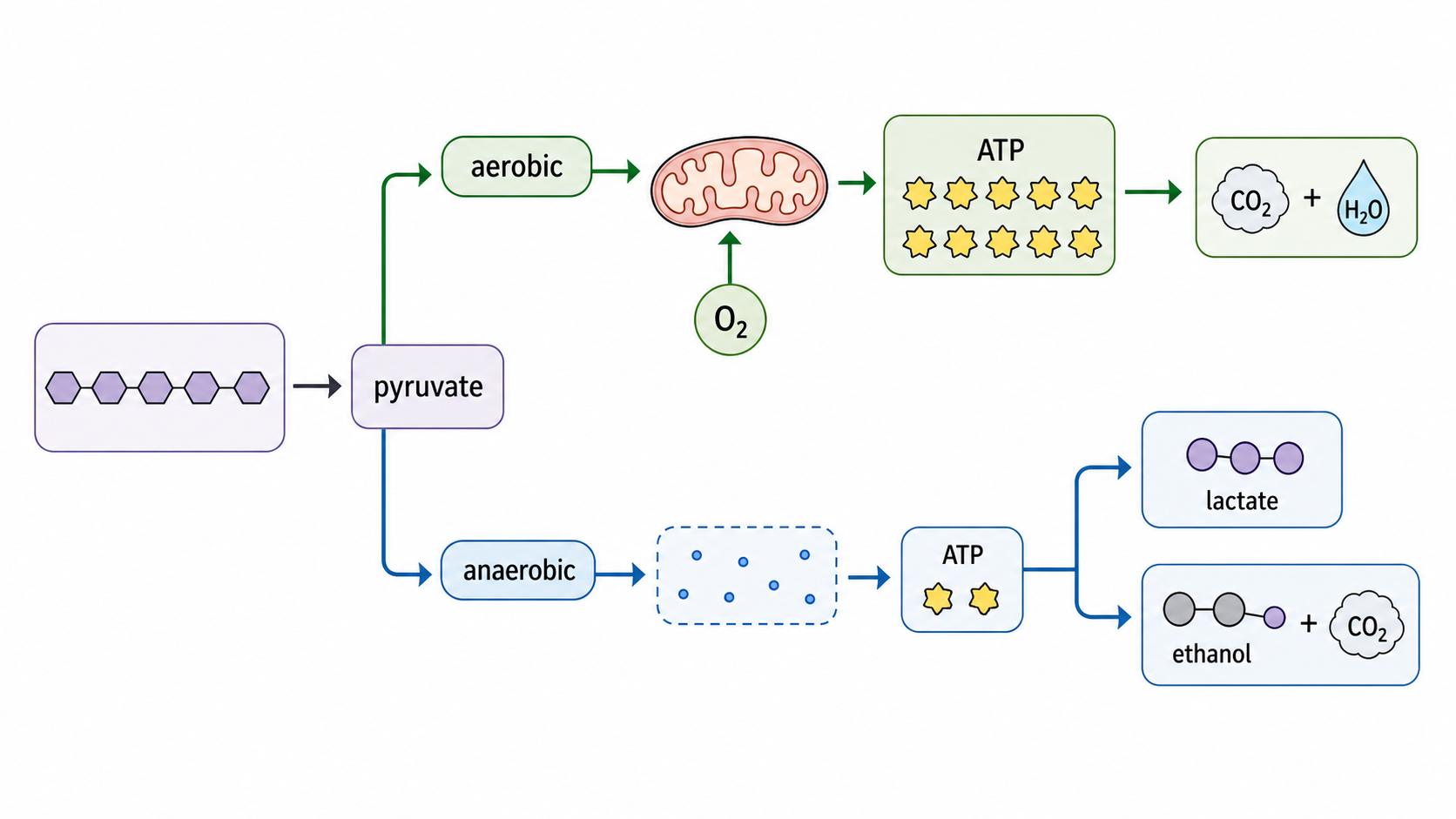
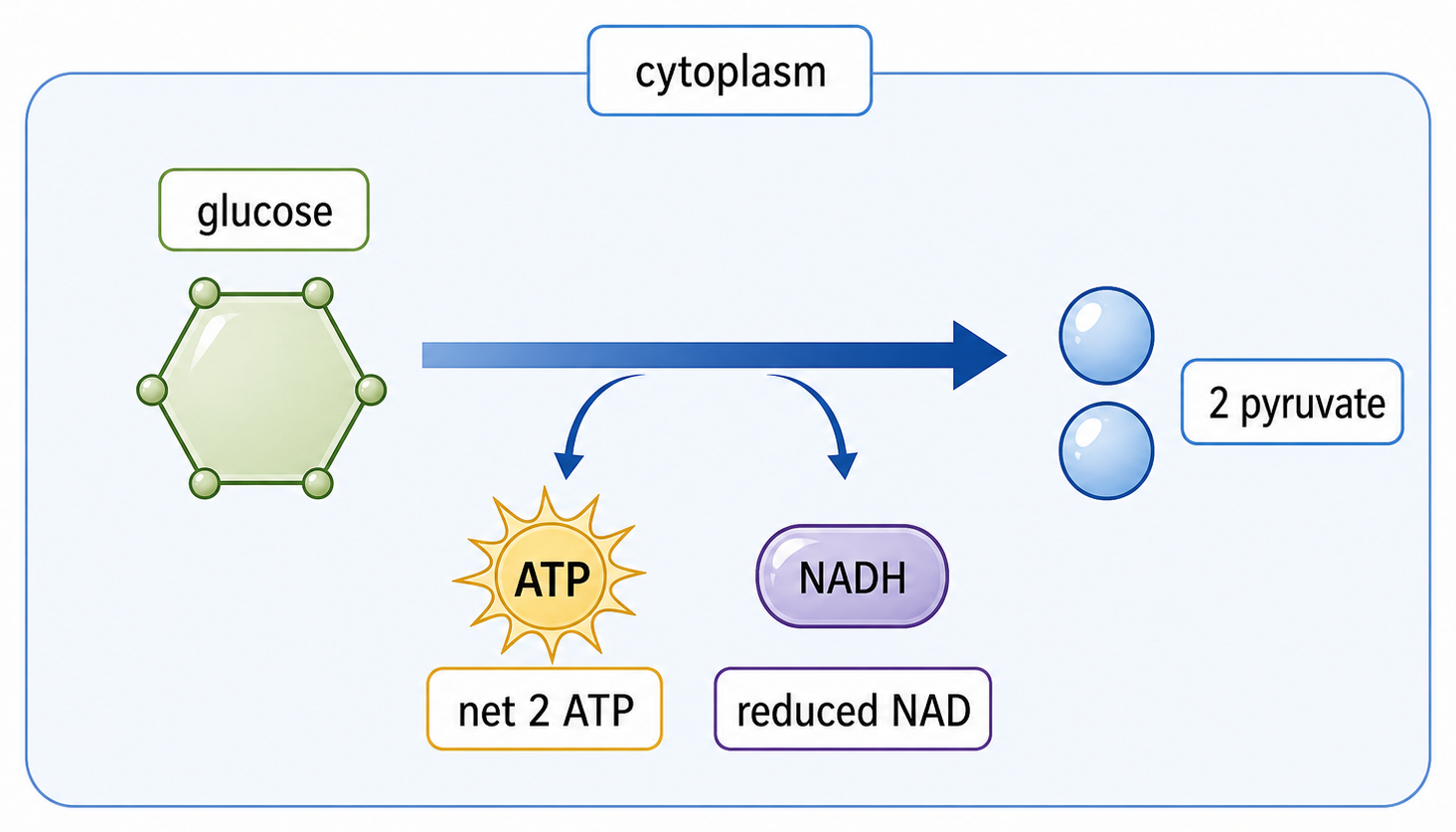
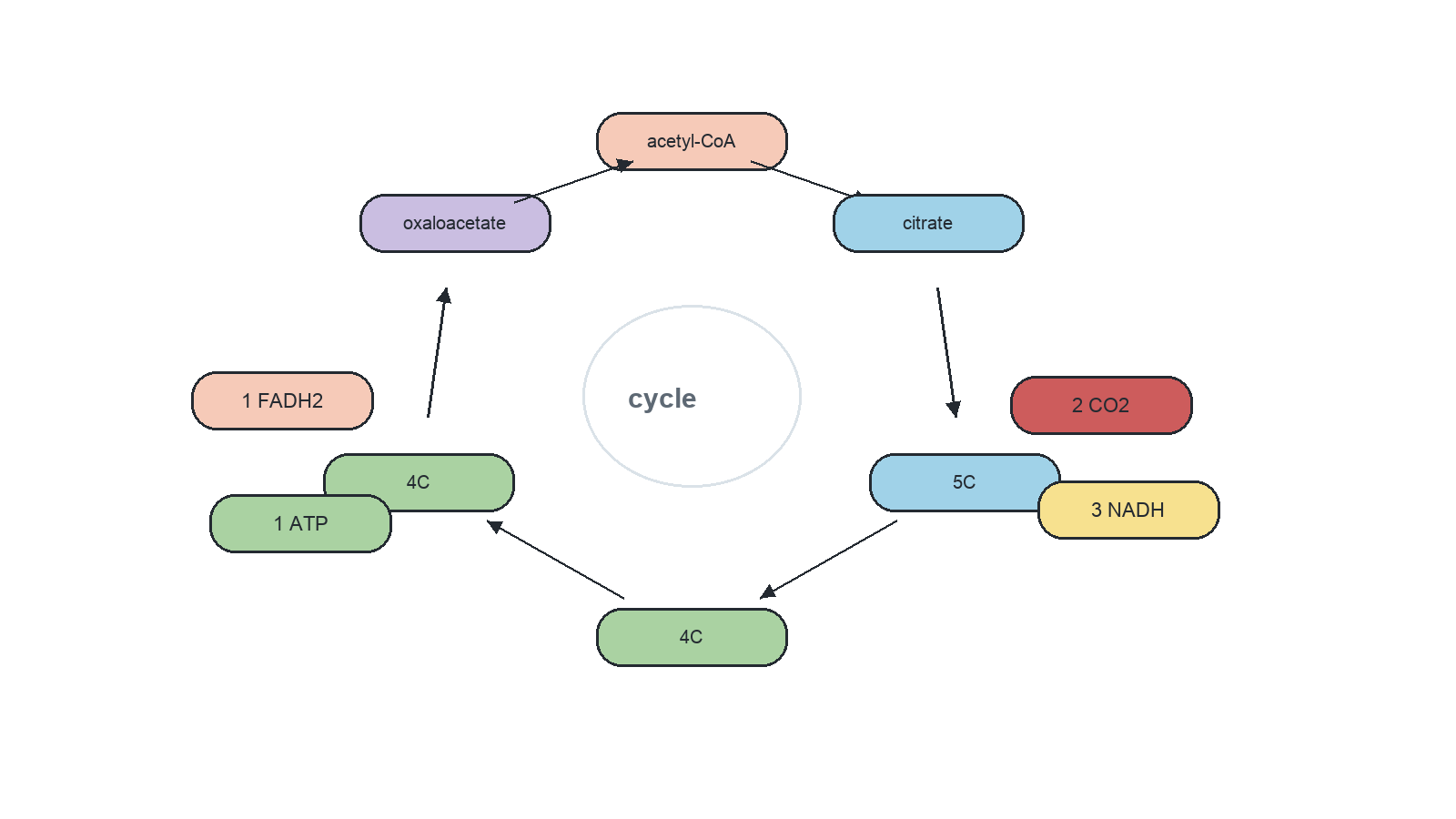
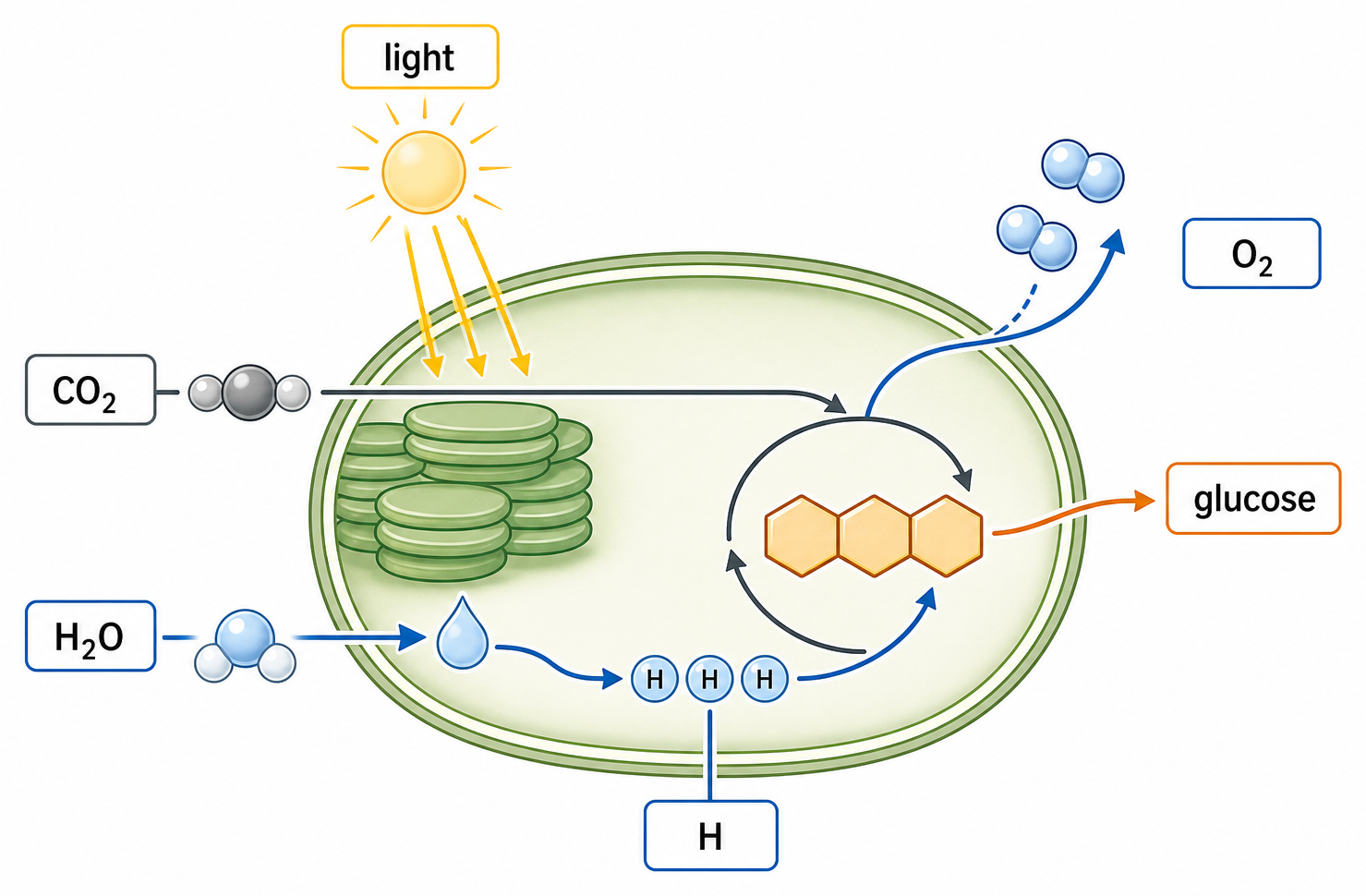
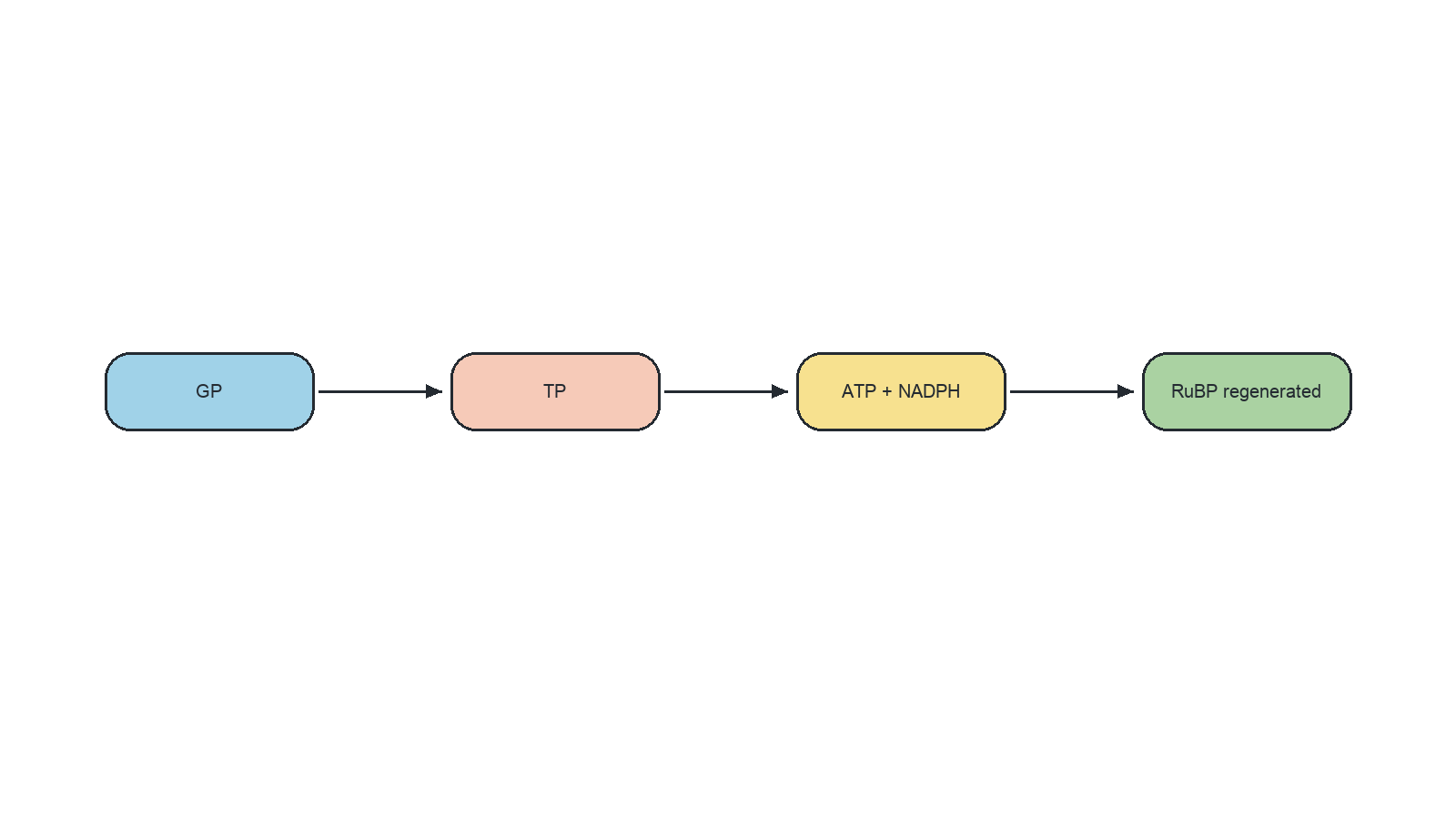
Glycolysis is linear: glucose passes through intermediates and ends as pyruvate. The Krebs cycle regenerates oxaloacetate, and the Calvin cycle regenerates ribulose bisphosphate while processing new carbon input.

Identify pathway form by tracing carbon or the acceptor: if a starting acceptor is re-formed, the pathway is cyclical; if intermediates lead to a different terminal product without regeneration, it is linear.

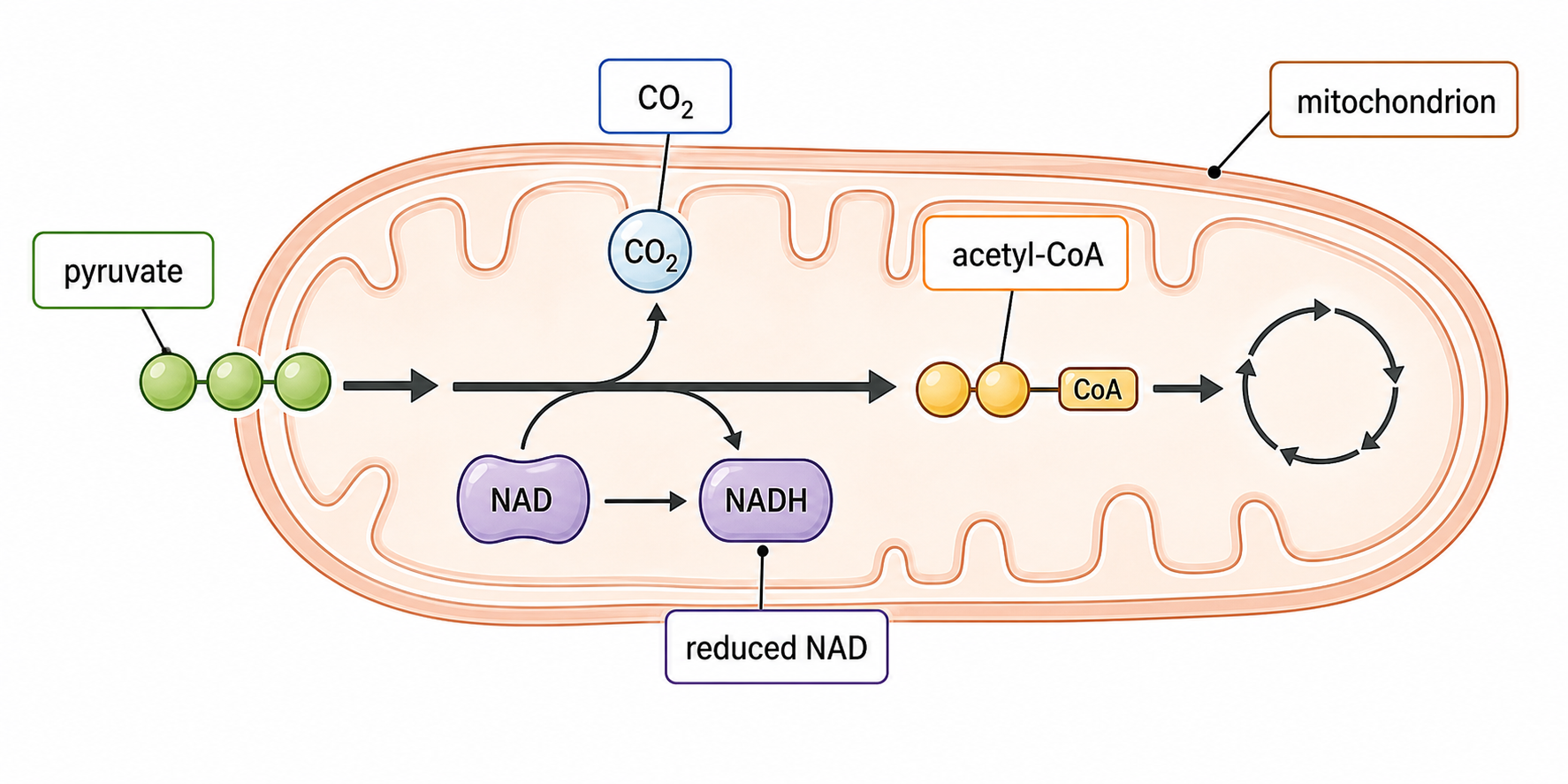
Each Krebs-cycle turn combines an acetyl group with oxaloacetate and later regenerates oxaloacetate, allowing another acetyl group to enter when substrates and cofactors are available.

A cycle is not self-sustaining perpetual motion: it requires new inputs and energy transfers. A linear pathway can also contain reversible steps without becoming a cycle.
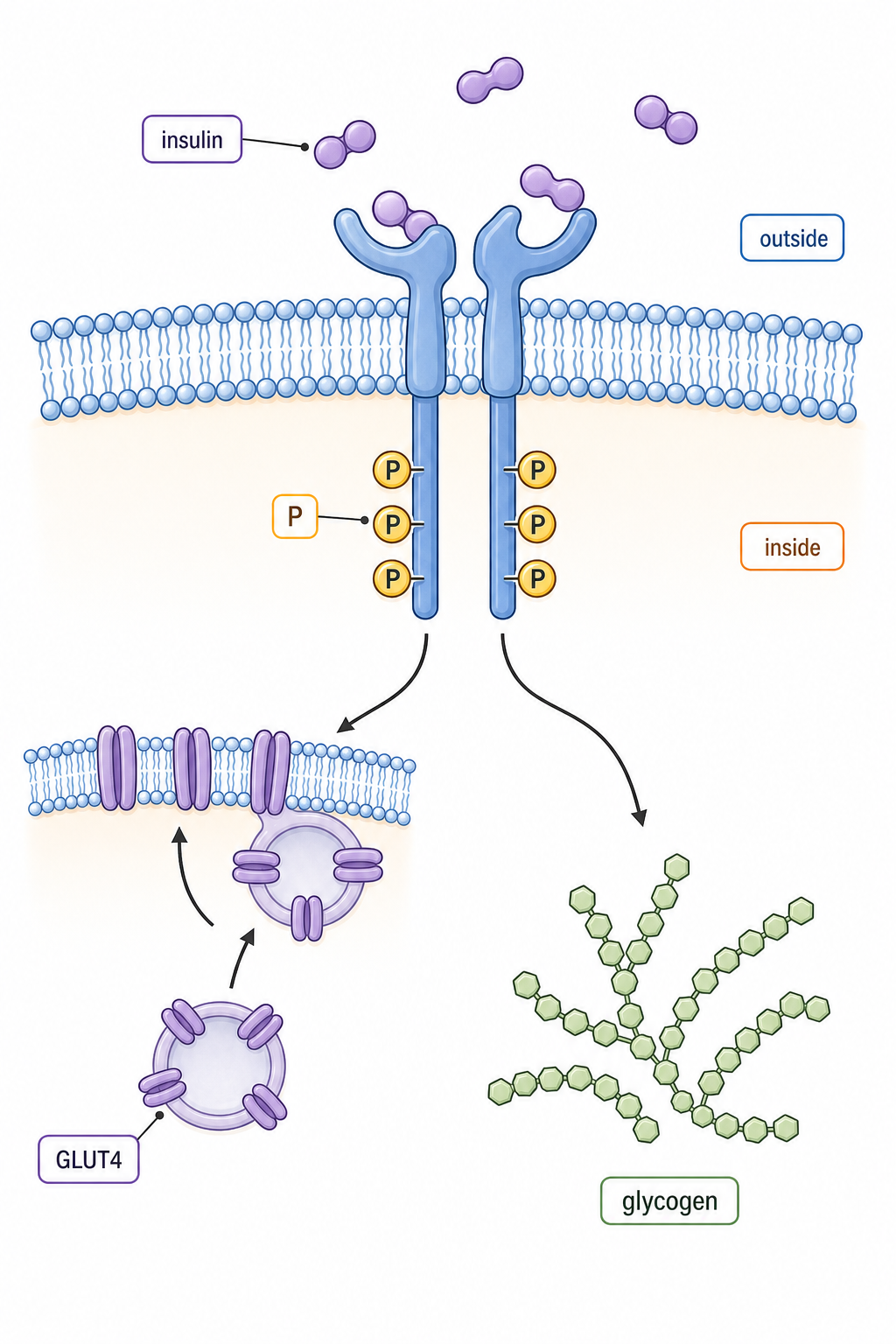
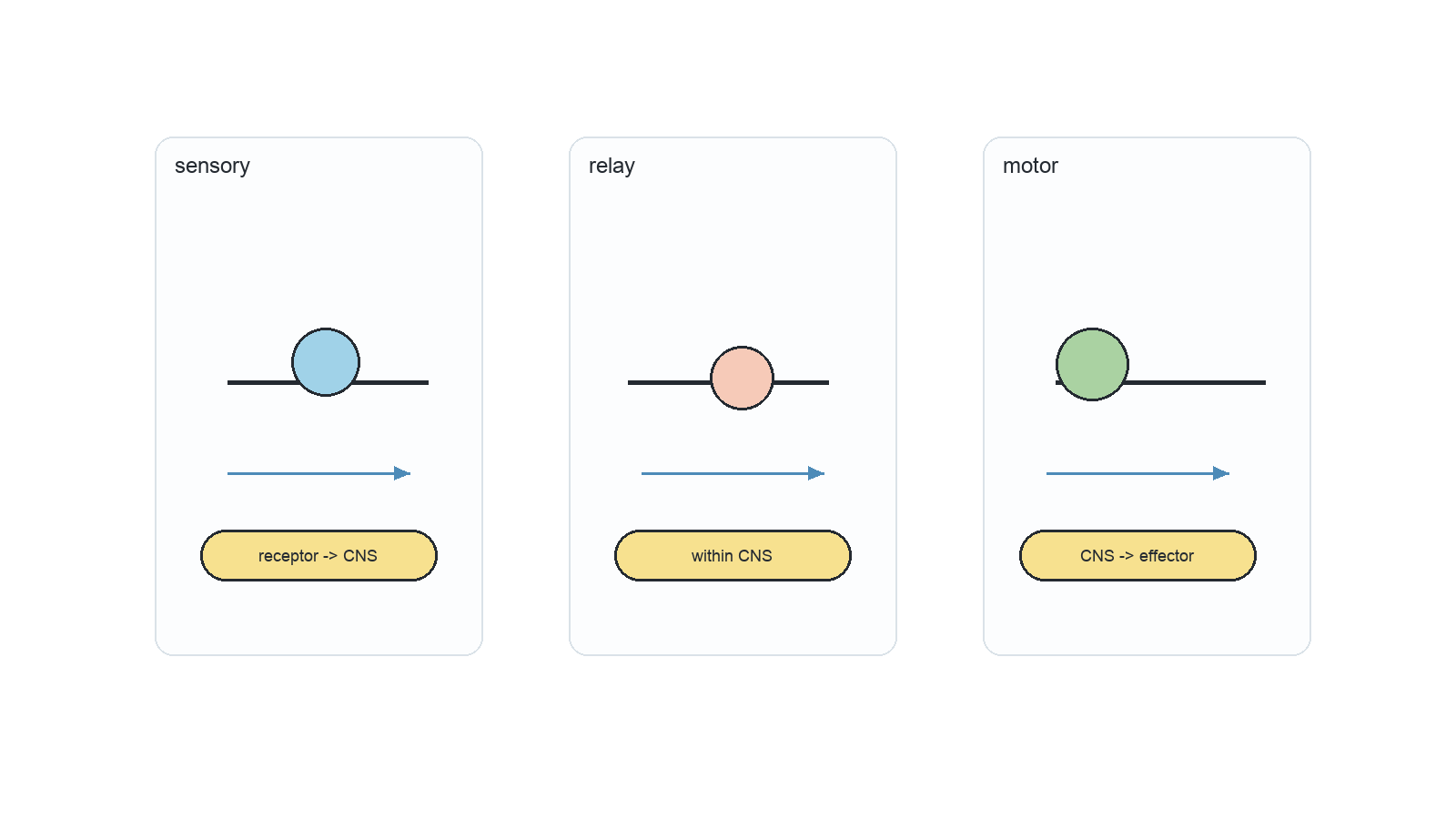
Cyclical and linear pathways in metabolism

HL only

Assessment in practice

1 marks
How it is assessed

This objective is assessed through structured response, commonly using Distinguish.

Command terms

Distinguish

What earns marks

Build the answer around this relationship: Linear pathways proceed from substrate to final product.

Representative question

Question 1

[Maximum number: 1]

Distinguish between processes involved in cyclical and linear metabolic pathways.

Enzyme Regulation

HL only

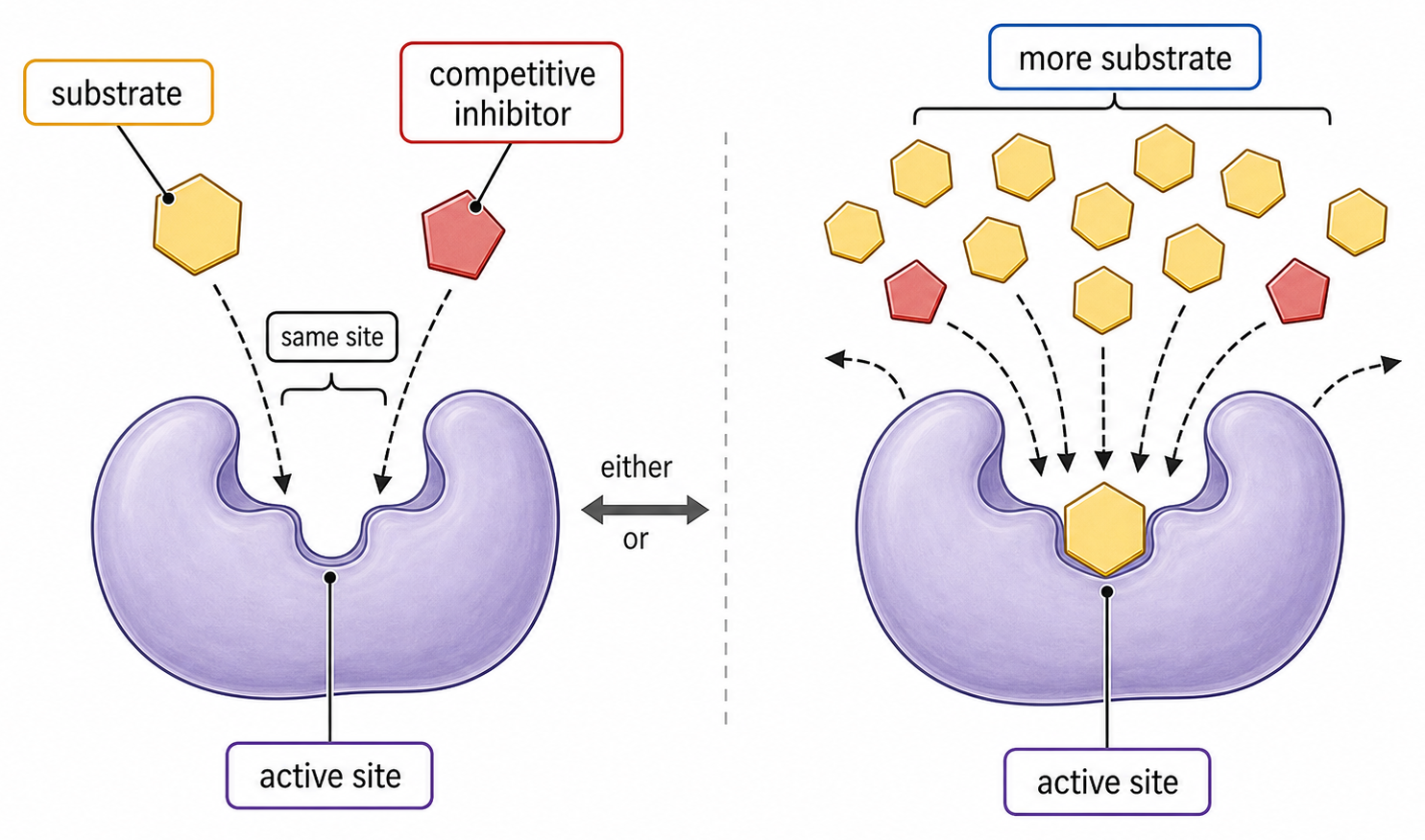
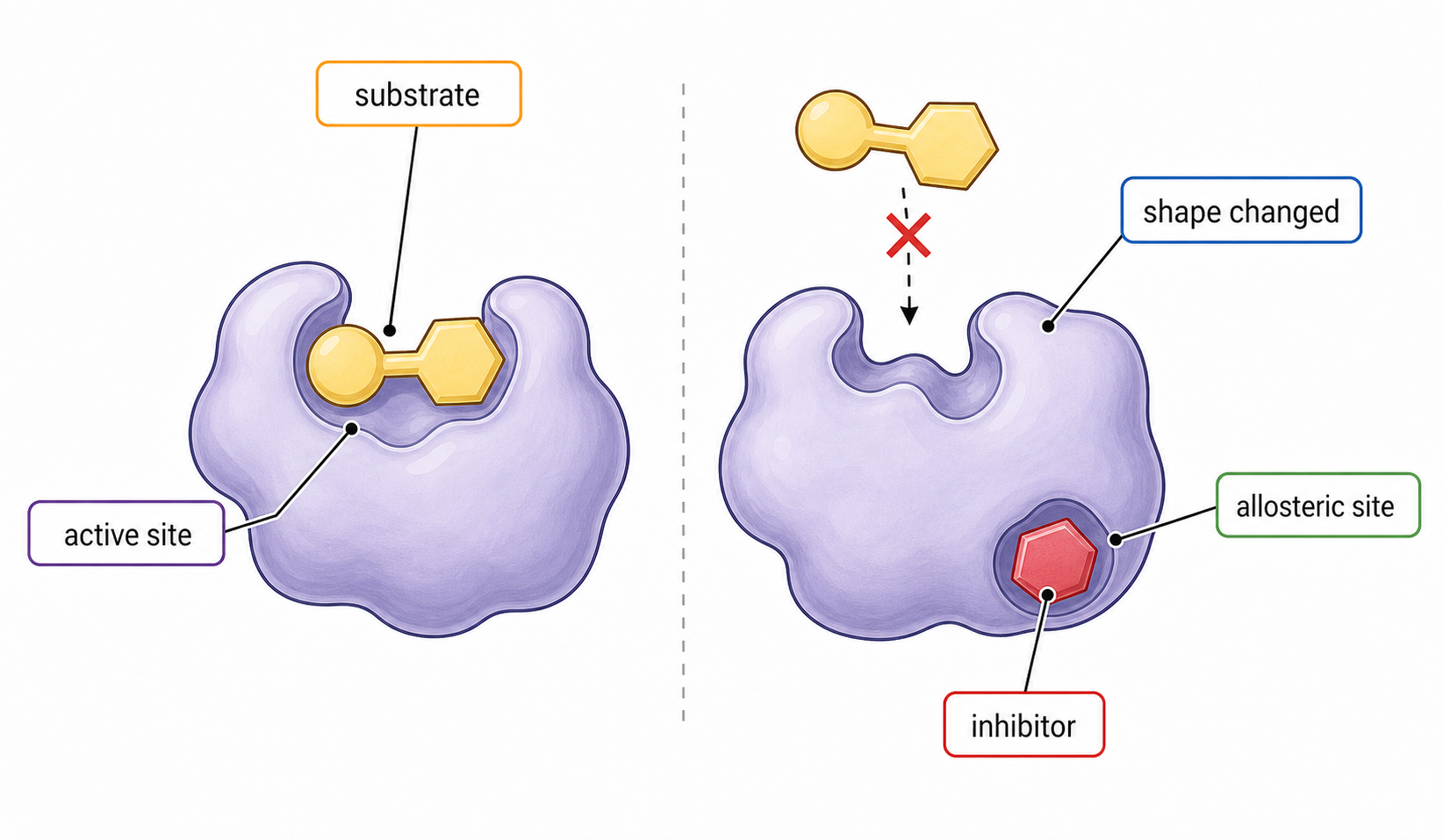
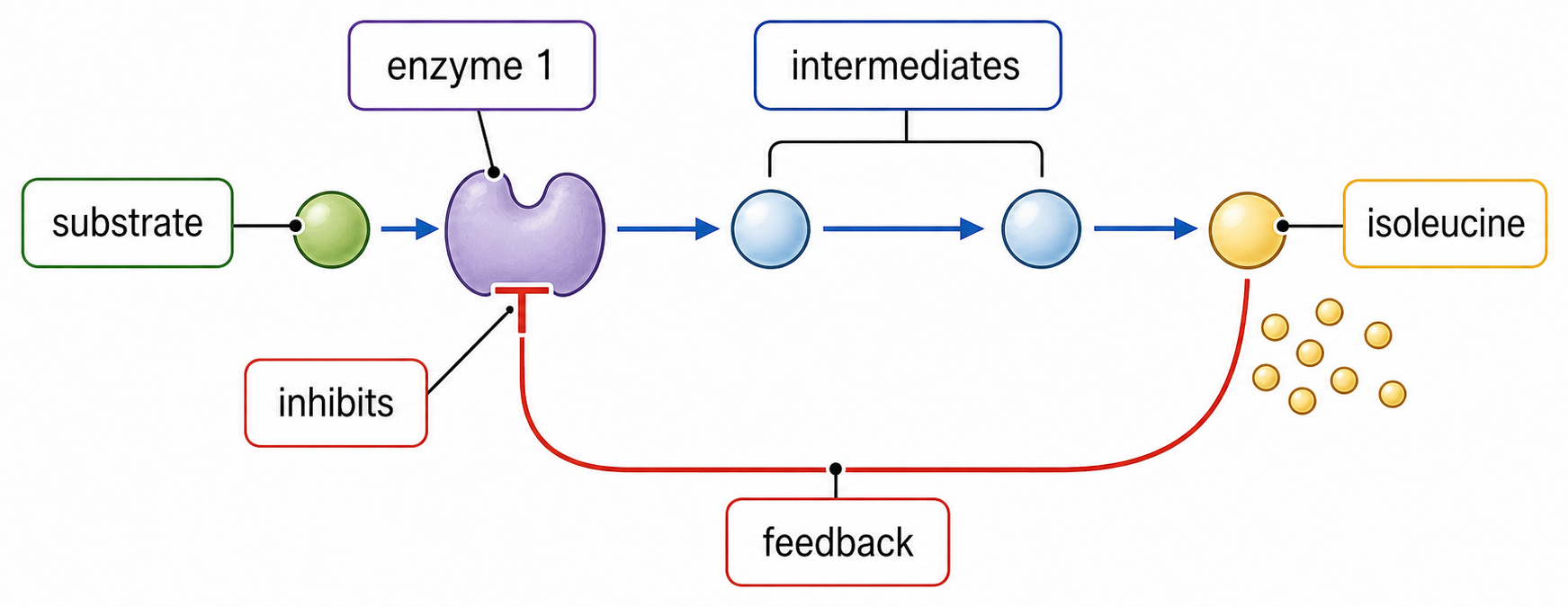
Enzymes can act inside or outside cells, metabolic reactions release heat, pathways may be linear or cyclical, and pathway output is regulated by inhibition. Competitive inhibitors bind active sites and can be overcome by more substrate; non-competitive inhibitors bind allosteric sites; feedback inhibition uses end products to inhibit earlier enzymes; mechanism-based inhibitors trap enzymes after reaction begins.

  • Location: intracellular versus extracellular enzyme action.
  • Pathway shape: linear products move forward; cyclical pathways regenerate acceptors.
  • Inhibition: competitive active-site competition, non-competitive allosteric shape change, feedback end-product control, mechanism-based irreversible trapping.

Concept essentials

  • Linear pathways proceed from substrate to final product.
  • Cyclical pathways regenerate a molecule or intermediate.
  • Products can become substrates again in metabolic cycles.
  • The distinction concerns pathway organization, not whether enzymes are involved.