C1.1.6—Molecular motion
Molecular motion enables substrates to collide with enzyme active sites, making successful enzyme-substrate complex formation possible during catalysis in reactions.
- Syllabus
- First assessment 2025
- Objective
- C1.1.6
- Level
- HL
Molecular motion enables substrates to collide with enzyme active sites, making successful enzyme-substrate complex formation possible during catalysis in reactions.
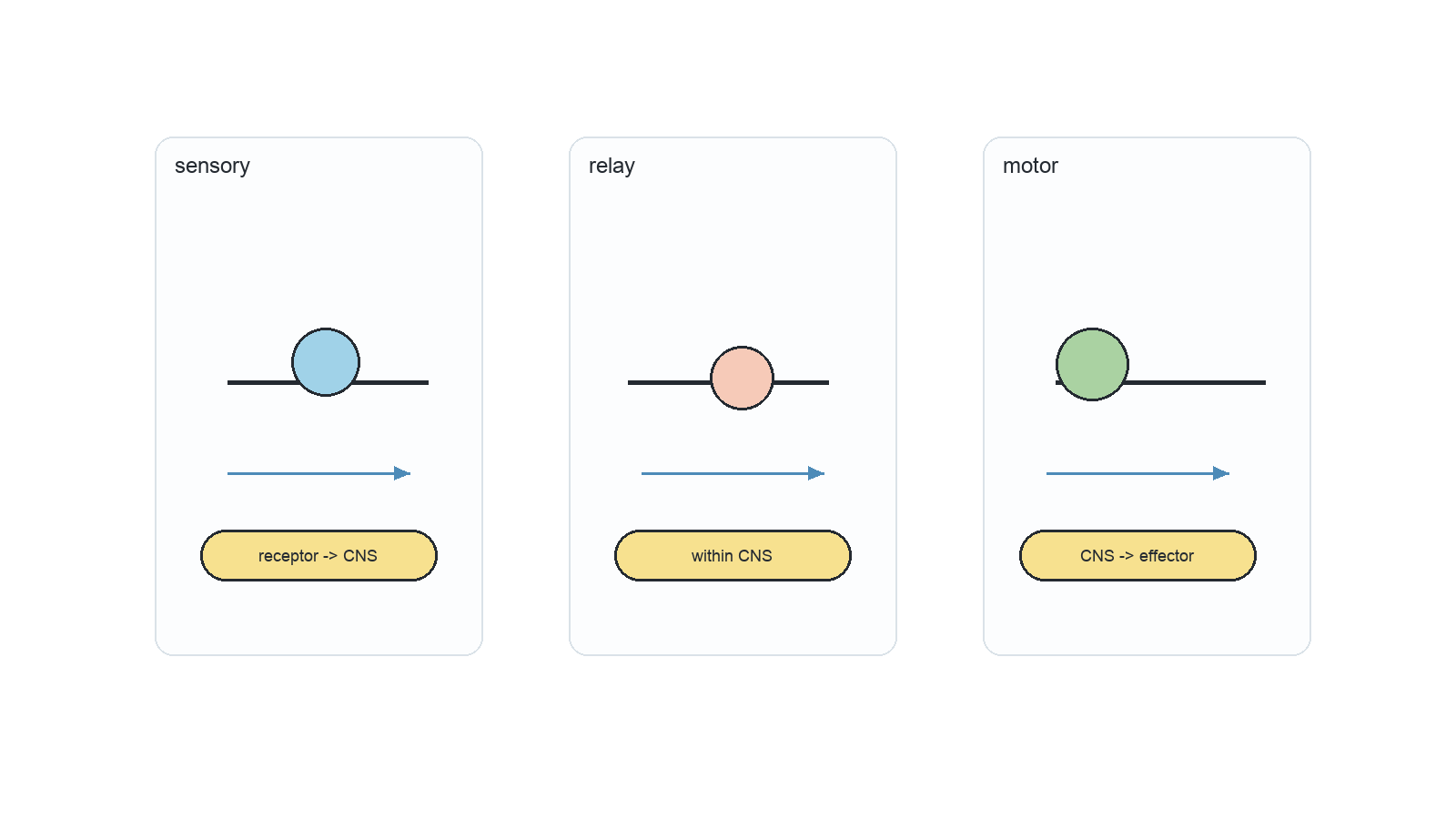
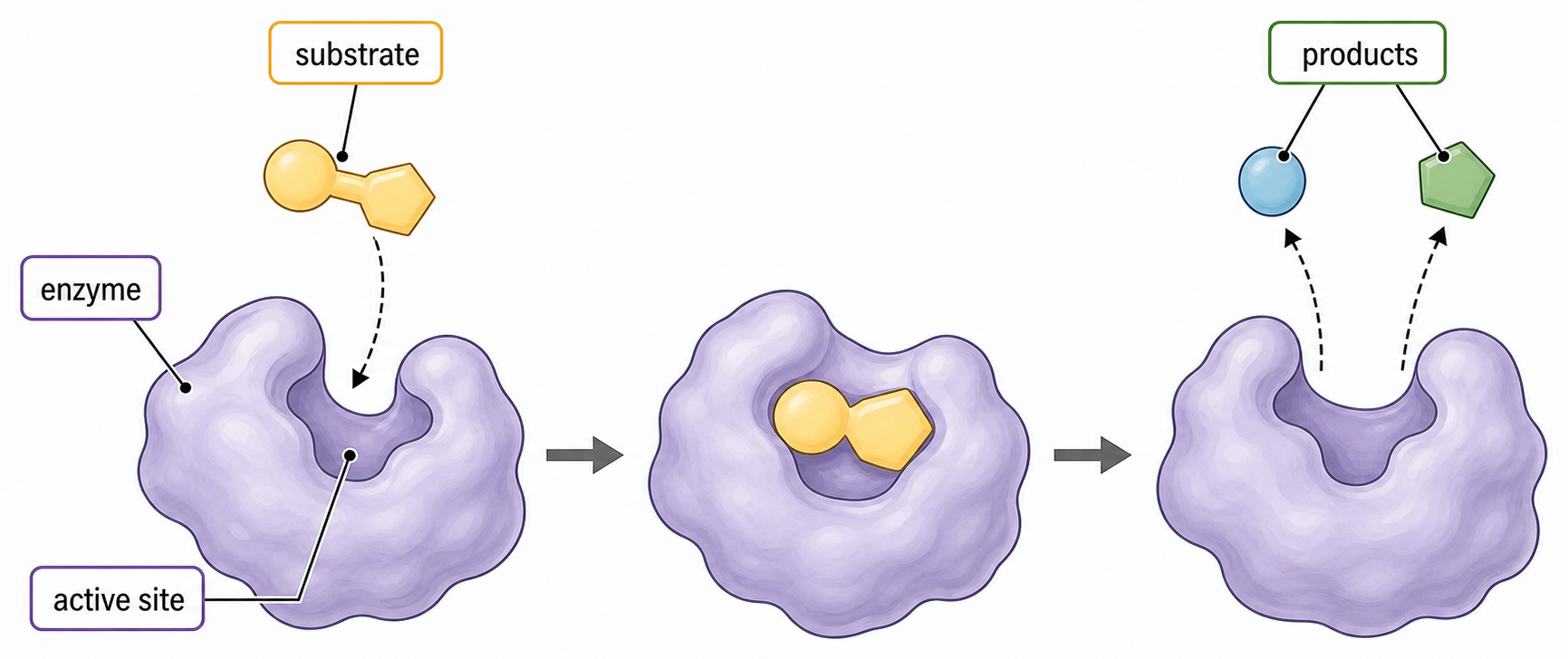
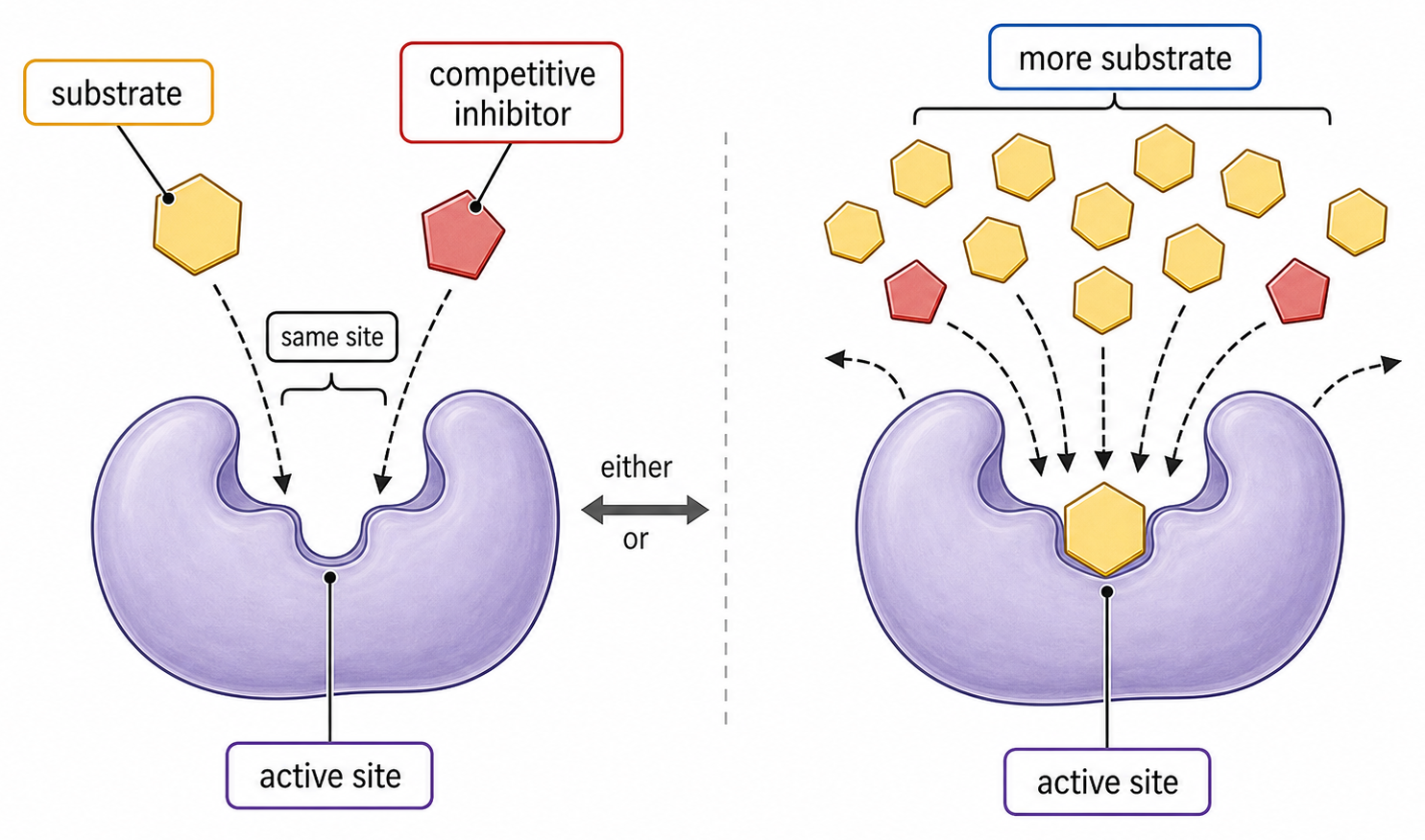
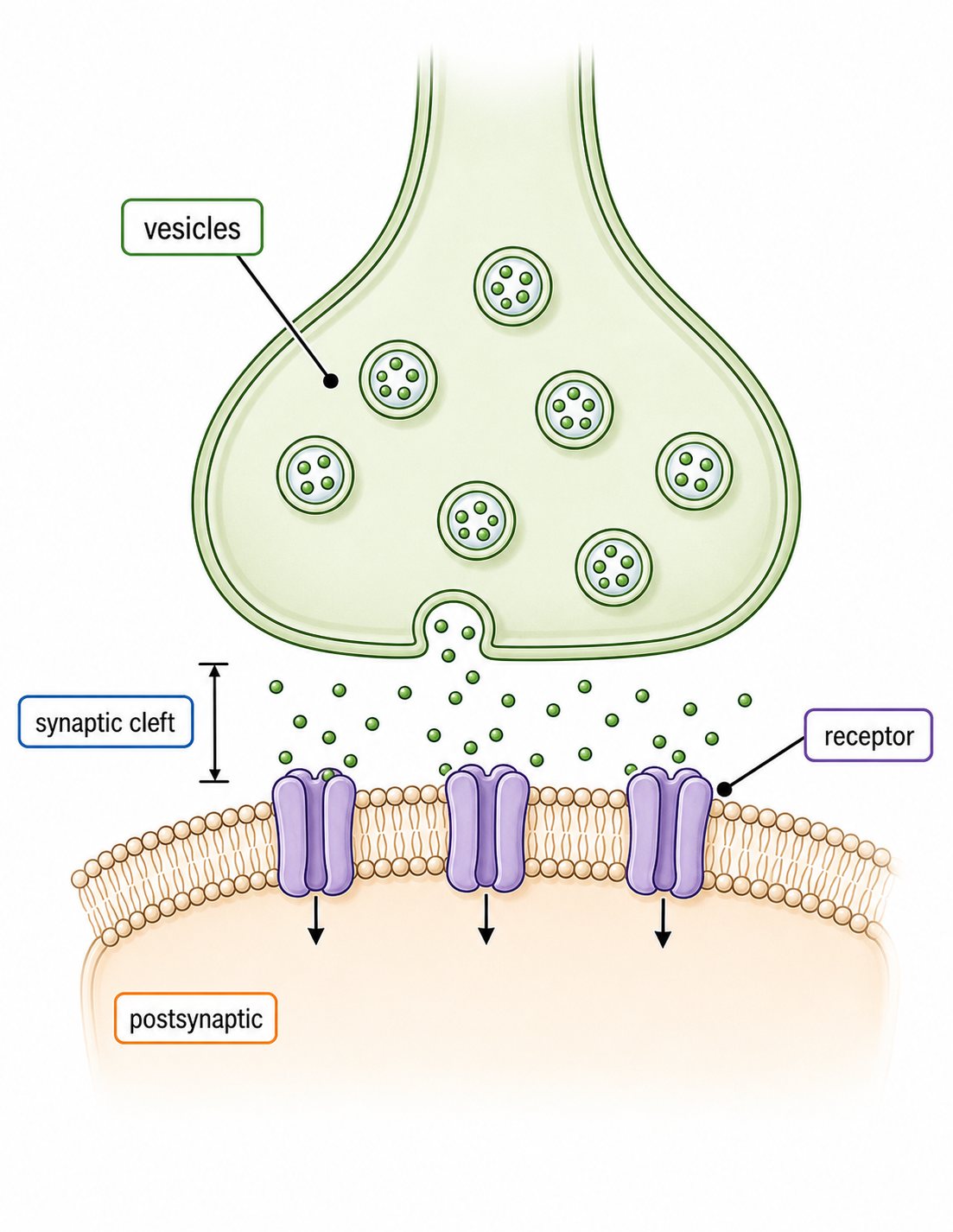
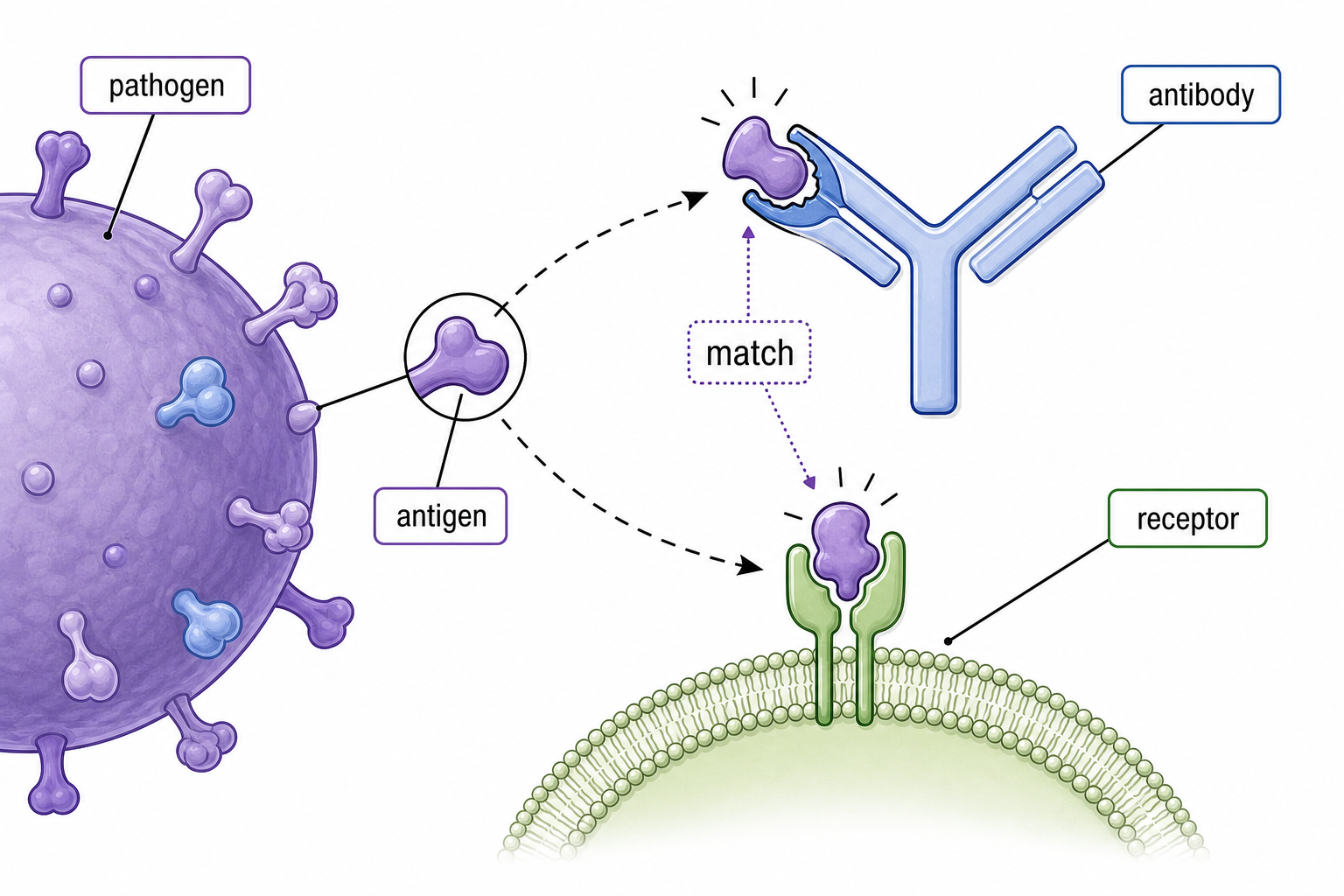
Enzyme catalysis requires random molecular motion to bring a substrate into a productive collision with an active site.
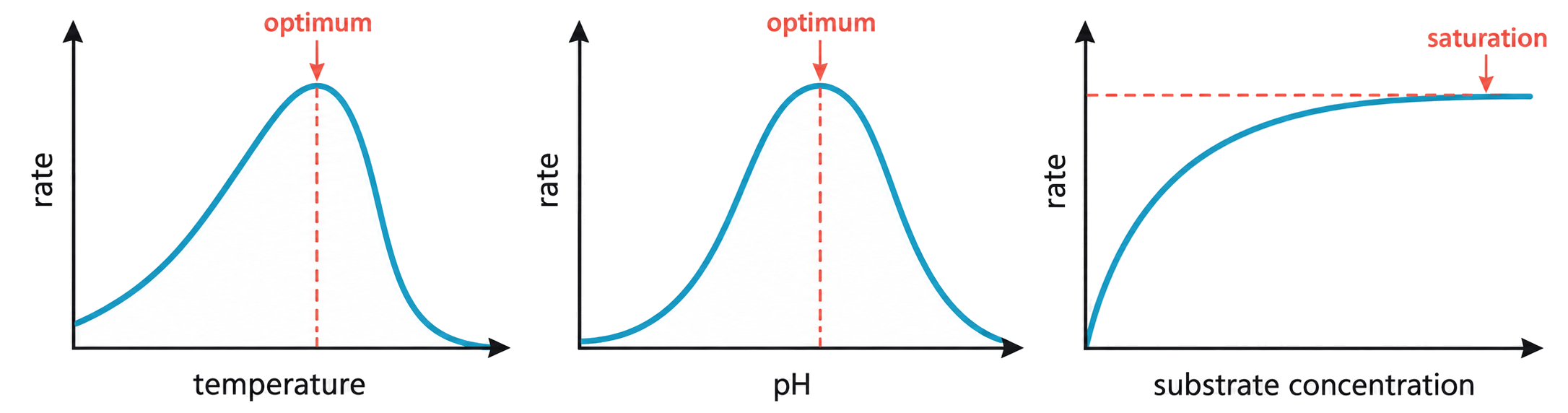
Higher kinetic energy increases motion and collision frequency up to the point where enzyme structure becomes unstable. A collision must also have suitable orientation and enough energy for binding and reaction.
Sometimes a large substrate is effectively immobilized, so enzyme molecules diffuse to exposed sites. In other systems the enzyme is immobilized in a membrane, and moving substrate molecules collide with its fixed active sites.
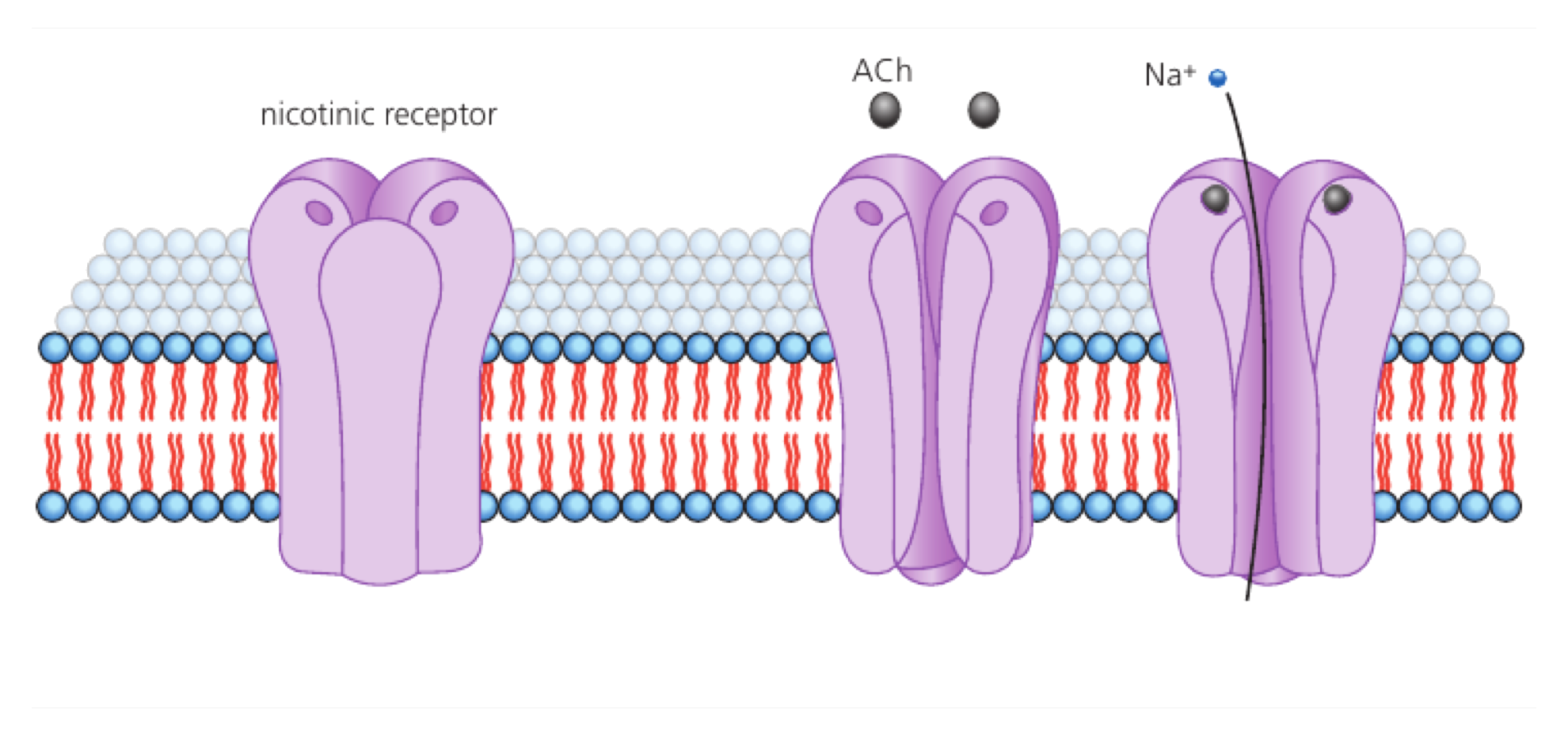
A membrane-embedded enzyme remains in one location while dissolved substrate diffuses through the membrane environment and collides with the active site.
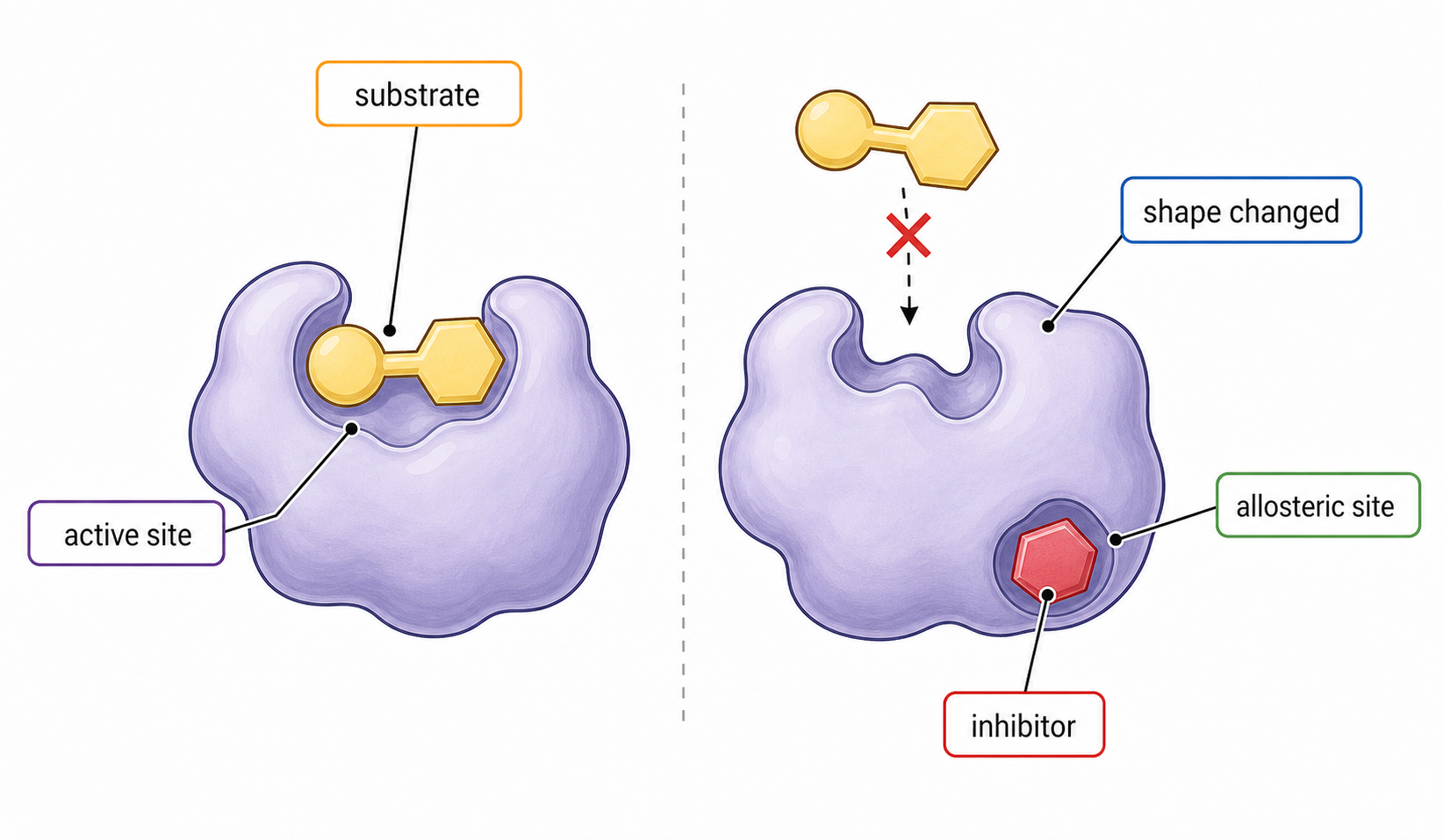
Immobilized does not mean inactive, and faster motion alone cannot guarantee catalysis: molecular complementarity, orientation and enzyme conformation still matter.
This objective is assessed through multiple choice, commonly using Identify.
Identify
Build the answer around this relationship: Substrates must collide with enzyme active sites for catalysis.
Representative question
Which statement applies to enzymes?
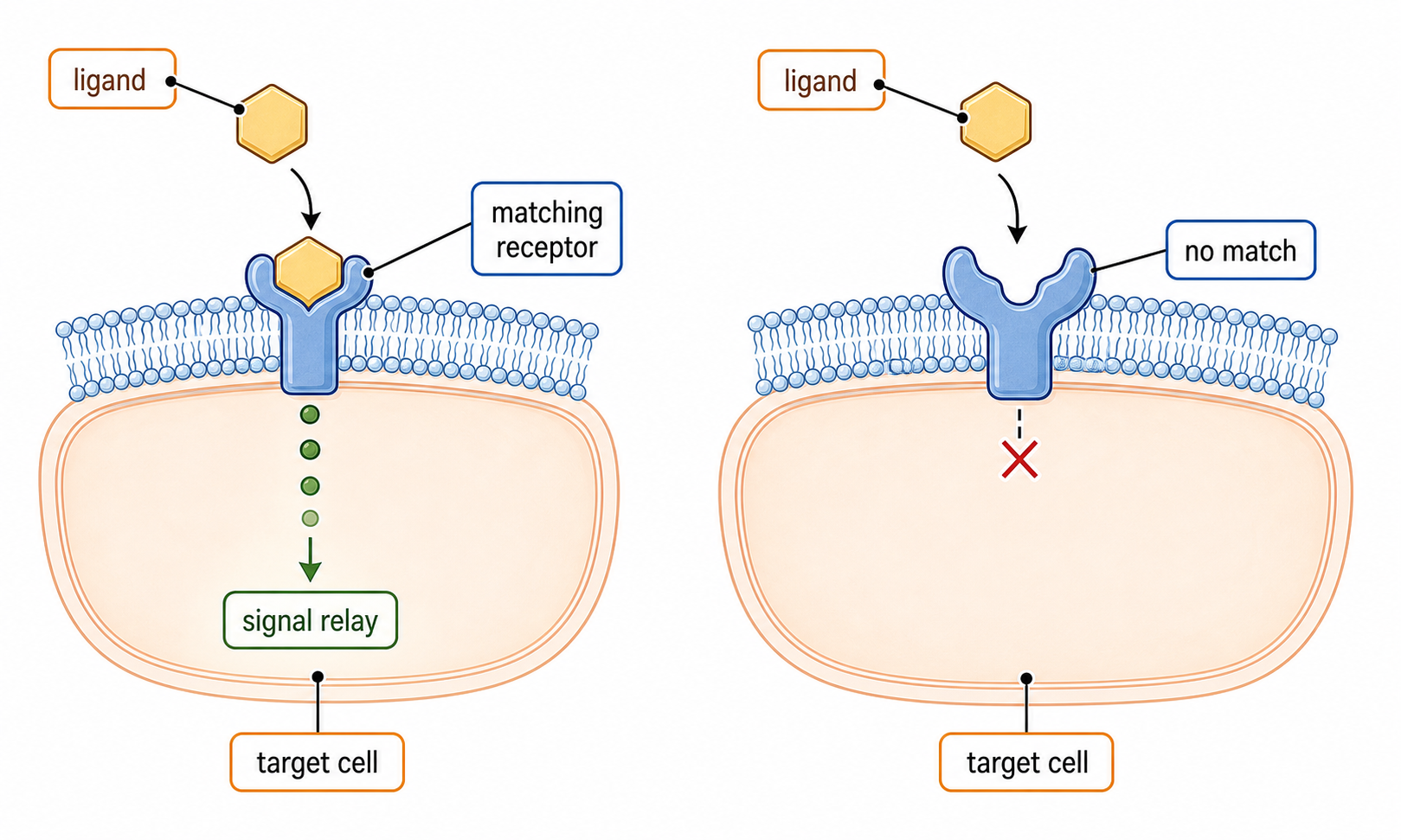
Enzyme function depends on collisions between substrate and active sites.
One active site typically binds to a broad range of substrates.
The active site on the substrate is specific to one enzyme.
When enzymes are immobilized they stop working.
A
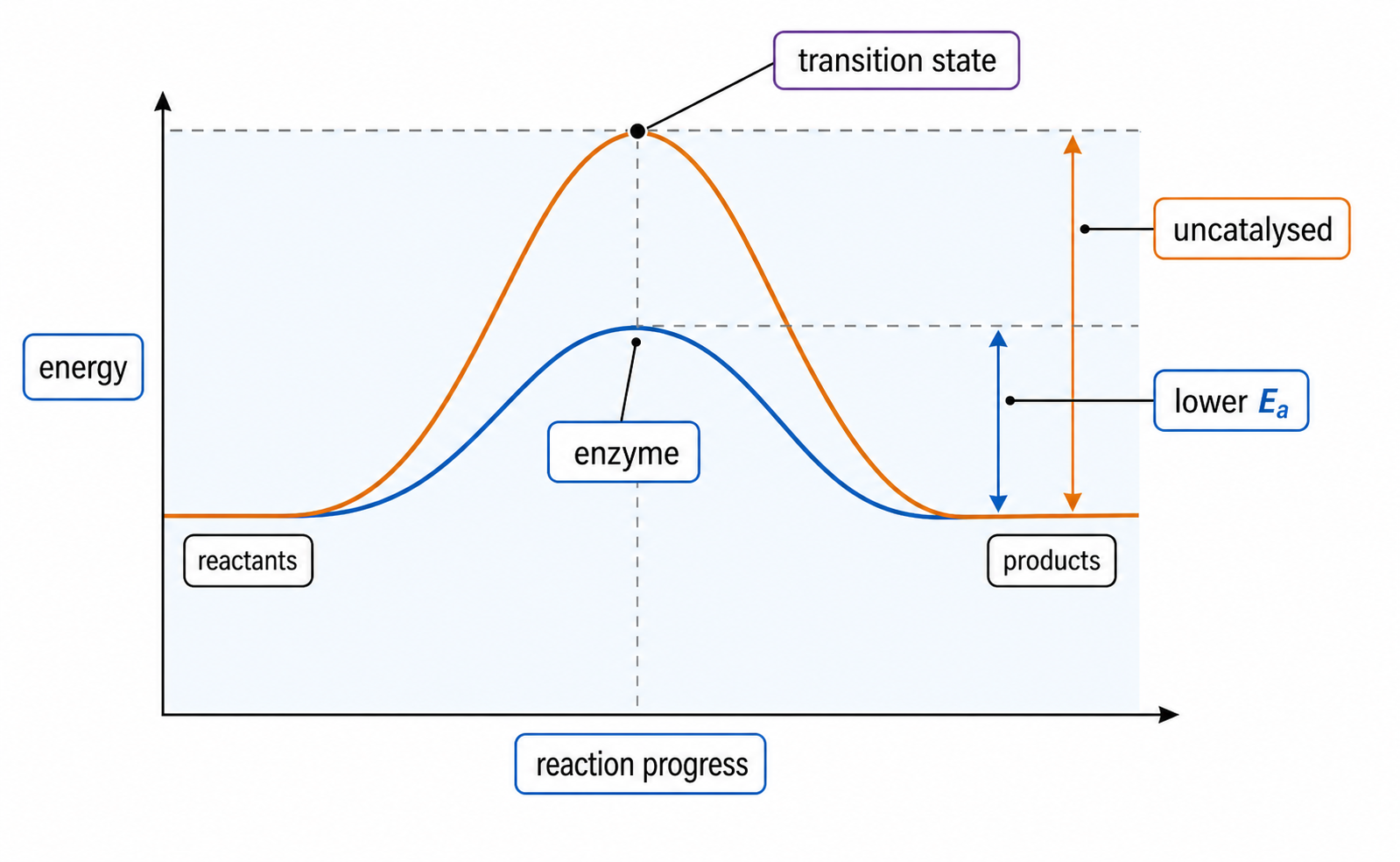
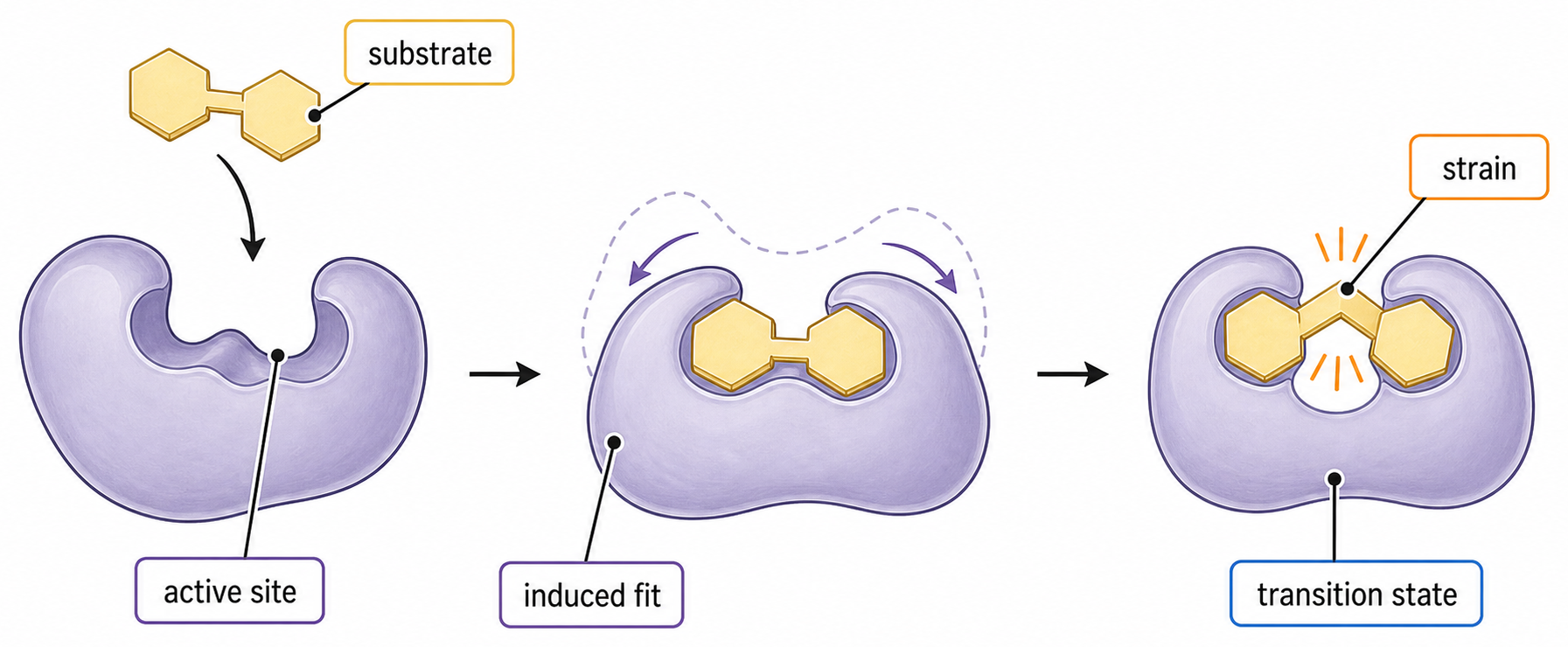
Enzymes are biological catalysts that lower activation energy and remain unchanged. Their globular protein shape creates active-site specificity; induced fit aligns substrates; molecular motion and collisions affect rate; temperature, pH, and substrate concentration change activity; assays measure substrate loss or product formation over time.