C1.1.2—Role in metabolism
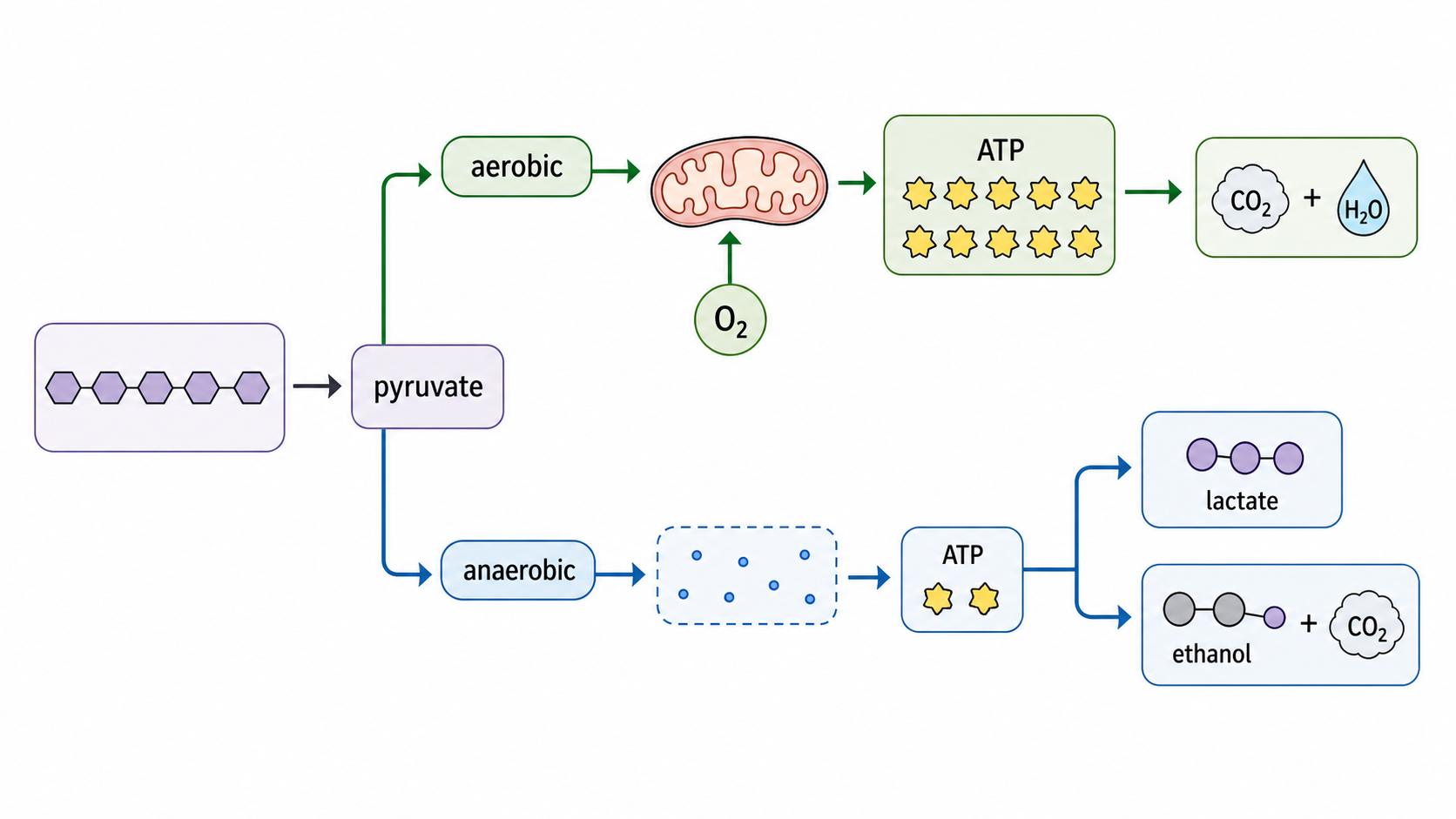
Metabolism is the total network of enzyme-controlled chemical reactions that build, break down and transform molecules inside living cells and organisms.
- Syllabus
- First assessment 2025
- Objective
- C1.1.2
- Level
- HL
Metabolism is the total network of enzyme-controlled chemical reactions that build, break down and transform molecules inside living cells and organisms.
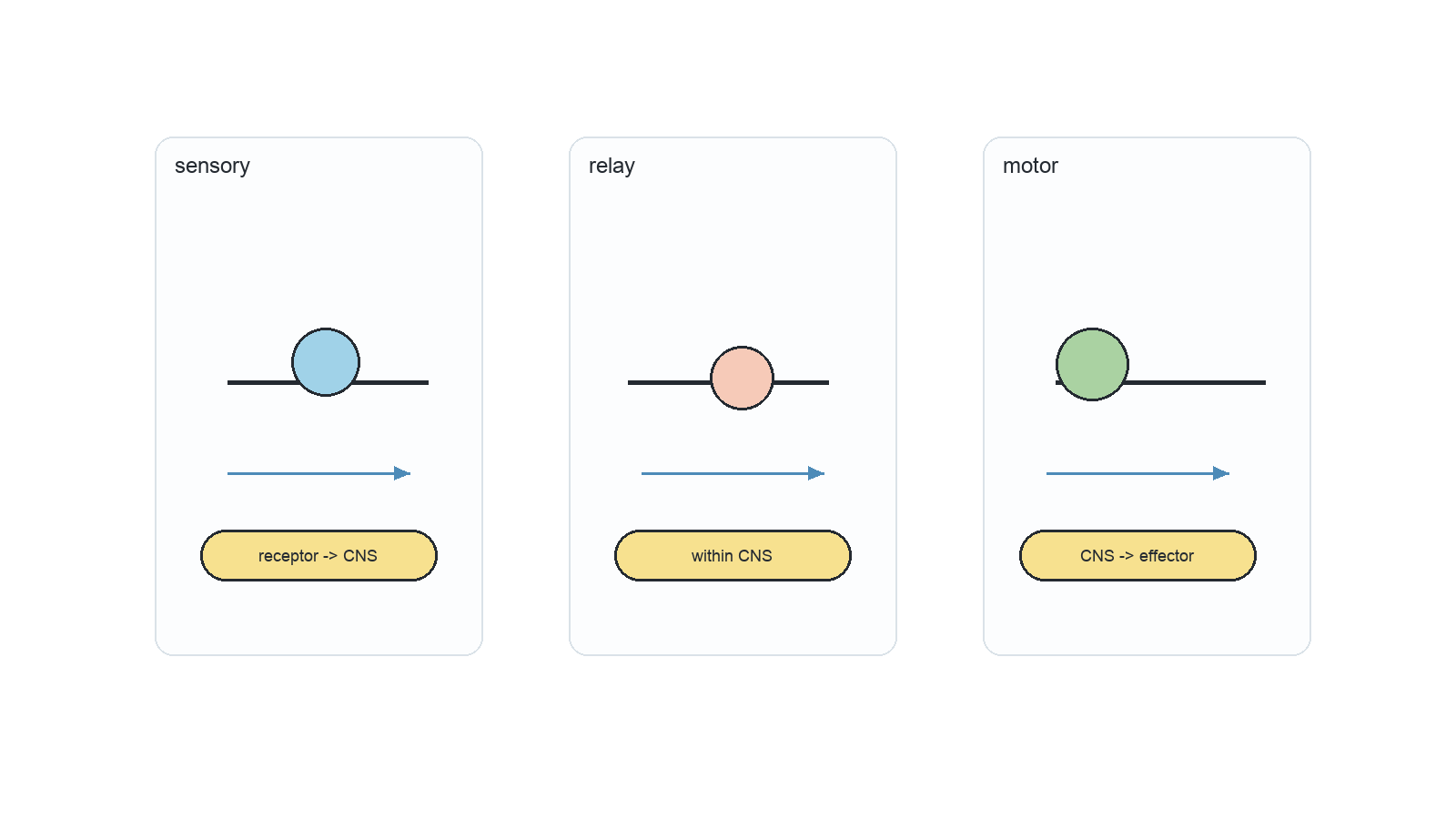
Metabolism is the complex network of interdependent and interacting chemical reactions occurring in a living organism; each step is catalysed by a specific enzyme.
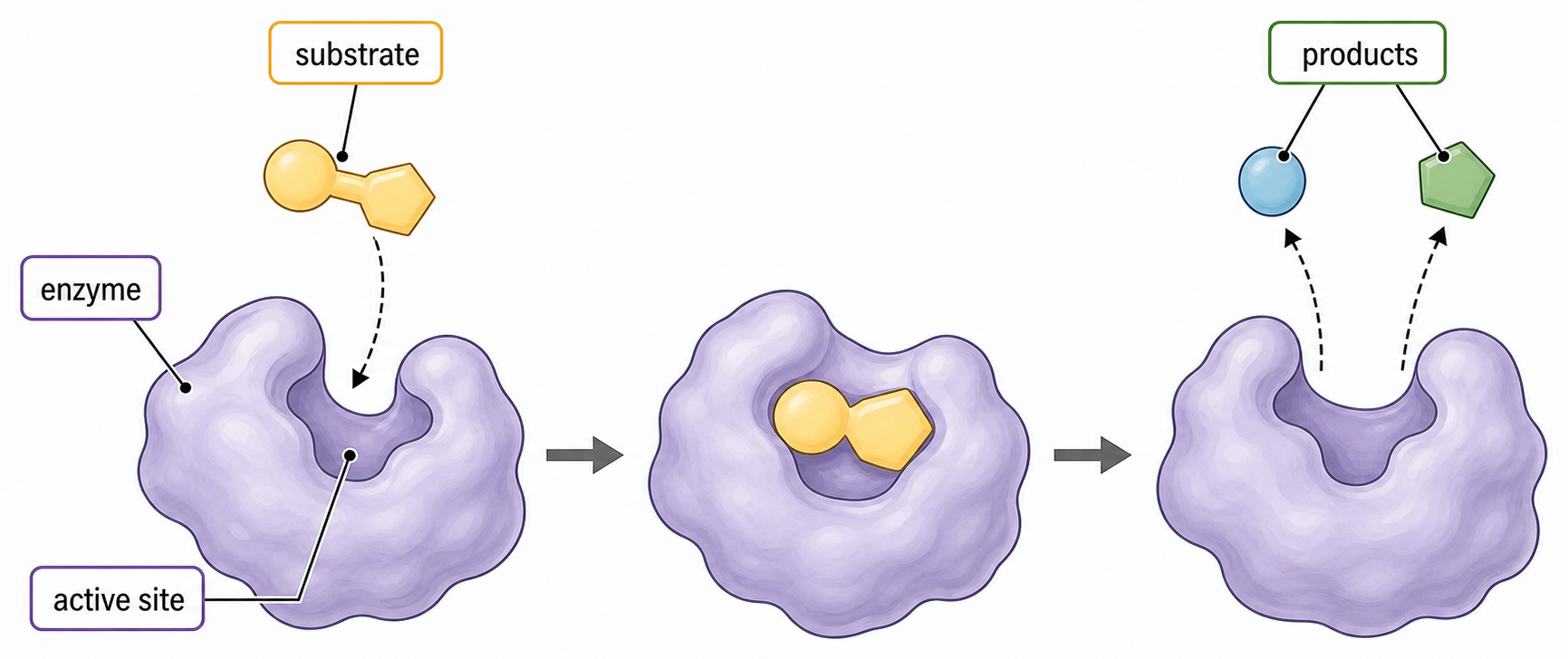
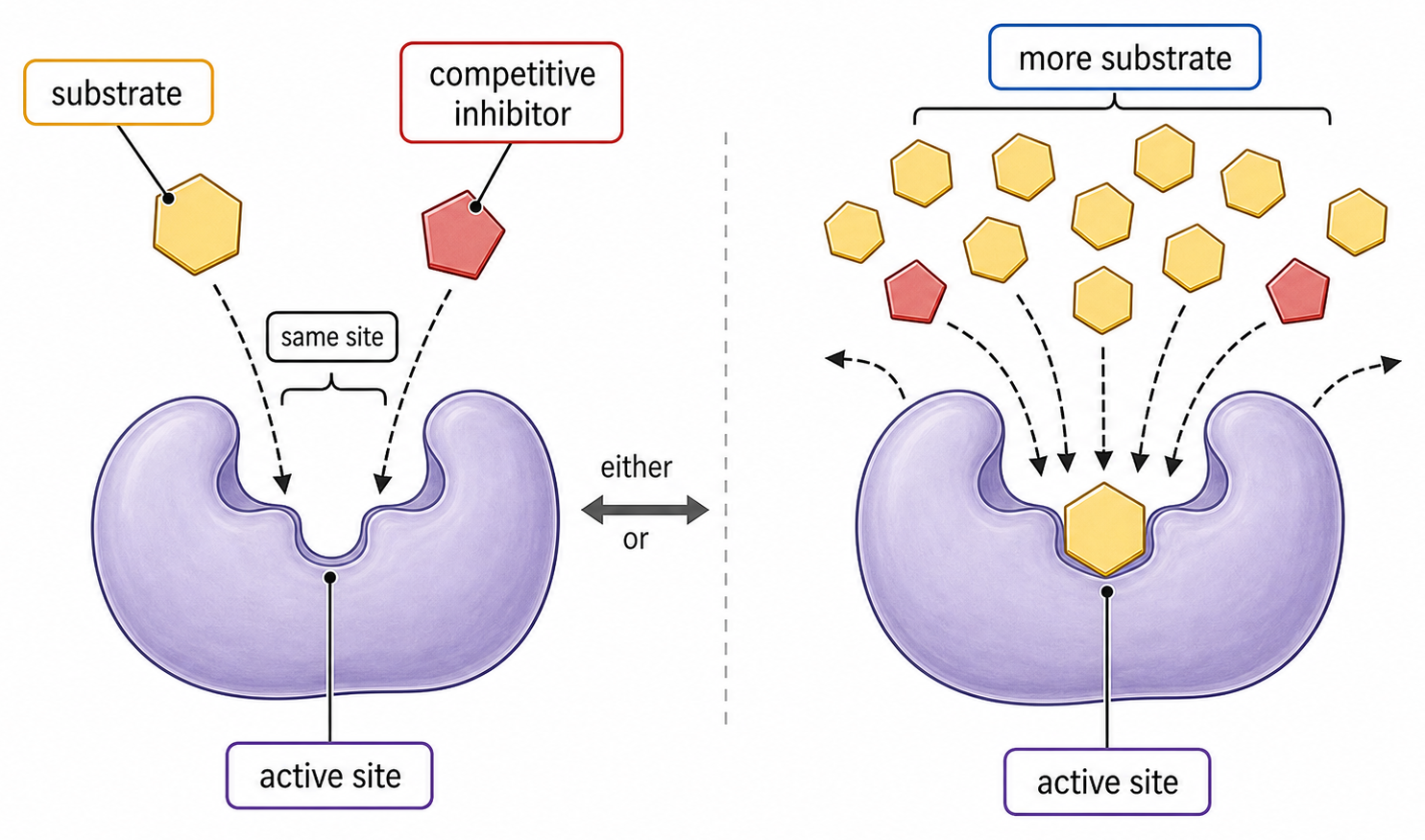
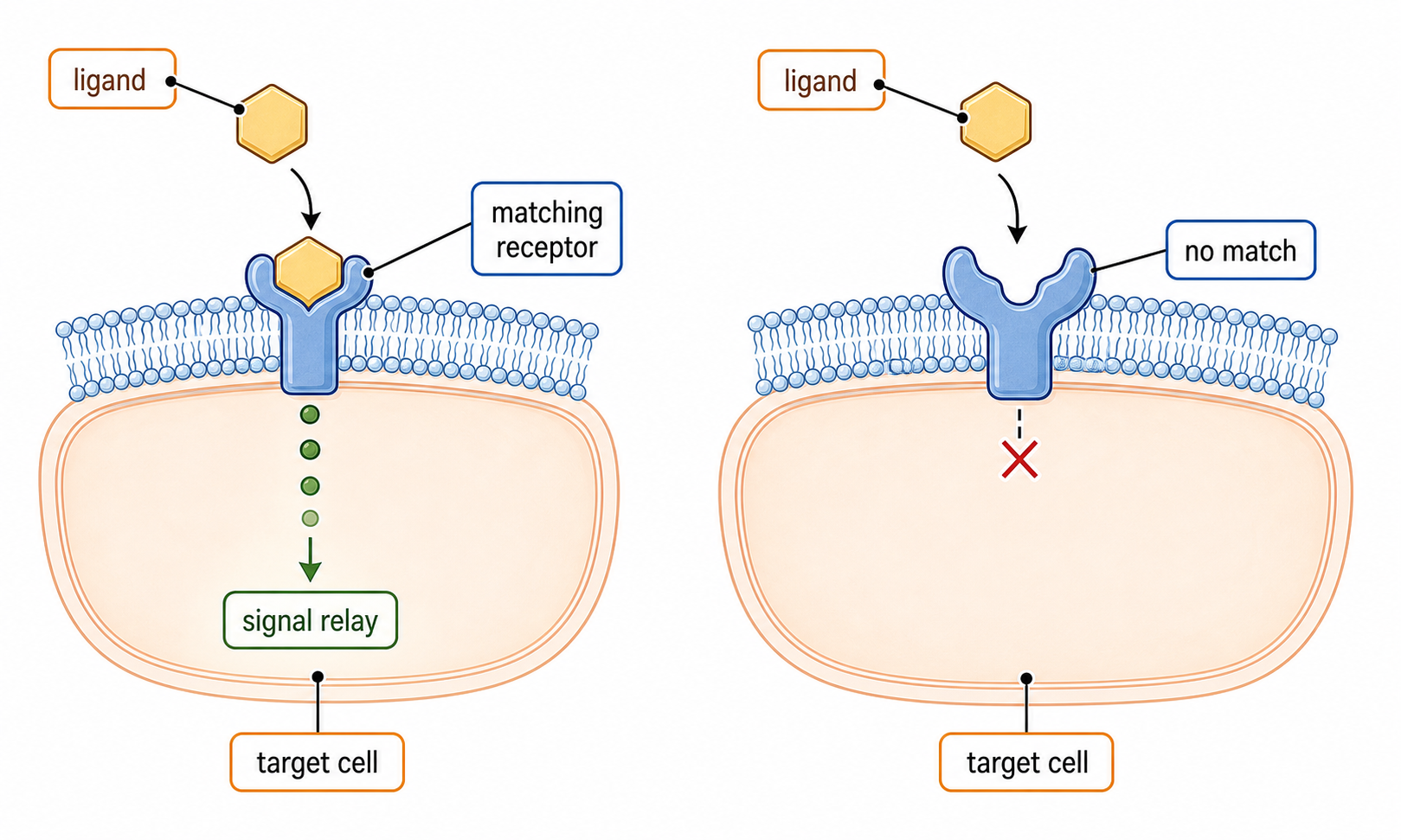
Enzyme specificity requires many different enzymes, because each active site catalyses only a limited reaction. Linking enzyme-controlled steps lets the products of one reaction become substrates for another.
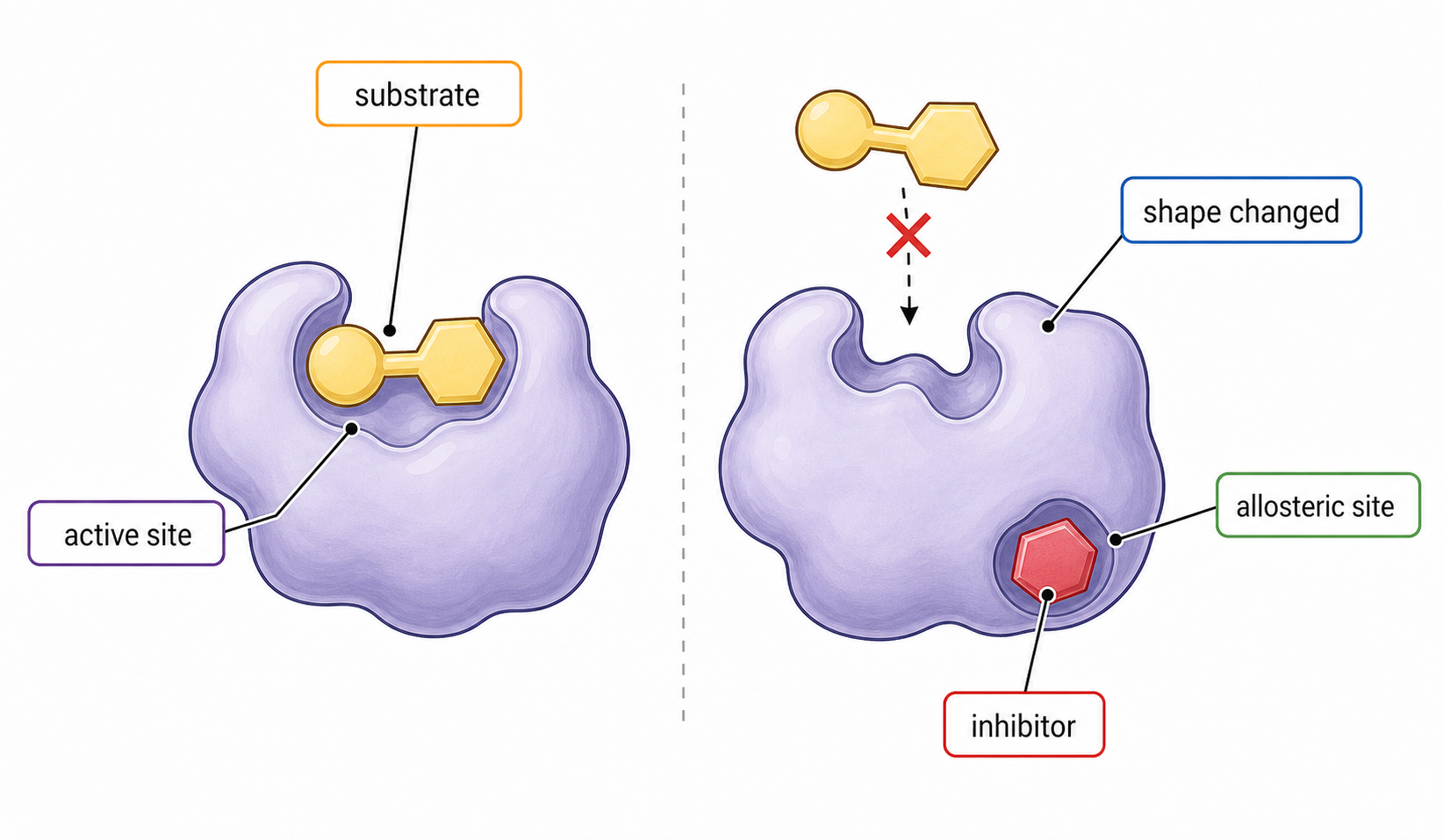
Cells control metabolic flux by changing enzyme synthesis, activity, location or access to substrate. Regulation at one key step can alter the output of an entire pathway while other pathways continue independently.
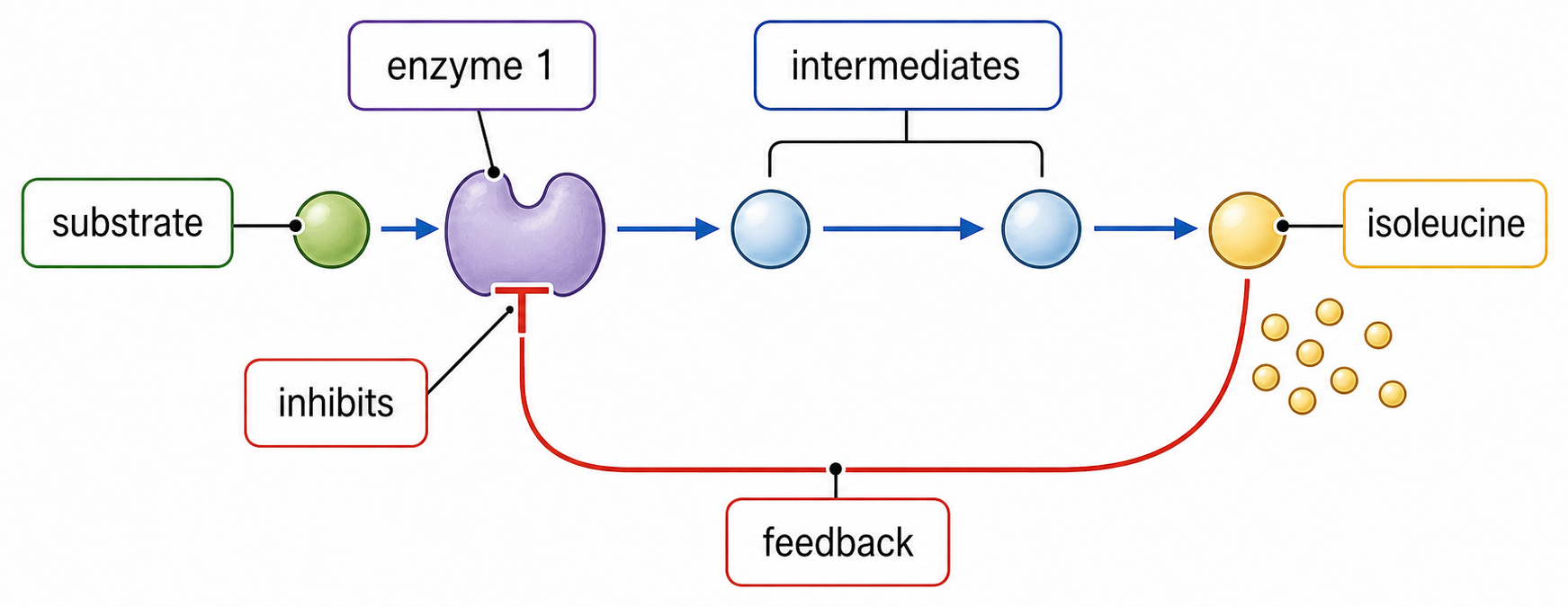
In a pathway A → B → C, one enzyme catalyses A → B and a different enzyme catalyses B → C; inhibiting the first step reduces both B formation and downstream C production.
Metabolism is not one reaction or only energy release: it includes all interacting anabolic and catabolic reactions and the controls acting through their enzymes.
This objective is assessed through structured response, commonly using Define / Explain.
Define / Explain
Build the answer around this relationship: Metabolism is the total set of chemical reactions in cells or organisms.
Representative question
Explain the role of enzymes in metabolic pathways.
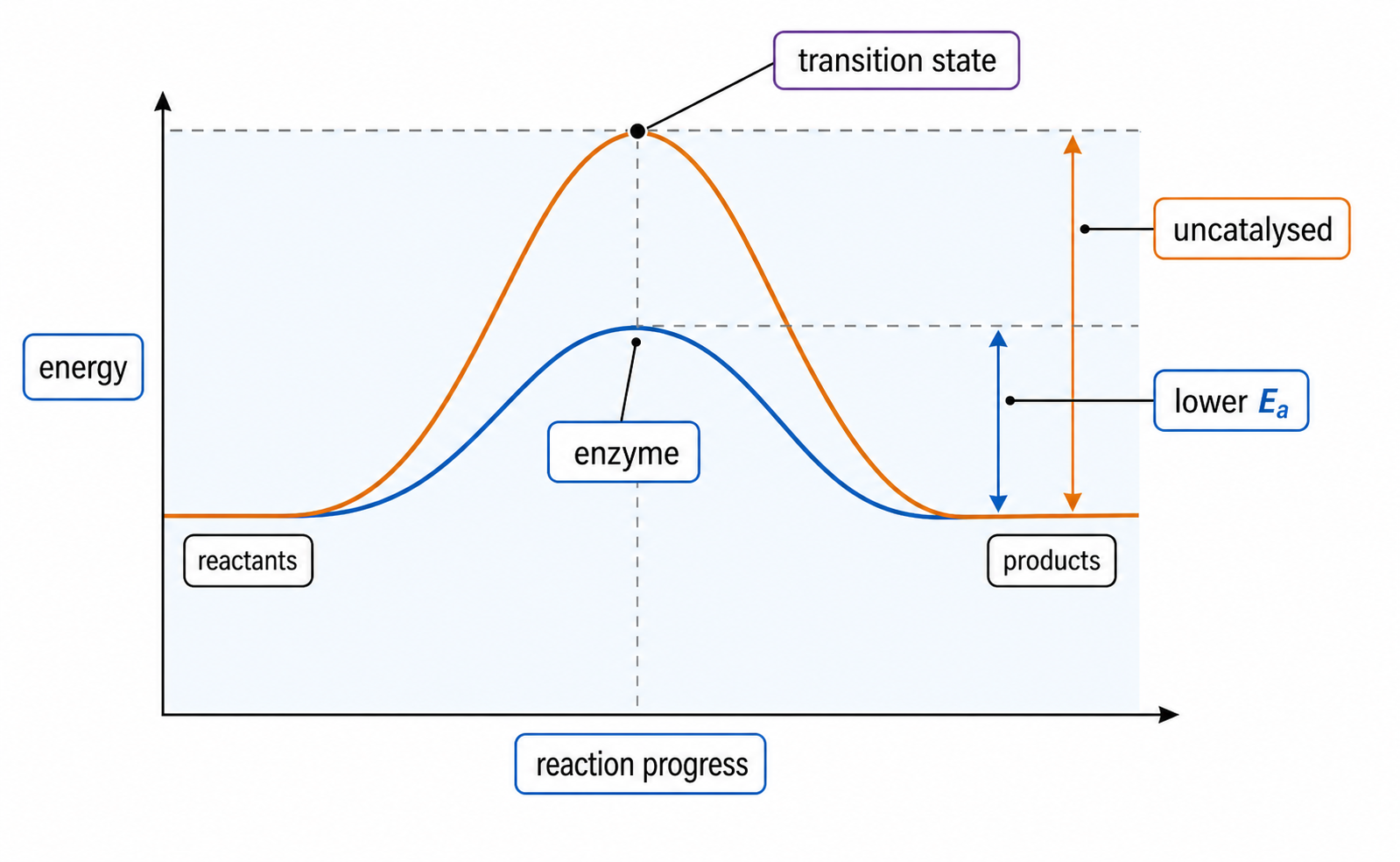
enzymes speed up/catalyse metabolic reactions;
by reducing the activation energy;
each reaction (in the pathway) has a different enzyme;
metabolic pathways can be controlled by controlling which enzymes are produced;
end-products of a metabolic pathway act as inhibitors;
end-product inhibitors bind to/inhibit an enzyme at the start of the pathway;
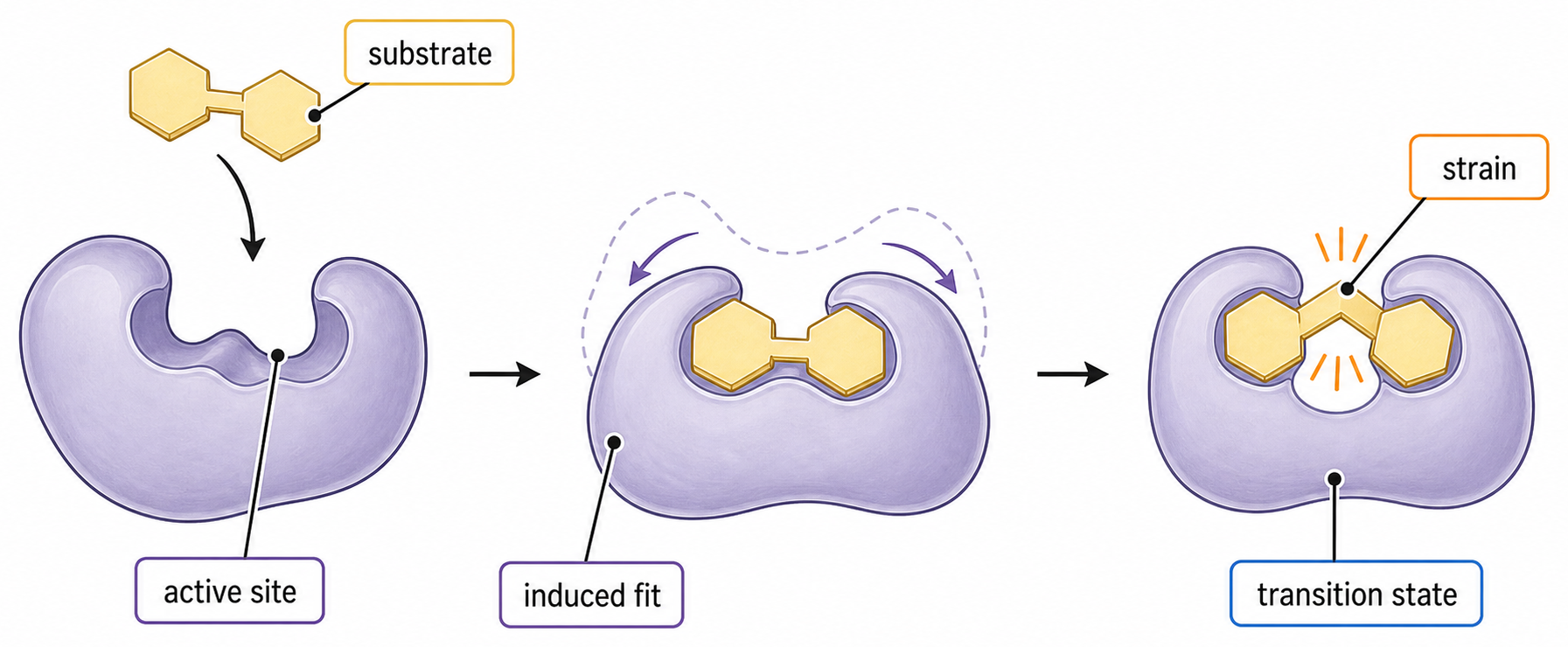
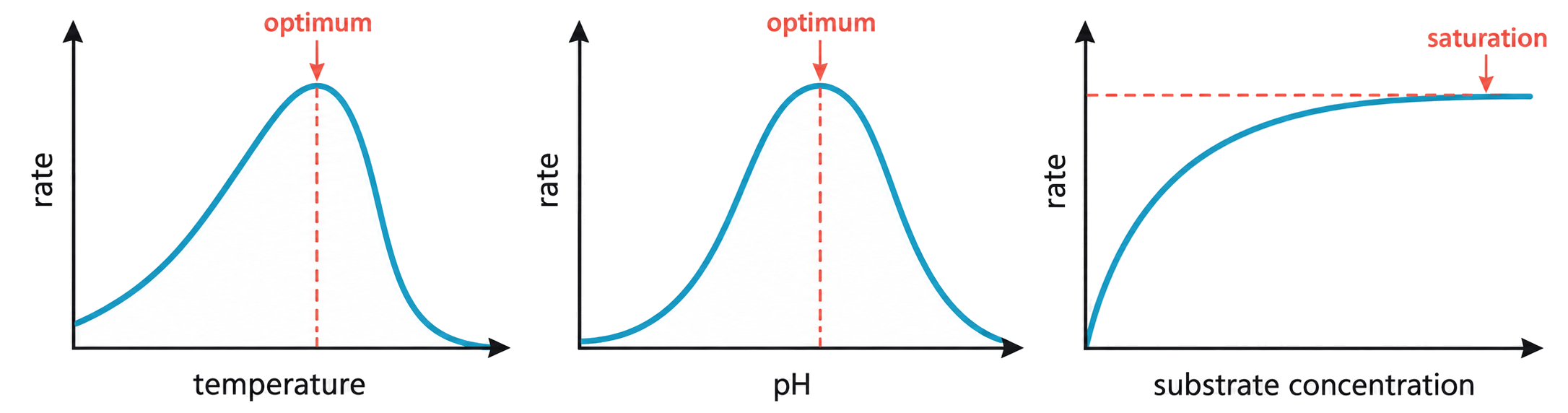
Enzymes are biological catalysts that lower activation energy and remain unchanged. Their globular protein shape creates active-site specificity; induced fit aligns substrates; molecular motion and collisions affect rate; temperature, pH, and substrate concentration change activity; assays measure substrate loss or product formation over time.