C1.1.15 (HL)—Competitive inhibition

Competitive inhibitors resemble substrates and occupy active sites, reducing substrate binding until substrate concentration becomes high enough in reactions and pathways.
Syllabus
First assessment 2025
Objective
C1.1.15
Level
HL

Exam analysis

Chance of appearing15%of analysed past papers
Latest appearanceNovember 2025
Most common paperPaper1
Typical marks1

Common command terms

  • Outline
  • Distinguish
  • Explain

Recent exam appearances

November 2025Paper2 ["HL"] · TZ18(a)[ 4 ]C1.1.15 (HL)—Competitive inhibition
May 2025Paper1A ["HL"] · TZ36[ 1 ]C1.1.15 (HL)—Competitive inhibition
May 2025Paper1B ["HL"] · TZ13(d)[ 1 ]C1.1.15 (HL)—Competitive inhibition
November 2024Paper1 ["HL"] · TZ07[ 1 ]C1.1.15 (HL)—Competitive inhibition
November 2022Paper1 ["HL"] · TZ029[ 1 ]C1.1.15 (HL)—Competitive inhibition
Practice this objective

Coverage 2012–2025 · Updated 15 Jul 2026

Competitive Inhibitors Occupy the Active Site

HL only

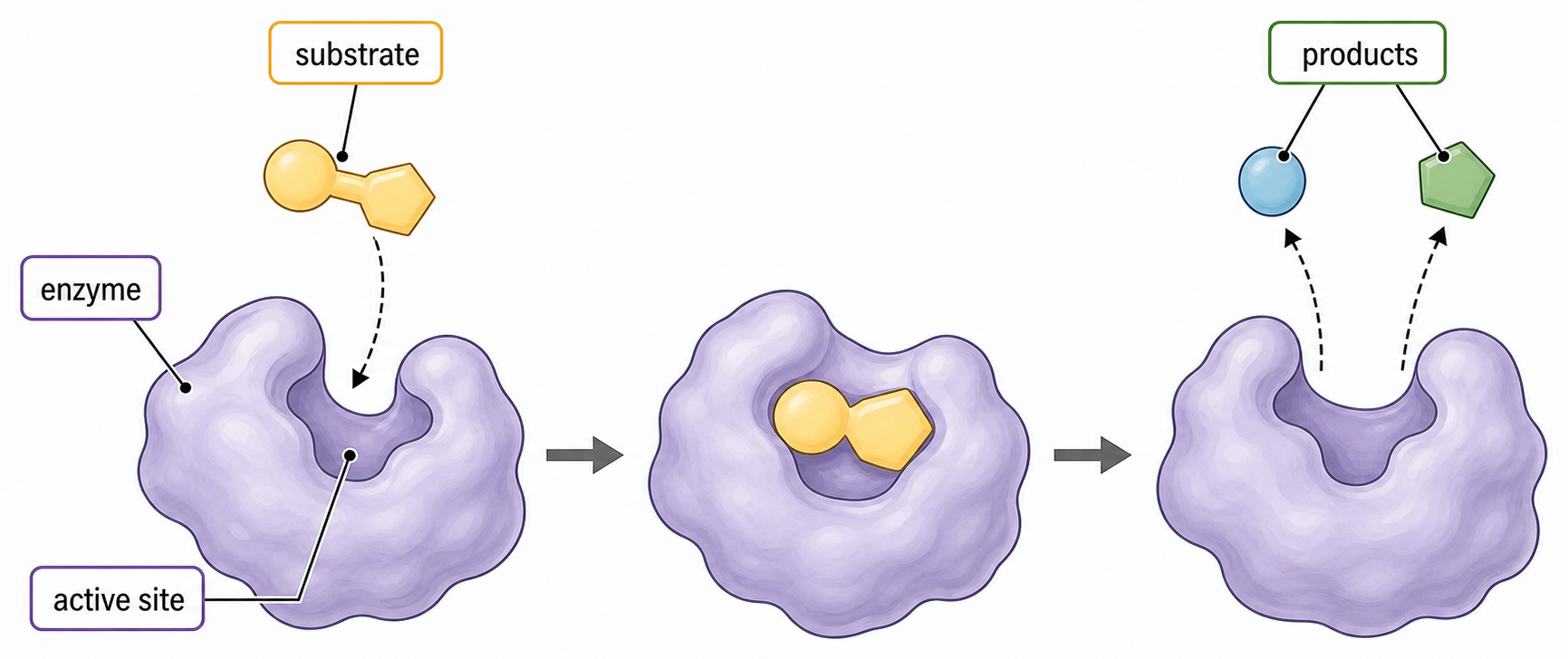
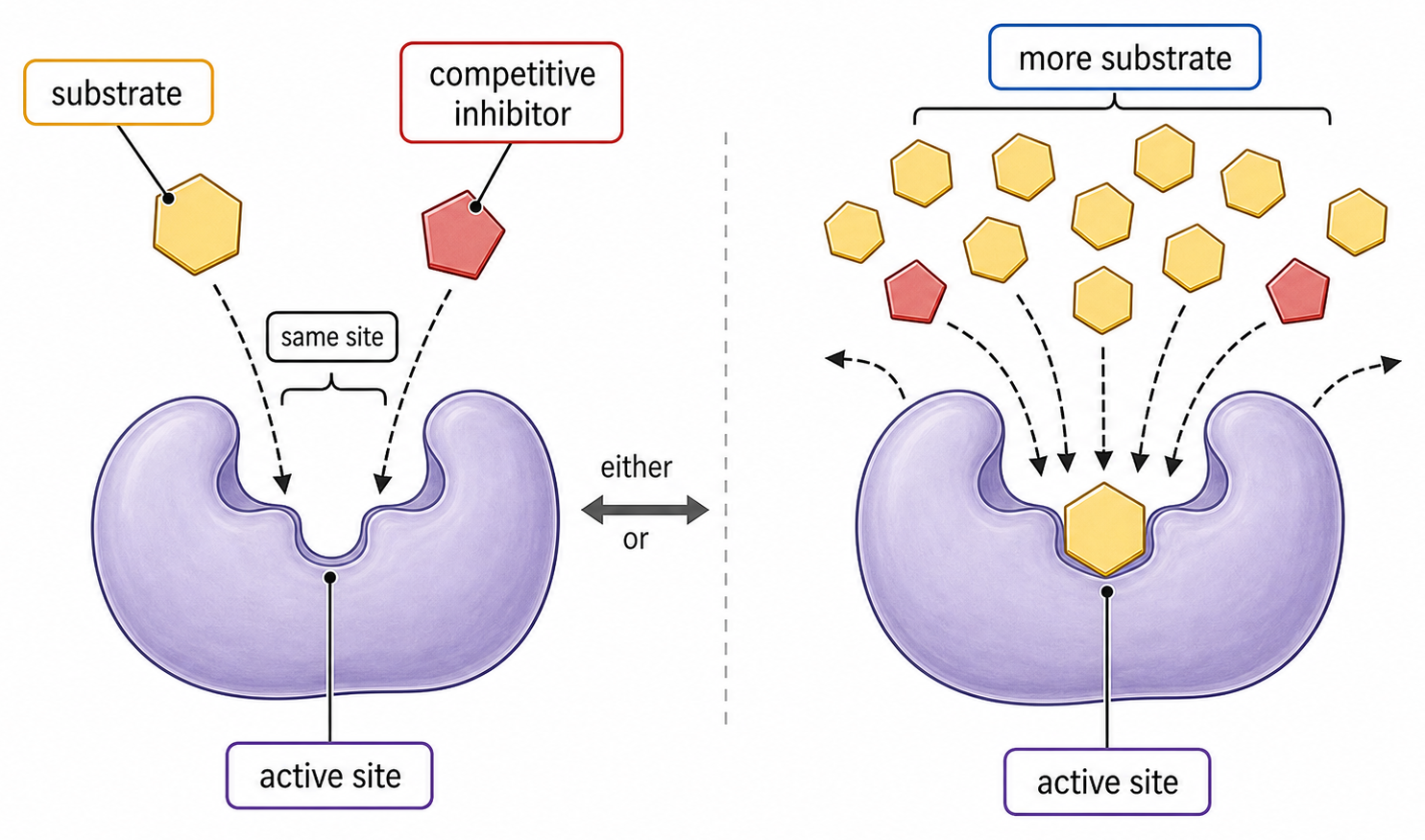
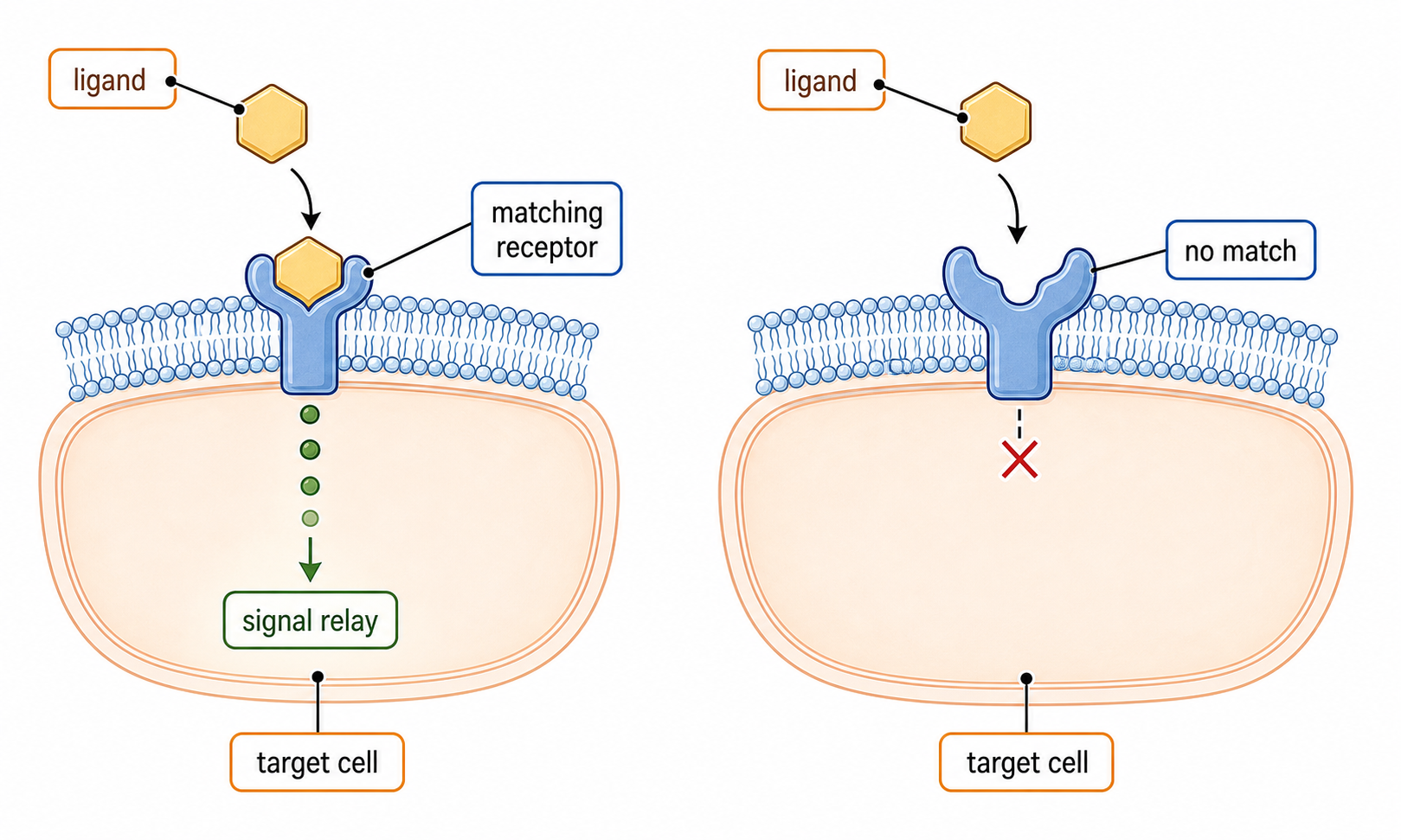
A competitive inhibitor binds reversibly to the enzyme's active site and prevents substrate binding while it occupies that site.
The inhibitor often resembles part of the substrate. Increasing substrate concentration raises the chance that substrate rather than inhibitor occupies the active site, so the inhibition can be reduced.

Statins competitively inhibit an active site in the cholesterol-synthesis pathway, reducing pathway flux. In the ideal kinetic model, more substrate raises the apparent substrate requirement while the original maximum rate remains reachable.

If a reaction recovers its uninhibited maximum rate at sufficiently high substrate concentration, reversible active-site competition is a plausible mechanism.

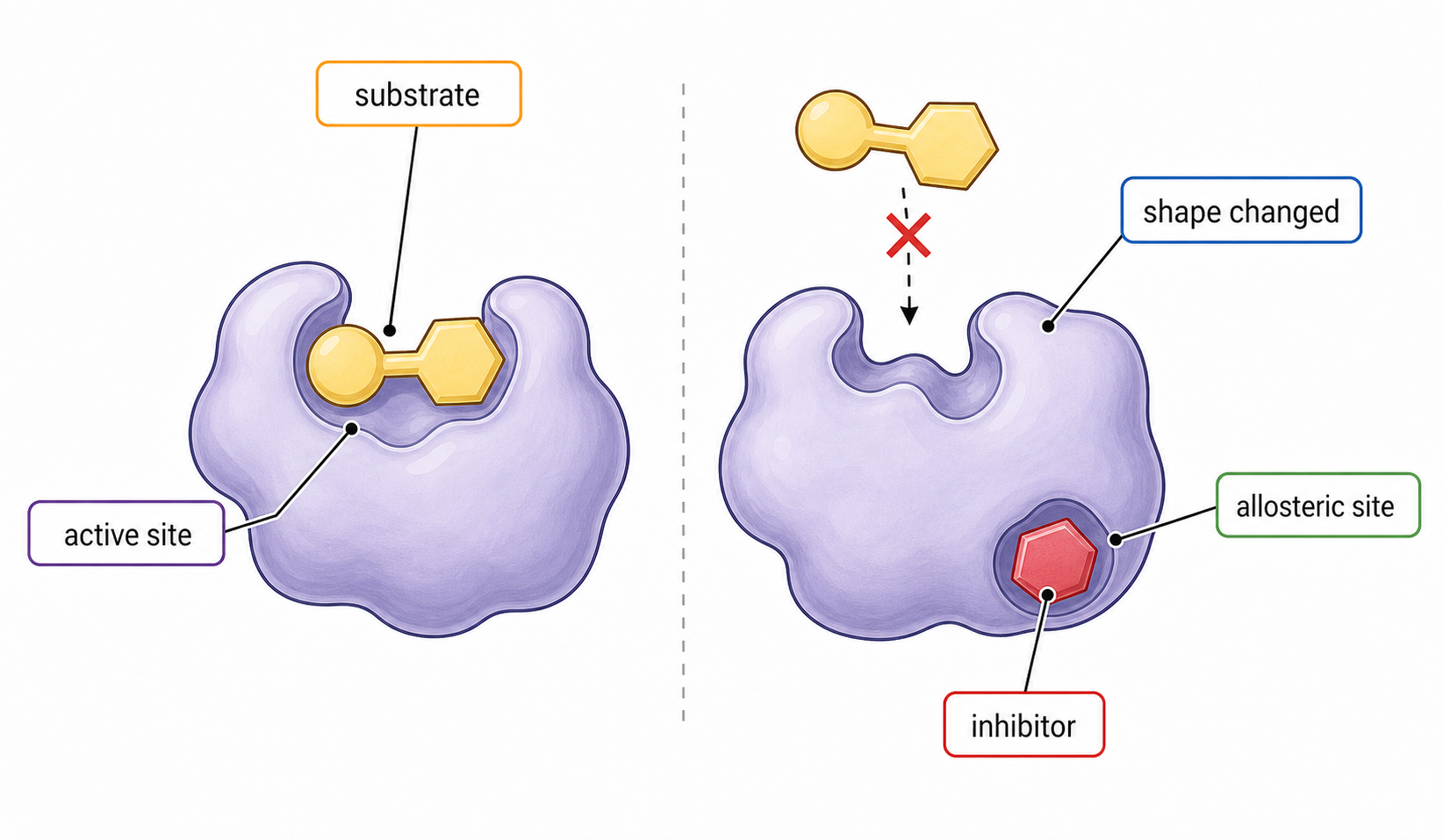
Competitive inhibition does not permanently destroy enzyme. Contrast it with reversible allosteric inhibition, whose effect is not overcome simply by adding substrate.

Competitive inhibition

HL only

Assessment in practice

1 marks
How it is assessed

This objective is assessed through structured response, commonly using Outline / Distinguish / Explain.

Command terms

Outline / Distinguish / Explain

What earns marks

Build the answer around this relationship: Competitive inhibitors bind to enzyme active sites.

Representative question

Question 1

[Maximum number: 4]

Explain, using an example, how competitive inhibitors interfere with enzyme activity.

Enzyme Regulation

HL only

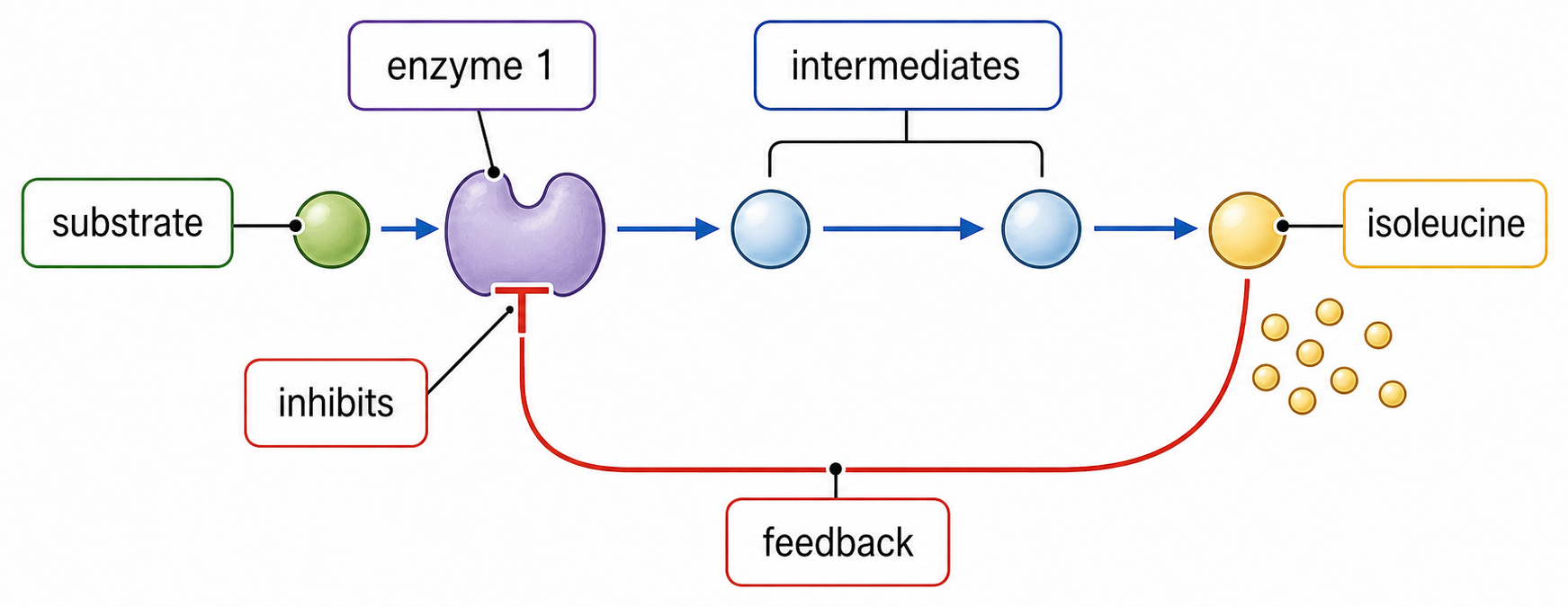
Enzymes can act inside or outside cells, metabolic reactions release heat, pathways may be linear or cyclical, and pathway output is regulated by inhibition. Competitive inhibitors bind active sites and can be overcome by more substrate; non-competitive inhibitors bind allosteric sites; feedback inhibition uses end products to inhibit earlier enzymes; mechanism-based inhibitors trap enzymes after reaction begins.

  • Location: intracellular versus extracellular enzyme action.
  • Pathway shape: linear products move forward; cyclical pathways regenerate acceptors.
  • Inhibition: competitive active-site competition, non-competitive allosteric shape change, feedback end-product control, mechanism-based irreversible trapping.

Concept essentials

  • Competitive inhibitors bind to enzyme active sites.
  • They often resemble the normal substrate.
  • They reduce enzyme-substrate complex formation and product formation.
  • Higher substrate concentration can reduce their effect.