EduNinja
[Maximum number: 5]

Capillaries are known as exchange vessels. Substances are exchanged between blood and tissue fluid as the blood flows through the capillaries.

Fig. 1.1 is an electron micrograph of a section through a capillary with two red blood cells.
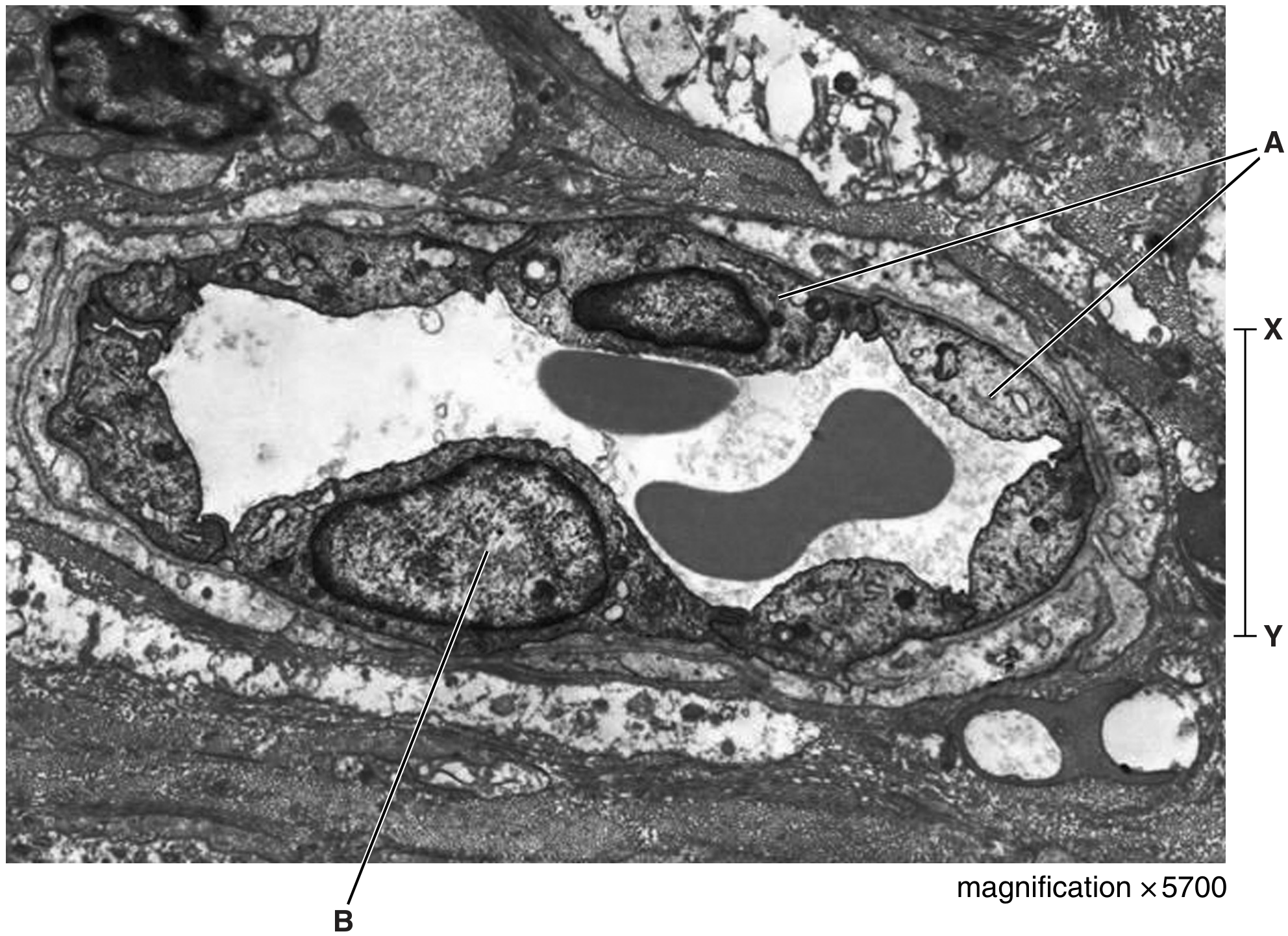
Fig. 1.1

Fig. 1.1

(a)

Table 1.1 shows the composition of blood, tissue fluid and lymph.
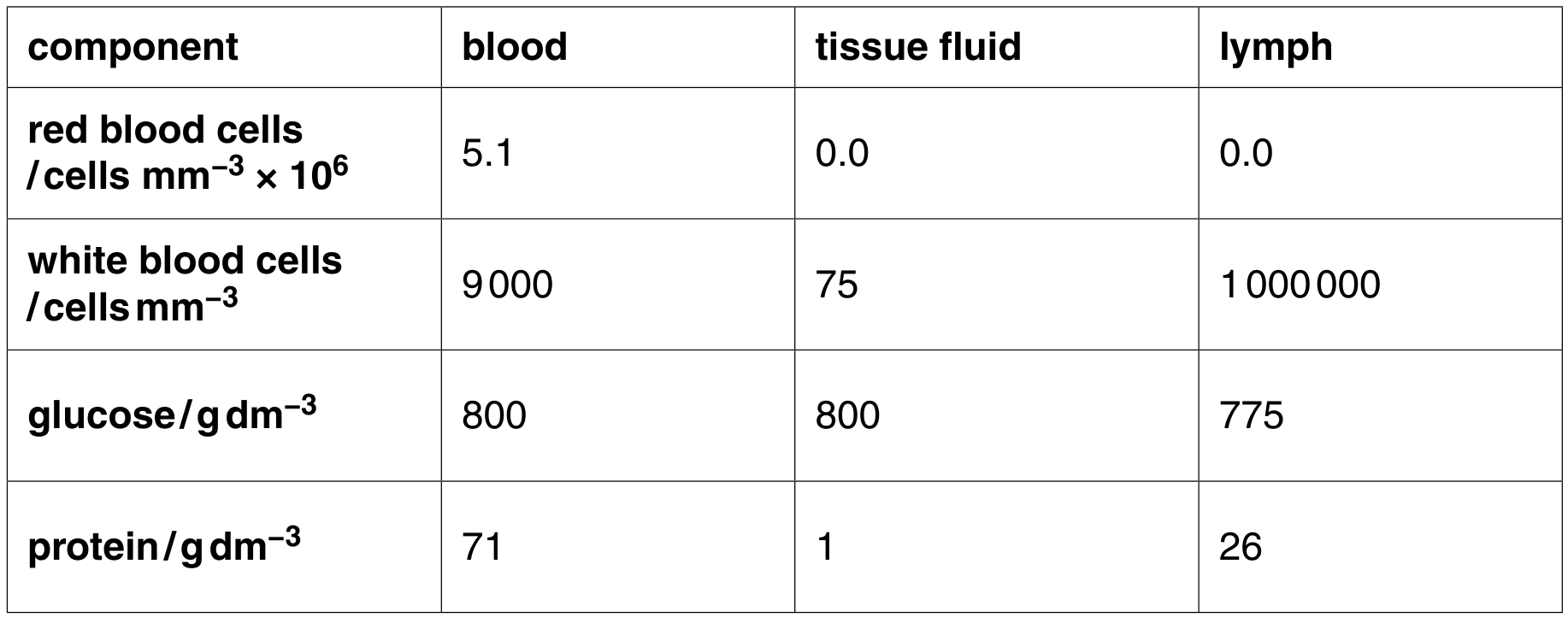
Table 1.1

Table 1.1

Explain the differences between the composition of blood, tissue fluid and lymph as shown in Table 1.1, for white blood cells, glucose and protein.
white blood cells
glucose
protein

[ 5 ]
[Maximum number: 1]

What is correct for tissue fluid?

phagocytes

platelets

protein concentration compared to blood plasma

key

✓ = present

x = absent

higher

χ\boldsymbol{\chi}

×

higher

x

lower

χ\boldsymbol{\chi}

lower

(a)

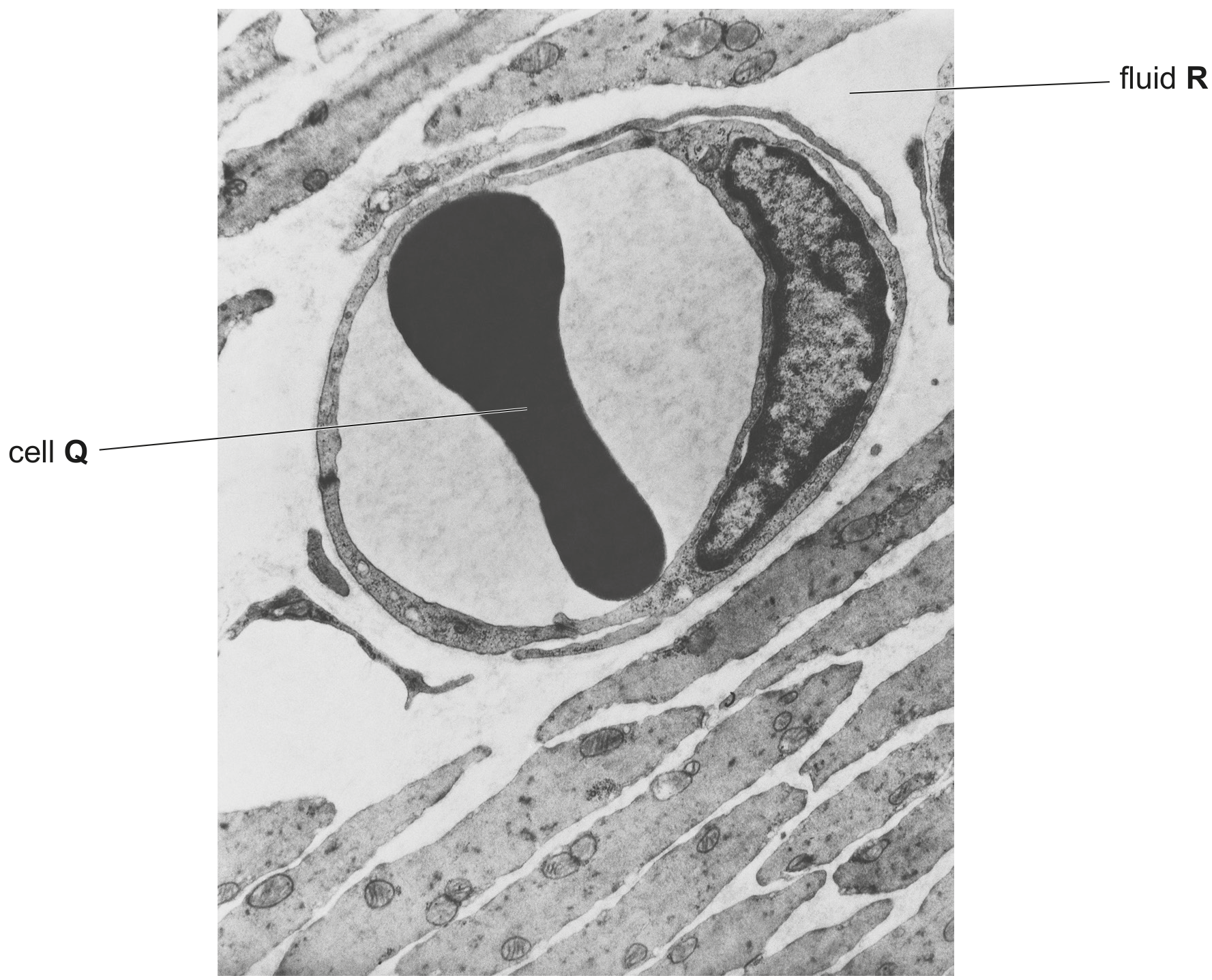
Fig. 2.1 is a transmission electron micrograph of a transverse section through a blood capillary that is surrounded by actively respiring cells.

Fig. 2.1

Fig. 2.1

[ 3 ]
(i)

Fluid R is formed from blood in the blood capillary.

State and explain one difference between the composition of fluid R and the composition of the blood in the capillary.
difference
explanation

[ 3 ]
[Maximum number: 2]

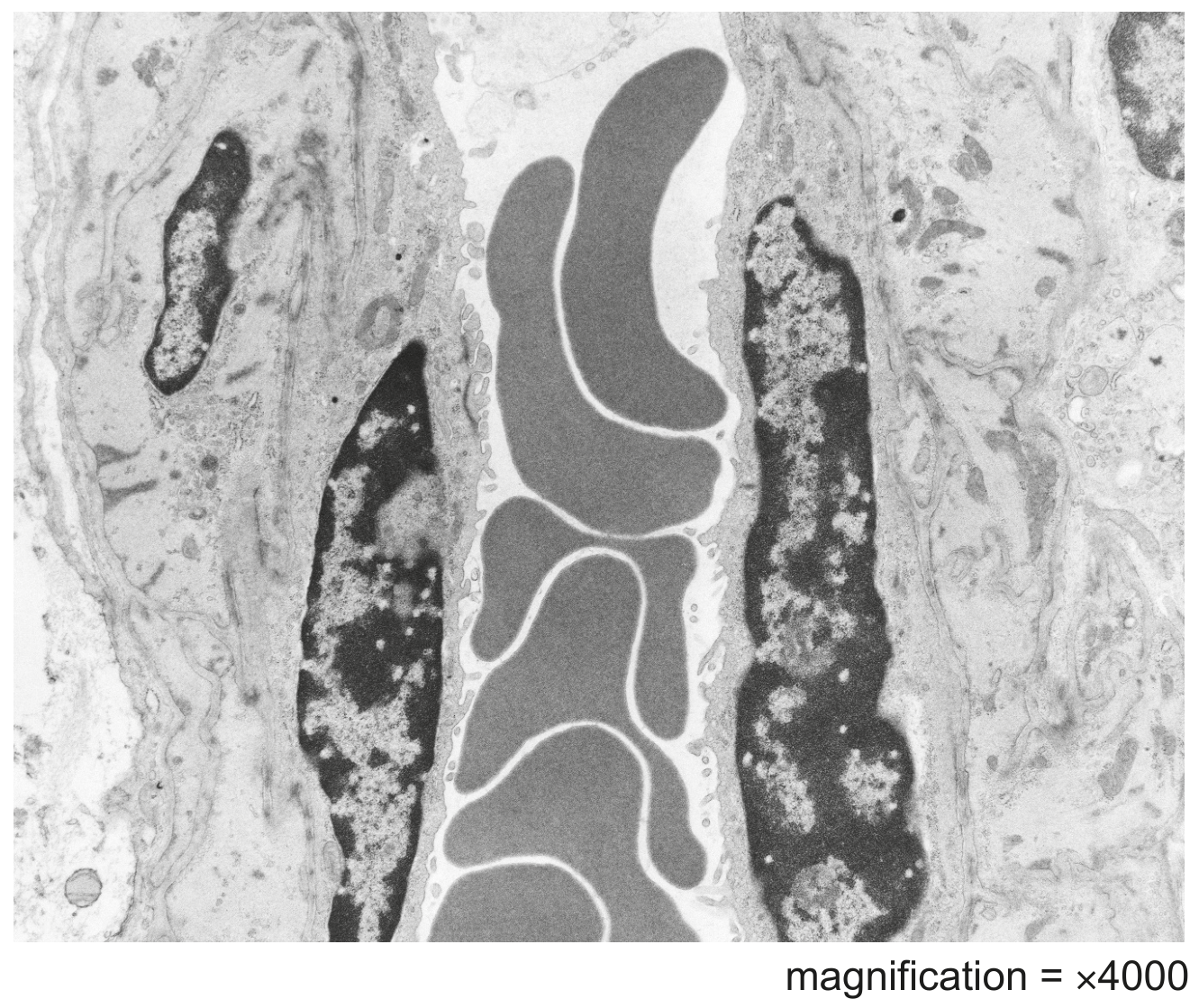
Fig. 3.1 is a transmission electron micrograph showing red blood cells in a capillary of a healthy adult.

Fig. 3.1

Fig. 3.1

(a)
(i)

Capillaries are surrounded by tissue fluid.

Outline the ways in which the composition of tissue fluid differs from blood.

[ 2 ]
(a)

Tissue fluid and lymph are formed when blood arrives in the capillary networks of body tissues.

[ 3 ]
(i)

Explain why tissue fluid is more similar to blood plasma than it is to blood.

[ 2 ]
(ii)

Explain why the tissue fluid formed after blood arrives in the capillary network has a higher concentration of amino acids than the newly formed lymph draining away from the network.

[ 1 ]
[Maximum number: 4]

In mammals, arteries branch to form smaller blood vessels called arterioles.
Arterioles branch to form capillaries that supply blood to tissues.

(a)
(i)

Capillaries have a role in the formation of tissue fluid.

Explain how tissue fluid is formed in the capillary network.

[ 2 ]
(ii)

The vessels labelled X in Fig. 4.2 carry excess tissue fluid back into the circulatory system.

Name the fluid inside the vessels labelled X and state one way in which its composition differs from blood plasma.
name of fluid
difference

[ 2 ]
[Maximum number: 1]

What is correct for tissue fluid?

phagocytes

platelets

protein concentration compared to blood plasma

higher

χ\boldsymbol{\chi}

χ\boldsymbol{\chi}

higher

χ\boldsymbol{\chi}

lower

χ\boldsymbol{\chi}

lower

key
✓ = present
x = absent

[Maximum number: 1]

Which statement correctly identifies a similarity between blood plasma and tissue fluid?

A

Protein is found in equal concentration in both blood plasma and tissue fluid.

B

The blood plasma is under the same pressure as the tissue fluid.

C

The water potential of the blood plasma and tissue fluid are equal.

D

White blood cells are found in both blood plasma and tissue fluid.

[Maximum number: 1]

Which components of blood are also present in tissue fluid?

phagocytes

proteins

sodium ions

key

×

×\boldsymbol{\times}

✓ = present

×\boldsymbol{\times}

x= absent

×\boldsymbol{\times}

[Maximum number: 1]

Which components of blood are found in tissue fluid?

glucose

proteins

white blood cells

key

×

✓ = present

×\boldsymbol{\times}

x = absent

×\boldsymbol{\times}

0