[Maximum number: 2]
Mammals have a closed double circulation system.
(a)
Explain what is meant by a closed double circulation.
[ 2 ]
 EduNinja
Mammals have a closed double circulation system.
Explain what is meant by a closed double circulation.
Fig. 2.1 is a simplified diagram of the human circulatory system.
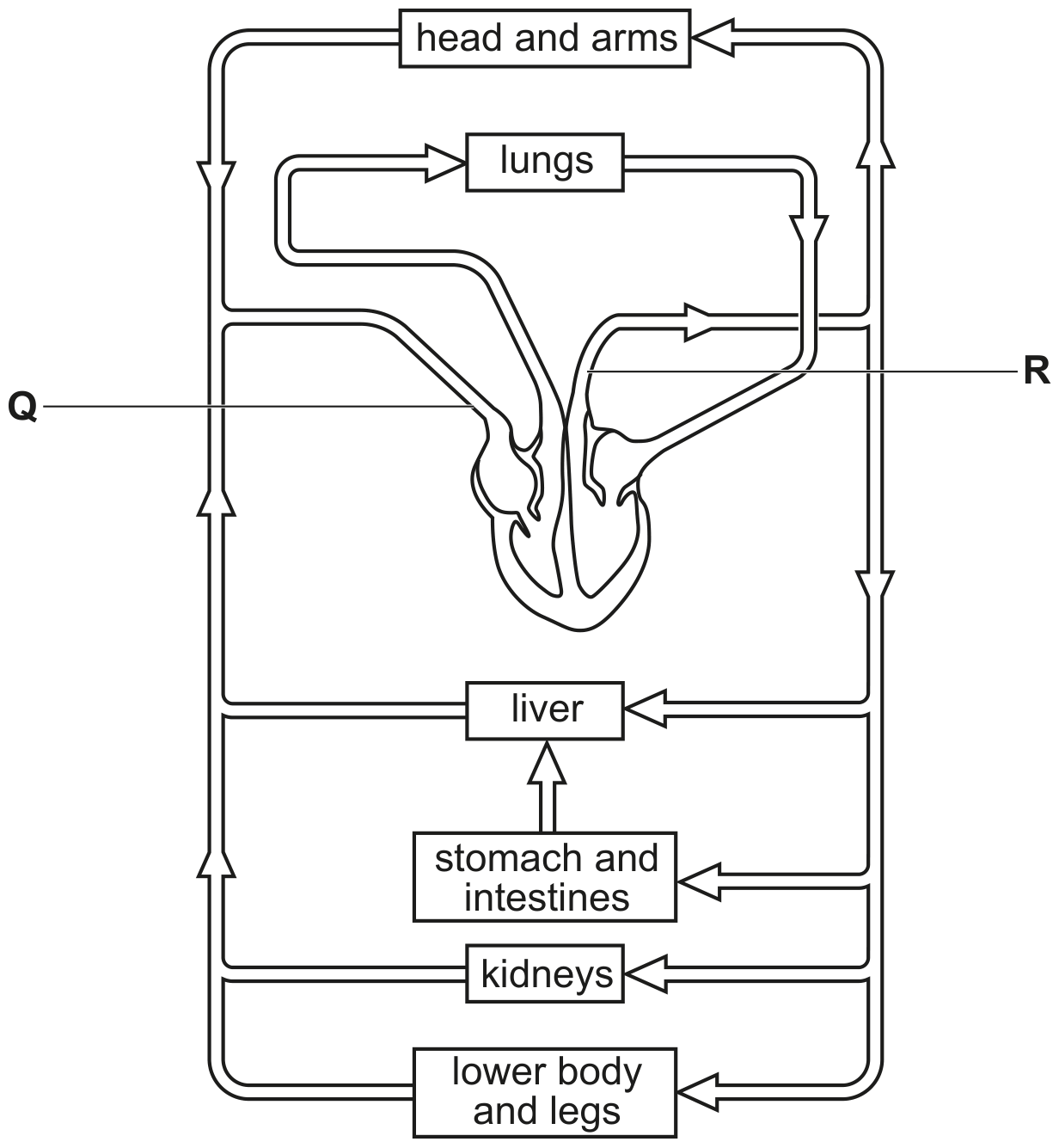
Fig. 2.1
State why the human circulatory system is described as a closed, double circulation.
Fig. 2.1 is a diagram of the circulation in a mammal.
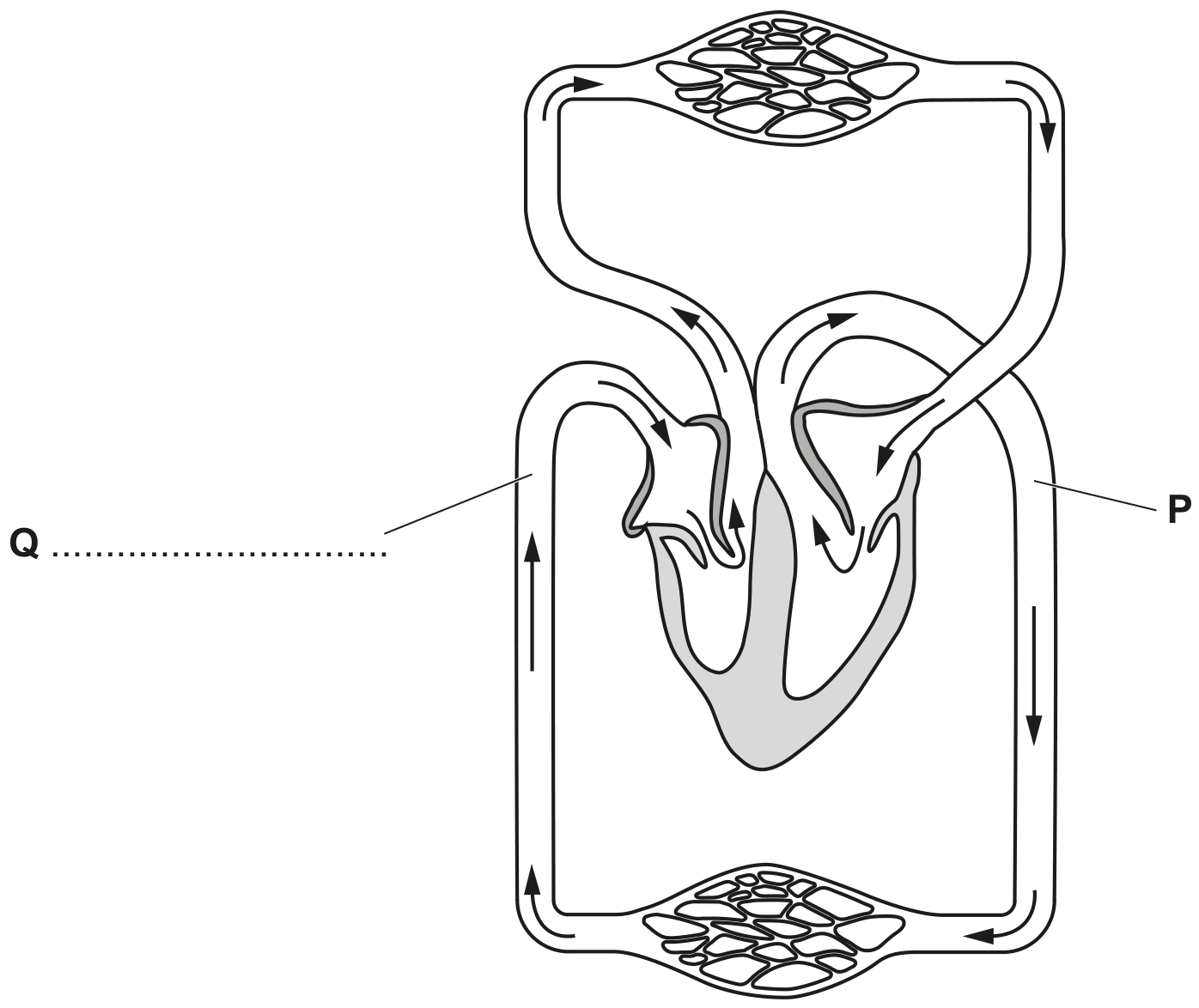
Fig. 2.1
Explain why the mammalian circulation is described as a closed, double circulation.
The main cause of tuberculosis (TB) in humans is the bacterium Mycobacterium tuberculosis. Most cases of the disease involve the lungs. The bacterium can enter cells and remain inactive in a latent (dormant) state. However, the bacterium can become active to produce symptoms of the disease.
In a person with active TB, the pathogen can be present in airborne droplets that are exhaled. Generally, a healthy person who inhales these droplets has effective defence mechanisms in the gas exchange system to prevent infection.
In people with a weakened immune system, M. tuberculosis can infect other organs and tissues, such as the kidneys and joints.
Suggest how the bacteria may spread from the lungs to other organs.
The main cause of tuberculosis (TB) in humans is the bacterium Mycobacterium tuberculosis. Most cases of the disease involve the lungs. The bacterium can enter cells and remain inactive in a dormant state. However, the bacterium can become active to produce symptoms of the disease.
In a person with active TB , the pathogen can be present in airborne droplets that are exhaled. Generally, a healthy person who inhales these droplets has effective defence mechanisms in the gas exchange system to prevent infection.
In people with a weakened immune system, M. tuberculosis can infect other organs and tissues, such as the kidneys and joints.
Suggest how the bacteria may spread from the lungs to other organs and tissues.
What describes how smoking contributes to cardiovascular disease?
1 Both nicotine and carbon monoxide speed up the development of plaques in arteries.
2 Nicotine increases blood pressure and heart rate and so increases the body's demand for oxygen.
3 Smoking interacts with other risk factors and increases the blood cholesterol level.
4 Tar is deposited in the lining of artery walls and increases the development of atherosclerosis.
4 only
2 and 4 only
1, 2 and 3 only
1, 2, 3 and 4
In mammals, oxygen is transported by red blood cells in a system that is described as a closed double circulation. The majority of oxygen molecules are transported as oxyhaemoglobin. At the respiring tissues, oxygen dissociates from haemoglobin and diffuses to the surrounding cells.
Explain what is meant by a closed double circulation.
Fig. 4.1 is a simplified diagram of the circulatory system of a mammal. Some of the lymph system is also shown.
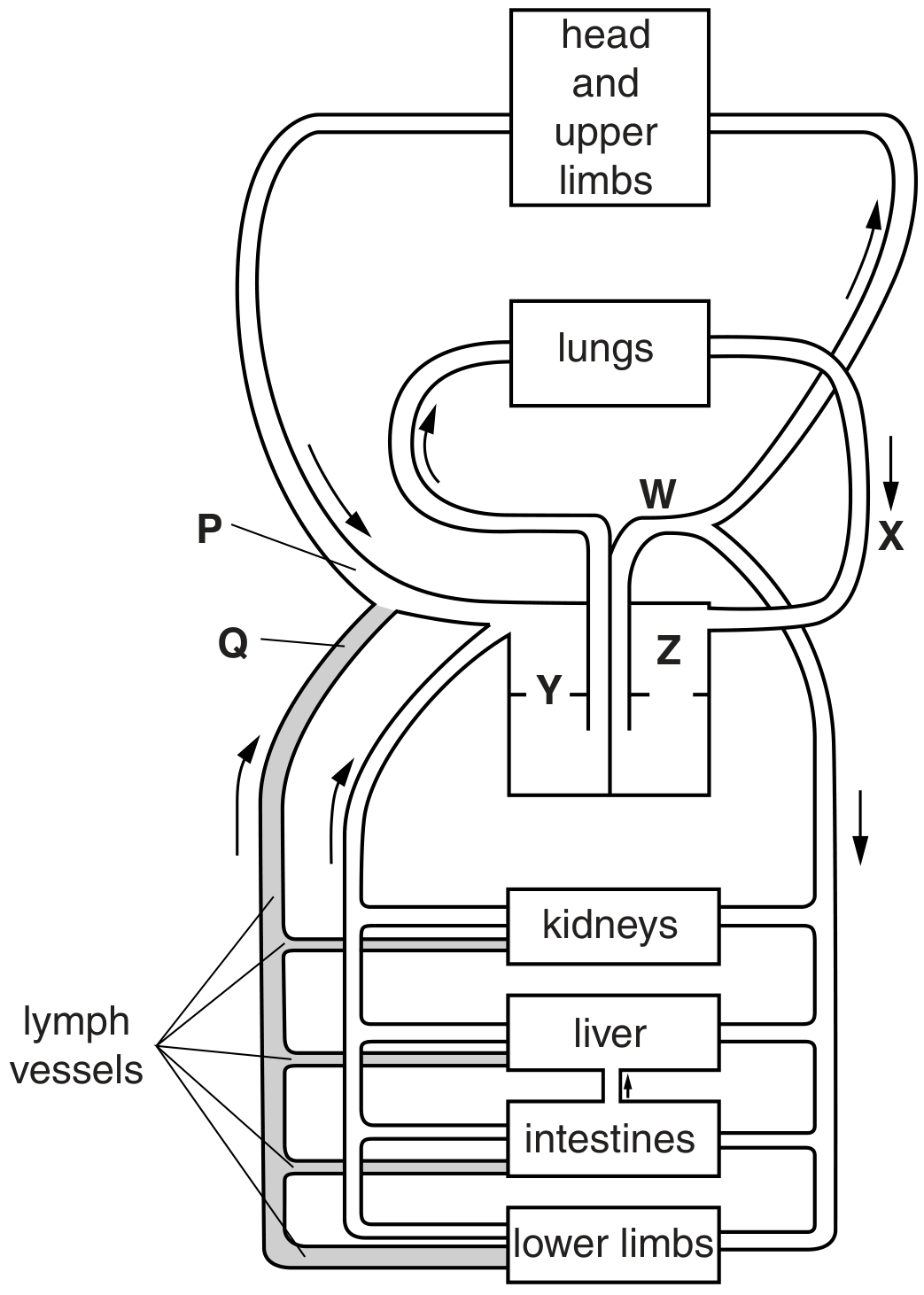
Fig. 4.1
The type of circulatory system shown in Fig. 4.1 is a closed double circulation.
Explain what is meant by a closed double circulation.
The circulatory system of mammals is a double circulation.
Explain what is meant by the term double circulation.
Fig. 3.1 shows a cross-section of the heart at the level of the valves.
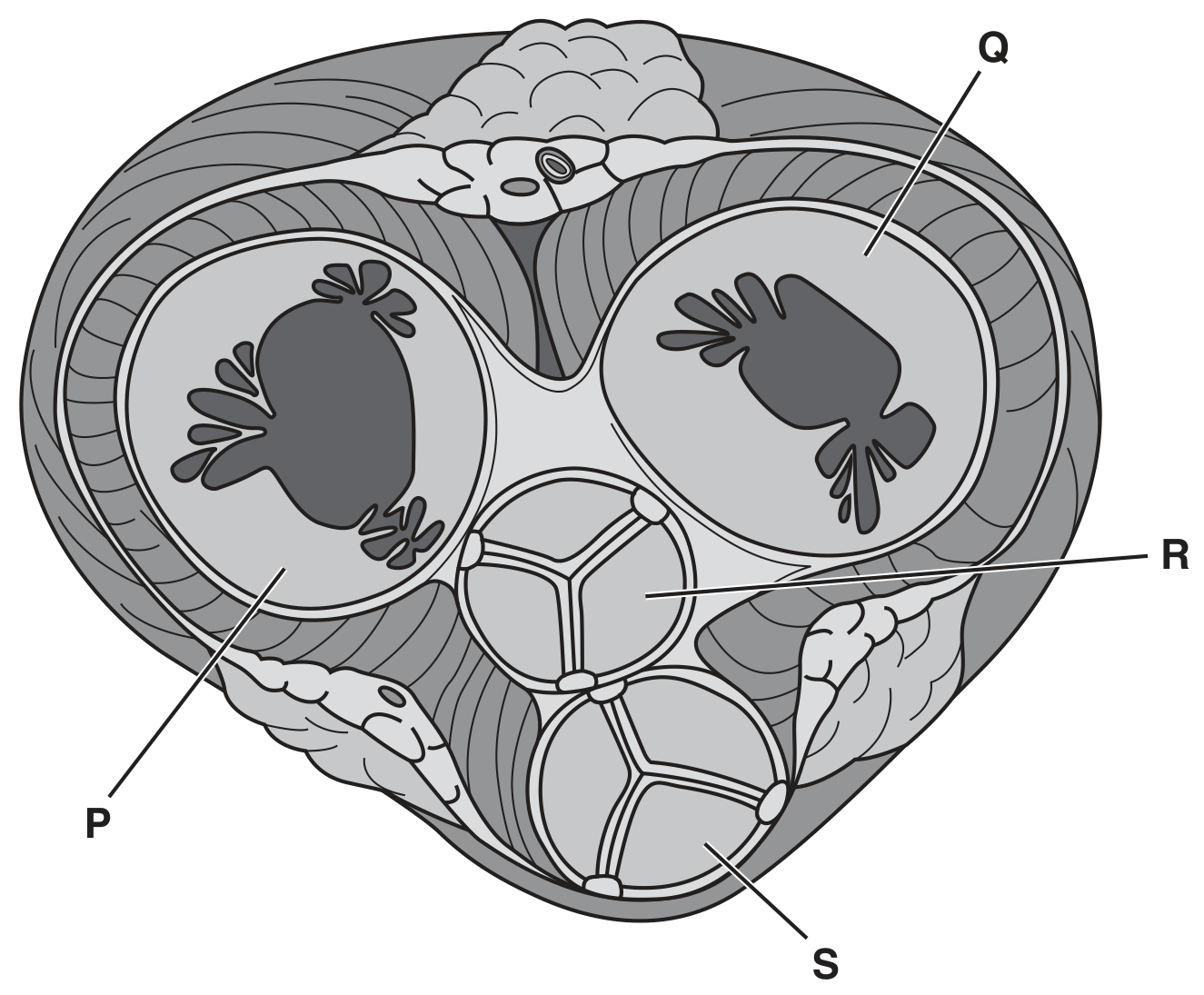
Fig. 3.1
Complete the following flow chart to show the pathway of blood through the heart.
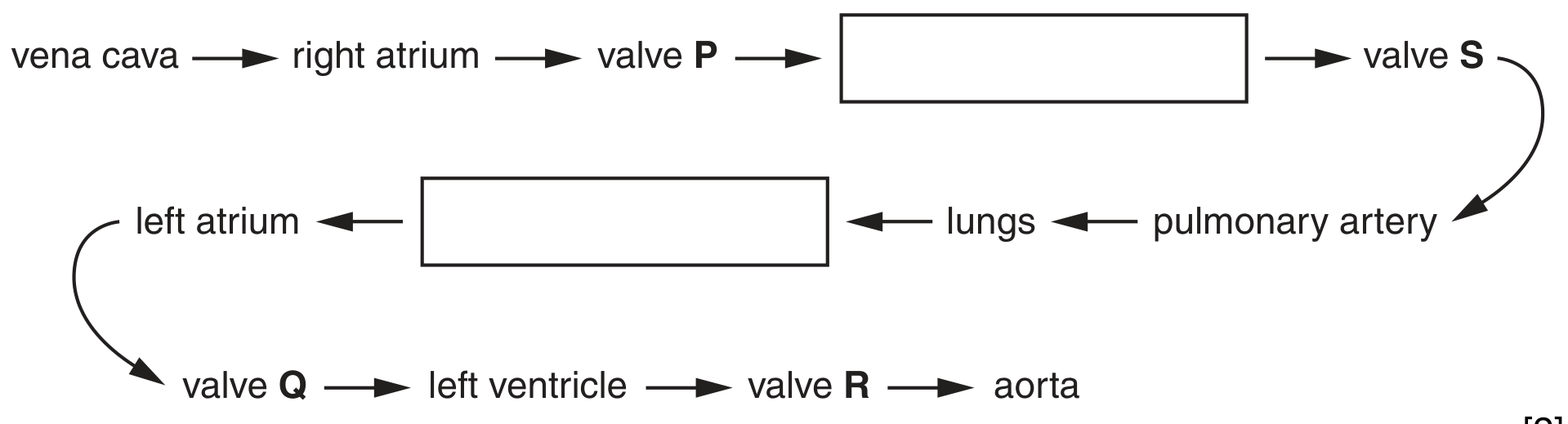
Fig. 3.1
Explain how the valves P and Q ensure one-way flow of blood through the heart.