EduNinja
(a)

Table 2.1 shows descriptions of three types of white blood cell.
Complete Table 2.1 by stating the names of these three types of white blood cell.
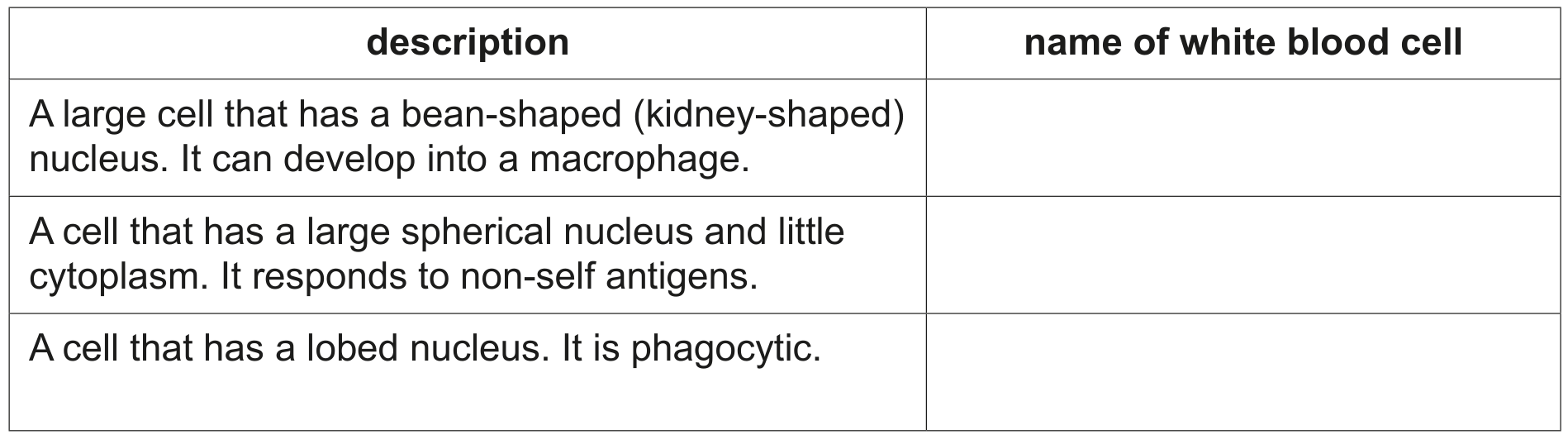
Table 2.1

Table 2.1

[ 3 ]
(b)

Dromedary camels are classified in the family Camelidae and live in desert habitats of North Africa and Asia. In these hot, dry environments, dromedary camels can lose up to 30 % of their body mass from dehydration, causing their blood to become more viscous (thicker).

Fig. 2.1 shows a drawing of red blood cells of a dromedary camel. Fig. 2.2 is a drawing of human red blood cells.
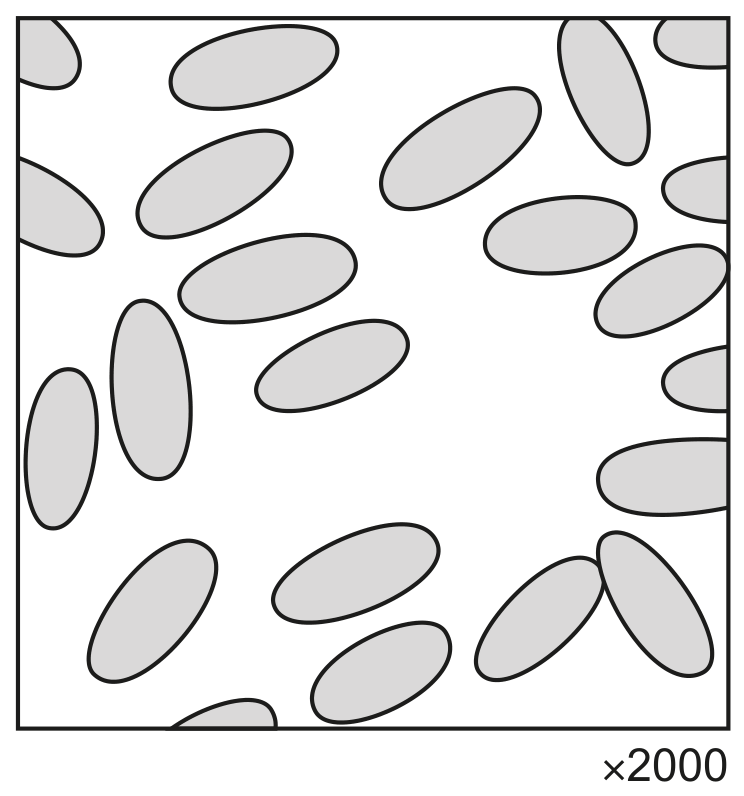
Fig. 2.1
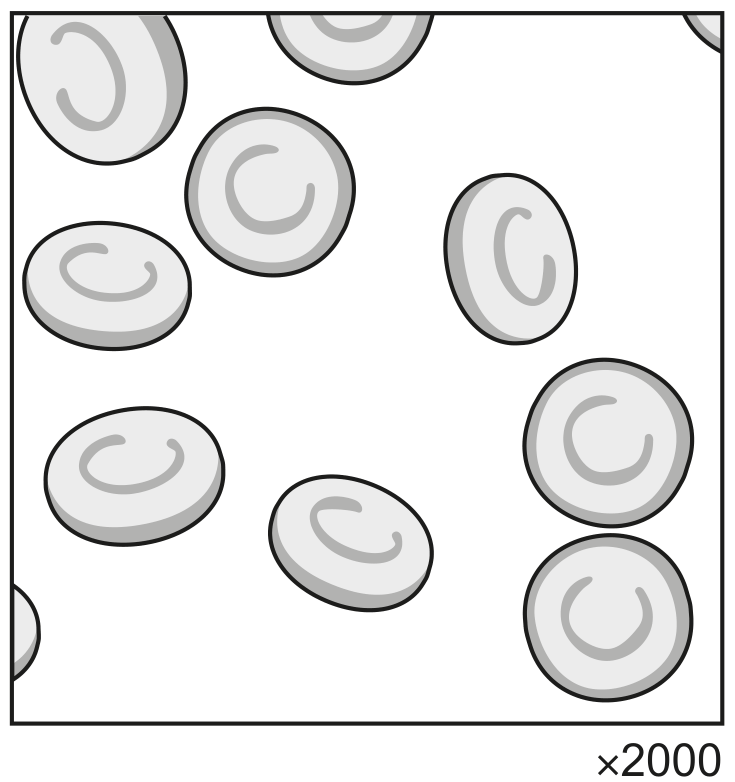
Fig. 2.1

Fig. 2.2

Fig. 2.2

Fig. 2.1 and Fig. 2.2 show differences between the red blood cells of dromedary camels and the red blood cells of humans.

Suggest how these differences adapt dromedary camels for living in hot, dry environments.
[ 3 ]
[Maximum number: 3]

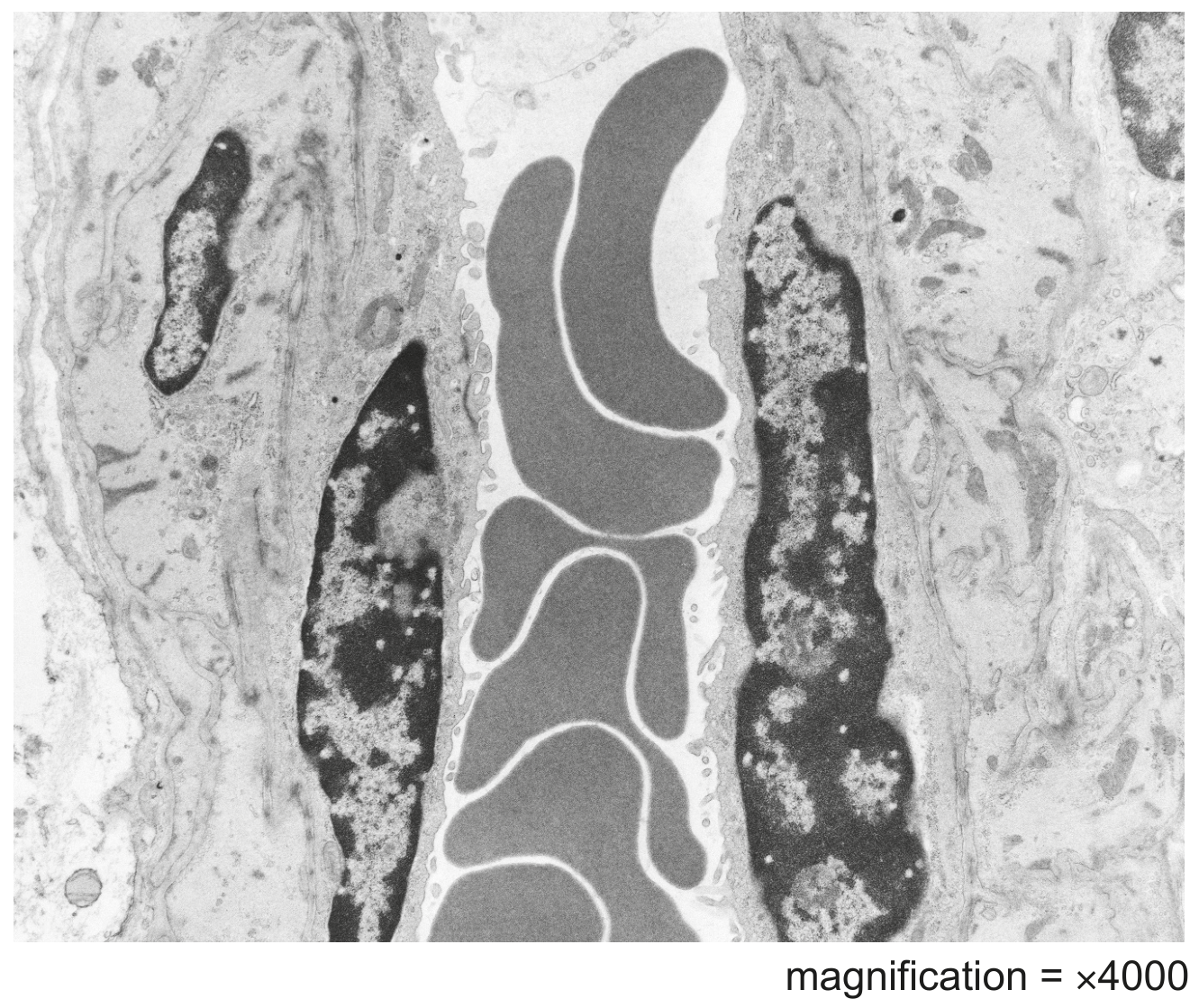
Fig. 3.1 is a transmission electron micrograph showing red blood cells in a capillary of a healthy adult.

Fig. 3.1

Fig. 3.1

(a)
(i)

Explain how the cells in the capillary shown in Fig. 3.1 can be identified as red blood cells.

[ 3 ]
[Maximum number: 3]

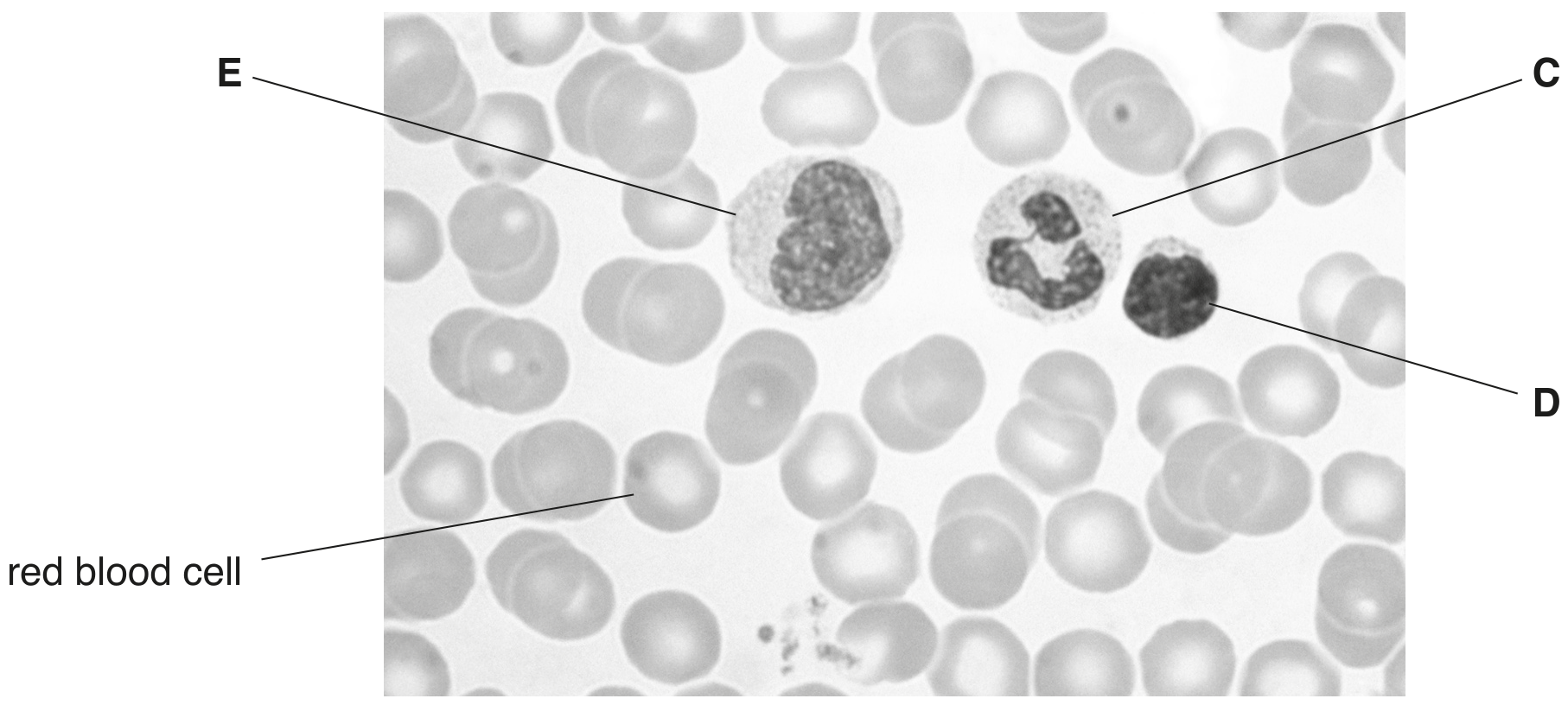
Fig. 3.1 is a photomicrograph of human blood cells from a healthy individual who lives at sea level. The cells labelled C, D and E are white blood cells.

Fig. 3.1

Fig. 3.1

(a)

Name cells C, D and E.

C

D

E

[ 3 ]
[Maximum number: 1]

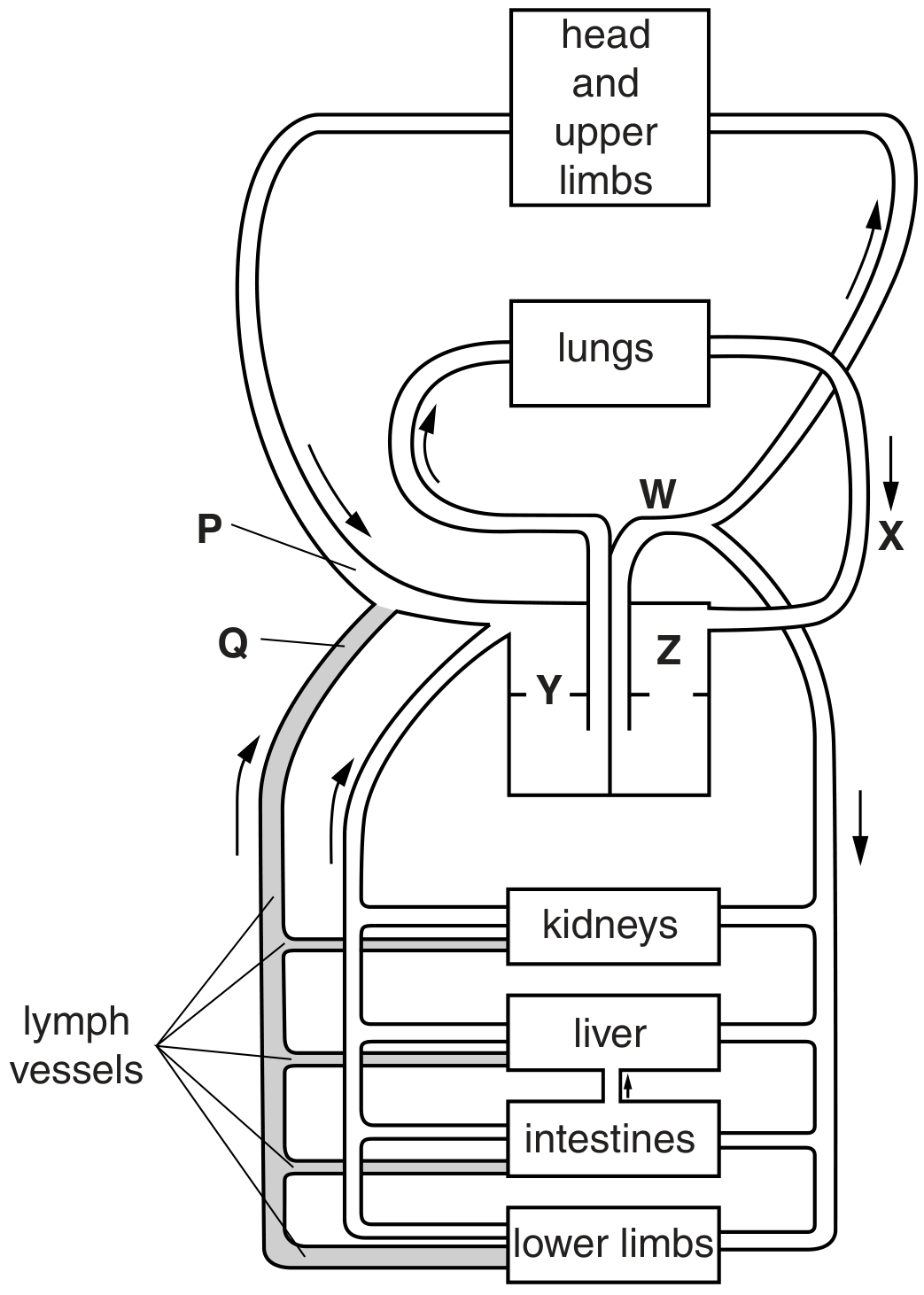
Fig. 4.1 is a simplified diagram of the circulatory system of a mammal. Some of the lymph system is also shown.

Fig. 4.1

Fig. 4.1

(a)

State the component present in the blood at location P that is not present in the lymph at location Q in Fig. 4.1.

[ 1 ]
[Maximum number: 2]

In mammals, arteries branch to form smaller blood vessels called arterioles.
Arterioles branch to form capillaries that supply blood to tissues.

(a)
(i)

Identify the cells inside the lumen of the arteriole in Fig. 4.1 and state one reason for your identification.

[ 2 ]
(a)

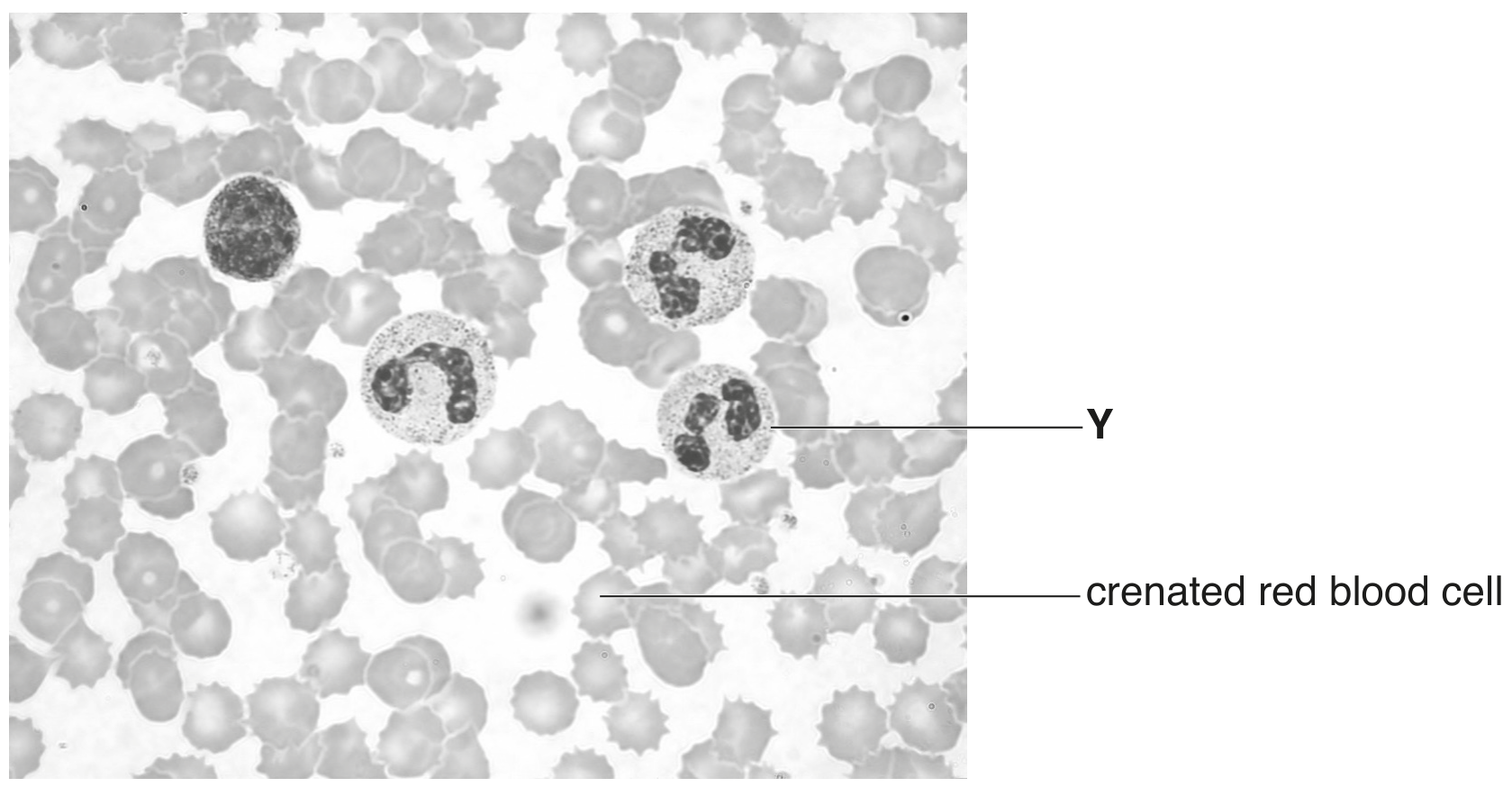
Fig. 5.1 is a photomicrograph of human blood cells that have been placed in a solution of sodium chloride.

Fig. 5.1

Fig. 5.1

[ 1 ]
(i)

State the function of the cell labelled Y.

[ 1 ]
[Maximum number: 1]

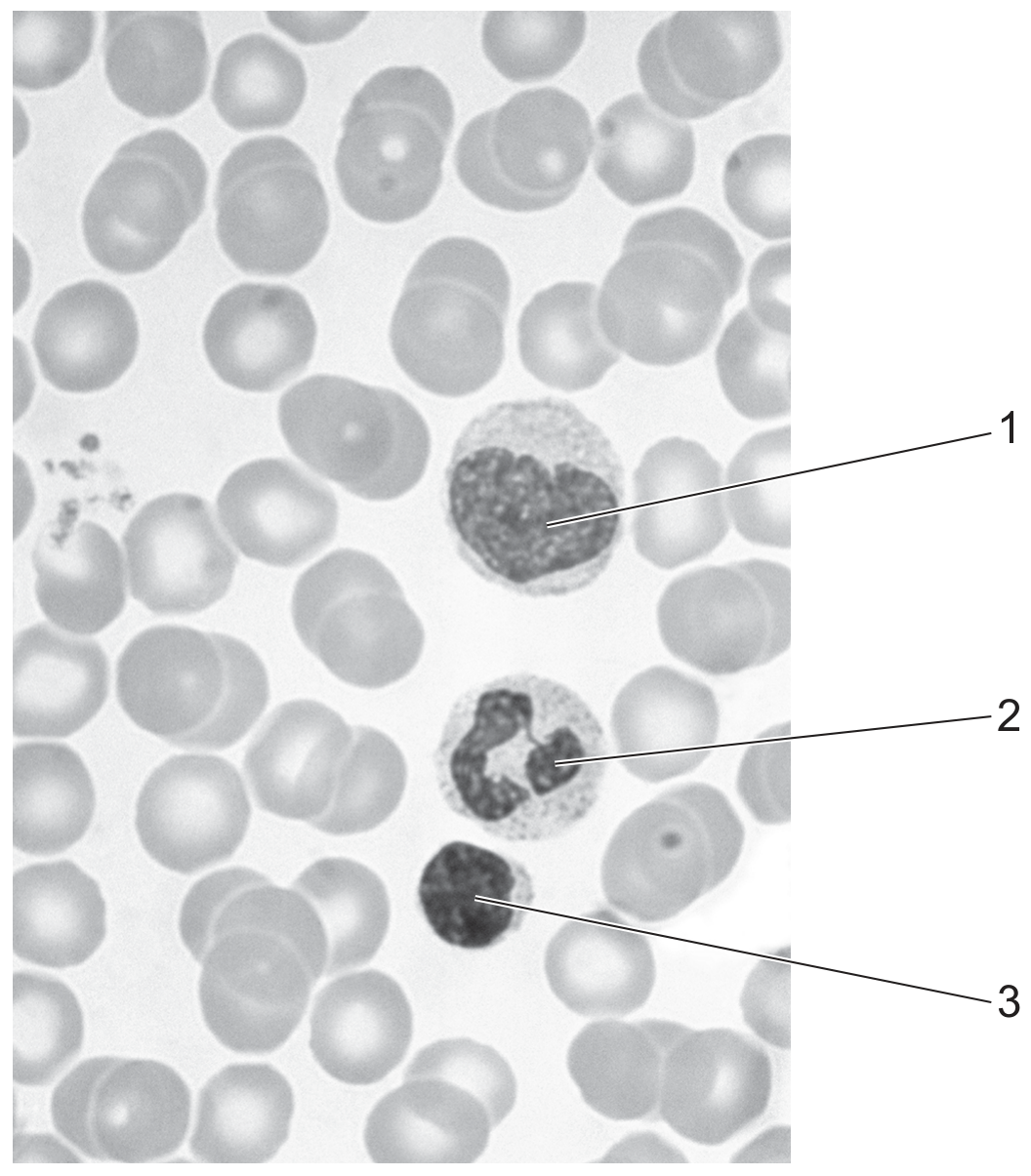
The photomicrograph shows a human blood smear.

Question image

Which row identifies the labelled cells?

1

2

3

lymphocyte

monocyte

neutrophil

lymphocyte

neutrophil

monocyte

monocyte

lymphocyte

neutrophil

monocyte

neutrophil

lymphocyte

[Maximum number: 1]

Which process can be carried out by a mature red blood cell?

A

active transport

B

cell division

C

phagocytosis

D

protein synthesis

[Maximum number: 1]

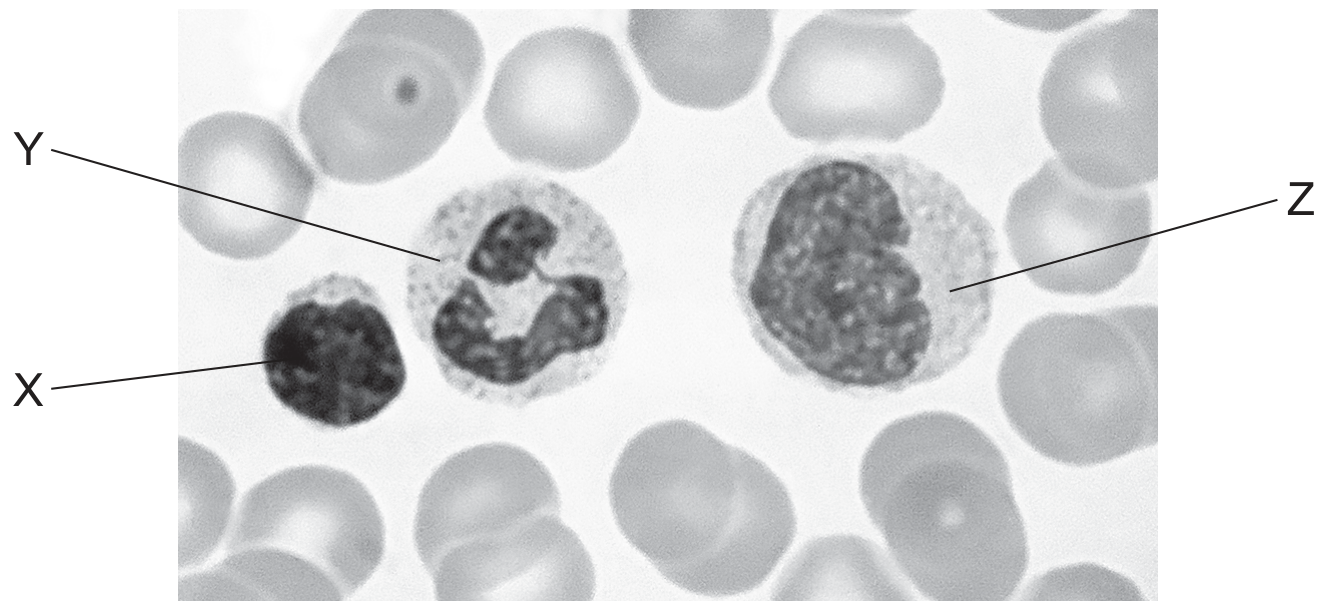
The photomicrograph shows three white blood cells labelled X, Y and Z.

Question image

Which row correctly identifies these cells?

cell X

cell Y

cell Z

lymphocyte

monocyte

neutrophil

lymphocyte

neutrophil

monocyte

monocyte

neutrophil

lymphocyte

neutrophil

monocyte

lymphocyte

[Maximum number: 2]

Cathelicidin LL-37 is a cell signalling compound that stimulates many different cells in humans. One role of cathelicidin LL-37 is stimulating the production of endothelial cells in the formation of capillaries during wound healing.

(a)
(i)

Describe the appearance of the endothelial cells of a capillary.

Cathelicidin LL-37 is a protein composed of 37 amino acids.
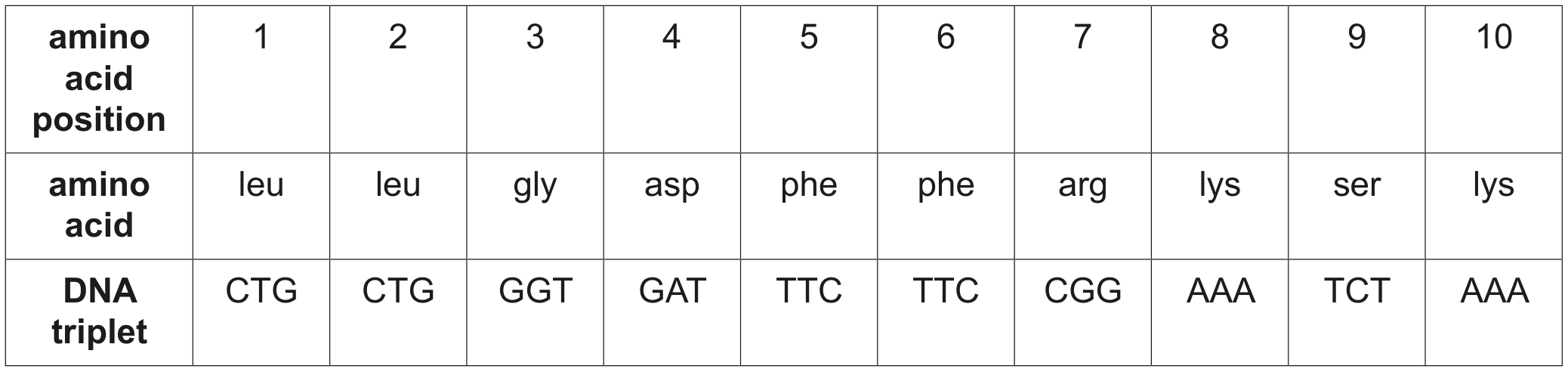
Table 5.1 shows:
- the sequence of the first 10 amino acids in the primary structure of cathelicidin LL-37
- DNA triplets in the non-transcribed strand in the gene that codes for the first 10 amino acids in the primary structure of cathelicidin LL-37.

Table 5.1

Table 5.1

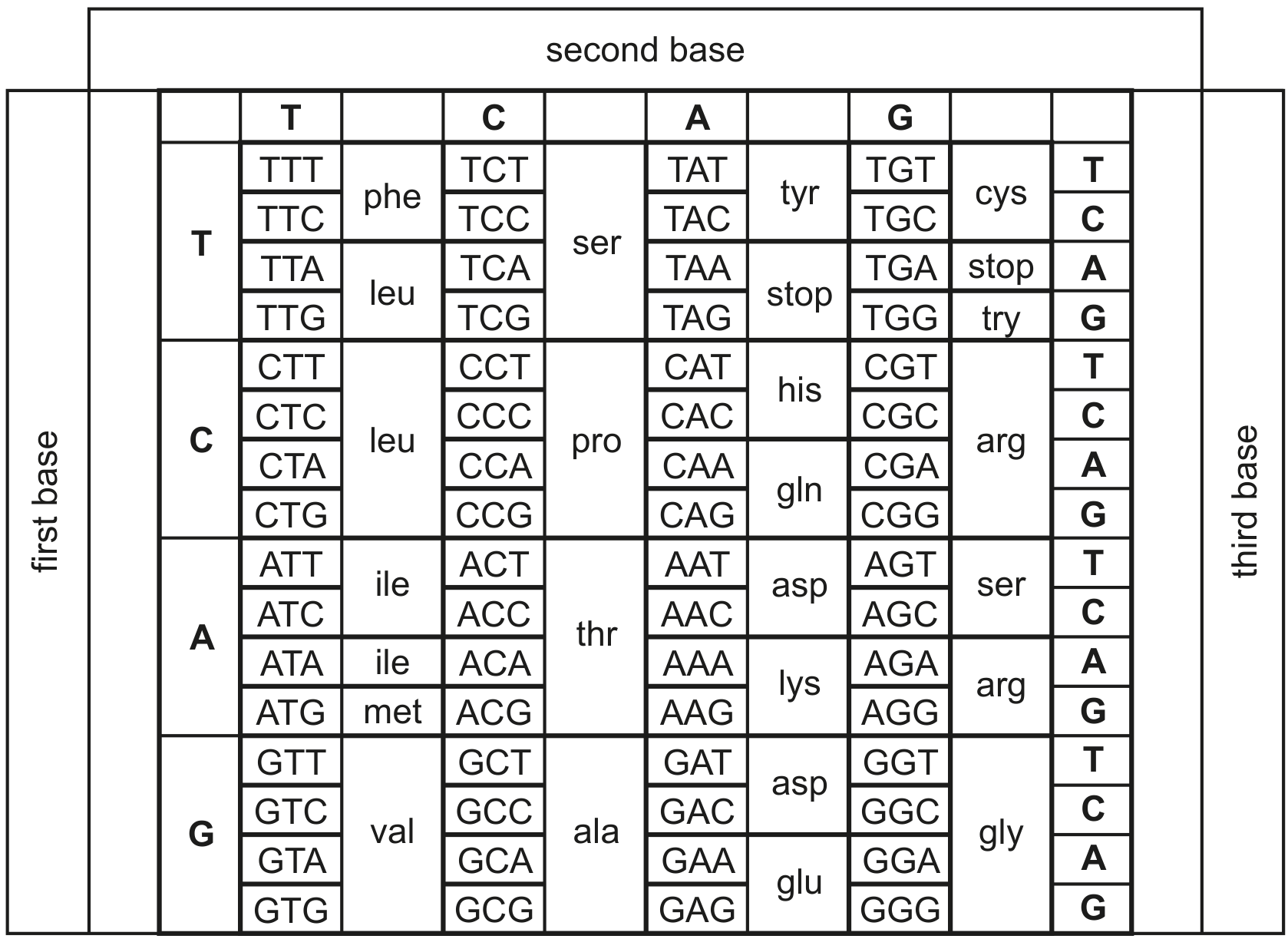
Table 5.2 shows the triplets of bases in DNA and the amino acids for which they code.

Table 5.2

Table 5.2

[ 2 ]
0