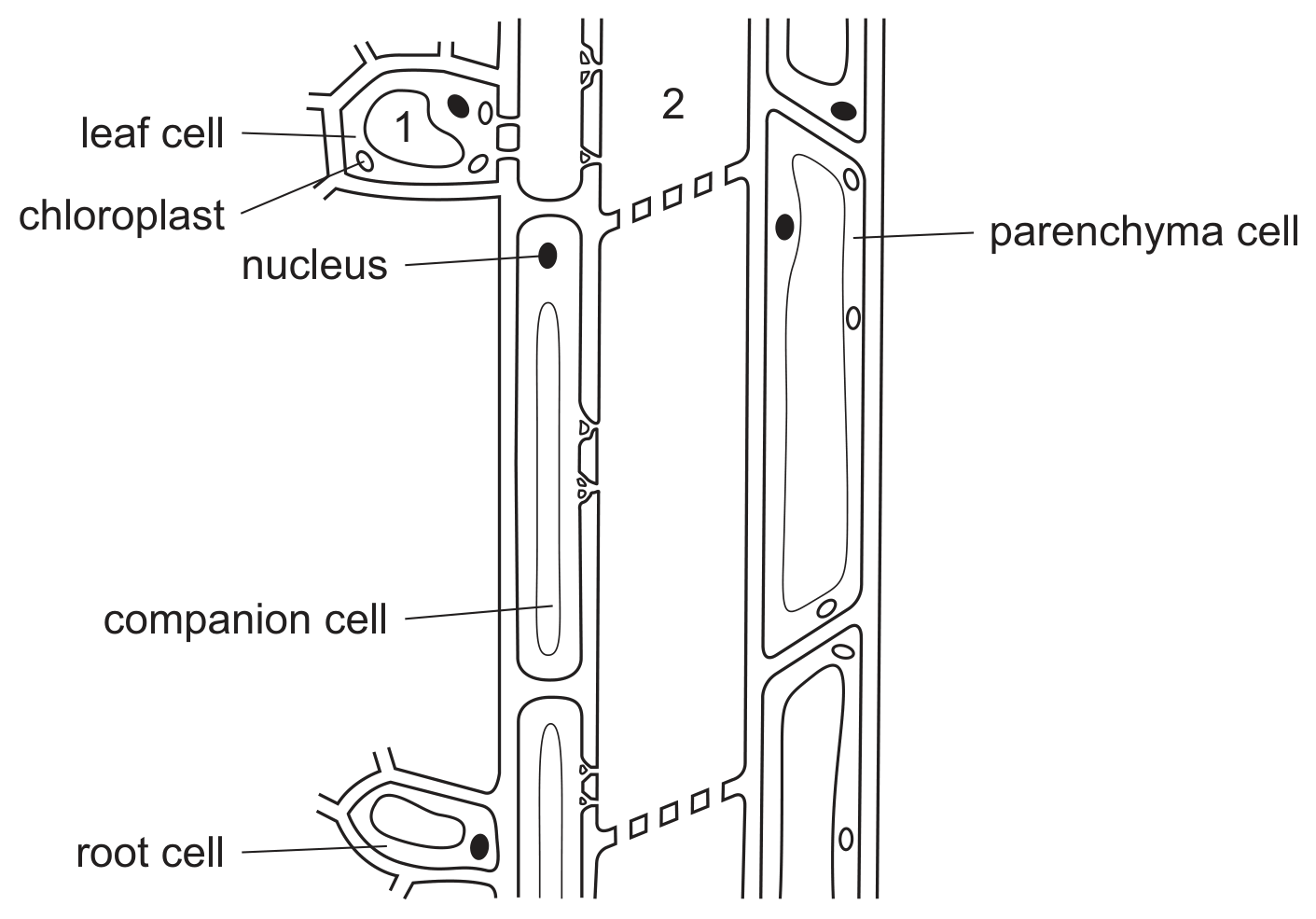
Phloem sap is transported from sources to sinks in phloem sieve tubes. Each sieve tube is constructed from phloem sieve tube elements.
The structure of a phloem sieve tube element is adapted to its function.
Each of explanations A to F describes how a particular structural feature of a phloem sieve tube element in a source is suited to the function of transporting phloem sap.
The matching structural feature for each explanation is listed in Table 1.1.
for entry of sucrose and other organic compounds
for rapid entry of water to create high hydrostatic pressure
provides pores to allow the flow of phloem sap from one sieve tube element to the next
to form very long tubular structures for the transport of phloem sap from source to sink E decreases resistance to the flow of phloem sap within each sieve tube element, so the speed of flow is maintained F provides more space to increase the volume of phloem sap transported per unit time Complete Table 1.1 by writing the correct letter from A to F in the last column of each row, so that each structural feature is matched to the correct explanation. Use each letter only once. The first row has been completed for you.
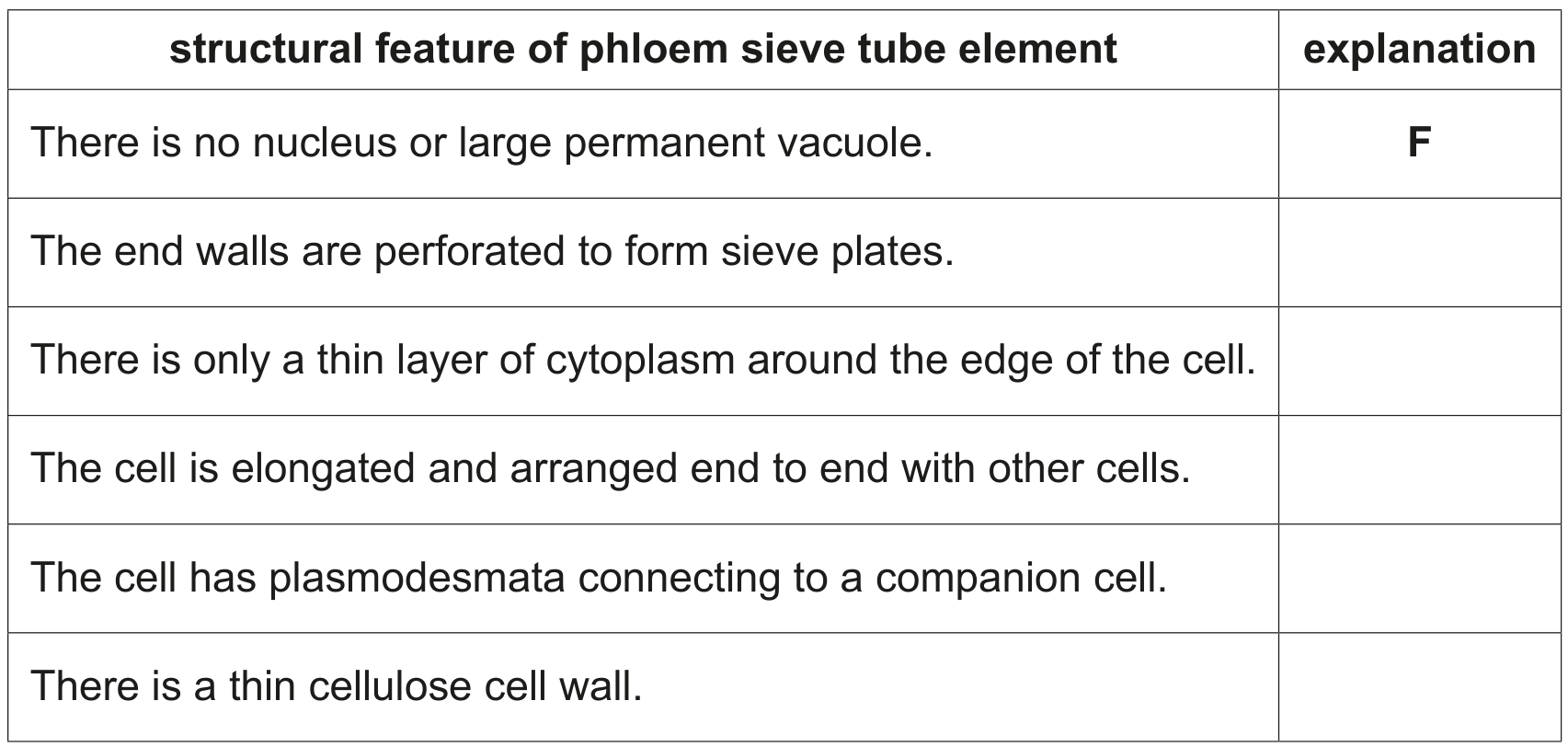
Table 1.1
At the sink, sucrose and other organic compounds are unloaded from the phloem sieve tube element.
Explain why the process of unloading helps the mass flow of phloem sap from the source to the sink.