EduNinja
[Maximum number: 3]

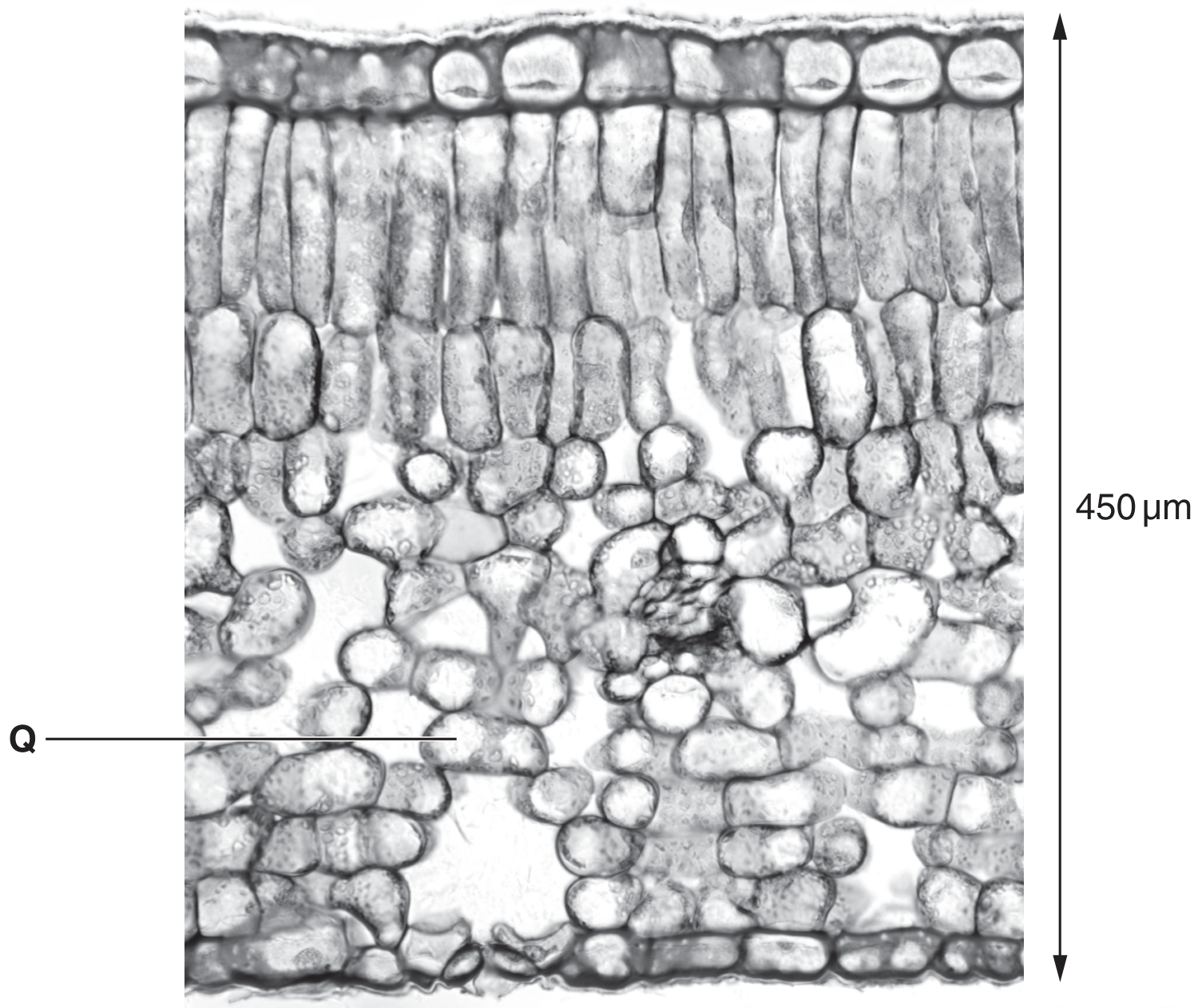
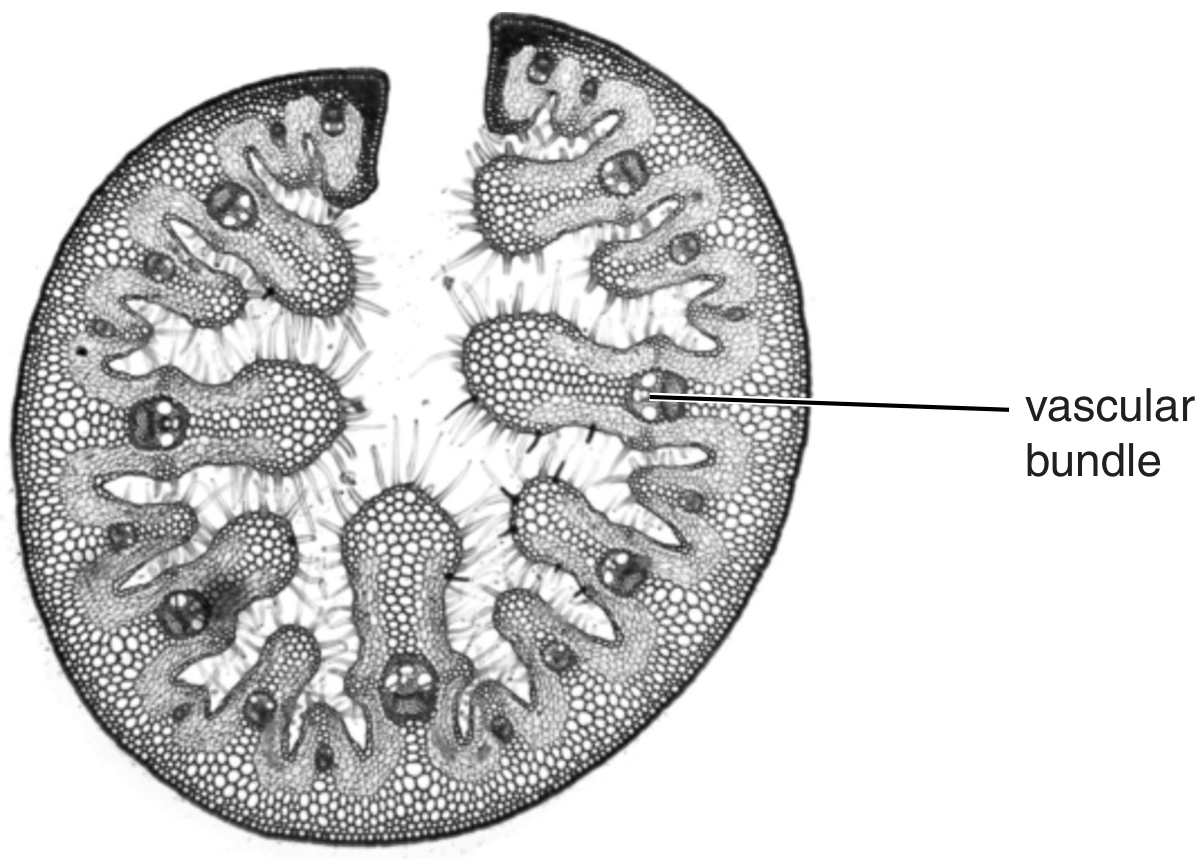
Fig. 1.1 and Fig. 1.2 are photomicrographs of sections through the leaves of two different plants.
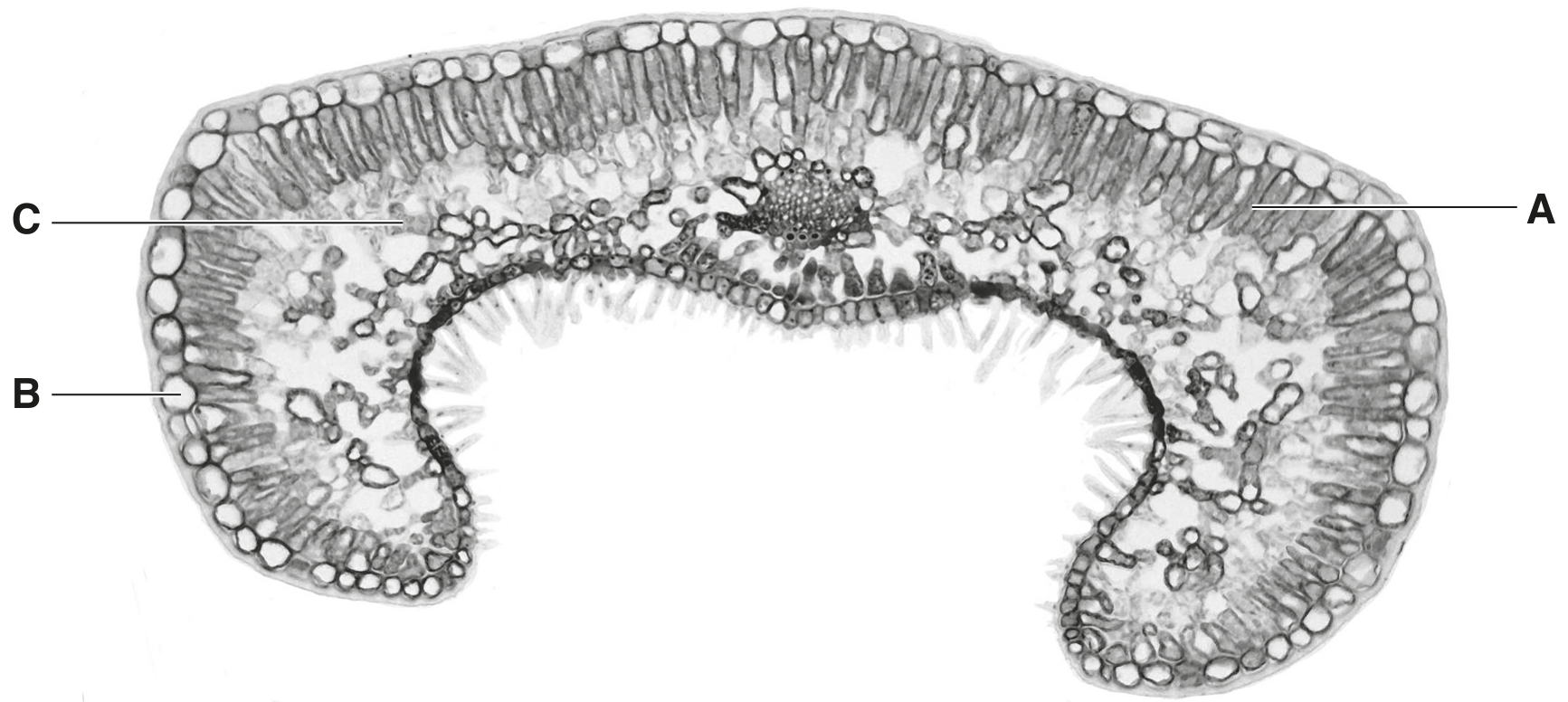
Fig. 1.1
Fig. 1.2 is a photomicrograph of a section through a leaf of Himalayan cedar, Cedrus deodara.

Fig. 1.1 Fig. 1.2 is a photomicrograph of a section through a leaf of Himalayan cedar, Cedrus deodara.
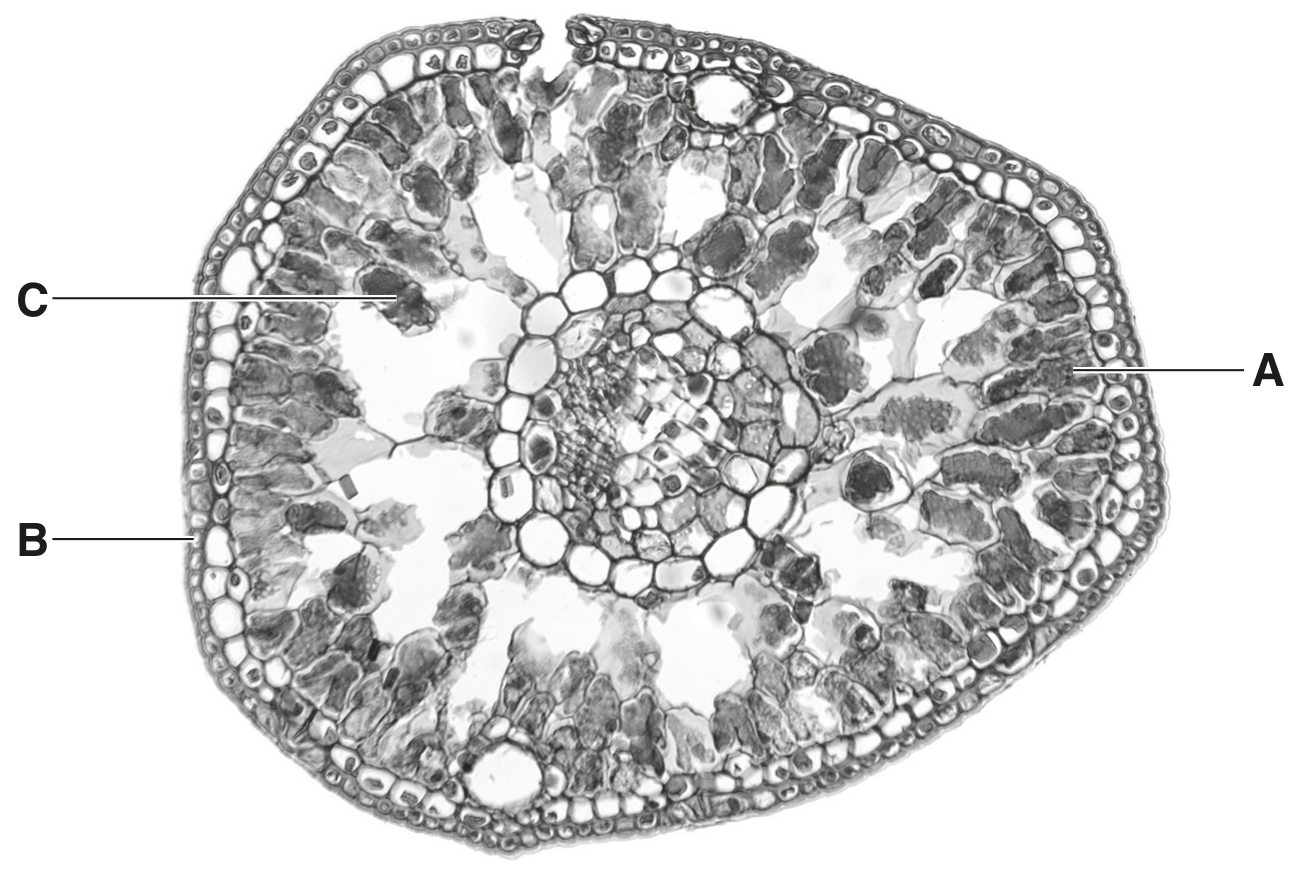
Fig. 1.2
Fig. 1.1 and Fig. 1.2 are not shown at the same magnification.

Fig. 1.2 Fig. 1.1 and Fig. 1.2 are not shown at the same magnification.

(a)

Erica vagans and Cedrus deodara are xerophytic plants.

With reference only to xerophytic features, describe the differences between the leaves of E. vagans and C. deodara visible in Fig. 1.1 and Fig. 1.2.

[ 3 ]
[Maximum number: 1]

Which xerophytic adaptations reduce the water potential gradient?

1 rolled leaves
2 hairy leaves
3 sunken stomata
4 fewer stomata
5 fleshy leaves

A

1, 2, 3, 4 and 5

B

1, 2 and 3 only

C

1, 3 and 4 only

D

2,4 and 5 only

[Maximum number: 3]

Marram grass, Ammophila arenaria, is an important plant of sand dunes. Leaves of marram grass are well adapted to reduce water loss by transpiration.

Fig. 2.1 is a photomicrograph of a section though the leaf of marram grass.

Fig. 2.1

Fig. 2.1

(a)

Examples of adaptations to reduce water loss by transpiration include a thick cuticle and no stomata on the outer surface, and stomata in pits on the inner surface.

[ 3 ]
(i)

State one other adaptation, visible in Fig. 2.1, which reduces water loss by transpiration.

[ 1 ]
(ii)

Explain how this adaptation reduces water loss.

[ 2 ]
(b)

State the term used to describe a plant type that has adaptations to reduce water loss by transpiration.

[Maximum number: 3]

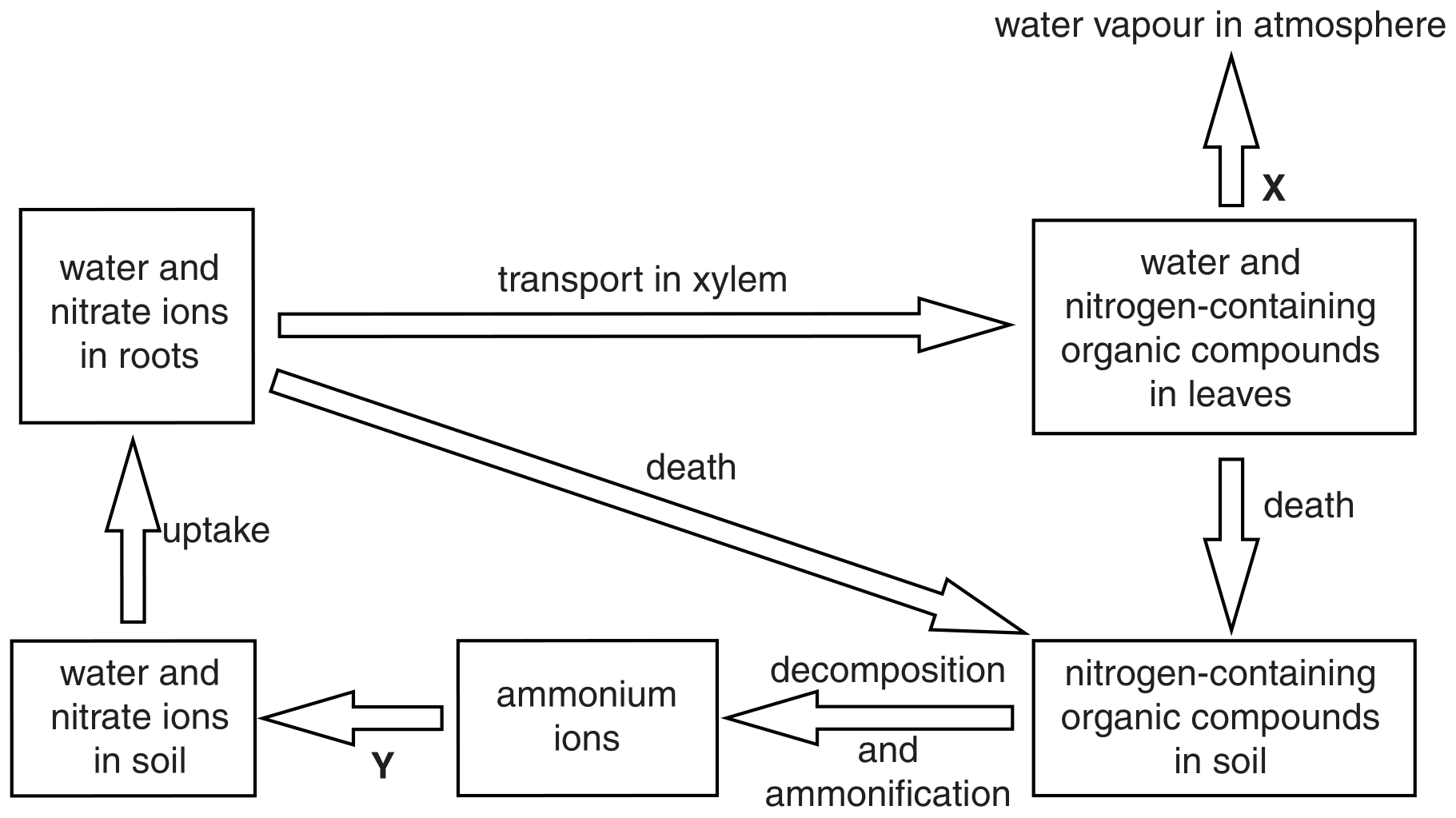
Fig. 2.1 shows one section of the nitrogen (N) cycle. Some details of the water cycle are also included.

Fig. 2.1

Fig. 2.1

(a)

Explain why process X occurs, even if it is a disadvantage to a plant.

[ 1 ]
(b)

State two examples of how the leaves of xerophytic plants are adapted to reduce the loss of water vapour to the atmosphere.
1.
2.

[ 2 ]
[Maximum number: 1]

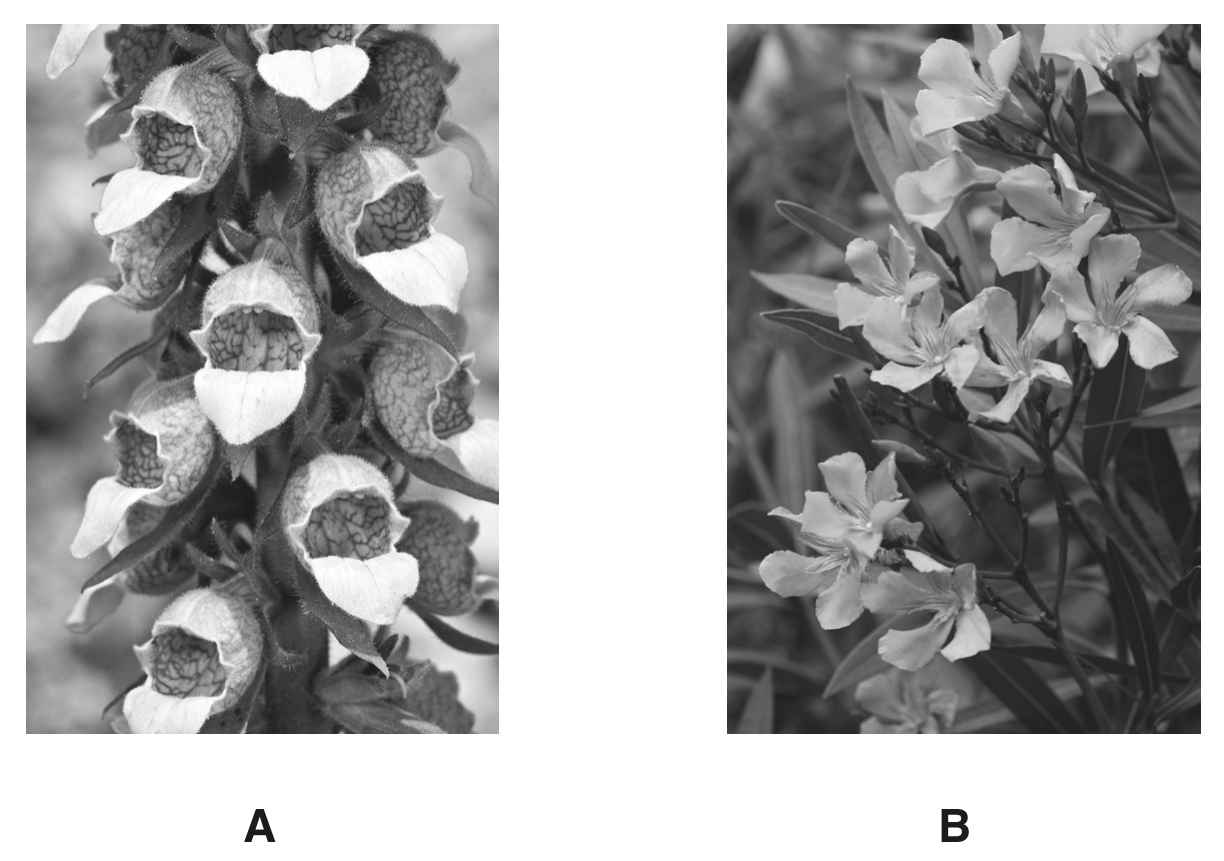
Woolly foxglove, Digitalis lanata, shown in Fig. 2.1A, and common oleander, Nerium oleander, shown in Fig. 2.1B, are plants grown for the attractive flowers that they produce.

Both plants are poisonous, as their leaves produce toxic organic compounds known as cardiac glycosides. Cardiac glycosides have a powerful effect on the action of cardiac muscle.

Fig. 2.1

Fig. 2.1

(a)

N. oleander is able to grow in very dry conditions. The leaves have adaptations to reduce water loss by transpiration.

State the term used to describe a plant, such as N. oleander, that has adaptations to allow it to grow in conditions where water is in short supply.

[ 1 ]
[Maximum number: 5]

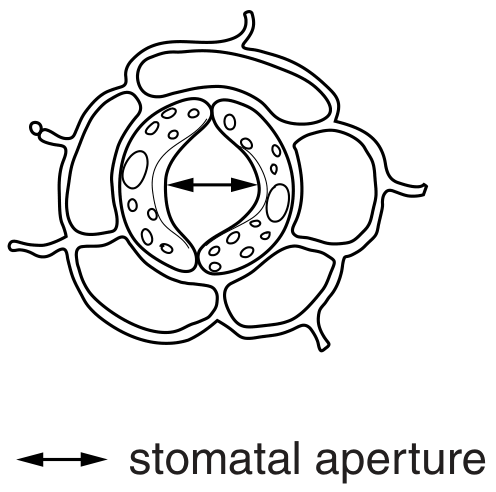
Most of the water lost from plants passes out through the stomata of leaves.
The distance between open guard cells is known as the stomatal aperture, as shown in Fig. 2.1.

Fig. 2.1

Fig. 2.1

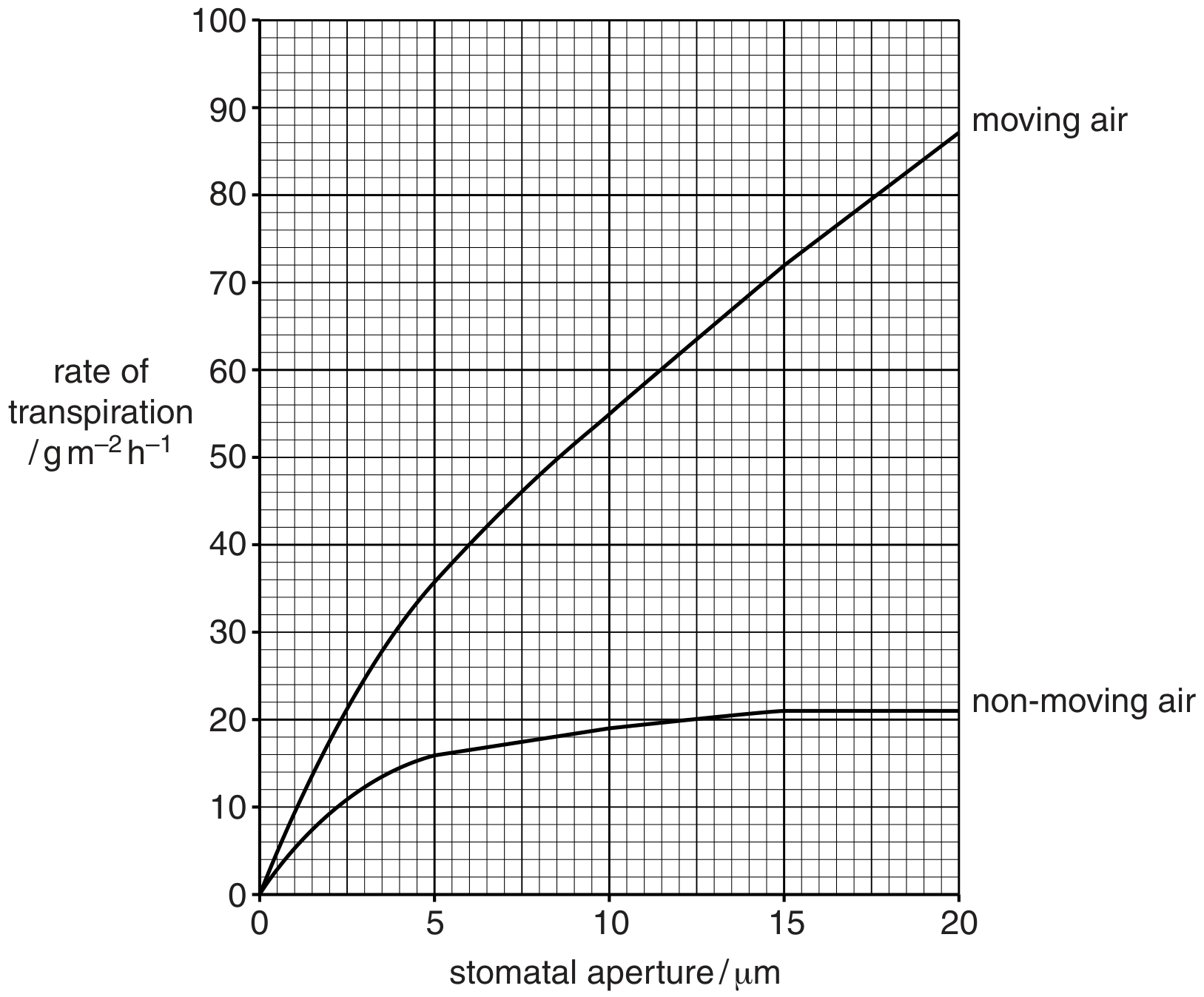
Researchers investigated the effect of stomatal aperture on rates of transpiration in leaves of Tradescantia zebrina under two conditions:
- air kept moving by a fan (moving air)
- non-moving air.

The results are shown in Fig. 2.2.

Fig. 2.2

Fig. 2.2

(a)

Spruce trees and pine trees are adapted to dry conditions where water can be in limited supply.

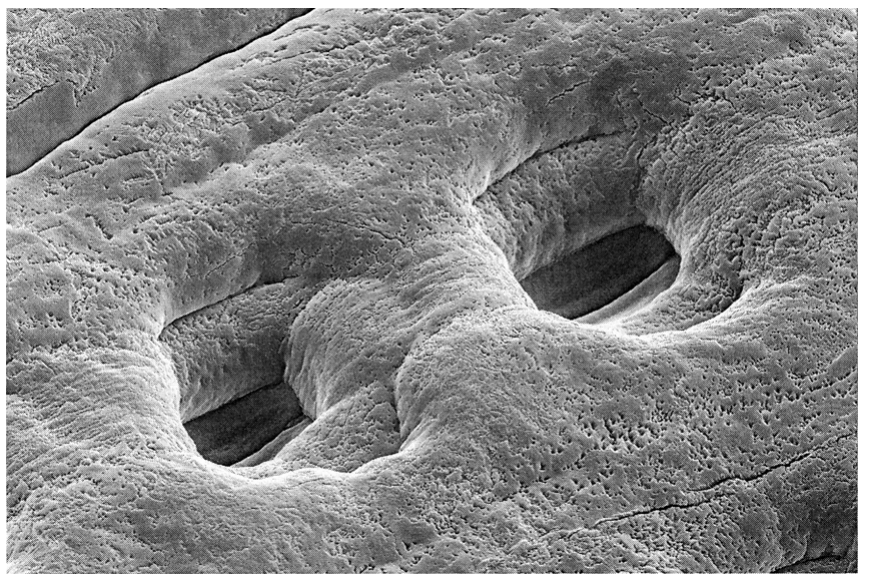
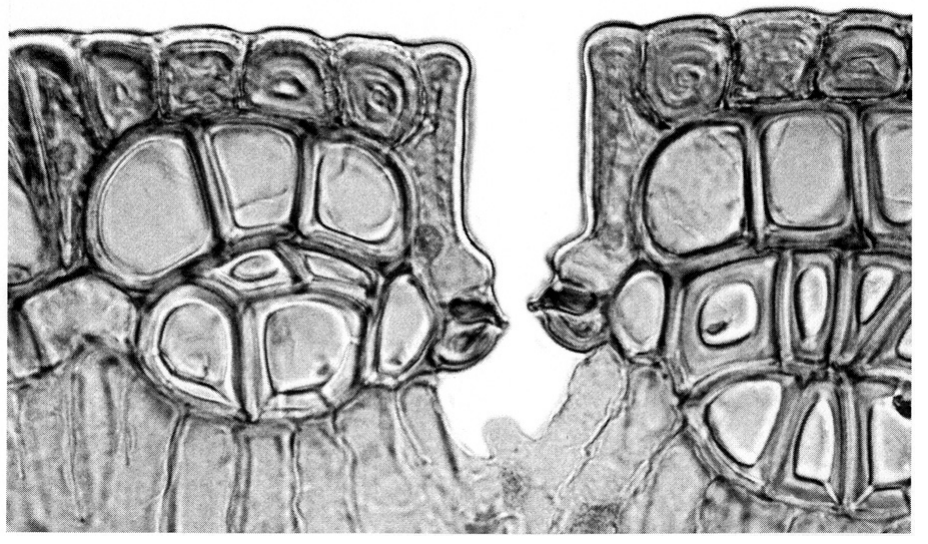
Fig. 2.3 shows two stomata in a spruce leaf and Fig. 2.4 shows a vertical section through a stoma from a pine leaf.

Fig. 2.3

Fig. 2.3

Fig. 2.4

Fig. 2.4

[ 5 ]
(i)

Explain how the stomatal features shown in Fig. 2.3 and Fig. 2.4 give an advantage to plants such as spruce and pine.

[ 2 ]
(ii)

Some plants that live in very dry conditions close their stomata during the day and open them at night.

State one disadvantage of this for these plants.

[ 1 ]
(iii)

State and explain two adaptations that plant leaves have for survival in dry conditions other than those involving number or structure of stomata.
1.
2.
Question 3 starts on page 10

[ 2 ]
[Maximum number: 3]

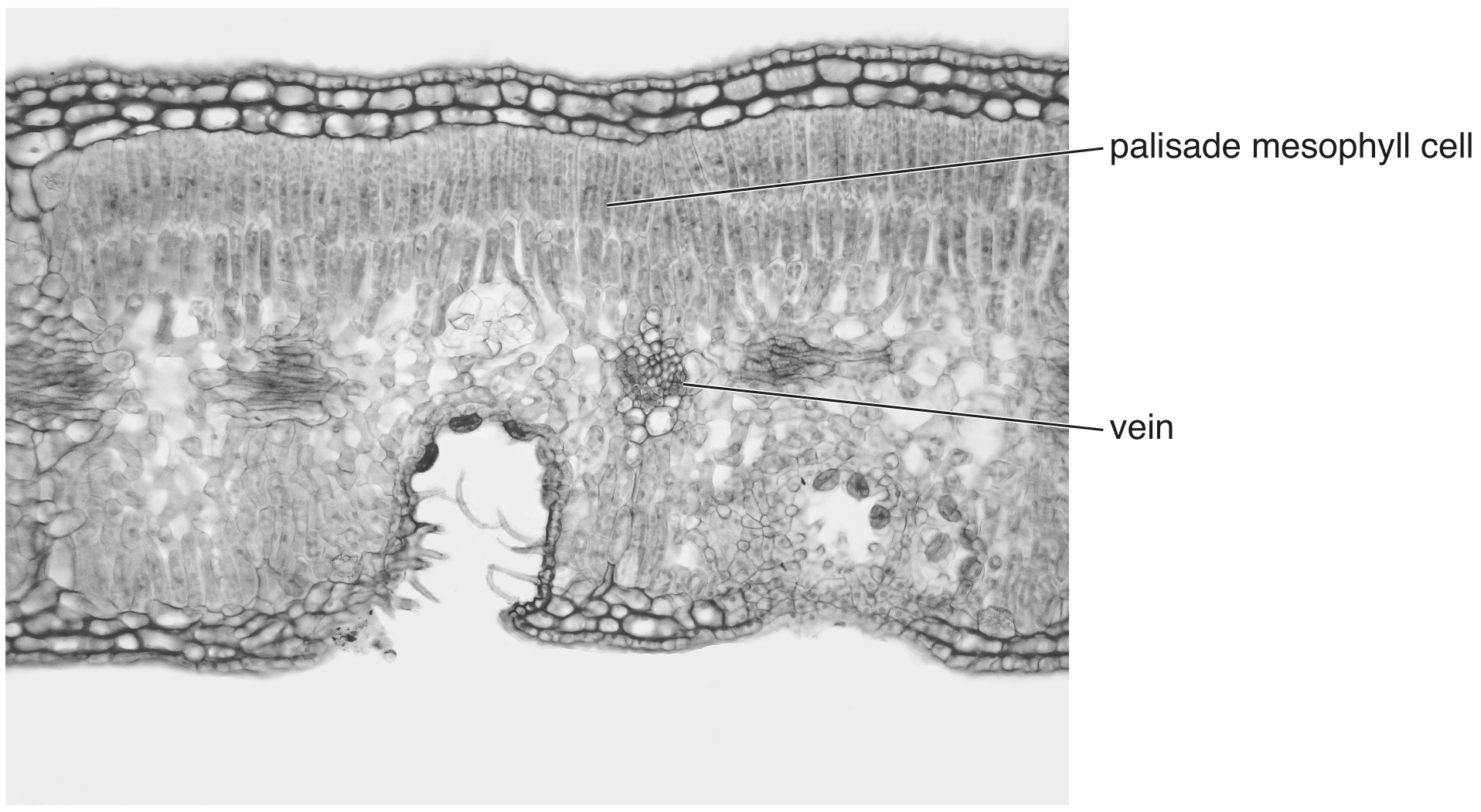
Nerium oleander is a xerophytic plant. A photomicrograph of a section through the leaf of N. oleander is shown in Fig. 3.1.

Fig. 3.1

Fig. 3.1

(a)

The leaf shown in Fig. 3.1 has a number of adaptations to reduce water loss by transpiration. Two of these adaptations are:
- a multilayered epidermis
- stomata only found in depressions, known as stomatal crypts, on the lower surface of the leaf.

Explain how a multilayered epidermis and stomatal crypts will help to reduce water loss in N. oleander.
multilayered epidermis
stomatal crypts

Sucrose, amino acids and other assimilates synthesised in palisade mesophyll cells of N. oleander pass to the vein, where they can be transported within specialised cells from the source to the sink.

[ 3 ]
(a)

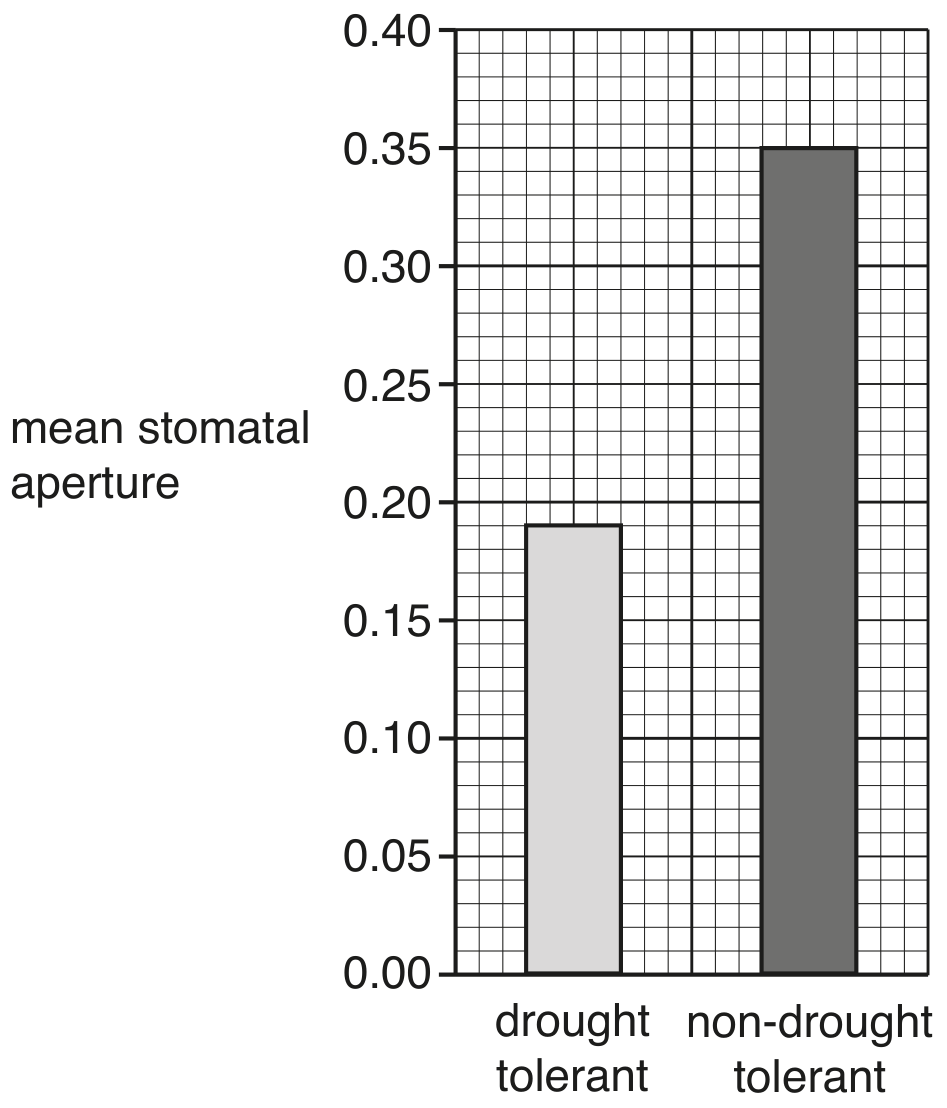
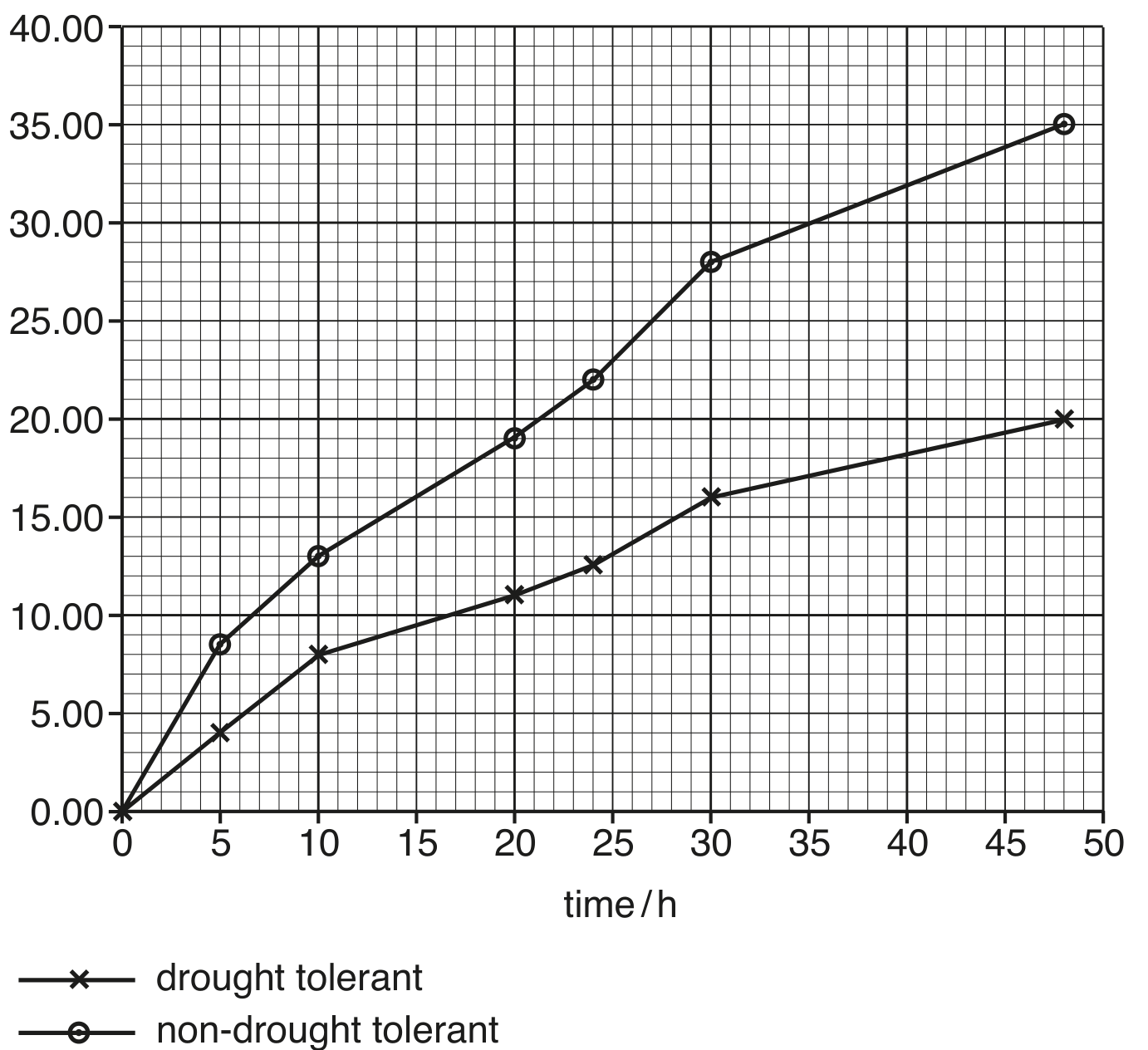
The tomato plant, Solanum lycopersicum, does not tolerate periods of drought (water shortage). Researchers have produced a tomato plant that has an improved tolerance of drought.

The researchers measured the width and the length of open stomata in plants that are tolerant of drought and tomato plants that are not tolerant.

Fig. 3.1 is the formula used to calculate the size of an open stoma (stomatal aperture).

 stomatal aperture = width of open stoma  length of open stoma \text { stomatal aperture }=\frac{\text { width of open stoma }}{\text { length of open stoma }}

Fig. 3.2 shows the mean stomatal aperture of the two groups of tomato plants.
Fig. 3.3 shows the rates of transpiration of the two groups of tomato plants when kept in identical conditions of drought.

Fig. 3.2

Fig. 3.2

transpiration rate / mmol water m2 s1\mathrm{m}^{-2} \mathrm{~s}^{-1}

The water uptake of leafy shoots taken from the two groups of tomato plants was measured using potometers. The leafy shoots were of similar mass and had the same number of leaves. The results are shown in Fig. 3.4.
mean water uptake /cm3/ \mathrm{cm}^{3} per shoot

Fig. 3.4

Fig. 3.4

With reference to Fig. 3.2, Fig. 3.3 and Fig. 3.4, describe and explain the differences between the plants that are drought tolerant and the plants that are non-drought tolerant.

[ 5 ]
[Maximum number: 3]

Fig. 3.1 is a photomicrograph of a transverse section through a leaf from a tea plant, Camellia sinensis.

Fig. 3.1

Fig. 3.1

(a)

The leaf of C. sinensis, shown in Fig. 3.1, has developed in a sunny position.

State three features of the leaf, visible in Fig. 3.1, which show that it has developed in a sunny position.
1.
2.
3.

[ 3 ]
(a)

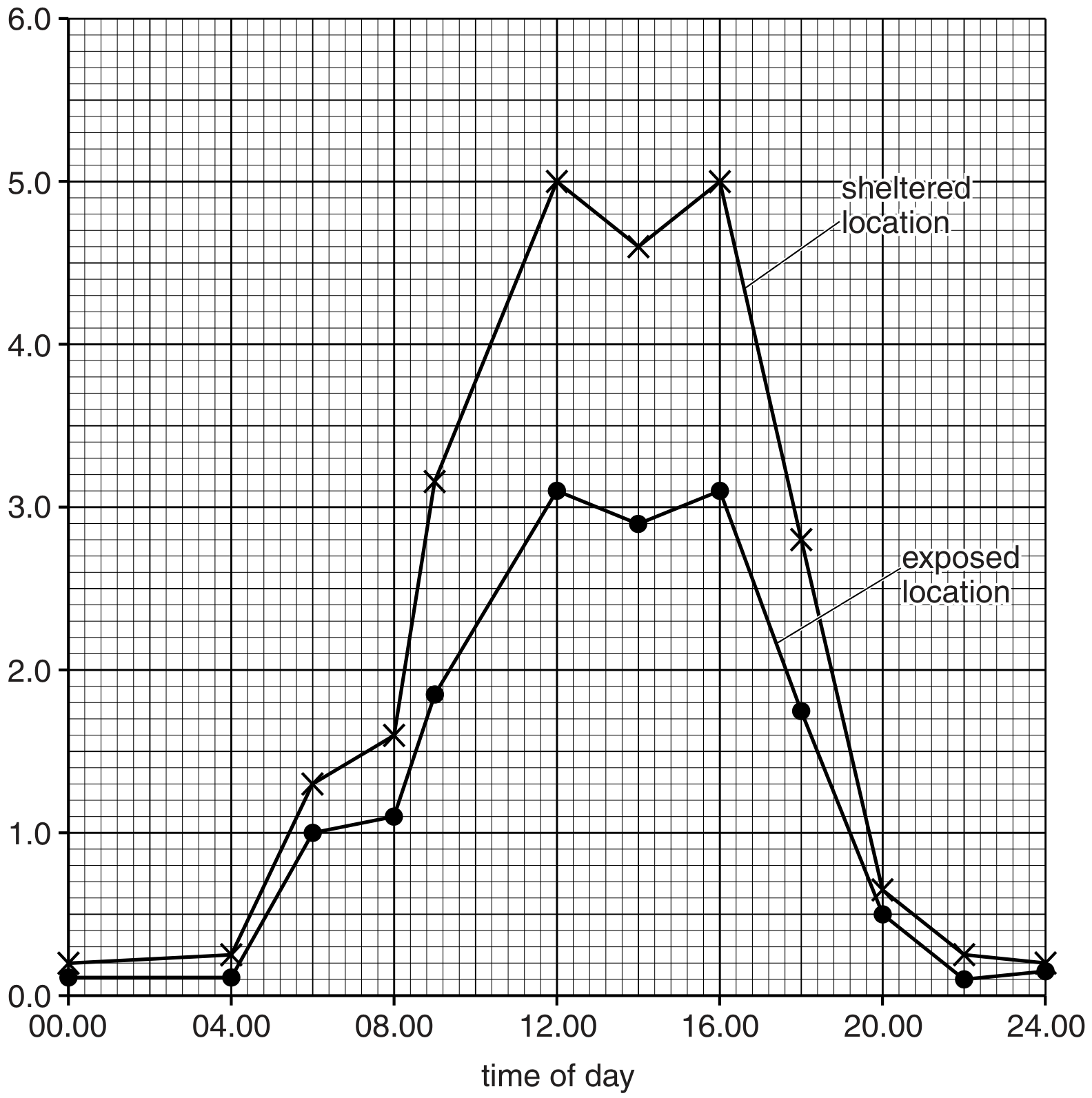
The buttonwood tree, Conocarpus erectus, grows in coastal areas of the Americas. A study was carried out on its ability to survive on Socorro Island off the Pacific coast of Mexico. The island is exposed to high winds, which can lead to high rates of transpiration.

The transpiration rates of trees at sheltered and exposed locations at the same altitude on Socorro Island were compared. The results are shown in Fig. 3.1.
transpiration rate /arbitrary units

Fig. 3.1

Fig. 3.1

Describe the results shown in Fig. 3.1.

[ 5 ]
(b)

The leaves of the buttonwood trees at the exposed site were significantly smaller than those at the sheltered site.

Describe three ways, other than small size, in which leaves are adapted to reduce the rate of transpiration.
1.
2.
3.

[ 3 ]
0