EduNinja
[Maximum number: 5]

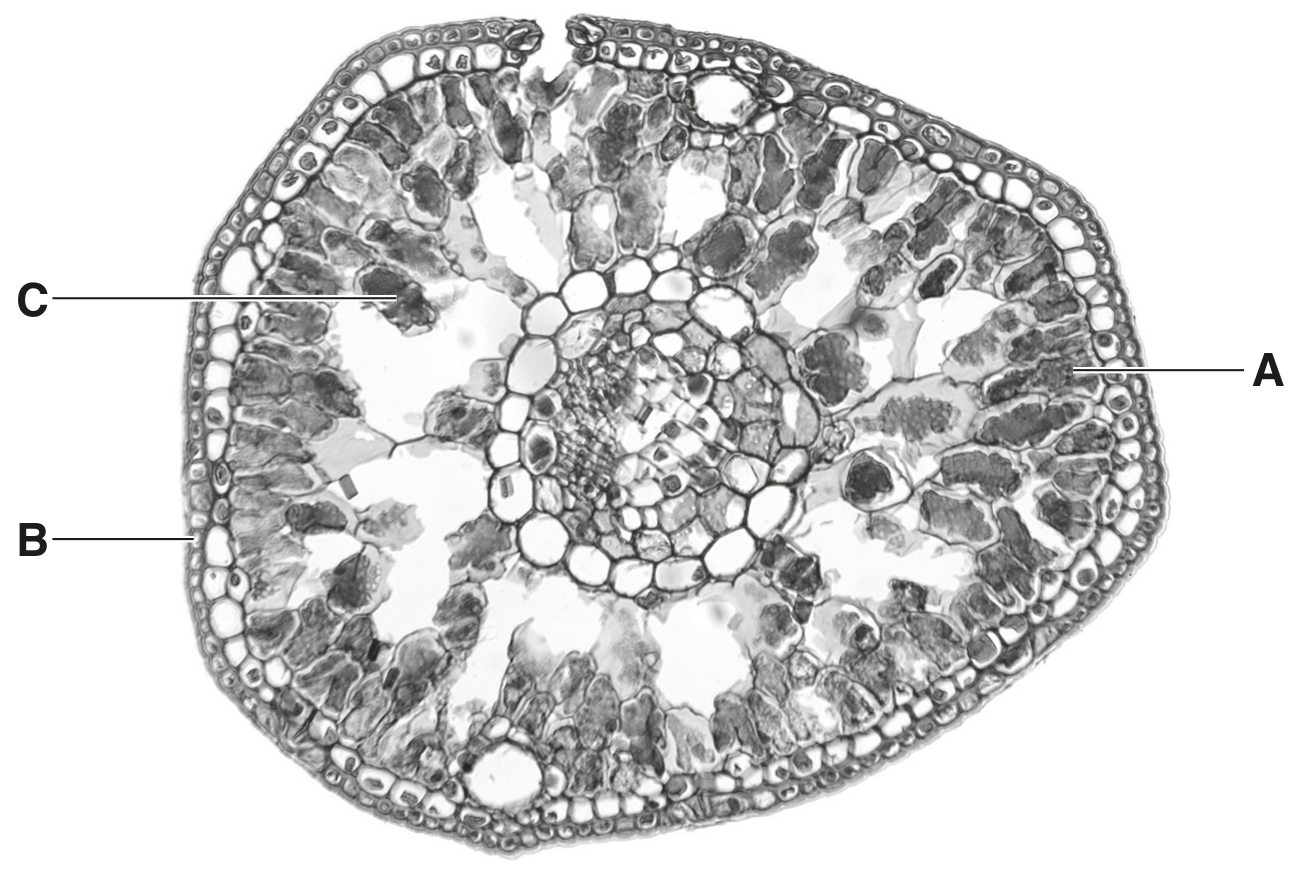
Fig. 1.1 is a diagram drawn from a photomicrograph of a transverse section through part of a leaf.
The arrows in Fig. 1.1 show the movement of water through the cells of the leaf after it has left the xylem.
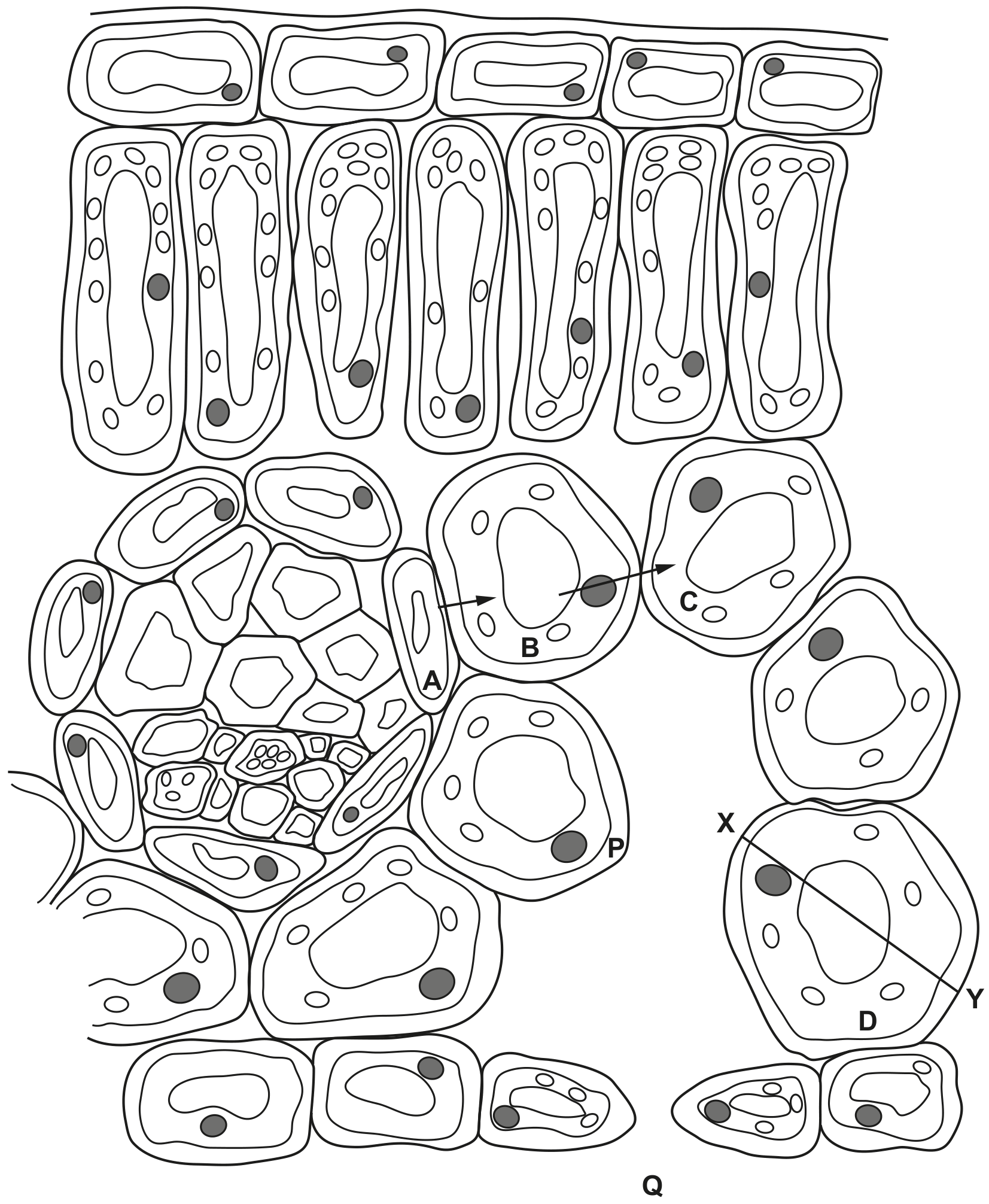
Fig. 1.1

Fig. 1.1

(a)

Water from the xylem can enter cell A and then moves to cells B and C without crossing their cell walls.

The cell structures through which water passes from cell A to cell B are not visible in Fig. 1.1.

[ 1 ]
(i)

Explain what causes water to move from cell B to cell C.

[ 1 ]
(b)

Most of the water that arrives at the leaf passes to the external atmosphere.

With reference to Fig. 1.1, describe and explain the sequence of events occurring between point P and point Q.

[ 4 ]
[Maximum number: 3]

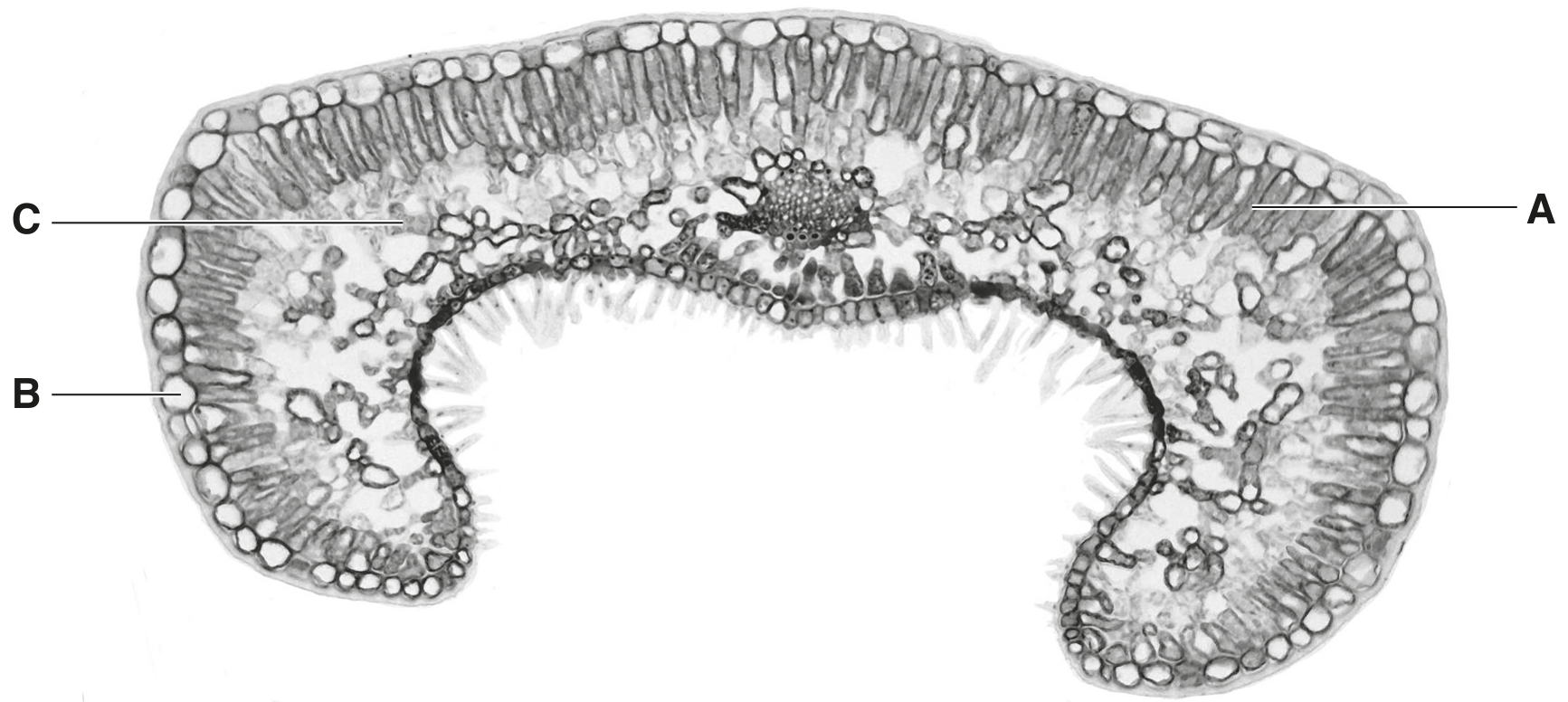
Fig. 1.1 and Fig. 1.2 are photomicrographs of sections through the leaves of two different plants.

Fig. 1.1
Fig. 1.2 is a photomicrograph of a section through a leaf of Himalayan cedar, Cedrus deodara.

Fig. 1.1 Fig. 1.2 is a photomicrograph of a section through a leaf of Himalayan cedar, Cedrus deodara.

Fig. 1.2
Fig. 1.1 and Fig. 1.2 are not shown at the same magnification.

Fig. 1.2 Fig. 1.1 and Fig. 1.2 are not shown at the same magnification.

(a)

Transpiration is a consequence of gas exchange in leaves.

Explain why the rate of transpiration is greater during the day than during the night.

[ 3 ]
(a)

The leaf is the main photosynthetic organ in most plants. For the light-independent stage of photosynthesis to occur, carbon dioxide must be present.

[ 2 ]
(i)

Describe how carbon dioxide enters the leaf.

[ 2 ]
[Maximum number: 2]

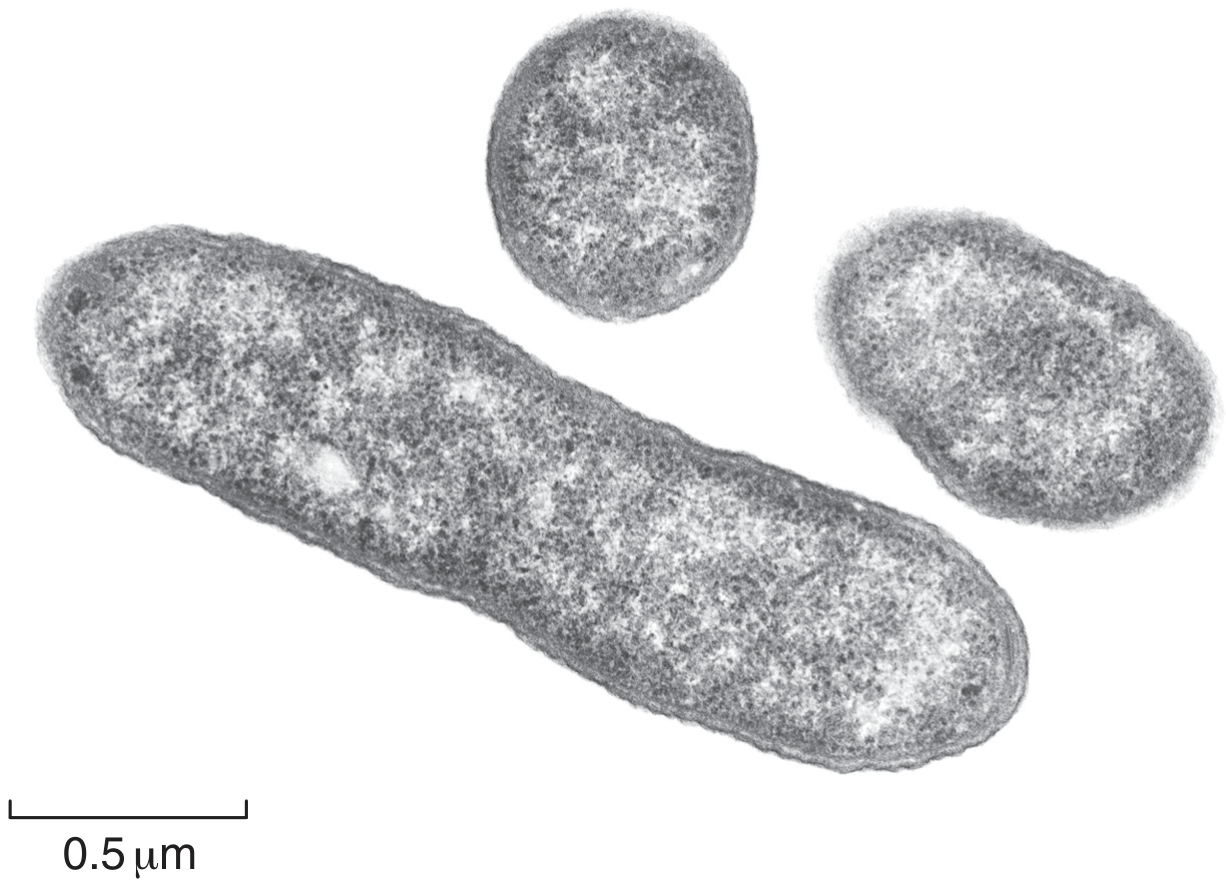
Fig. 1.1 is an electron micrograph of three cells of the same species of bacterium, Erwinia carotovora.

Fig. 1.1

Fig. 1.1

(a)

E. carotovora causes a disease in carrot and potato plants.

The bacteria release an enzyme called pectinase which hydrolyses the polysaccharide pectin. Pectin helps plant cells to attach to each other.

[ 2 ]
(i)

Suggest what effect this disease will have on vegetables, such as carrots and potatoes.

[ 2 ]
(a)
(i)

Define transpiration.

[ 1 ]
(ii)

State two environmental factors that affect the rate of transpiration.

Explain how each factor affects the rate of transpiration.
factor 1
explanation
factor 2
explanation

[ 4 ]
[Maximum number: 2]

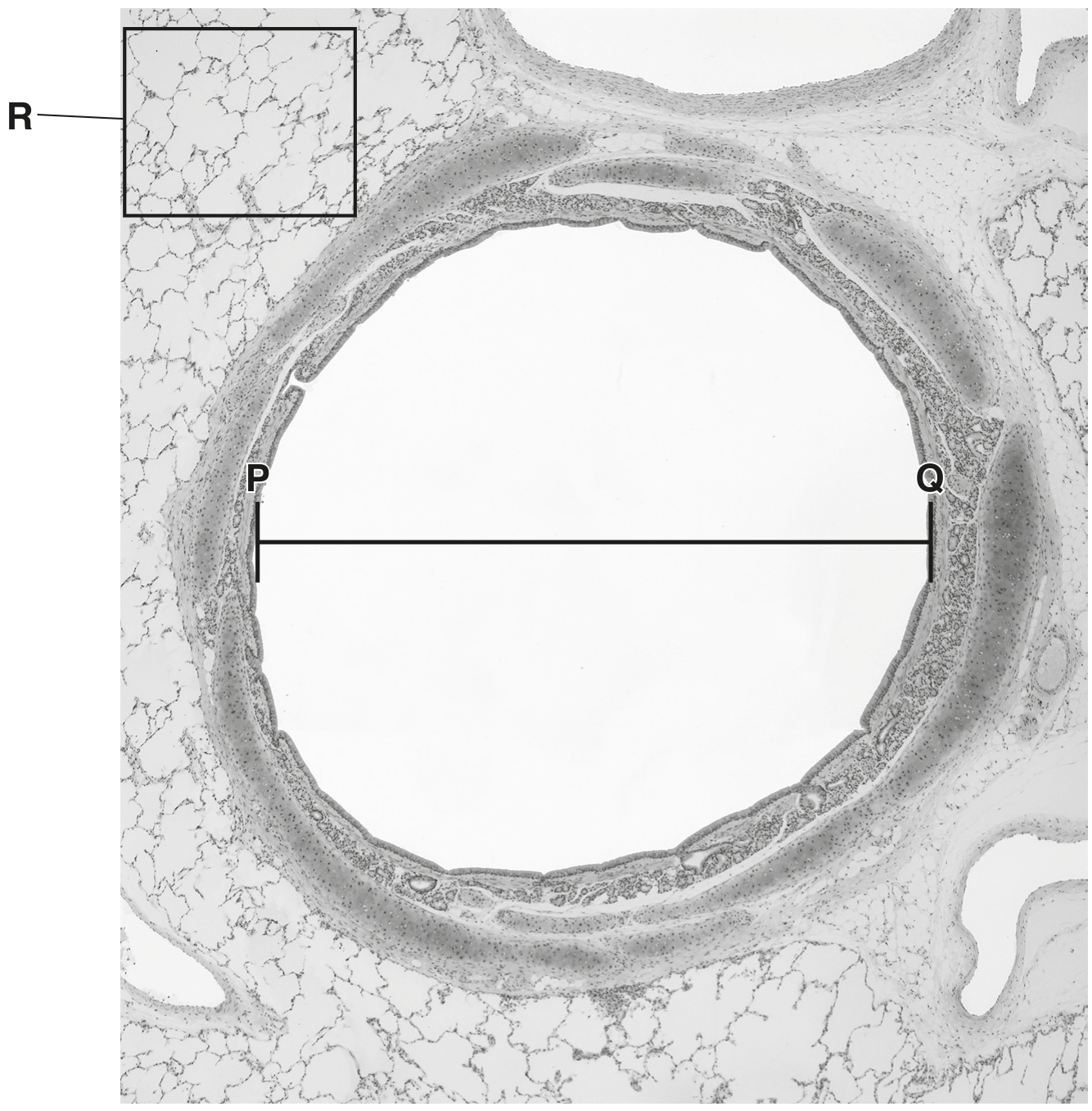
Fig. 2.1 is a photomicrograph showing a transverse section through a bronchus and the surrounding lung tissue.

Fig. 2.1

Fig. 2.1

magnification x40

(a)

In the leaves of plants, both gas exchange and transpiration occur through open stomata.

Suggest how the arrangement of cells in the leaf of a dicotyledonous plant contributes to the loss of water by transpiration.

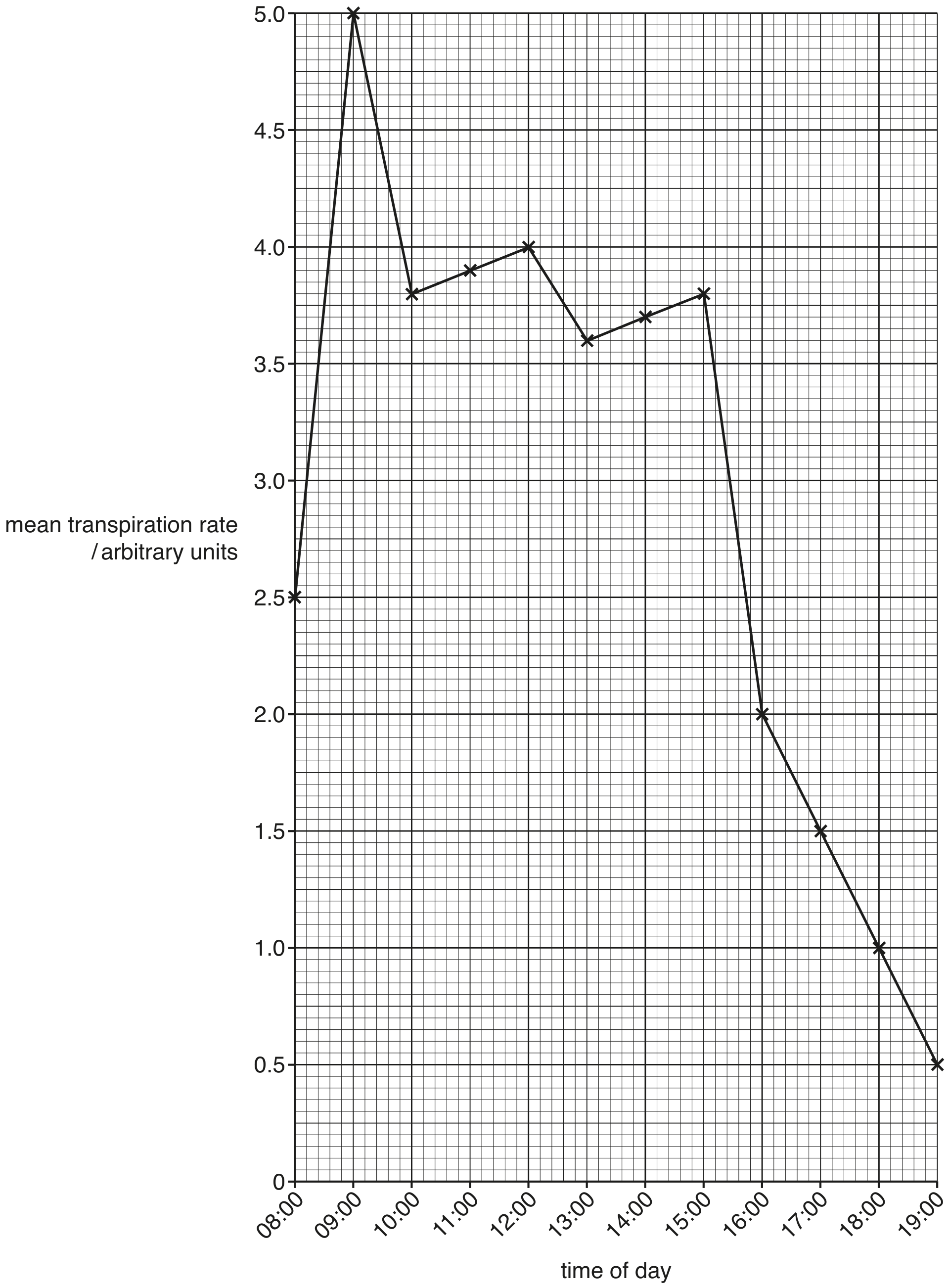
(d) Fig. 2.2 shows the mean transpiration rate of a xerophyte between 08:00 and 19:00.

(d) Fig. 2.2 shows the mean transpiration rate of a xerophyte between 08:00 and 19:00.

[ 2 ]
(i)

Suggest why the transpiration rate changed between 09:00 and 10:00.

[ 2 ]
[Maximum number: 11]

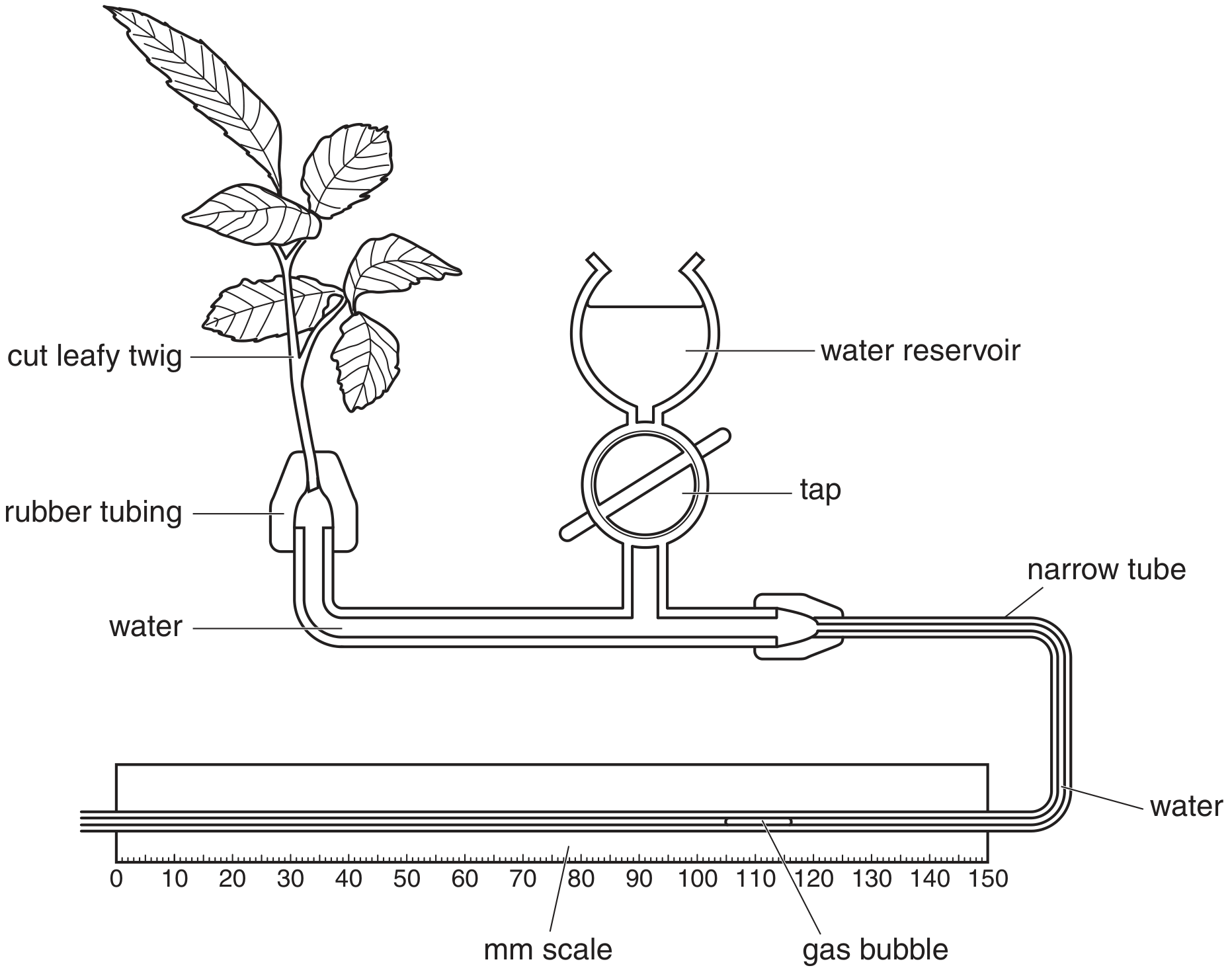
Fig. 2.1 shows an apparatus used to measure the rate of water uptake by leafy parts of plants.

Fig. 2.1

Fig. 2.1

(a)

State the name of this apparatus.

[ 1 ]
(b)

Explain why the rate of water uptake by the leafy part of the plant shown in Fig. 2.1 will not be the same as the rate of transpiration.

[ 2 ]
(c)

Using the apparatus as shown in Fig. 2.1, the rate of water uptake at 25C25^{\circ} \mathrm{C} was found to be greater than at 20C20^{\circ} \mathrm{C}.

[ 5 ]
(i)

Explain the effect of increasing the temperature on the rate of water uptake.

[ 3 ]
(ii)

State two environmental conditions, other than temperature, which will affect the rate of water uptake of a leafy twig as shown in Fig. 2.1.

1
2.

[ 2 ]
(d)

Transpiration is sometimes described as an 'inevitable consequence of gas exchange' in plants.

Explain this statement.

[ 3 ]
[Maximum number: 6]

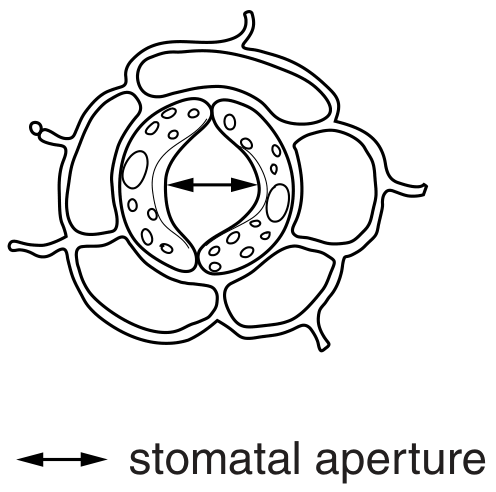
Most of the water lost from plants passes out through the stomata of leaves.
The distance between open guard cells is known as the stomatal aperture, as shown in Fig. 2.1.

Fig. 2.1

Fig. 2.1

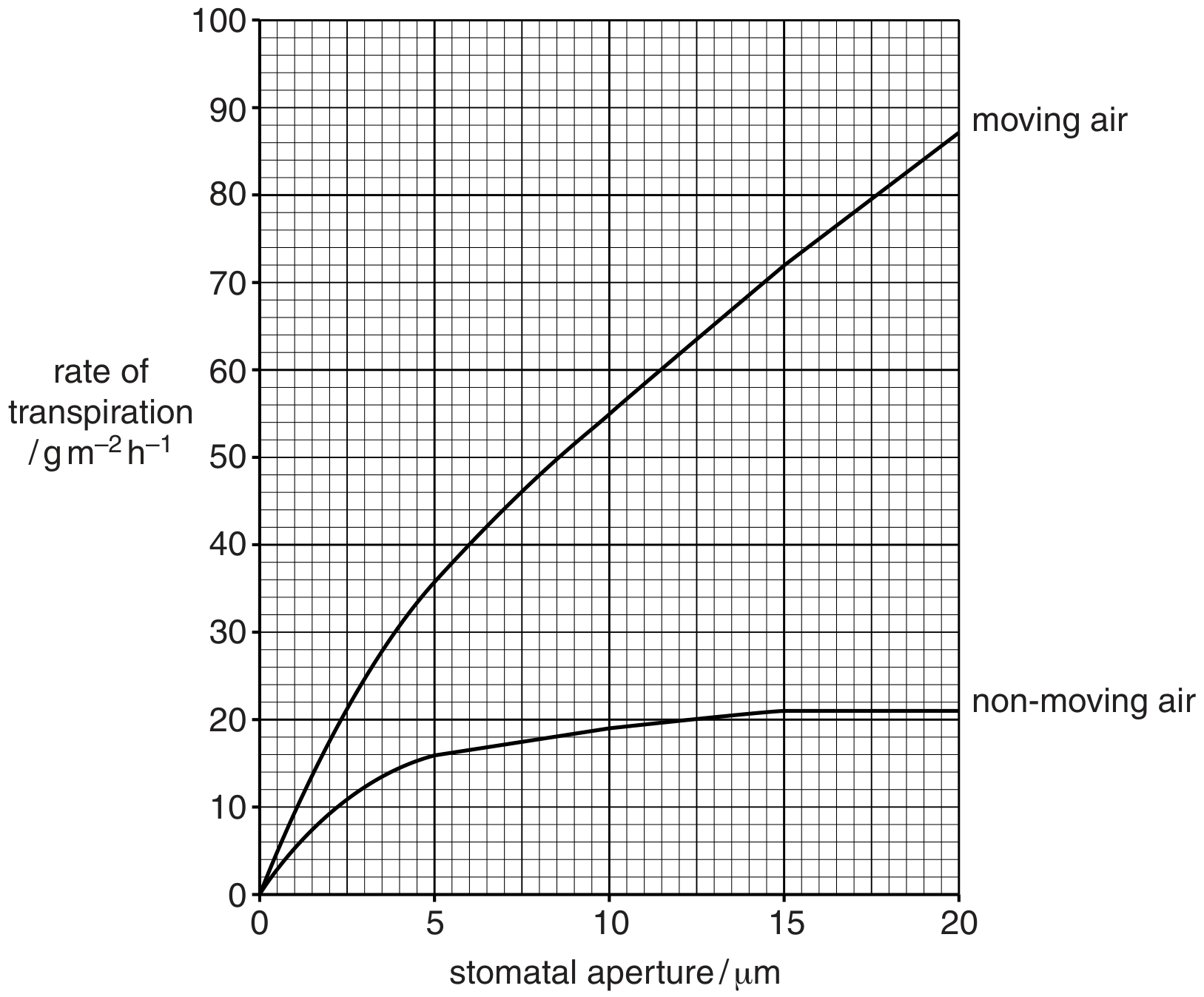
Researchers investigated the effect of stomatal aperture on rates of transpiration in leaves of Tradescantia zebrina under two conditions:
- air kept moving by a fan (moving air)
- non-moving air.

The results are shown in Fig. 2.2.

Fig. 2.2

Fig. 2.2

(a)
(i)

Compare the effect of stomatal aperture on the rate of transpiration in T. zebrina in the two conditions.

[ 3 ]
(ii)

Explain the effect of stomatal aperture on rates of transpiration in non-moving and moving air.

[ 3 ]
[Maximum number: 4]

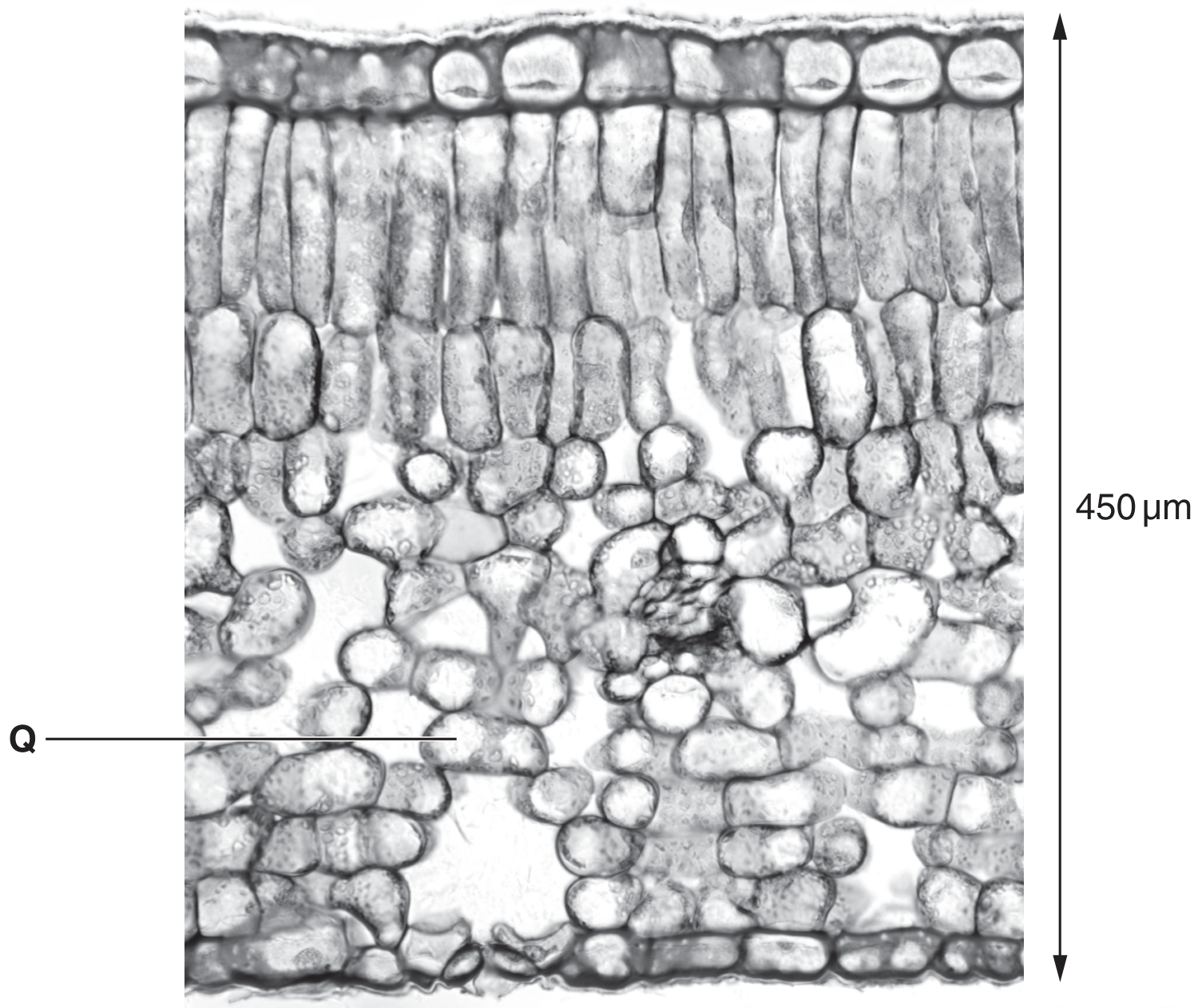
Fig. 3.1 is a photomicrograph of a transverse section through a leaf from a tea plant, Camellia sinensis.

Fig. 3.1

Fig. 3.1

(a)

Describe and explain how water moves from inside the leaf at point Q on Fig. 3.1 to the atmosphere outside the leaf during transpiration.

[ 4 ]
(a)

Transpiration is often described as an 'inevitable consequence of gas exchange in plants'.

Explain what is meant by this statement.

[ 3 ]
0