EduNinja
[Maximum number: 1]

Which features affect the tensile strength of collagen?
1 the helical structure of collagen chains
2 the small R group of the amino acids in collagen
3 the insoluble nature of collagen
4 the covalent bonds between collagen molecules

A

1, 2, 3 and 4

B

1 and 3 only

C

1, 2 and 4 only

D

2, 3 and 4 only
[Maximum number: 1]

Which features affect the tensile strength of collagen?

1 the helical structure of collagen chains
2 the small R group of the amino acids in collagen
3 the insoluble nature of collagen
4 the bonds between collagen molecules

A

1, 2, 3 and 4

B

1, 2 and 4 only

C

1 and 3 only

D

2, 3 and 4 only

[Maximum number: 1]

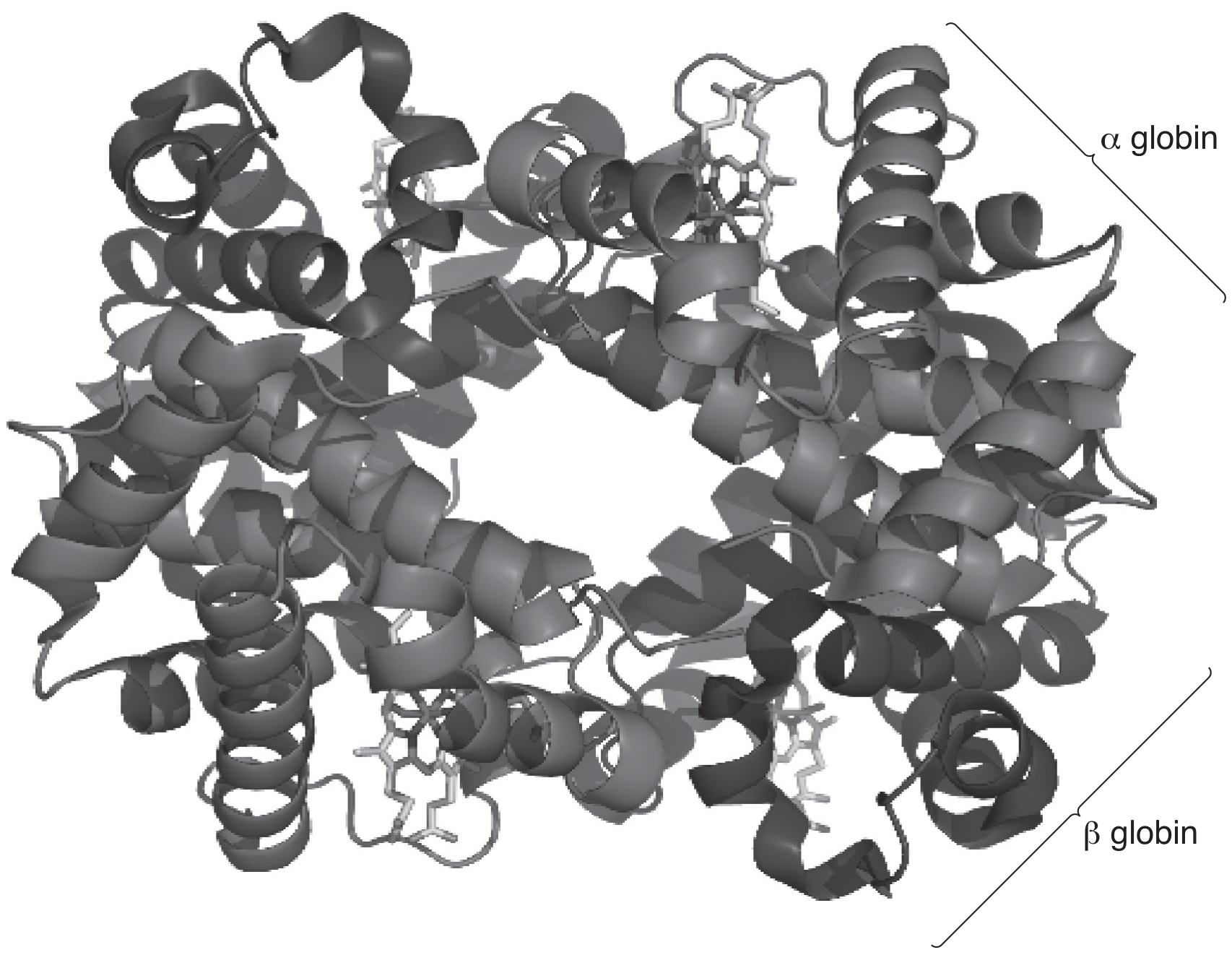
Fig. 3.1 shows a molecule of haemoglobin.

Fig. 3.1

Fig. 3.1

(a)

Collagen is a fibrous protein found in many tissues in animals.

[ 1 ]
(i)

State the function of collagen in the walls of arteries.

[ 1 ]
[Maximum number: 1]

Which row describes a collagen molecule?

bonds stabilising the molecule

properties

primary structure

helix

disulfide

high temperatures increase flexibility

high proportion of glycine

double

disulfide

resistant to stretching

repeat sequences of three amino acids

single

hydrogen

high tensile strength

repeat sequences of three amino acids

triple

hydrogen

insoluble in water

high proportion of glycine and proline

alpha

[Maximum number: 1]

Which feature of collagen enables it to fulfil a structural role in skin and in tendons?

A

Adjacent collagen molecules are linked by ester bonds.

B

Collagen fibres form layers with the fibres in different directions.

C

Collagen molecules are formed as a triple helix of polypeptide chains.

D

Polypeptide chains of collagen are tightly folded into compact shapes.

[Maximum number: 1]

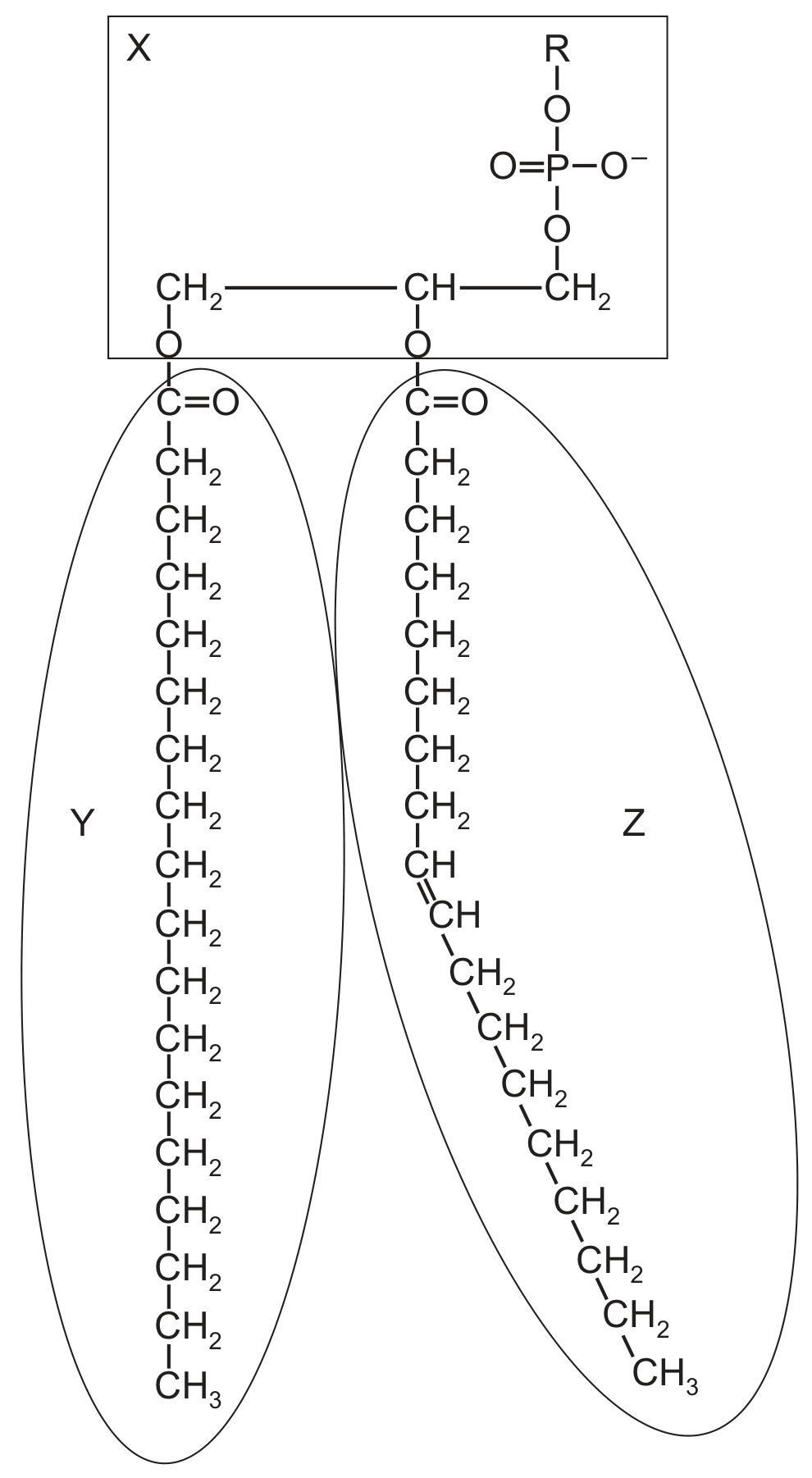
The diagram shows a phospholipid molecule divided into three regions, X, Y and Z. R, in region X , represents a range of possible chemical groups.

Question image

Regions X, Y and Z affect the properties of cell surface membranes in different ways.
Which row shows the effect of each region on the properties of a cell surface membrane?

increases permeability of hydrophobic region

repels polar molecules

attracts water molecules

X

X

Y and Z

Y

Y and Z

X

Y and Z

X

Y and Z

Z

Y and Z

X

[Maximum number: 1]

Which description is correct?

A

A collagen molecule has a high proportion of the amino acid glycine, which has a very small side chain.

B

A group of three collagen fibres forms a strong, insoluble coiled structure termed a triple helix.

C

Each of the collagen polypeptides in a collagen molecule has a regular spiral arrangement of many alpha helices.

D

Peptide bonds are present between amino acids of the same polypeptide and between the different polypeptides forming the collagen molecule.

[Maximum number: 1]

Which row gives the correct description of both a collagen molecule and a collagen fibre?

collagen molecule

collagen fibre

α\alpha and β\beta polypeptide chains forming a double helix, held together by disulfide bonds

molecules of collagen arranged randomly to each other, linked by hydrogen bonds

a polypeptide chain, with repeating amino acids, forming an α\alpha-helix

three molecules of collagen, forming a triple helix, held together by hydrogen bonds

a polypeptide chain, with three repeating amino acids, forming a helix

three α\alpha helical collagen molecules, forming a triple helix, held together by ionic bonds

three helical polypeptide chains, forming a triple helix, held together by hydrogen bonds

molecules of collagen lying parallel and cross-linked to each other

[Maximum number: 2]

Collagen is a fibrous protein that is found in many tissues in animals.

(a)

Osteogenesis imperfecta is a disease that results from a deficiency in collagen.

Suggest how a named tissue or structure is affected in a person who has this disease.

[ 2 ]
0