[Maximum number: 1]
Fig. 1.1 is a diagram of an antibody molecule.
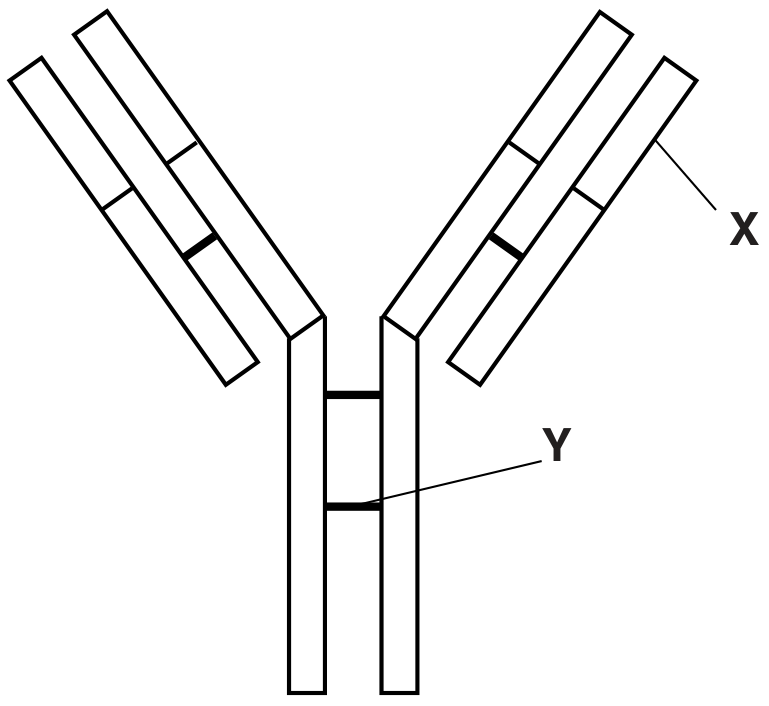
Fig. 1.1
(a)
(i)
Name the part labelled X.
[ 1 ]
 EduNinja
Fig. 1.1 is a diagram of an antibody molecule.
Fig. 1.1
Name the part labelled X.
During translation, a polypeptide is synthesised when amino acids are added to a growing chain of amino acids.
Fig. 1.1 shows part of a growing chain of amino acids and the amino acid cysteine.
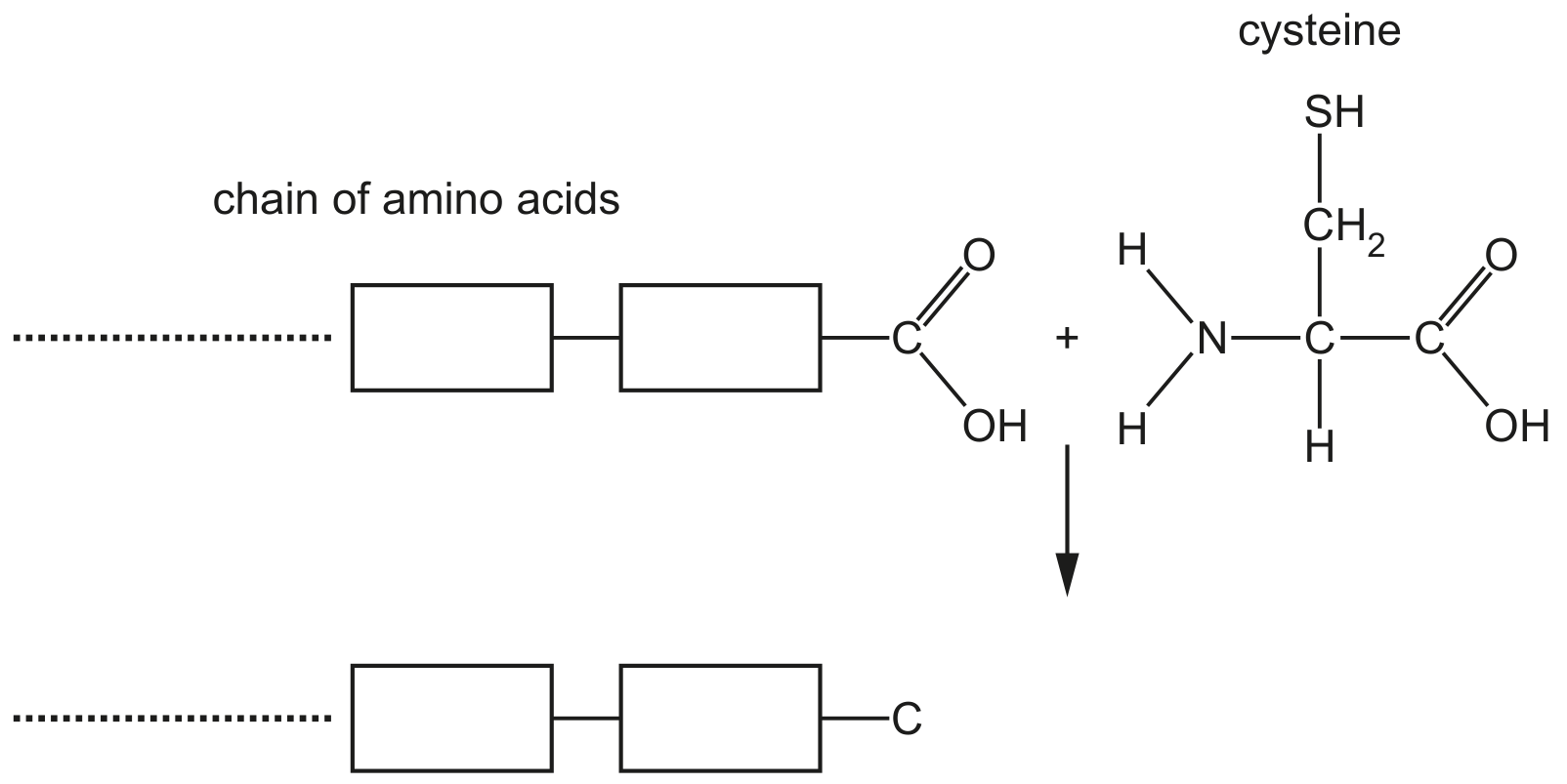
Fig. 1.1
State the name of the covalent bond that forms when cysteine is added to the growing chain of amino acids.
Antibodies are secreted by activated B-lymphocytes known as plasma cells.
Fig. 1.1 is a diagram showing the cellular processes involved in the production of a polypeptide of an antibody molecule (not drawn to scale).
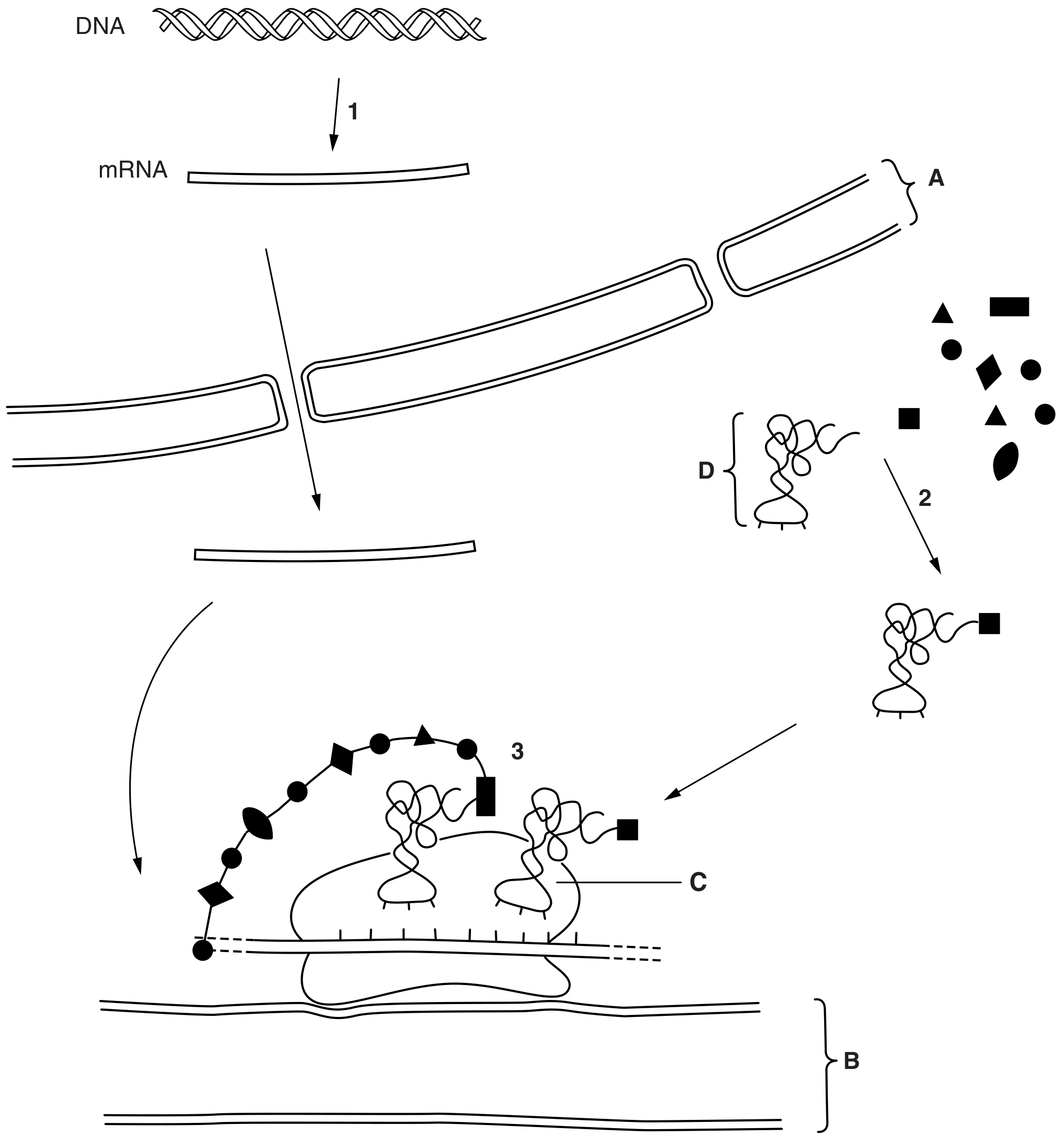
Fig. 1.1
Antibodies are glycoproteins.
State what is meant by the term glycoprotein.
Fig. 1.1 shows five biological molecules.
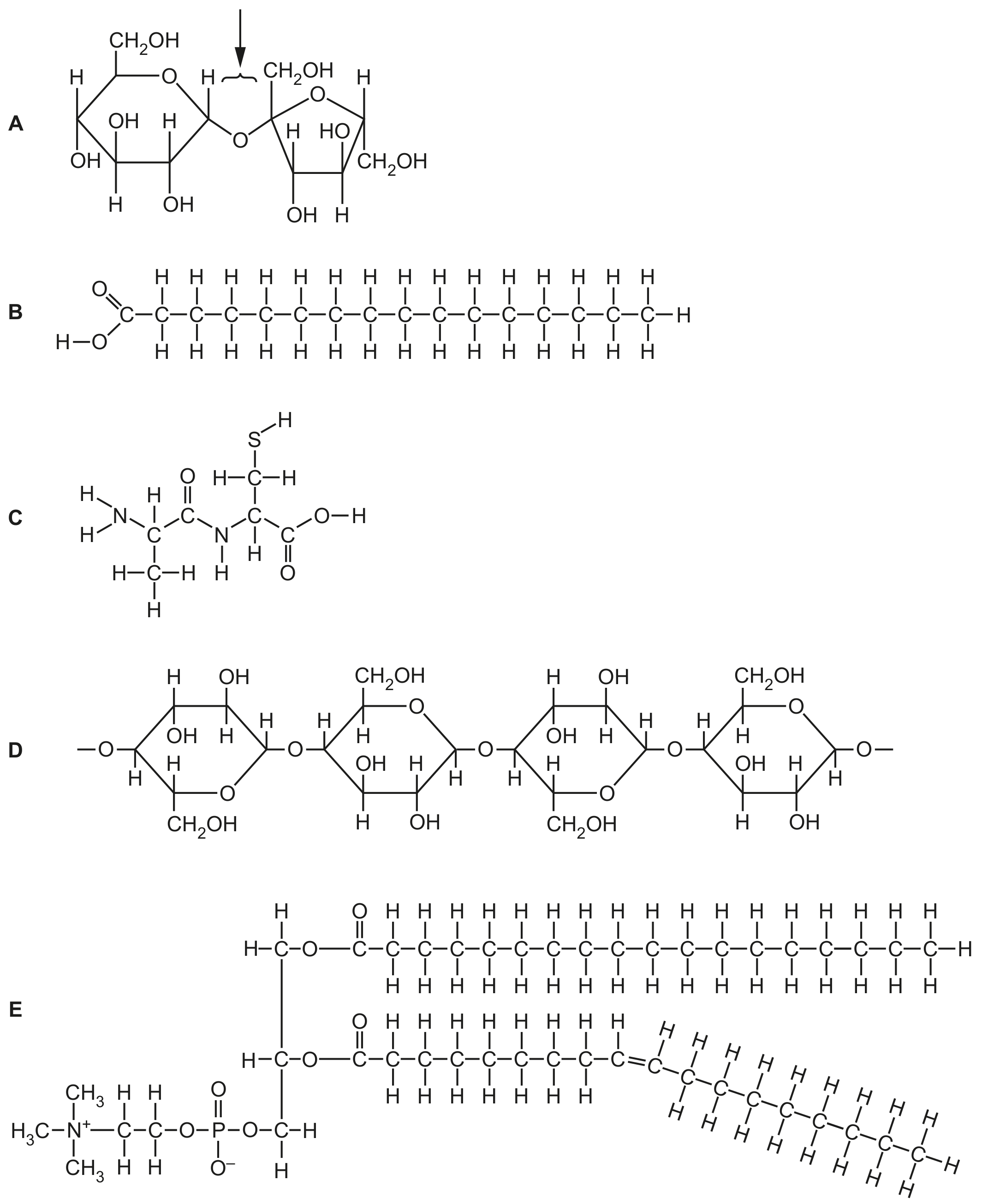
Fig. 1.1
State the letter of the molecule that could be formed during the hydrolysis of a polypeptide.
A student investigated the initial rate of reaction of catalase in breaking down hydrogen peroxide into oxygen and water:
The volume of oxygen collected was recorded over a period of 140 seconds. The results are shown in Fig. 2.1.
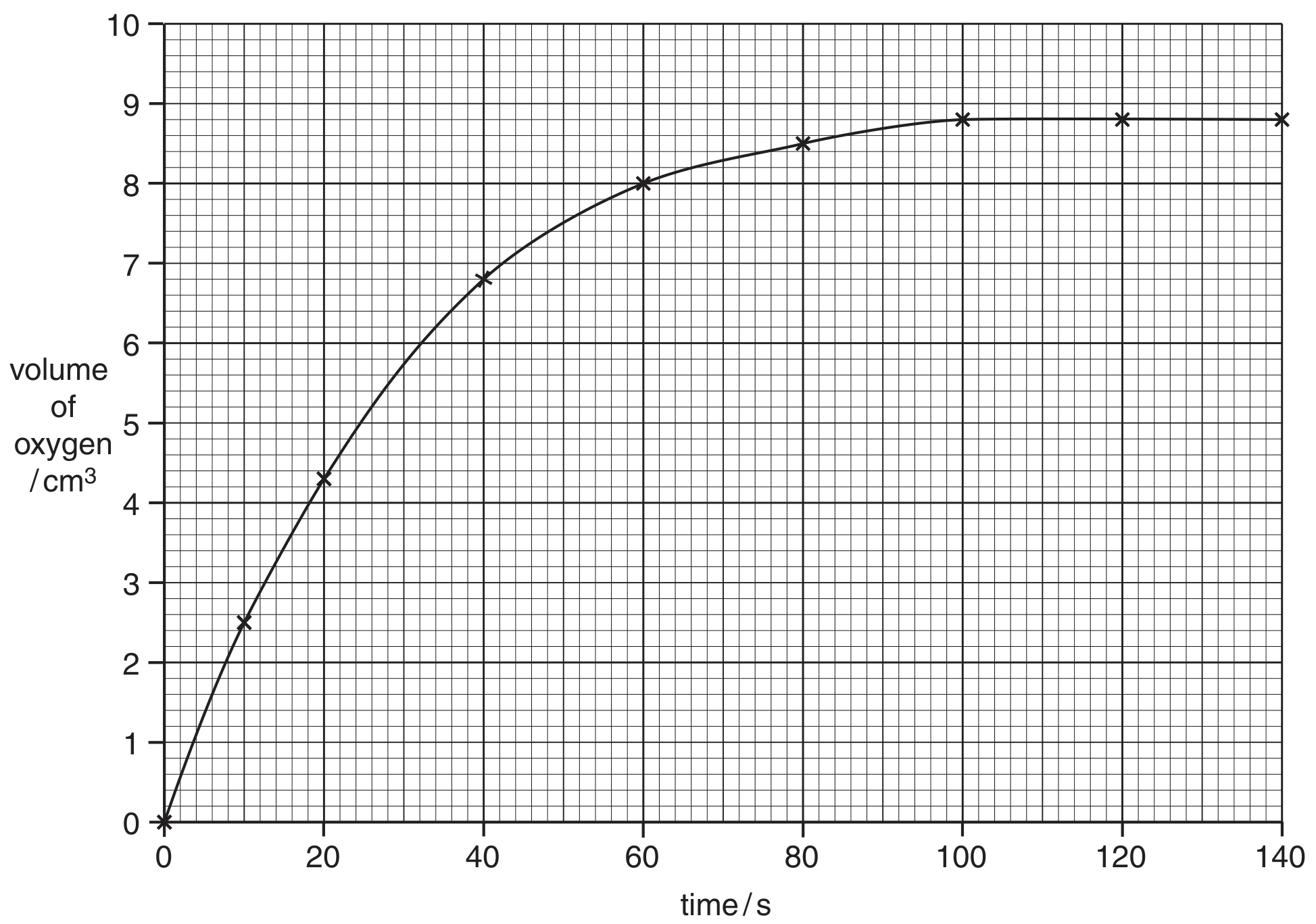
Fig. 2.1
Enzyme molecules in cells eventually stop working and are broken down.
Outline how cells replace the enzymes that are broken down.
Ribosomes exist as separate subunits that bind together during protein synthesis.
What do these subunits consist of?
mRNA and protein
mRNA and tRNA
rRNA and protein
rRNA and tRNA
Fig. 2.1 is a photomicrograph of a longitudinal section (LS) through a root tip. Two different regions are visible:
- the root apical meristem
- the root cap.
Cells in the root cap synthesise a gel-like, sticky secretion known as mucilage, which is important in reducing friction between soil and the growing root. It is composed mainly of polysaccharides and also contains some amino acids and enzymes.
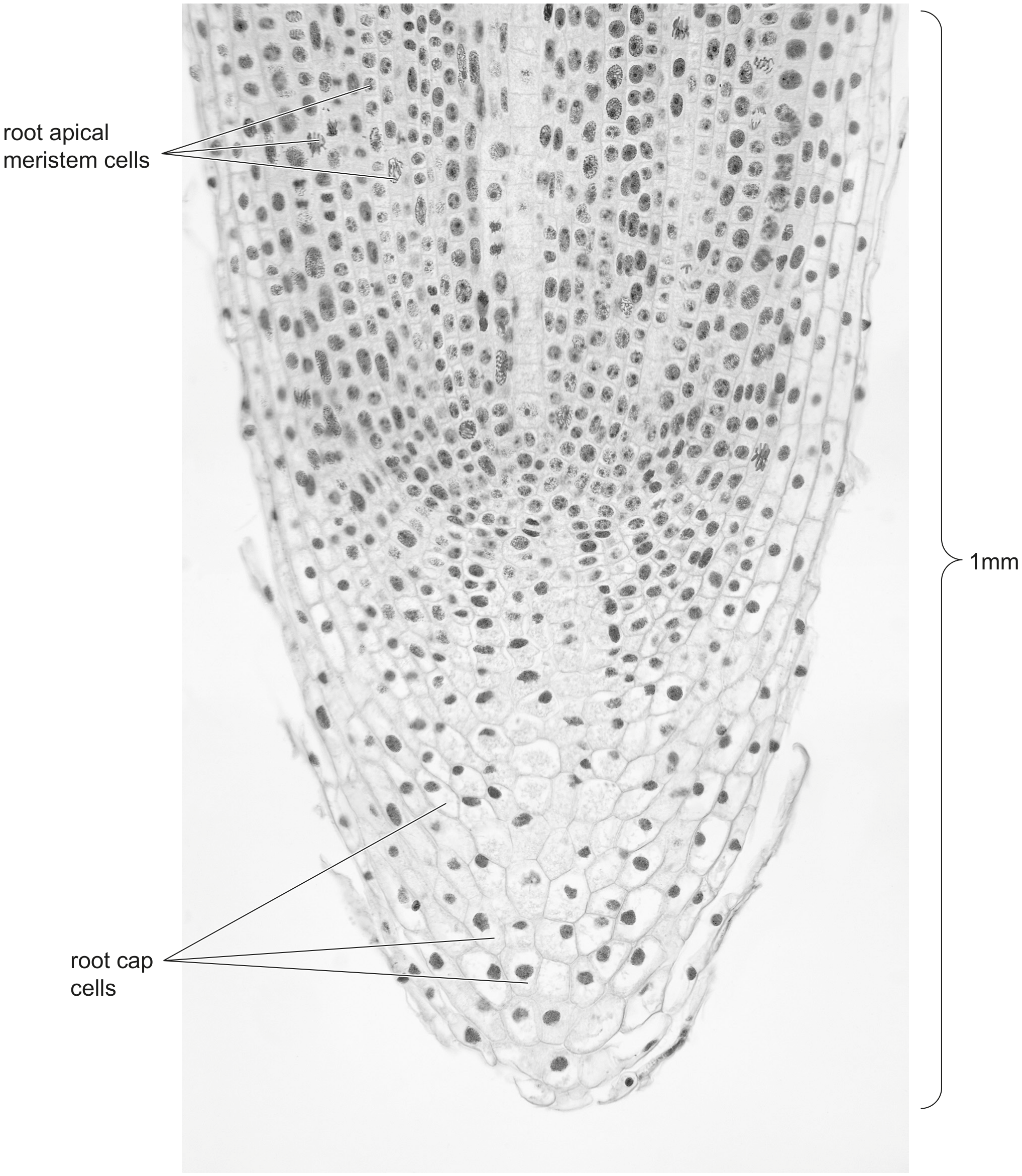
Fig. 2.1
The polysaccharides and amino acids present in the mucilage are a source of nutrients for soil microorganisms that live in the area surrounding the root. Some of these microorganisms can break down soil compounds to release mineral ions.
The soil microorganisms use amino acids to synthesise proteins. All of the twenty different amino acids that are present in proteins have the same general structure.
Draw the general structure of an amino acid in the space provided and use this drawing to explain how it is possible to have many different amino acids.
Starch molecules are the main storage molecules in many types of cereal grain, such as the grain of the barley plant.
When the seed inside a barley grain germinates, genes coding for digestive enzymes are switched on. The enzymes that are synthesised catalyse the hydrolysis of storage molecules such as proteins and starch.
The hydrolysis of proteins in the barley seed produces amino acids that can be used in the synthesis of the proteins required for formation of the seedling (young plant).
Fig. 2.1 is an incomplete diagram of the molecular structure of the smallest amino acid, glycine. Each molecule of glycine has two carbon atoms.
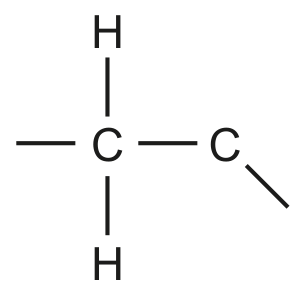
Fig. 2.1
Complete Fig. 2.1 to show the molecular structure of glycine.
The diagrams show the structure of four amino acids in aqueous solution.
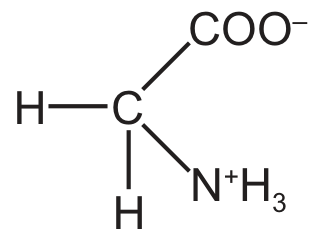
glycine
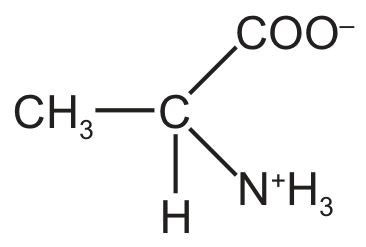
alanine
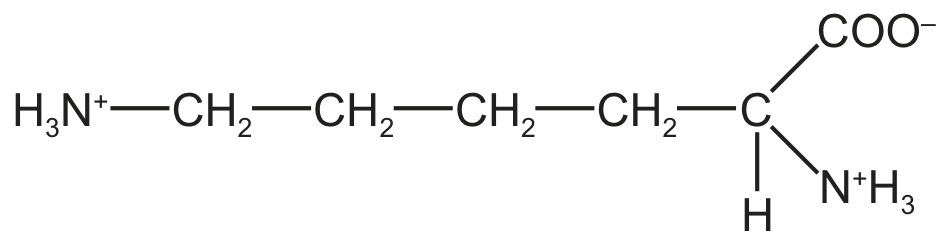
Iysine
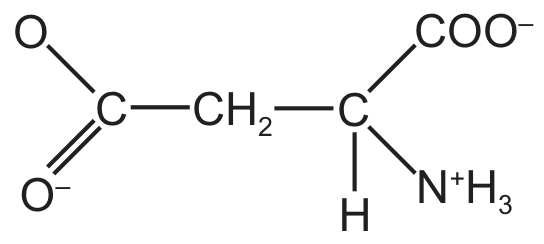
aspartate
Which two structures have an overall charge?
alanine and aspartate
alanine and glycine
aspartate and lysine
glycine and lysine
Which biological molecules always contain the element nitrogen?
amino acids, cellulose, mRNA
amino acids, DNA, lipids
enzymes, mRNA, tRNA
membrane proteins, starch, tRNA