C1.3.15 (HL)—Carbon fixation by Rubisco
Rubisco catalyses carbon fixation by attaching carbon dioxide to RuBP, forming glycerate phosphate at the start of the Calvin cycle.
- Syllabus
- First assessment 2025
- Objective
- C1.3.15
- Level
- HL
Rubisco catalyses carbon fixation by attaching carbon dioxide to RuBP, forming glycerate phosphate at the start of the Calvin cycle.

Coverage 2015–2024 · Updated 15 Jul 2026
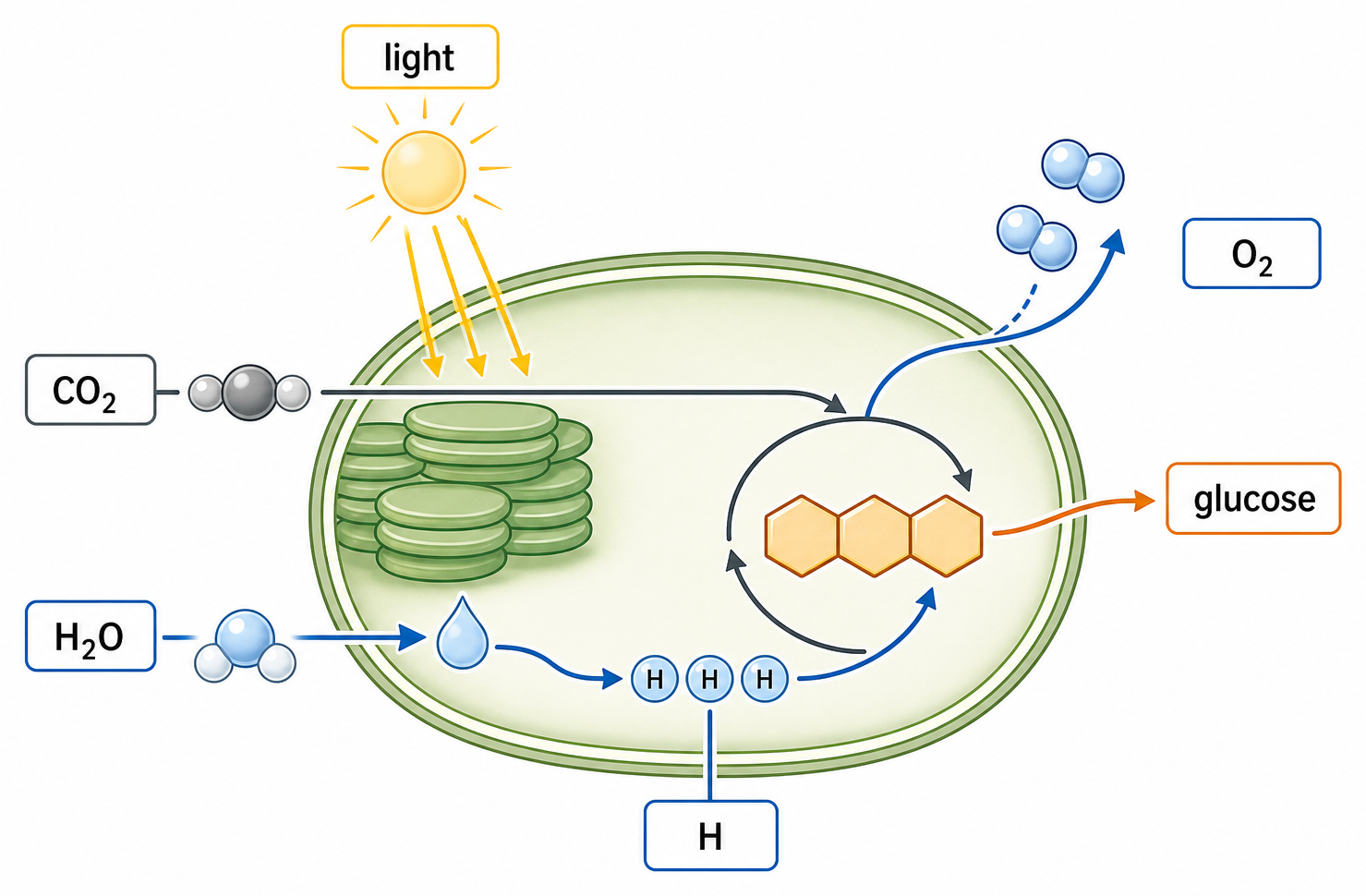
Rubisco catalyses carbon fixation in the chloroplast stroma by adding CO₂ to the five-carbon acceptor RuBP.
The unstable six-carbon product immediately divides into two molecules of glycerate 3-phosphate (GP). This is carbon's entry into the Calvin cycle.
Substrates: CO₂ and RuBP; enzyme: Rubisco; product: two GP molecules. Rubisco is the most abundant enzyme on Earth, and plants maintain high stromal concentrations because it works relatively slowly and is ineffective at low CO₂ concentrations.
Fixing three CO₂ molecules to three RuBP molecules produces six GP molecules before their reduction to triose phosphate.
Rubisco does not directly produce glucose or triose phosphate. It catalyses the fixation step that produces GP, which is modified in later Calvin-cycle reactions.
This objective is assessed through structured response, commonly using State / Describe / Explain.
State / Describe / Explain / Identify / Predict
Build the answer around this relationship: Rubisco catalyses carboxylation of RuBP.
Representative question
With reference to Calvin's experiment, explain the fixation of carbon dioxide in photosynthesis.
a. Calvin's experiment used algae/Chlorella in a round/thin/flat apparatus/"lollipop";
b. labelled carbon dioxide with radioactive carbon/ C14/14C (supplied to algae);
c. exposed the algae to light to promote photosynthesis;
d. every 5/few seconds/at short time intervals, samples of algae were taken;
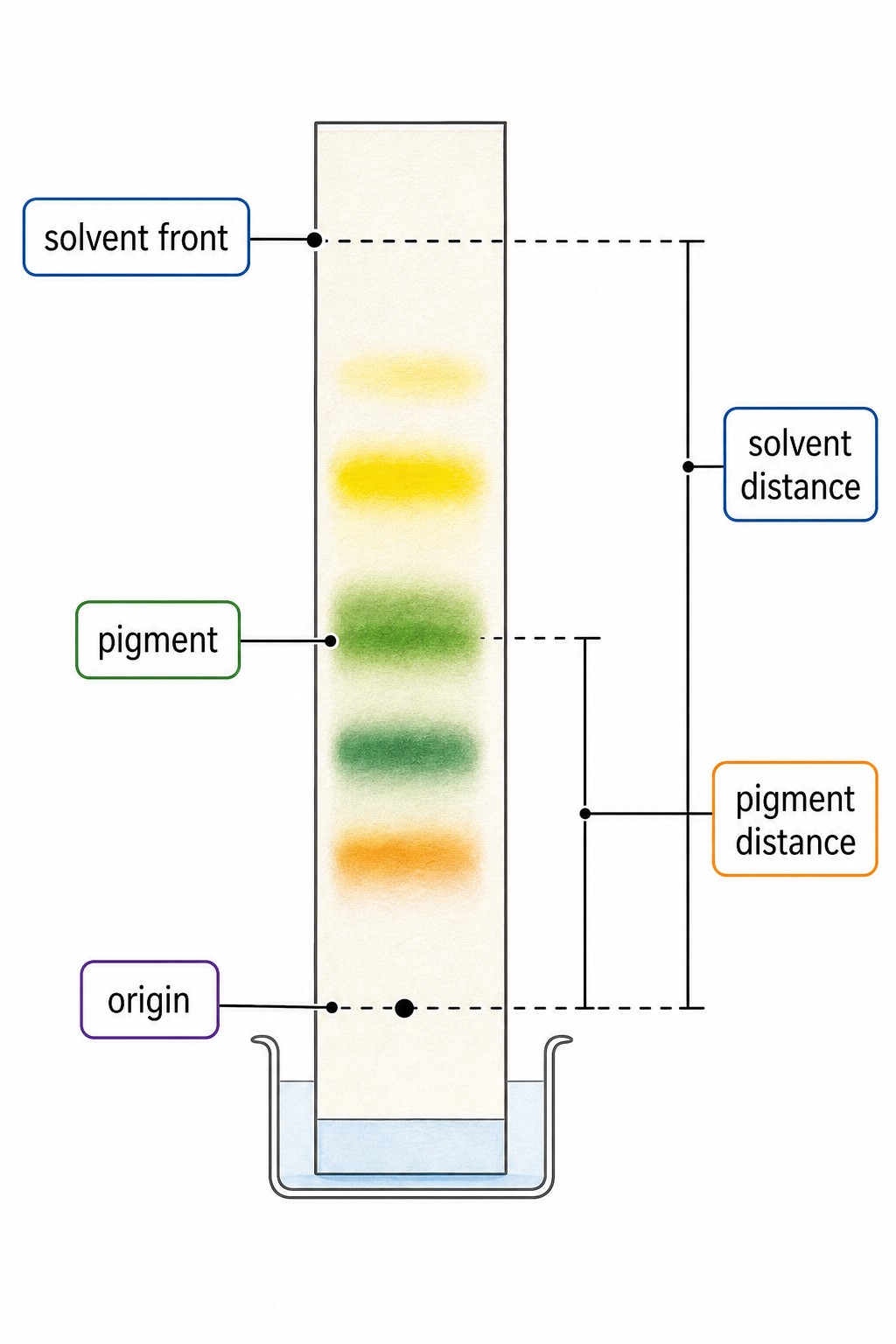
e. carbon compounds separated using chromatography;
f. radioactive carbon compounds/molecules with radioactive carbon/C14/ 14C identified with x-rays (autoradiography) / molecules containing radioactive carbon/C14/ 14C traced / glycerate 3-phosphate was the first compound detected/identified;
g. Calvin cycle/carbon fixation is the light-independent phase (of photosynthesis);
h. it takes place in the stroma (of the chloroplast);
i. ribulose bisphosphate/RuBP carboxylated to glycerate 3-phosphate/G3P;
j. catalysed by rubisco / (ribulose bisphosphate) carboxylase;
k. glycerate 3-phosphate/G3P is reduced to triose phosphate (using reduced NADP/NADPH and ATP);
I. triose phosphate is used to produce glucose;
m. triose phosphate is used to regenerate RuBP;
Marking guidance:
Allow clear annotated diagrams for
marking points mpi to mpm.
8 max
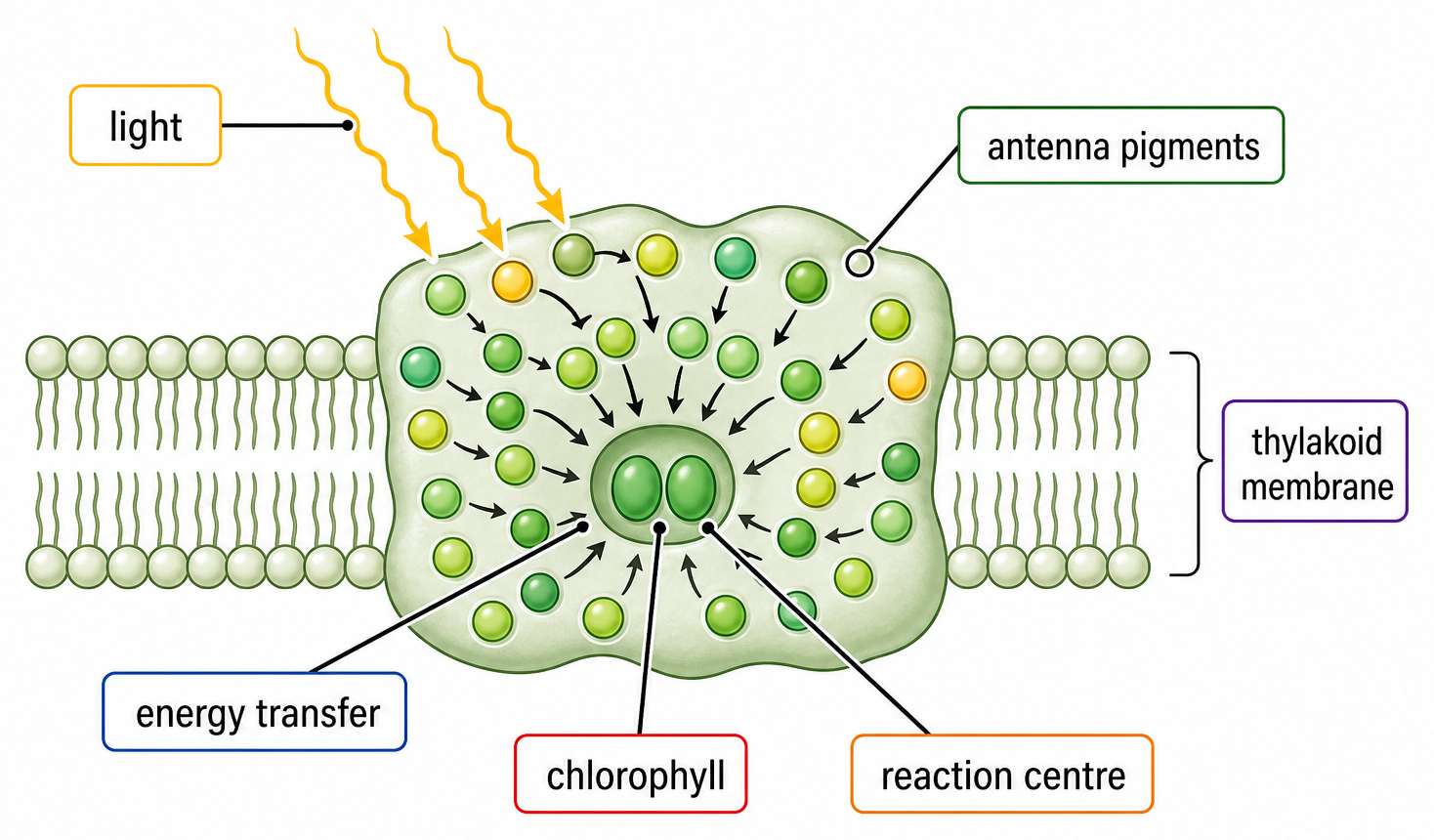
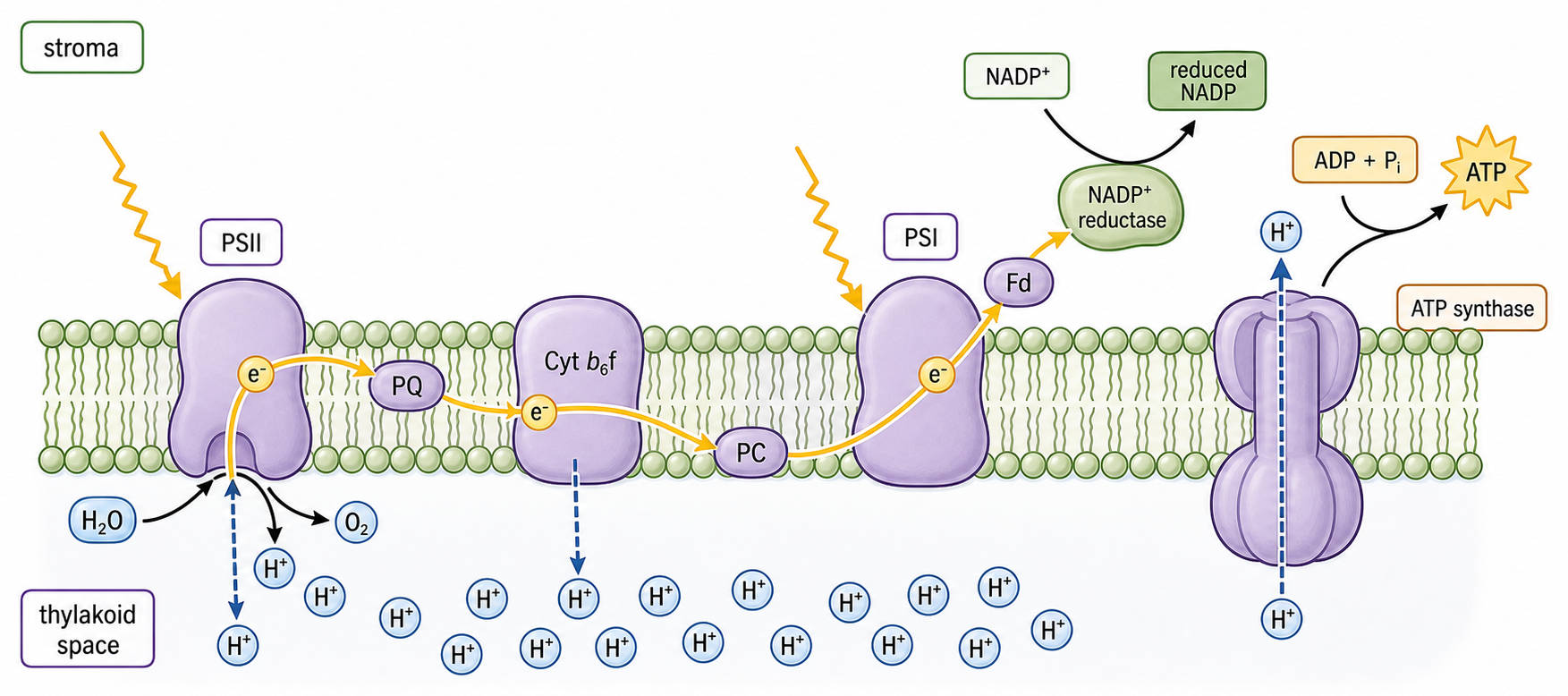
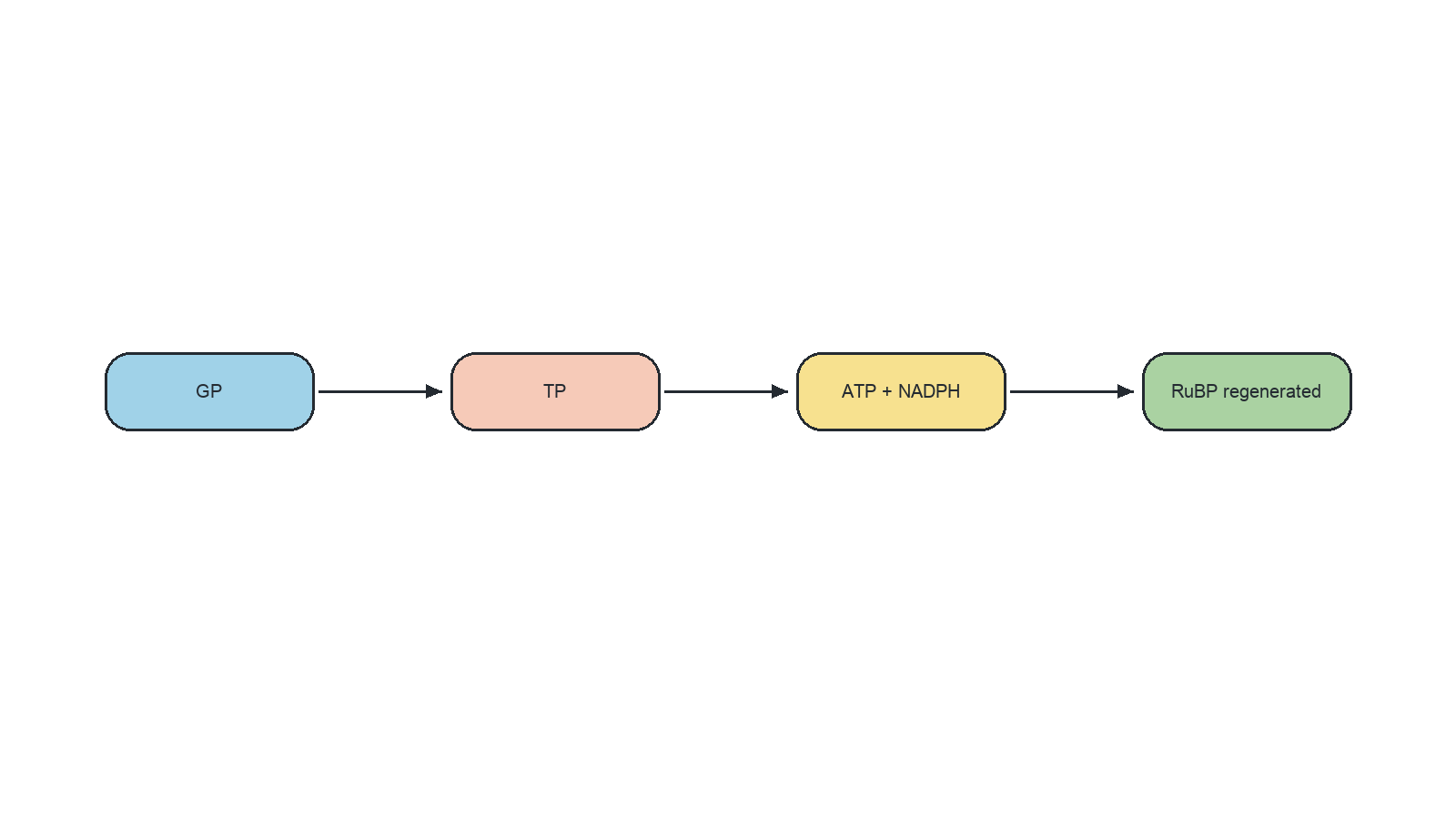
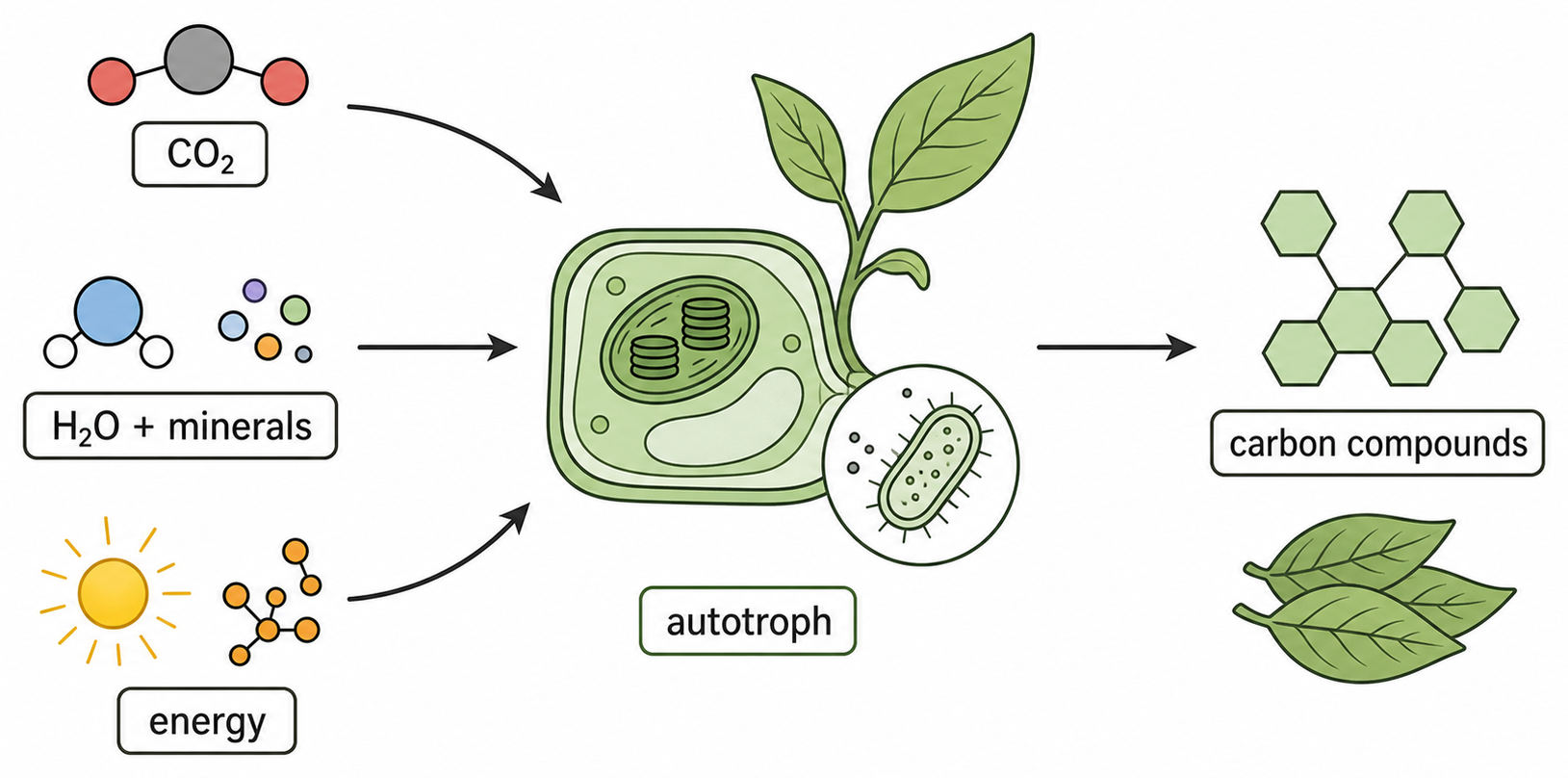
HL photosynthesis links light-dependent reactions to the Calvin cycle. Photosystems are pigment-protein arrays in thylakoid membranes; antenna pigments broaden absorption and pass energy to reaction-centre chlorophyll. PSII uses light to split water, supplying electrons, protons, and oxygen. Electron transport pumps protons into the thylakoid space, ATP synthase makes ATP by photophosphorylation, PSI re-excites electrons, and NADP is reduced. The Calvin cycle uses ATP and reduced NADP: Rubisco fixes CO2 to RuBP to form GP, GP is reduced to triose phosphate, most triose phosphate regenerates RuBP, and some becomes wider biomolecules.