C1.3.19 (HL)—Interdependence of light and light-independent reactions

The light-independent reactions depend on ATP and reduced NADP made by light-dependent reactions to reduce fixed carbon into sugars, connecting the mechanism to observable photosynthesis evidence.

Syllabus
First assessment 2025
Objective
C1.3.19
Level
HL

Exam analysis

Chance of appearing4%of analysed past papers
Latest appearanceNovember 2021
Most common paperPaper1
Typical marks1–8

Common command terms

  • Explain
  • Distinguish

Recent exam appearances

November 2021Paper2 ["HL"] · TZ07(c)[ 7 ]C1.3.19 (HL)—Interdependence of light and light-independent reactions
May 2017Paper1 ["HL"] · TZ213[ 1 ]C1.3.19 (HL)—Interdependence of light and light-independent reactions
May 2013Paper2 ["HL"] · TZ15(c)[ 8 ]C1.3.19 (HL)—Interdependence of light and light-independent reactions
May 2012Paper1 ["HL"] · TZ130[ 1 ]C1.3.19 (HL)—Interdependence of light and light-independent reactions
Practice this objective

Coverage 2012–2021 · Updated 15 Jul 2026

Calvin cycle products and recycling

HL only

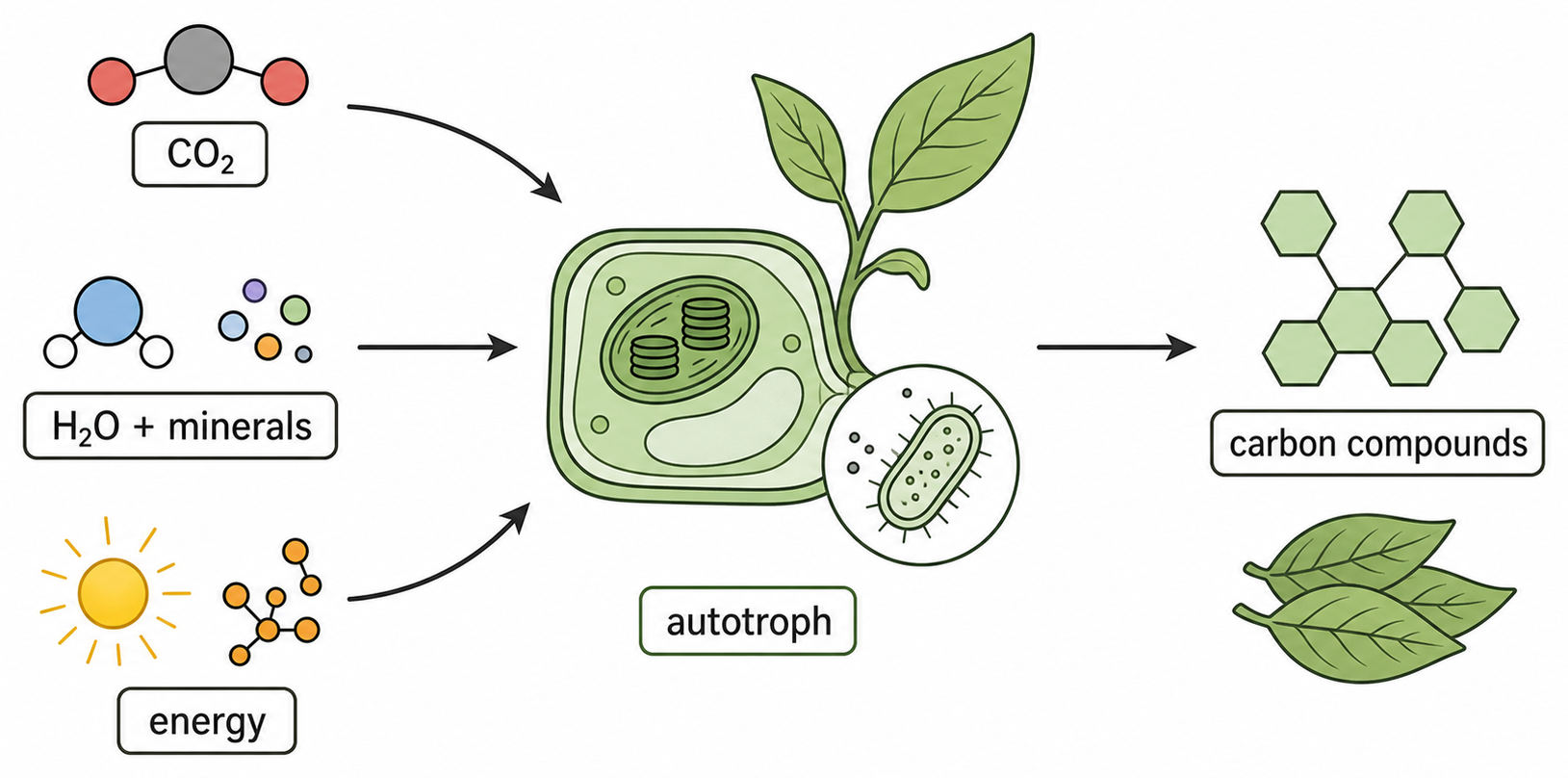
The Calvin cycle supplies carbon intermediates for carbohydrates, amino acids and other carbon compounds, while depending on ATP and reduced NADP from the light-dependent reactions.
All carbon in compounds made by a photosynthesizing organism is first fixed through the Calvin cycle. TP and other intermediates enter metabolic pathways; mineral nutrients supply elements such as nitrogen needed for amino acids and other products.
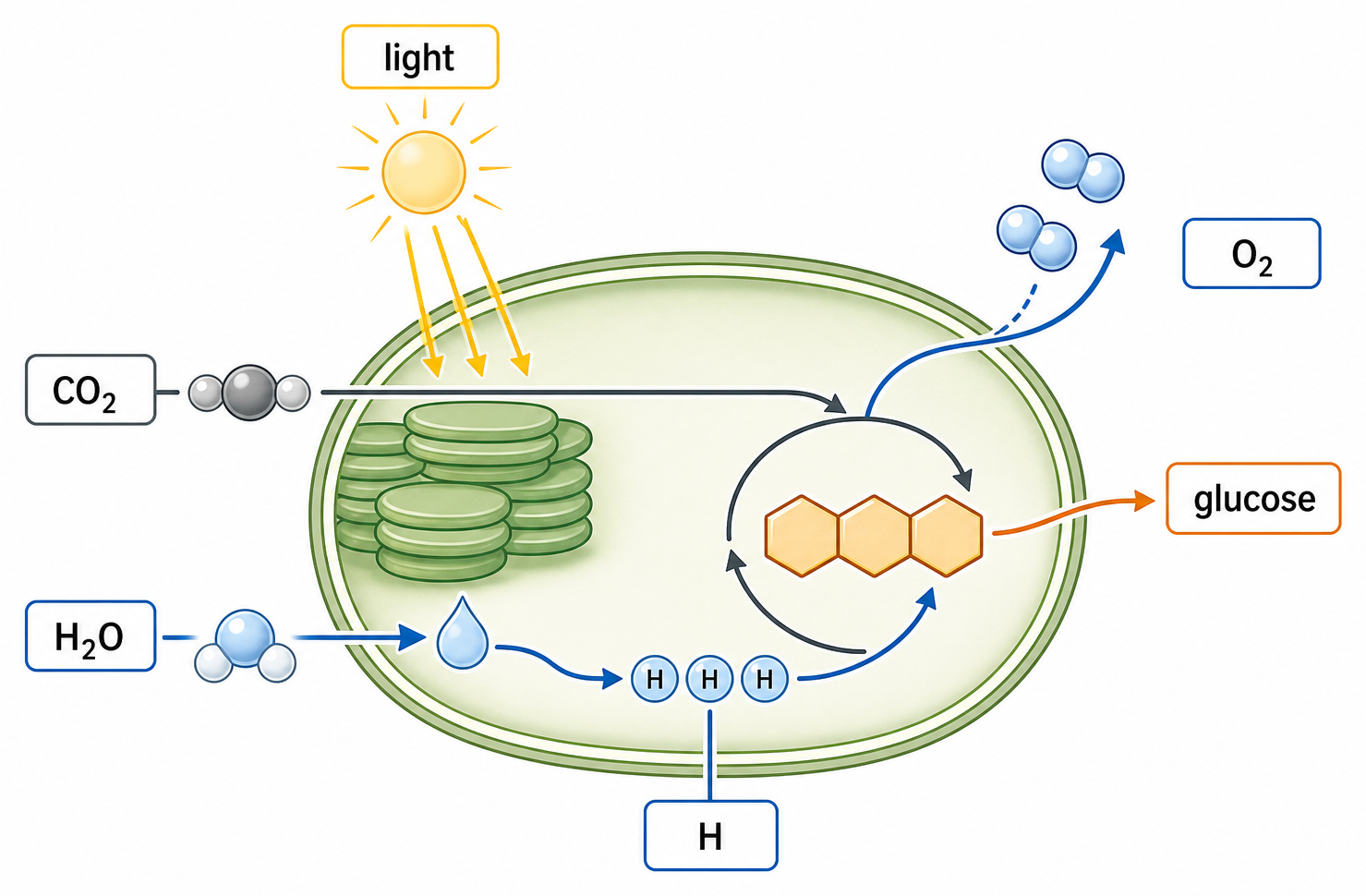
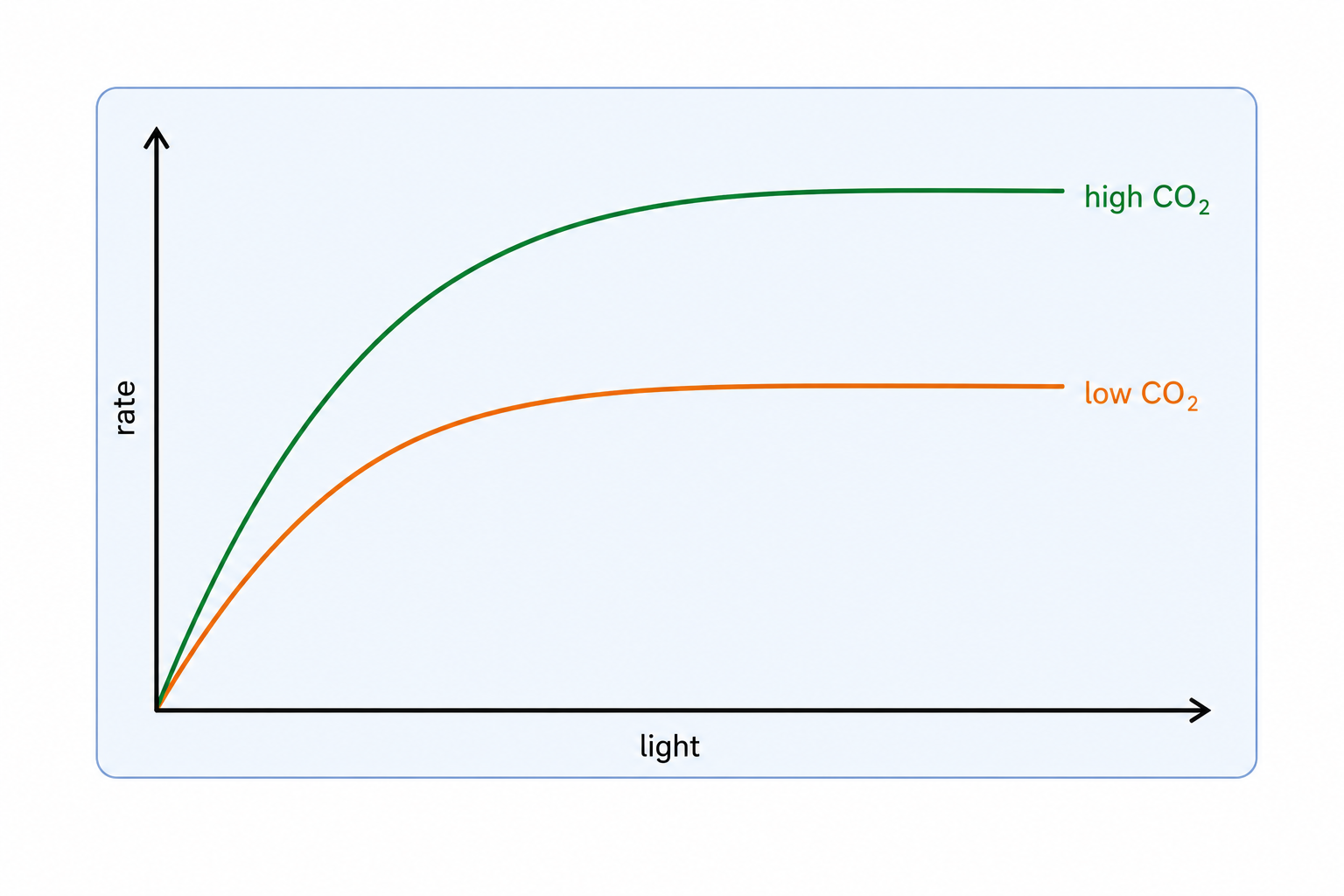
The light-dependent reactions supply ATP and reduced NADP; the Calvin cycle returns ADP, phosphate and NADP. Without light, ATP and reduced NADP production stops. Without CO₂, carbon fixation stops and the coupled recycling of electron acceptors is disrupted, eventually preventing photosystem II from functioning.

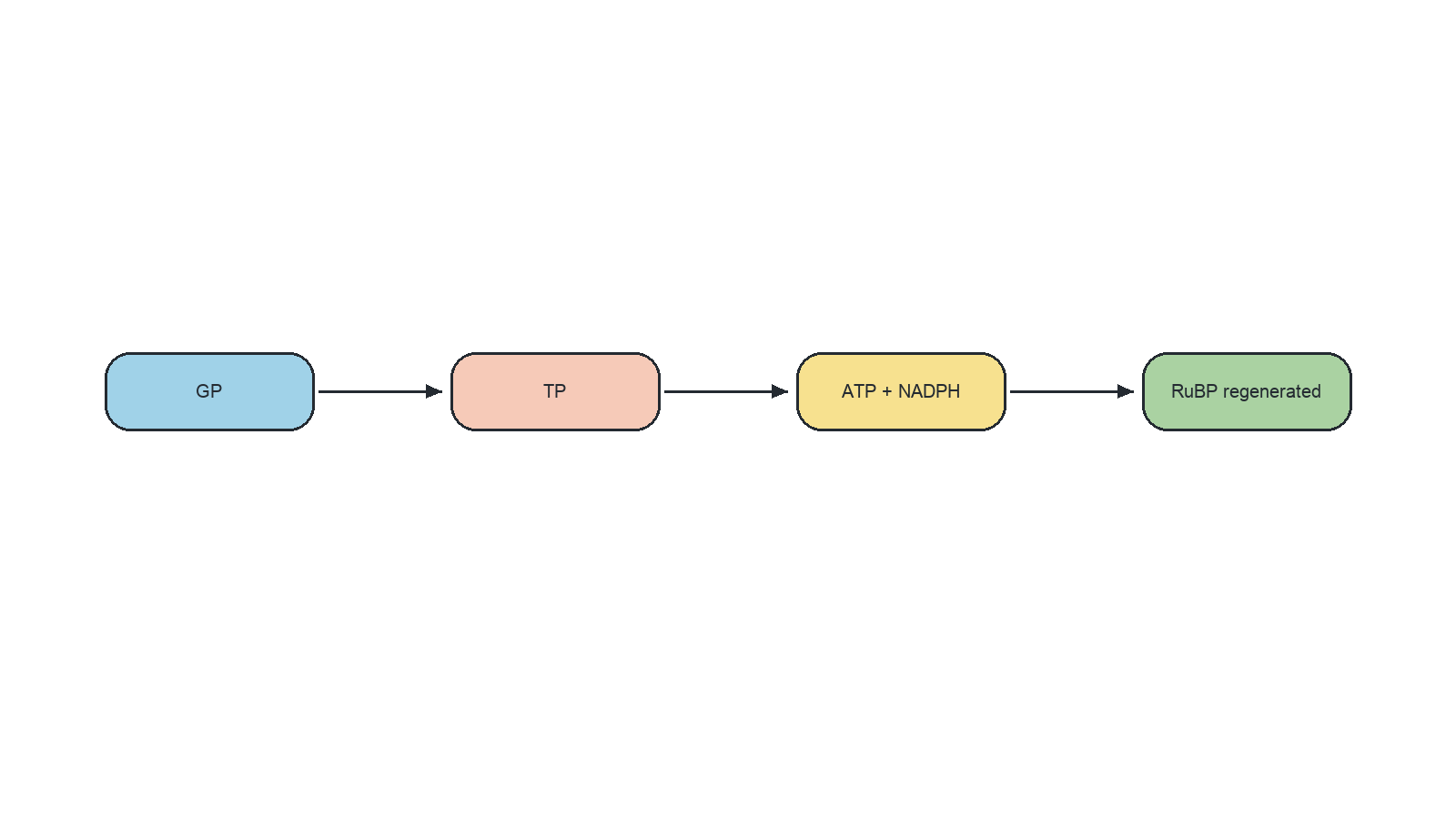
Some TP contributes to sucrose or starch, while carbon skeletons combined with mineral nitrogen can form amino acids. Most TP remains in the cycle to regenerate RuBP.

‘Light-independent’ means light is not absorbed directly by these reactions; it does not mean they can continue indefinitely without light-reaction products. Glucose is not formed in one Calvin-cycle step.

Interdependence of light and light-independent reactions

HL only

Assessment in practice

1–7 marks
How it is assessed

This objective is assessed through structured response, commonly using Explain / Distinguish.

Command terms

Explain / Distinguish

What earns marks

Build the answer around this relationship: Light-dependent reactions produce ATP and reduced NADP.

Representative question

Question 1

[Maximum number: 7]

Explain how the light-independent reactions of photosynthesis rely on the light-dependent reactions.

Trace Photosynthesis Mechanism

HL only

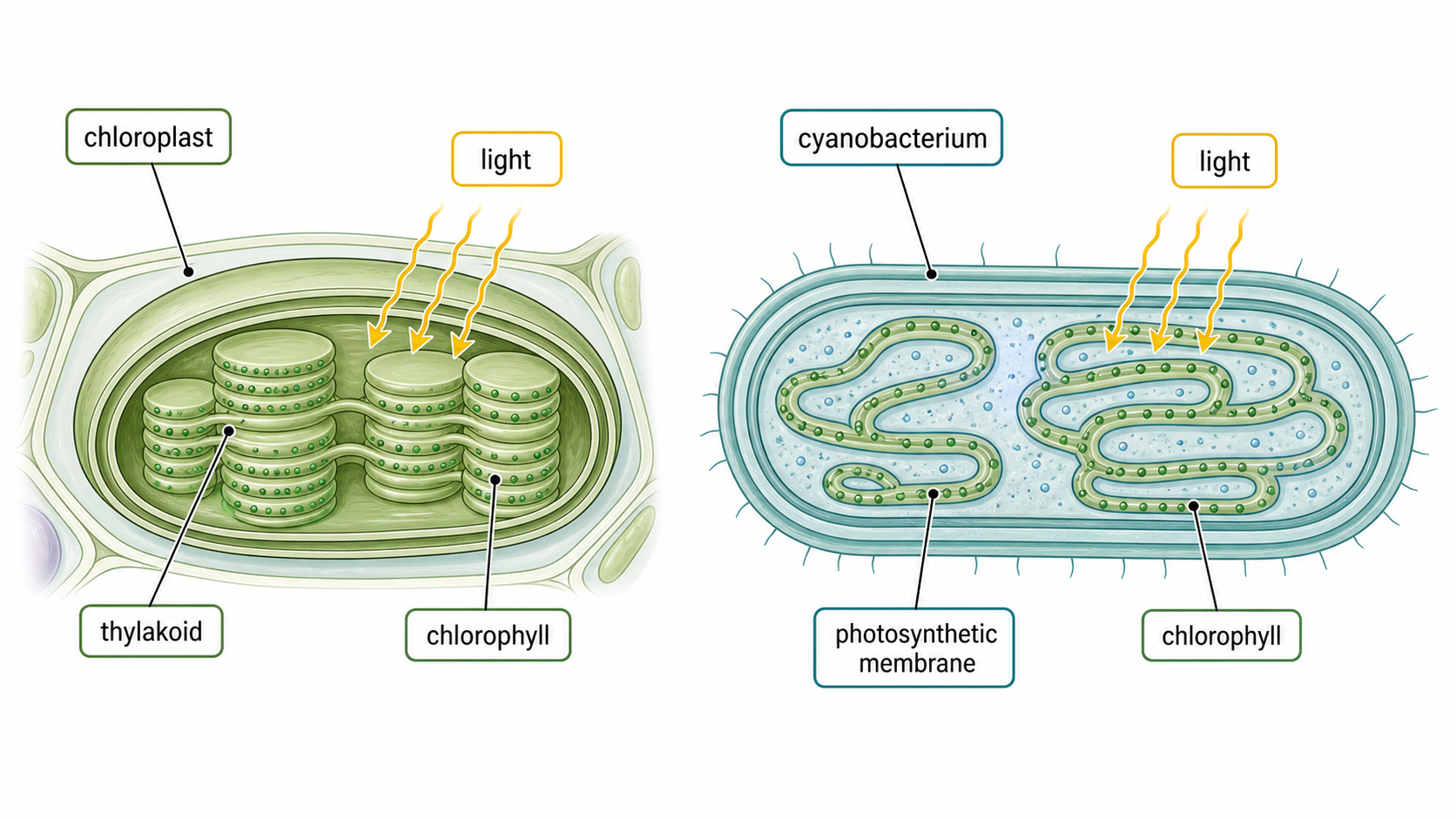
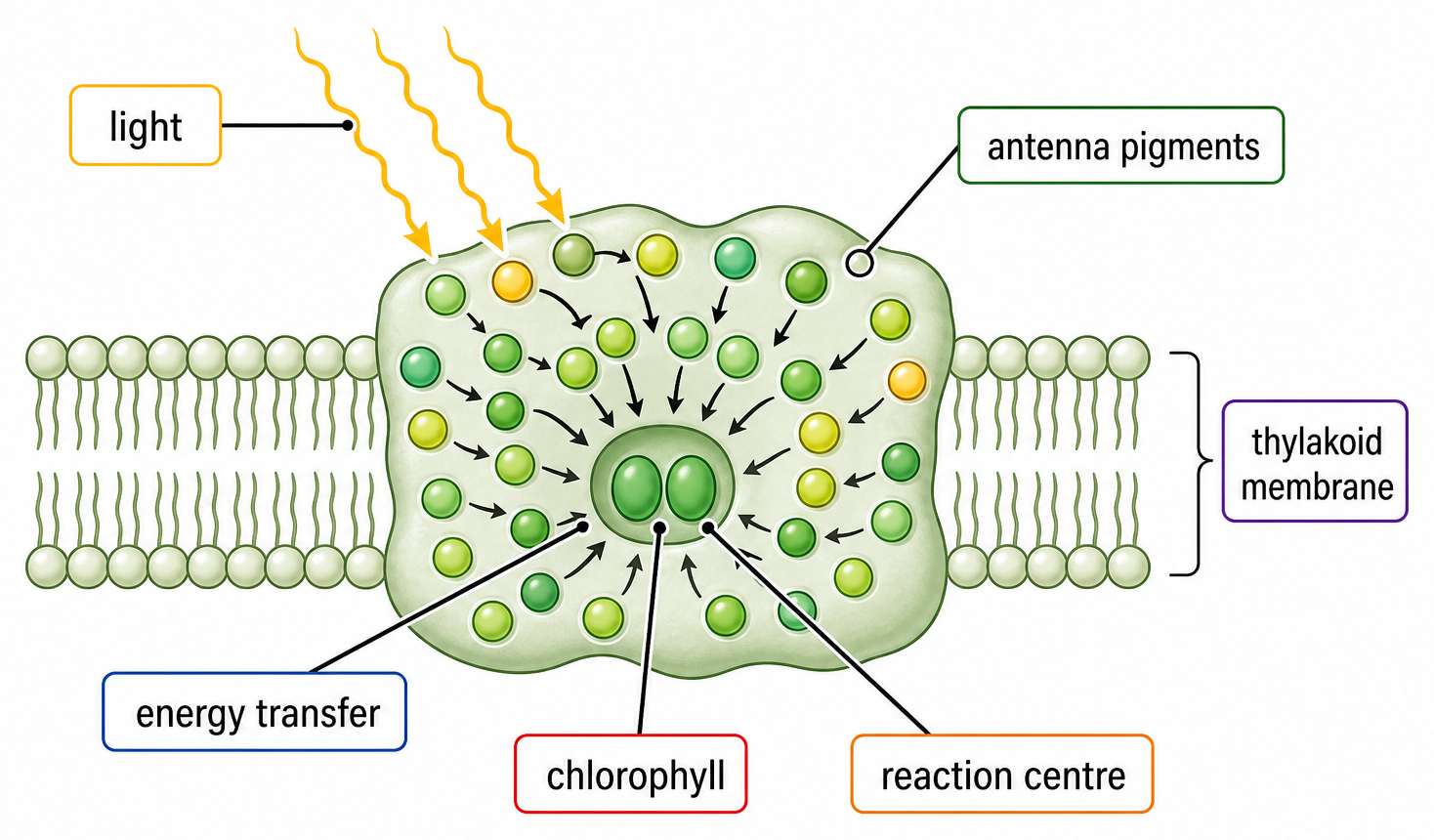
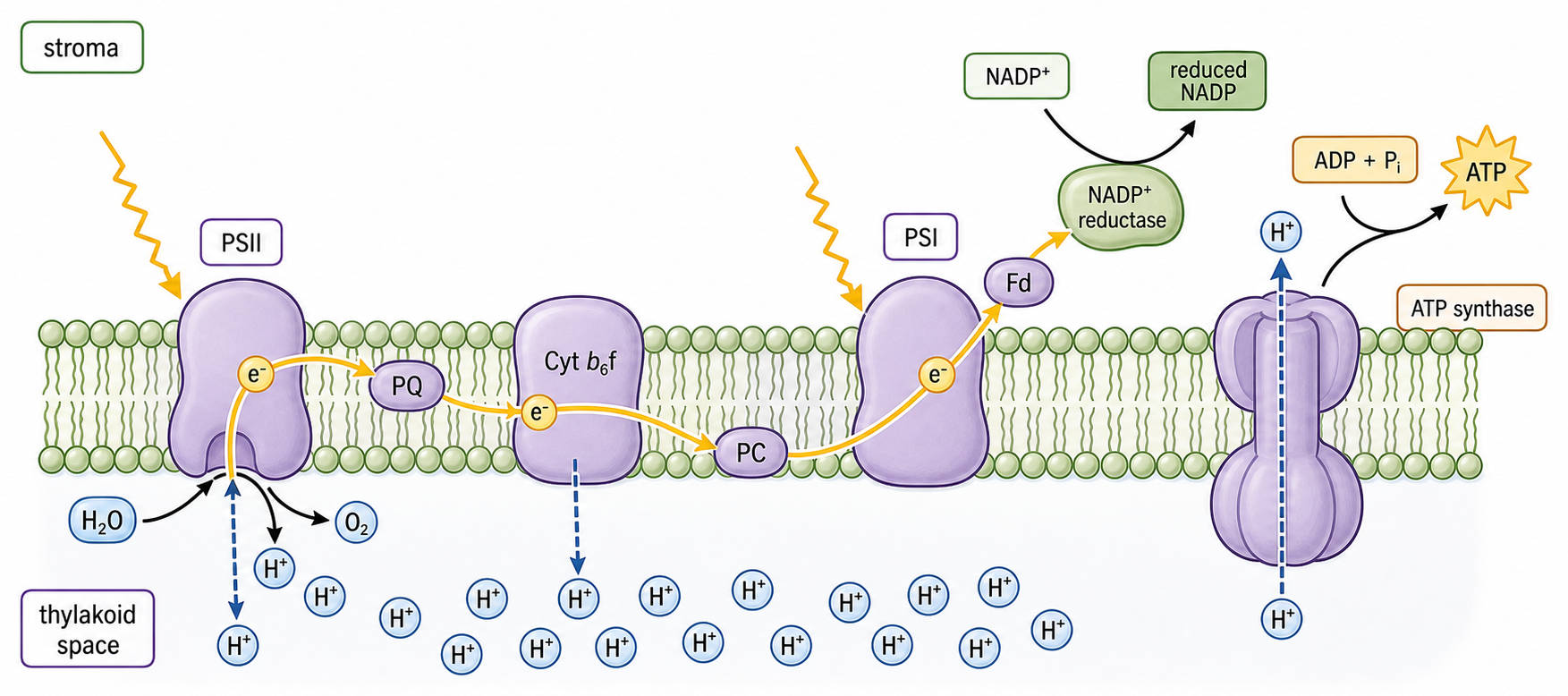
HL photosynthesis links light-dependent reactions to the Calvin cycle. Photosystems are pigment-protein arrays in thylakoid membranes; antenna pigments broaden absorption and pass energy to reaction-centre chlorophyll. PSII uses light to split water, supplying electrons, protons, and oxygen. Electron transport pumps protons into the thylakoid space, ATP synthase makes ATP by photophosphorylation, PSI re-excites electrons, and NADP is reduced. The Calvin cycle uses ATP and reduced NADP: Rubisco fixes CO2 to RuBP to form GP, GP is reduced to triose phosphate, most triose phosphate regenerates RuBP, and some becomes wider biomolecules.

  • Trace energy: pigments -> reaction centres -> ATP and reduced NADP.
  • Trace electrons/protons: water -> PSII -> carriers -> PSI -> NADP; proton gradient -> ATP synthase.
  • Trace carbon: CO2 -> RuBP/GP -> triose phosphate -> RuBP regeneration and biomolecule synthesis.
  • Trace exchange: light-dependent reactions supply ATP/reduced NADP; Calvin cycle returns ADP/NADP.

Concept essentials

  • Light-dependent reactions produce ATP and reduced NADP.
  • The Calvin cycle uses ATP and reduced NADP to reduce fixed carbon.
  • Light-dependent reactions occur in thylakoids, while the Calvin cycle occurs in stroma.
  • The two stages depend on exchange of energy carriers and reduced carriers.