C1.3.9 (HL)—Photosystems

Photosystems are pigment-protein arrays in thylakoid membranes that capture light and pass excited electrons through linked reaction centres, connecting the mechanism to observable photosynthesis evidence.

Syllabus
First assessment 2025
Objective
C1.3.9
Level
HL

Exam analysis

Chance of appearing3%of analysed past papers
Latest appearanceNovember 2025
Most common paperPaper1
Typical marks1–3

Common command terms

  • Outline

Recent exam appearances

November 2025Paper1B ["HL"] · TZ33(d)[ 2 ]C1.3.9 (HL)—Photosystems
May 2025Paper2 ["HL"] · TZ210(b)[ 3 ]C1.3.9 (HL)—Photosystems
November 2020Paper1 ["HL"] · TZ030[ 1 ]C1.3.9 (HL)—Photosystems
Practice this objective

Coverage 2020–2025 · Updated 15 Jul 2026

Photosystem structure and function

HL only
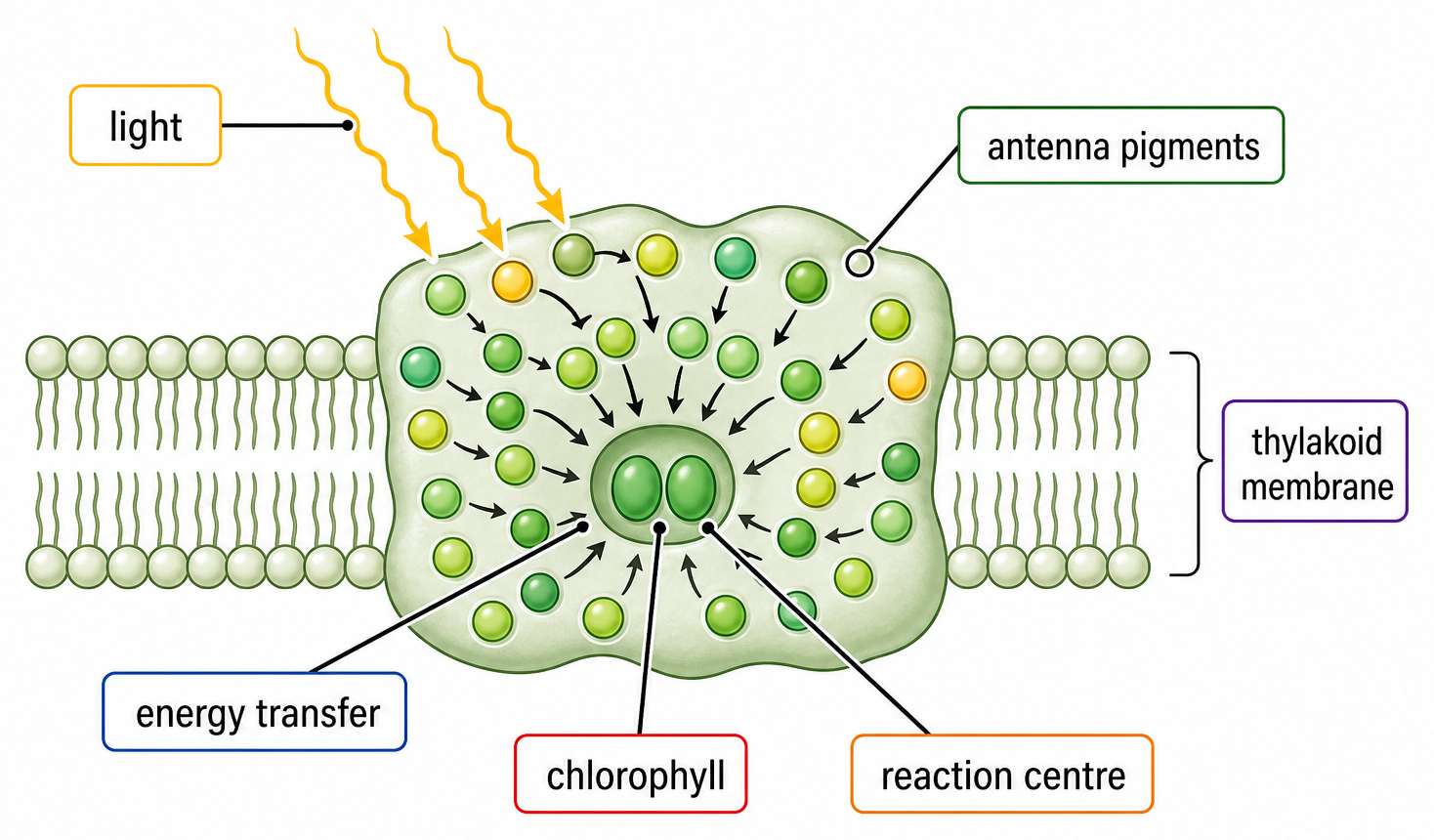
A labelled photosystem in the thylakoid membrane showing multiple antenna pigments around a reaction-centre chlorophyll and the direction of energy transfer.

A photosystem is a membrane-bound molecular array of chlorophyll and accessory pigments surrounding a special reaction-centre chlorophyll.

Different antenna pigments absorb different wavelengths and transfer excitation energy toward the reaction centre. The reaction-centre chlorophyll emits an excited electron to an electron acceptor, initiating electron flow.

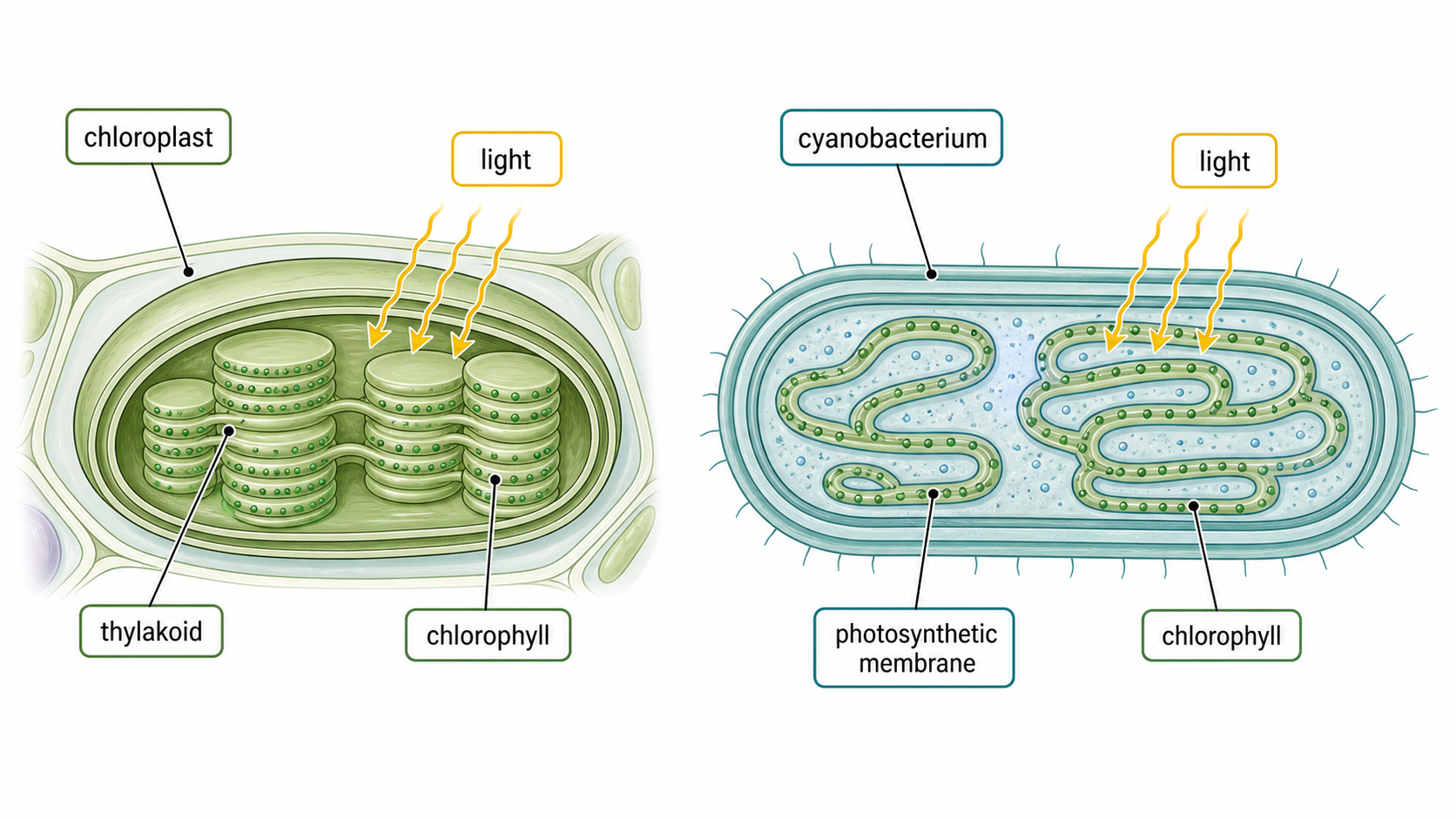
Photosystems occur in chloroplast thylakoid membranes and photosynthetic membranes of cyanobacteria. The structured array broadens light capture and funnels energy efficiently to one reaction centre.

A wavelength weakly absorbed by the reaction-centre chlorophyll can still drive electron emission when an accessory pigment absorbs it and transfers the excitation energy through the array.

A single isolated chlorophyll or accessory-pigment molecule cannot perform any part of photosynthesis by itself; the organized pigment–protein membrane system is essential.

Photosystems exam focus

HL only

Assessment in practice

1–3 marks
How it is assessed

This objective is assessed through structured response, commonly using Outline.

Command terms

Outline

What earns marks

Build the answer around this relationship: Photosystems are located in thylakoid membranes.
Representative question

Question 1

[Maximum number: 3]

Outline the relationship between structure and function in photosystems.
Trace Photosynthesis Mechanism

HL only

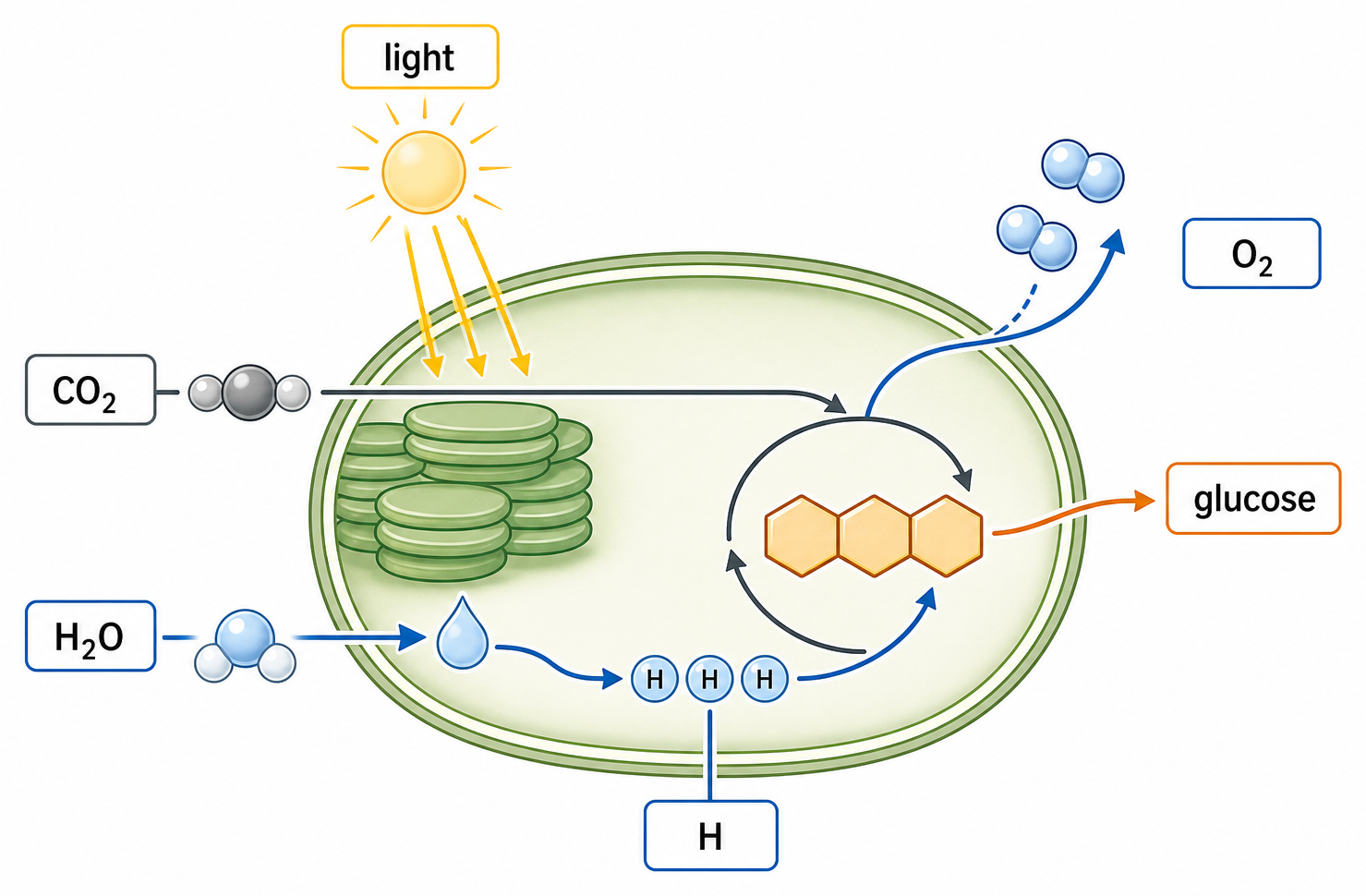
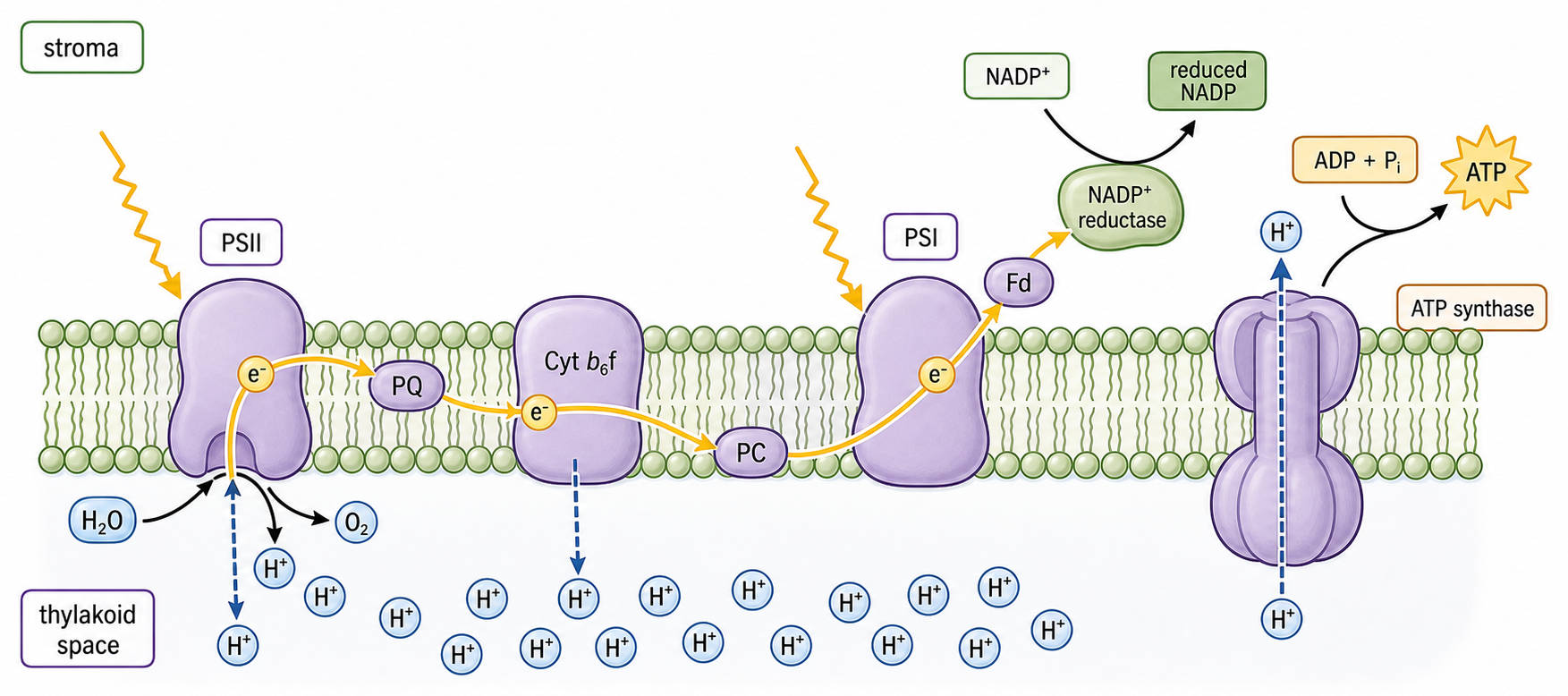
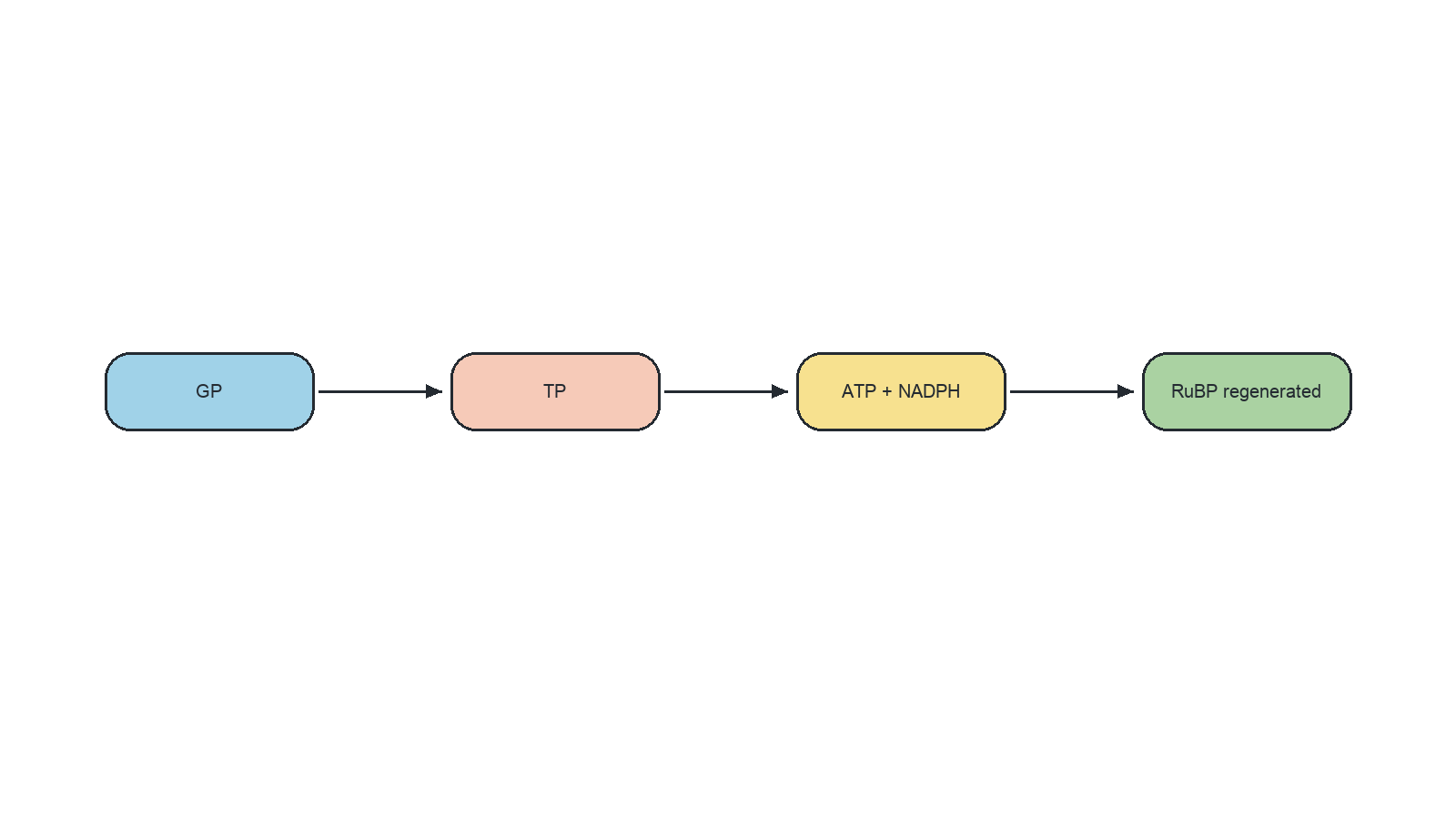
HL photosynthesis links light-dependent reactions to the Calvin cycle. Photosystems are pigment-protein arrays in thylakoid membranes; antenna pigments broaden absorption and pass energy to reaction-centre chlorophyll. PSII uses light to split water, supplying electrons, protons, and oxygen. Electron transport pumps protons into the thylakoid space, ATP synthase makes ATP by photophosphorylation, PSI re-excites electrons, and NADP is reduced. The Calvin cycle uses ATP and reduced NADP: Rubisco fixes CO2 to RuBP to form GP, GP is reduced to triose phosphate, most triose phosphate regenerates RuBP, and some becomes wider biomolecules.

  • Trace energy: pigments -> reaction centres -> ATP and reduced NADP.
  • Trace electrons/protons: water -> PSII -> carriers -> PSI -> NADP; proton gradient -> ATP synthase.
  • Trace carbon: CO2 -> RuBP/GP -> triose phosphate -> RuBP regeneration and biomolecule synthesis.
  • Trace exchange: light-dependent reactions supply ATP/reduced NADP; Calvin cycle returns ADP/NADP.

Concept essentials

  • Photosystems are located in thylakoid membranes.
  • Photosystem II passes electrons through carriers toward Photosystem I.
  • Reaction centres receive energy from surrounding pigment arrays.
  • Accessory pigments broaden the wavelengths captured by a photosystem.