C1.3.14 (HL)—Thylakoids as light-dependent systems

Thylakoids produce ATP and reduced NADP in the light-dependent reactions, supplying the Calvin cycle with energy and reducing power, connecting the mechanism to observable photosynthesis evidence.

Syllabus
First assessment 2025
Objective
C1.3.14
Level
HL

Exam analysis

Chance of appearing1%of analysed past papers
Latest appearanceMay 2022
Most common paperPaper1
Typical marks1

Common command terms

  • State

Recent exam appearances

May 2022Paper1 ["HL"] · TZ131[ 1 ]C1.3.14 (HL)—Thylakoids as light-dependent systems
Practice this objective

Coverage 2022–2022 · Updated 15 Jul 2026

Chemiosmosis in thylakoids

HL only
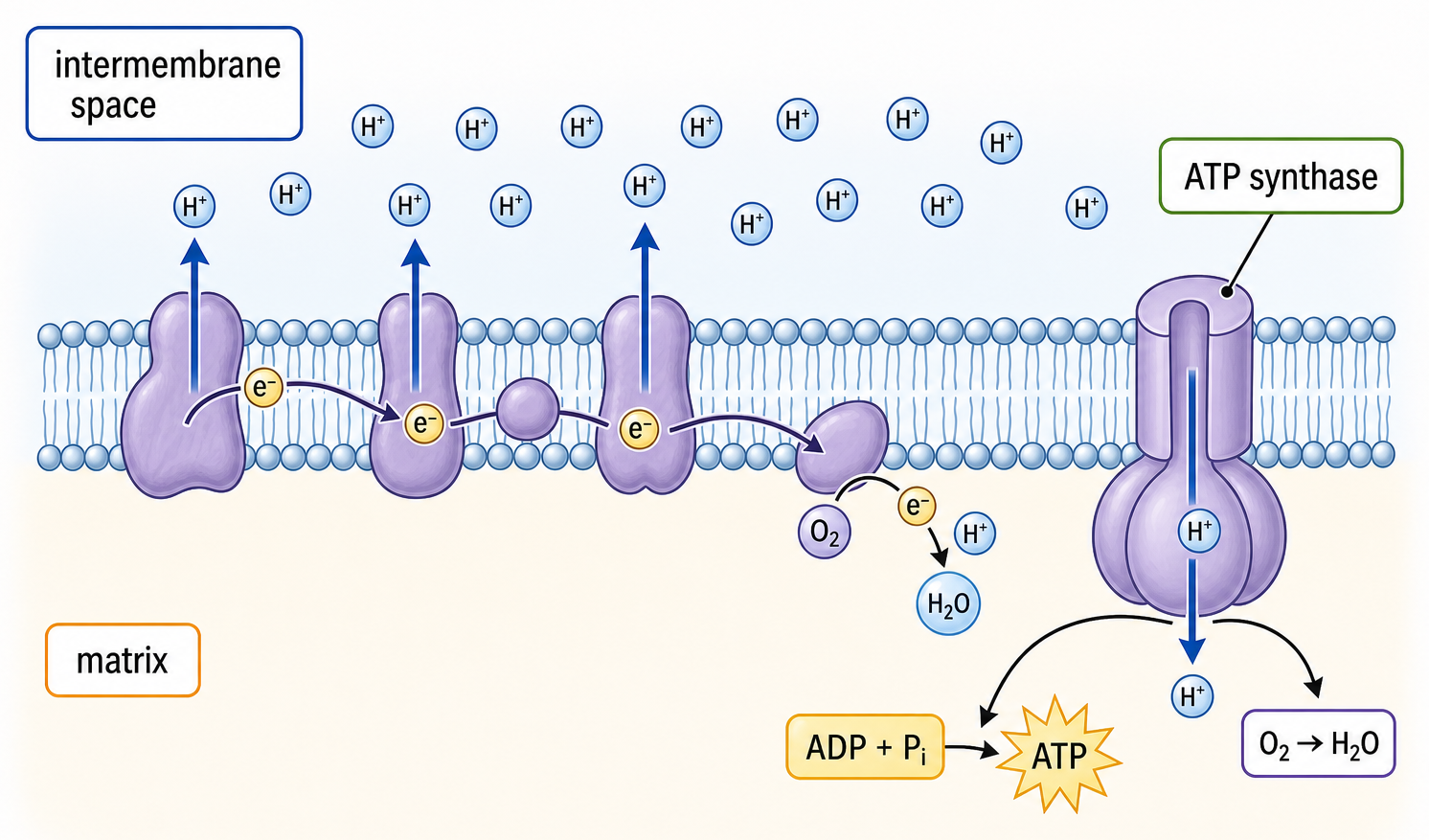
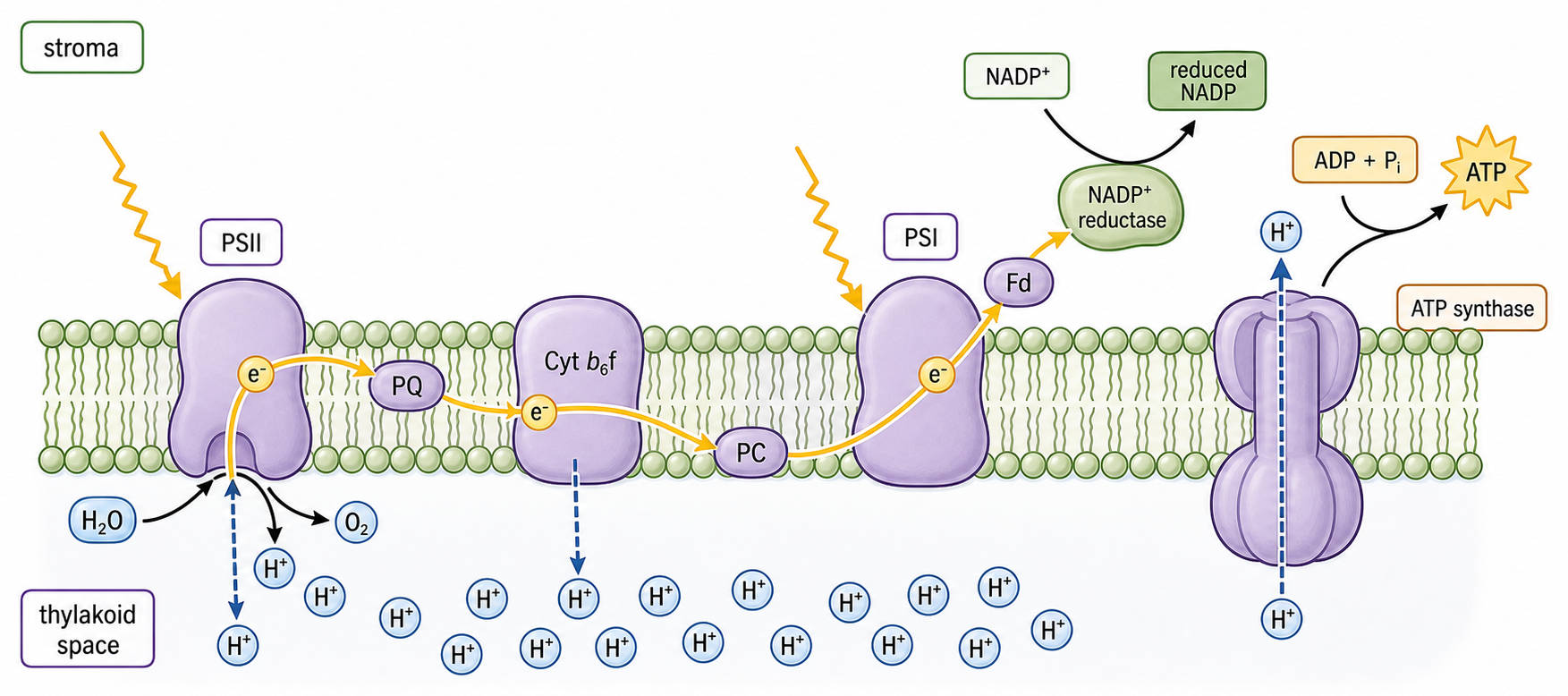
Labelled thylakoid membrane cross-section showing PSII, electron carriers, PSI, ATP synthase, proton accumulation in the thylakoid space, and ATP/reduced NADP on the stromal side.

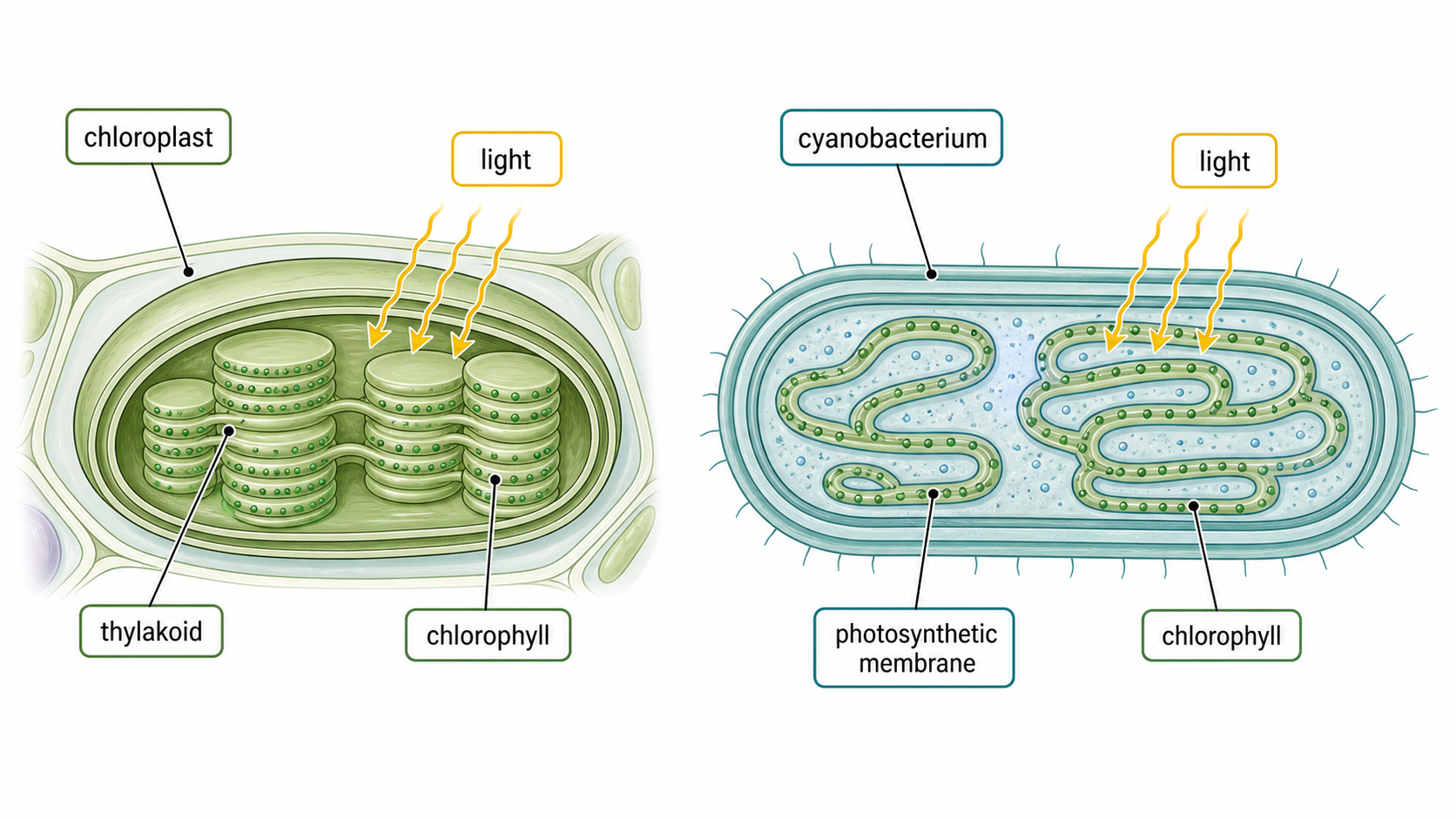
The thylakoid is an integrated membrane system that positions photosystems, electron carriers and ATP synthase for the light-dependent reactions.
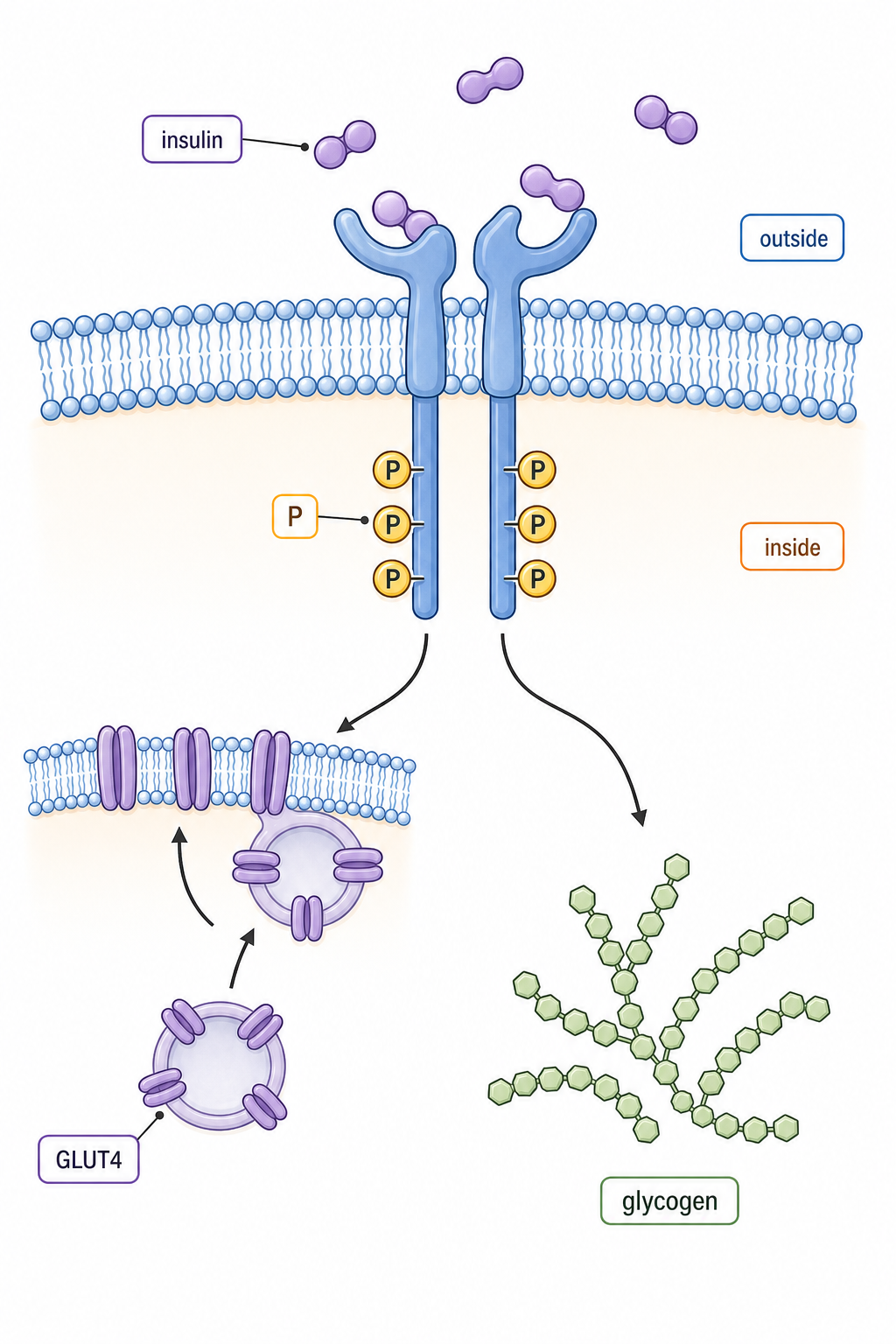
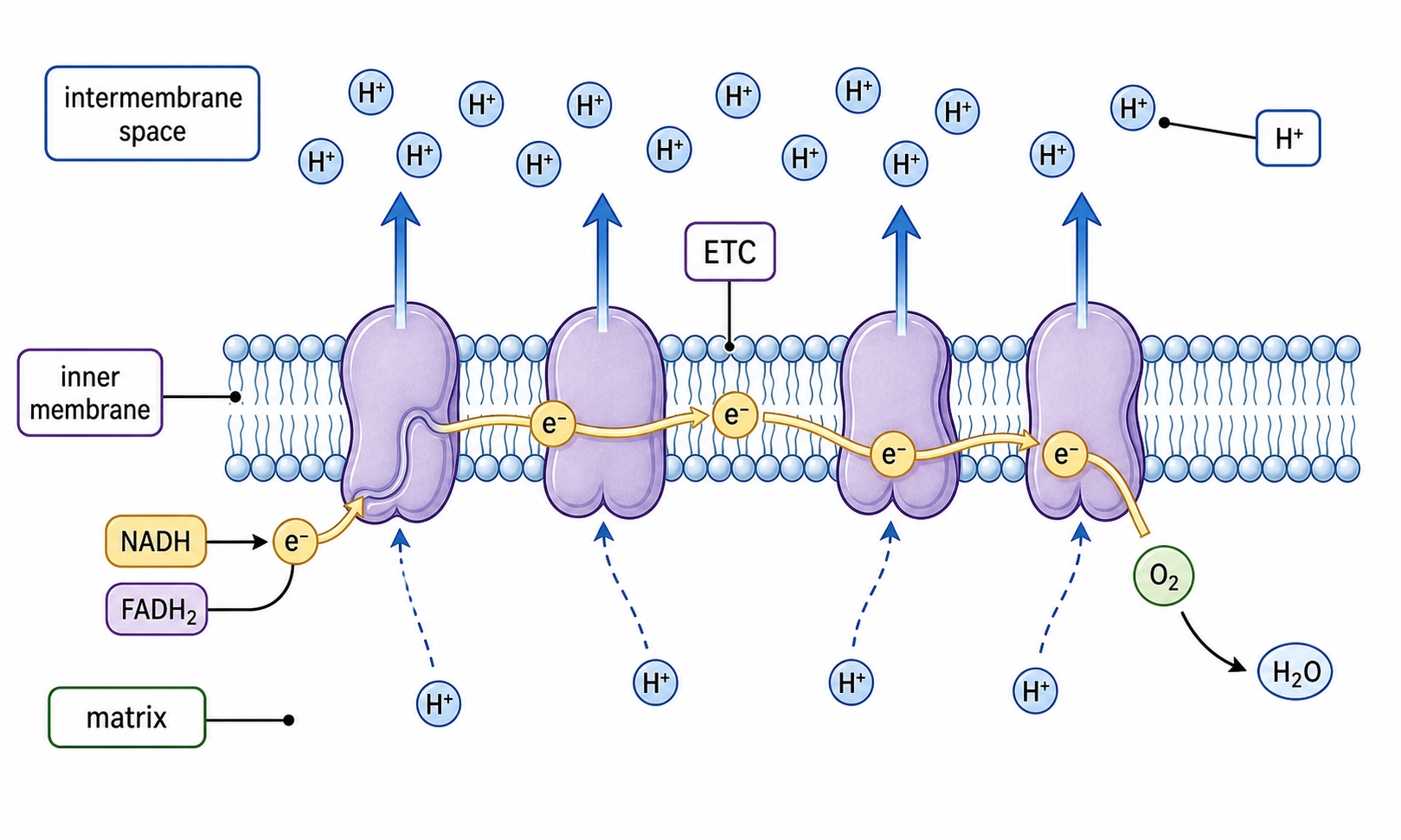
Electron transfer releases energy that pumps H⁺ from the stroma into the thylakoid lumen. H⁺ then moves down its electrochemical gradient through ATP synthase, coupling that flow to ADP + Pi → ATP in the stroma.
Photolysis occurs at photosystem II, ATP synthesis across the membrane, and NADP reduction at photosystem I on the stromal side. Non-cyclic electron flow begins with electrons from photosystem II and makes ATP plus reduced NADP; cyclic flow returns electrons from photosystem I and supports ATP production without reducing NADP.

The membrane separates the H⁺-rich lumen from the stroma, so electron-carrier proton pumping stores energy as a gradient and ATP synthase converts that gradient energy into chemical energy in ATP.

Electron carriers build the gradient; ATP synthase uses it. Chemiosmosis is proton movement through ATP synthase, not electron passage through the enzyme.

Thylakoids as light-dependent systems

HL only

Assessment in practice

1 marks
How it is assessed

This objective is assessed through structured response, commonly using State.

Command terms

State

What earns marks

Build the answer around this relationship: Thylakoids house the light-dependent reactions of photosynthesis.

Representative question

Question 1

[Maximum number: 1]

State two products that pass from the light-dependent to the light-independent stages of photosynthesis.
1.
2.

Trace Photosynthesis Mechanism

HL only

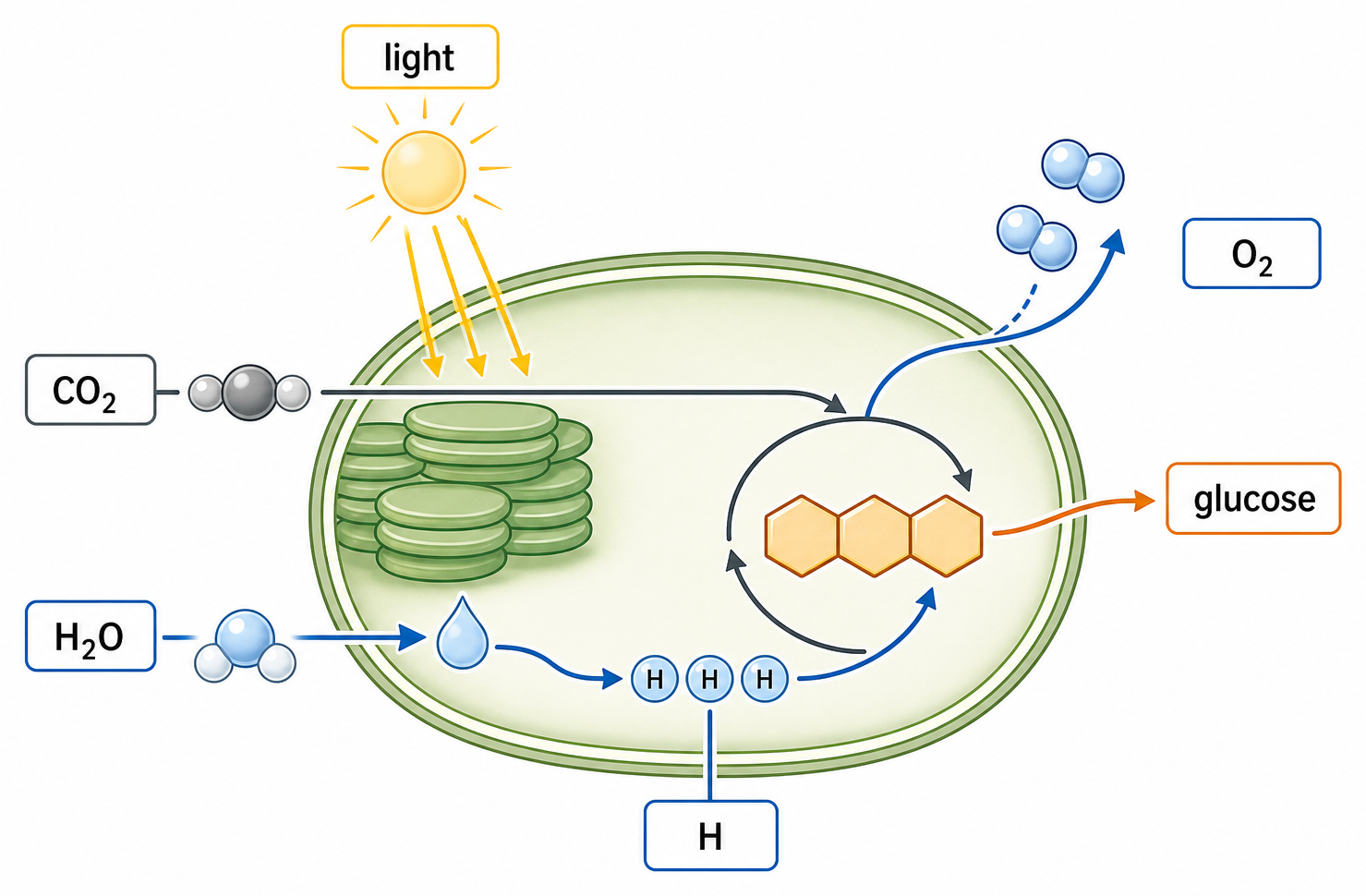
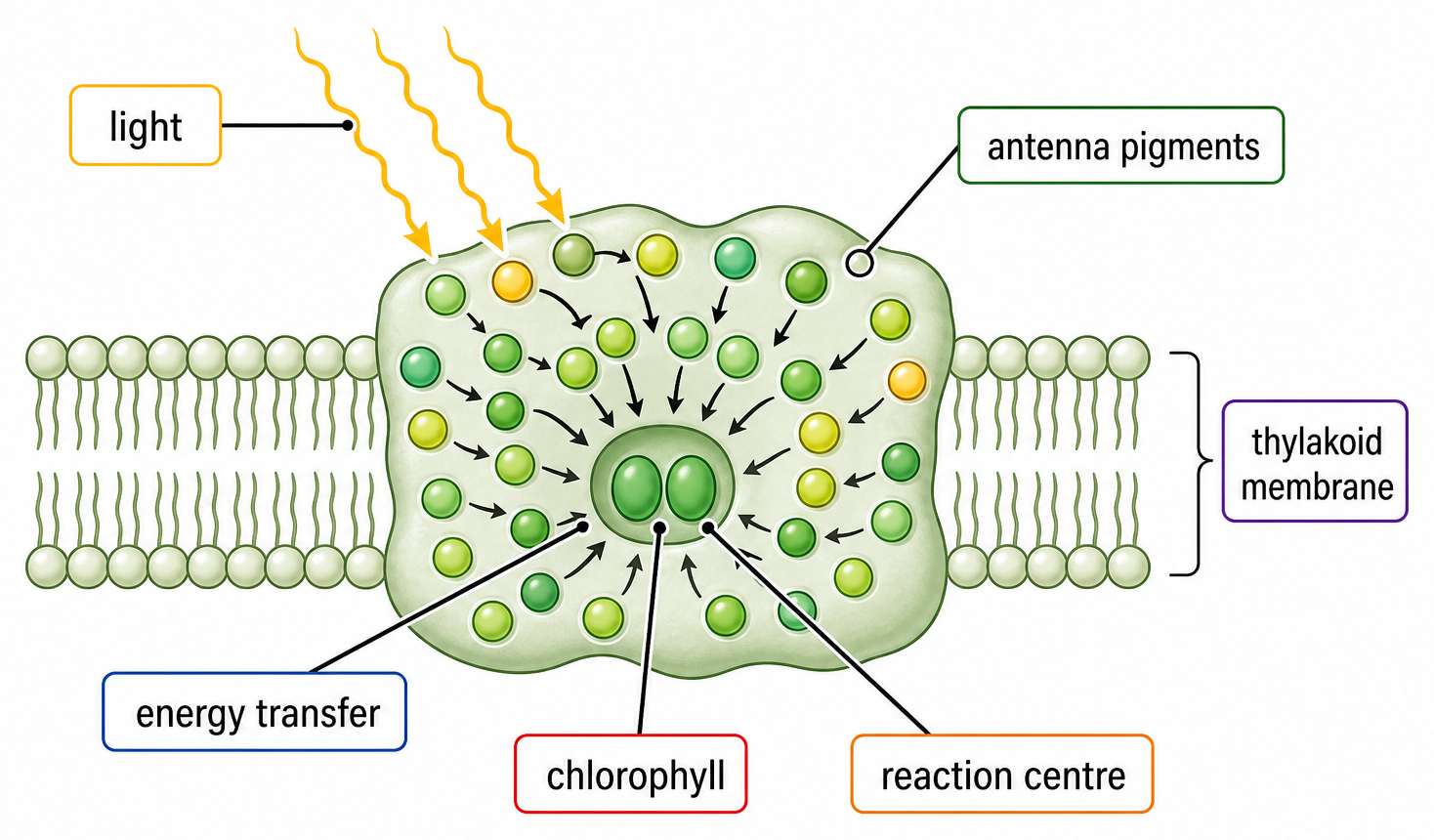
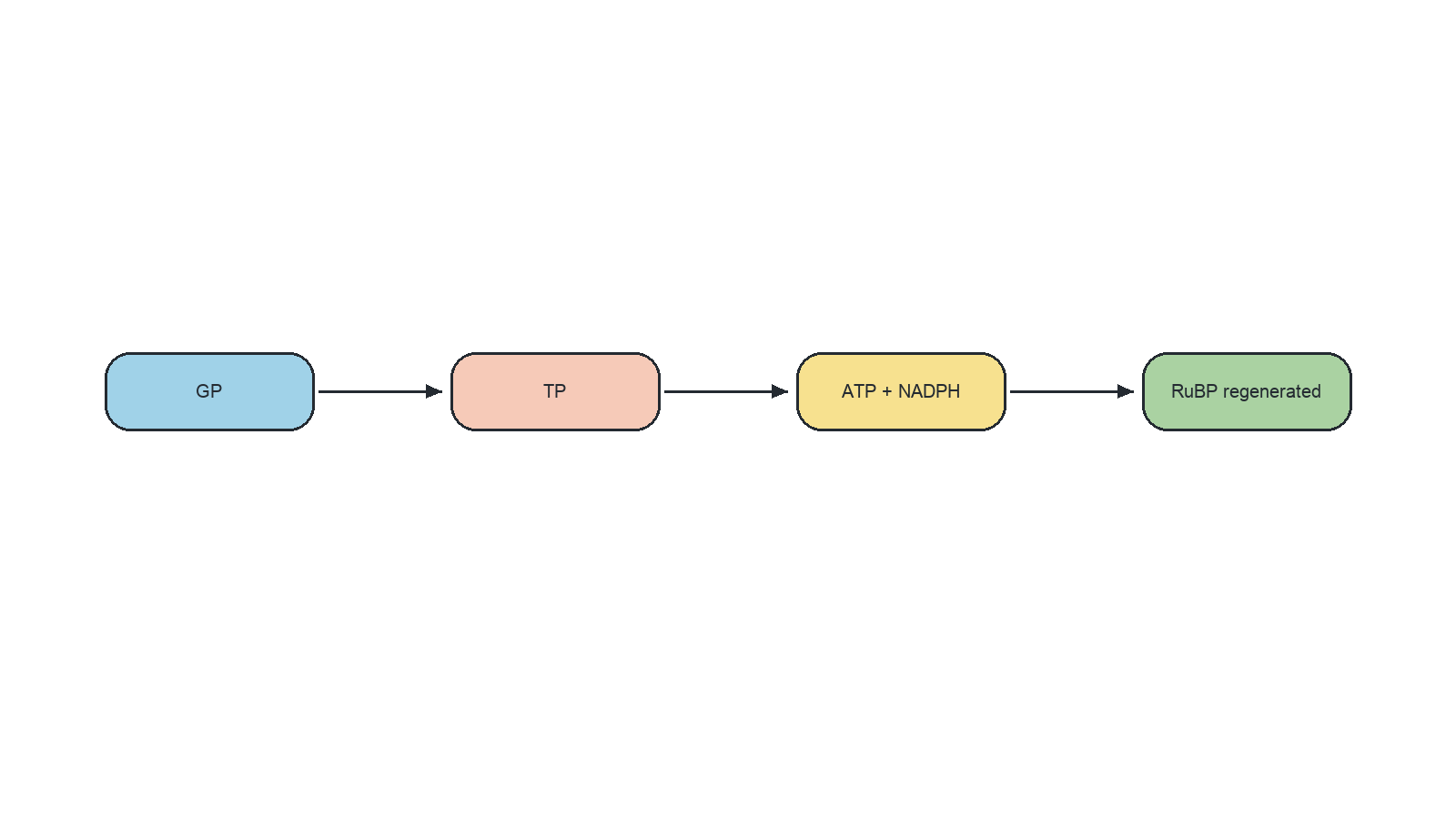
HL photosynthesis links light-dependent reactions to the Calvin cycle. Photosystems are pigment-protein arrays in thylakoid membranes; antenna pigments broaden absorption and pass energy to reaction-centre chlorophyll. PSII uses light to split water, supplying electrons, protons, and oxygen. Electron transport pumps protons into the thylakoid space, ATP synthase makes ATP by photophosphorylation, PSI re-excites electrons, and NADP is reduced. The Calvin cycle uses ATP and reduced NADP: Rubisco fixes CO2 to RuBP to form GP, GP is reduced to triose phosphate, most triose phosphate regenerates RuBP, and some becomes wider biomolecules.

  • Trace energy: pigments -> reaction centres -> ATP and reduced NADP.
  • Trace electrons/protons: water -> PSII -> carriers -> PSI -> NADP; proton gradient -> ATP synthase.
  • Trace carbon: CO2 -> RuBP/GP -> triose phosphate -> RuBP regeneration and biomolecule synthesis.
  • Trace exchange: light-dependent reactions supply ATP/reduced NADP; Calvin cycle returns ADP/NADP.

Concept essentials

  • Thylakoids house the light-dependent reactions of photosynthesis.
  • ATP and reduced NADP are products transferred to the Calvin cycle.
  • The Calvin cycle uses energy and reducing power made in thylakoids.
  • Oxygen is released from water splitting but is not used by the Calvin cycle.