C1.3.1—Light energy → chemical energy
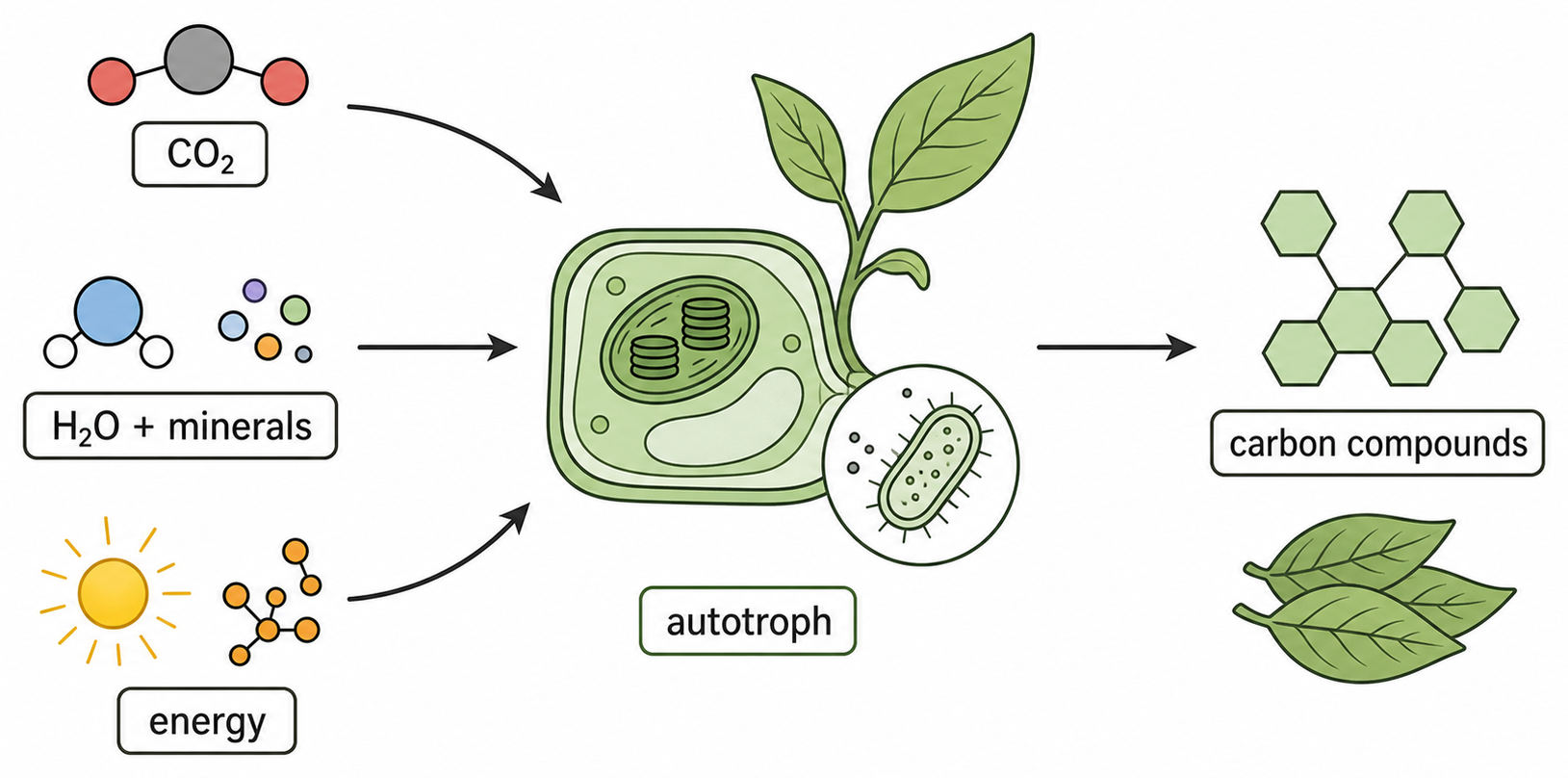
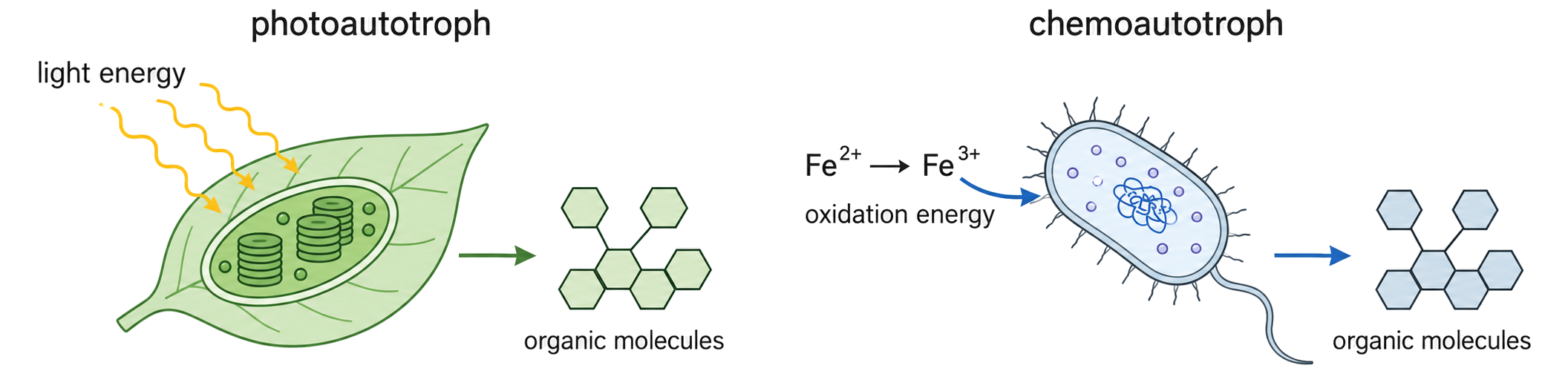
Photosynthesis captures light with pigments and converts it into chemical energy stored temporarily in ATP and ultimately in organic molecules.
- Syllabus
- First assessment 2025
- Objective
- C1.3.1
- Level
- HL
Photosynthesis captures light with pigments and converts it into chemical energy stored temporarily in ATP and ultimately in organic molecules.
Coverage 2016–2018 · Updated 15 Jul 2026
Photosynthesis captures light energy and stores it as chemical energy in organic molecules.
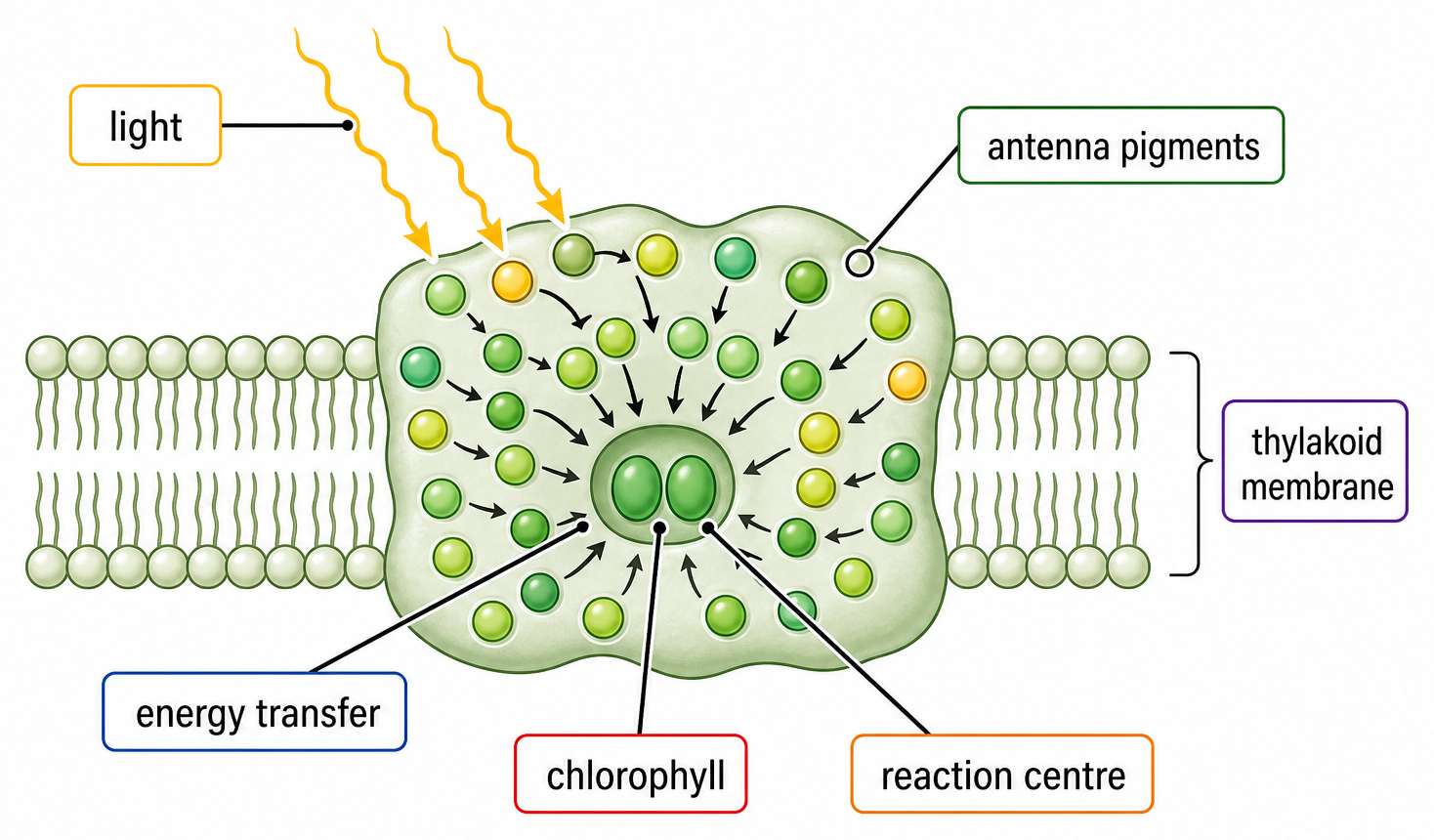
Pigments absorb photons and excite electrons; electron transfer creates ATP and reduced NADP, which then drive carbon fixation. The process depends on light, pigments, membranes, water, carbon dioxide and suitable conditions.
Trace the energy conversion:
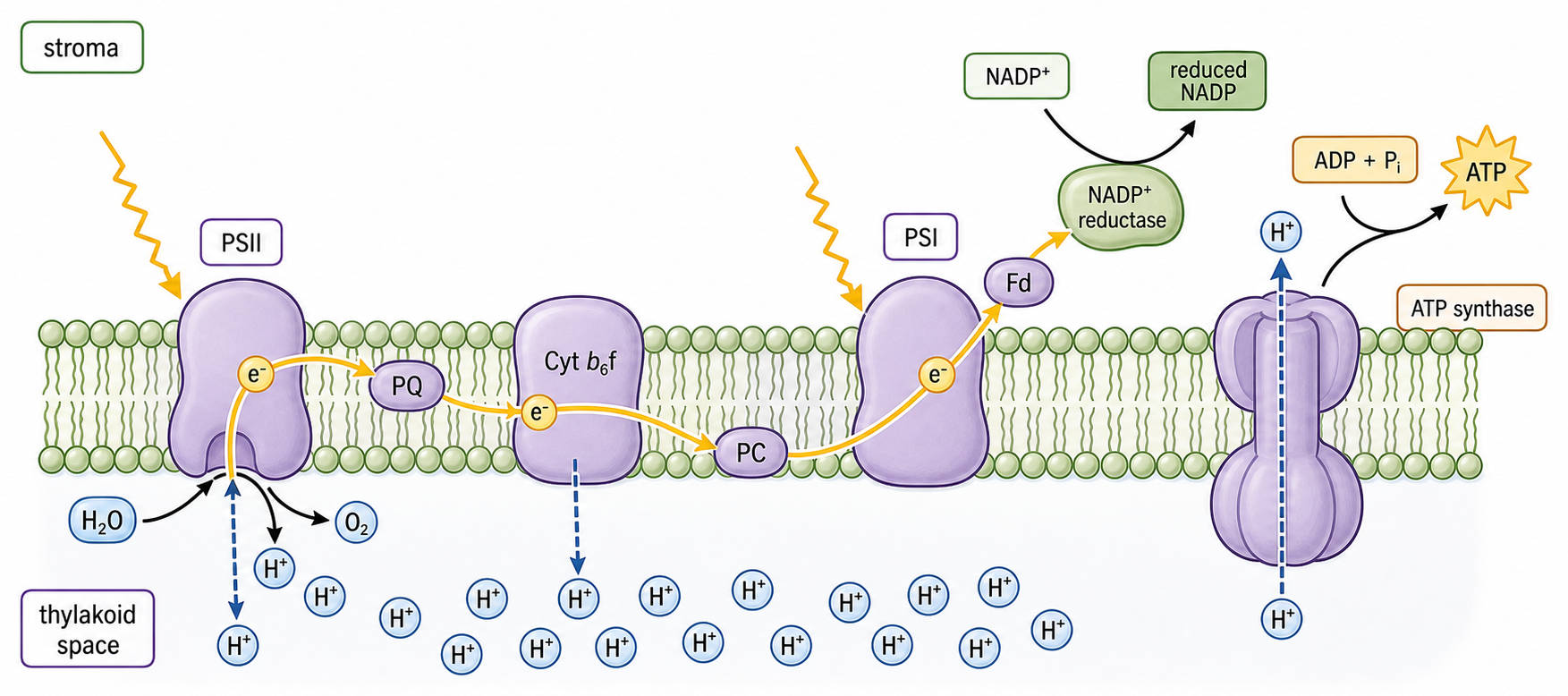
A leaf exposed to light can use ATP and reduced NADP from the thylakoid reactions to build carbohydrate in the stroma.
Light provides energy but is not itself converted directly into glucose molecules.
This objective is assessed through structured response, commonly using Identify / State / Outline.
Identify / State / Outline / Describe / Explain / Distinguish
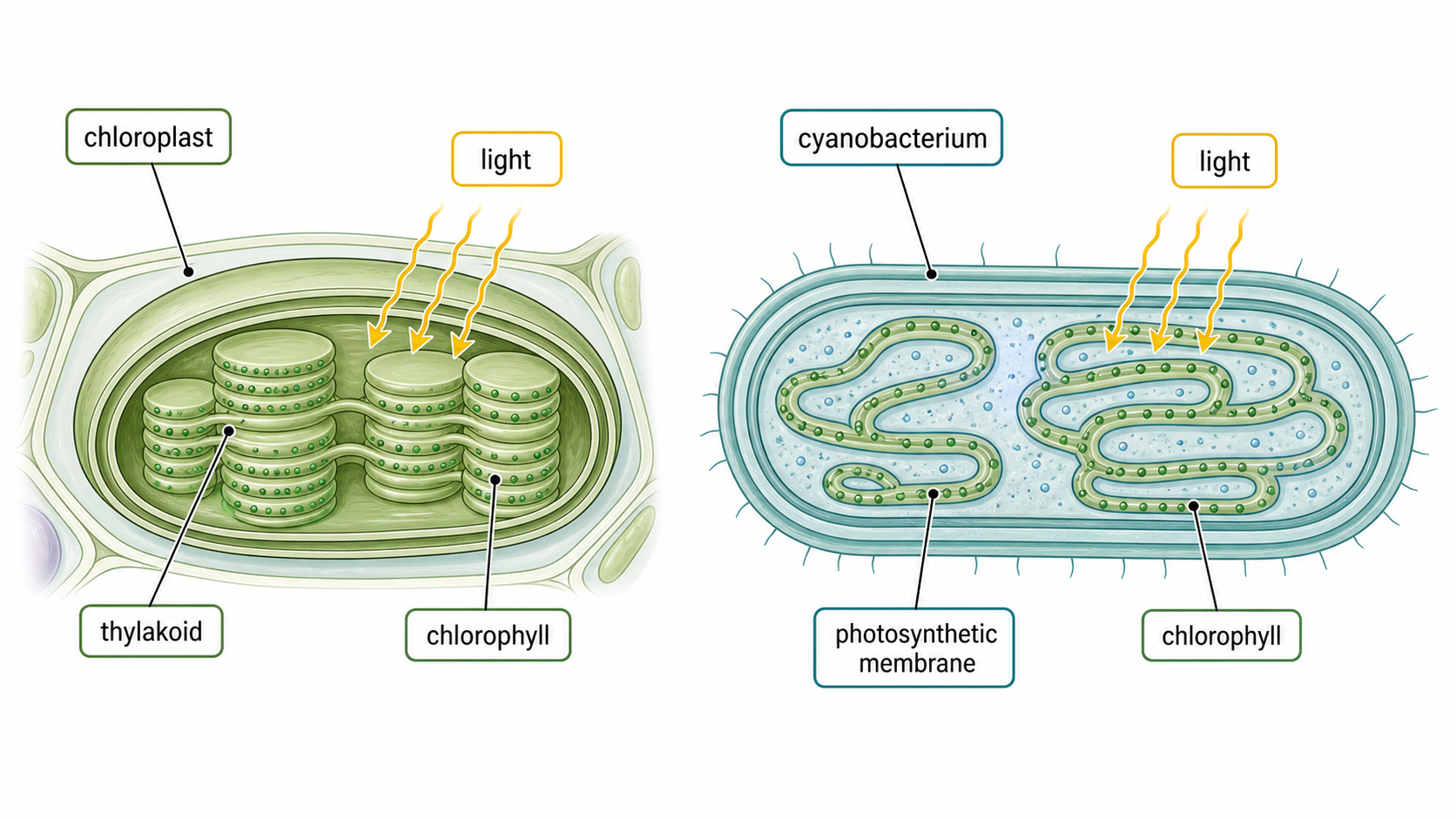
Build the answer around this relationship: Chlorophyll and other pigments absorb light energy inside chloroplasts.
Representative question
Explain the processes by which light energy is converted into chemical energy.
a. plants/producers/autotrophs convert light to chemical energy by photosynthesis
b. chlorophyll/photosynthetic pigments absorb light
c. electrons are excited/raised to higher energy level
d. excited electrons pass along chain of electron carriers
e. energy from electrons used to pump protons across thylakoid membrane/into thylakoid space
f. chemiosmosis/proton gradient used to make ATP
g. ATP synthase generates ATP
h. pigments arranged in photosystems
i. electrons from Photosystem II flow via the electron chain to Photosystem I
j. electrons from Photosystem I are used to reduce NADP
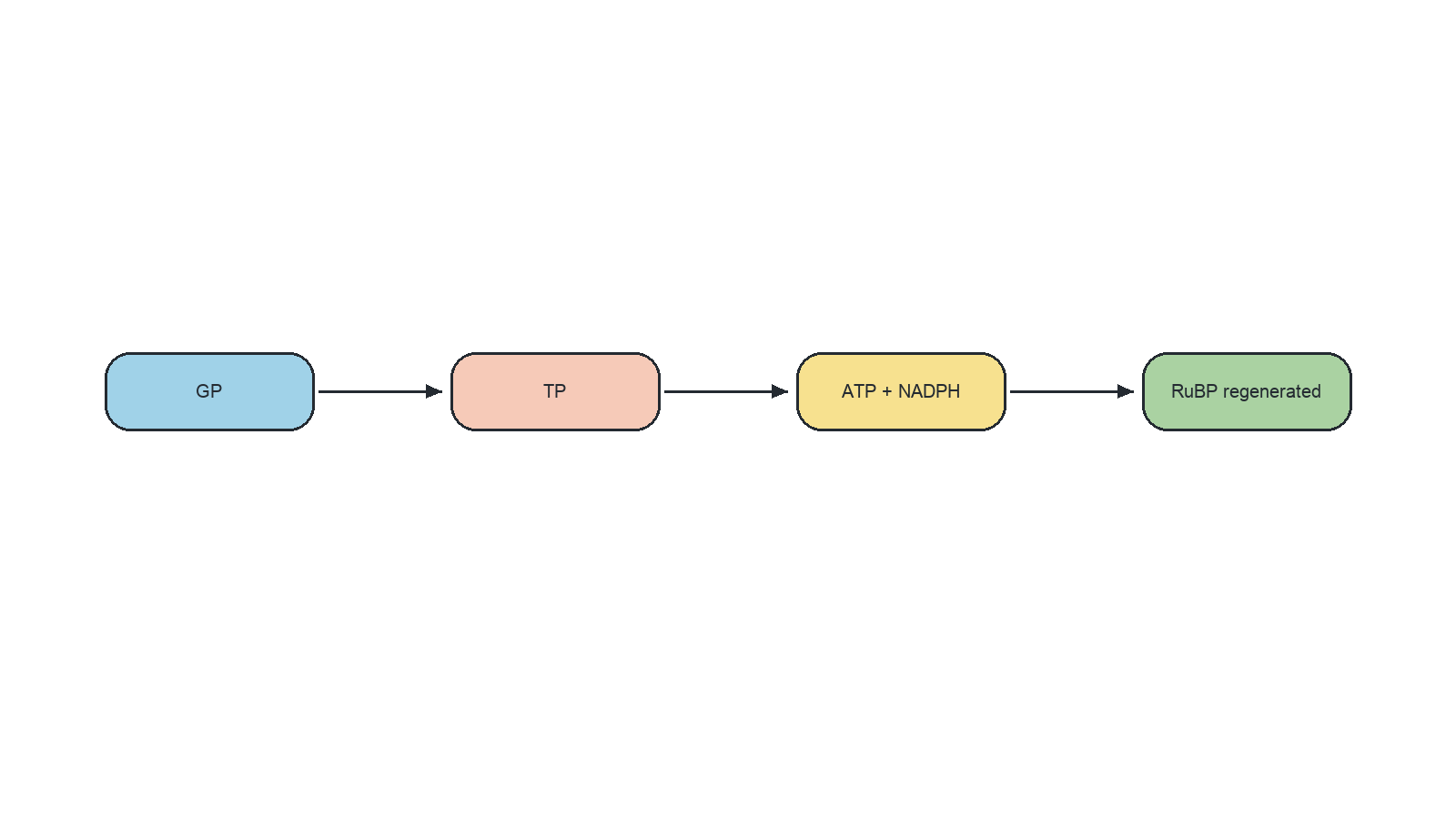
k. ATP and reduced NADP used in the light independent reactions/Calvin cycle
I. carbohydrate/glucose/carbon compounds produced containing energy
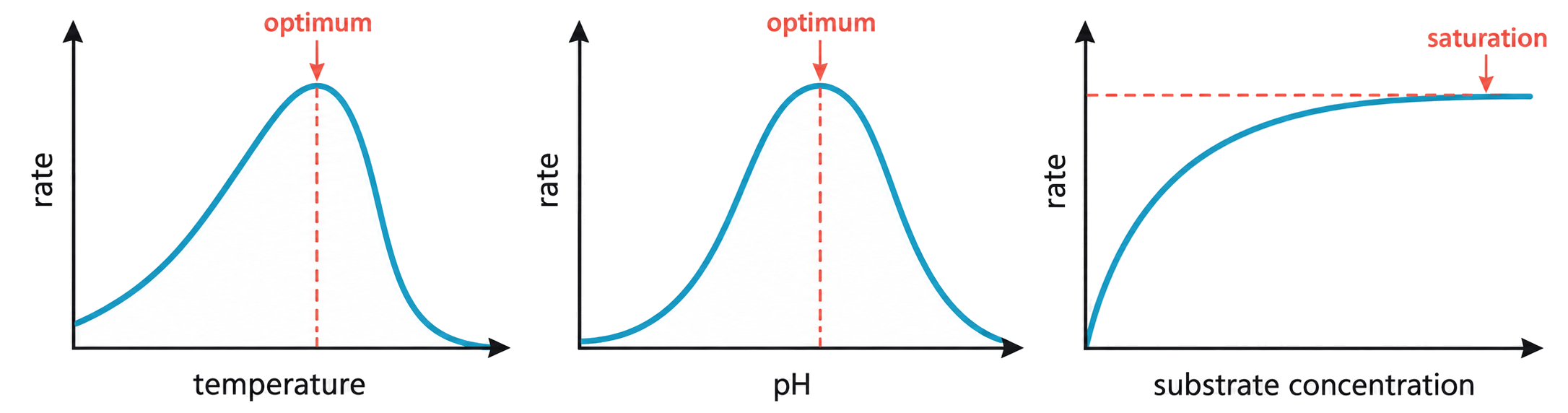
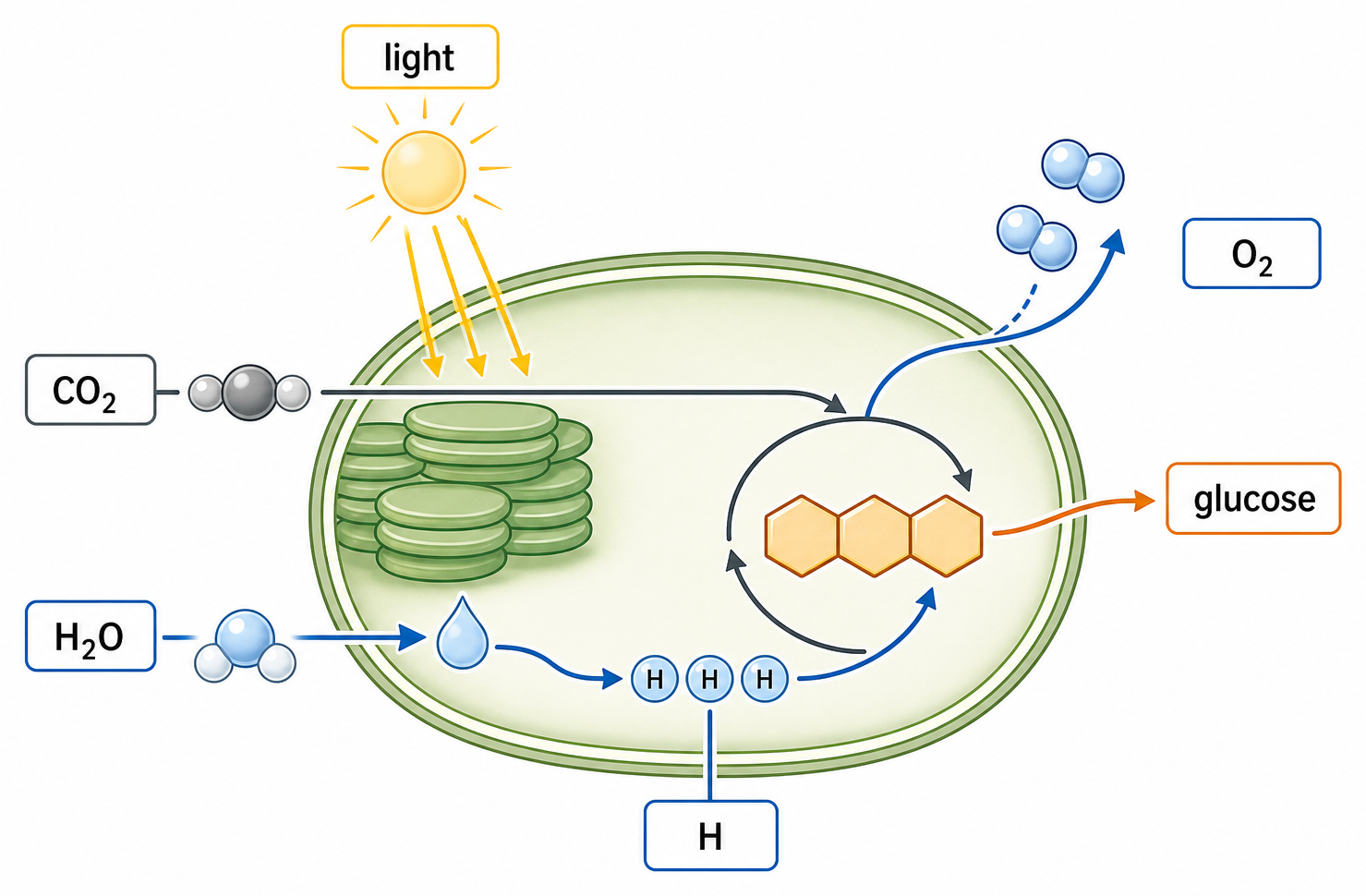
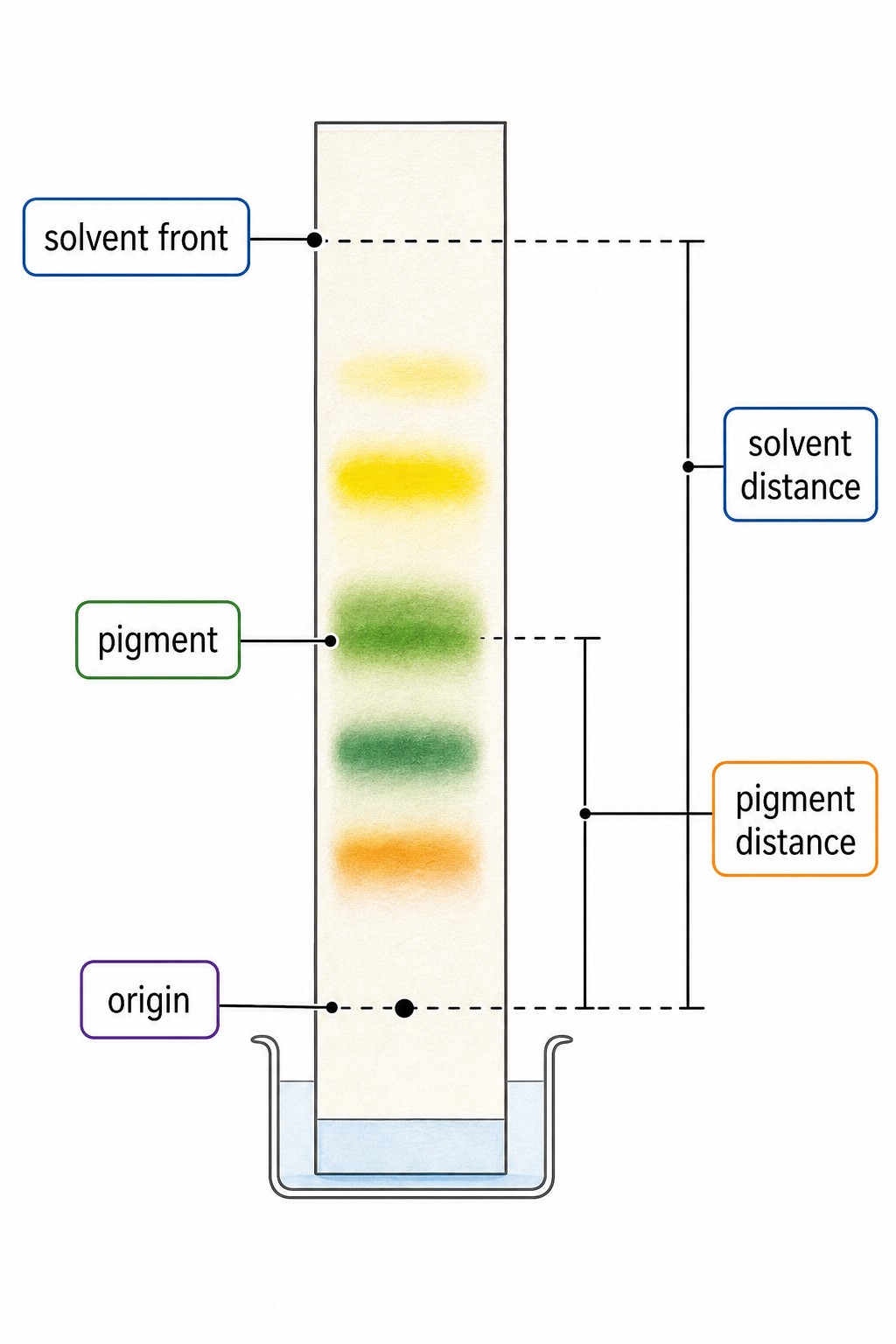
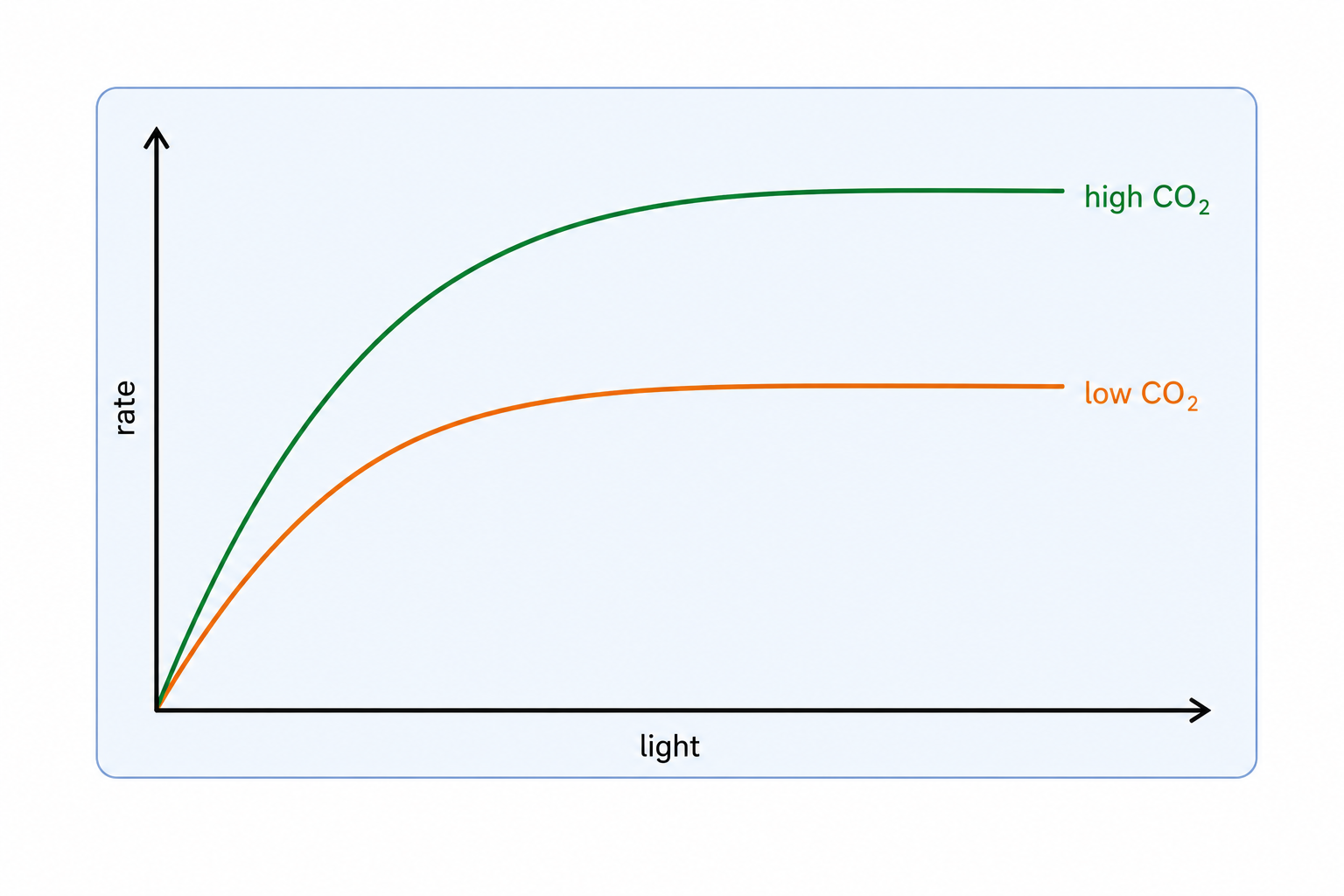
Photosynthesis converts light energy into chemical energy in carbon compounds. Carbon dioxide is reduced to carbohydrate using hydrogen from water, glucose is the main stored product, and released oxygen comes from photolysis of water. Pigment evidence is tested with chromatography and Rf, spectra questions separate absorption from action, and rate/evidence questions use limiting factors, controls, and CO2 enrichment context.