C1.3.7—Limiting factors investigation

Photosynthesis rate is limited by whichever required factor is least available, commonly light intensity, carbon dioxide concentration or temperature, connecting the mechanism to observable photosynthesis evidence.

Syllabus
First assessment 2025
Objective
C1.3.7
Level
HL

Exam analysis

Chance of appearing9%of analysed past papers
Latest appearanceMay 2022
Most common paperPaper2
Typical marks1–2

Common command terms

  • State
  • Identify
  • Determine
  • Calculate
  • Describe
  • Compare
  • Explain
  • Suggest
  • Draw
  • Sketch
  • Predict
  • Outline
  • Discuss

Recent exam appearances

May 2022Paper1 ["HL"] · TZ19[ 1 ]C1.3.7—Limiting factors investigation
November 2021Paper2 ["HL"] · TZ01(c)[ 2 ]C1.3.7—Limiting factors investigation
November 2020Paper3 ["HL"] · TZ03(c)[ 1 ]C1.3.7—Limiting factors investigation
November 2020Paper3 ["HL"] · TZ03(b)(ii)[ 3 ]C1.3.7—Limiting factors investigation
November 2020Paper3 ["HL"] · TZ03(b)(i)[ 1 ]C1.3.7—Limiting factors investigation
Practice this objective

Coverage 2013–2022 · Updated 15 Jul 2026

Test Photosynthesis by Identifying the Limiting Factor

At any moment, the limiting factor is the condition in shortest effective supply relative to photosynthetic demand; increasing it raises rate until another factor becomes limiting.

State a testable hypothesis, vary one independent variable—carbon-dioxide concentration, light intensity or temperature—and measure photosynthesis rate as the dependent variable. Control the other two, plant material, time and measurement conditions; repeat measurements.
Vary light with lamp distance or a light meter, CO₂ with known hydrogencarbonate concentrations or gas control, and temperature with a thermostatically controlled water bath. Measure an initial oxygen-production or CO₂-consumption rate.
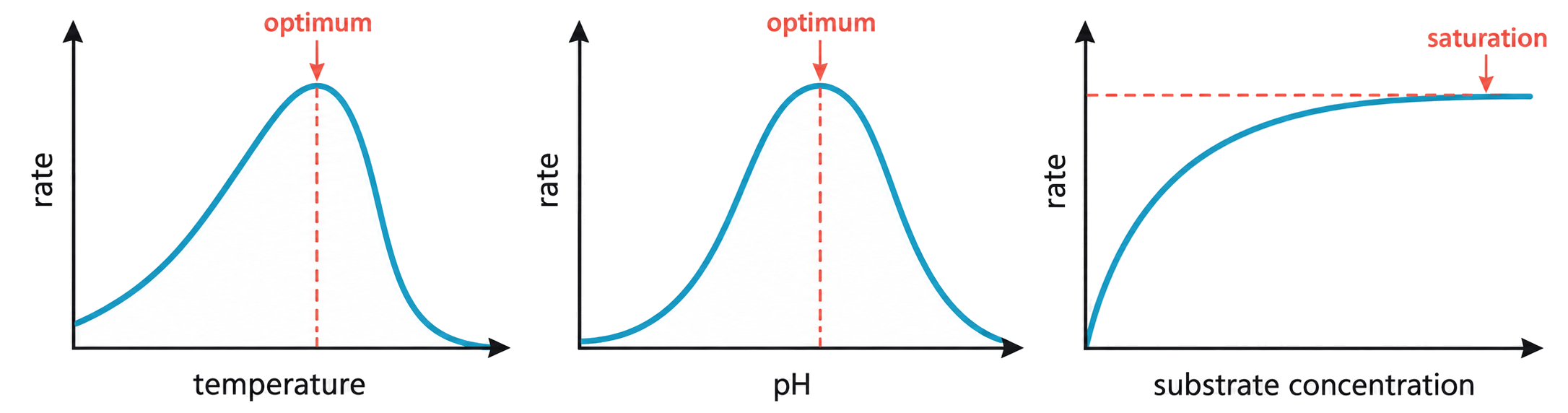
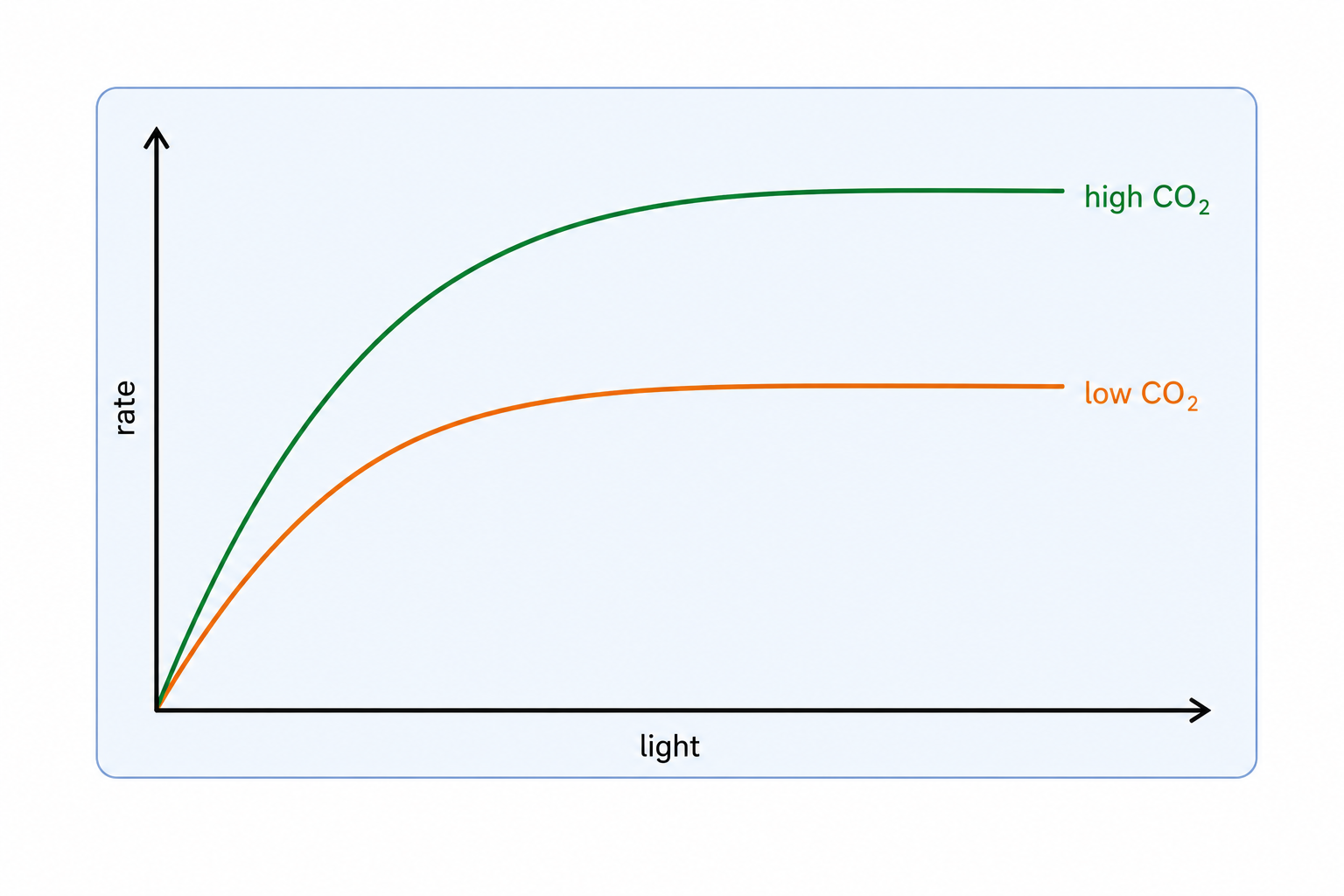
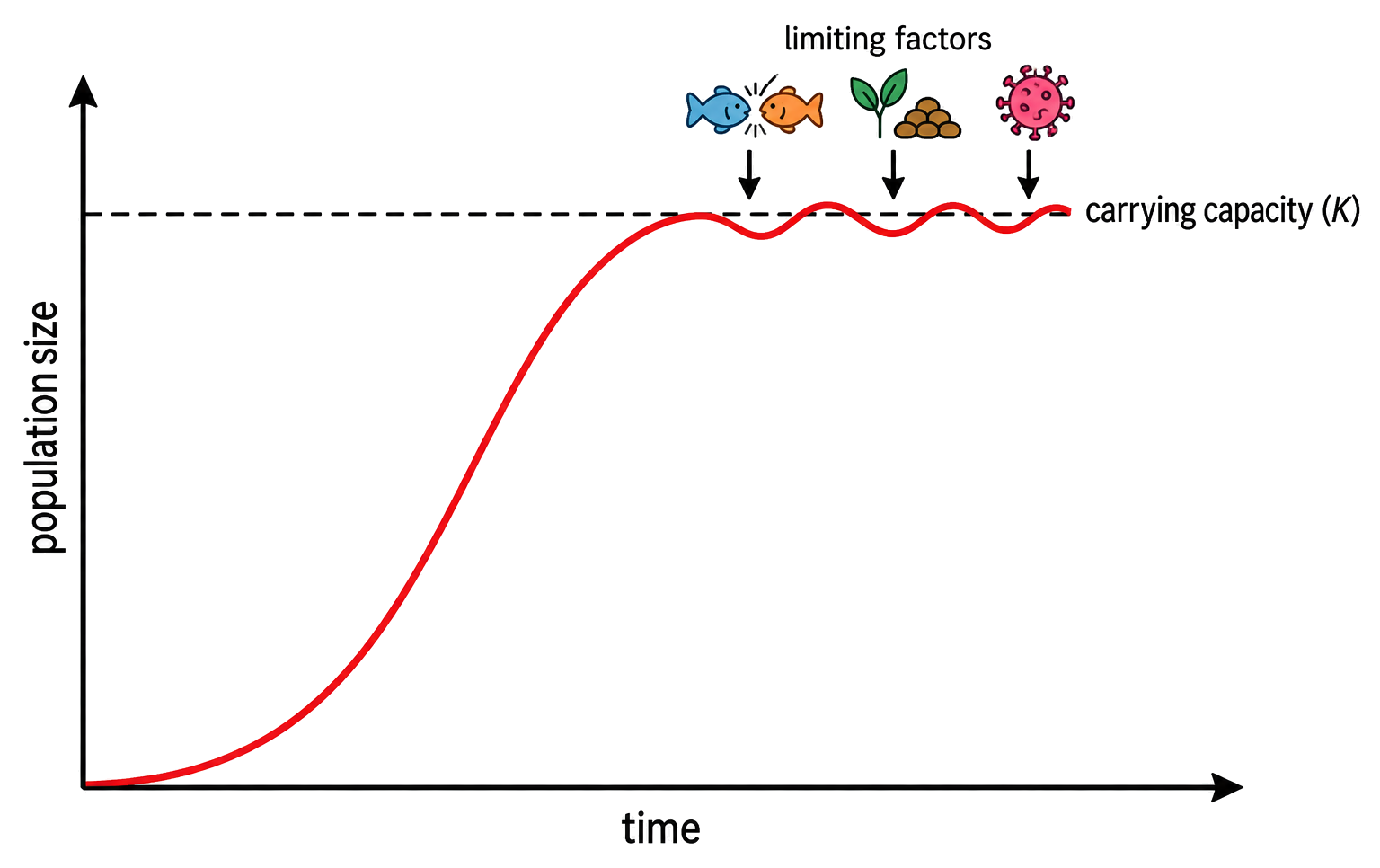
A rate rising with light intensity and then reaching a plateau supports the hypothesis that light was initially limiting; at the plateau, CO₂ concentration, temperature or biochemical capacity may limit instead.

A hypothesis is provisional and needs repeated testing. A plateau does not mean photosynthesis has stopped, and moving a lamp can also change temperature unless heat is controlled.

Limiting factors investigation

Assessment in practice

1–2 marks
How it is assessed

This objective is assessed through structured response, commonly using State / Identify / Determine.

Command terms

State / Identify / Determine / Calculate / Describe / Compare / Explain / Suggest / Draw / Sketch / Predict / Outline / Discuss

What earns marks

Build the answer around this relationship: Photosynthesis rises with a limiting factor only while that factor restricts the rate.

Representative question

Question 1

[Maximum number: 9]

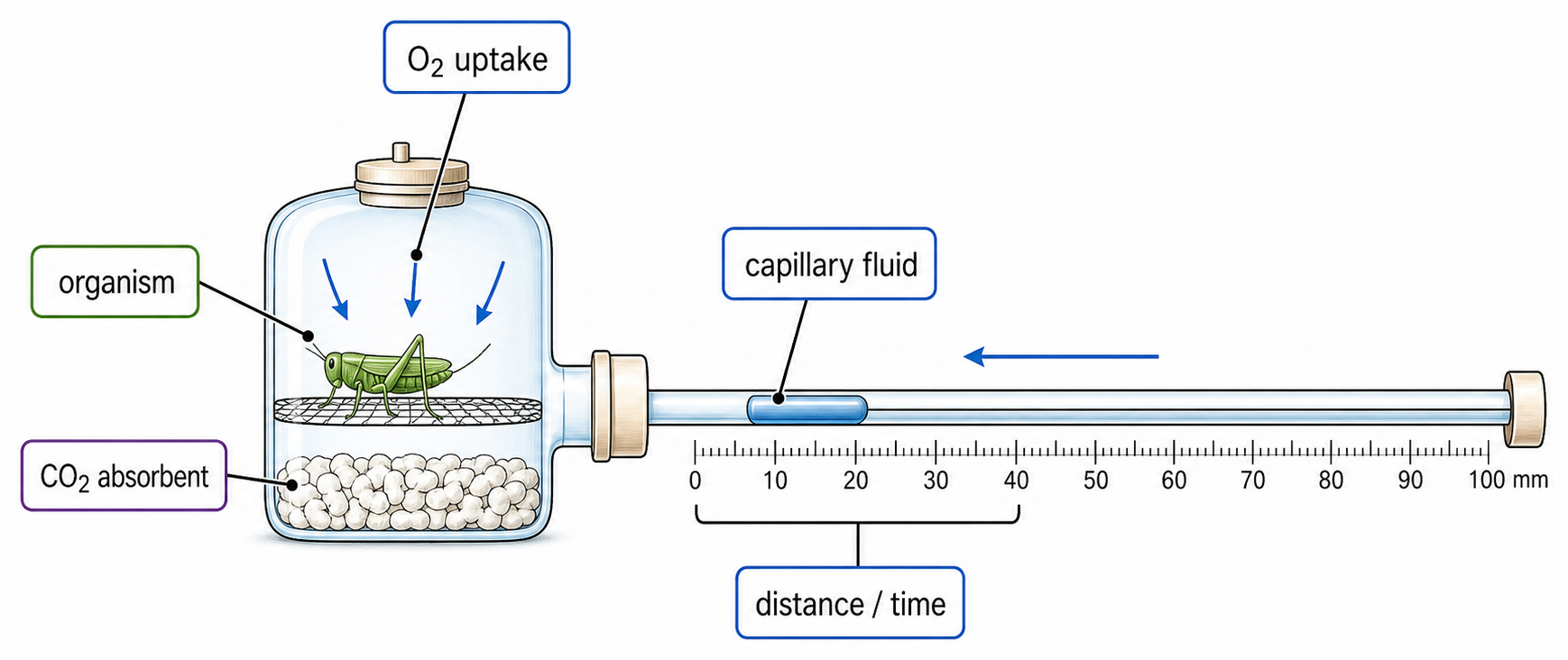
Explain methods by which the rate of photosynthesis can be measured, including conditions that affect the rate.

SL Transfer: Explain Core Photosynthesis

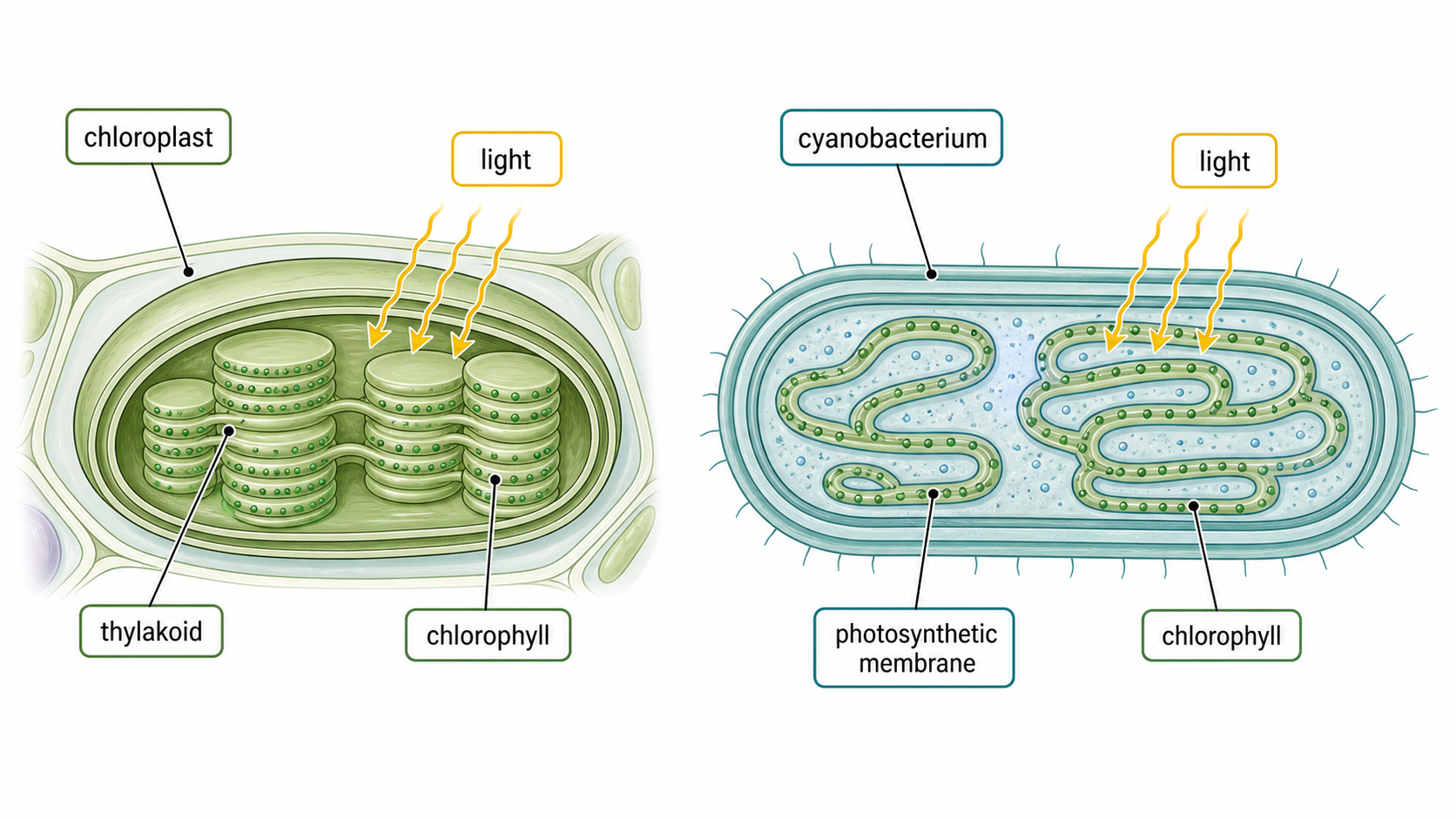
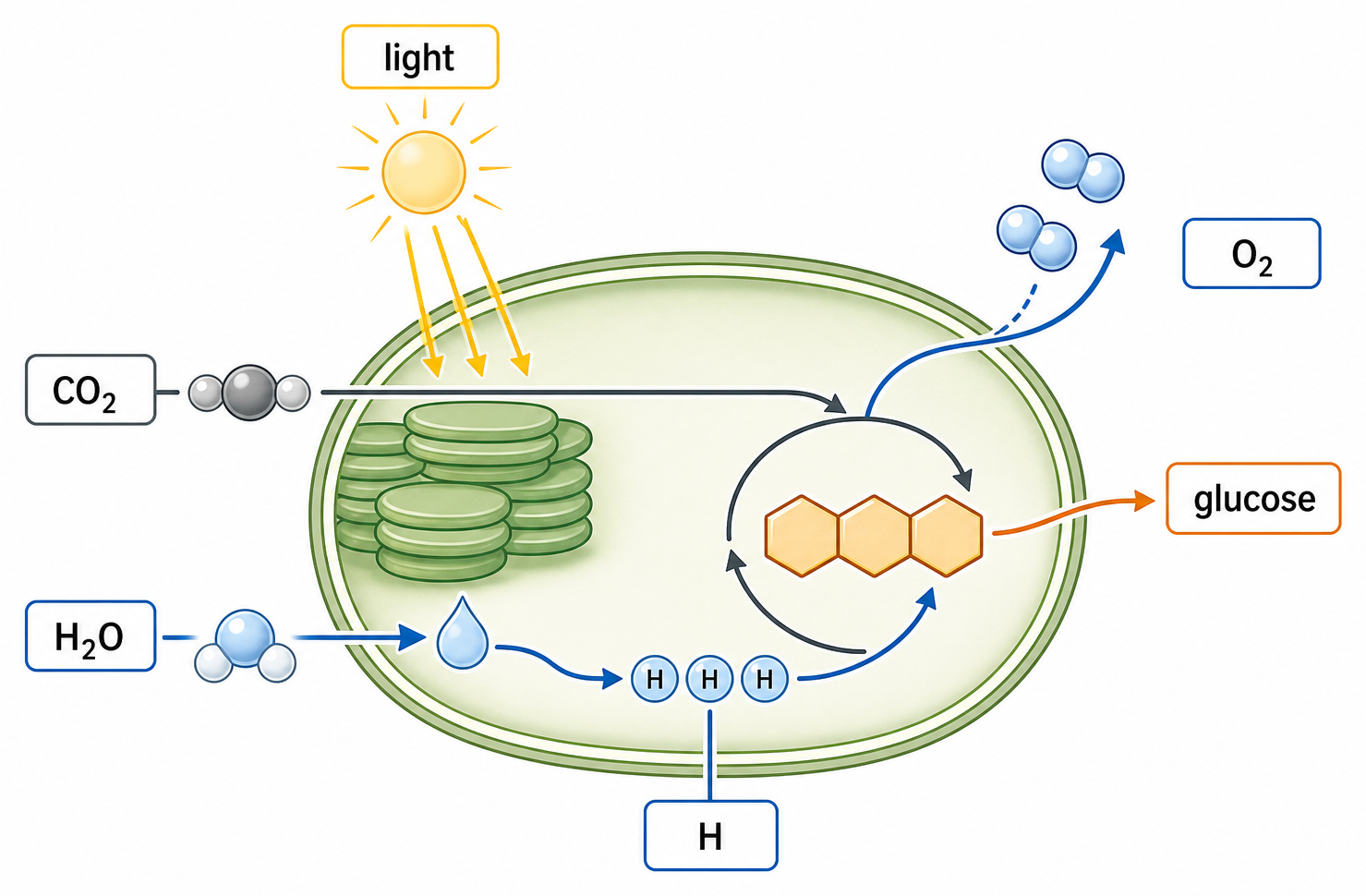
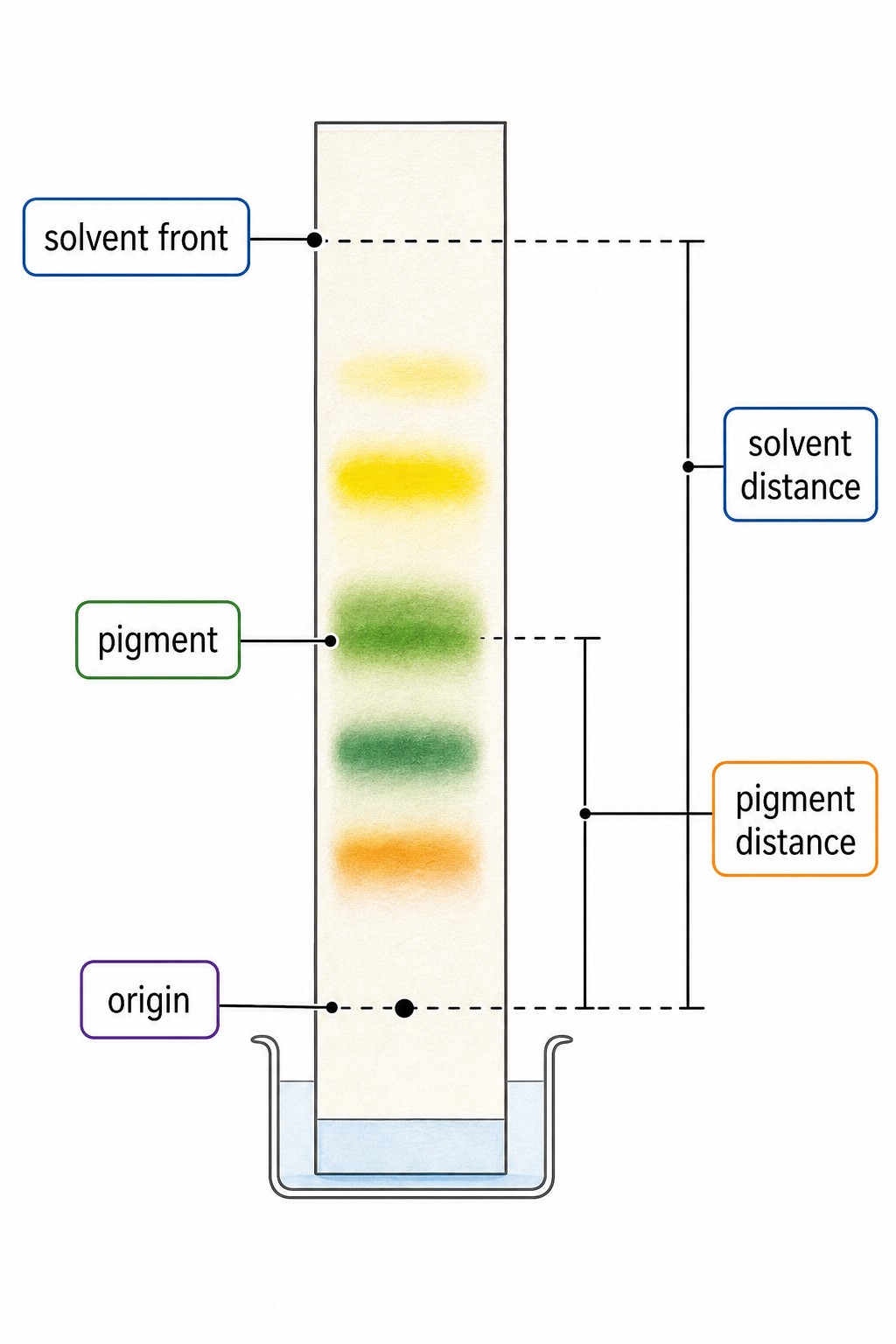
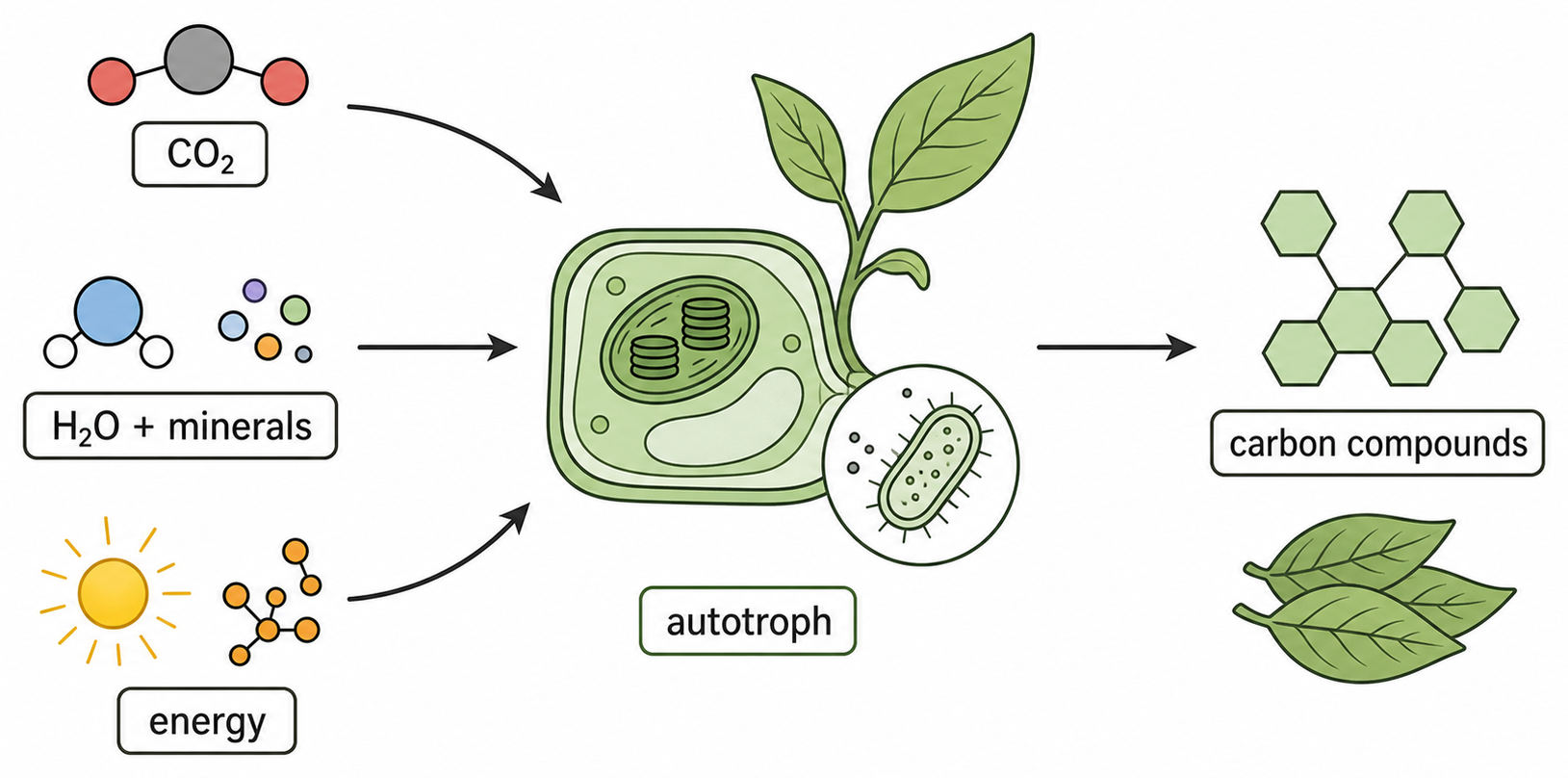
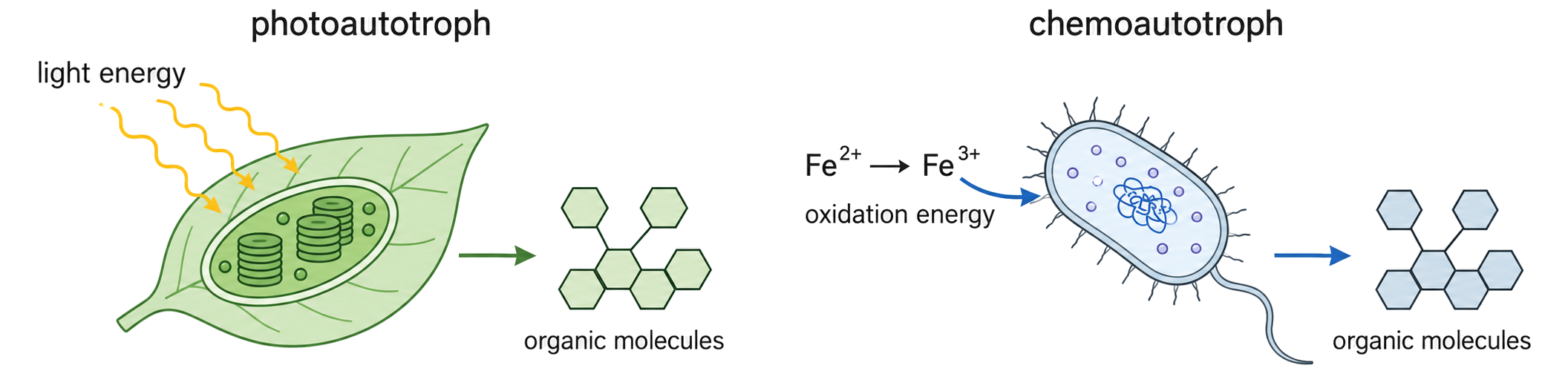
Photosynthesis converts light energy into chemical energy in carbon compounds. Carbon dioxide is reduced to carbohydrate using hydrogen from water, glucose is the main stored product, and released oxygen comes from photolysis of water. Pigment evidence is tested with chromatography and Rf, spectra questions separate absorption from action, and rate/evidence questions use limiting factors, controls, and CO2 enrichment context.

  • Light becomes chemical energy in carbon compounds through chlorophyll-containing photoautotrophs.
  • Carbon in carbohydrate comes from CO2; released oxygen comes from photolysis of water.
  • Chromatography separates pigments using Rf; absorption spectra and action spectra measure different things.
  • Limiting-factor and CO2 enrichment questions require variables, controls, and realistic interpretation.

Concept essentials

  • Photosynthesis rises with a limiting factor only while that factor restricts the rate.
  • Light intensity, carbon dioxide concentration and temperature are common limiting factors.
  • A plateau on a rate graph indicates that another factor has become limiting.
  • Photosynthesis rate can be measured by oxygen production, carbon dioxide uptake, pH change or biomass gain.