EduNinja
(a)

The ability of the mAb produced in (a) to prevent rejection of transplanted hearts in mice was compared with that of a protein, P, which blocks the CD28 signalling pathway.

Four groups of mice were treated as follows:
- group A - no treatment
- group B - treated with protein P only
- group C - treated with mAb only
- group D - treated with both mAb and protein P.

Fig. 2.1 shows the percentage survival of the transplanted hearts in the four groups of mice over a period of 80 days.
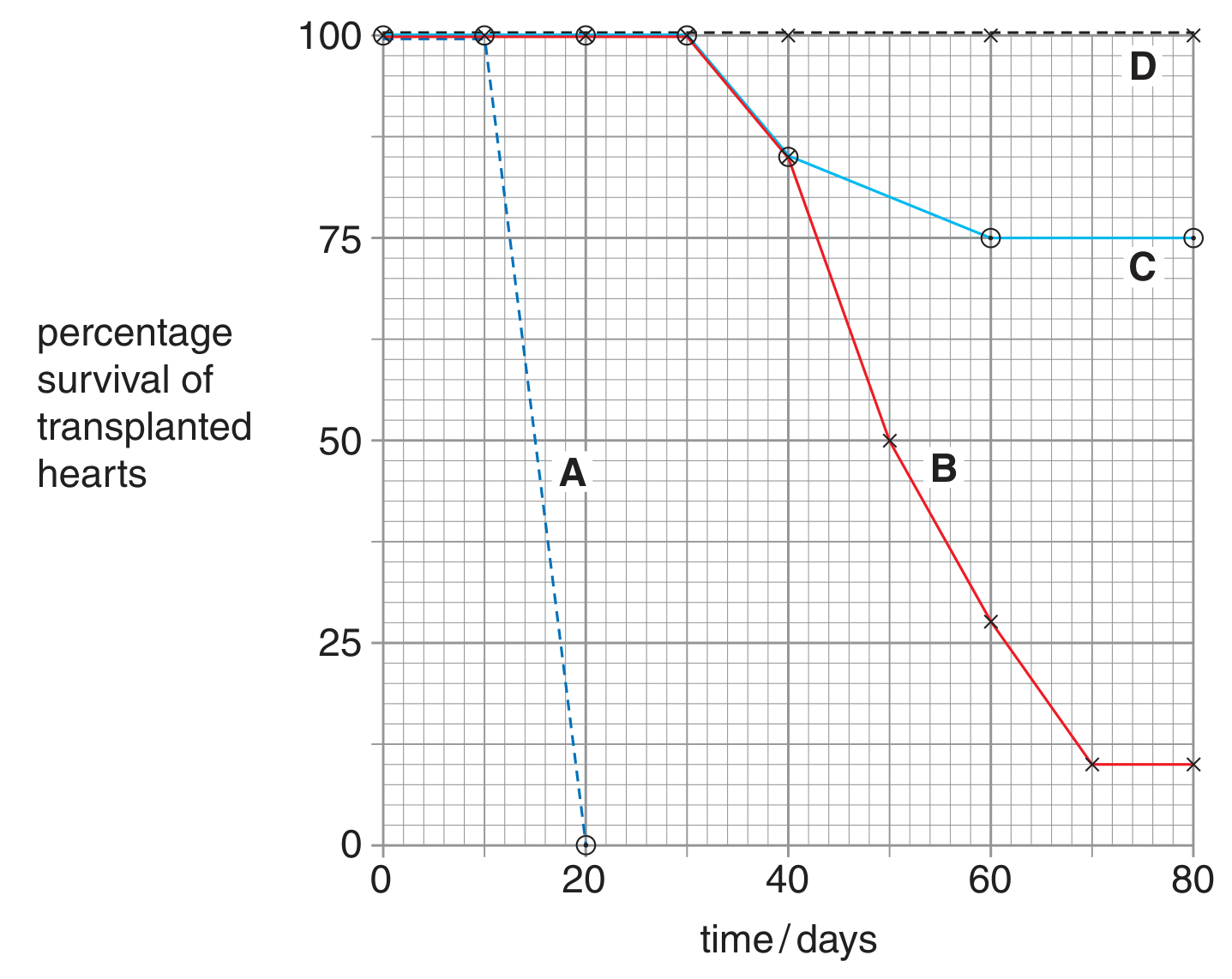
Fig. 2.1

Fig. 2.1

With reference to Fig. 2.1

[ 6 ]
(i)

describe the effectiveness of the four different treatments

[ 4 ]
(ii)

suggest an explanation for the differences in survival of the transplanted hearts in groups B and D.

[ 2 ]
(b)

State two uses of mAbs in humans, other than preventing rejection of transplanted tissue.
1.
[ 2 ]
[Maximum number: 6]

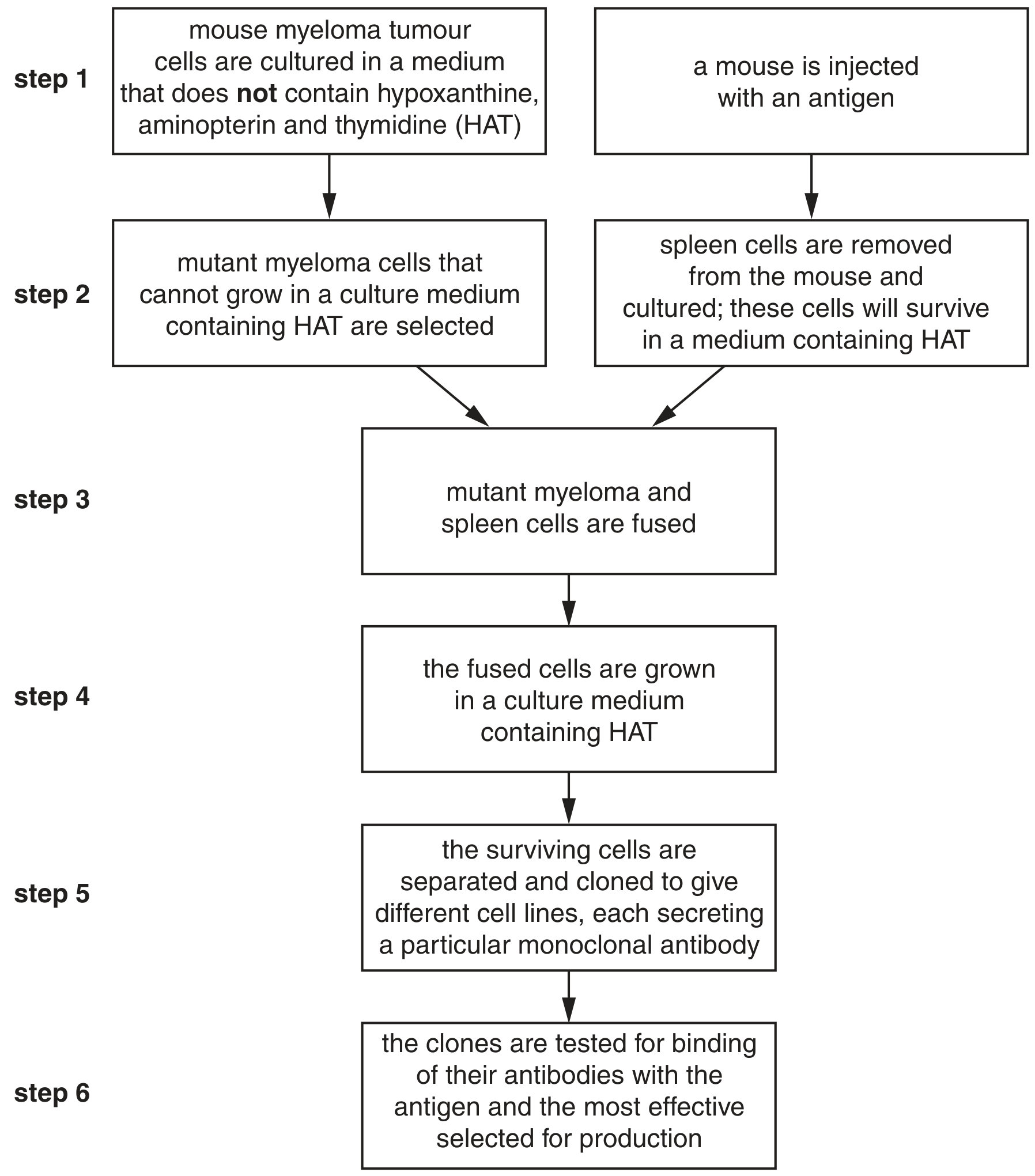
Some of the steps in the production of monoclonal antibodies are shown in Fig. 2.1.
step 1
A mouse is injected with an antigen, A.
step 2
The mouse is left for a few weeks to allow an immune response to occur.
step 3
Plasma cells (effector B lymphocytes) are extracted from the mouse's spleen.
step 4
Hybridoma cells are formed.
step 5
Each hybridoma cell is isolated and allowed to grow and divide.
step 6
The hybridoma cells producing anti-A antibodies are identified and cultured on a large scale.
Fig. 2.1

(a)

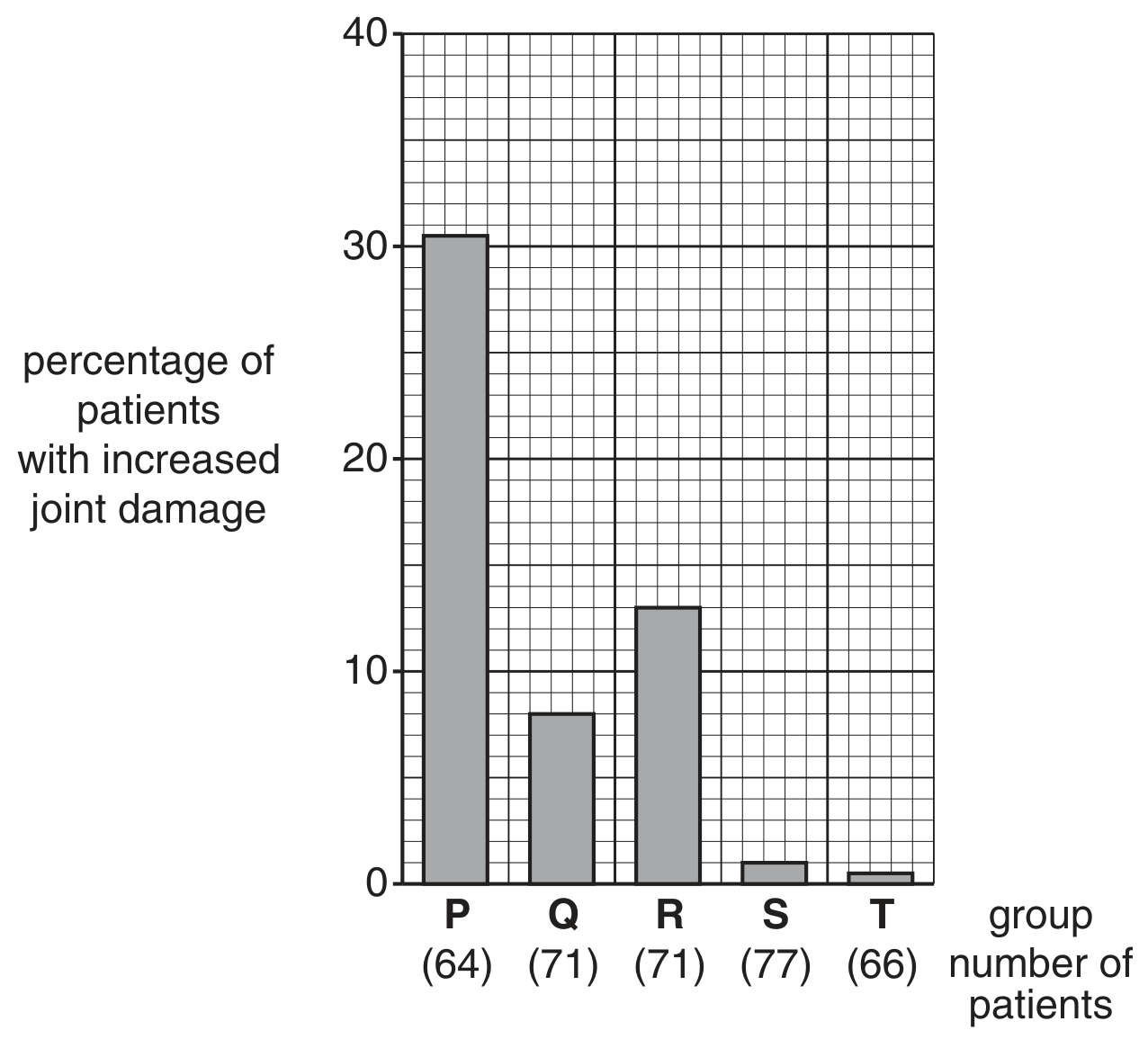
Rheumatoid arthritis (RA) is an autoimmune disease in which T lymphocytes attack the cartilage of joints by secreting a protein, TNF α\alpha. When RA is untreated, joint damage increases considerably.

The monoclonal antibody, infliximab, is used to treat RA. Infliximab specifically binds to TNF α\alpha.

A trial was set up to compare the effectiveness of infliximab and a standard treatment for RA, the anti-inflammatory drug, MTX.

Five groups of people with RA received the following treatments for one year:
- group P - MTX only
- group Q - MTX plus low dosage of infliximab at intervals of eight weeks
- group R - MTX plus low dosage of infliximab at intervals of four weeks
- group S - MTX plus high dosage of infliximab at intervals of eight weeks
- group T - MTX plus high dosage of infliximab at intervals of four weeks.

At the end of the year's treatment, the proportion of people in each group with increased joint damage was determined.

The results are shown in Fig. 2.2.
The number of people in each group is shown in brackets.

Fig. 2.2

Fig. 2.2

With reference to Fig. 2.2:

[ 3 ]
(i)

describe the effect of infliximab treatment on these people

[ 3 ]
(b)

Explain the advantages of the use of monoclonal antibodies, compared with conventional methods, in the diagnosis of disease.

[ 3 ]
[Maximum number: 5]

Many tumours release a protein growth factor called VEGF. This is a chemical signal that causes nearby blood vessels to grow new branches into the tumour.

The monoclonal antibody, bevacizumab (Avastin ® { }^{\text {® }} ), specifically binds to VEGF.

(a)

Suggest how Avastin ®{ }^{\circledR} can prevent the growth and spread of a tumour.

[ 2 ]
(b)

The monoclonal antibody made by the hybridoma method is modified to obtain humanised mouse antibody. This type of antibody molecule resembles those produced by humans.

Suggest advantages of using humanised mouse antibody rather than mouse antibody.

[ 3 ]
[Maximum number: 4]

Fig. 3.1 shows a method of producing monoclonal antibodies.

Fig. 3.1

Fig. 3.1

(a)

Suggest advantages of using monoclonal antibodies for pregnancy testing.

[ 4 ]
[Maximum number: 2]

Fig. 3.1 is a diagram that shows the structure of an antibody molecule.

Fig. 3.1

Fig. 3.1

(a)

Monoclonal antibodies are used both in diagnosis and in treatment of disease.

[ 2 ]
(i)

Suggest the advantages of using monoclonal antibodies in diagnosis of disease.

[ 2 ]
[Maximum number: 1]

Cholera is a life-threatening and infectious disease caused by the bacterium Vibrio cholerae. One of the symptoms of the disease is severe diarrhoea.
V. cholerae O1 and V. cholerae O139 are the two forms of the pathogen that are associated with cholera epidemics (large outbreaks). These two forms have different antigens that can be detected.

(a)

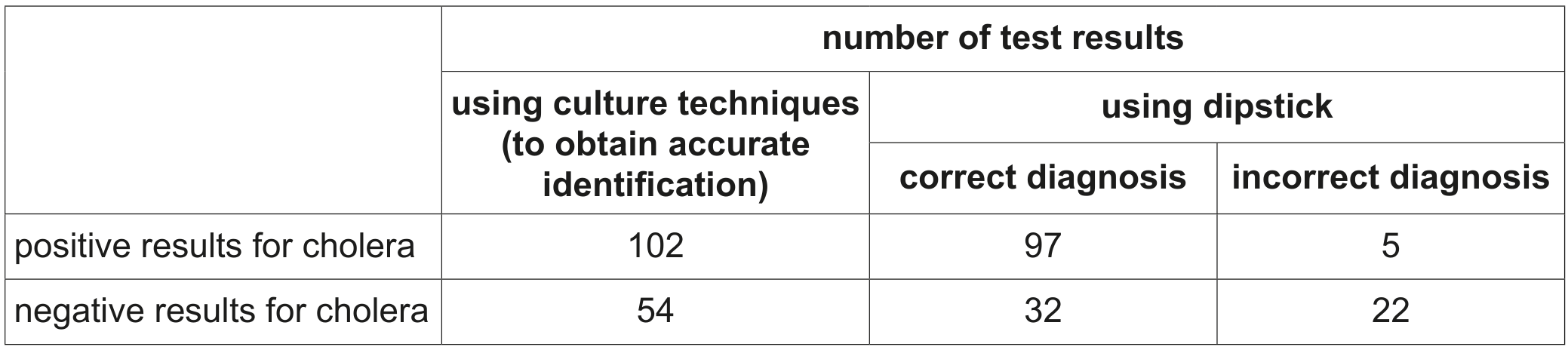
Table 2.1 shows the results of an investigation to evaluate the effectiveness of an RDT dipstick in diagnosing cholera.

Samples taken from 156 people were tested using a dipstick and compared to the results obtained by culturing the pathogen in a laboratory for accurate identification.

Table 2.1

Table 2.1

[ 1 ]
(i)

Using an RDT dipstick to diagnose cholera is much cheaper than culturing the pathogen and requires less technical skill.

Suggest one additional advantage of using an RDT dipstick, rather than culture techniques, to diagnose cholera.

[ 1 ]
[Maximum number: 2]

Rheumatoid arthritis (RA) is a disease of the joints in the human body.

(a)
(i)

Suggest how monoclonal antibody against TNF- α\alpha can reduce the symptoms of RA.

[ 2 ]
[Maximum number: 1]

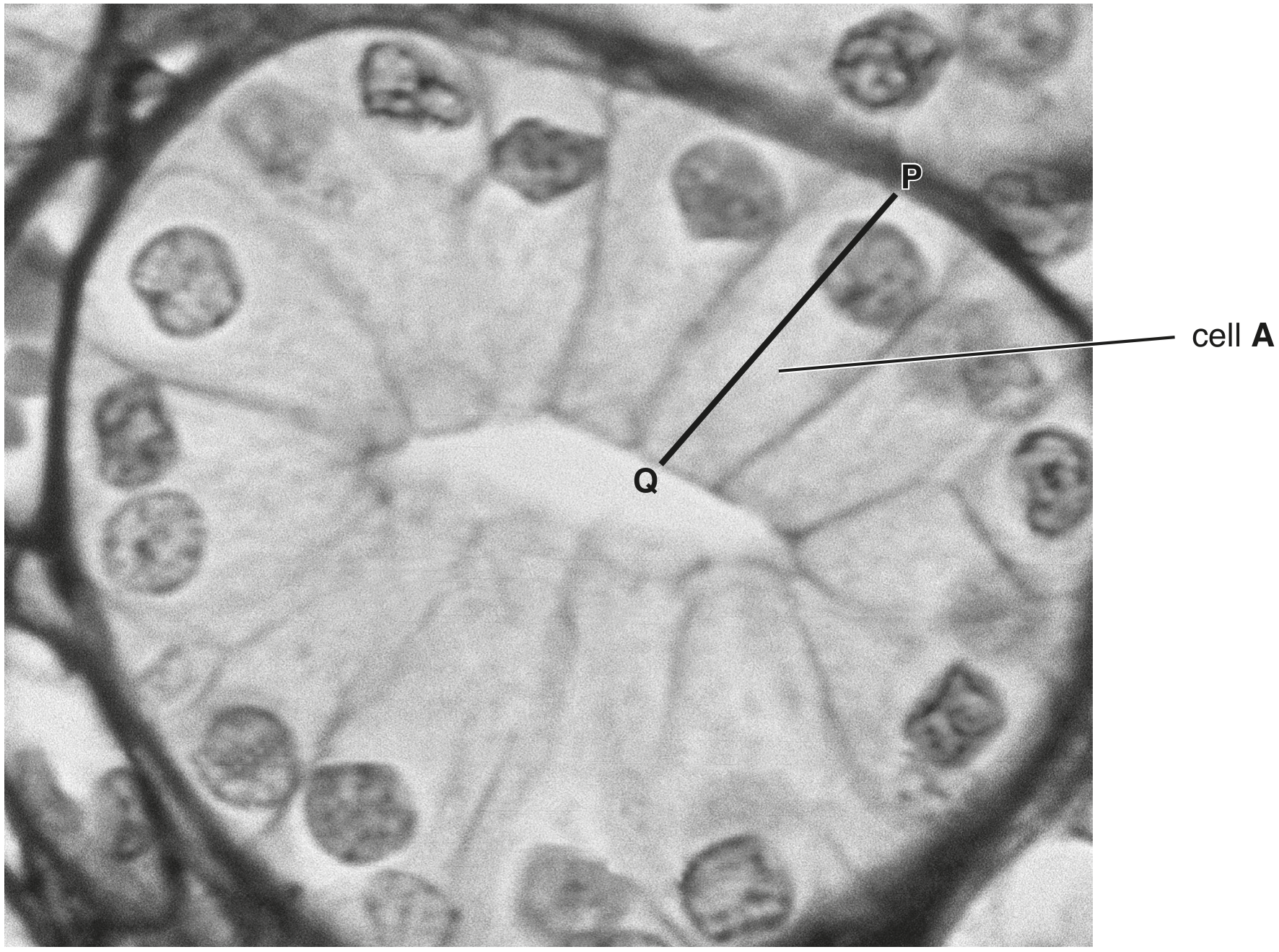
Fig. 4.1 is a photomicrograph of a cross-section of a tubular structure in the kidney made from epithelial cells.

Fig. 4.1

Fig. 4.1

(a)

Monoclonal antibodies used as a treatment need to be given more than once. Repeated treatment can cause side effects to the person or can become less effective.

Suggest why repeated treatment with monoclonal antibodies may have these effects.

[ 1 ]
[Maximum number: 2]

Dogs have an exceptionally good sense of smell. They can detect molecules in the air with a concentration of one part per trillion (1012)\left(10^{12}\right).

(a)

Dogs can use their sense of smell to detect differences between the breath of people with lung cancer and the breath of people without lung cancer. These differences are due to the presence of particular chemicals at very low concentrations in the breath of people with lung cancer. Dogs can be trained to sit when a person's breath indicates that lung cancer is present.

Screening people for lung cancer is important for early detection and treatment.
Suggest two advantages of using dogs in this way to screen people for lung cancer.

[ 2 ]
[Maximum number: 1]

T-lymphocytes have a protein, PD-1, on their surface. Some cancer cells have a receptor molecule on their surface which binds with PD-1, inactivating the T-lymphocyte.

A monoclonal antibody, lambrolizumab, has been produced against this receptor.
Trials showed that in 54 of 135 people with advanced skin cancer who were given lambrolizumab the tumours more than halved in volume. In six of the 57 people who were given the highest dose the tumours disappeared.

What may be correctly concluded from this information?
1 Lambrolizumab binds with a receptor on the surface of skin cancer cells.
2 Cancer cells to which lambrolizumab is bound cannot inactivate T-lymphocytes.
3 Lambrolizumab targets and kills skin cancer cells.
4 Lambrolizumab allows a patient's own immune system to kill cancer cells.

A

1, 2, 3 and 4

B

1, 2 and 4 only

C

1 and 3 only

D

2, 3 and 4 only

0