The glycoproteins CD28 and CD40 are found on the surface of T-lymphocytes (T-cells). They are binding sites for cell-signalling molecules and are essential for triggering the cloning of T-cells in an immune response.
A monoclonal antibody (mAb), which could block the CD40 signalling pathway, was produced from hamsters using the hybridoma method.
Outline the procedure, starting with a hamster, for producing mAbs suitable for use in another mammal, such as a mouse.
Some of the steps in the production of monoclonal antibodies are shown in Fig. 2.1.
step 1
A mouse is injected with an antigen, A.
step 2
The mouse is left for a few weeks to allow an immune response to occur.
step 3
Plasma cells (effector B lymphocytes) are extracted from the mouse's spleen.
step 4
Hybridoma cells are formed.
step 5
Each hybridoma cell is isolated and allowed to grow and divide.
step 6
The hybridoma cells producing anti-A antibodies are identified and cultured on a large scale.
Fig. 2.1
With reference to Fig. 2.1, explain:
what is meant by a hybridoma cell (step 4)
why hybridoma cells need to be formed (step 4)
how hybridoma cells producing anti-A antibody can be identified.
Many tumours release a protein growth factor called VEGF. This is a chemical signal that causes nearby blood vessels to grow new branches into the tumour.
The monoclonal antibody, bevacizumab (Avastin R◯ ), specifically binds to VEGF.
Avastin ® is made by the hybridoma method.
State:
the antigen that is injected into a mouse to produce this monoclonal antibody
what is meant by a hybridoma.
When preparing infertile women for in-vitro fertilisation (IVF), it is necessary to stimulate the growth and maturation of several ovarian follicles. This is done by giving daily injections of the glycoprotein hormone, follicle stimulating hormone (FSH).
Each molecule of FSH has quaternary structure and consists of two different polypeptide chains, α and β.
Human FSH can be extracted from women's urine (u-hFSH). A procedure involving the use of monoclonal antibodies is used to produce purified u-hFSH.
Suggest how monoclonal antibodies can be used to obtain purified u-hFSH from urine.
B-lymphocytes are activated to form plasma cells during immune responses.
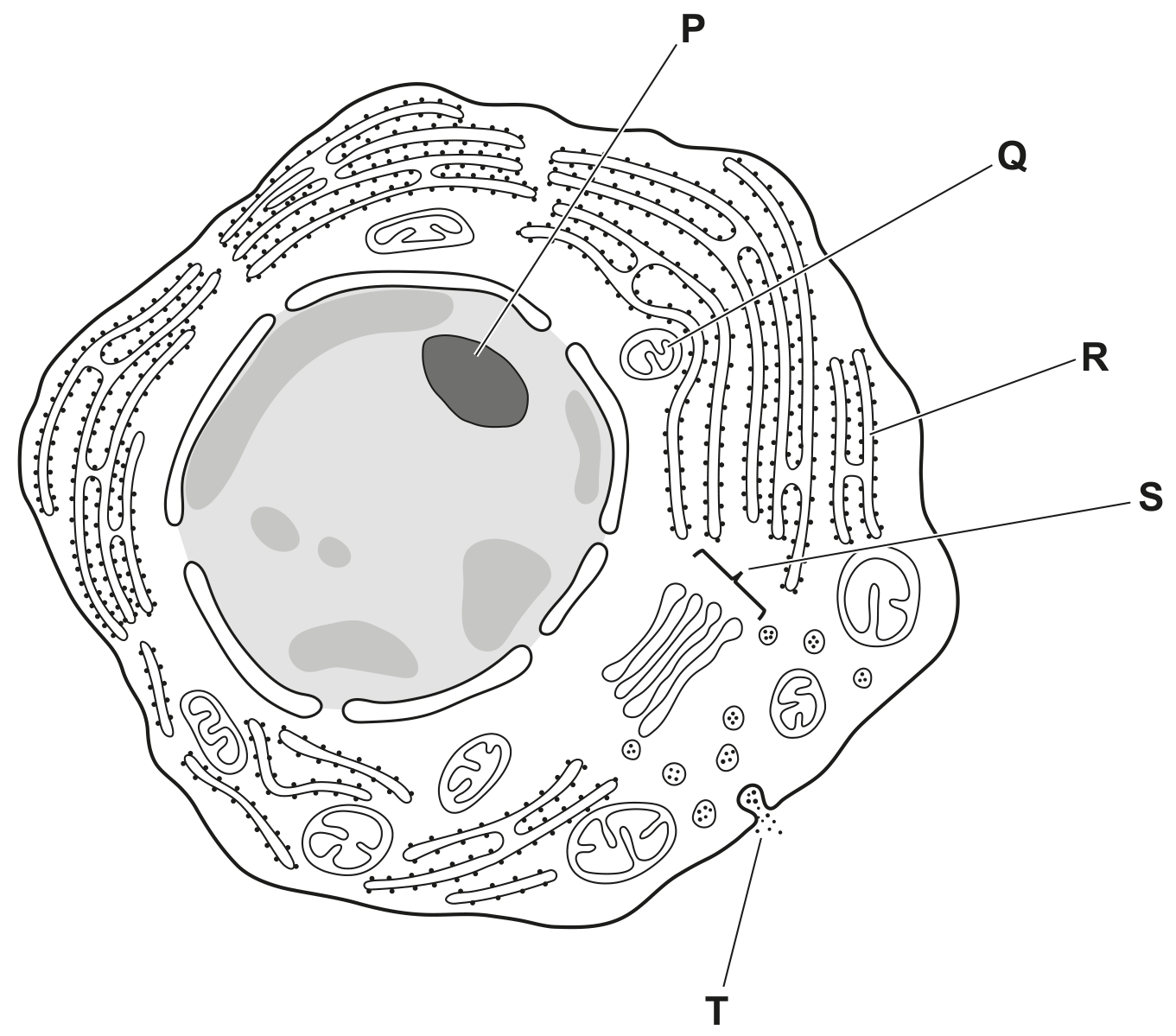
Fig. 2.1 is a drawing of a plasma cell made from a transmission electron micrograph.

Fig. 2.1
Plasma cells can be used in the commercial production of some monoclonal antibodies.
The method of production is known as the hybridoma method.
Outline the steps in the production of monoclonal antibodies by the hybridoma method.
Fig. 3.1 shows a method of producing monoclonal antibodies.

Fig. 3.1
Name this method of producing monoclonal antibodies.
The mutant myeloma cells used in step 2 are myeloma cells with a gene mutation that prevents them from growing in a culture medium containing hypoxanthine, aminopterin and thymidine (HAT).
Suggest why growing the fused cells in a culture medium containing HAT (step 4) is an important part of the procedure shown in Fig. 3.1.
Fig. 3.1 is a diagram that shows the structure of an antibody molecule.

Fig. 3.1
Monoclonal antibodies are used both in diagnosis and in treatment of disease.
Outline how monoclonal antibodies are produced.
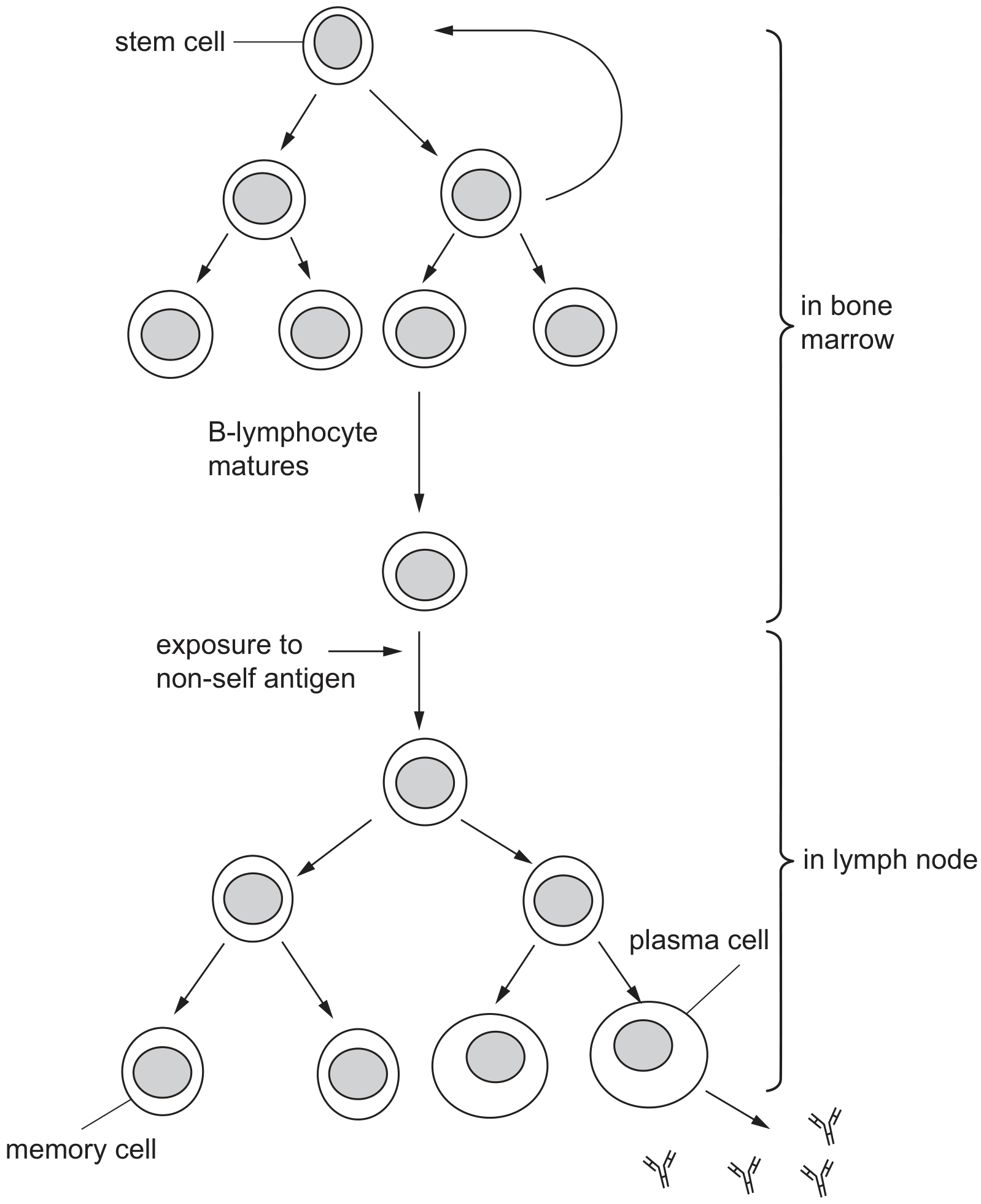
Fig. 6.1 shows the origin and development of a B-lymphocyte and its subsequent role in an immune response following an infection by a pathogen.

Fig. 6.1
(a) B-lymphocyte activation can occur as a result of direct contact with a specific antigen on the invading pathogen.
State two other ways for the B-lymphocyte to become exposed to the antigen.
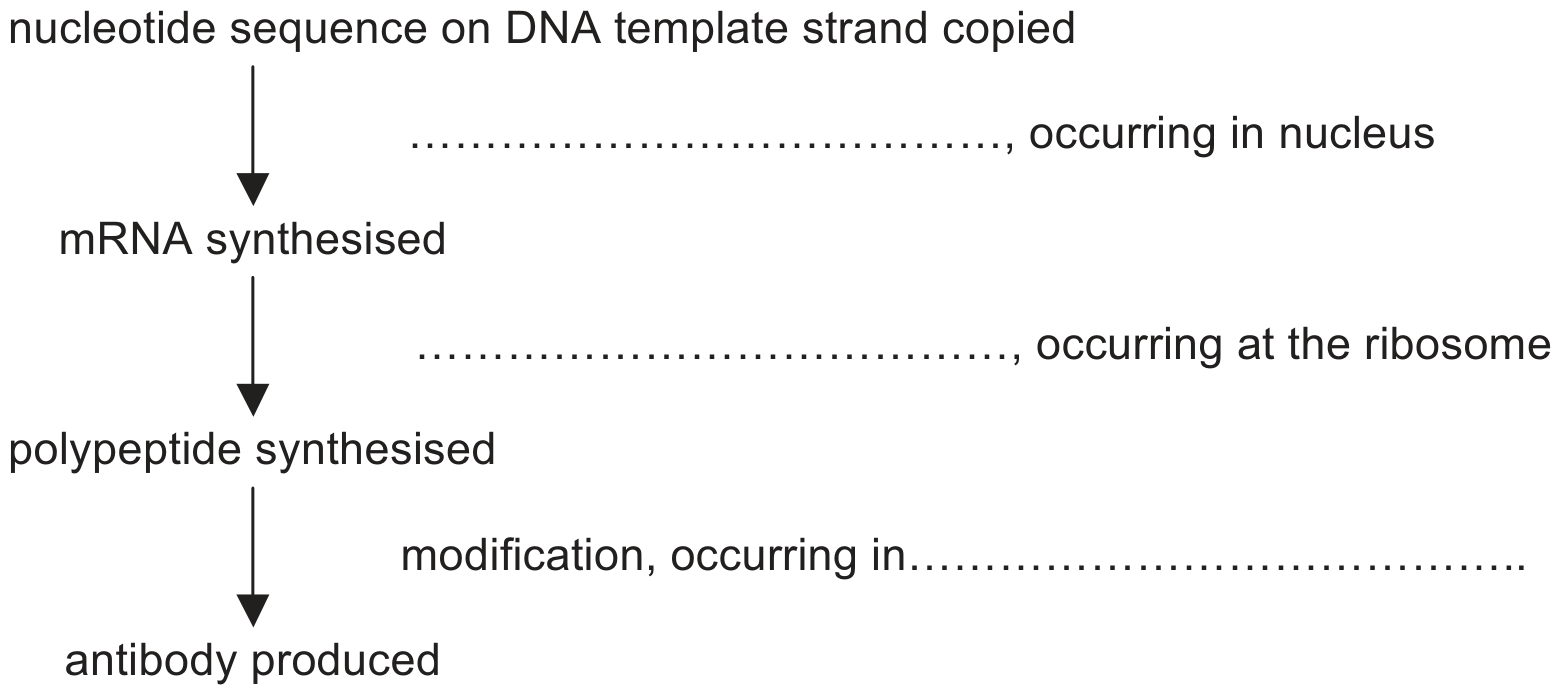
(b) The function of the plasma cell is to produce and secrete specific antibody.
Complete Fig. 6.2 to summarise the sequence of events occurring in the plasma cell.

Fig. 6.2
(c) Antibodies are globular proteins with quaternary structure.
(i) Suggest why antibodies need to be globular proteins.
(ii) With reference to antibody structure, explain what is meant by quaternary protein structure.
(d) Monoclonal antibody can be produced commercially for use in the diagnosis of infectious disease.
Name the type of cell used to produce monoclonal antibody.
Morbillivirus, which causes measles, and the human immunodeficiency virus (HIV) share these common features:
- outer envelope surrounding the protein coat
- RNA as the genetic material
- infect cells of the immune system.
HIV has an antigen known as p24.
One test for an early diagnosis of HIV infection uses a monoclonal antibody that identifies antigen p24.
Outline how the monoclonal antibody against antigen p24 is produced.