[Maximum number: 3]
Fig. 1.1 shows the human gas exchange system.
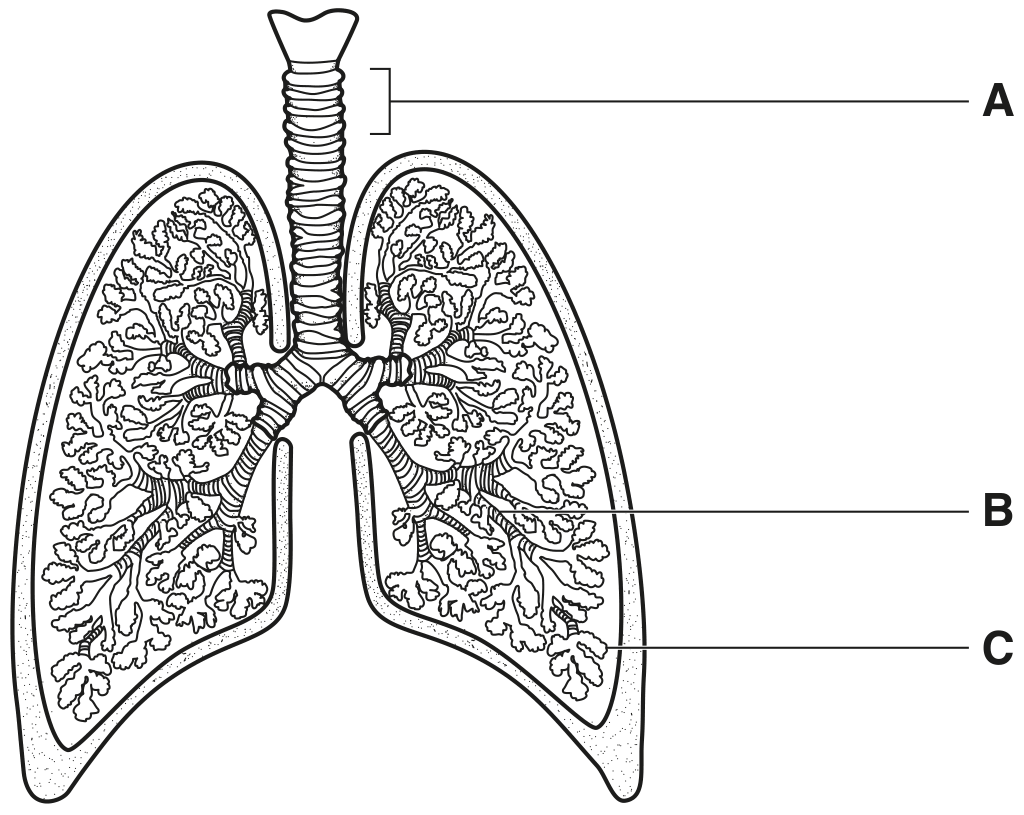
Fig. 1.1
(a)
There are a number of vaccines being developed to help control the spread of malaria.
Explain why vaccination programmes have not been able to eradicate malaria.
[ 3 ]
 EduNinja
Fig. 1.1 shows the human gas exchange system.
Fig. 1.1
There are a number of vaccines being developed to help control the spread of malaria.
Explain why vaccination programmes have not been able to eradicate malaria.
Vibrio cholerae is a prokaryotic organism.
Fig. 1.1 shows the structure of a cell of V. cholerae.
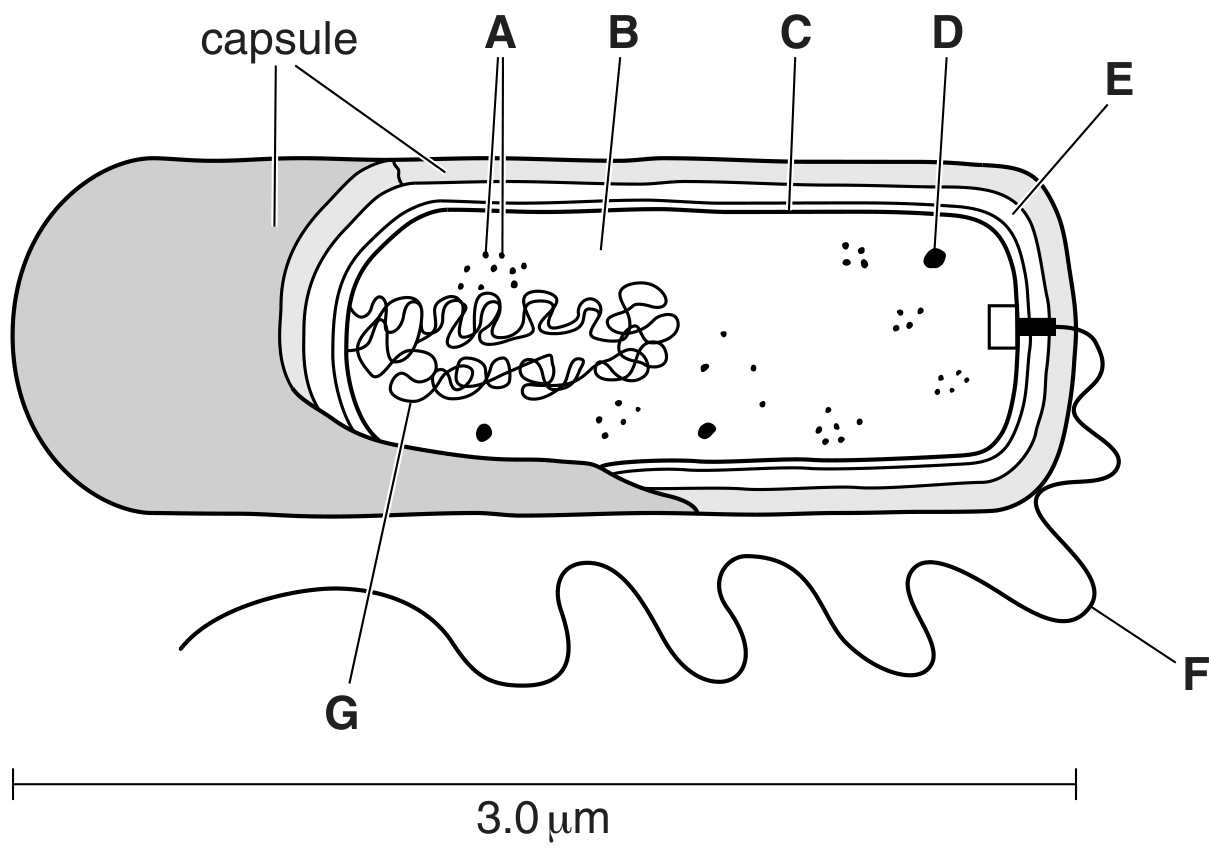
Fig. 1.1
It is important to know how pathogens are transmitted in order to develop effective control methods.
Explain how this knowledge is used to control the spread of V. cholerae in the human population.
The endangered Californian condor, Gymnogyps californianus, is the largest flying bird in North America. Condors feed on dead bodies of large mammals, such as cattle and deer. Fig. 2.1 shows the Californian condor.
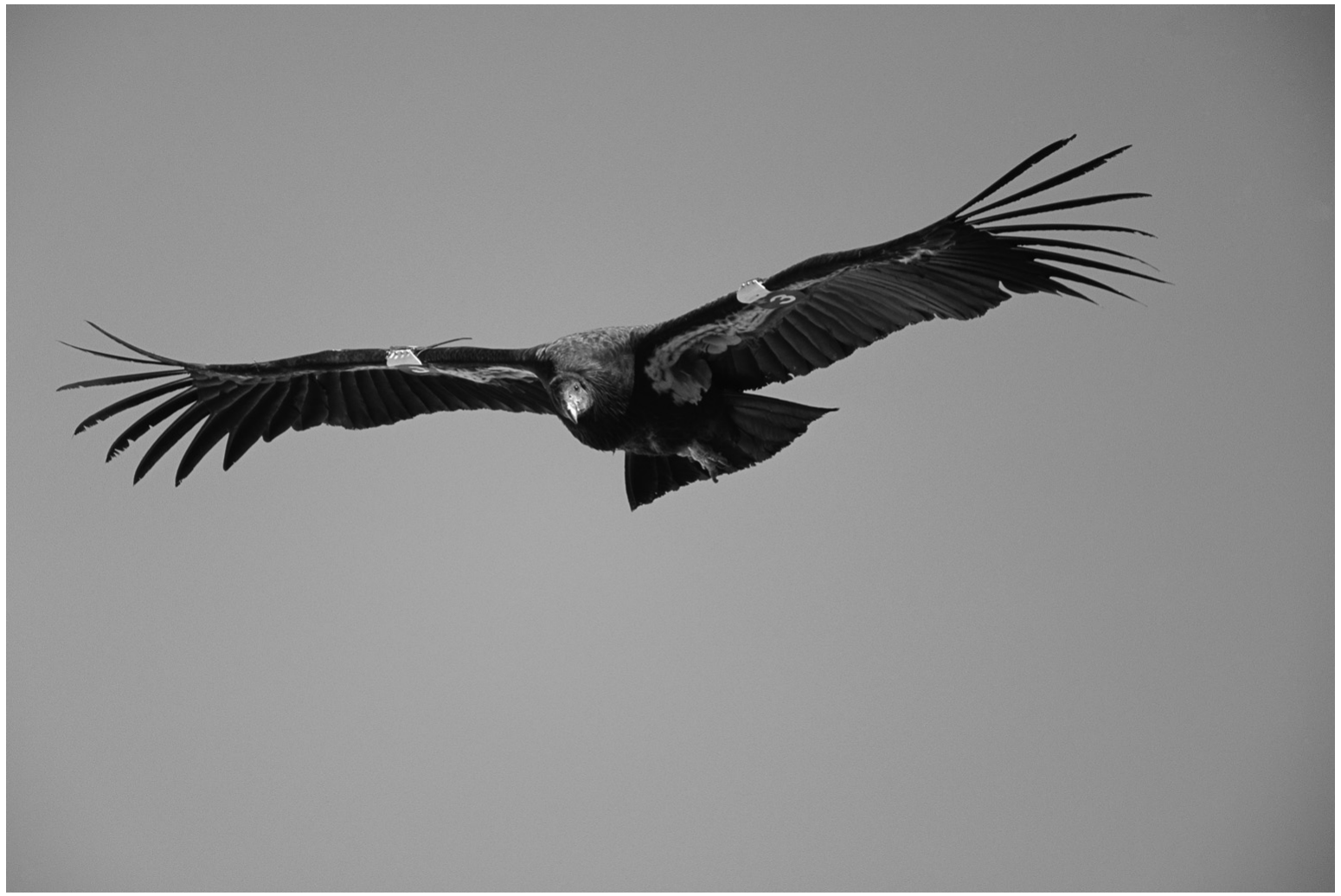
Fig. 2.1
The population of these condors fell to just 22 in 1982 and this led to the California Condor Recovery Program (CCRP), a captive breeding programme, being set up in different zoos in the United States and Mexico.
Owing to the success of the captive breeding programme there are now over 300 condors. Many of these have been released as part of the programme.
Bullets containing lead are commonly used by hunters. Hunting for pleasure means that hunters often leave the killed animals, such as deer, bears and antelopes, in the area where they have been shot.
Suggest why this is a threat, rather than an advantage, to the Californian condor.
In 2016, the highest number of cases of malaria and deaths caused by the disease were in sub-Saharan Africa. In many areas of sub-Saharan Africa, malaria is endemic (continually present) and people are at high risk of becoming infected with the Plasmodium pathogen.
In high risk areas it is recommended that:
- homes are provided with insecticide-treated nets (ITN)
- the surfaces inside homes where Anopheles mosquitoes may rest are sprayed with insecticide. This is known as indoor residual spraying (IRS).
Explain how the use of ITN and IRS can help break the transmission cycle of malaria.
Fig. 2.1 shows the proportion of the population in sub-Saharan Africa at risk of malaria that is protected by using IRS or ITN, or both, in the years 2010 to 2016.
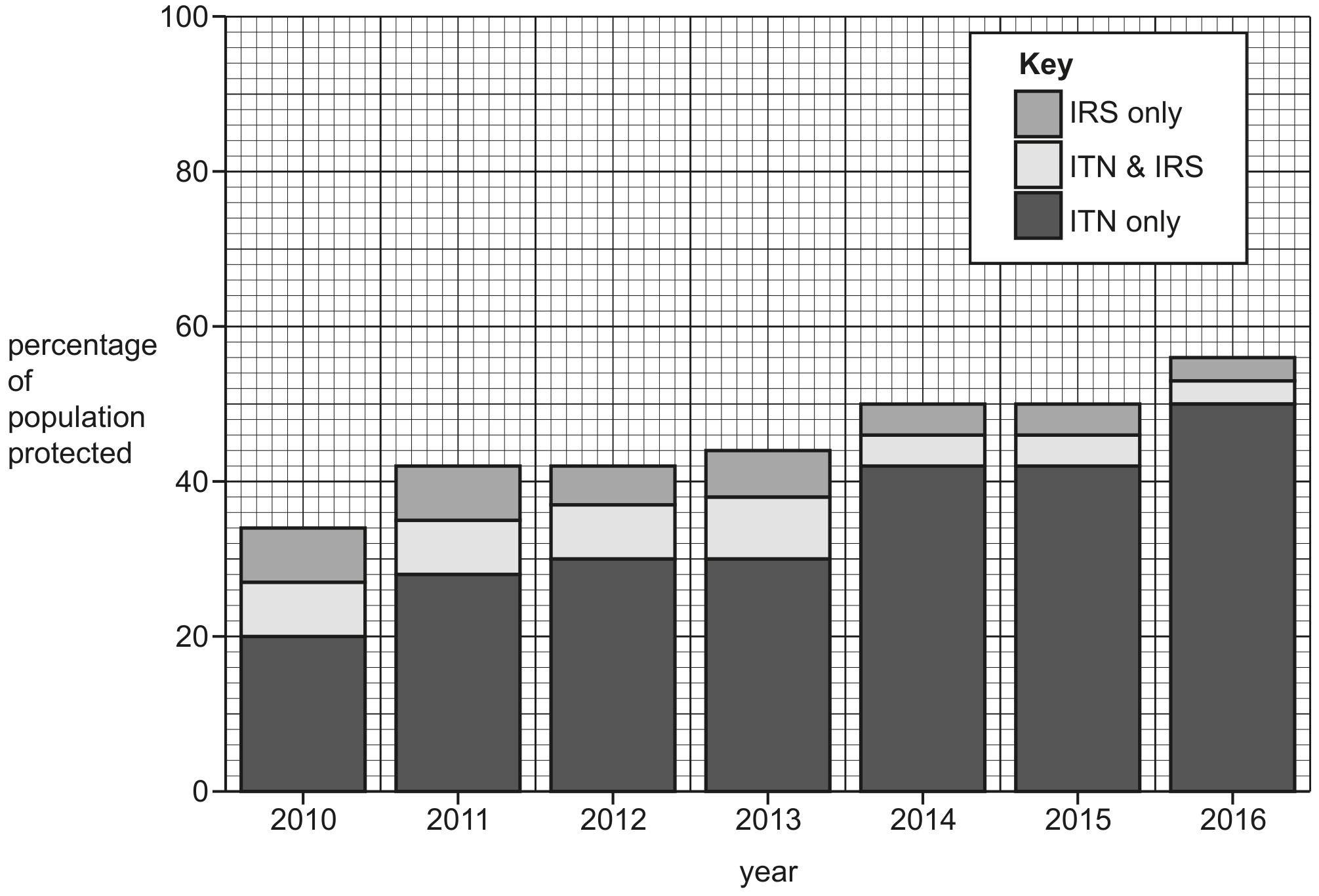
Fig. 2.1
The main trend in Fig. 2.1 shows that there is an increase in the percentage of the population protected over time.
Explain why the main trend shown in Fig. 2.1 could be a concern for the World Health Organization.
With reference to Fig. 2.1, suggest a reason for the difference in trends shown for ITN only compared with IRS only.
Fig. 2.1 shows a world map shaded by country according to the incidence of tuberculosis (TB).
TB incidence.
New cases per 100000 people per year
<10
10<25
25<50
50 < 100
100 < 300
>300
The World Health Organization (WHO) aims to eradicate TB worldwide by 2050. With reference to Fig. 2.1, discuss the problems to be faced in the eradication of TB.
Outline some of the factors that led to the successful eradication of smallpox from the world population.
Globally, measles is an important disease that mainly affects children. Many deaths from measles occur in children under five years of age.
Table 3.1 shows the population of six countries in Africa in 2009 and the number of cases of measles per 100000 people for the four years 2009 to 2012.
All six countries are classified as low-income countries.
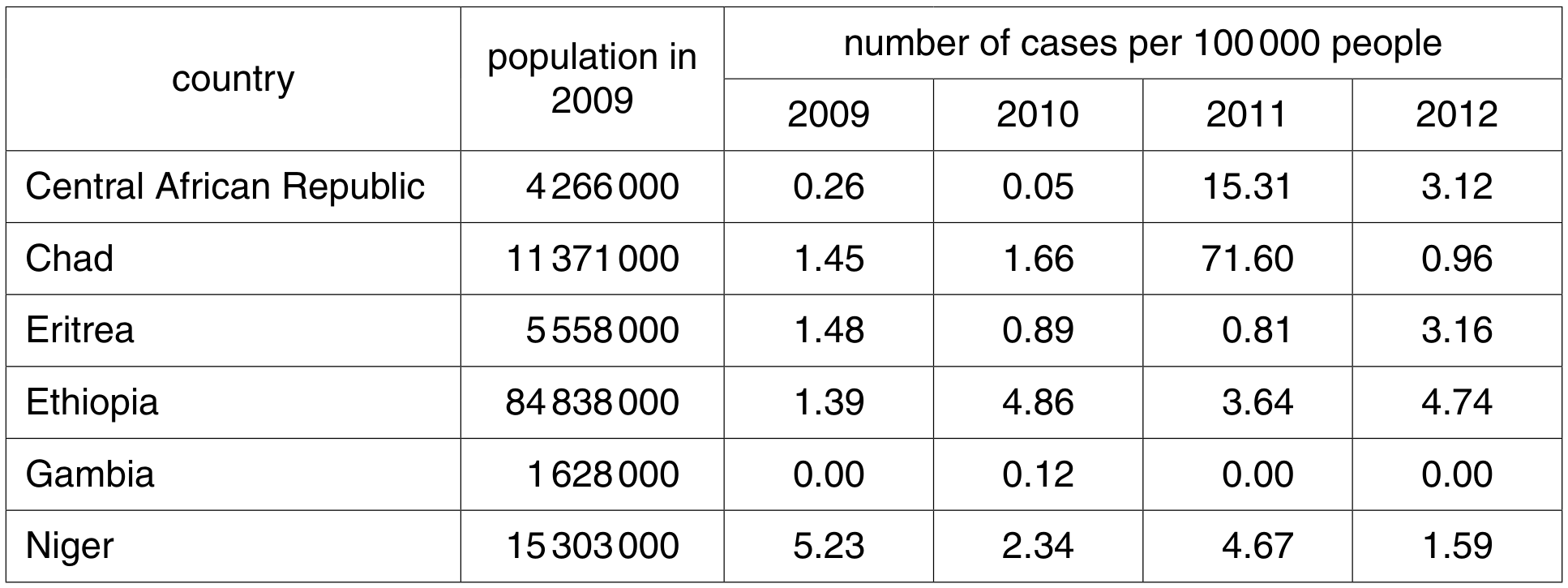
Table 3.1
Use the data for Chad, Eritrea and Ethopia to explain the advantages of showing the data in Table 3.1 as number of cases of measles per 100000 people rather than the actual number of cases.
Question 3 continues on page 6
Fig. 3.1 shows the percentage of children vaccinated against measles over a ten year period from 2003 to 2012.
- The percentage vaccinated represents children under one year of age who have been given at least one dose of the vaccine against measles in the given year.
- The data are for the six African countries shown in Table 3.1.
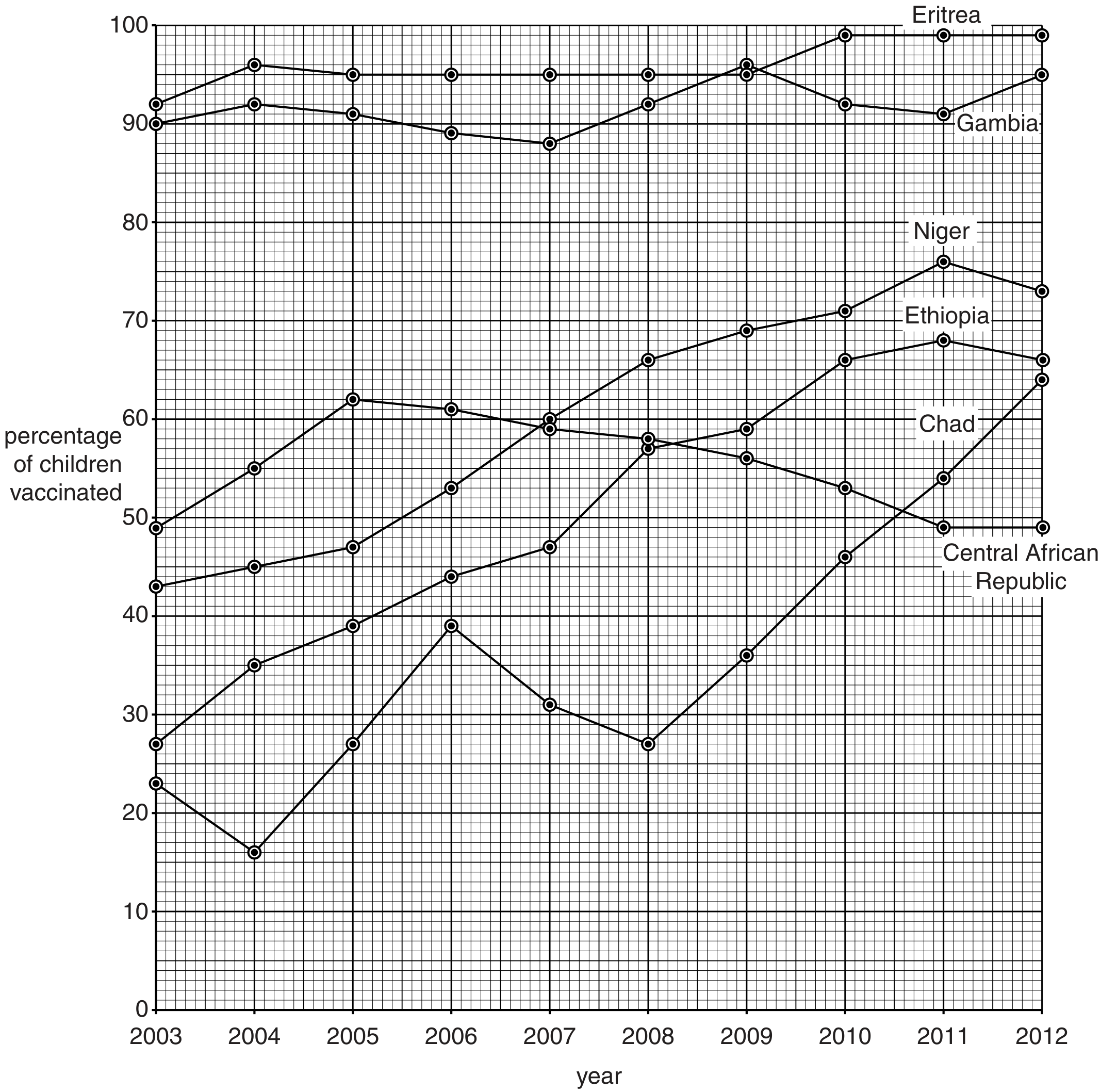
Fig. 3.1
Planning the prevention and control of measles using a vaccination programme means that financial costs must be considered.
State two examples of these costs.
1
2
Smallpox, measles and HIV/AIDS are infectious diseases caused by different viruses. These different viruses share some structural features.
Antibiotics may be prescribed for a person with HIV/AIDS.
Suggest why antibiotics may be prescribed for a person with HIV/AIDs.
Smallpox is the only infectious disease of humans that has been globally eradicated. This eradication was due mainly to a successful global vaccination programme. Most people who were given the vaccine gained immunity to the disease.
A student correctly listed four reasons for the success of the global vaccination programme for smallpox. These reasons are listed in Fig. 2.1.
- The virus did not mutate.
- A live virus, closely related to the smallpox virus, was used in the vaccine.
- The vaccine was freeze-dried and so was thermostable (heat stable).
- The vaccine was easy to administer (give), so little training was required.
Discuss how the reasons listed in Fig. 2.1 contributed to the success of the eradication of smallpox.
The main cause of tuberculosis (TB) in humans is the bacterium Mycobacterium tuberculosis. Most cases of the disease involve the lungs. The bacterium can enter cells and remain inactive in a latent (dormant) state. However, the bacterium can become active to produce symptoms of the disease.
In a person with active TB, the pathogen can be present in airborne droplets that are exhaled. Generally, a healthy person who inhales these droplets has effective defence mechanisms in the gas exchange system to prevent infection.
TB is a disease of global importance.
Discuss the factors influencing the trends shown in Table 2.1.
The main cause of tuberculosis (TB) in humans is the bacterium Mycobacterium tuberculosis. Most cases of the disease involve the lungs. The bacterium can enter cells and remain inactive in a dormant state. However, the bacterium can become active to produce symptoms of the disease.
In a person with active TB , the pathogen can be present in airborne droplets that are exhaled. Generally, a healthy person who inhales these droplets has effective defence mechanisms in the gas exchange system to prevent infection.
Describe the differences between the trend in the total number of reported cases for TB and the trend in the total number of reported cases of MDR-TB, as shown in Table 2.1.
Many social and economic factors need to be considered in the prevention and control of MDR-TB.
Outline three of these factors.