[Maximum number: 1]
Fig. 1.1 is a scanning electron micrograph of part of the wall of the bronchus of a healthy human.
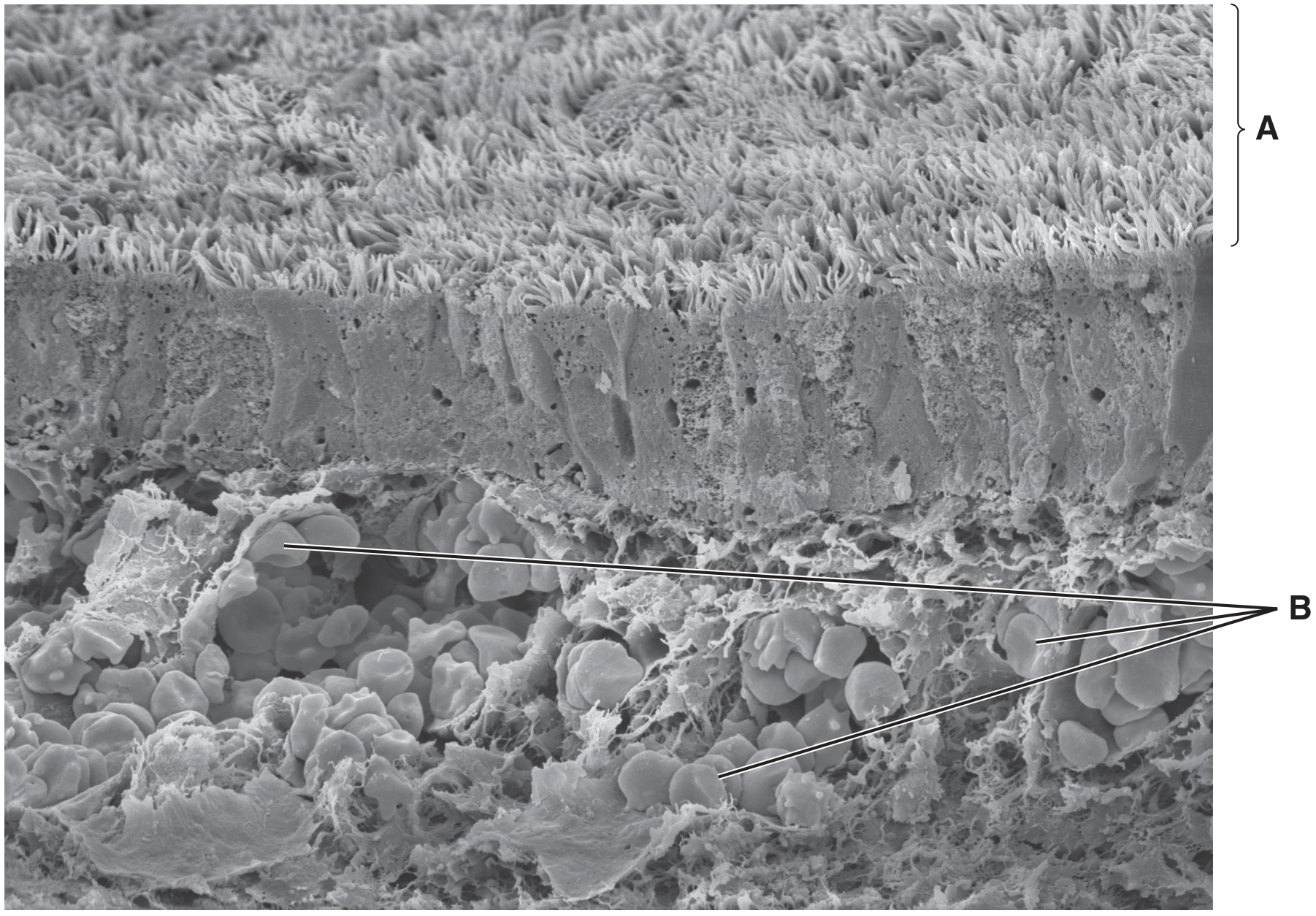
Fig. 1.1
(a)
State the name of the other condition that contributes to COPD.
[ 1 ]
 EduNinja
Fig. 1.1 is a scanning electron micrograph of part of the wall of the bronchus of a healthy human.
Fig. 1.1
State the name of the other condition that contributes to COPD.
Which statement is an example of epidemiological evidence linking smoking to lung cancer?
Chemical analysis of tar from cigarettes shows that it contains carcinogens.
Dogs made to inhale the smoke from cigarettes develop lung tumours.
The incidence of lung cancer increases in a population as more cigarettes are smoked.
When tar from cigarettes is rubbed onto the skin of mice, the mice develop skin tumours.
The infectious disease cholera is caused by a bacterium.
Cholera is an example of an infectious disease.
Explain what is meant by an infectious disease.
The symptoms of cholera are caused by choleragen, a toxin released by the bacterium.
Choleragen is a protein made up of six polypeptides:
- a single copy of a polypeptide known as the A subunit that includes an extended alpha helix
- five polypeptides that together make the B subunit.
The B subunit of choleragen binds to a cell surface membrane component, known as GM1, of an intestinal epithelial cell. The complete choleragen protein then enters the cell by endocytosis. Once inside the cell, the A subunit of the protein acts as an enzyme, disrupting the normal functioning of the cell.
Define the term disease.
Malaria is an infectious disease that is considered by the World Health Organization to be a disease of worldwide importance.
Explain what is meant by the term infectious.
Chronic bronchitis is one of the conditions that contributes to chronic obstructive pulmonary disease (COPD).
In 1980, it was announced that the highly infectious viral disease, smallpox, had been eradicated. This was mainly due to a worldwide vaccination programme planned by the World Health Organization (WHO).
Attempts have been made to control other diseases, such as measles, sickle cell anaemia and cholera, without the same success as smallpox.
Define the term disease.
Vaccination can protect against the infectious disease tuberculosis (TB).
Define the terms:
infectious disease.
Cells of the immune system function to protect the body against infectious diseases.
Viruses that infect bacteria are called bacteriophages. Some bacteriophages that infect the cholera pathogen cause lysis of the bacterium.
Some scientists believe that bacteriophages could be used to treat people who are infected with cholera.
Suggest the properties of the bacteriophages that would make this possible.
Explain why tuberculosis (TB) is known as an infectious disease.
Fig. 3.1 is an electron micrograph of a type of B-lymphocyte called a plasma cell.
Plasma cells secrete antibody molecules.
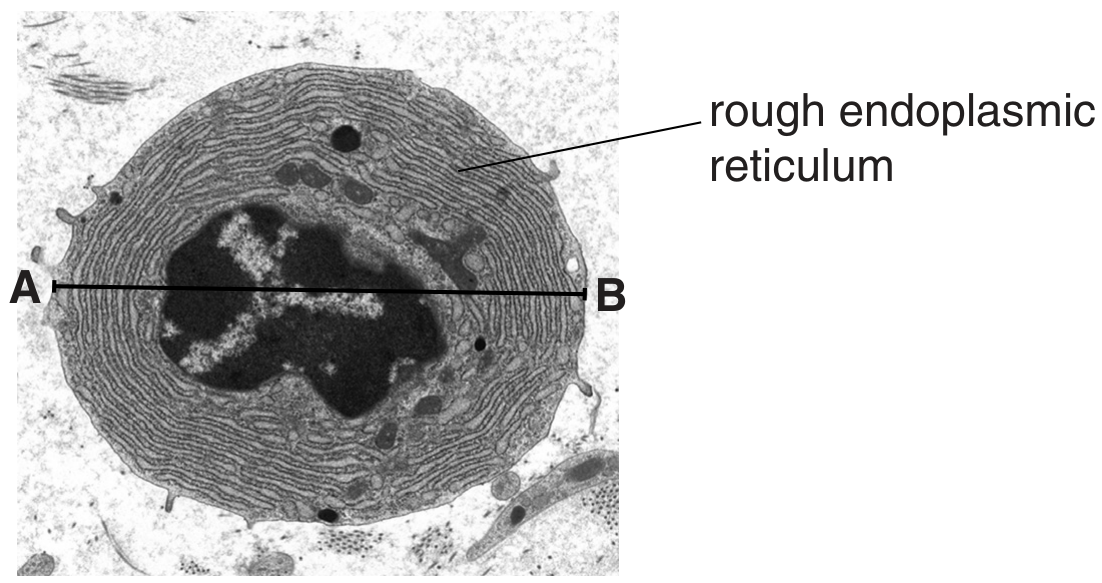
Fig. 3.1
Smallpox was the first disease to be eradicated by vaccination. The vaccine was effective for up to 10 years after one dose and did not require boosters within this time.
Name the causative organism (pathogen) of smallpox.