EduNinja
[Maximum number: 2]

Fig. 1.1 is a photomicrograph of a low power image of part of the common sunflower, Helianthus annuus. Fig. 1.1 is a transverse section.
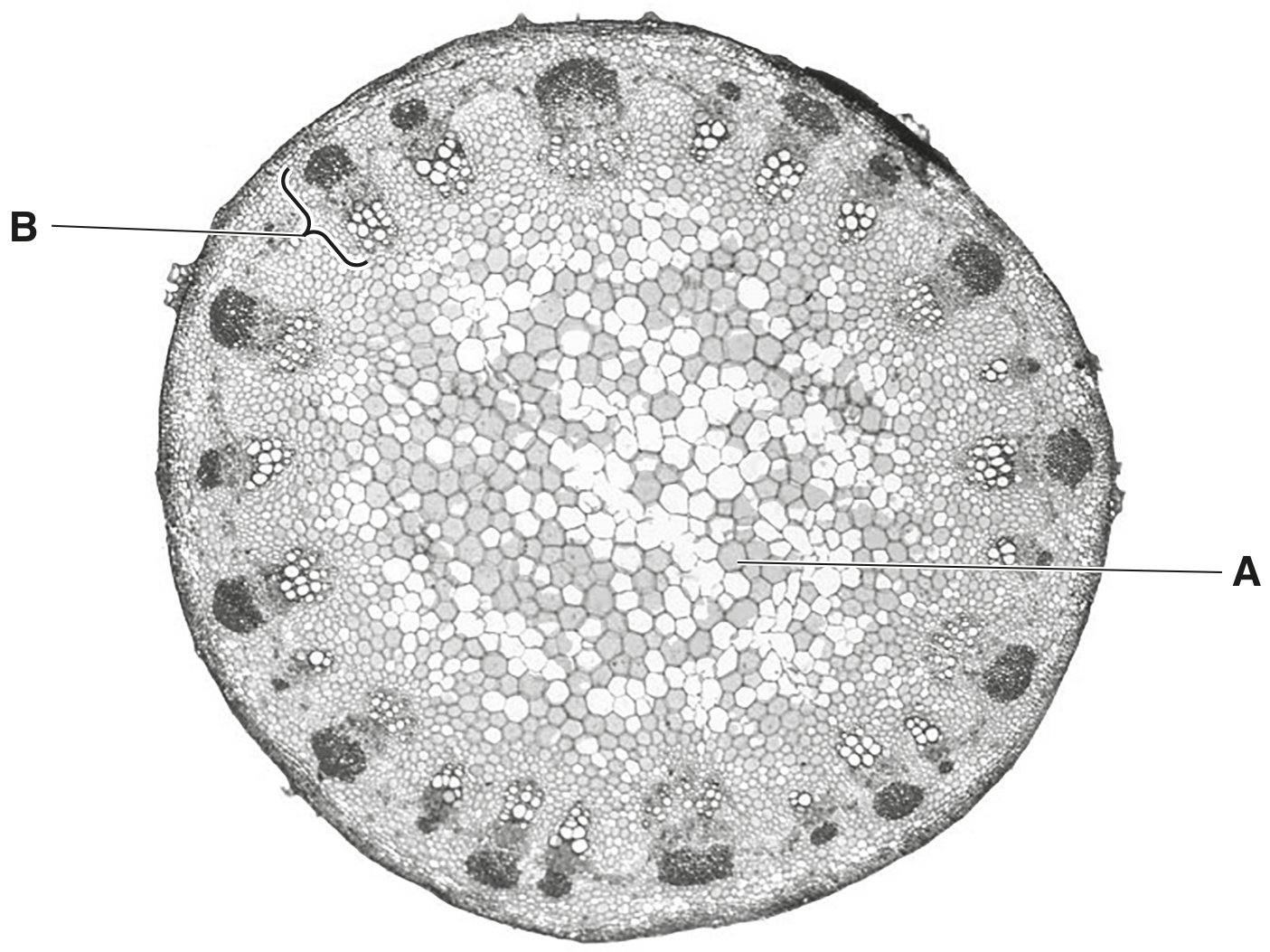
Fig. 1.1

Fig. 1.1

(a)

Cell type A in Fig. 1.1 has a large central vacuole.

Suggest, with reasons, the role of the tissue formed by this type of cell.

[ 2 ]
[Maximum number: 5]

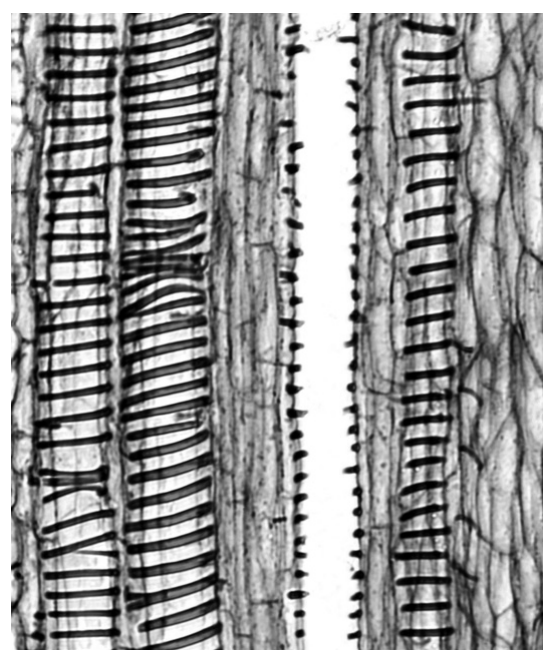
Fig. 2.1 shows xylem tissue in a longitudinal section through the stem of a dicotyledonous plant.

Fig. 2.1

Fig. 2.1

(a)

Describe and explain how the structure of xylem vessels is suited to their function.

[ 5 ]
(a)

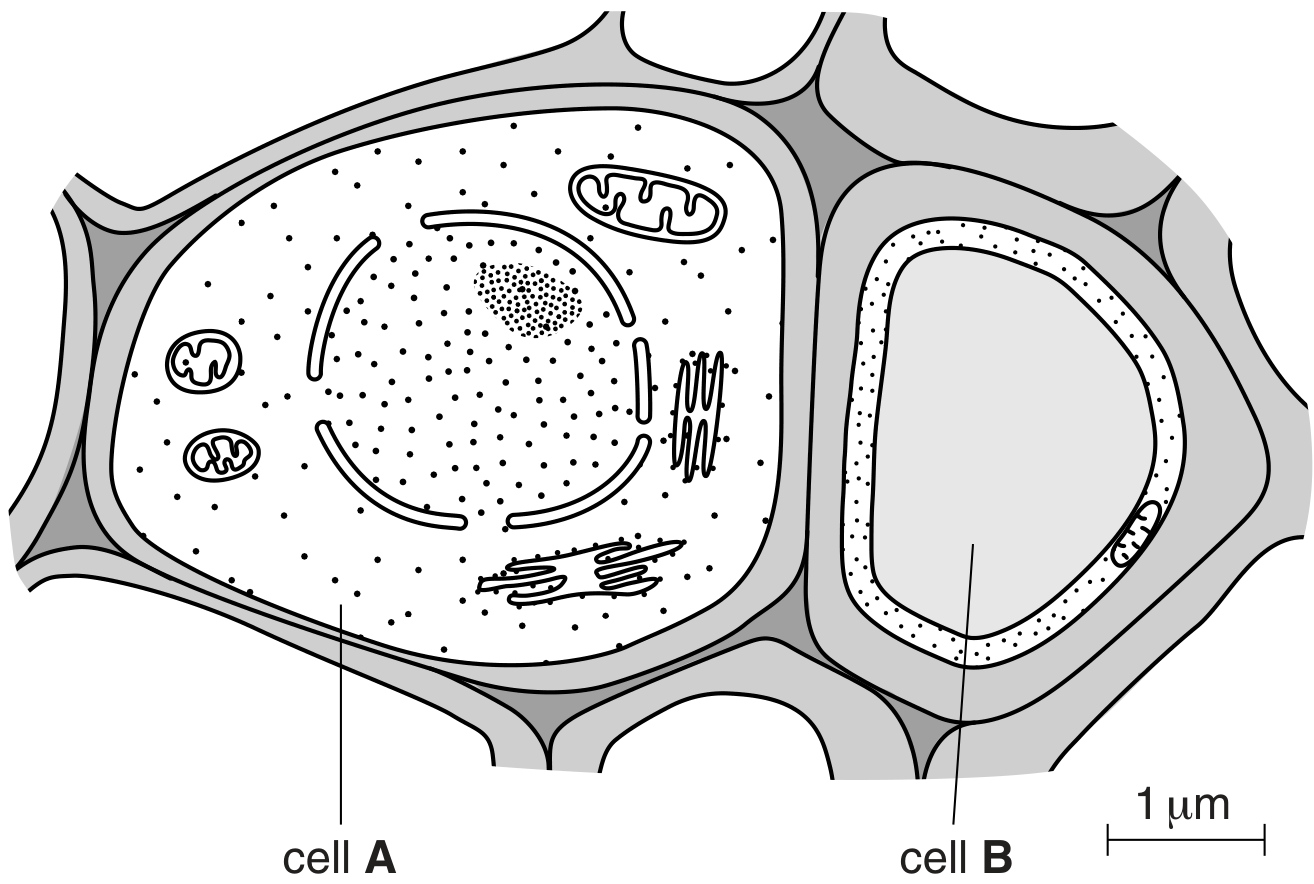
Fig. 3.1 is a drawing of a transverse section through part of the stem of a dicotyledonous plant. Cell A and cell B are involved in the transport of dissolved organic molecules.

Fig. 3.1

Fig. 3.1

[ 5 ]
(i)

With reference to Fig. 3.1, explain how the different structures of cell types A and B are related to their function.

[ 5 ]
[Maximum number: 4]

Meristematic tissue is found in the growing regions of plants, such as shoot tips. Meristematic cells have a similar role to stem cells in animals.

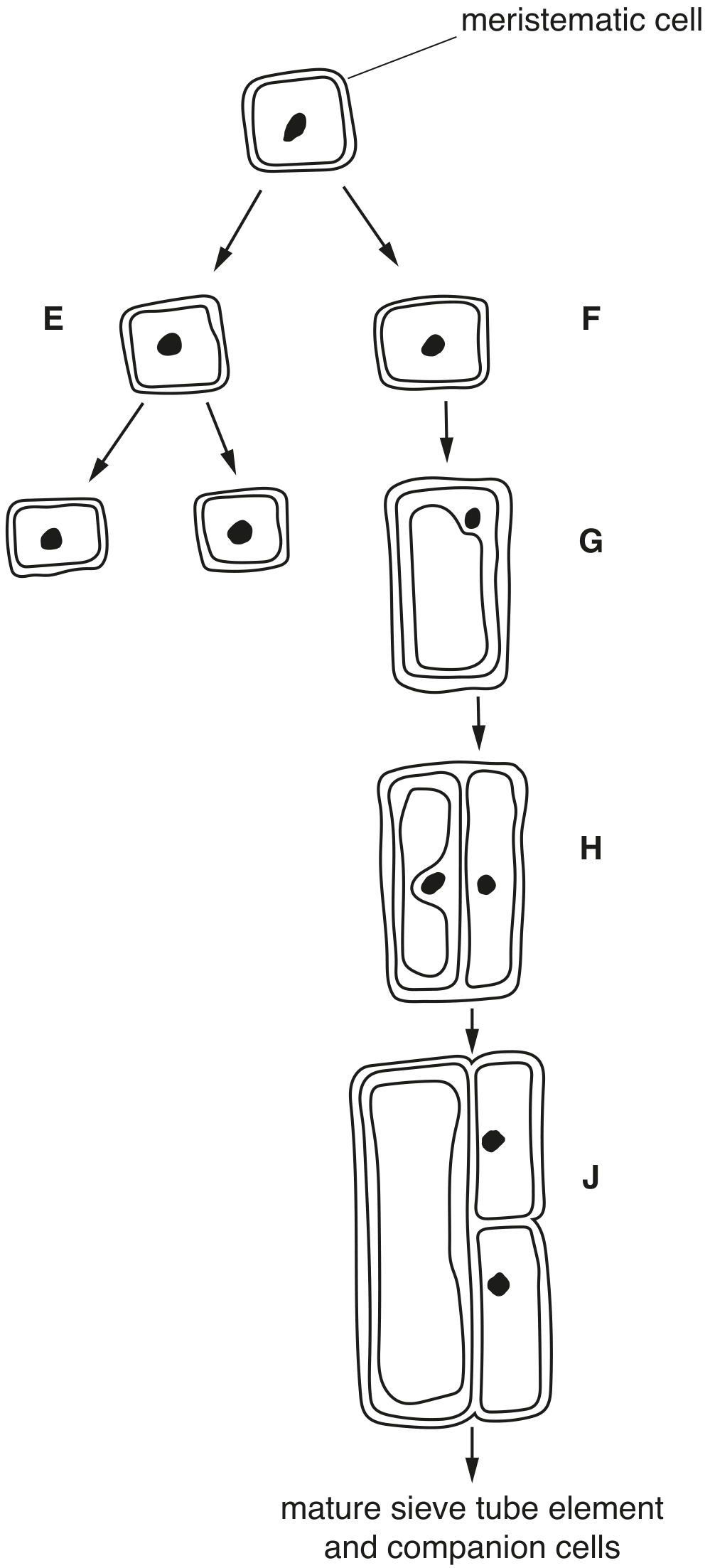
Fig. 4.1 shows some of the stages in the formation of a mature phloem sieve tube element and companion cells from a meristematic cell.

Fig. 4.1 shows some of the stages in the formation of a mature phloem sieve tube element and companion cells from a meristematic cell.

(a)

Explain how the structure of a mature sieve tube element is related to its function.

[ 4 ]
(a)

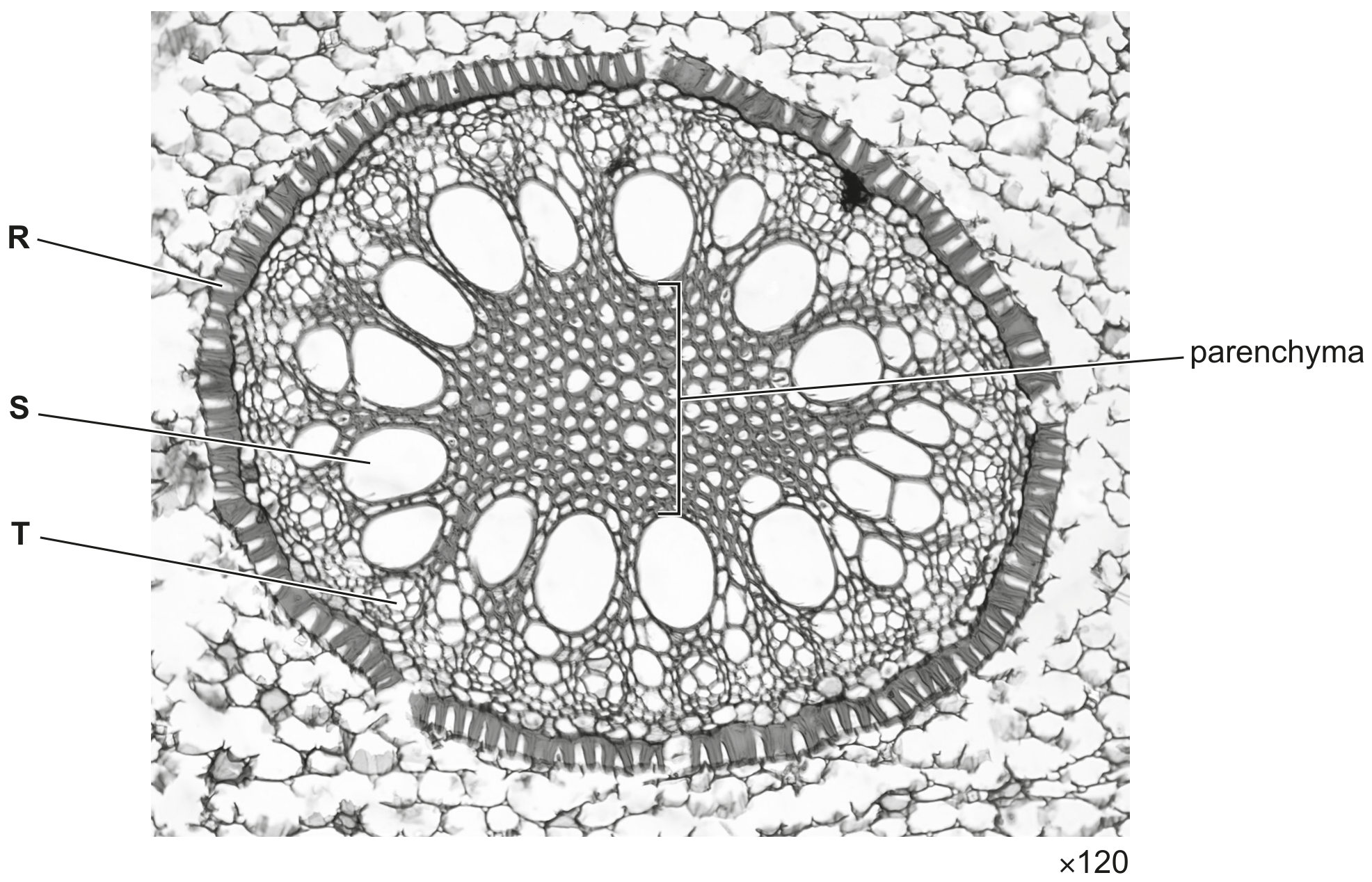
Fig. 3.1 is a photomicrograph showing part of a transverse section through the root of an iris, Iris germanica. Irises are herbaceous monocotyledons. These plants have the same transport tissues as herbaceous dicotyledons, but the transport tissues are distributed differently. In monocotyledons, the central tissue in the root is parenchyma (packing tissue).

Fig. 3.1

Fig. 3.1

[ 2 ]
(i)

Outline the role of the tissue in which cell R is found in Fig. 3.1.

[ 2 ]
[Maximum number: 1]

Which correctly matches the structure and function of sieve tube elements?

structure

function

cellulose cell wall with no lignin

to prevent loss of water

end walls modified to form sieve plates

slow down the rate of transport of solutes

elongated cells joined end to end

form a tube to transport dissolved mineral ions and water

peripheral cytoplasm with no nucleus

to provide as little resistance to flow as possible

[Maximum number: 1]

Which feature of xylem vessel elements allows them to stay open as transpiration increases?

A

new vessel elements carry extra water as a plant grows

B

there are no cross walls between vessel elements

C

vessel elements form narrow tubes

D

walls of vessel elements contain lignin

[Maximum number: 1]

Which row explains why xylem vessels have no cytoplasm?

to contain a larger volume of water

to transport water faster

to increase the cellulose content of the vessel walls

key

χ\boldsymbol{\chi}

χ\boldsymbol{\chi}

✓ = explains

×

x= does not explain

χ\boldsymbol{\chi}

[Maximum number: 1]

Which feature of xylem vessel elements allows them to have reduced resistance to water movement?

A

lignin forms an incomplete secondary wall

B

new vessels carry extra water as a plant grows

C

there are no cross walls between vessel elements

D

vessel elements join to form narrow tubes

[Maximum number: 1]

Which statement about xylem vessel elements is correct?

A

Hollow vessels enable the constant movement of water up and down a plant.

B

Pits enable the movement of water into adjacent xylem vessels.

C

Vessels contain numerous mitochondria to generate ATP for active transport.

D

Vessels contain perforated cross-walls called sieve plates.

0