[Maximum number: 2]
Fig. 1.1 is a diagram showing the structure of a section of a DNA molecule.
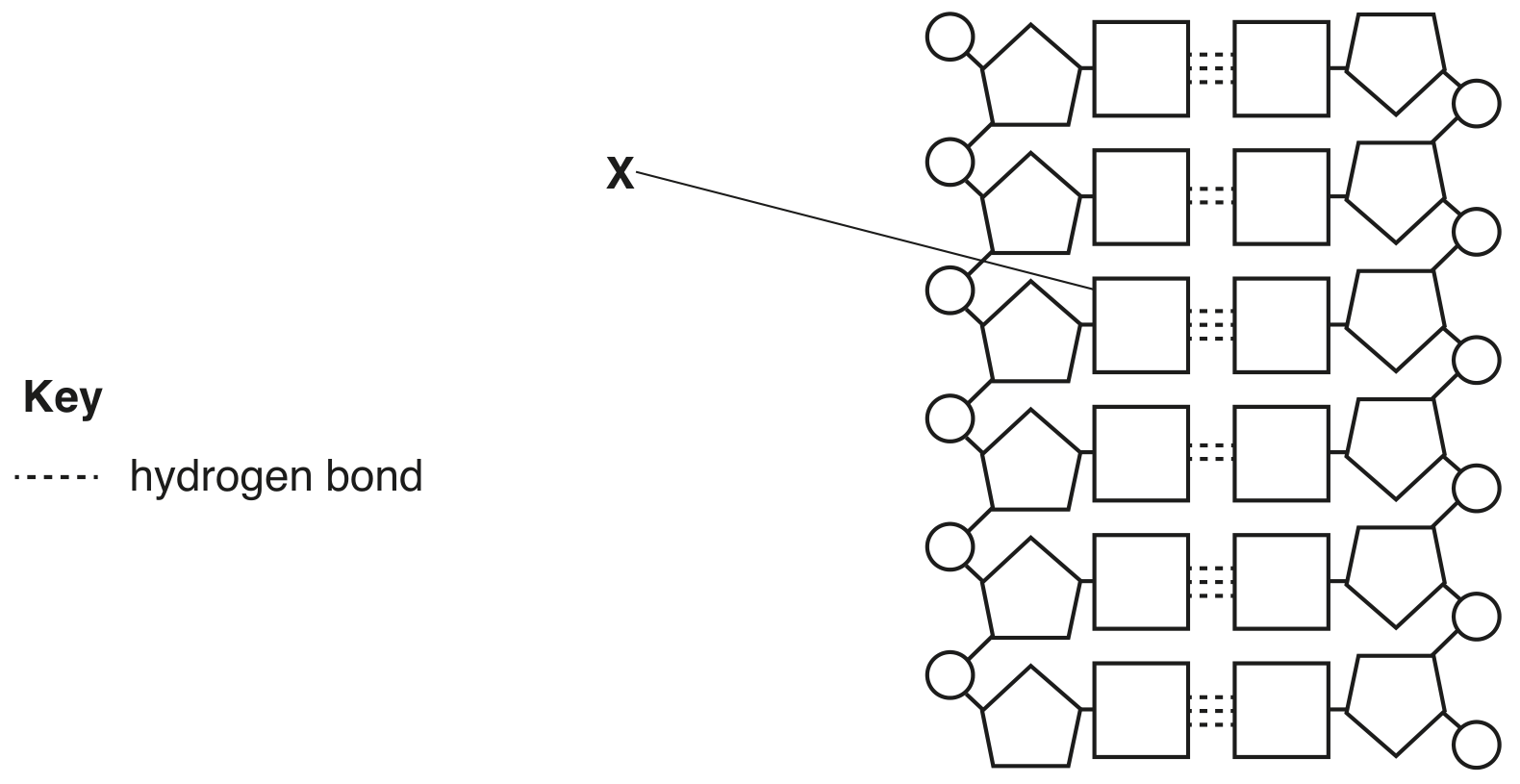
Fig. 1.1
(a)
Name the two bases forming the base pair at X in Fig. 1.1 and give a reason for your answer. bases reason
[ 2 ]
 EduNinja
Fig. 1.1 is a diagram showing the structure of a section of a DNA molecule.
Fig. 1.1
Name the two bases forming the base pair at X in Fig. 1.1 and give a reason for your answer. bases reason
DNA replication is an important event in the cell cycle.
Fig. 2.1 shows pairing between two bases, X and Y, in a DNA molecule.
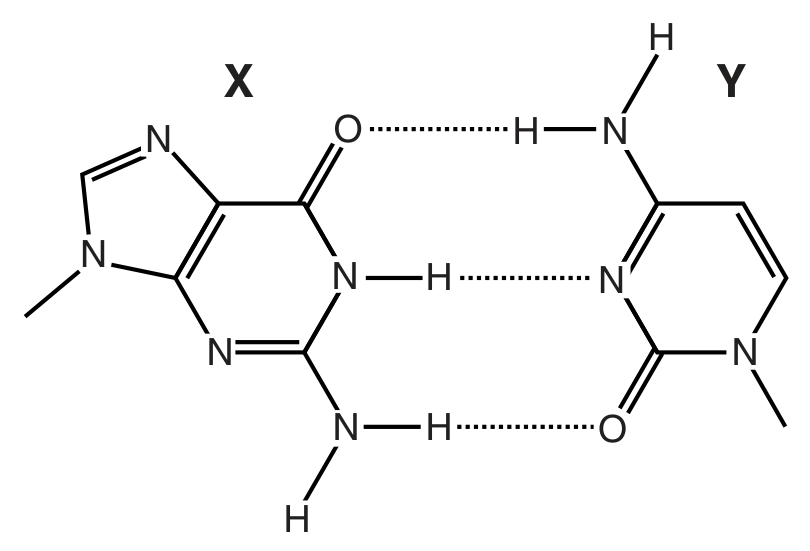
Fig. 2.1
Name the type of bond shown by the dotted lines between the bases.
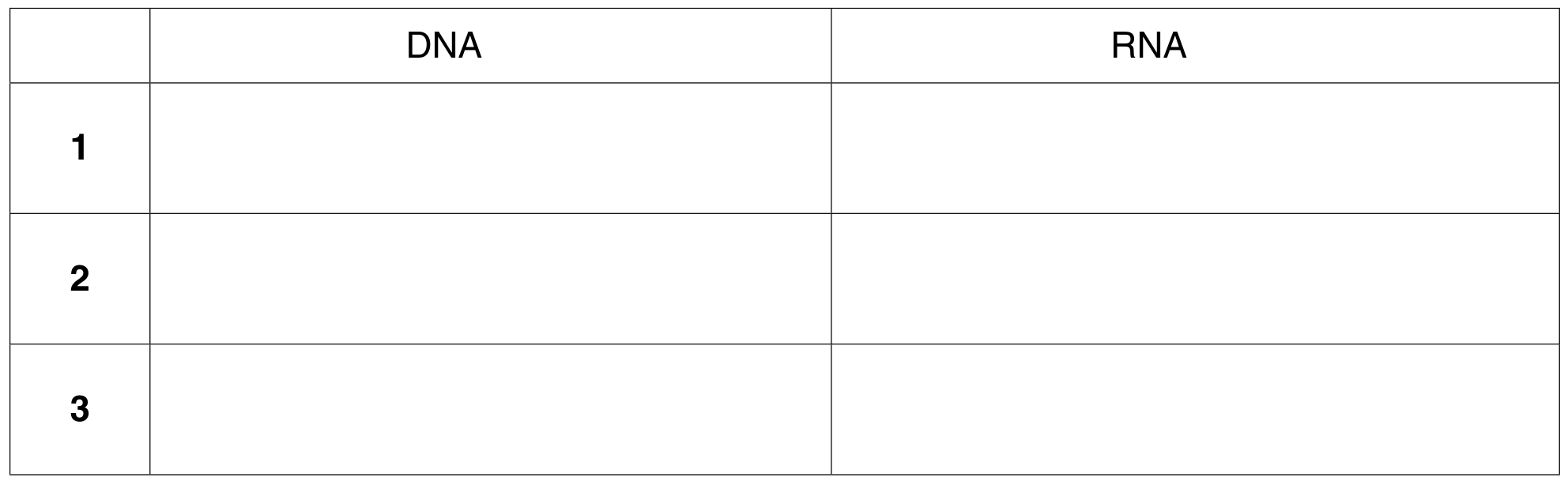
Complete the table to show three ways in which the structure of DNA differs from RNA.
The diagram shows three routes, X, Y and Z, through which substances can pass across a cell surface membrane.
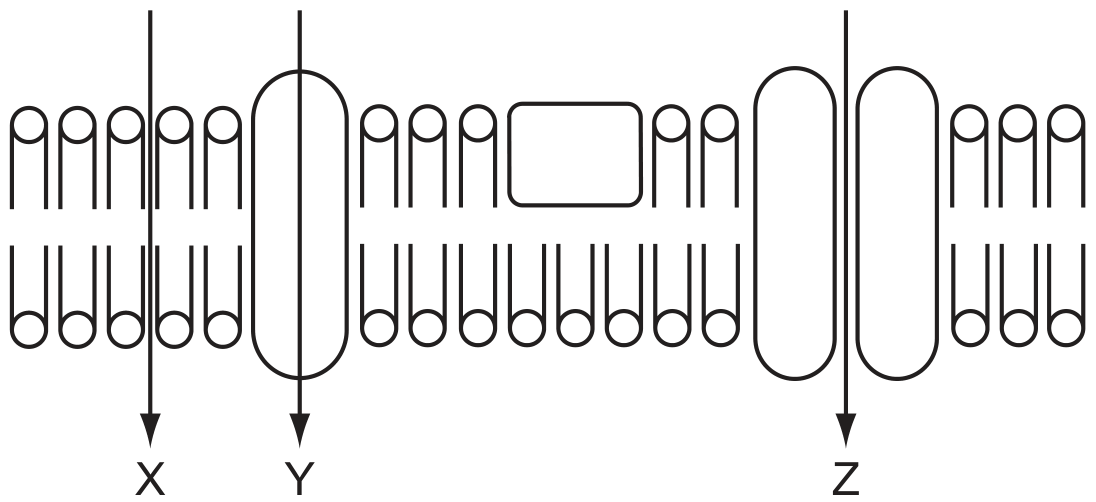
Which correctly shows the routes for vitamin D, which is fat soluble, and vitamin C, which is water soluble?
vitamin D
vitamin C
Y
X
X
Y
X
Z
Z
Y
Fig. 3.1 is a diagram of a monomer of the nucleic acid, messenger RNA.
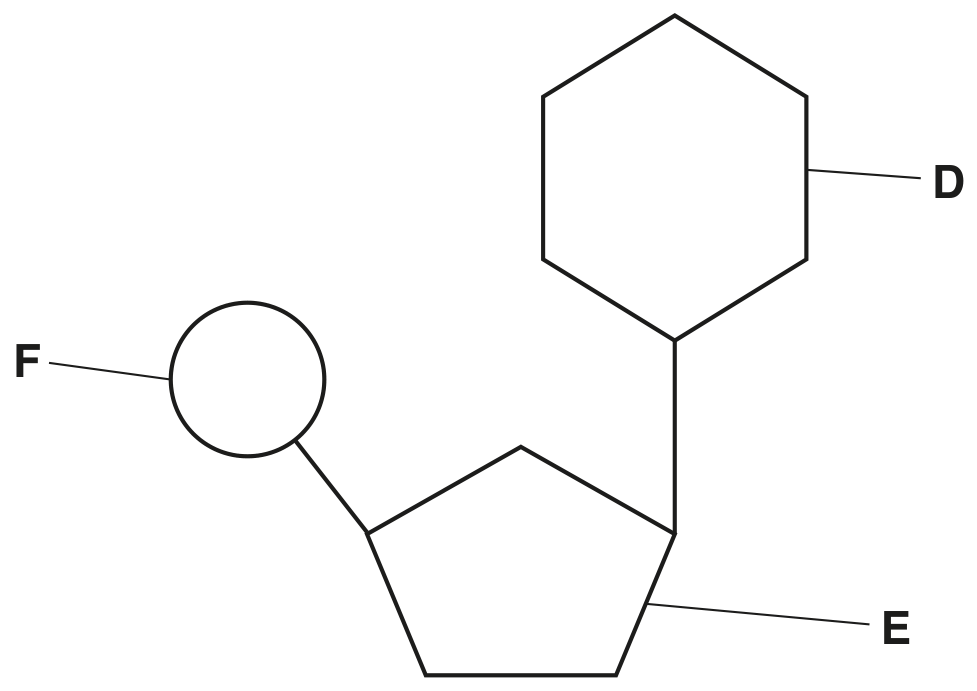
Fig. 3.1
Name D, E and F in Fig. 3.1.
D
E
F
Catalase is an enzyme that catalyses the breakdown of hydrogen peroxide, a toxic waste product of metabolism.
Fig. 3.1 shows the results of an investigation into the effect of hydrogen peroxide concentration on the rate of the catalase-controlled reaction, with and without the presence of two different inhibitors.
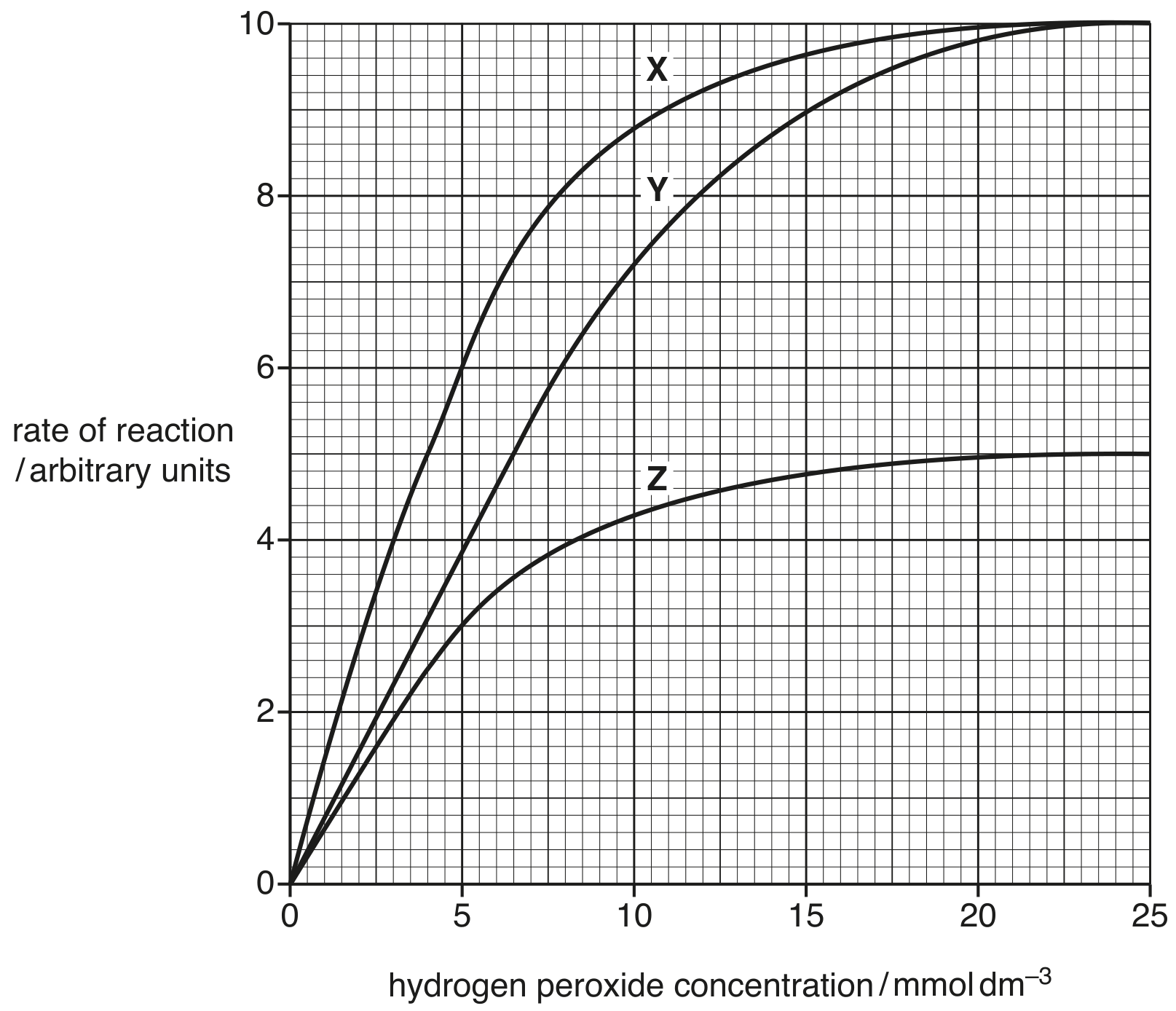
Fig. 3.1
Describe the structure of DNA.
DNA is involved in the processes of replication and transcription.
Complete Table 4.2 by using a tick to indicate which features apply to each of the processes. Use a cross ( X ) for features that do not apply.
The first row has been completed for you.
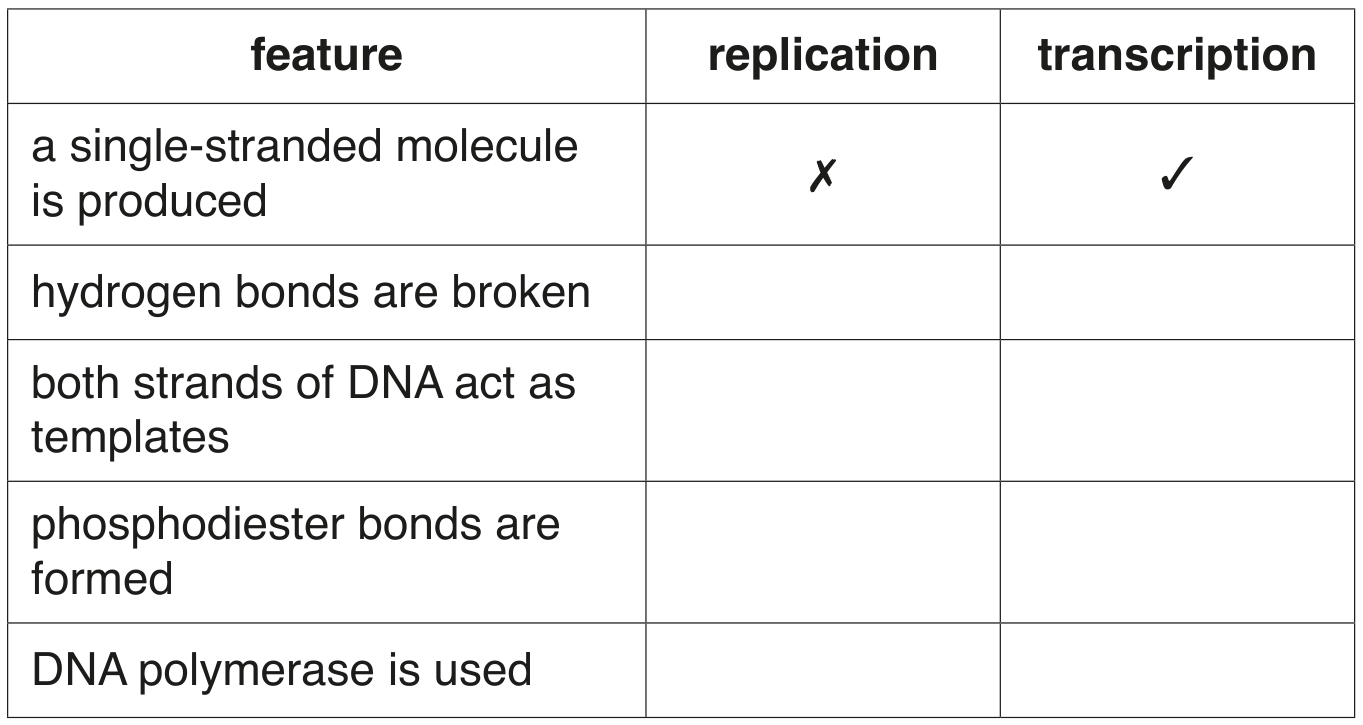
Table 4.2
The diagram shows part of a DNA molecule.
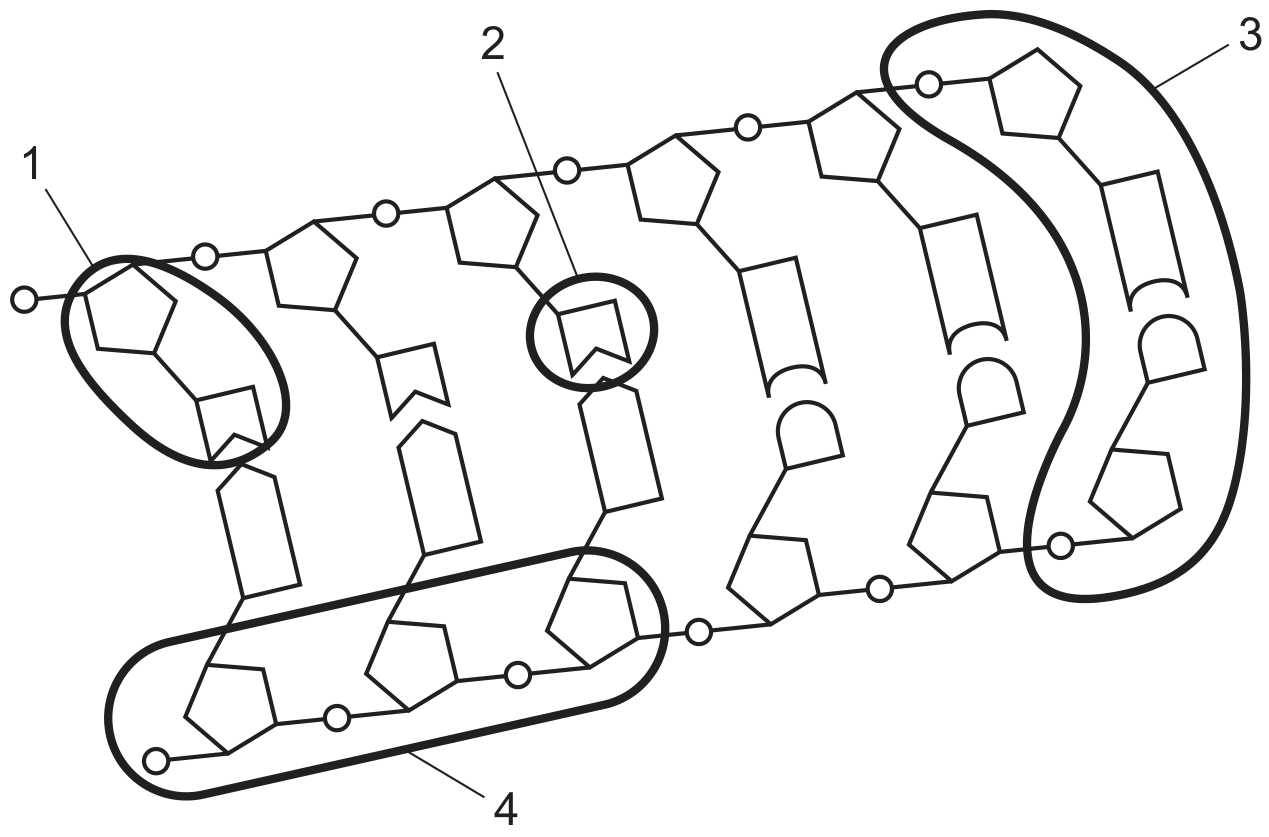
Which regions contain phosphate groups?
1 and 2
1 and 4
3 and 4 only
2, 3 and 4
DNA and RNA are important biological molecules that are involved in the production of polypeptides.
Fig. 4.1 shows two nucleotides joined by a covalent bond.
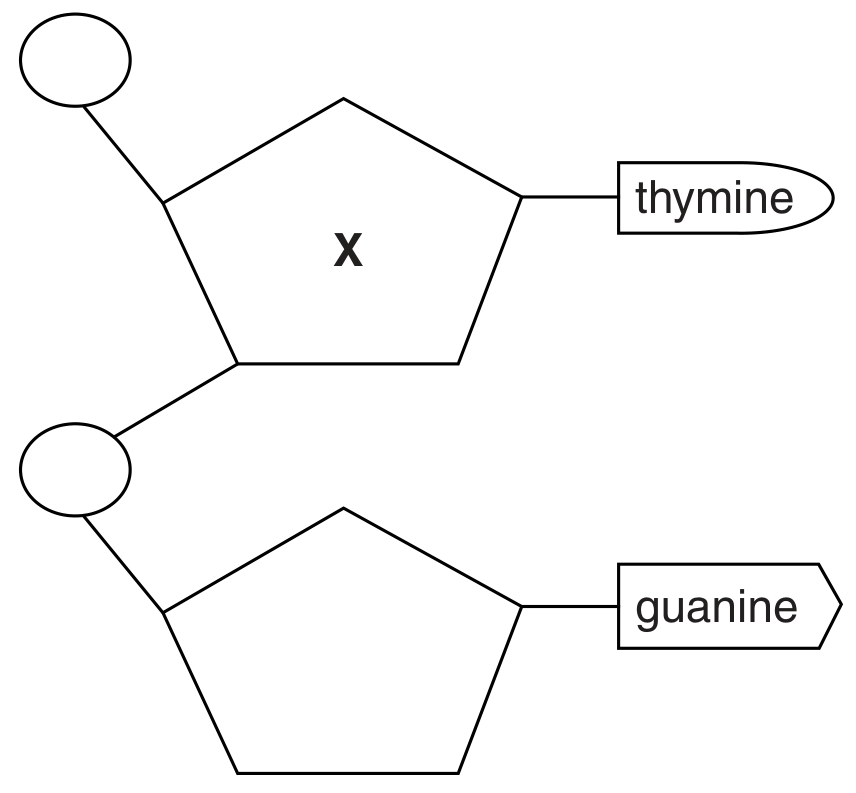
Fig. 4.1
Fig. 4.1 represents part of a DNA molecule, not part of an RNA molecule.
Explain why.
Name the covalent bond between the two nucleotides.