(a)
ATP and coenzyme A both play important roles in respiration.
Fig. 1.1 represents the molecular structure of coenzyme A.
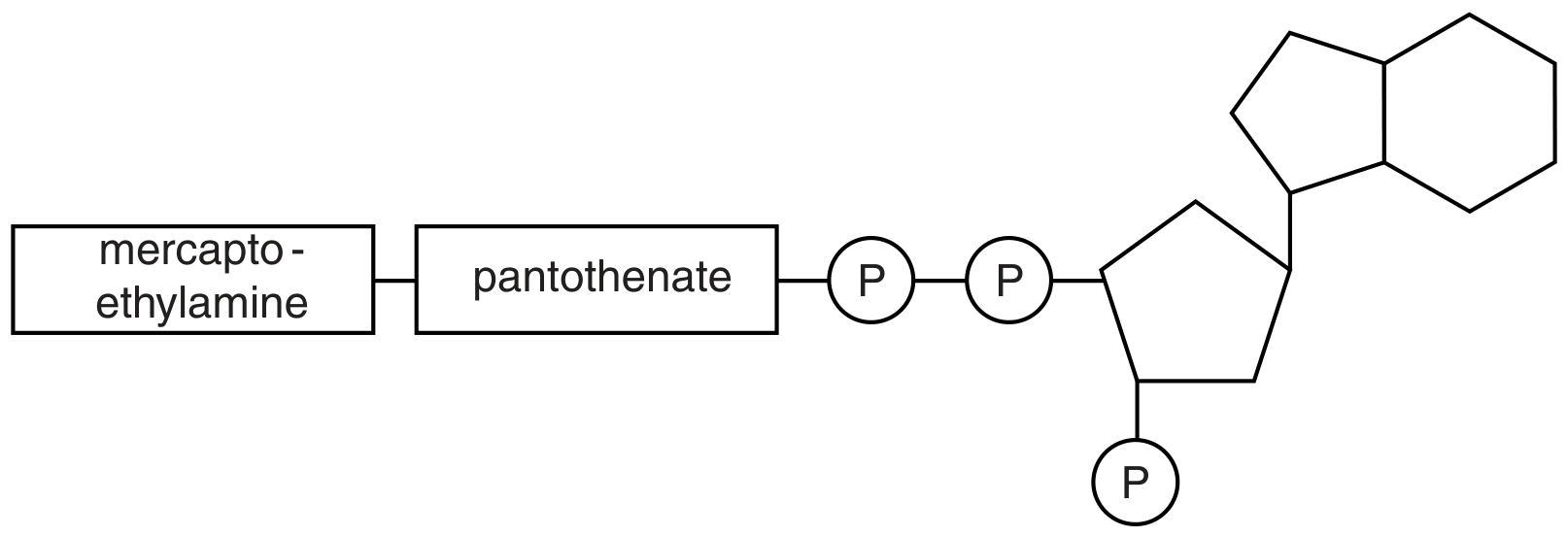
Fig. 1.1
[ 2 ]
(i)
With reference to Fig. 1.1, state two structural similarities between coenzyme A and ATP.
1
2
[ 2 ]
 EduNinja
ATP and coenzyme A both play important roles in respiration.
Fig. 1.1 represents the molecular structure of coenzyme A.
Fig. 1.1
With reference to Fig. 1.1, state two structural similarities between coenzyme A and ATP.
1
2
Protein production involves a complex sequence of events and a number of cell structures.
One example of protein modification is the removal of the first amino acid, methionine, from a newly formed polypeptide chain to make a functioning protein.
The DNA nucleotide sequence that specifies the amino acid methionine is TAC.
State the mRNA nucleotide sequence that is complementary to the DNA sequence for methionine.
Fig. 1.1 is a diagram showing the structure of a section of a DNA molecule.
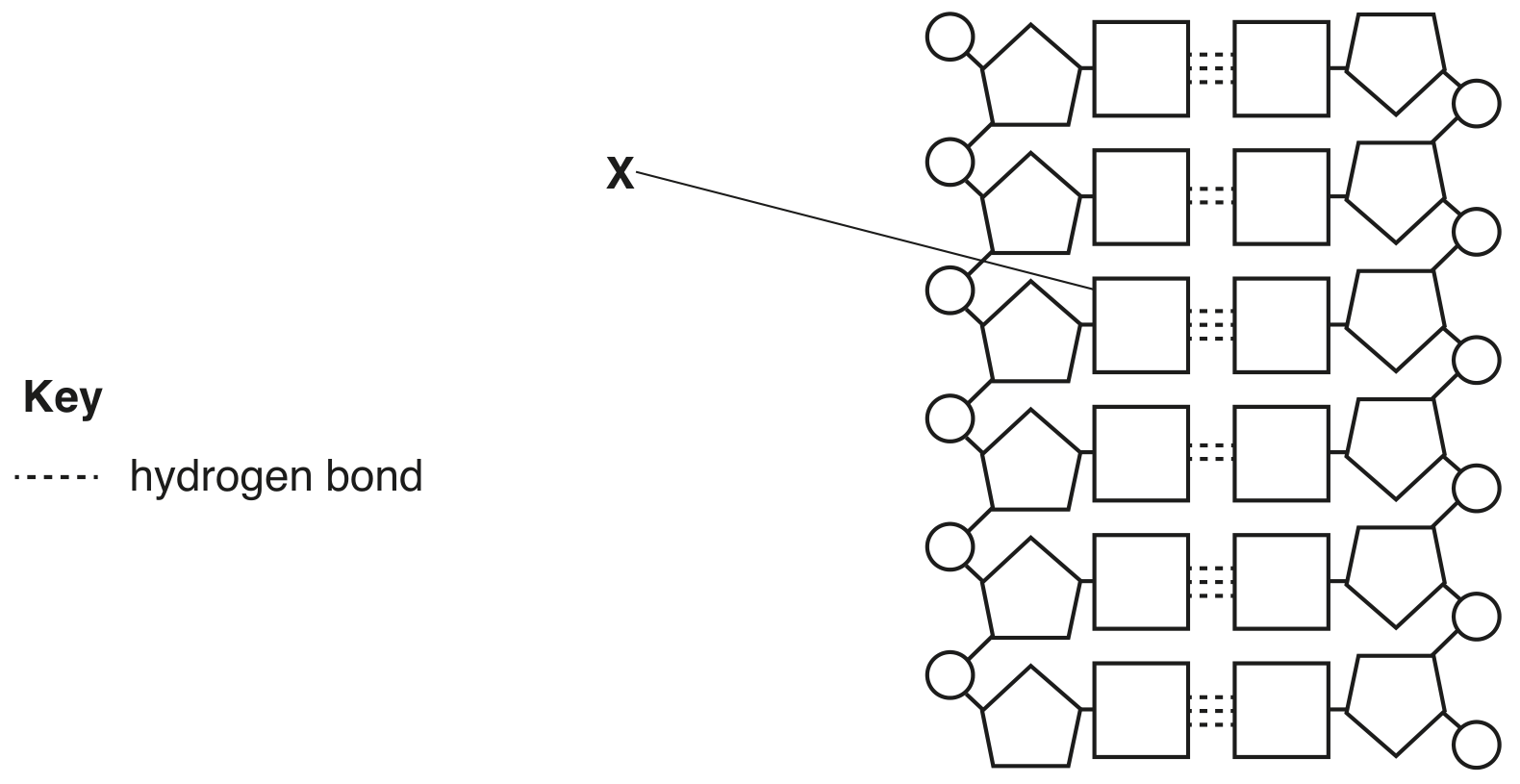
Fig. 1.1
Draw a circle around one monomer of DNA in Fig. 1.1.
ATP molecules are synthesised in mitochondria.
Which sugar is found in these ATP molecules?
deoxyribose
fructose
glucose
pentose
Fig. 2.1 shows one section of the nitrogen (N) cycle. Some details of the water cycle are also included.
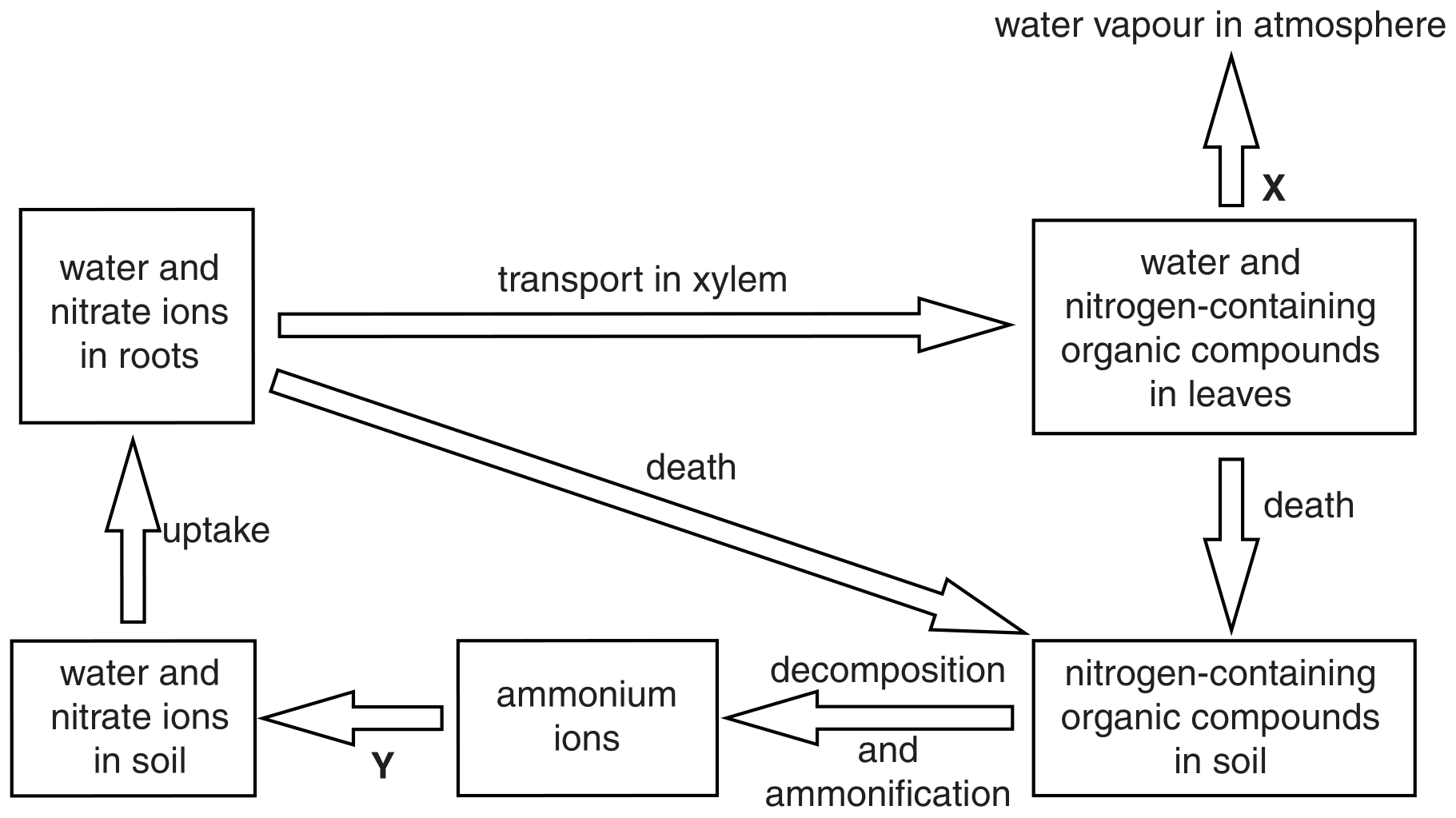
Fig. 2.1
One use of the nitrogen in the nitrate ions is for the synthesis of organic molecules such as RNA.
State where nitrogen is found within an RNA molecule.
Which types of RNA are found in both prokaryotic and eukaryotic cells?
mRNA
rRNA
tRNA
key
x
present
x
x= absent
x
x
A molecule of messenger RNA (mRNA) was produced during the transcription of a gene. Part of the template sequence of DNA was ATGC.
Fig. 3.1 shows the part of the molecule of messenger RNA corresponding to that sequence of four bases.
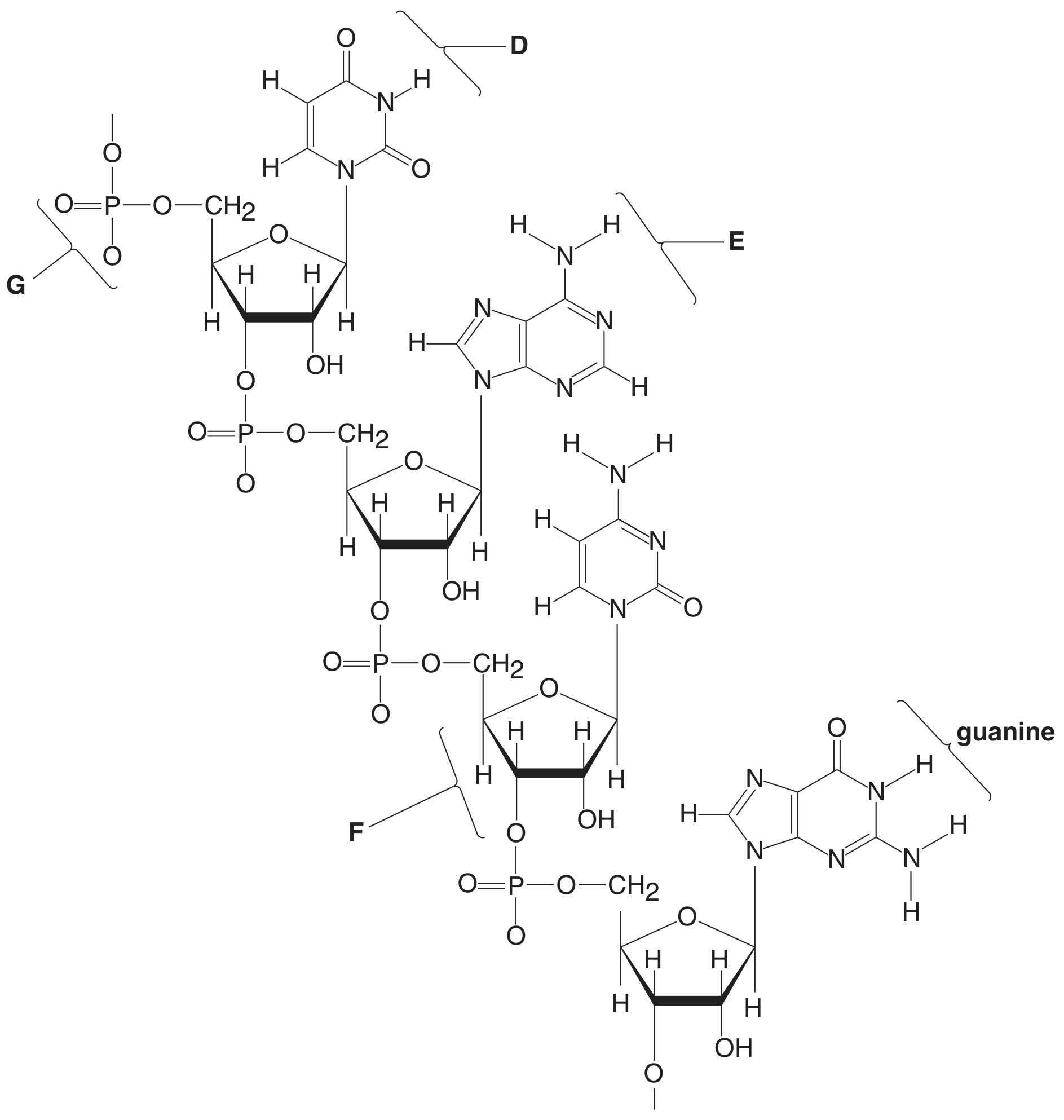
Fig. 3.1
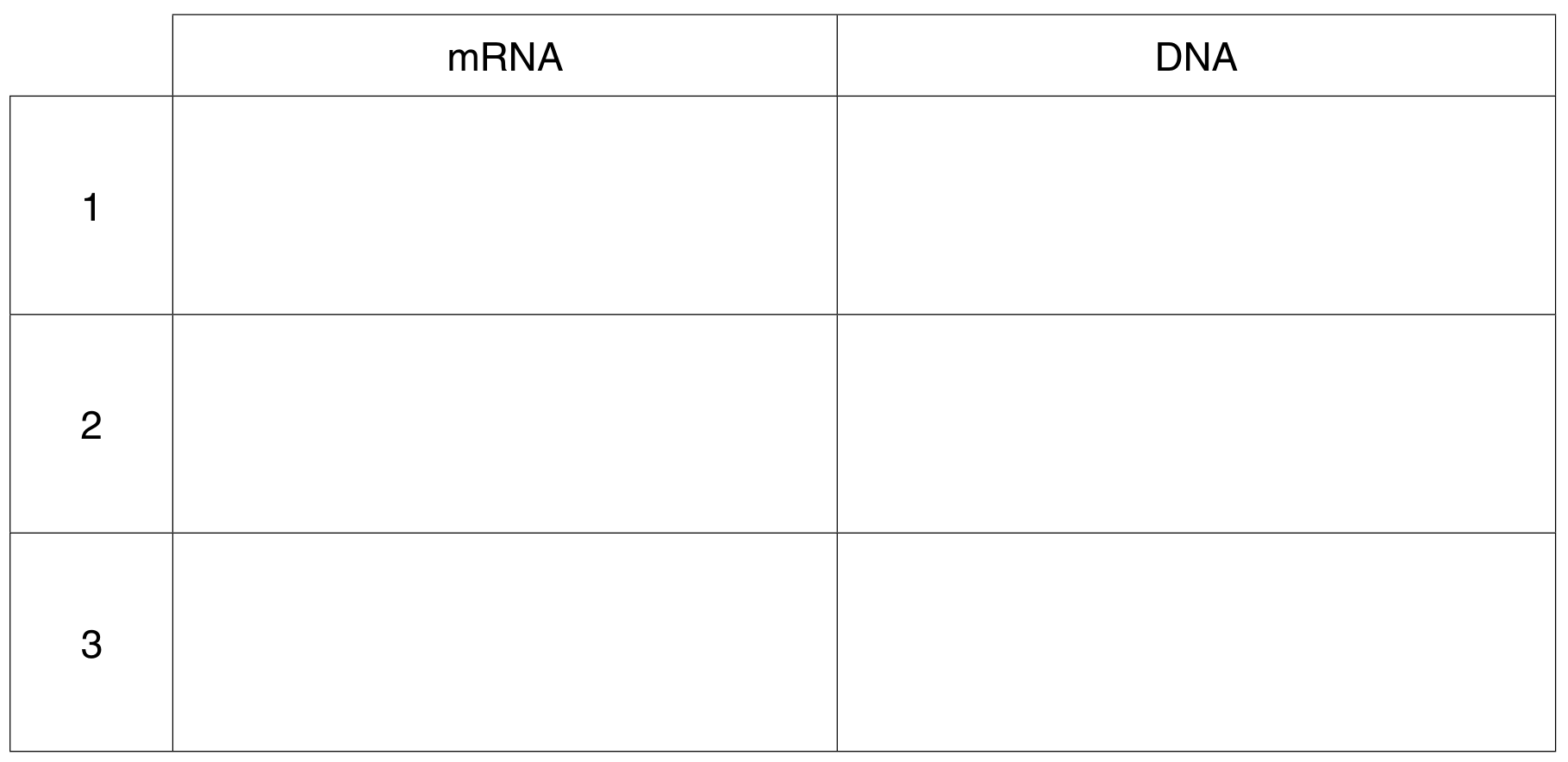
Complete the table to show three ways in which mRNA differs from DNA.
Protein synthesis requires ribosomes, mRNA, tRNA, amino acids and enzymes.
Fig. 4.1 is a diagram of a molecule of tRNA.
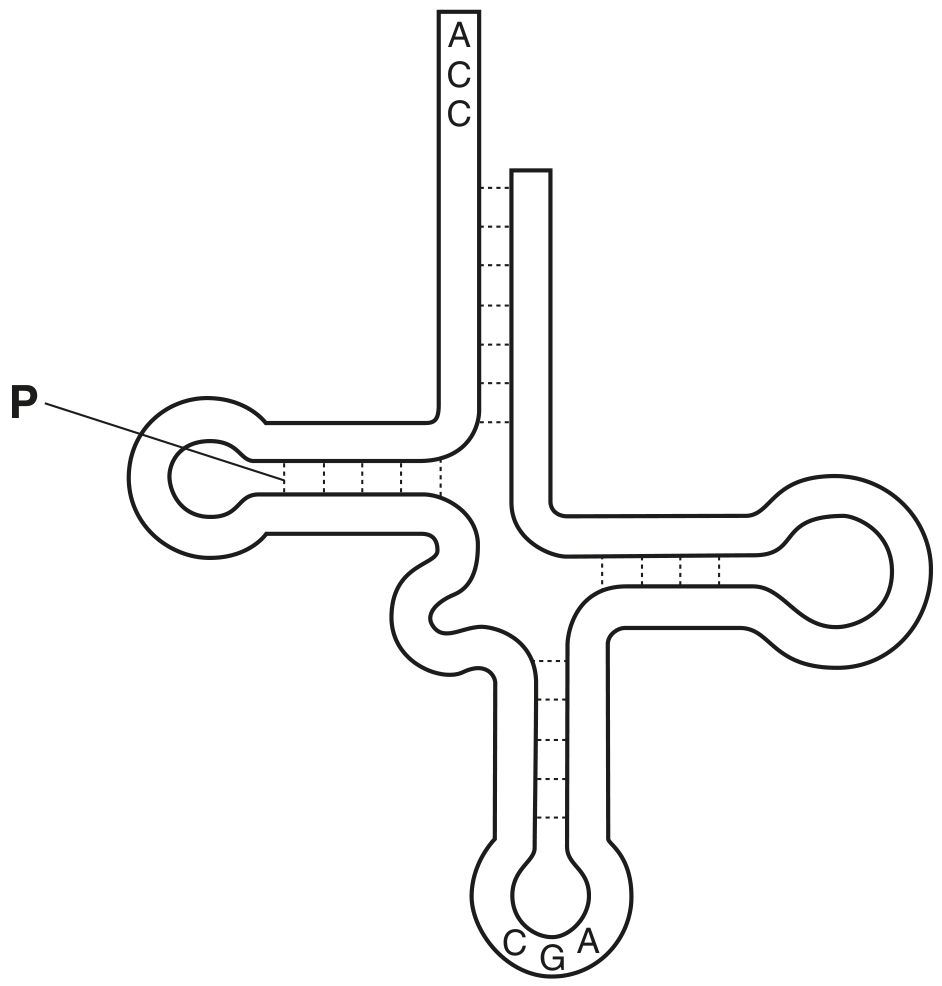
Fig. 4.1
tRNA molecules are synthesised inside the nucleus of eukaryotic cells.
Outline the process by which tRNA molecules are synthesised in the nucleus.
Which statement about nucleotides is correct?
Adenine and guanine are pyrimidines.
ATP is a phosphorylated nucleotide.
Purines have a single ring structure.
Uracil replaces cytosine in RNA.