[Maximum number: 1]
Blocks of agar are stained with a pH indicator and used to investigate the diffusion of an acid solution.
Which block would completely change colour the fastest?
A
B
C
D
 EduNinja
Blocks of agar are stained with a pH indicator and used to investigate the diffusion of an acid solution.
Which block would completely change colour the fastest?
Four agar blocks are stained green using universal indicator and suspended in hydrochloric acid.
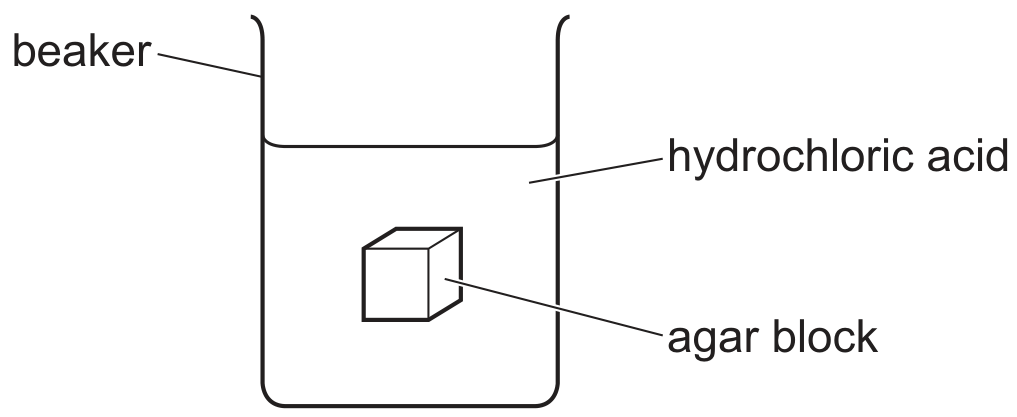
The time taken for the agar blocks to change from green to red was recorded.
Which agar block would be the first to become completely red?
The indicator cresol red, changes from red to yellow when put into acid.
Four blocks of agar containing cresol red were cut to different sizes measured in millimetres. The blocks were submerged in acid. All other variables were kept constant. The time taken for each of the blocks to completely turn yellow was recorded.
Which of the four blocks became completely yellow most quickly?
A student measured the time taken for complete diffusion of a dye into agar blocks of different sizes.
The results are shown in the table.
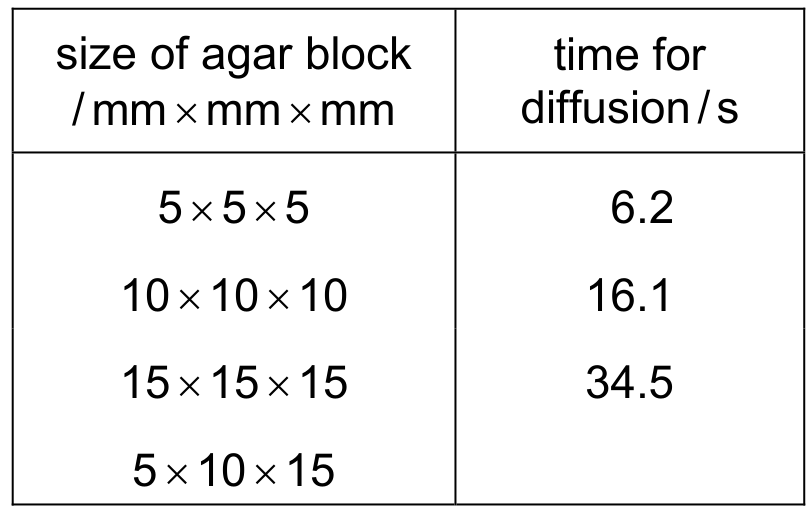
What is the predicted time for complete diffusion of the dye into the agar block measuring ?
6.2 s
16.1 s
34.5 s
more than 34.5 s
A student measured the time taken for complete diffusion of a dye into agar blocks of different sizes which were suspended in the dye.
The results are shown.
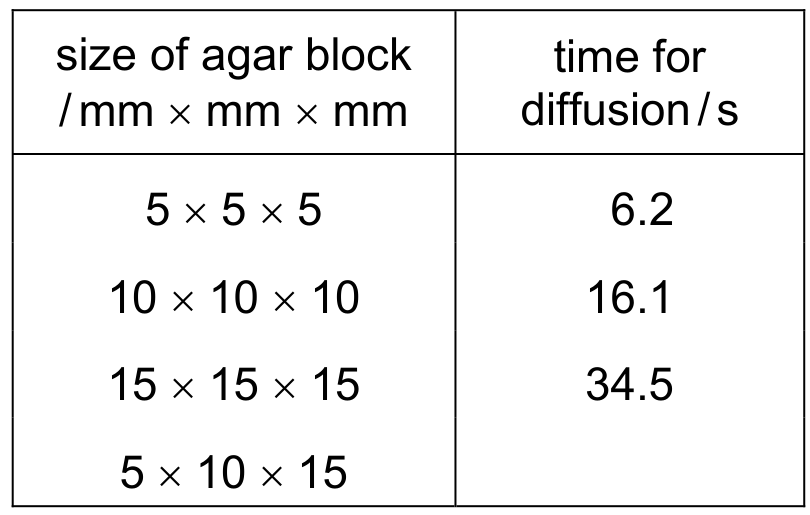
What is the predicted time for complete diffusion of the dye into the agar block measuring ?
6.2 s
16.1 s
34.5 s
more than 34.5 s
Agar cubes can be used to demonstrate the effect on diffusion of changing the surface area to volume ratio.
Three different agar cubes made using a coloured indicator solution were placed into a dilute acid that diffused into the cubes. As the acid diffused into the agar cubes, the colour of the indicator solution changed.
The cubes had volumes of and and were left in the dilute acid for 10 minutes. All other variables were kept the same.
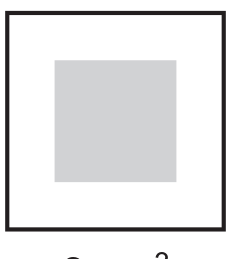
After 10 minutes, the agar cubes were removed from the dilute acid and cut in half. The cut surfaces were observed and the results were recorded as diagrams. All diagrams were drawn to the same scale.
The results for the cube are shown.
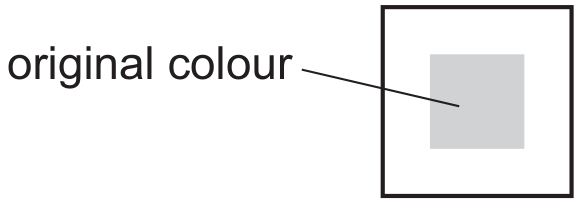
Which diagrams show the results for the and the cubes?
A

\(1 \mathrm{~cm
\(3 \mathrm{~cm
B

\(1 \mathrm{~cm

\(3 \mathrm{~cm
C

\(1 \mathrm{~cm

\(3 \mathrm{~cm
D

\(1 \mathrm{~cm

\(3 \mathrm{~cm
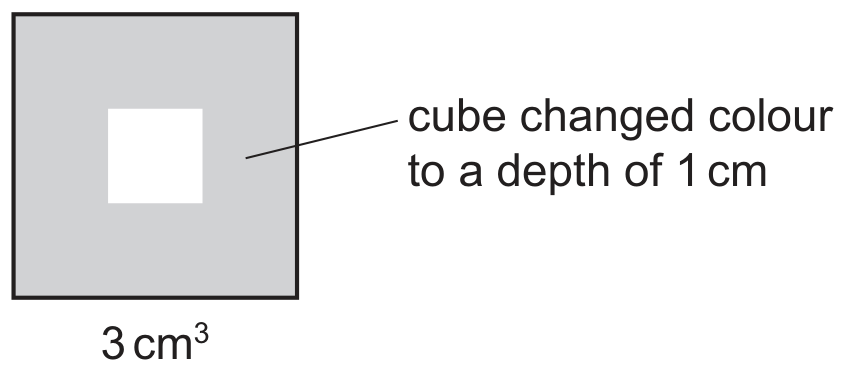
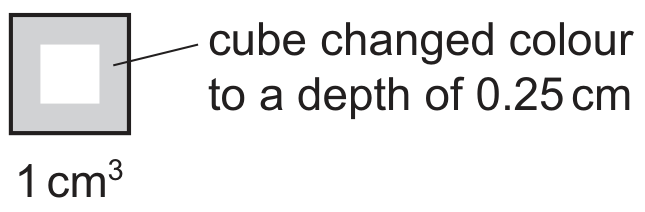
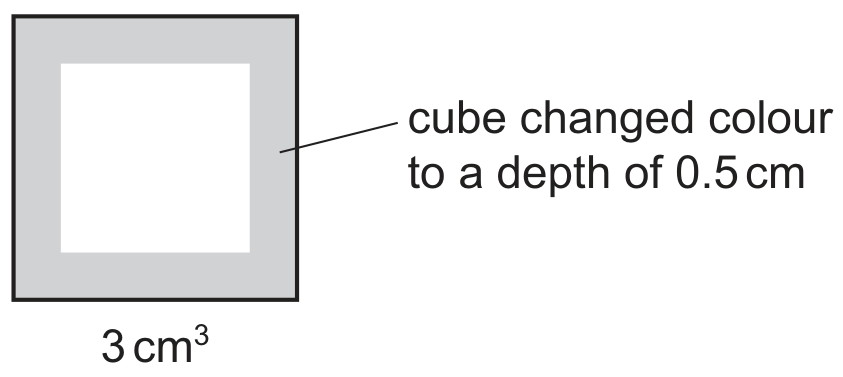
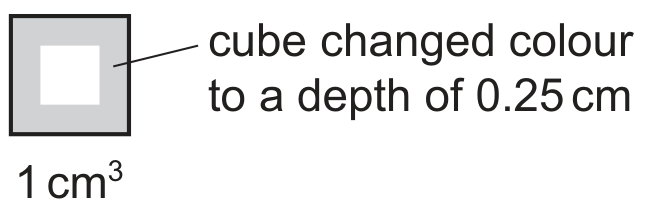
Agar cubes can be used to demonstrate the effect of changing surface area to volume ratio on diffusion.
Three different agar cubes made using a dilute acid were placed into an indicator solution that diffused into the cubes. When the indicator came into contact with the acid it changed colour.
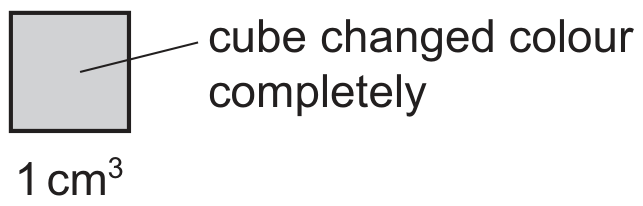
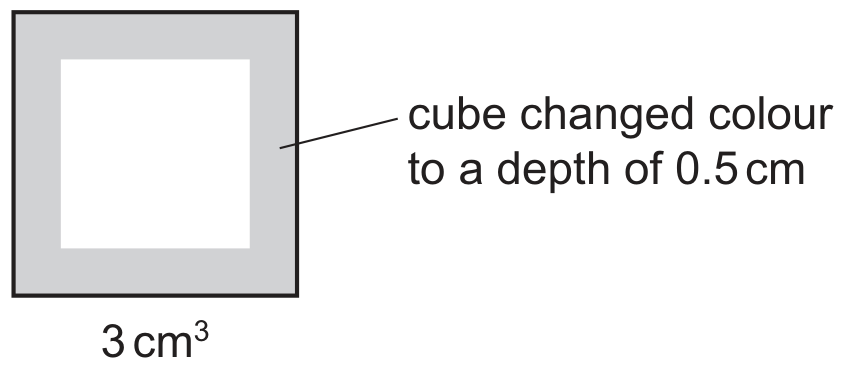
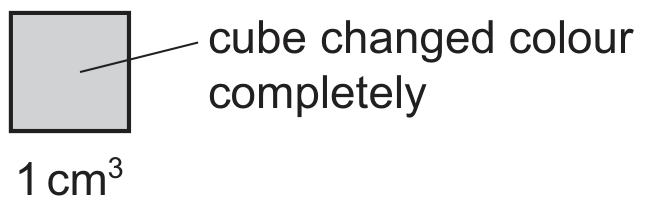
The cubes were and and were left in the indicator solution for 10 minutes. All other variables were kept the same. The results were recorded as diagrams.
The results for the cube are shown.
not to scale

Which diagrams represent the results for the and the cubes?
not to
scale
A
B
C
D
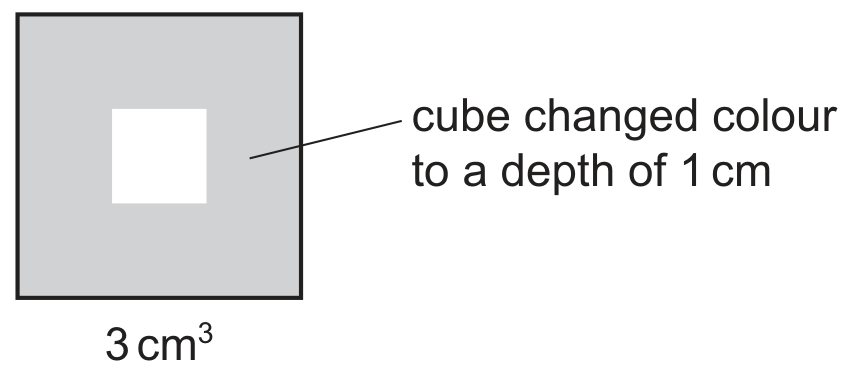
A student investigated the effect of changing the surface area to volume ratio on diffusion.
- Two different-sized blocks of agar, X and Y, were made.
- The agar contained Universal Indicator solution.
- Universal Indicator solution changes colour when acid is added.
- The blocks were placed in dilute hydrochloric acid at the same temperature.
- The student timed how long it took for each block to change colour completely.
Blocks X and Y are shown in Fig. 6.1. All dimensions are in cm .
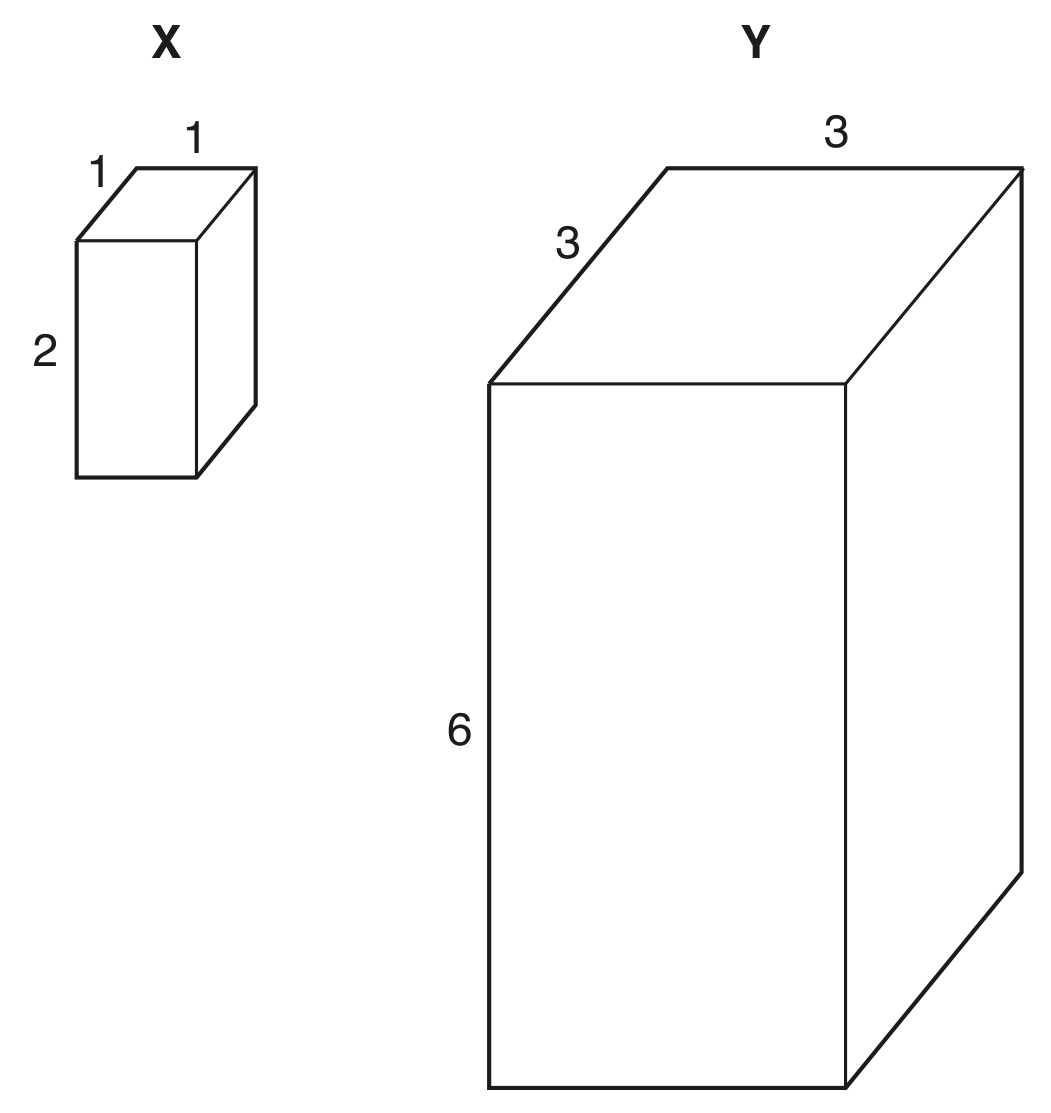
Fig. 6.1
The student observed that block X changed colour completely in a much shorter time than block Y.
Explain why.