EduNinja
(a)

Fig. 1.1 shows a neurone forming three synapses with adjacent neurones.
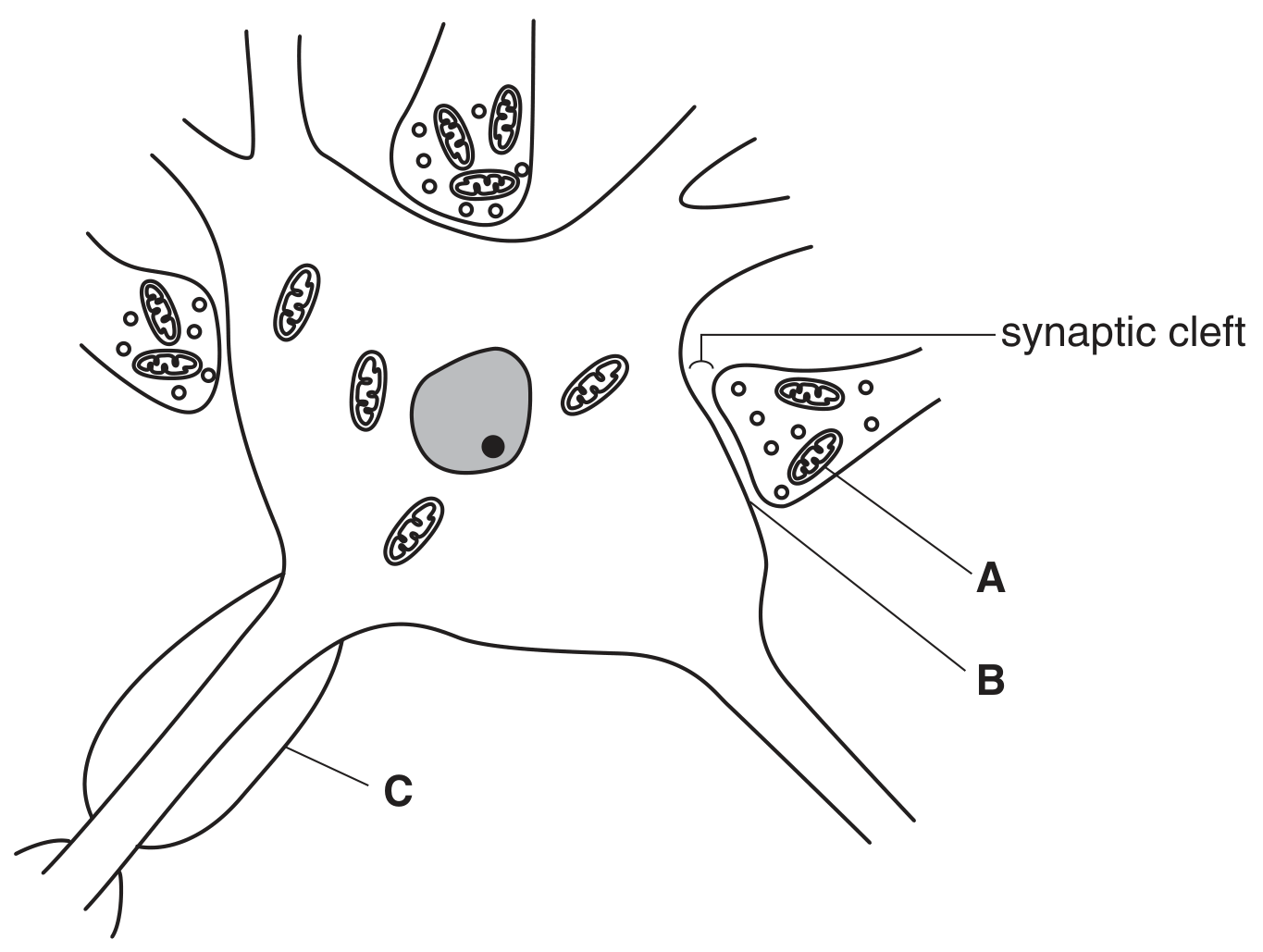
Fig. 1.1

Fig. 1.1

Name A, B and C.

A

B

C

[ 3 ]
(b)

Outline the role of structure A in synaptic transmission.

[ 3 ]
(c)

The drug nicotine has a similar structure to acetylcholine.

Suggest the effects on brain neurones of inhaling nicotine from a cigarette.
(a)

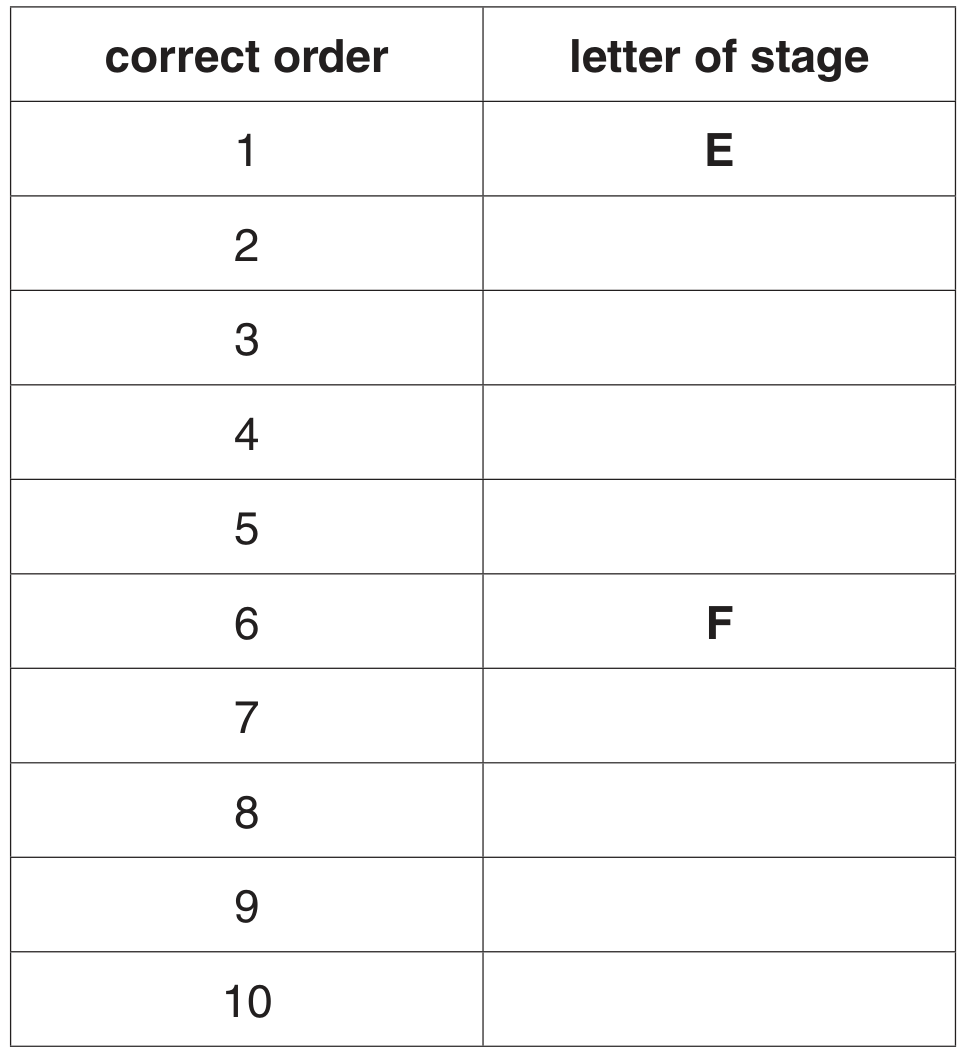
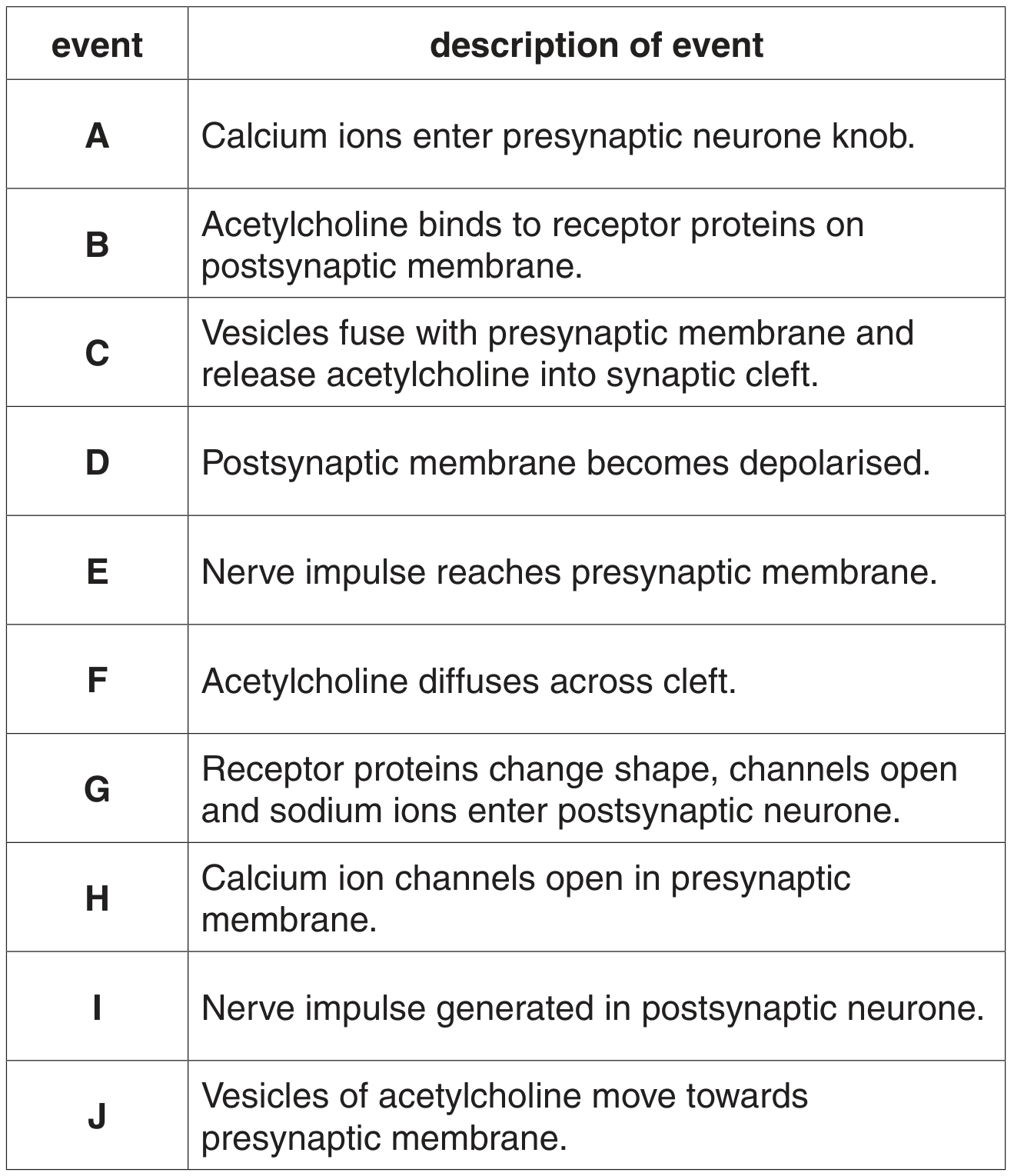
Nerve impulses have to cross synapses. The events that enable a nerve impulse to cross a cholinergic synapse are listed in Table 1.1.

The events are not listed in the correct order.

Table 1.1

Table 1.1

Complete Table 1.2 to show the events in the correct order.

Two of the events have been done for you.

Table 1.2

Table 1.2

[ 4 ]
(b)

Synapses have many roles in nervous coordination in mammals.

[ 2 ]
(i)

Explain how synapses ensure one-way transmission of nerve impulses.

[ 2 ]
(ii)

In a learning activity, it is believed that the number of synapses between brain neurones increases. Suggest the advantages of this increased number of synapses.

(a)

A type of sea snail, Conus purpurascens, produces a toxin that blocks calcium ion channels in the presynaptic knob of a cholinergic synapse. The presence of this toxin results in no action potentials in the postsynaptic neurone.

Explain why the presence of this toxin results in no action potentials in the postsynaptic neurone.

[ 5 ]
(a)

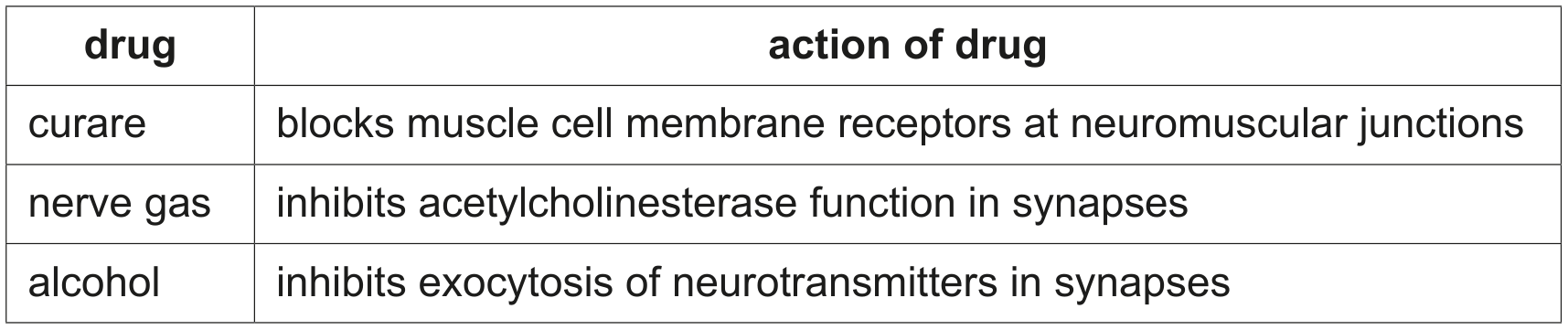
Some drugs can affect the functioning of neuromuscular junctions or cholinergic synapses.

Table 1.1 lists three drugs and describes their action on neuromuscular junctions or cholinergic synapses.

Table 1.1

Table 1.1

Suggest and describe the immediate consequence of the action of each drug on a neuromuscular junction or cholinergic synapse.

[ 5 ]
(a)

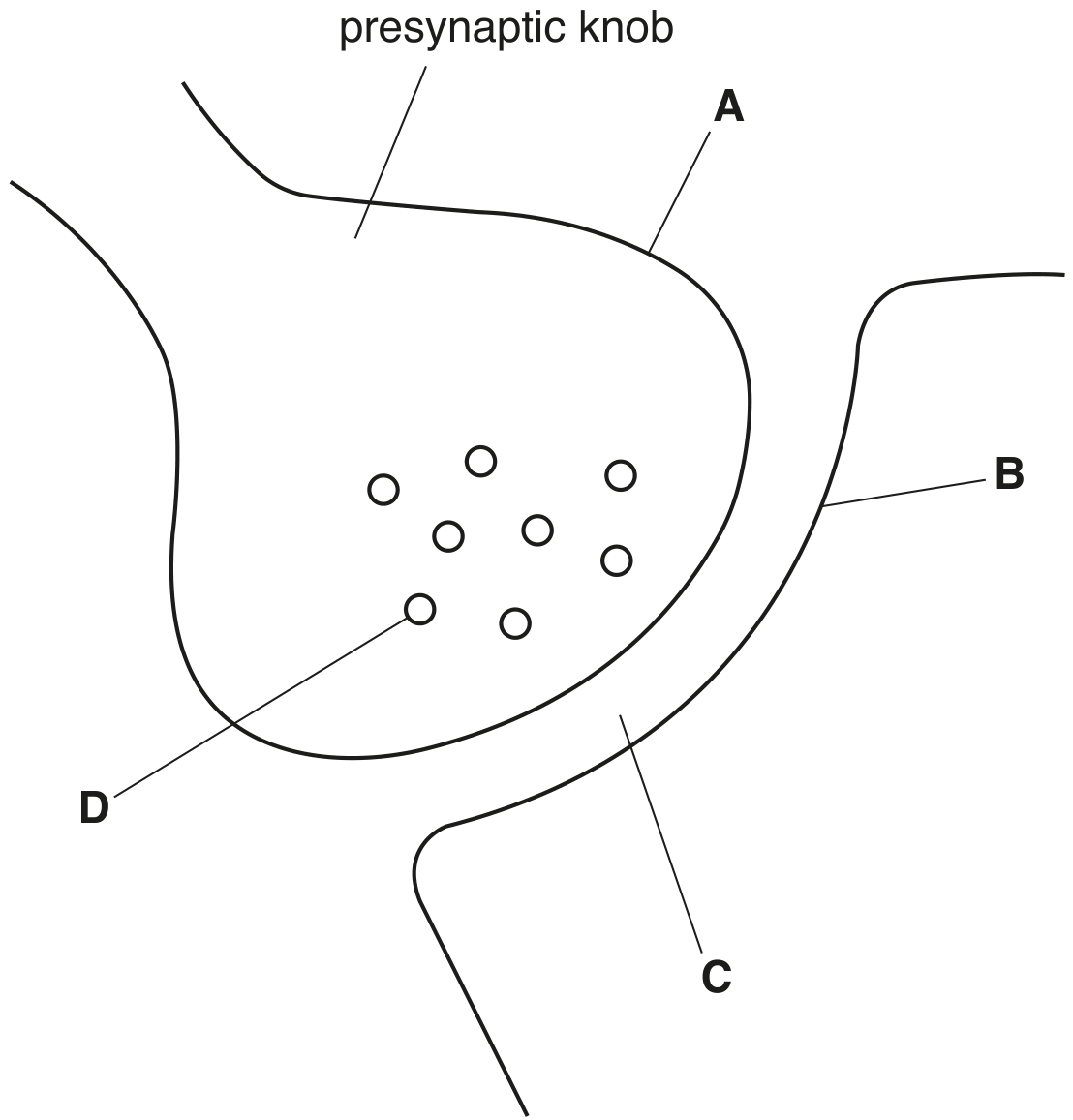
Fig. 1.1 shows a cholinergic synapse.

Fig. 1.1

Fig. 1.1

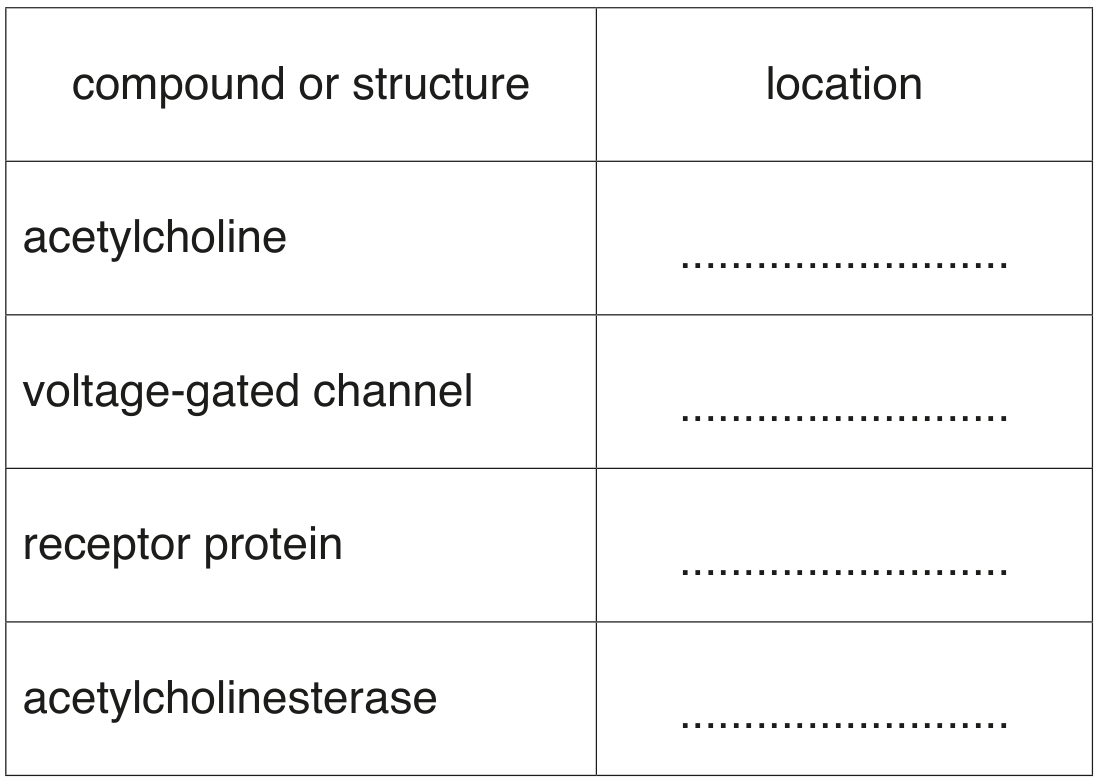
Complete Table 1.1, using the letters A, B, C or D from Fig. 1.1, to show the location of compounds and structures associated with a cholinergic synapse.

You may use A, B, C and D once, more than once, or not at all.

Table 1.1

Table 1.1

[ 4 ]
(b)

Explain the role of acetylcholinesterase in a synapse.

[ 3 ]
(c)

Outline the roles of synapses in the nervous system.

[ 2 ]
(a)

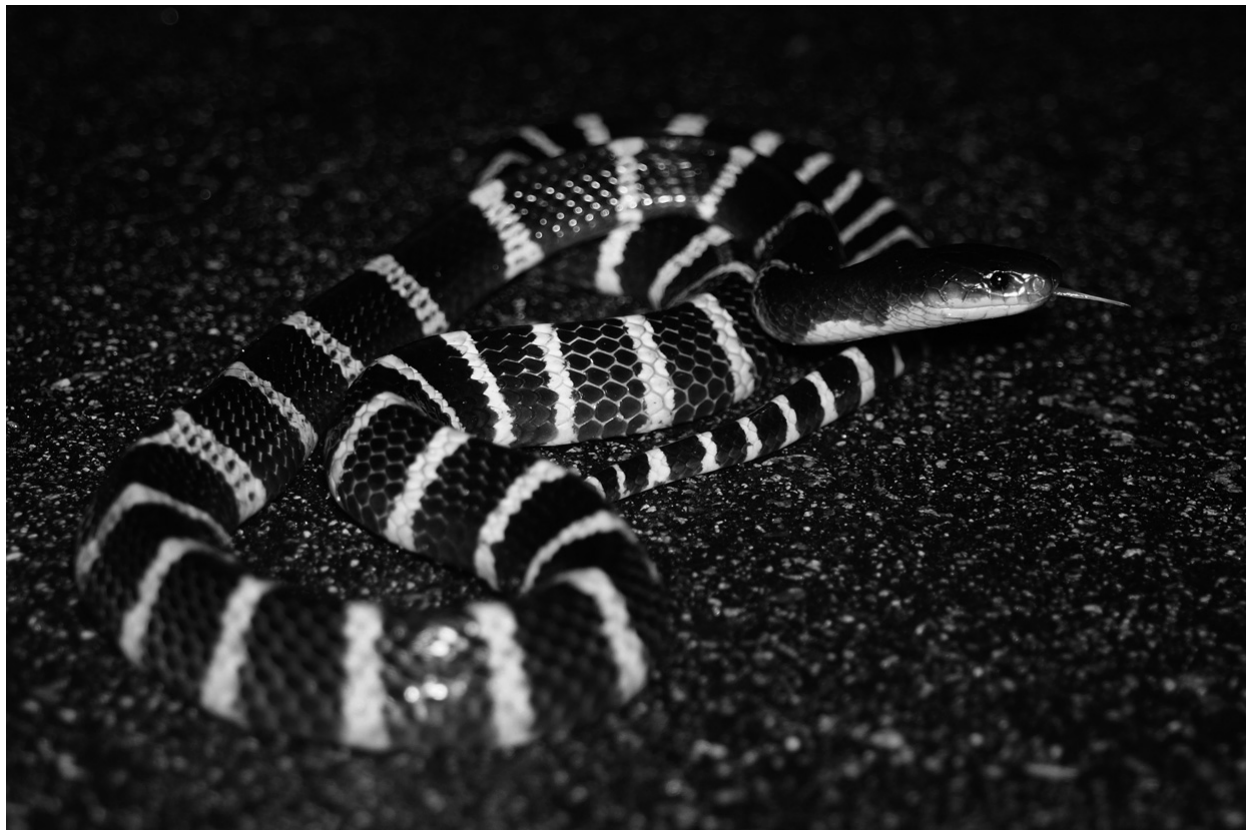
The many-banded krait, Bungarus multicinctus, is a venomous snake.

Fig. 3.1 shows a many-banded krait.

Fig. 3.1

Fig. 3.1

The venom from the many-banded krait contains bungarotoxin. In mammals that are bitten by this snake, the venom acts at the neuromuscular junction, causing muscle paralysis (loss of muscle function).

Suggest how bungarotoxin may cause muscle paralysis.

[ 4 ]
(a)

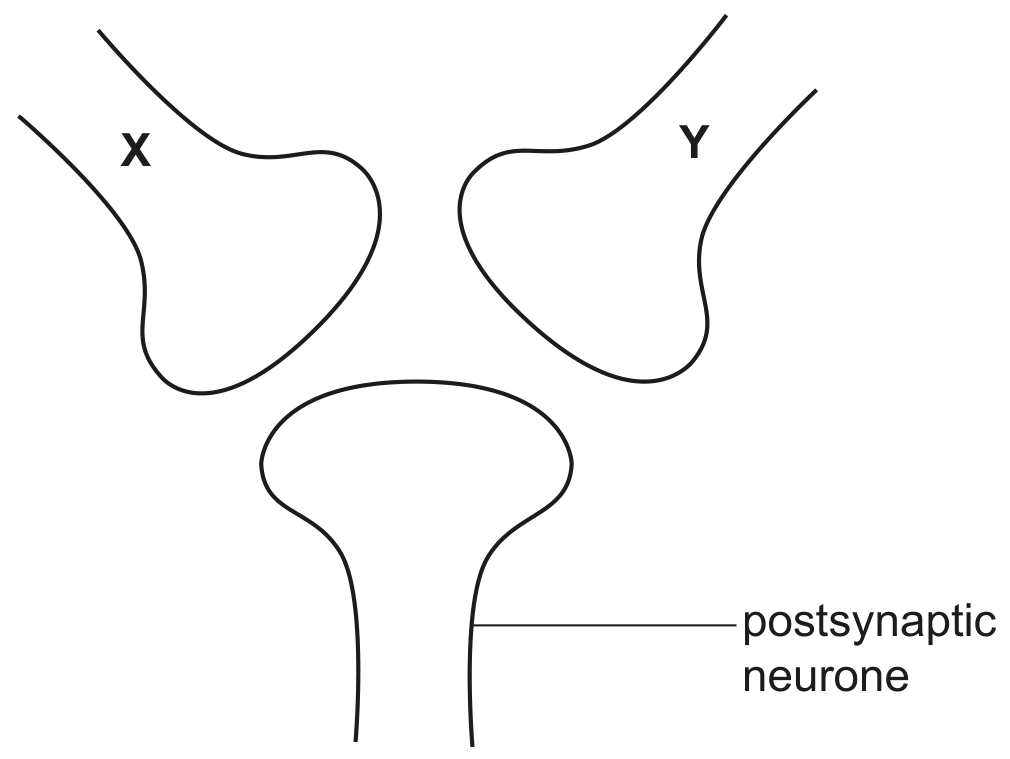
Fig. 7.1 is a diagram of synapses between a postsynaptic neurone and two presynaptic neurones, X and Y.

Fig. 7.1

Fig. 7.1

- Neurone X releases the neurotransmitter acetylcholine.
- Neurone Y releases the neurotransmitter glutamate.
- Both neurotransmitters bind to channel proteins in the membrane of the postsynaptic neurone.
- Acetylcholine binding results in an influx (entry) of sodium ions.
- Glutamate binding results in an influx of chloride ions.

A student made three statements:

[ 3 ]
(i)

1. When only neurone X is stimulated, an action potential will occur in the postsynaptic neurone.

(ii)

2. When only neurone Y is stimulated, an action potential will occur in the postsynaptic neurone.

(iii)

3. When neurone X and neurone Y are stimulated at the same time, an action potential will not occur in the postsynaptic neurone.

Explain whether or not you agree with these statements.

[ 3 ]
[Maximum number: 8]

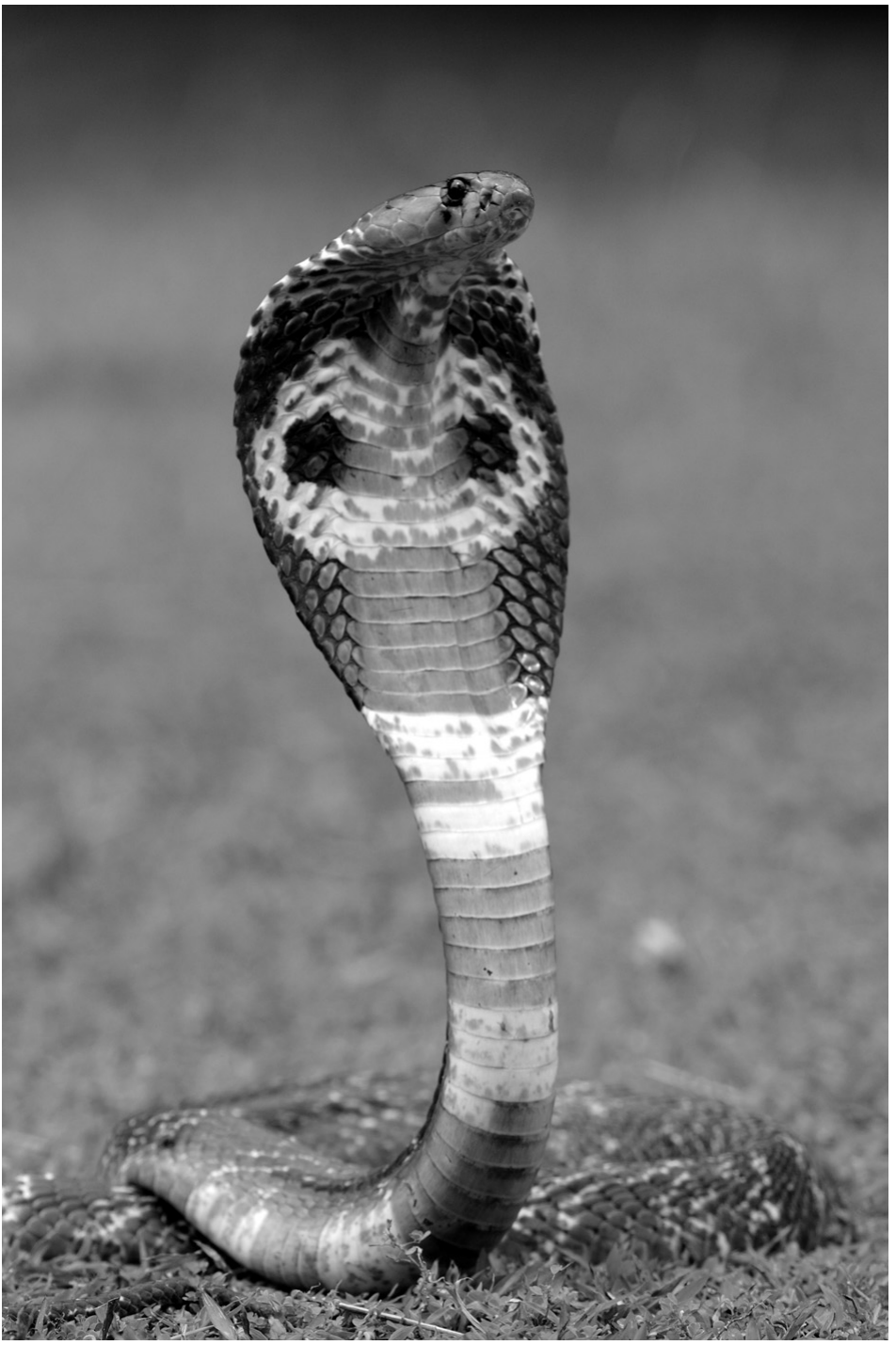
The Indian cobra (Naja naja) is a species of venomous snake found in South Asia.
Fig. 6.1 shows an Indian cobra.

Fig. 6.1

Fig. 6.1

(a)

The Indian cobra's venom contains a toxin which causes muscle paralysis in mammals bitten by the snake. The toxin acts at cholinergic synapses.

Suggest ways by which the toxin in cobra venom may cause muscle paralysis.

[ 3 ]
(b)

Describe the role played by calcium ions in synaptic transmission.

[ 3 ]
(c)

Synapses slow down the rate of transmission of nerve impulses but have an important role in the nervous system.

Outline two of the roles of synapses in the nervous system.

[ 2 ]
(a)

Acetylcholine is a neurotransmitter.

Describe the events that occur at a synapse that lead to the release of acetylcholine.

[ 5 ]
0