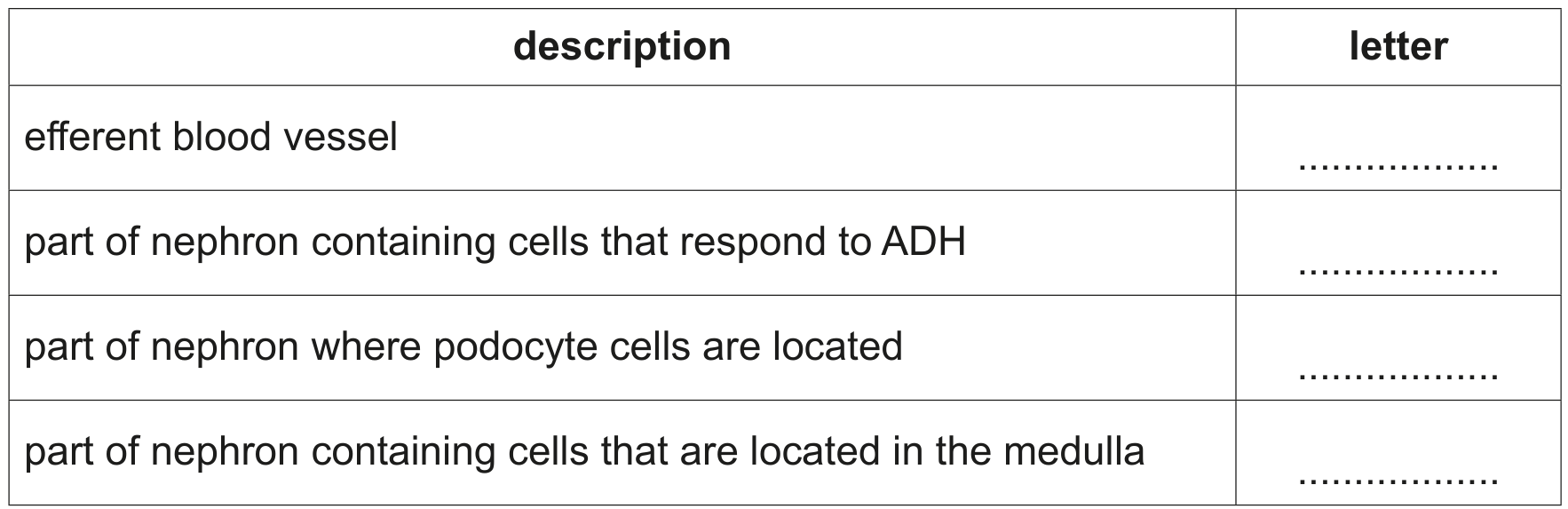
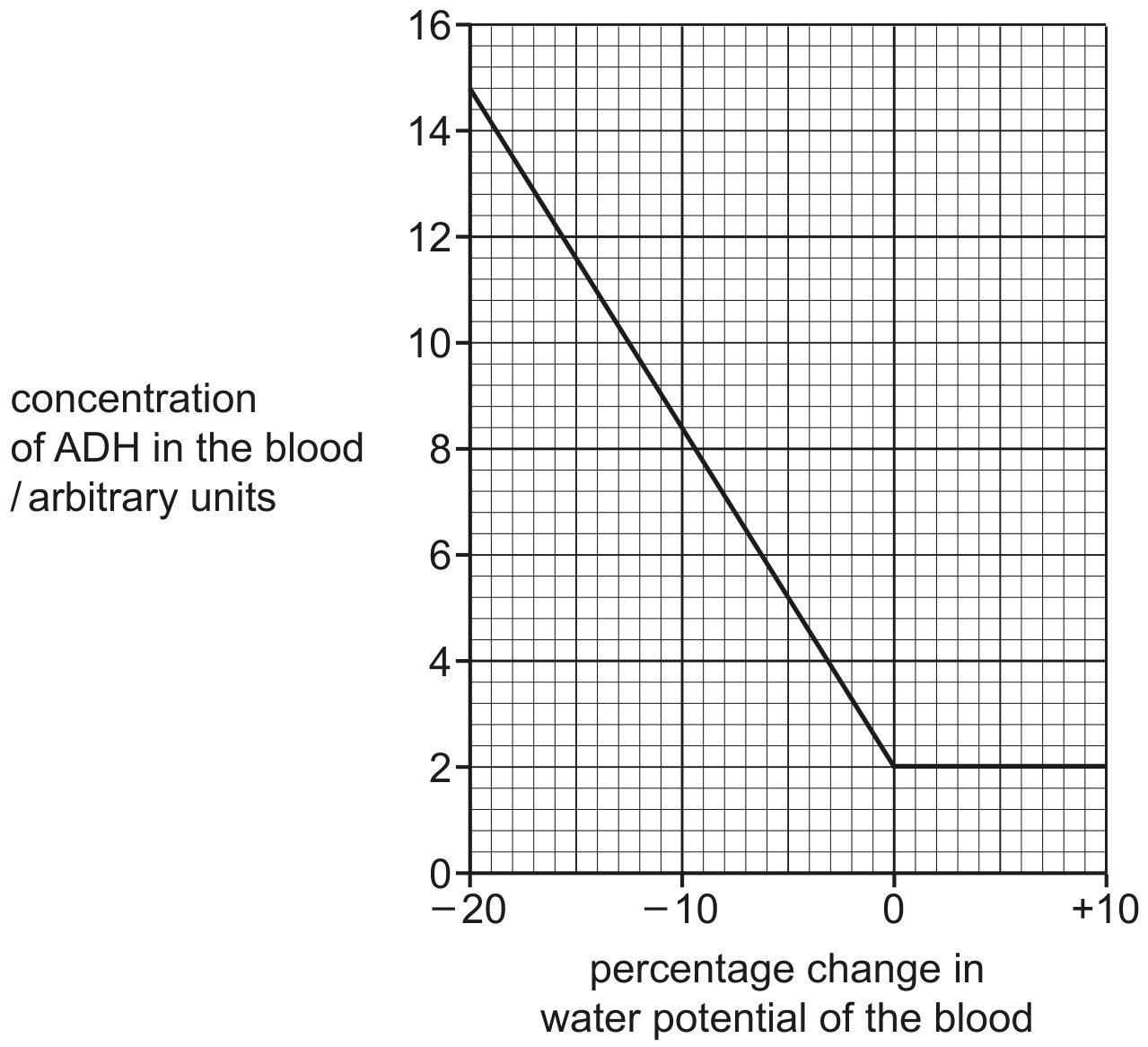
Osmoregulation is the control of the water potential of body fluids such as blood.
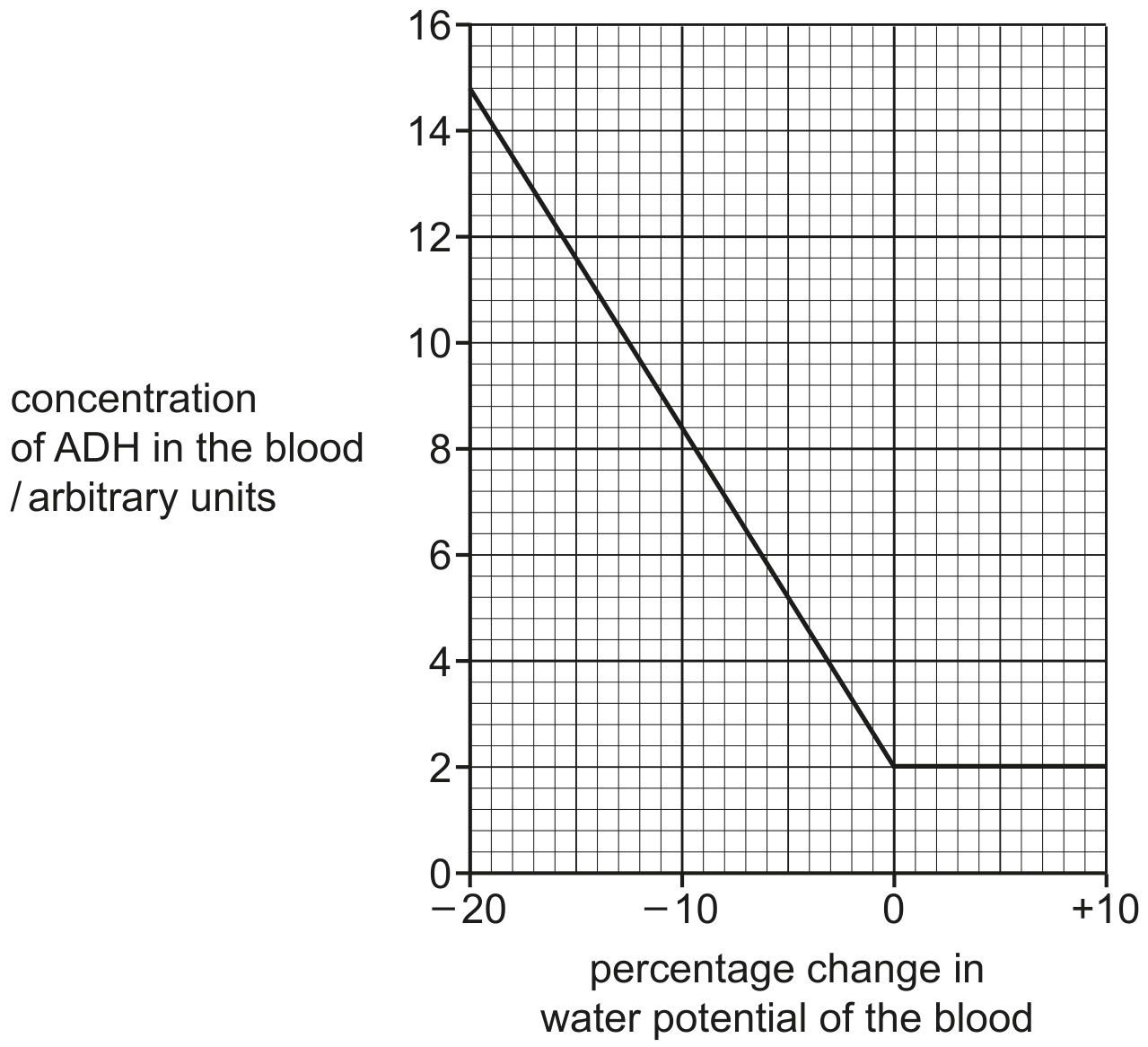
Osmoreceptors and antidiuretic hormone (ADH) have an important role in osmoregulation.
Name the location of osmoreceptors.
State the stimulus that is detected by osmoreceptors.
Name the structure that secretes ADH into the blood.
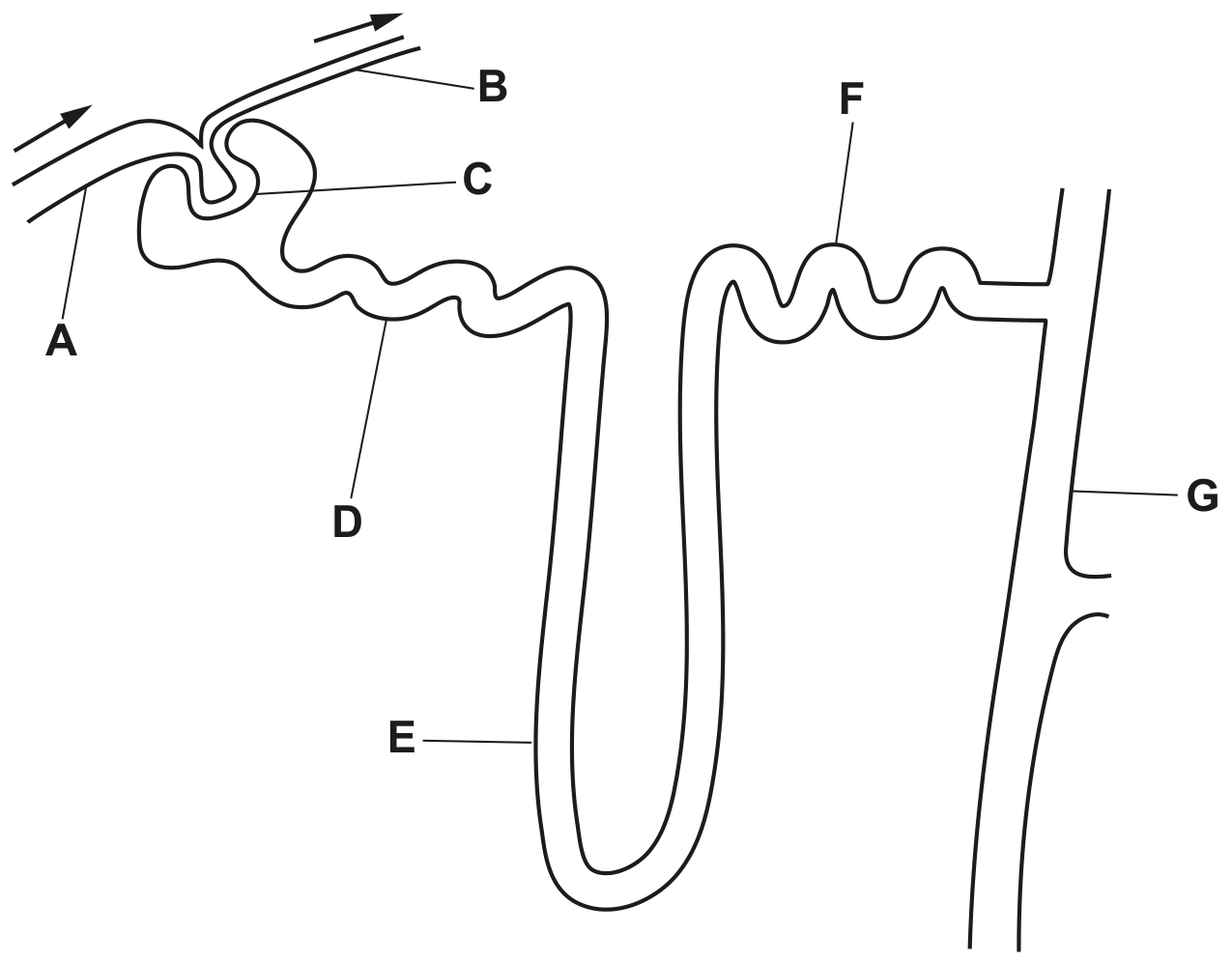
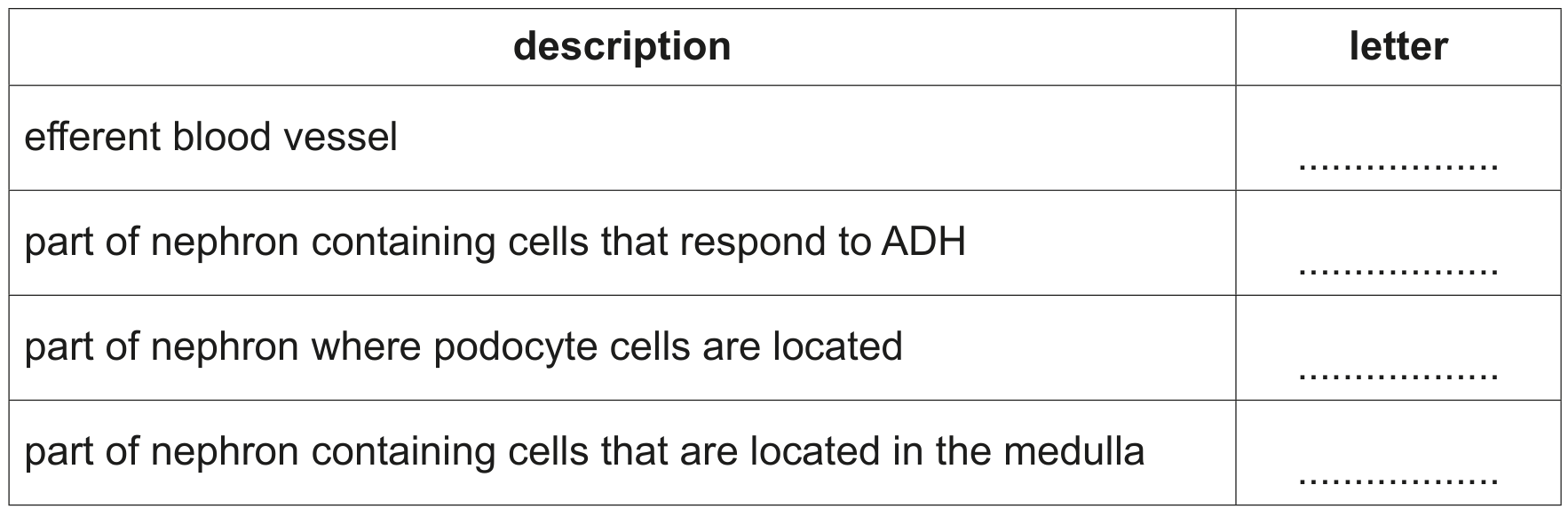
ADH acts on the cells of the collecting duct, resulting in changes in the volume and concentration of urine.
Fig. 1.1 shows the relationship between the concentration of ADH in the blood and the rate of production of urine by the kidneys.
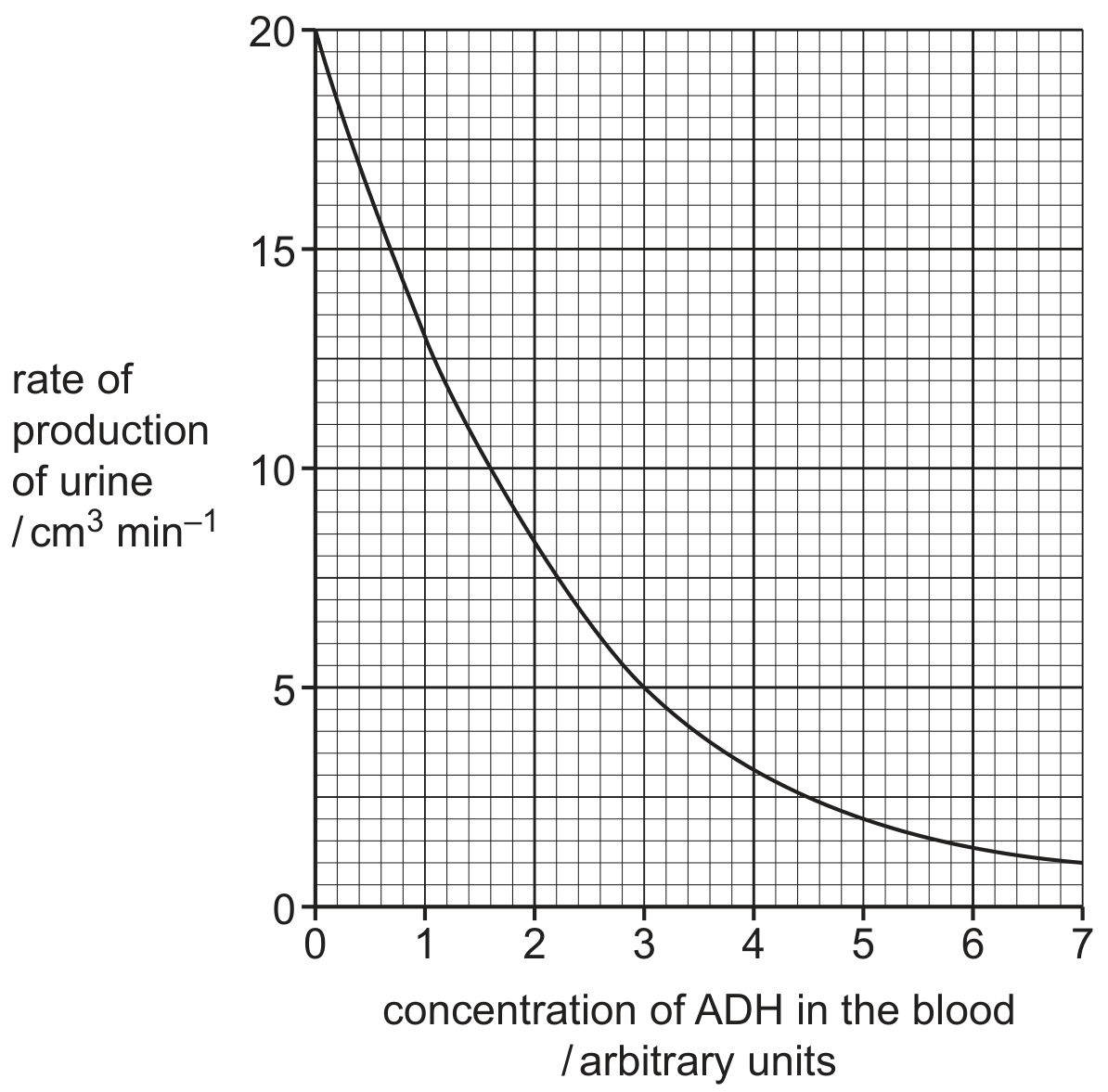
Fig. 1.1
As the concentration of ADH in the blood increases, the rate of production of urine decreases.
Using Fig. 1.1, calculate the percentage decrease in the rate of production of urine between ADH concentrations of 1 and 3 arbitrary units.
Show your working.
Give your answer to one decimal place.
answer =
Explain the relationship shown in Fig. 1.1.