EduNinja
[Maximum number: 7]

Interferon-alpha (IFN- α\alpha ) can be produced as a recombinant human protein to treat some types of cancer. The gene IFNA2 codes for IFN- α\alpha.

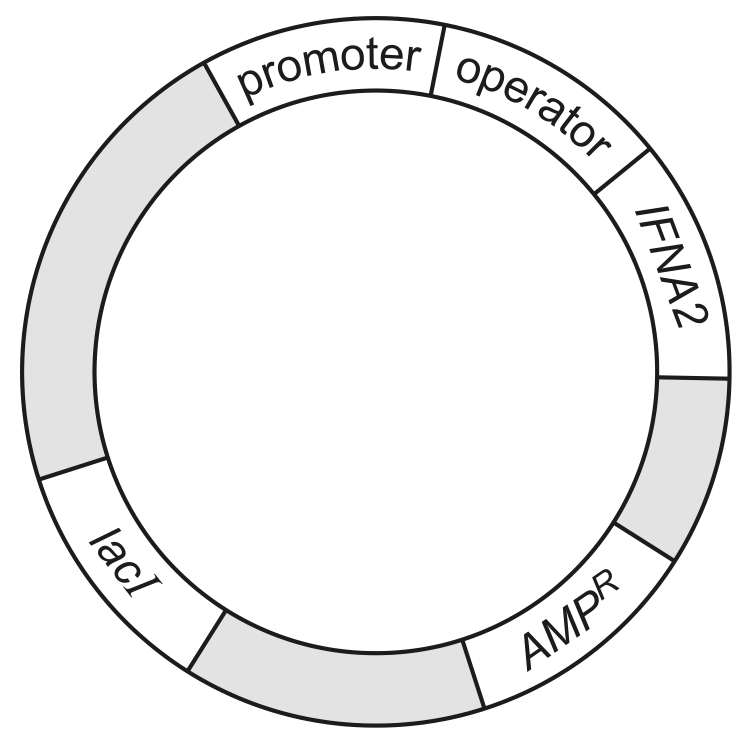
One method of producing recombinant IFN- α\alpha uses genetically engineered Escherichia coli bacteria that contain recombinant plasmids. Each recombinant plasmid contains:
- the gene IFNA2
- three regulatory sequences of the lac operon (promoter, operator and lacl)
- a gene for antibiotic resistance, AMPRA M P^{R}.

Each of the sequences for the lacI gene and AMPRA M P^{R} gene contains its own promoter. As a result, these genes are always expressed in E. coli bacteria that contain this recombinant plasmid.

Fig. 2.1 is a diagram of the recombinant plasmid. The promoter regions of the lacI gene and AMPRA M P^{R} gene are not shown.

Fig. 2.1

Fig. 2.1

(a)

The start of transcription of the gene IFNA2 by E. coli with the recombinant plasmid shown in Fig. 2.1 needs to be controlled to obtain an optimum yield of IFN α-\alpha.

Scientists investigated the effect of two inducers of transcription on the production of recombinant IFN- α\alpha :
- lactose, which is converted to allolactose in E. coli
- IPTG, which is a synthetic molecule with a very similar structure to allolactose. IPTG cannot be broken down by E. coli.

The scientists grew three cultures of E. coli containing the recombinant plasmid in the same growth medium. The growth medium contained glucose, amino acids, essential vitamins and minerals. The growth medium did not contain lactose.

After four hours, either lactose or IPTG at the same concentration was added to two of the cultures of E. coli. As a control, the third culture of E. coli was grown without adding lactose or IPTG.

The concentration of recombinant IFN- α\alpha in the cultures was measured at different times over a period of 28 hours. The results are shown in Fig. 2.2.
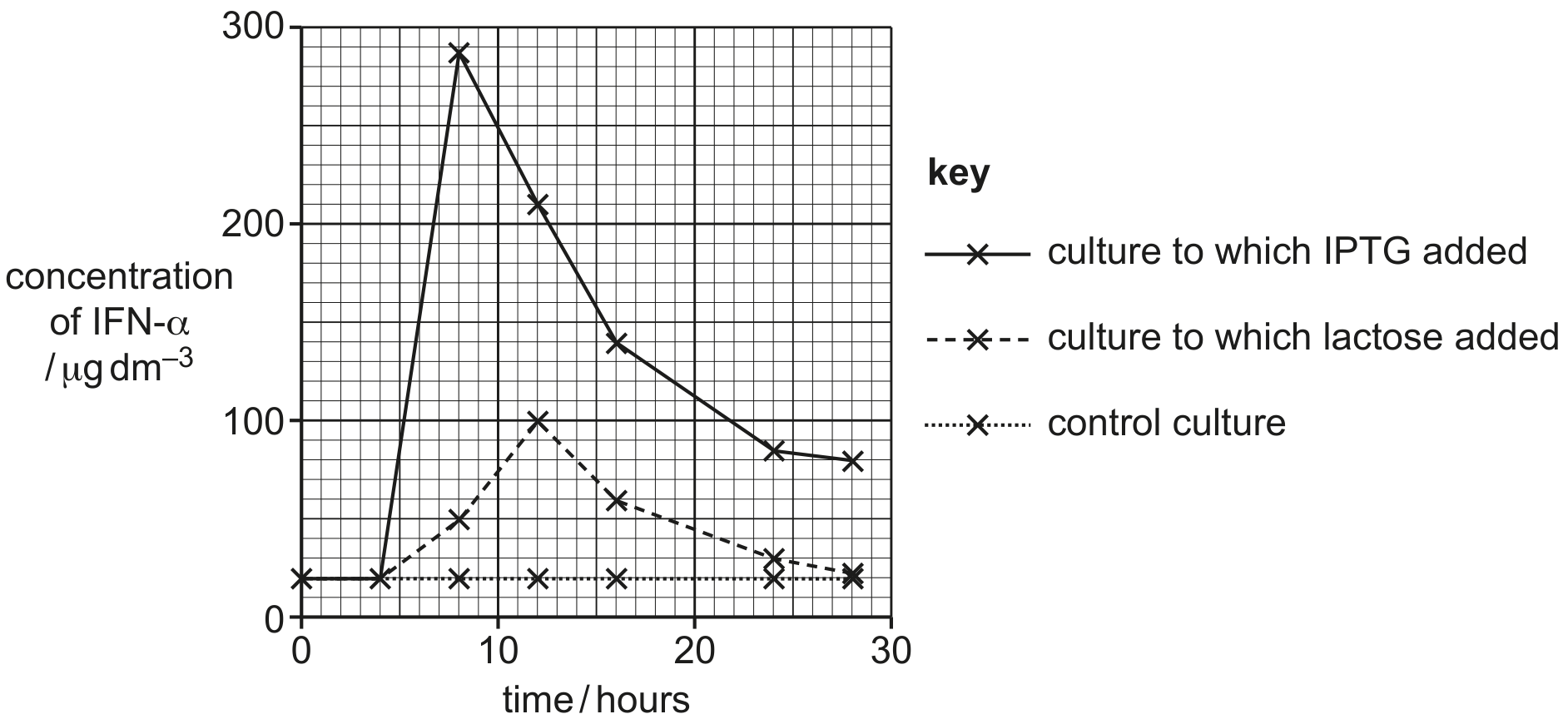
Fig. 2.2

Fig. 2.2

[ 7 ]
(i)

The regulatory sequences of the lac operon contained in the recombinant plasmid are involved in the control of transcription of the gene IFNA2.

Explain the role of the gene lacI in the control of transcription of the IFNA2 gene between 0 hours and 4 hours.

[ 2 ]
(ii)

With reference to Fig. 2.2, describe the changes in the concentration of recombinant IFN- α\alpha in the culture containing IPTG from when IPTG was added at 4 hours to the end of the experiment at 2 8 hours.

[ 3 ]
(iii)

Suggest one reason for the difference between the concentration of recombinant IFN- α\alpha in the culture at 8 hours in the presence of lactose and the concentration of recombinant IFN- α\alpha in the culture at 8 hours in the presence of IPTG.

[ 1 ]
(iv)

Suggest one reason for the change in the concentration of recombinant IFN- α\alpha in the culture containing IPTG from 12 hours to 16 hours.

[ 1 ]
[Maximum number: 4]

Steelhead trout, Oncorhynchus mykiss, are fish that live in streams in North America.
To increase the number of steelhead trout, captive breeding has occurred since 1992. Fish eggs and sperm are mixed and the young fish grow in large tanks of aerated water for the first year of their lives. Most are then released into the wild, however a few male and female fish are kept to become the parents of the next generation of captive-bred fish.

Each tank may hold up to 50000 fish. The young captive fish are fed processed food. Some young fish are unable to survive these conditions and a proportion die. Death is usually the result of poor wound-healing after accidents due to overcrowding and due to the spread of diseases.

(a)
(i)

Explain how gene expression is controlled in eukaryotes such as fish.

[ 4 ]
[Maximum number: 10]

Gene expression in a cell is controlled. When a gene is expressed (switched on), the gene is transcribed. When a gene is not expressed (switched off), the gene is not transcribed.

Environmental changes can cause some genes to be switched on or switched off.

(a)

An example of control of gene expression in prokaryotes is regulation in the lac operon.

The lac operon is a length of DNA that is made up of different parts.
Fig. 3.1 shows a simple diagram representing the lacI (regulatory) gene and the lac operon.

Fig. 3.1

Fig. 3.1

[ 7 ]
(i)

Outline the main features of the lac operon.

[ 3 ]
(ii)

Explain the role of the l a c I gene in the regulation of the lac operon.

[ 4 ]
(b)

The lac operon codes for inducible enzymes. Repressible operons code for repressible enzymes.

Suggest and explain why it is an advantage to a prokaryote to have a repressible operon.

[ 3 ]
(a)

In eukaryotes, gene expression is controlled by transcription factors, coded for by regulatory genes.

[ 5 ]
(i)

Outline ways in which transcription factors carry out their role.

[ 2 ]
(ii)

It is estimated that 2 % of human DNA consists of genes coding for proteins (structural genes). Of the remaining 98 %, some of the DNA consists of regulatory genes and control sequences that together control gene expression.

State one type of control sequence found in human DNA.

[ 1 ]
(iii)

A study of human evolution identified the location of mutations that result in a change in human phenotype. The study found most examples of mutations had occurred in regulatory genes, not structural genes.

Suggest and explain why most changes in human phenotype are due to mutations in regulatory genes.

[ 2 ]
[Maximum number: 3]

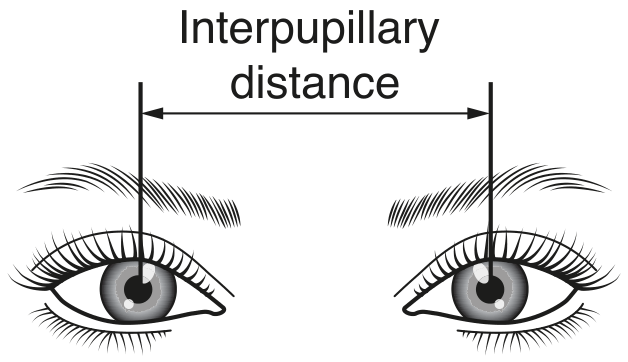
The interpupillary distance (IPD) is the distance in millimetres between the centres of the pupils of the eyes. Fig. 2.1 shows how IPD is measured.

Fig. 2.1

Fig. 2.1

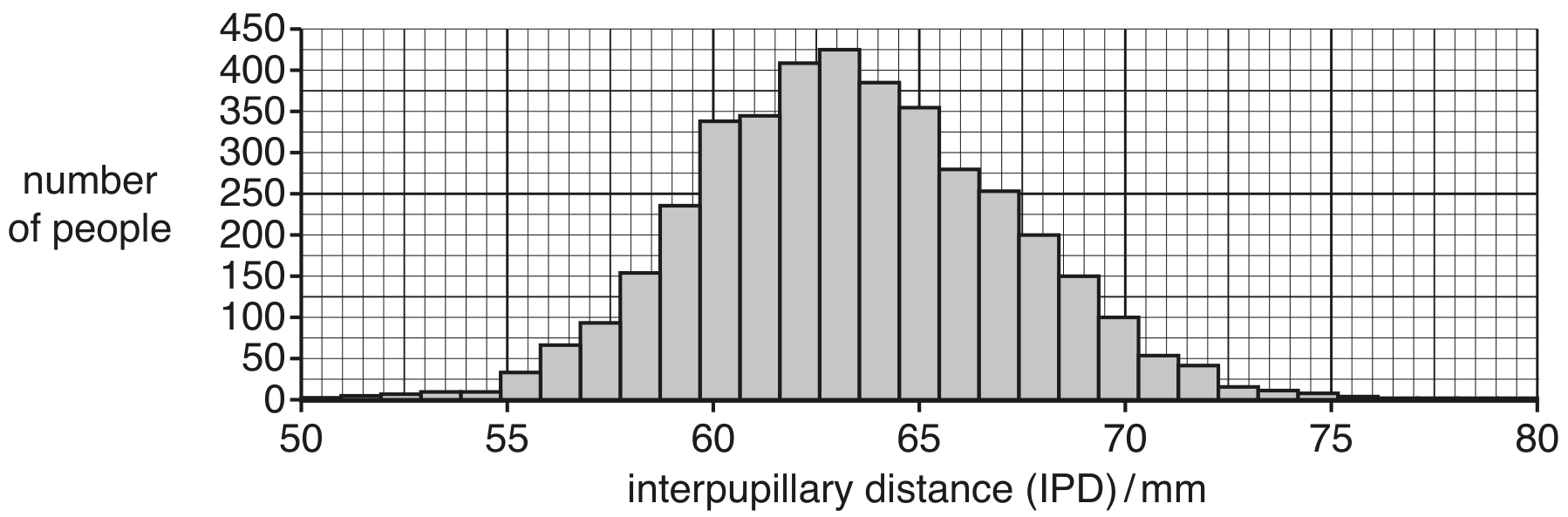
IPD is one example of a characteristic of human facial structure that shows variation.
Fig. 2.2 shows the pattern of variation in IPD in a large sample of adults.

Fig. 2.2

Fig. 2.2

(a)

Individuals with an IPD of 70 mm or more have a mutation in the PAX3 gene that results in less PAX3 protein being made.

The normal role of the PAX3 protein is to increase the expression of many other genes involved in embryonic development. These genes affect a range of phenotypic features such as facial structure, hearing and eye colour.

[ 3 ]
(i)

State the term that is used to describe a gene, such as P A X 3, that controls the expression of other genes and suggest how the PAX3 protein controls the expression of other genes.

[ 3 ]
[Maximum number: 2]

Therapeutic proteins are used to treat disease. The first purified therapeutic protein used was insulin, in 1922. The insulin was extracted from animal pancreases. Since 1982 most insulin has been made by recombinant DNA technology.

(a)

The gene coding for salmon calcitonin is introduced into bacteria in a specially designed plasmid called an expression vector. An expression vector must contain a prokaryotic promoter, such as the lac promoter.

Explain why differences in the control of gene expression in prokaryotes and eukaryotes mean that expression vector plasmids must contain a prokaryotic promoter.

[ 2 ]
(a)

The zona pellucida of an oocyte is made up of ZP proteins. ZP3, which does not occur anywhere else in the body, has a complex tertiary structure and acts as a receptor for sperm during fertilisation.

A new method of contraception, which does not involve the use of hormones, is in the early stages of development. It involves blocking the expression of the gene coding for ZP3.

[ 3 ]
(i)

Explain how blocking the expression of the gene coding for ZP3 acts as a contraceptive.

[ 3 ]
0