(a)
Very little of the energy consumed by grazing animals is available to carnivores. State two reasons why this is so.
[ 2 ]
 EduNinja
Very little of the energy consumed by grazing animals is available to carnivores. State two reasons why this is so.
Oxygen is needed for aerobic respiration in cells.
In eukaryotic cells, the mitochondrion is the organelle used for aerobic respiration.
Fig. 1.1 shows a transmission electron micrograph of a mitochondrion.
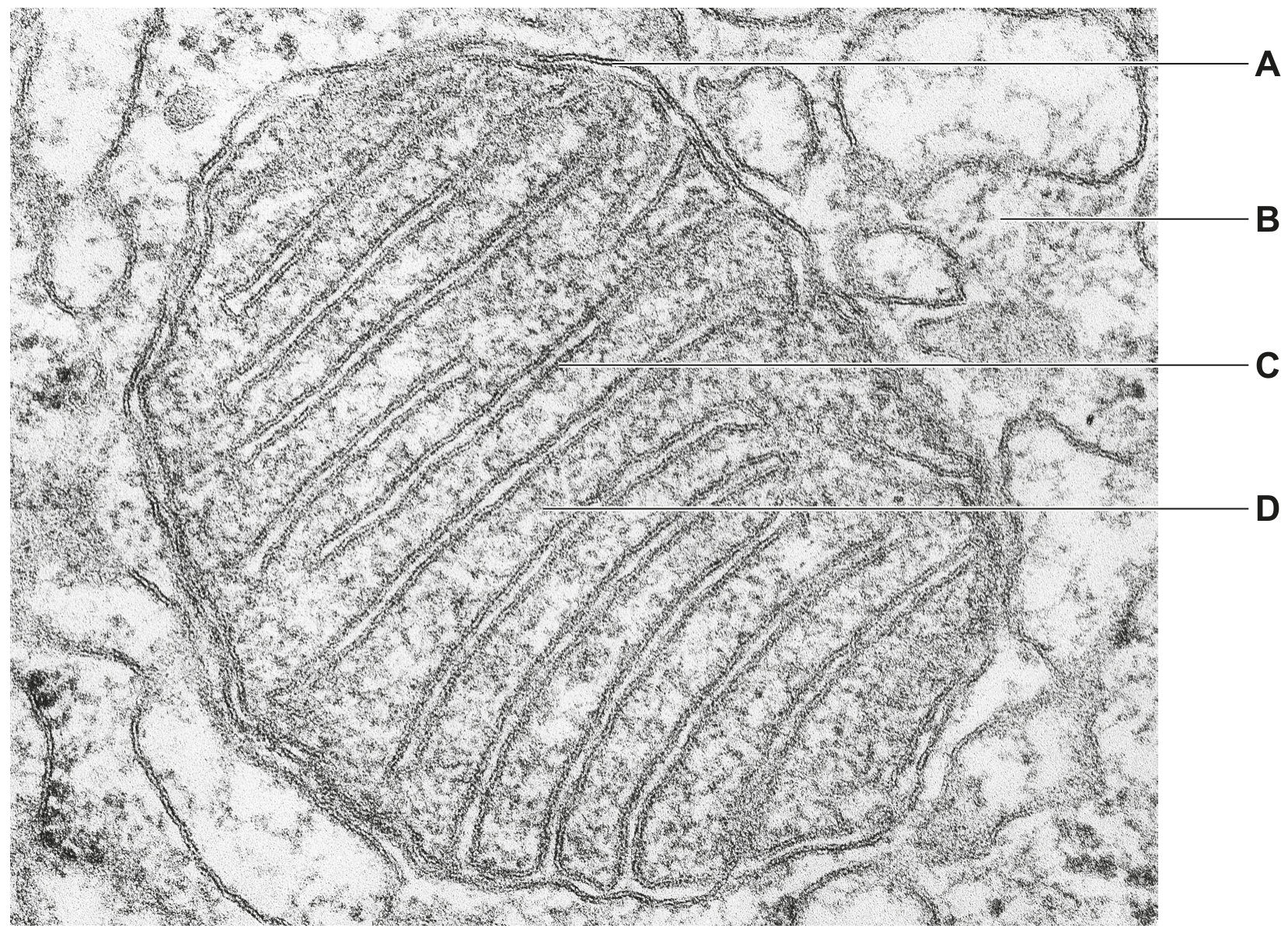
Fig. 1.1
Table 1.1 lists the four stages of aerobic respiration.
With reference to Fig. 1.1, complete Table 1.1 using the letters A-D to show where each stage occurs.
Each letter may be used once, more than once or not at all.
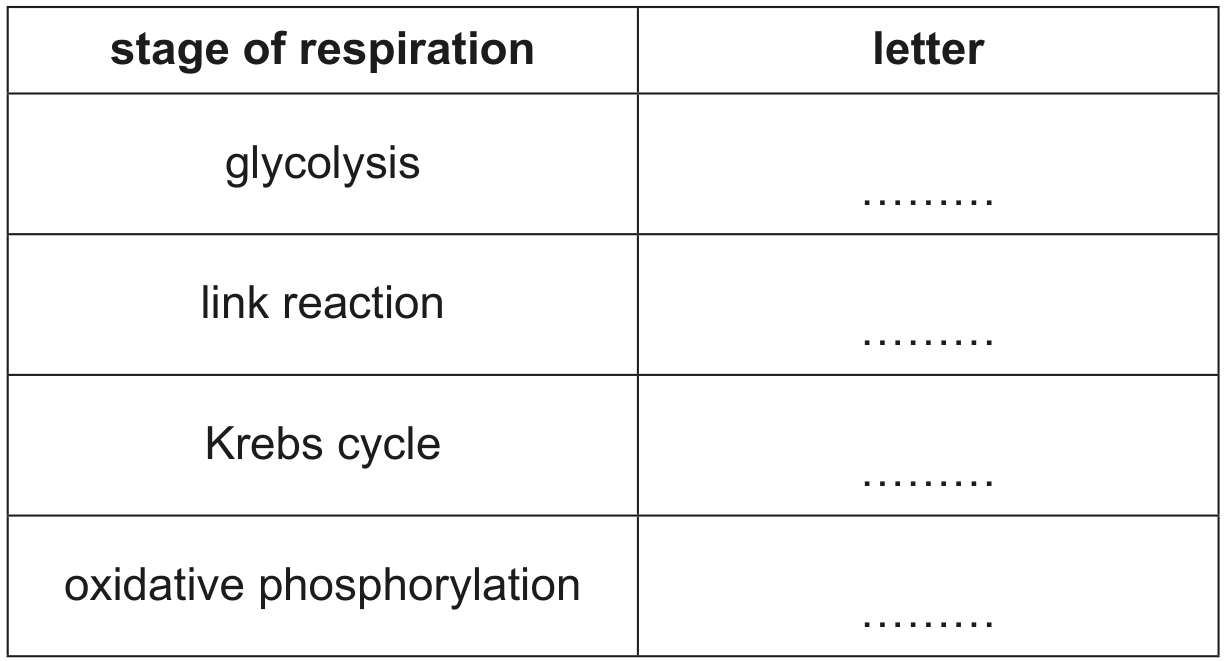
Table 1.1
In anaerobic conditions, no ATP can be synthesised by oxidative phosphorylation because the process stops.
Explain why ATP synthesis by oxidative phosphorylation stops in anaerobic conditions.
Up to 60\% of the ATP that is produced in cancer cells comes from lactate fermentation of glucose, even though oxygen is present.
Scientists are developing cancer treatments to inhibit the enzyme that catalyses the last step of lactate fermentation.
Explain how the inhibition of this enzyme reduces the production of ATP in cancer cells.
Some organisms carry out respiration in anaerobic conditions when oxygen is not available or when there is a low concentration of oxygen. In yeast and some plants, this is called ethanol fermentation. In mammals, it is called lactate fermentation.
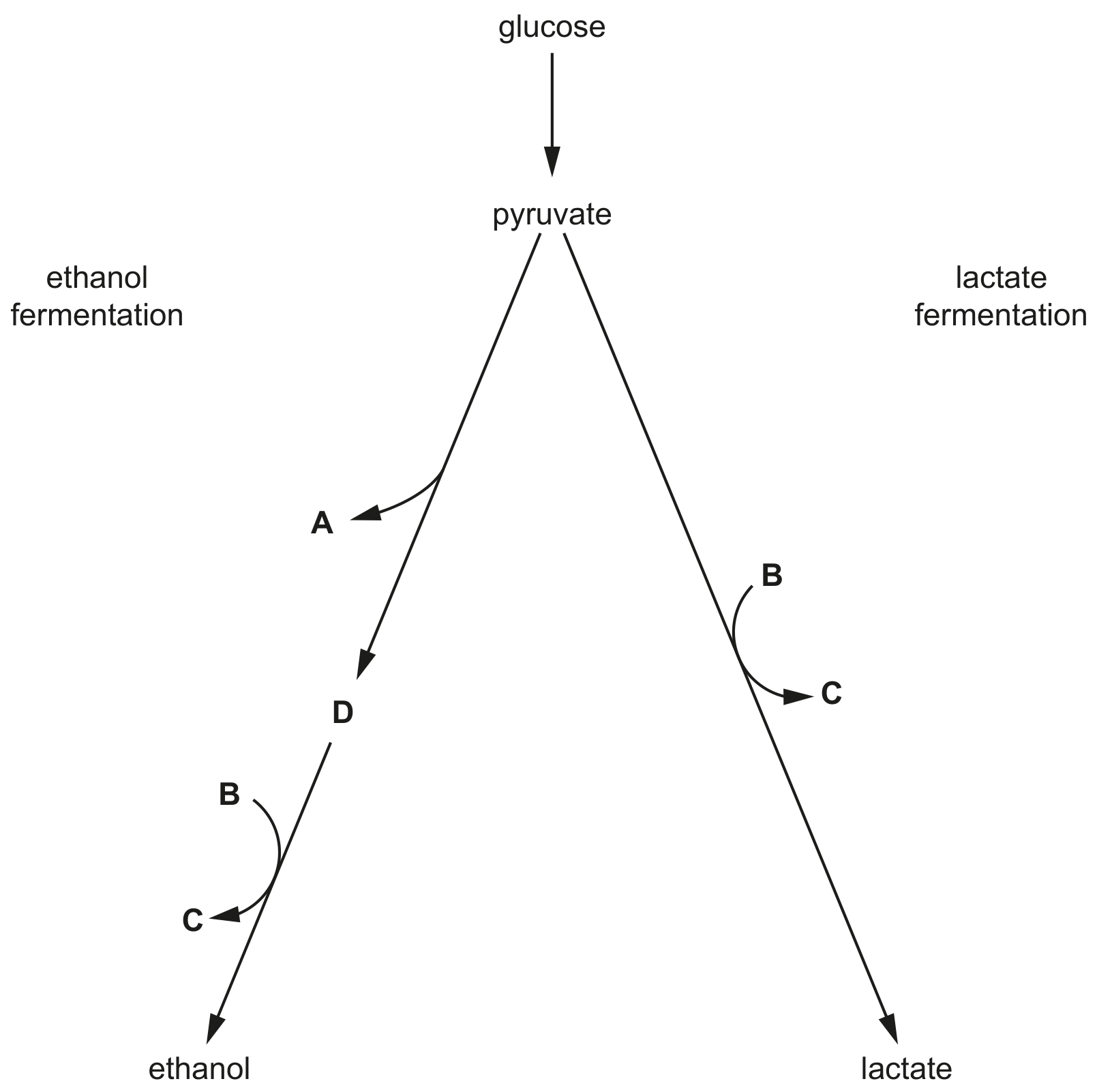
Fig. 1.1 outlines ethanol fermentation and lactate fermentation.
Identify substances A-D.
A
B
C
D
Explain how processes such as ethanol fermentation and lactate fermentation allow cells to continue to function in the absence of oxygen.
The cereal crop rice, Oryza sativa, grows in fields that are flooded with water. The roots of the rice plants are submerged in water that contains very little oxygen.
Describe and explain how rice plants are adapted to grow in flooded fields.
The Krebs cycle was named after the biochemist Sir Hans Krebs, who worked out the sequence in 1937.
Fig. 1.1 is an outline of the Krebs cycle.
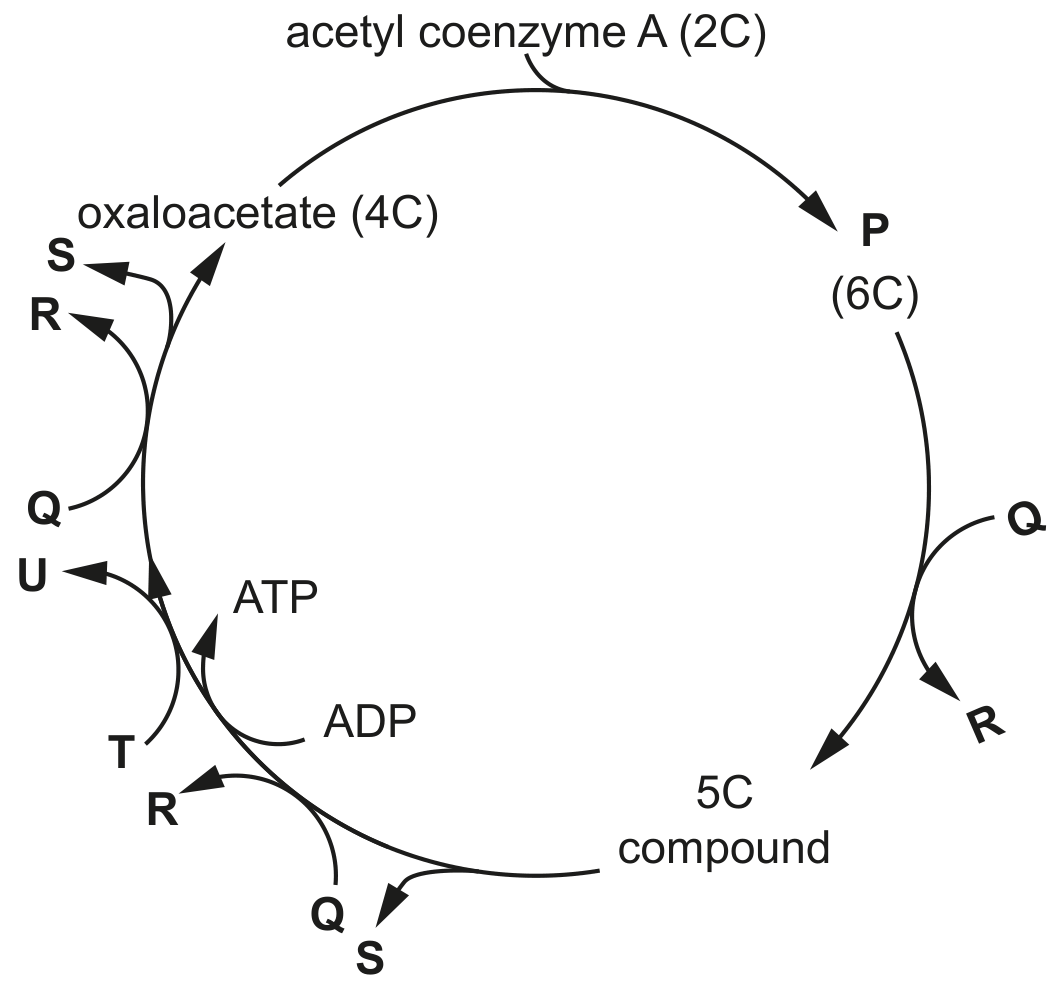
Fig. 1.1
Identify substances P-U.
P
Q
R
S
T
U
Describe how ATP is produced from ADP in the Krebs cycle.
Glycolysis is a biochemical pathway that occurs in the cytoplasm of cells.
In glycolysis, a molecule of glucose is metabolised to two molecules of pyruvate. The process is outlined in Fig. 1.1.
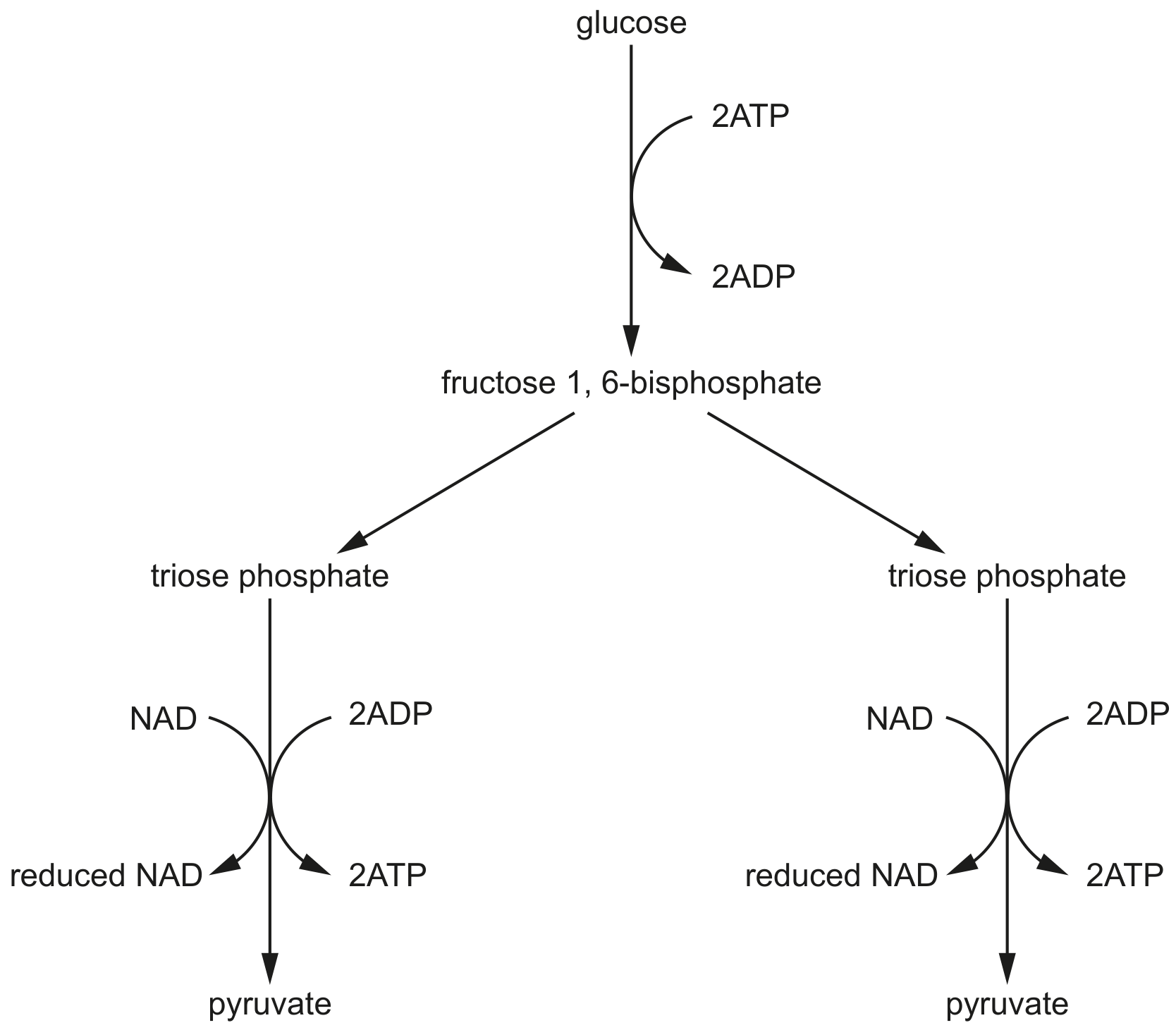
Fig. 1.1
Explain why glucose is phosphorylated at the beginning of glycolysis.
Suggest one use of the reduced NAD that is produced in glycolysis.
Name the type of phosphorylation reaction by which ATP is made during glycolysis.
Pyruvate can enter the mitochondrion by active transport.
Describe the main conditions that are required for pyruvate to enter the mitochondrion by active transport.
Pyruvate is involved in the link reaction in the matrix of the mitochondrion.
Describe the link reaction.
Name the type of chemical reaction by which ATP is made during the Krebs cycle.
Outline the roles of NAD in the cytoplasm of a cell.
ATP and coenzyme A both play important roles in respiration.
Fig. 1.1 represents the molecular structure of coenzyme A.
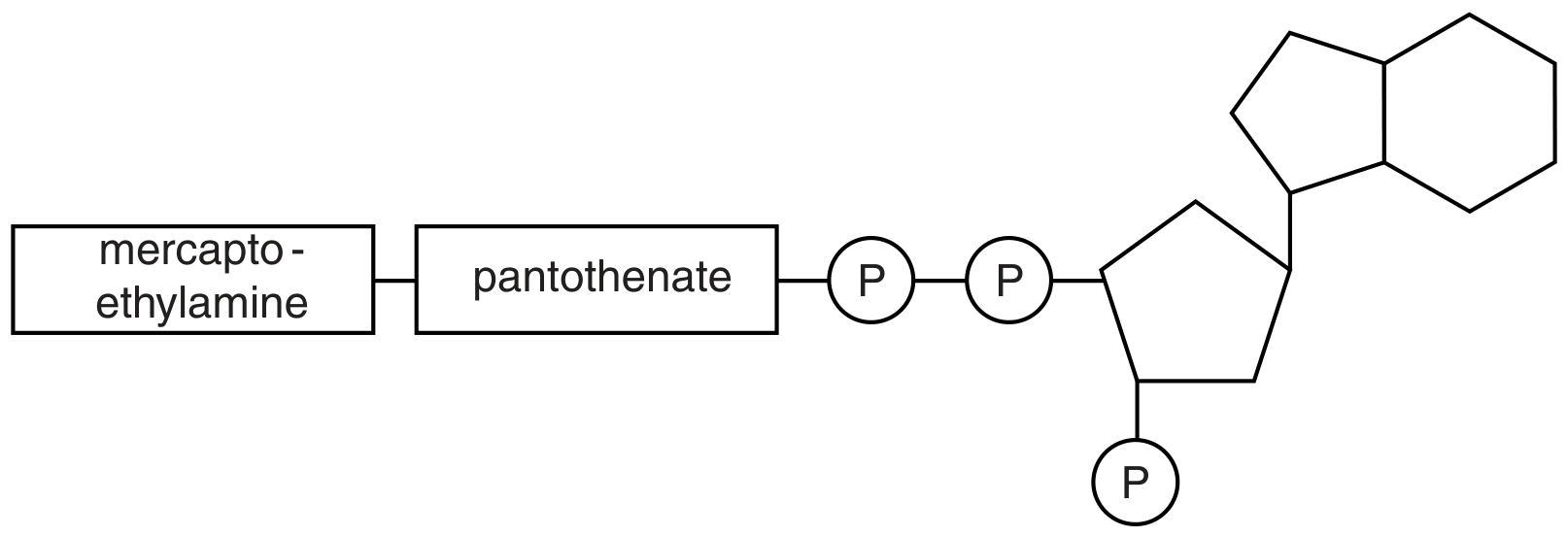
Fig. 1.1
Describe the role of coenzyme A in respiration.
Yeast cells sometimes carry out anaerobic respiration.
Fig. 1.1 outlines the process of anaerobic respiration in yeast cells.

Fig. 1.1
State two differences between anaerobic respiration in yeast cells and anaerobic respiration in human muscle cells.
Dinitrophenol (DNP) is a compound used as a herbicide. DNP inhibits respiration by interfering with the formation of the proton gradient between mitochondrial membranes.
When DNP was added to isolated mitochondria the following observations were made:
- fewer ATP molecules were produced
- more heat energy was released
- the uptake of oxygen remained constant.
Suggest explanations for these observations.
fewer ATP molecules produced
more heat energy released
constant oxygen uptake
A sample of tree sap, rich in sugars, was found to be contaminated with yeast. This sample was tested for the concentration of ethanol at regular intervals.
The results are shown in Fig. 1.1.
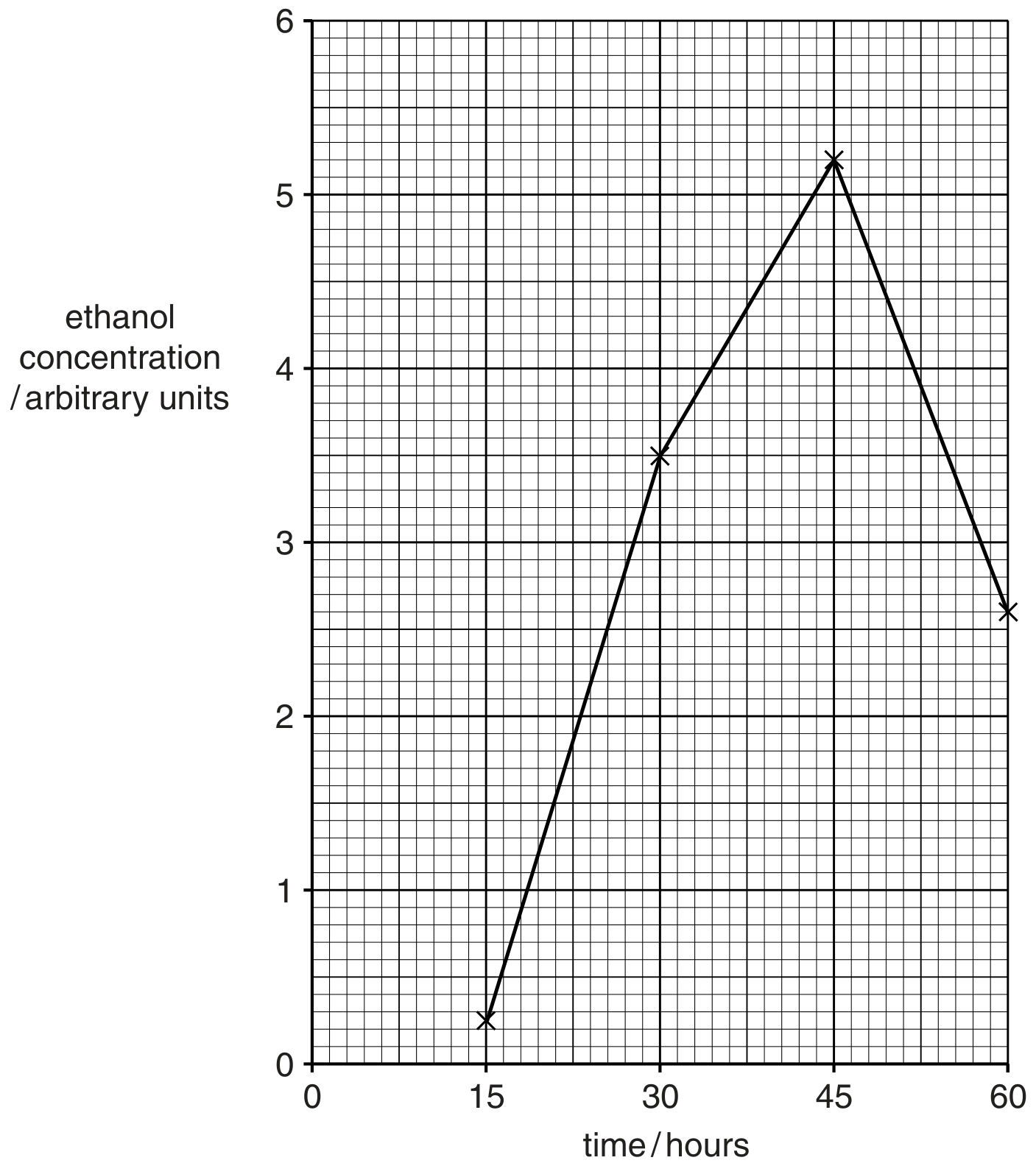
Fig. 1.1
Calculate the percentage increase in ethanol concentration between 15 and 45 hours.
Show your working.
answer
\%
Suggest why the concentration of ethanol decreased after 45 hours.
When a mammal dies, aerobic respiration stops. The striated muscles contract and remain contracted for a few hours after death.
Suggest why the muscles remain contracted for a few hours.