(a)
Explain what is meant by a voltage-gated channel.
[ 2 ]
 EduNinja
Explain what is meant by a voltage-gated channel.
The St. Lawrence river in Canada has been identified as an area with very high biodiversity.
Algal blooms sometimes occur in the area of the Atlantic ocean near the St. Lawrence river. These result from rapid population growth of unicellular algae such as Alexandrium tamarense.
A. tamarense produces saxitoxin, a neurotoxin that causes muscle paralysis by acting on voltage-gated sodium ion channels in neurones. Saxitoxin can kill whales.
Suggest how saxitoxin results in the death of a whale.
The brain depends on a constant supply of oxygen for aerobic respiration. Anaerobic respiration is not sufficient to keep neurones in the brain alive. This is because neurones require especially large amounts of ATP. Up to 80 % of the ATP is used to provide energy for the pump.
When a person suffers a stroke, blood flow to part of the brain is stopped, so some neurones receive no oxygen. ATP production by oxidative phosphorylation stops. Fig. 4.1 shows some of the ways in which the lack of ATP affects a neurone in the brain.
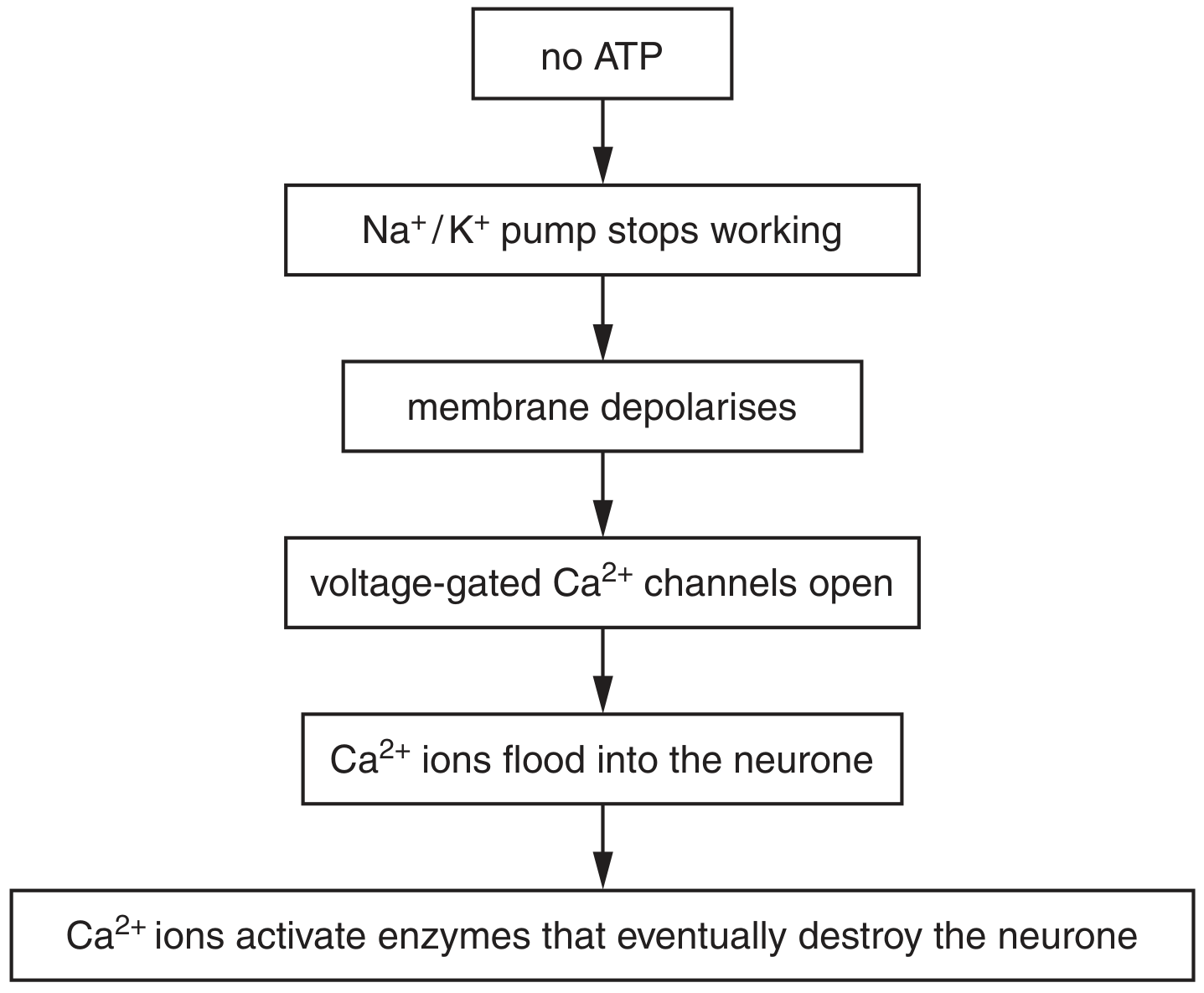
Fig. 4.1
Explain why the membrane of the neurone depolarises when the pump stops working.
Suggest why calcium ions flood into the neurone when the pump stops working.
Many processes and actions in plants and animals are due to the movement of ions.
Table 5.1 lists several ions, the direction of movement of each ion and the action resulting from that movement.
Complete Table 5.1.
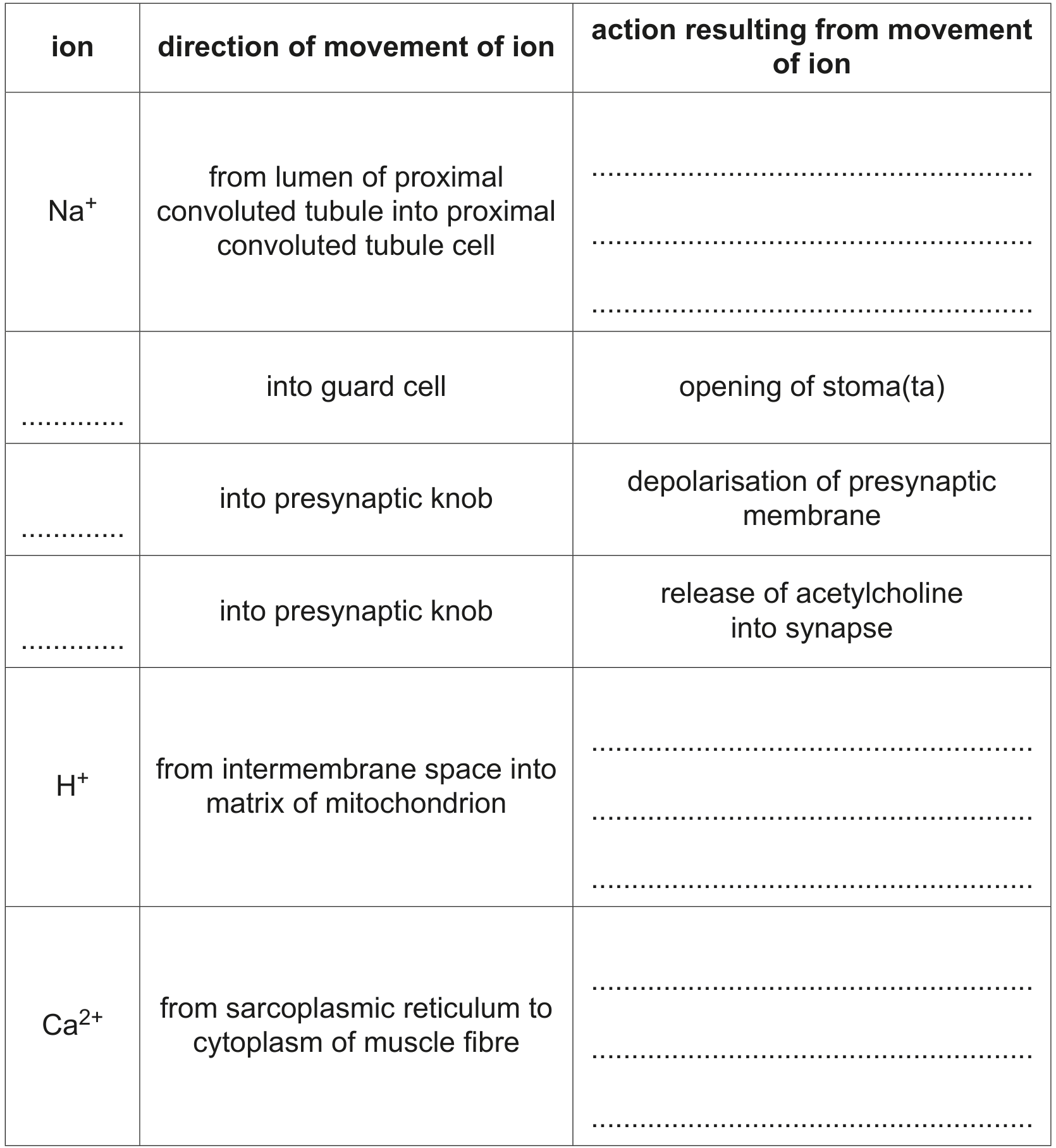
Table 5.1
Multiple sclerosis (MS) is an auto-immune condition of humans in which the body's immune system attacks the myelin sheaths which are then damaged. This leads to a decrease in information reaching the brain from sensory receptors.
Explain why this damage leads to a decrease in information reaching the brain from sensory receptors.
Cloves are the aromatic flower buds of the tree Syzygium aromaticum. Eugenol is a drug extracted from cloves.
Eugenol affects the movement of sodium ions through the cell surface membranes of sensory neurones.
Fig. 6.1 shows the effect of eugenol concentration on the percentage decrease in sodium ion movement.
percentage decrease in sodium ion movement
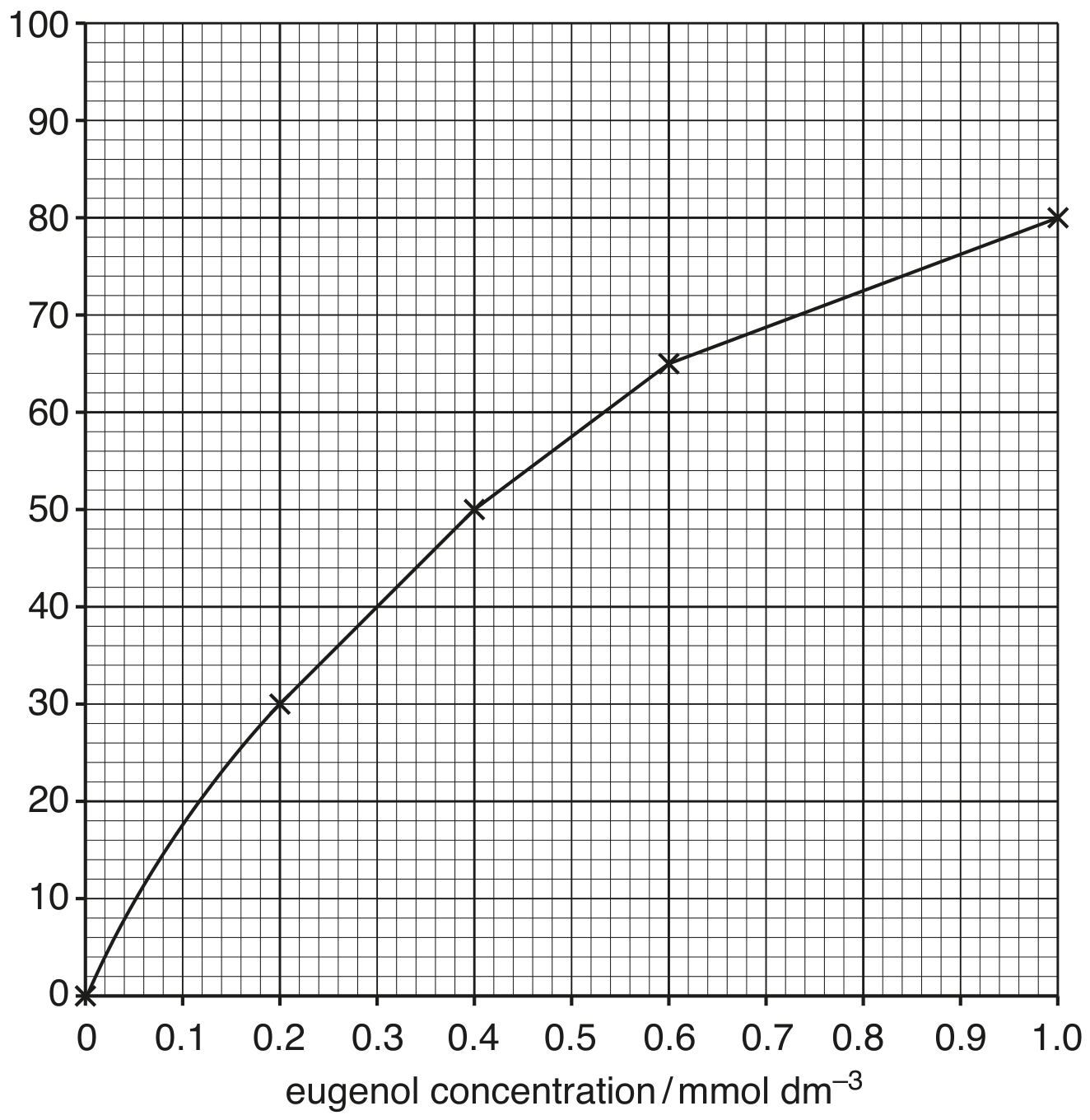
Fig. 6.1
Describe the effect of eugenol concentration on the percentage decrease in sodium ion movement.
Using Fig. 6.1, determine the percentage decrease in sodium ion movement at a eugenol concentration of . \%
The Venus fly trap, Dionaea muscipula, is a carnivorous plant, native to wetlands of the East Coast of the USA. Mineral ions from decayed organisms are often washed away in these wetlands.
Fig. 7.1 shows a Venus fly trap leaf.
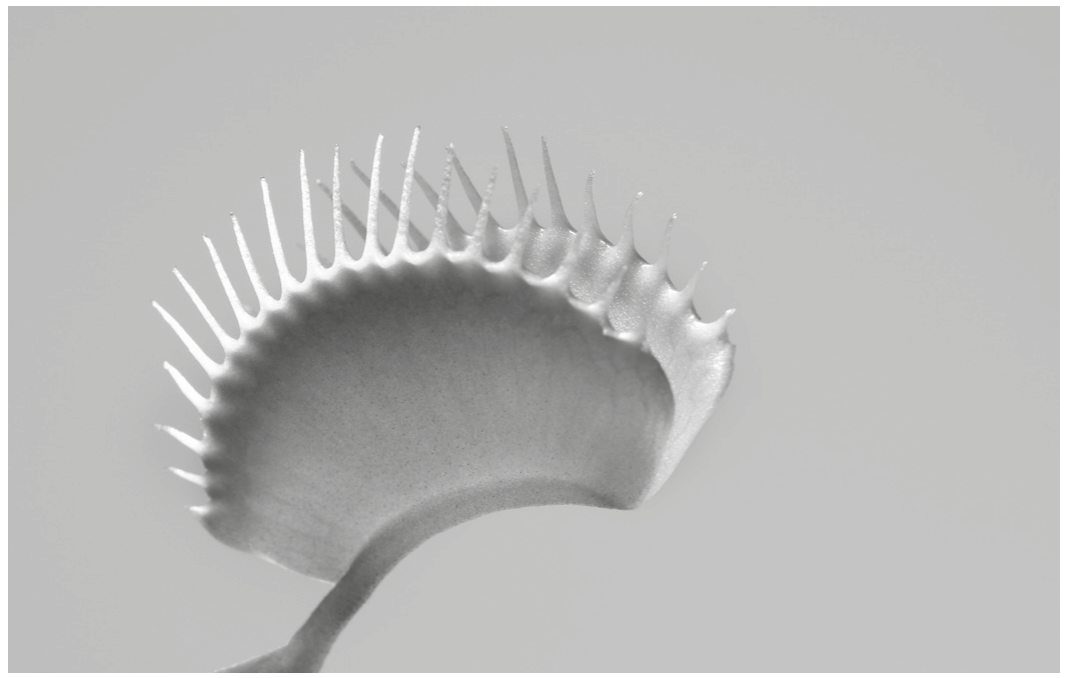
Fig. 7.1
Fig. 7.2 is a graph of an action potential in a human neurone.
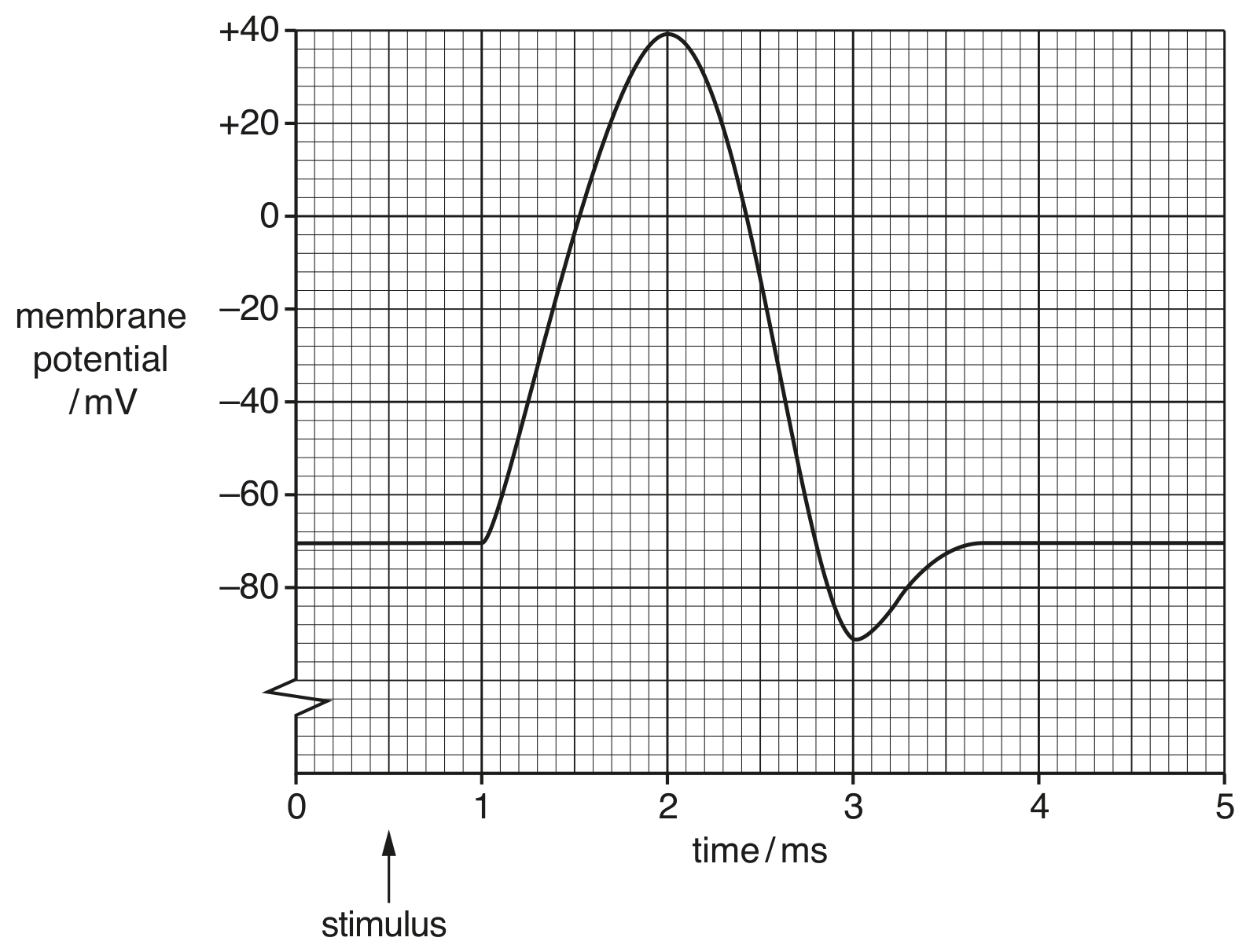
Fig. 7.2
Fig. 7.3 is a graph of an action potential in leaf cells of a Venus fly trap.
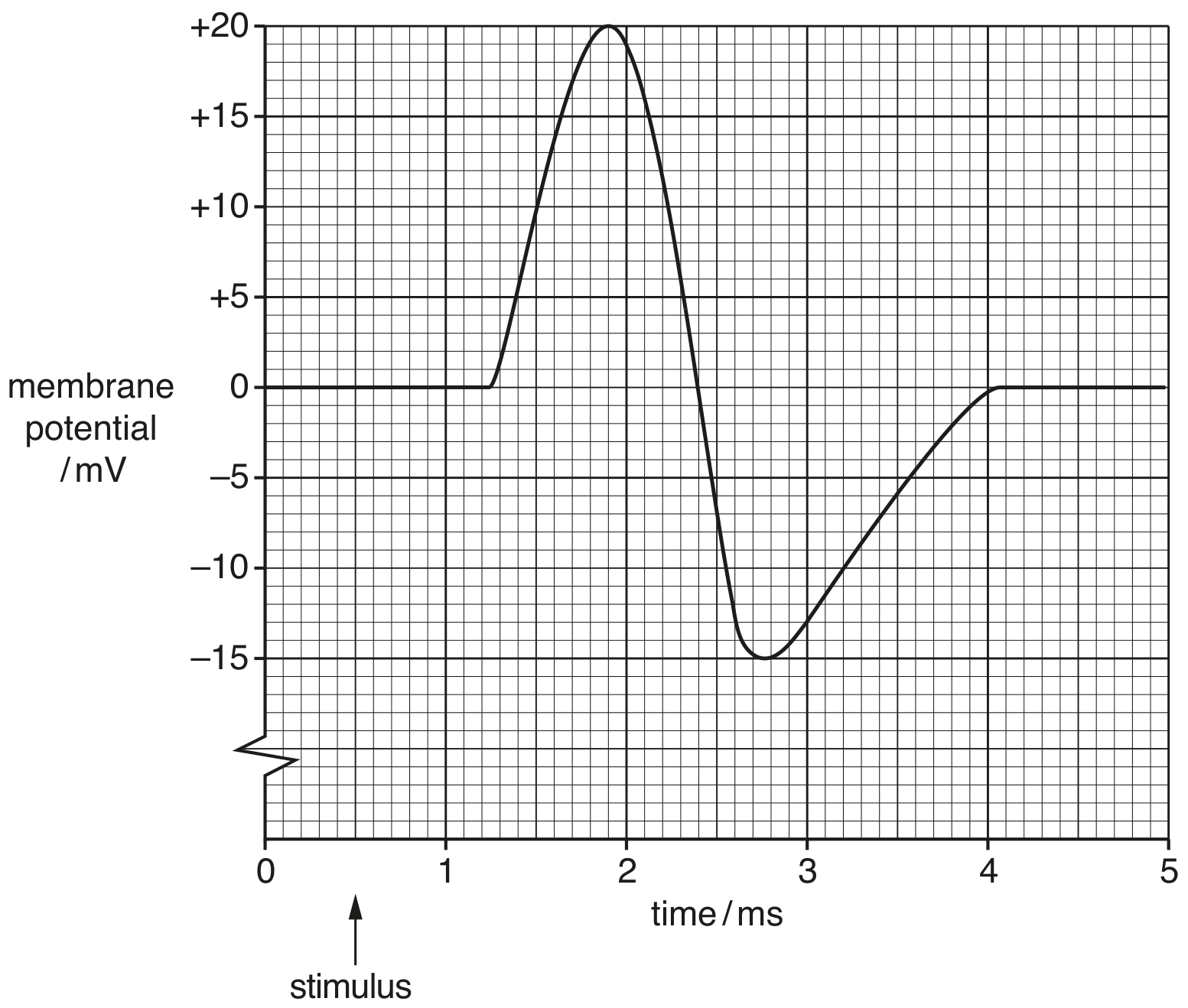
Fig. 7.3 \(9700 / 42 / 0 / \mathrm{N
With reference to Fig. 7.2 and Fig. 7.3, describe how the action potential of the Venus fly trap differs from that of a human.
Fig. 8.1 shows the changes in potential difference (p.d.) across the membrane of a receptor cell over a period of time. The membrane was stimulated at time A and at time B with stimuli of different intensities.
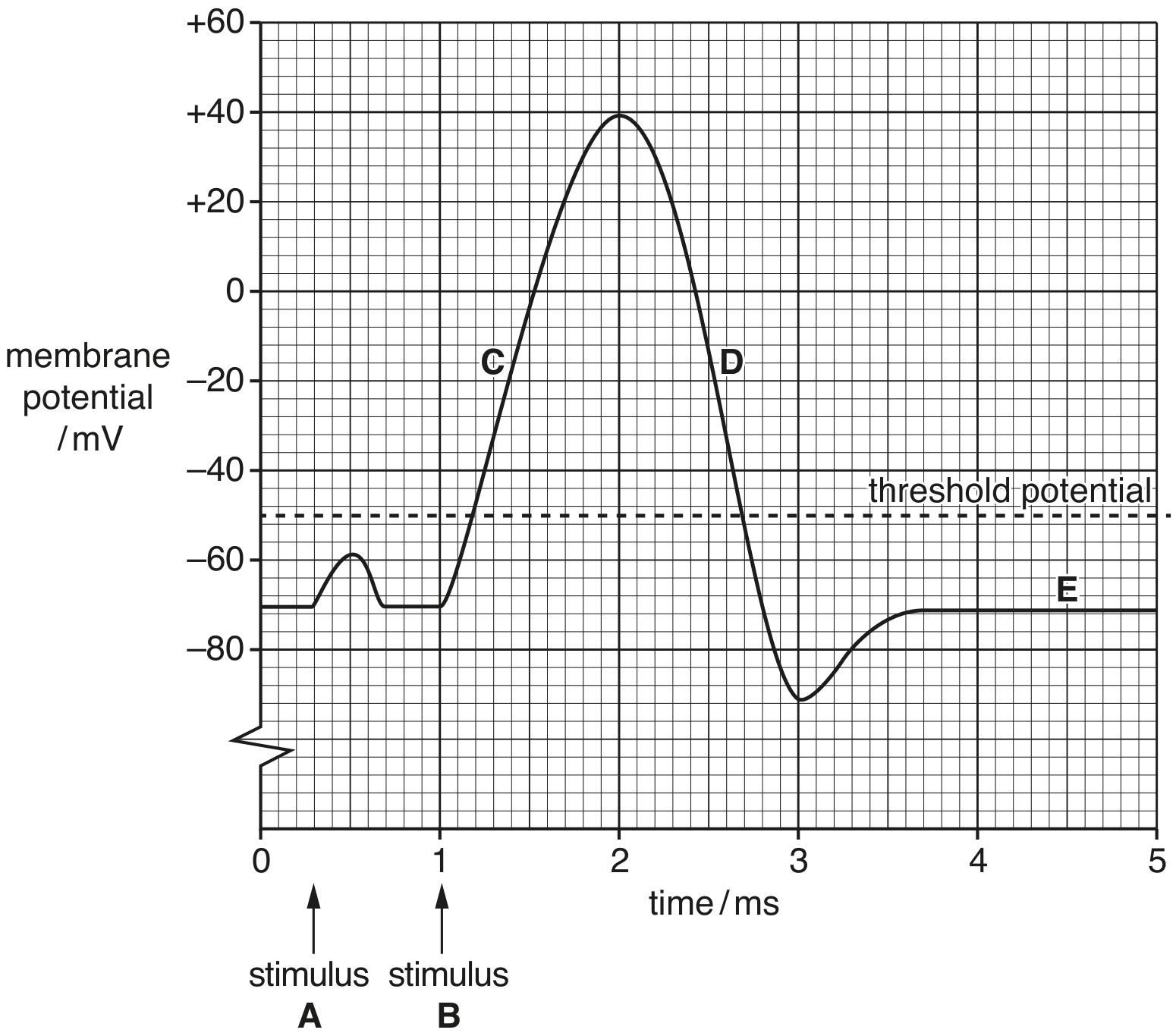
Fig. 8.1
State which of the letters C, D and E on Fig. 8.1 correspond to each of these events. You may use each of the letters C, D or E once, more than once or not at all.
The pump is operating
The voltage-gated channels are open
The voltage-gated channels are open
Explain why stimulus A did not result in an action potential being produced whereas stimulus B did.
A neuromuscular junction allows the transmission of an action potential from a motor neurone to a striated muscle fibre, causing it to contract.
Fig. 9.1 is a graph of an action potential in a motor neurone.
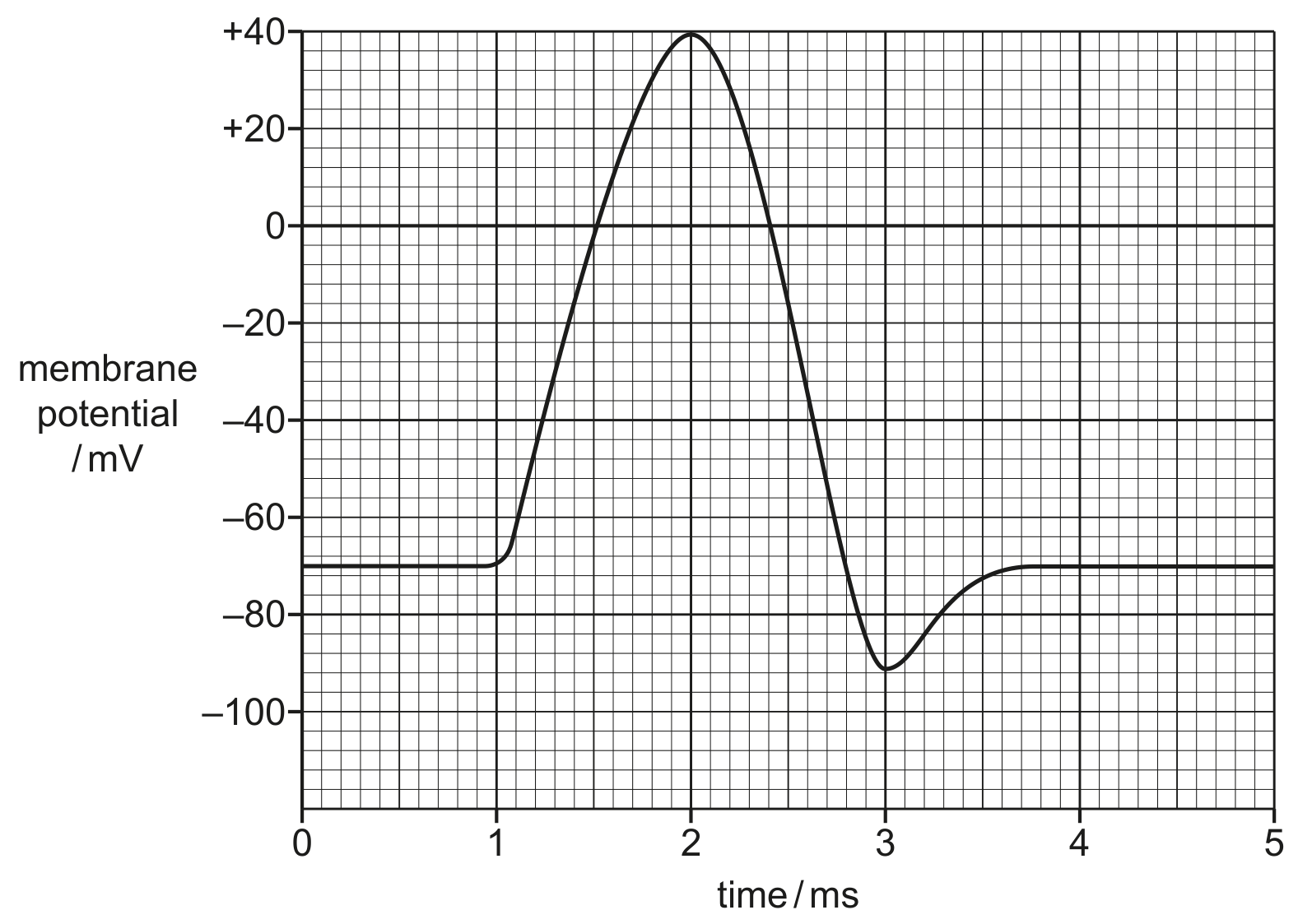
Fig. 9.1
Fig. 9.2 is a graph of an action potential in a striated muscle fibre.
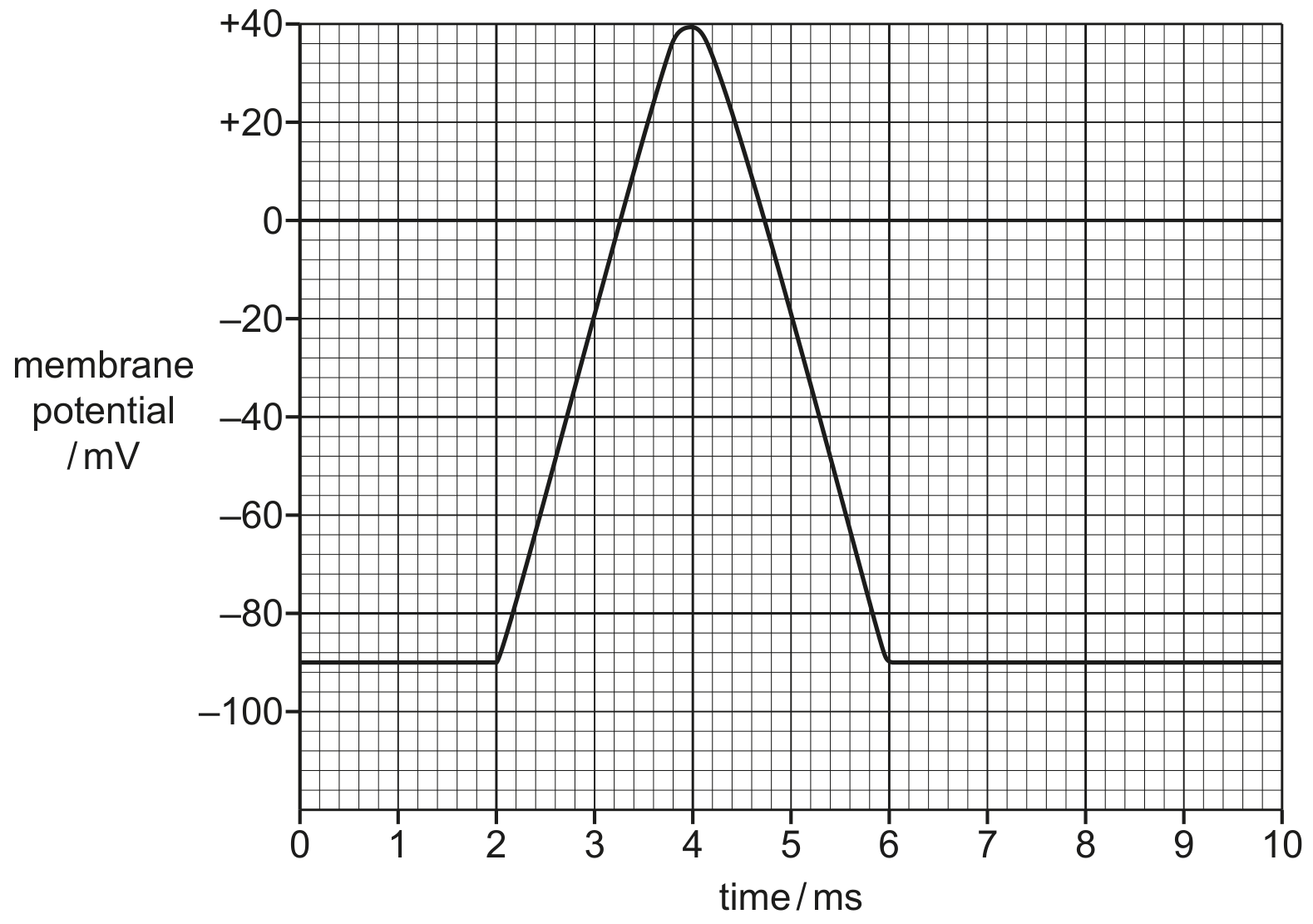
Fig. 9.2
With reference to Fig. 9.1 and Fig. 9.2, describe the differences between the action potential in a motor neurone and the action potential in a striated muscle fibre.
Voltage-gated channels are involved in the generation of an action potential.
Fig. 9.1 is a diagram of the voltage-gated channels of sodium ions and potassium ions in the membrane of an axon. The channels are shown in three different states, 1, 2 and 3.
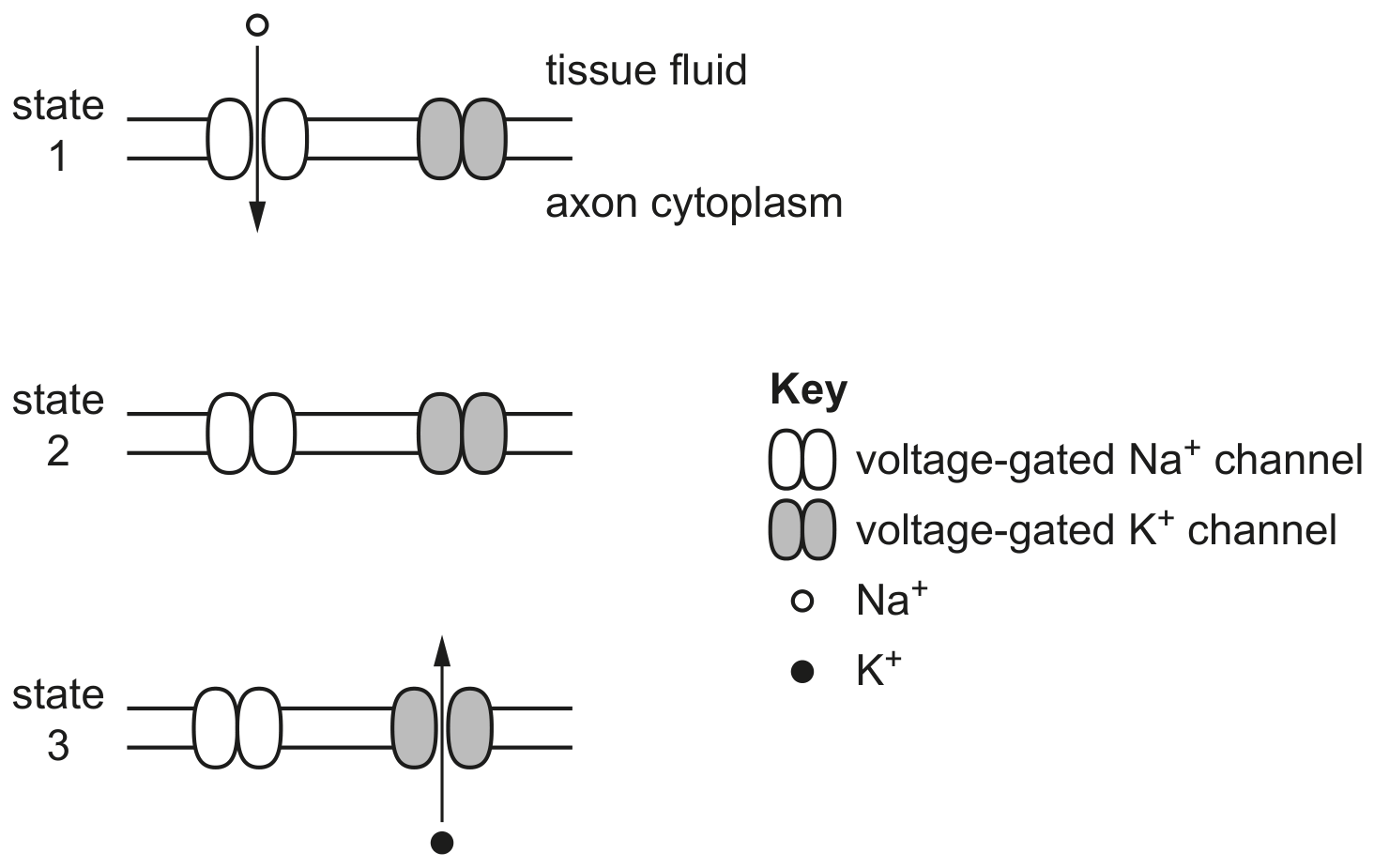
Fig. 9.1
Fig. 9.2 is a diagram of different phases of an action potential in an axon. The phases are labelled A, B, C, D, E, F and G.
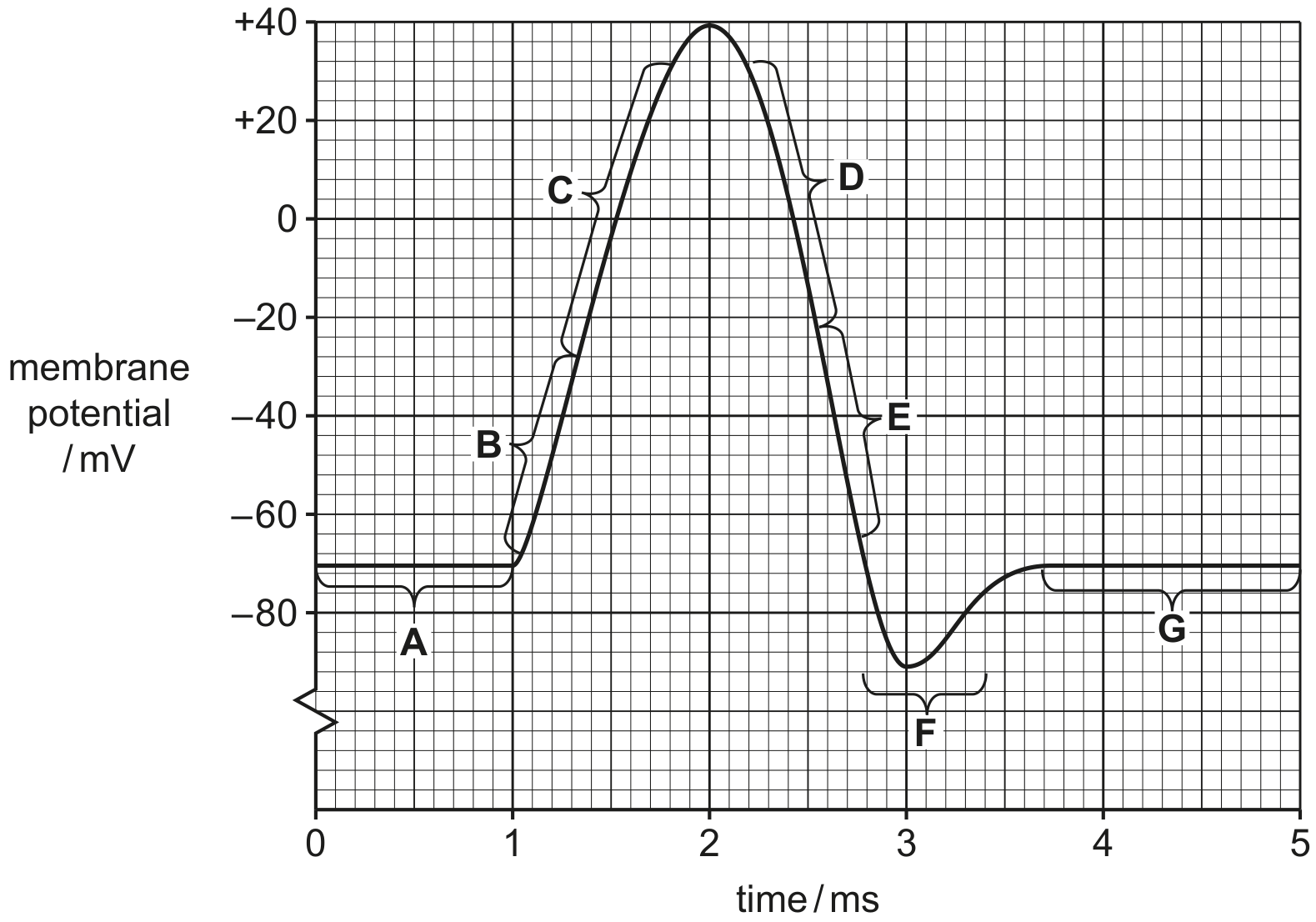
Fig. 9.2
Complete Table 9.1 to match each of the listed phases of the action potential with the appropriate state of the voltage-gated channels: 1,2 or 3.
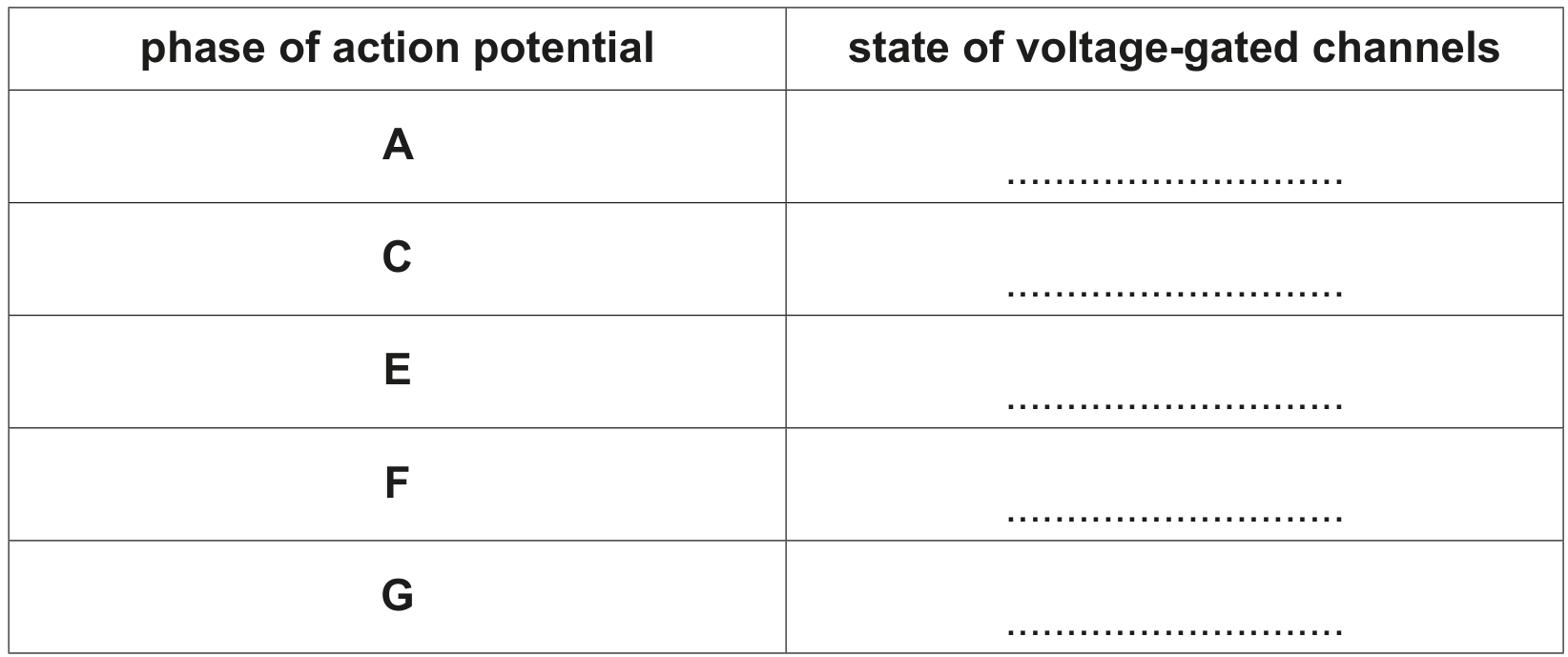
Table 9.1