(a)
A blood test to detect the dominant allele is available for people at risk of HD.
Suggest why some people at risk of HD may decide not to take the blood test.
[ 3 ]
 EduNinja
A blood test to detect the dominant allele is available for people at risk of HD.
Suggest why some people at risk of HD may decide not to take the blood test.
The artificial plasmid, pBR322, was constructed to act as a vector. It has often been used to insert human genes, such as the human insulin gene, into the bacterium, Escherichia coli.
The plasmid was constructed to include two genes, each giving resistance to a different antibiotic: an ampicillin resistance gene and a tetracycline resistance gene. The plasmid also has a target site for the restriction enzyme, BamHI, in the middle of the tetracycline resistance gene.
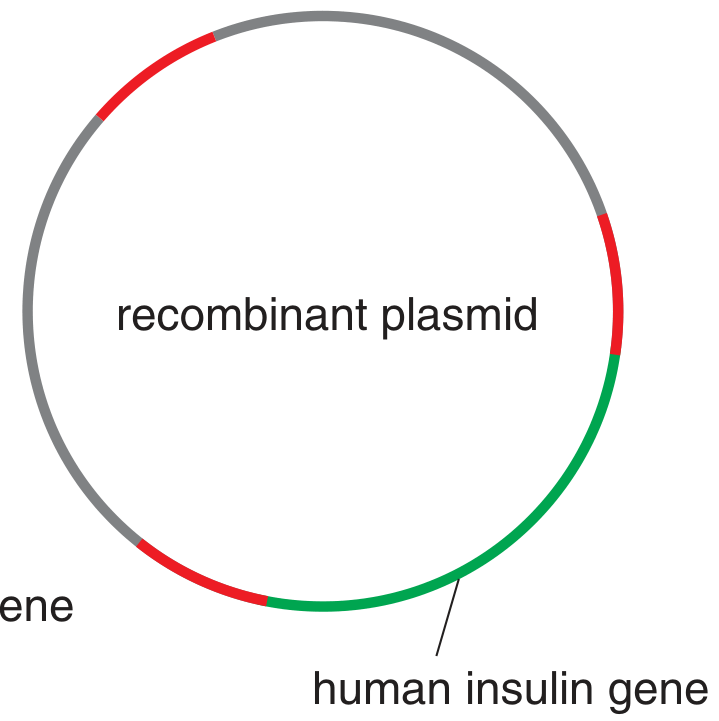
A pBR322 plasmid was cut using BamHI and the cDNA gene for human insulin inserted into it.
Fig. 2.1 shows pBR322 and the recombinant plasmid.
ampicillin resistance gene
pBR322
etracycline resistance gene
target site for BamHI
GlG A T C C
CCTA G^G
Fig. 2.1
Plasmid vectors carrying antibiotic resistance genes are now rarely used in gene technology.
Explain why antibiotic resistance genes are now rarely used.
Suggest one problem that may arise from the use of ICSI.
Giant axonal neuropathy (GAN) is a rare autosomal recessive disease, which affects neurones.
GAN is caused by a mutation in a gene that codes for a protein known as gigaxonin.
Scientists have tested gene therapy in mice with GAN. In one study, viral vectors containing a functioning allele of the gene that codes for gigaxonin were made. Mice with GAN were treated with one dose of these viral vectors at 12 months of age.
Six months after treatment, when the mice were 18 months old, the scientists used a rotarod test to measure the effect of the gene therapy.
In the rotarod test:
- the length of time the mice are able to balance on a moving platform is recorded
- the longer the length of time the mice can balance on the moving platform, the better their neurone activity.
The rotarod test was repeated on the same mice each month until the mice were 23 months old. The rotarod test was also carried out, at the same time intervals and ages, on mice with GAN that were not treated with gene therapy and on mice without GAN. All mice were kept in the same conditions.
The results are shown in Fig. 2.1.
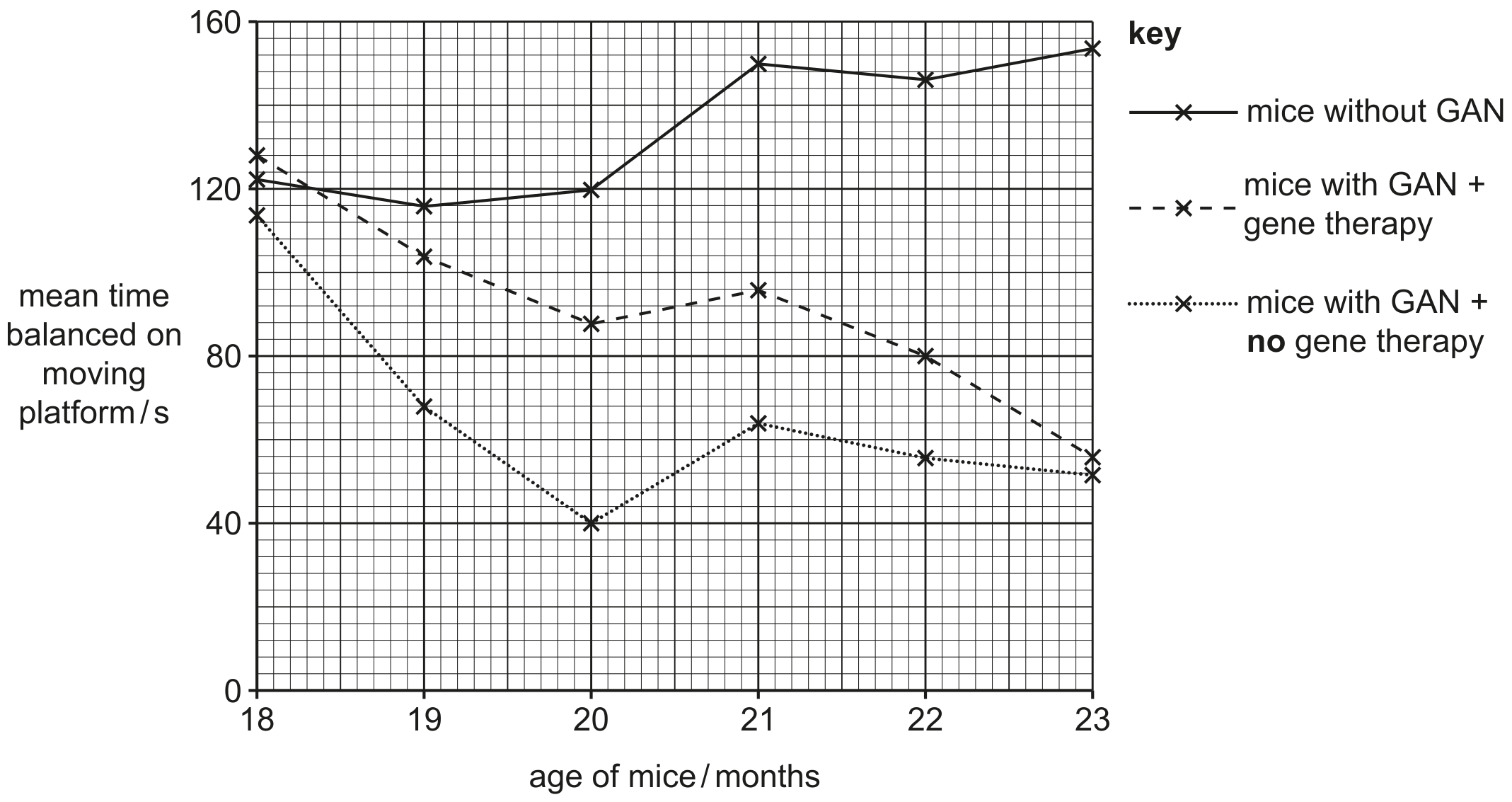
Fig. 2.1
From the results, some students concluded that:
- giving the mice with GAN one dose of gene therapy had a benefit, but did not cure the mice
- the results of the rotarod test were not affected by the age of the mice.
With reference to Fig. 2.1, discuss whether each of these two conclusions is justified by the data.
Question 3 starts on page 9.
Severe combined immunodeficiency (SCID) is a group of life-threatening diseases. SCID is caused by mutations that prevent the normal function of the immune system. Infants born with SCID are at very high risk of infectious diseases.
One feature of SCID is that T-lymphocytes do not develop normally.
In the development of normal T-lymphocytes, the production of circular pieces of DNA called T-lymphocyte receptor excision circles (TRECs) is an important event.
It is possible to use the polymerase chain reaction (PCR) to detect TRECs in DNA extracted from a sample of blood. The results of this reaction can be used to identify children with SCID.
One form of SCID is caused by a mutation that results in a deficiency of the enzyme adenosine deaminase (ADA).
Children with ADA-deficient SCID can be treated with gene therapy using a virus. After successful gene therapy, the children are able to produce ADA for themselves.
Suggest how children with ADA-deficient SCID can be treated with gene therapy using a virus.
Outline the challenges of using a virus for gene therapy.
Question 3 starts on page 8
State three advantages of using human insulin produced by genetic engineering.
One cause of the genetic disease severe combined immunodeficiency (SCID) is a mutation in the ADA gene. This mutation results in a deficiency of the enzyme adenosine deaminase (ADA).
Although ADA is found throughout the body, it is especially active in lymphocytes. The absence of functional ADA causes the build-up of toxic metabolites that kill lymphocytes and damage organs.
Babies are often diagnosed with SCID by six months old. Treatment can greatly improve the life expectancy of children with SCID.
Some treatment options are available.
- Enzyme replacement therapy with recombinant human ADA made by genetically modified (GM) Escherichia coli. Weekly intra-muscular injections are given.
- Bone marrow transplant if a well-matched donor, such as a close relative, can be found.
- Gene therapy.
Suggest and explain why it may be more appropriate to use enzyme replacement therapy to treat SCID instead of a bone marrow transplant.
Outline the procedure used for gene therapy treatment of a person with SCID.
Suggest the social and ethical implications of gene therapy for SCID that need to be considered before treatment is carried out.
Human insulin can be synthesised in a laboratory strain of Escherichia coli using recombinant DNA (rDNA) technology.
The starting point for the process is mRNA coding for insulin, isolated from human pancreas cells.
Four enzymes are needed:
- reverse transcriptase
- DNA polymerase
- restriction enzyme
- DNA ligase.
Describe and explain one advantage of treating diabetics with human insulin produced by rDNA technology.
It is possible to use rDNA technology to produce insulin with a slightly different structure from that of human insulin. The effect of the changed structure can then be investigated.
The activities of equal quantities of two insulins, both produced by E. coli, were compared in healthy, non-diabetic subjects:
- human insulin
- insulin X, in which the positions of two amino acids, lysine and proline, were exchanged. Lysine has a hydrophilic R group and proline has a hydrophobic R group.
The results of the investigation are shown in Fig. 3.1.
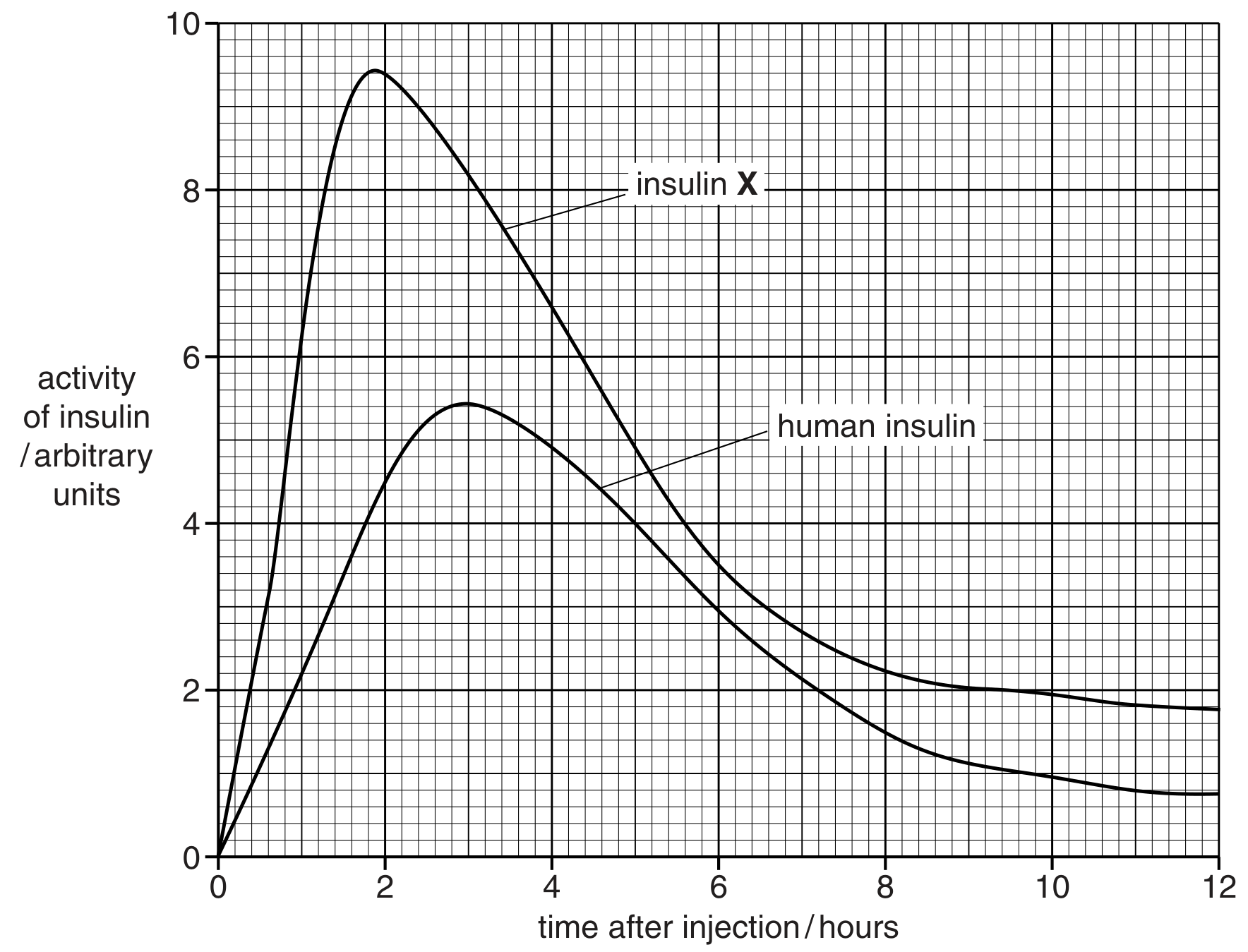
Fig. 3.1
With reference to Fig. 3.1 describe the differences in activity between human insulin and insulin X.
The cilia of ciliated epithelial cells show variation in length, within an individual and between different individuals.
Samples of ciliated epithelial tissue were removed from the airways of healthy people and the mean cilia length for each individual was calculated.
The people in the study formed two groups:
- people who were exposed to a harmful environmental factor
- people who were not exposed to a harmful environmental factor.
The results are shown in Fig. 3.1.
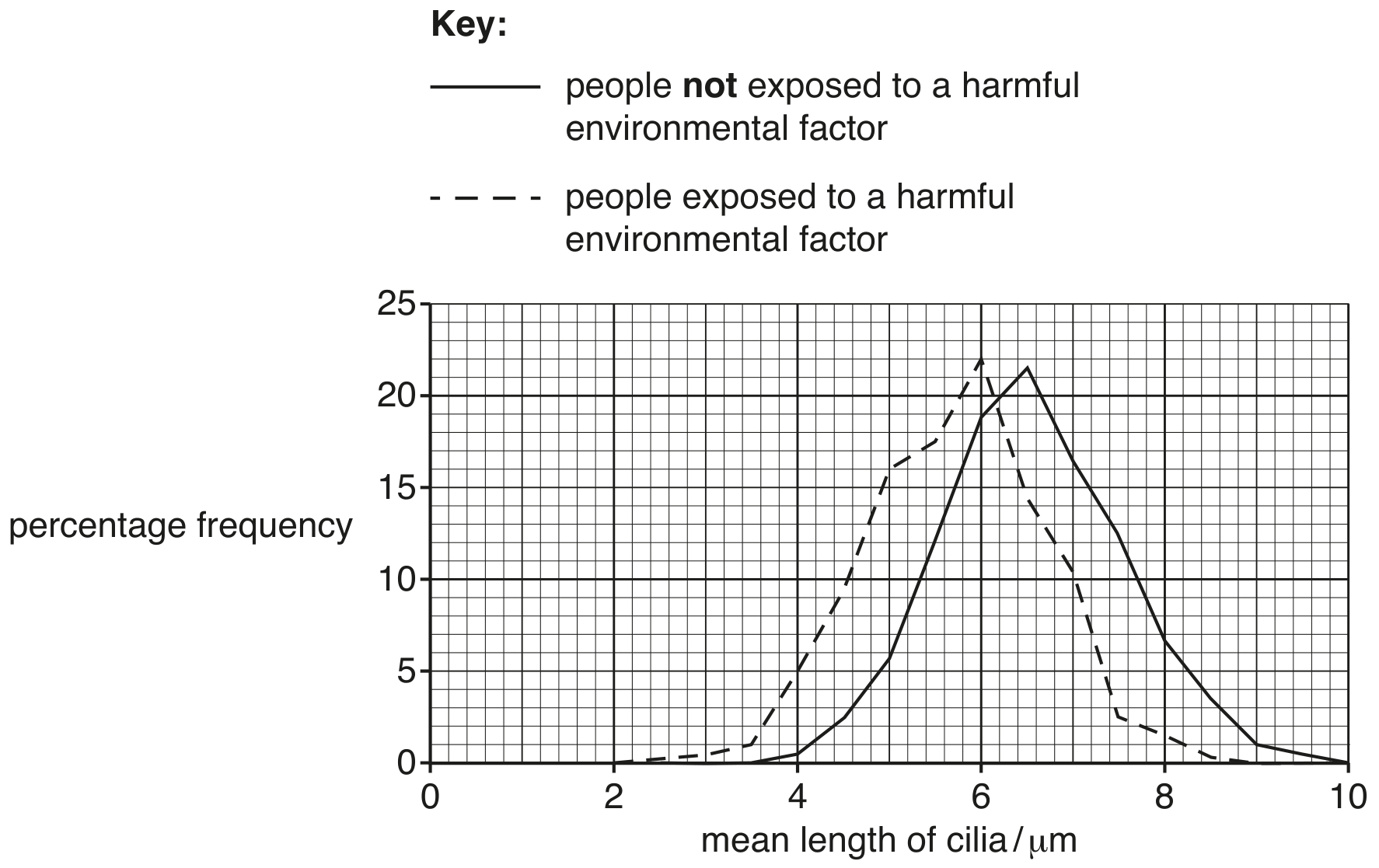
Fig. 3.1
Microarray analysis has shown that ciliated epithelial cells and other epithelial cells in the airways express genes that code for receptor proteins on cell surface membranes. These receptor proteins detect specific chemicals.
When the receptor proteins bind to specific chemicals, this causes coughing, constriction of the airways and an increase in cilia activity. In people who have asthma, the response can be severe and life-threatening.
Suggest how knowledge of the genes for these receptor proteins could help in the treatment of asthma.
Human insulin can be synthesised in a laboratory strain of Escherichia coli using recombinant DNA (rDNA) technology.
The starting point for the process is mRNA coding for insulin, isolated from human pancreas cells.
Four enzymes are needed:
- reverse transcriptase
- DNA polymerase
- restriction enzyme
- DNA ligase.
Describe and explain one advantage of treating diabetics with human insulin produced by rDNA technology.