EduNinja
(a)

Outline the biological basis of the effect of the oestrogen/progesterone contraceptive pill.

[ 4 ]
(b)

The zona pellucida of an oocyte is made up of ZP proteins. ZP3, which does not occur anywhere else in the body, has a complex tertiary structure and acts as a receptor for sperm during fertilisation.

A new method of contraception, which does not involve the use of hormones, is in the early stages of development. It involves blocking the expression of the gene coding for ZP3.

[ 2 ]
(i)

Explain why it is desirable to devise a method of contraception that does not involve oestrogen and progesterone.

[ 2 ]
(a)

The hormone testosterone is secreted by Leydig cells in the testis. These cells form an endocrine gland.

Explain what is meant by an endocrine gland.

[ 2 ]
[Maximum number: 8]

The hormone FSH (follicle stimulating hormone) plays important roles in the reproductive cycles of mammals.

(a)

State the precise site of secretion of FSH.

[ 1 ]
(b)

Certain cells in the ovaries and testes have receptors for FSH in their cell surface membranes. FSH can bind with these receptors, which triggers the cells to respond to the hormone.

Mice were genetically modified so that they lacked functioning alleles of the gene that codes for the production of FSH receptors.

[ 7 ]
(i)

Female mice without FSH receptors were sterile. They were found to have normal primary and secondary follicles in their ovaries, but no Graafian (ovarian) follicles or corpora lutea.

Explain these observations.

[ 4 ]
(ii)

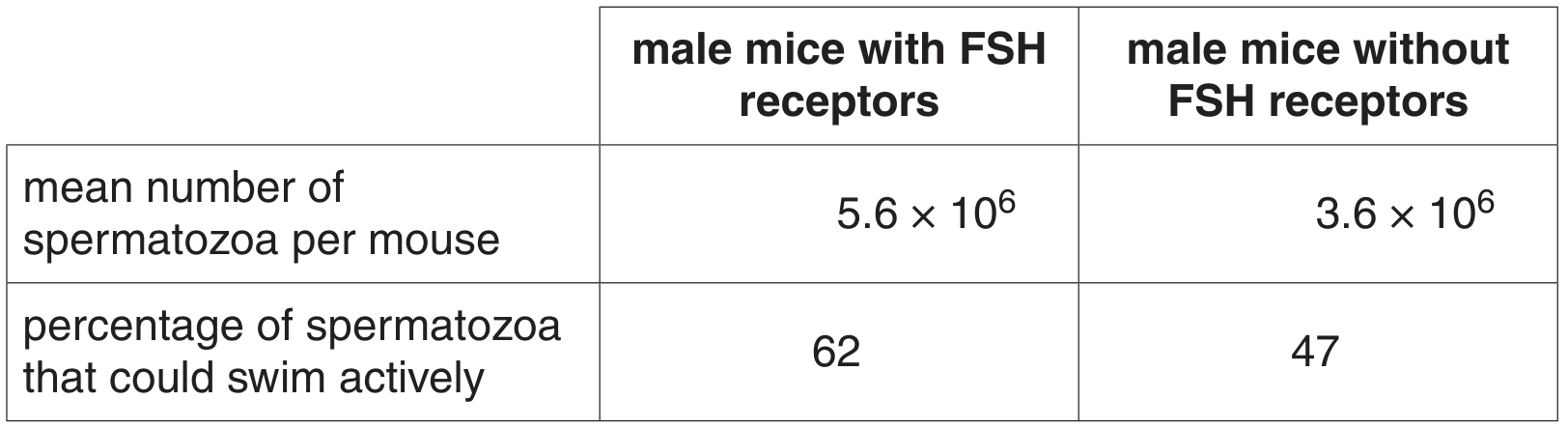
Spermatozoa were collected from male mice with and without FSH receptors. The mean number of spermatozoa per mouse was estimated. The percentage of spermatozoa that could swim actively was calculated. Table 5.1 shows the results.

Table 5.1

Table 5.1

Discuss what these results suggest about the role of FSH in the development of spermatozoa in male mice.

[ 3 ]
(a)

In Uganda, many children are infected with HIV from their mothers. This is called vertical HIV transmission.

Uganda has used two ways of trying to reduce vertical HIV transmission. These methods are
- to increase the use of antiretroviral drugs (ARVs) by HIV-infected pregnant women
- to reduce, through contraception, the numbers of unwanted pregnancies.

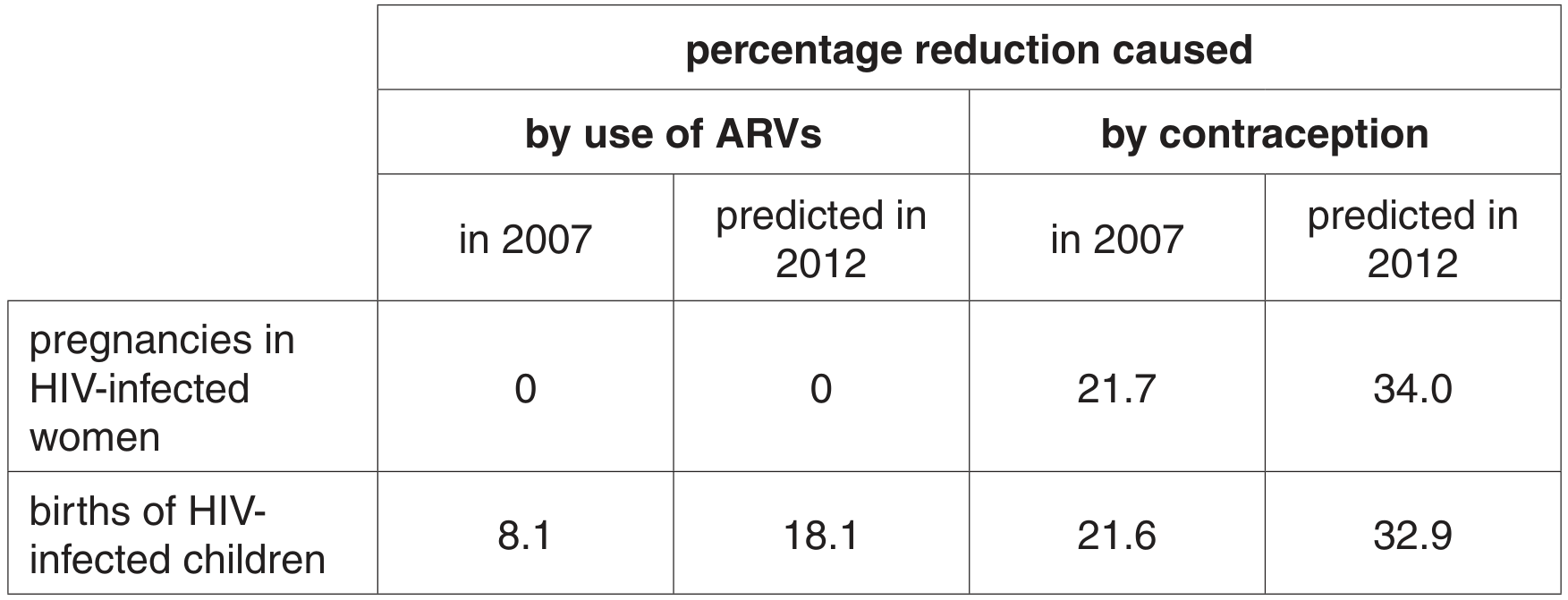
Table 5.1 shows the percentage reductions in the number of children born with HIV infections and the number of pregnancies in HIV-infected women, that were brought about as a result of the use of ARVs and contraception in 2007.

Table 5.1 also shows the predicted reductions in 2012 if usage of ARVs and contraception increase as expected.

Table 5.1

Table 5.1

[ 2 ]
(i)

With reference to Table 5.1, explain the difference between the effects of ARVs and contraception on the numbers of pregnancies in HIV-infected women.

[ 2 ]
(a)

The combined oral contraceptive pill contains oestrogen and progesterone.

[ 5 ]
(i)

Explain how this combined contraceptive pill works to prevent pregnancy.

[ 4 ]
(ii)

Suggest why some women take the combined contraceptive pill for just the first 21 days of their cycles.

[ 1 ]
(a)

Spinal reflexes help the body to respond very quickly to potentially dangerous situations that could cause injury.

[ 2 ]
(i)

State two features of a spinal reflex, other than being fast.

[ 2 ]
(a)

The passage outlines the endocrine system.
Complete the passage by using the most appropriate scientific terms.
The endocrine system consists of tissues and ,
which secrete hormones such as insulin, glucagon and antidiuretic hormone (ADH). Glucagon only affects target cells that have complementary receptors, which are located on the . Glucagon binds to these receptors and this leads to the production of a , which transfers the signal throughout the cytoplasm. The target cells for insulin are in the liver, and adipose tissue. The target cells for ADH are those of the distal convoluted tubule and the of the kidney nephron. These hormones are involved in , which is the maintenance of a constant internal environment.

[ 6 ]
0