(a)
Explain what is meant by saltatory conduction and describe its effect on the transmission of a nerve impulse.
[ 3 ]
 EduNinja
Explain what is meant by saltatory conduction and describe its effect on the transmission of a nerve impulse.
Giant axonal neuropathy (GAN) is a rare autosomal recessive disease, which affects neurones.
Mitochondria can move freely within the axons of neurones.
In GAN, the axons of neurones become enlarged and blocked by the accumulation of specific proteins. This prevents the free movement of mitochondria and affects the transmission of action potentials along the axon membrane.
Suggest and explain why preventing the free movement of mitochondria within the cytoplasm of the axon affects the transmission of action potentials along the axon membrane.
Fig. 2.1 shows a diagram of a motor neurone.
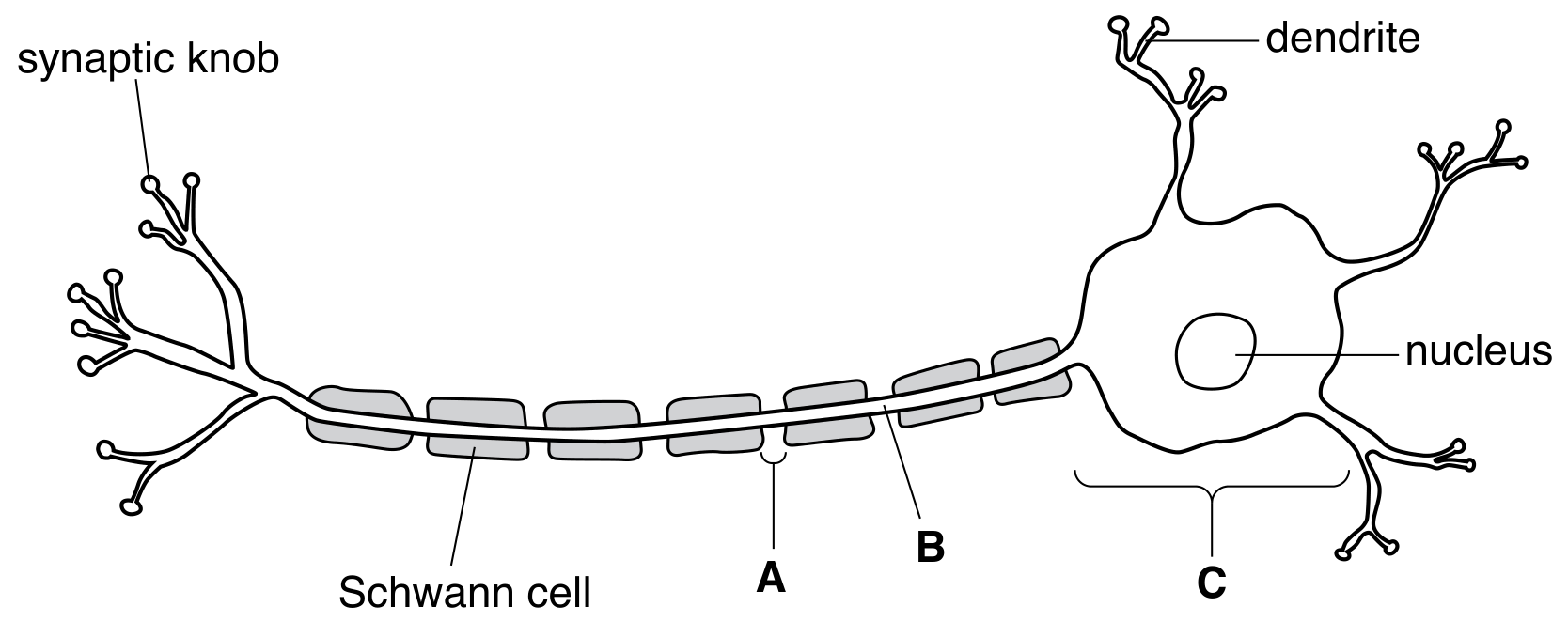
Fig. 2.1
With reference to Fig. 2.1, explain the fast transmission of impulses along a motor neurone.
Motor neurones are cells within the nervous system.
Fig. 2.2 shows a picture of a blue whale, Balaenoptera musculus. Blue whales are the largest living mammals and have motor neurones of the type shown in Fig. 2.1. These motor neurones can be up to 30 metres long. The speed of nerve impulses along this type of motor neurone is fast.
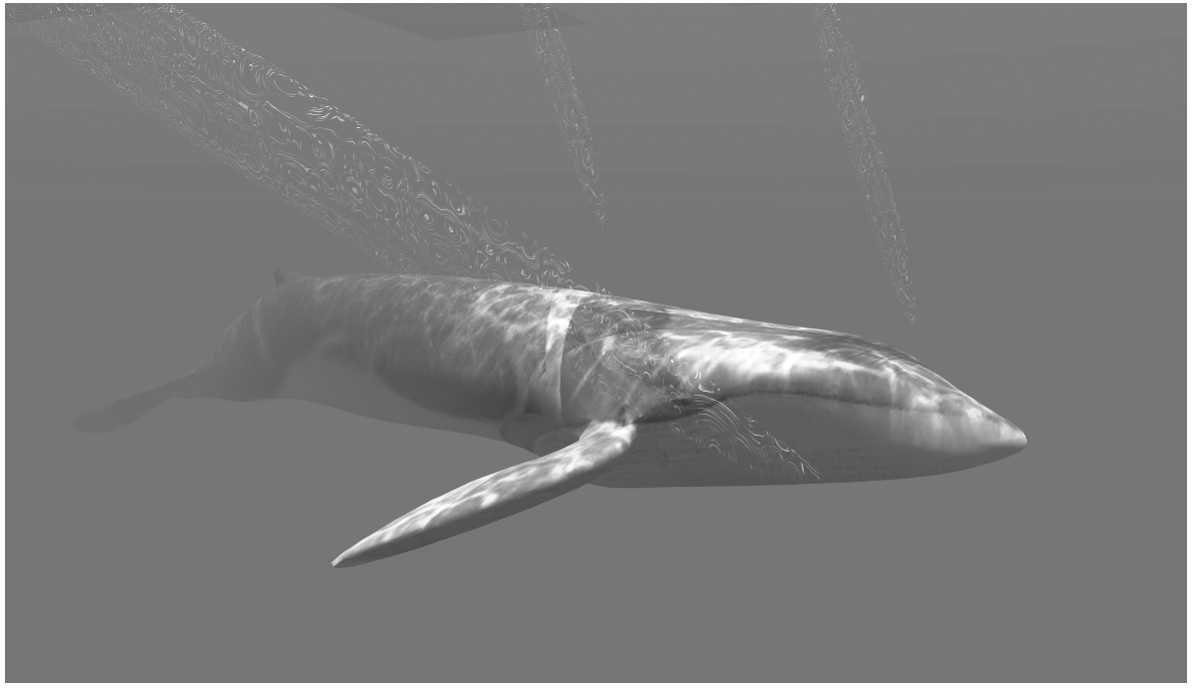
Fig. 2.2
With reference to Fig. 2.1, explain the fast transmission of impulses along this type of motor neurone.
Multiple sclerosis is a condition in which the myelin sheath breaks down in some neurones.
Suggest the effect of multiple sclerosis on the transmission of action potentials in the affected neurones.
Explain the importance of the myelin sheath in the transmission of action potentials.
Table 6.1 shows the mean axon diameter and mean speed of conduction of nerve impulses for four different animals.
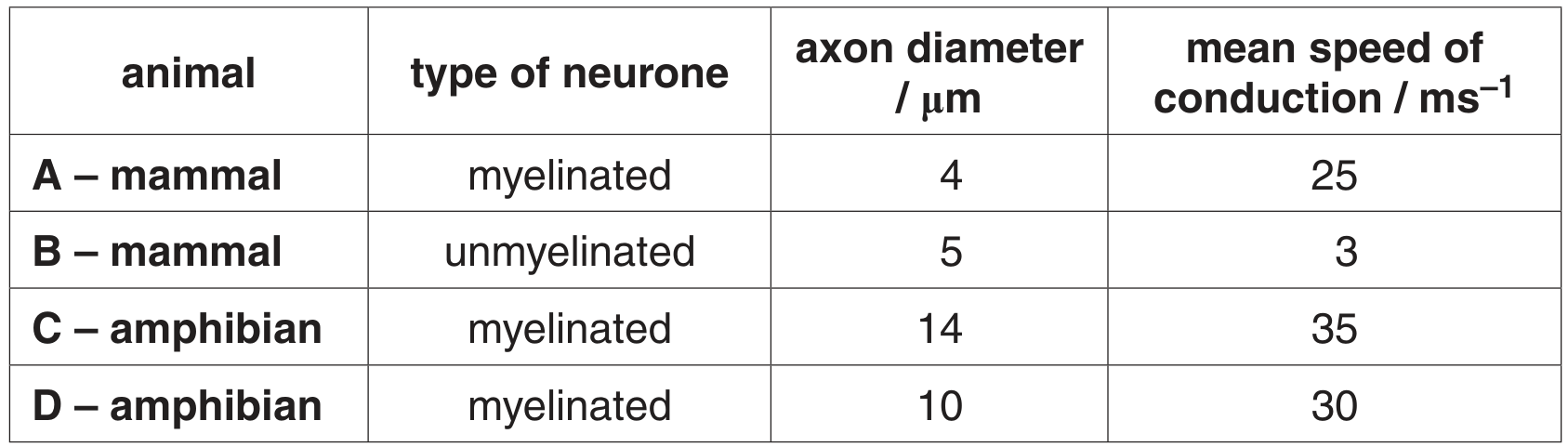
Table 6.1
With reference to Table 6.1, describe:
the effect of myelination on the speed of conduction of impulses in mammals
the effect of axon diameter on the speed of conduction of impulses in amphibians.
Explain how myelination affects the speed of conduction of impulses.
With reference to voltage-gated sodium ion channels, explain the difference in speed of transmission of an action potential along a myelinated neurone and a non-myelinated neurone.
When a part of the body is damaged or injured, action potentials are sent to the areas of the brain responsible for the perception of pain.
Explain how the structure of a sensory neurone can enable the action potentials to reach the brain very quickly.
Fig. 8.1 shows the changes in potential difference (p.d.) across the membrane of a receptor cell over a period of time. The membrane was stimulated at time A and at time B with stimuli of different intensities.
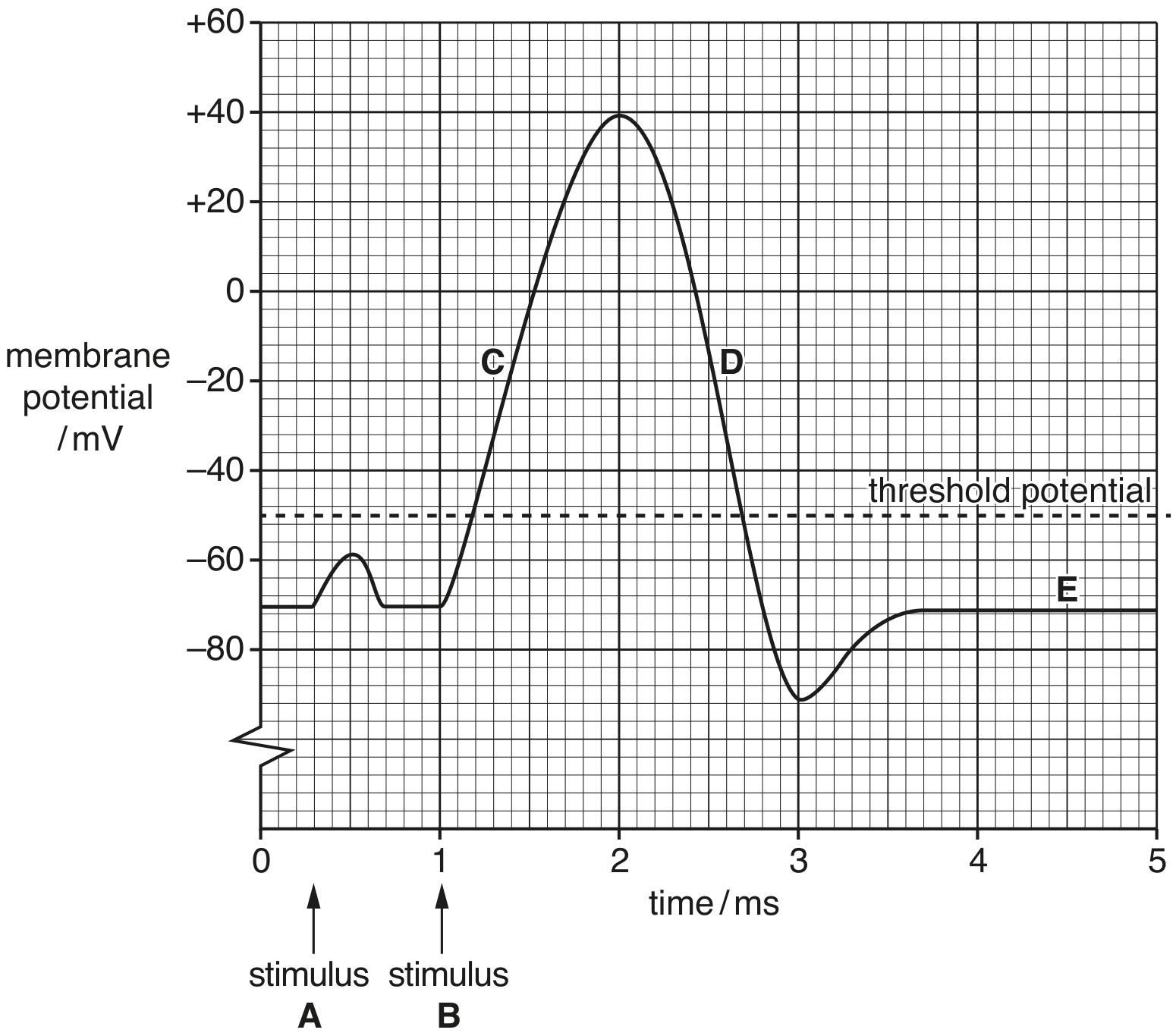
Fig. 8.1
Describe how action potentials are transmitted along a myelinated axon.
Answer one question.