(a)
The molecules listed below are all associated with respiration.
ATP synthase
oxaloacetate
glucose
pyruvate
ATP
citrate
NAD
oxygen
From these molecules identify:
a phosphorylated nucleotide
a 3-carbon compound
a coenzyme
an enzyme
[ 4 ]
 EduNinja
The molecules listed below are all associated with respiration.
ATP synthase
oxaloacetate
glucose
pyruvate
ATP
citrate
NAD
oxygen
From these molecules identify:
a phosphorylated nucleotide
a 3-carbon compound
a coenzyme
an enzyme
The enzyme alanine transaminase (ALT) is found in the liver. The function of ALT is to convert the amino acid -ketoglutarate into another amino acid, glutamate.
Suggest why the liver may need to convert one amino acid into another.
The water potential of mammalian blood needs to be maintained within narrow limits so that cells function efficiently. This process is called osmoregulation.
The relative medullary thickness (RMT) indicates the proportion of a kidney that is composed of medullary tissue.
Table 1.1 shows the relationship between the RMT and the concentration of urine produced by four mammals from different habitats.
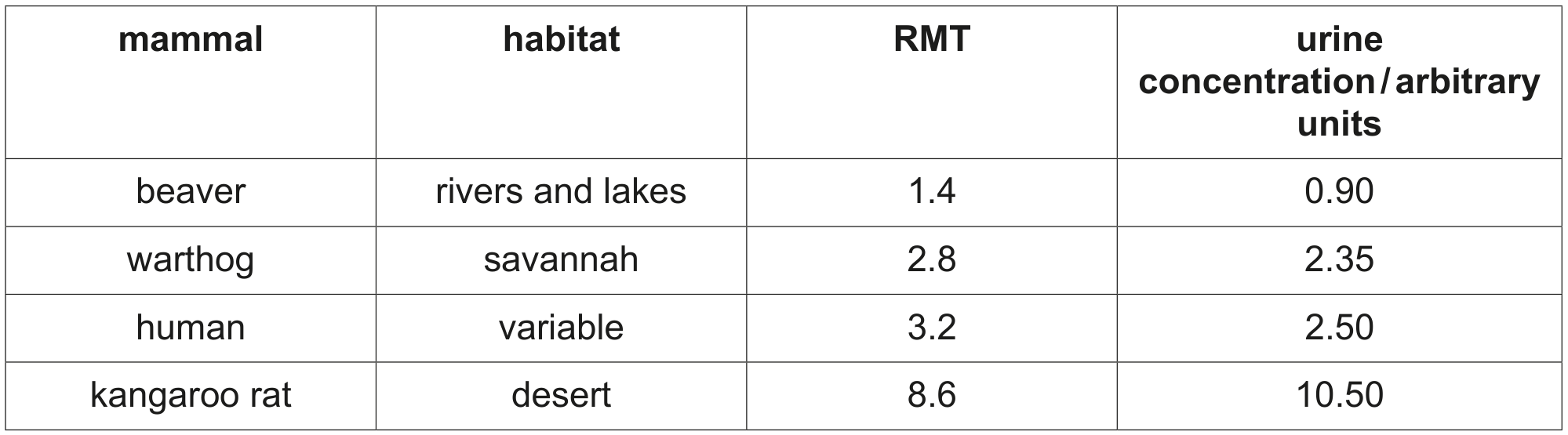
Table 1.1
Describe the relationship between the RMT and the concentration of urine produced and explain the differences between the data for the beaver and the kangaroo rat.
Describe and explain the features of ATP that make it suitable as the universal energy currency.
ATP provides an immediate energy source for metabolic processes such as anabolic reactions.
State two examples of anabolic reactions in a mammal that require ATP as an energy source.
1
2
Carbohydrates and lipids are used as respiratory substrates.
Table 1.1 shows the energy values of carbohydrates and lipids.
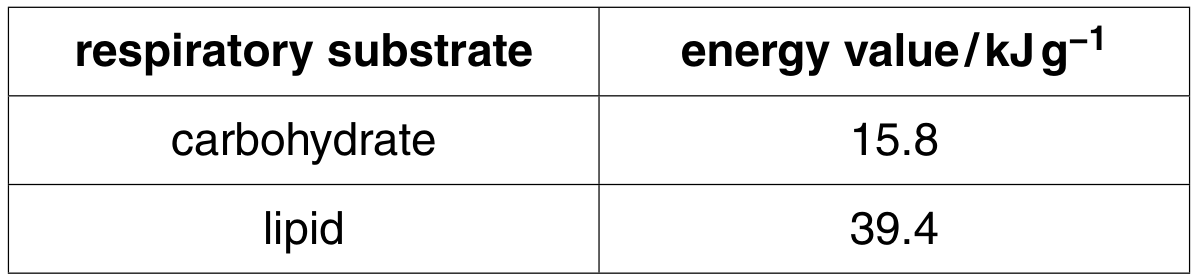
Table 1.1
Explain why lipids have a higher energy value than carbohydrates.
The natterjack toad, Bufo calamita, is an endangered amphibian species in the UK. It comes out of hibernation in April and breeds in pools by sand dunes along parts of the UK coast. A young natterjack toad will take about 10 weeks to develop from a fertilised egg. A natterjack toad feeds at night, by running at its prey, mainly insects and worms, on the sand dunes.
Fig. 1.1 shows a natterjack toad.
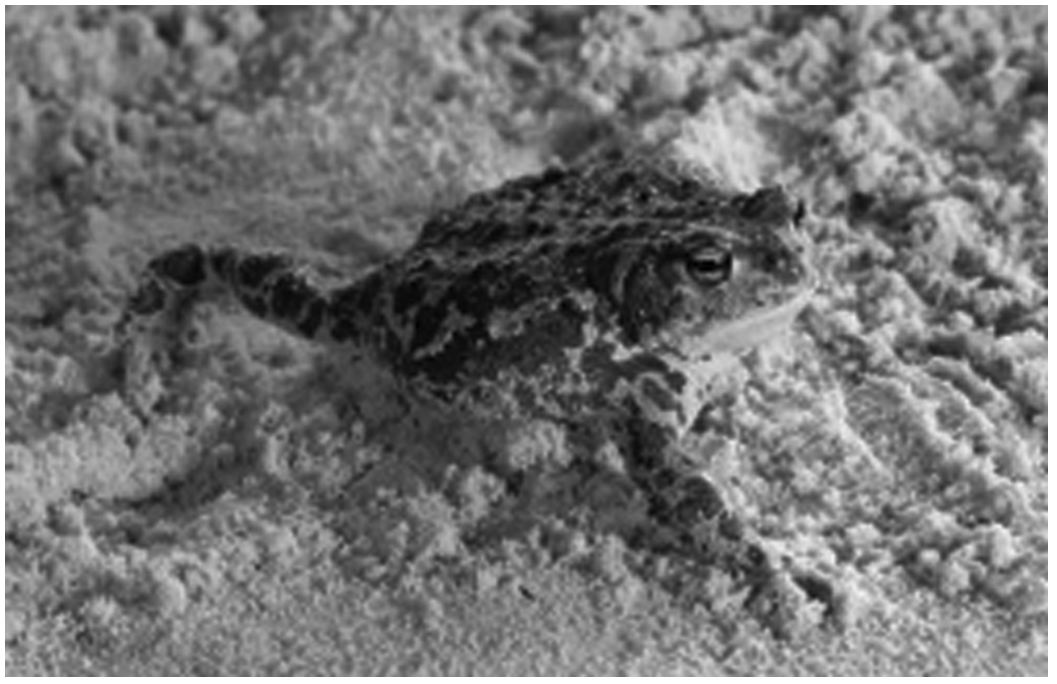
Fig. 1.1
The natterjack toad is heterotrophic.
Explain what is meant by heterotrophic.
During respiration, respiratory substrates such as glucose are used as a source of energy to produce ATP molecules.
Only a proportion of energy released by the respiration of glucose is used to make ATP.
- The energy yield from the respiration of glucose in aerobic conditions is .
- When ATP is hydrolysed to ADP, it releases of energy.
- It is estimated that 31 moles of ATP are made per mole of glucose respired.
Calculate the percentage efficiency of glucose respiration.
Show your working. \%
When a person exercises, power is generated.
Power is measured in joules per second ( ).
The power generated when a person exercises will vary depending on the type and intensity of exercise. More power is generated when the intensity of exercise increases.
An experiment was carried out to determine whether increasing the intensity of exercise in a healthy human male caused a change in the value of the respiratory quotient (RQ).
- The man had a balanced diet.
- The RQ was calculated at rest.
- He carried out exercise for the same length of time on four separate days.
- The intensity of exercise was increased over the four days, generating different powers.
- The RQ was calculated for the four different powers generated.
The results are shown in Fig. 2.1.
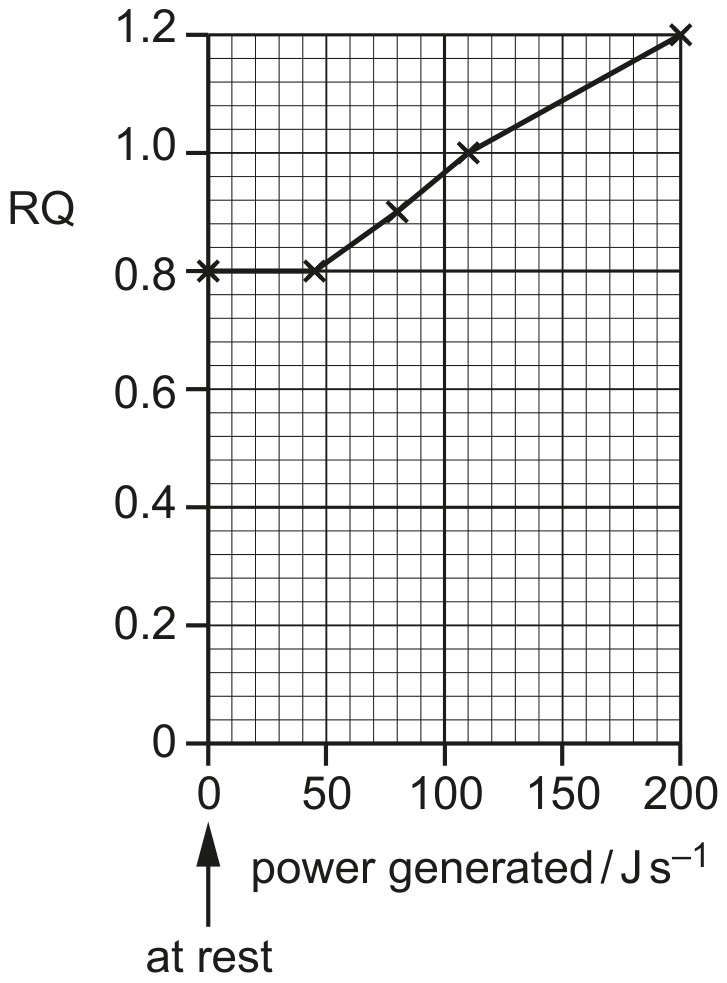
Fig. 2.1
With reference to Fig. 2.1, suggest what can be deduced from: the RQ at rest
the R Q when the power generated is
the RQ when the power generated is .
Fig. 2.1 shows one section of the nitrogen (N) cycle. Some details of the water cycle are also included.
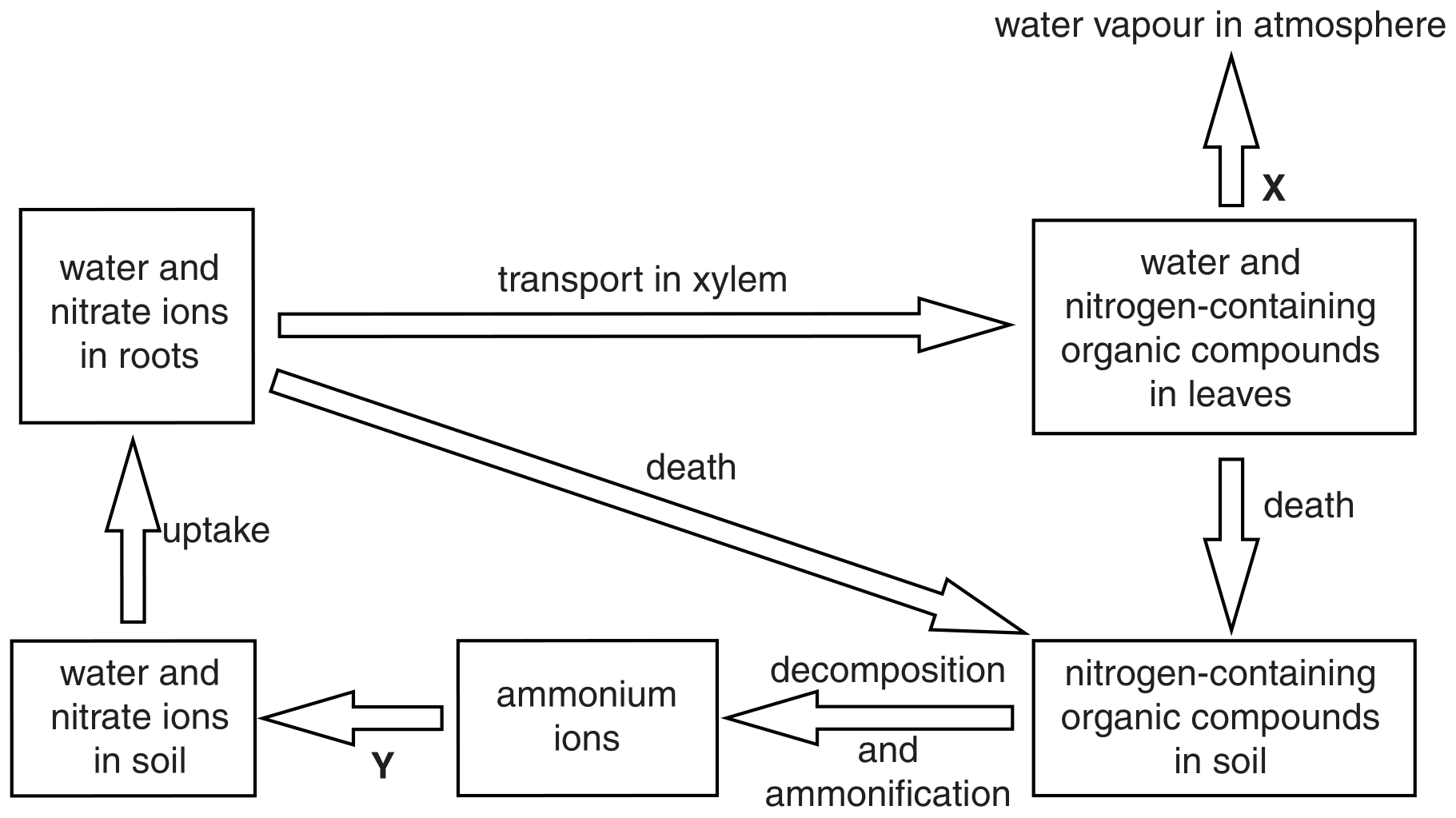
Fig. 2.1
Name processes X and Y.
X
Y
Name one organism involved in process Y.
Woolly foxglove, Digitalis lanata, shown in Fig. 2.1A, and common oleander, Nerium oleander, shown in Fig. 2.1B, are plants grown for the attractive flowers that they produce.
Both plants are poisonous, as their leaves produce toxic organic compounds known as cardiac glycosides. Cardiac glycosides have a powerful effect on the action of cardiac muscle.
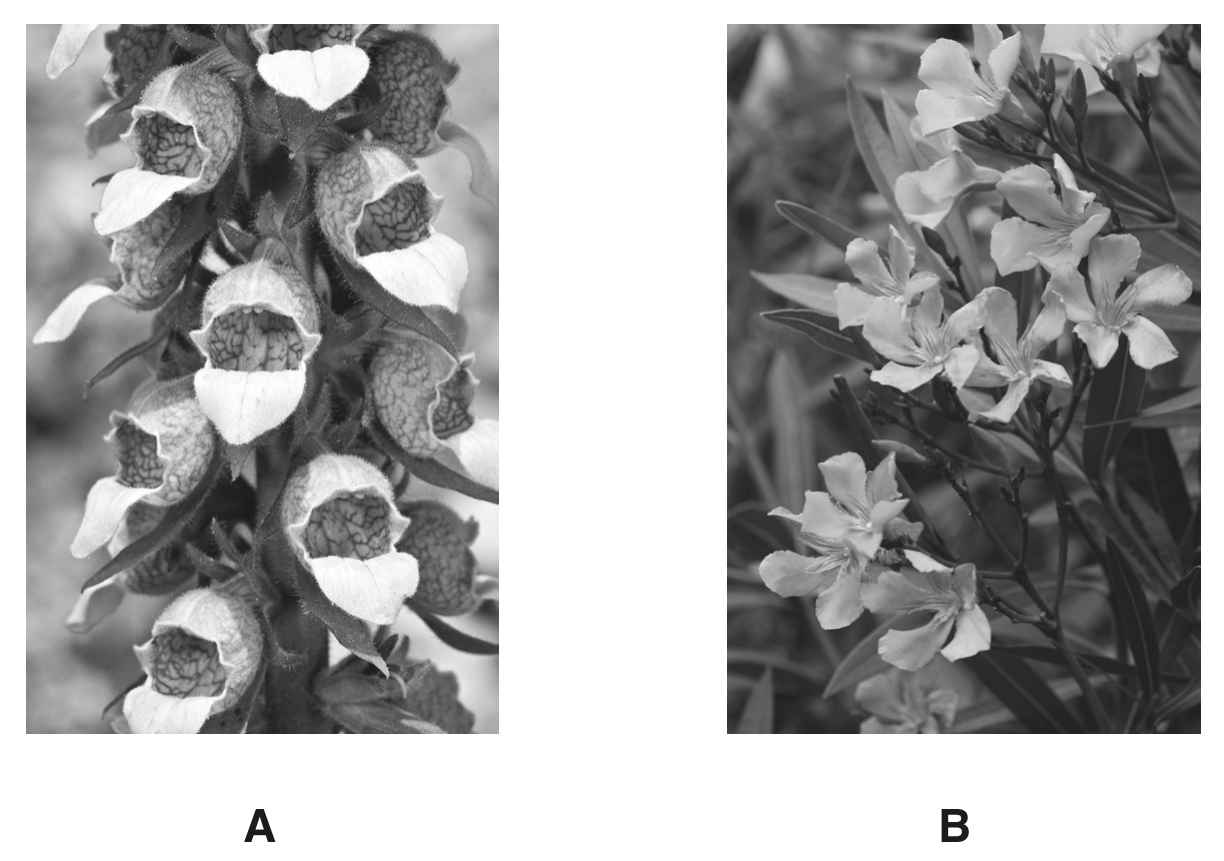
Fig. 2.1
Investigations into the action of the cardiac glycoside oleandrin, extracted from N. oleander, have shown that it acts to prevent the correct functioning of Na/K-ATPase, a membrane transport protein.
Na/K-ATPase has a role as an enzyme and as a transport molecule.
- ATPase is an enzyme that catalyses the hydrolysis of ATP to ADP and inorganic phosphate.
- Energy released from this hydrolysis is used to transport sodium ions ( ) out of cardiac muscle cells and potassium ions ( ) into the cells.
Explain what is meant by the hydrolysis of ATP.
Which statements about ATP are correct?
1 It is produced in mitochondria only.
2 It can be hydrolysed to form ADP.
3 It contains deoxyribose.
1 and 3
1 only
2 and 3
2 only