
Question 1(a)(v)
"Best Meals" is one of many small catering companies, each of which prepares a variety of different meals for airlines in Country X. Table 1 shows the costs of production in US dollars (US$) on a per hour basis for "Best Meals".
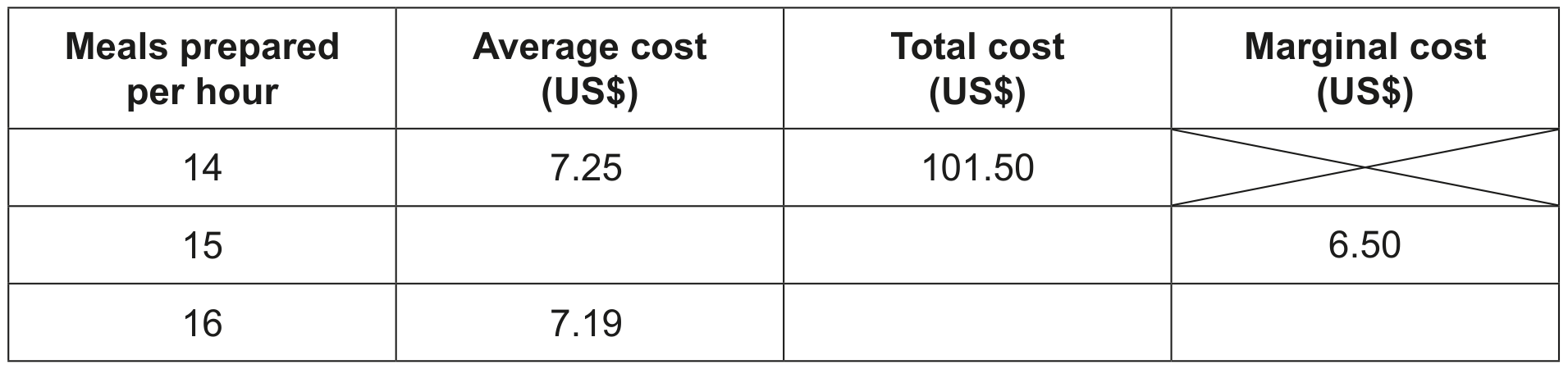
Table 1
Calculate the indirect tax paid by airlines for the catering meals they bought in 2021 if the domestic indirect tax rate on food was 6.5 % and their expenditure on meals was US$54506.70.
The information that follows refers to the aviation industry, which is considered a significant contributor to global warming and climate change.
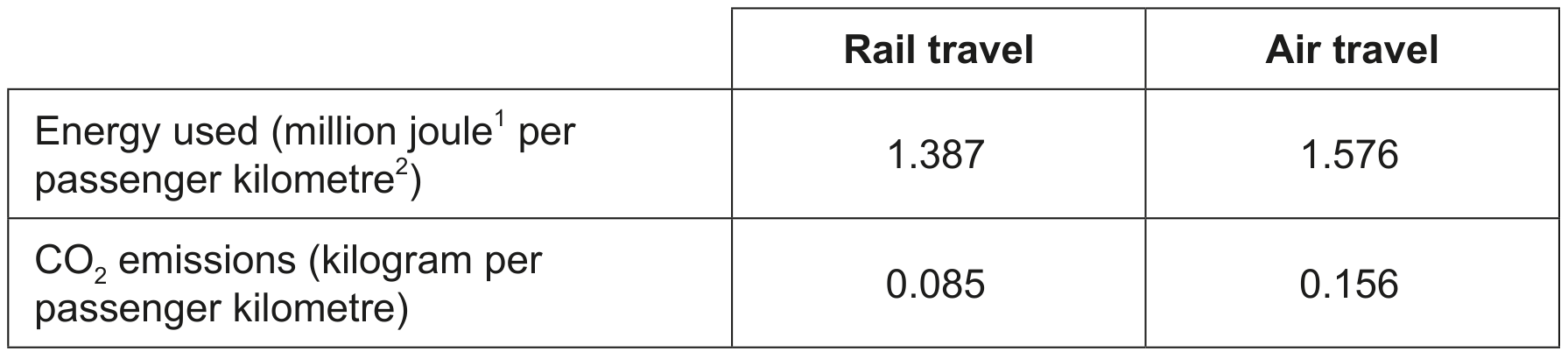
Table 2: Energy used and carbon dioxide ( \(\mathrm{CO
joule: a standard unit of energy
passenger kilometre: one passenger travelling one kilometre
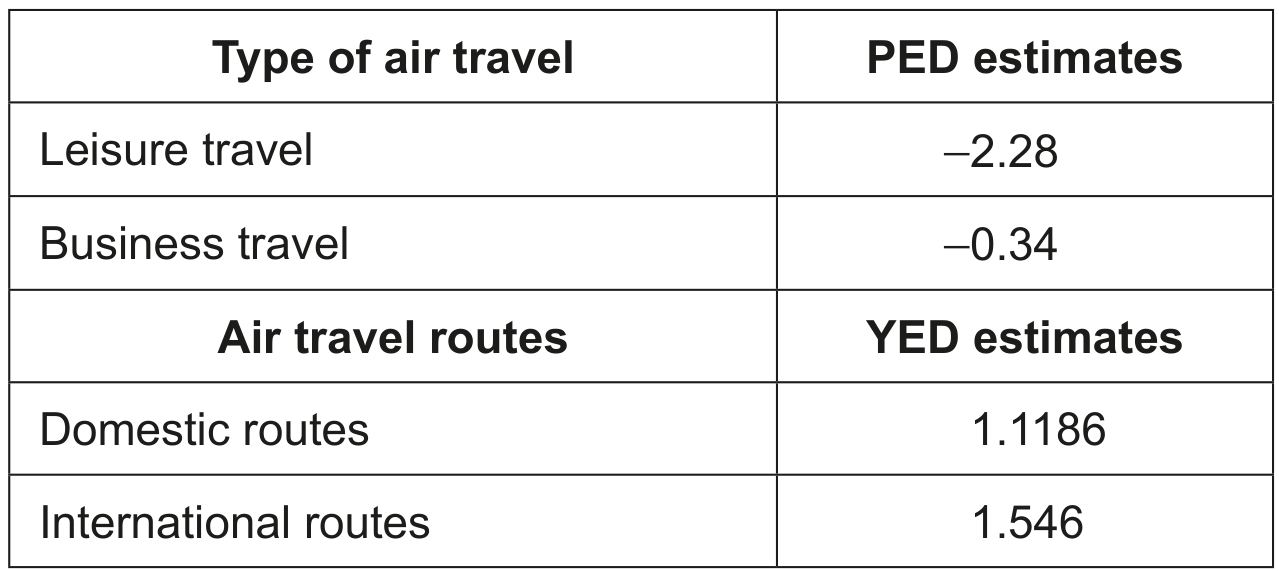
Table 3: Estimates of price elasticities of demand (PED) for leisure and business air travel and estimates of income elasticities of demand (YED) for domestic and international air travel routes
- The aviation sector creates emissions that account for about 4.9 % of human made global warming and its share of greenhouse gas emissions is rapidly growing.
- A flight from San Francisco to Paris can produce around 1.25 metric tons of carbon emissions per passenger. This is more than the average person in certain countries generates in an entire year.
- The energy source for aircraft is not easily substitutable. Road and rail-based passenger vehicles can switch from carbon-based fuels to renewably sourced electricity. Aviation emissions are thus not expected to be easily reduced.
- The aviation industry's growth has also accelerated as a result of subsidies, including general sales tax and fuel tax exemptions, which are unavailable to other modes of transport.