EduNinja

IB Economics HL4.8 Measuring developmentQuestion Bank

Question 1

[Maximum number: 2]

Read the extracts and answer the questions that follow.
Text A — Costa Rica: Economic growth and development strategies

(1) In the early 1990s, Costa Rica, a Central American country with a population of approximately 5 million people, was considered an economic development success story. This stable democracy has experienced consistent economic growth (approximately 4 % annually) for the last 20 years. Some experts say this has been due to moving from a failed import substitution policy to outward-oriented economic policies. The outward-oriented policies included export promotion, diversification, trade liberalization and inward foreign direct investment (FDI). During the same period, social and environmental policies were implemented. Public education and healthcare were guaranteed for all citizens, social programmes were improved to include extensive transfer payments and minimum wages were increased. This helped the reduction in absolute poverty rates and Costa Rica became known as a global leader in environmental conservation efforts.

(2) The Dominican Republic-Central America-United States Free Trade Agreement (CAFTA-DR), was a significant move towards trade liberalization. In addition to reducing trade barriers, it established a secure and predictable environment for foreign investors. This agreement also led to the breakup of the state-owned monopolies in the telecommunication and insurance industries in Costa Rica. Additionally, trade agreements with Canada, China, the European Union (EU), Mexico, Peru and Singapore were established.

(3) Costa Rica encouraged inward FDI by lowering regulations and providing tax incentives in manufacturing industries. In 1997, Intel, a large multinational tech company from the United States (US) invested US$300 million in building a computer parts factory. Intel's investment helped diversify Costa Rica's main exports away from coffee and bananas to electronics. Moreover, the FDI allowed Costa Rica to benefit from production externalities, as multinational companies provided training to local employees. Manufacturing and services overtook agriculture in terms of contribution to gross domestic product (GDP), and Costa Rica experienced its first trade surplus in 50 years. The increase in real GDP from the FDI was significant, as the marginal propensity to consume (MPC) was 0.8 at the time.

(4) To promote diversification, export subsidies for companies in the manufacturing sector were granted. Agricultural diversification was also encouraged through subsidising farmers who were adopting new technology to produce higher value-added products, such as roasted coffee beans.
Text B - Current concerns

(1) Despite earlier successes, income inequality in Costa Rica has remained high and poverty levels have remained unchanged for several years. This has been blamed on insufficient transfer payments due to a tax system that is not progressive enough and tax exemptions offered to foreign firms. Unemployment has consistently risen, and despite high levels of spending in education, a significant number of young people have not completed secondary or higher education. The focus on higher value-added sectors did not create jobs for low skilled workers, which had a disproportionate impact on women and youth. Additionally, the social programmes have often failed, and still fail, to reach the very poor.

(2) High social and environmental spending, large increases in public sector wages, and insufficient revenue have resulted in very large government (national) debt. Most of the debt is domestic, which is raising concerns about possible crowding out.

(3) FDI has historically supported economic growth, however, domestic investment and further FDI have slowed down due to rising costs and outdated infrastructure. Additionally, the appreciating colón (Costa Rica's currency) has lowered export competitiveness, and Costa Rica remains heavily dependent on one major trading partner, the US.
Text C - "Green Trademark" environmental policy
The "Green Trademark" policy has reversed deforestation and has resulted in Costa Rica becoming one of the countries with the greatest level of biodiversity in the world. However, it is difficult to maintain the environmental focus due to pressure on government resources and the high opportunity costs associated with land use. The consistent economic growth has made it difficult for Costa Rica to reduce carbon emissions from fossil fuels. Increasing urbanization and the growth in the manufacturing sector have increased air and water pollution. Moreover, the overuse of chemicals in farming has caused river pollution, and the intensive use of land for agriculture has generated concern for environmental conservation.
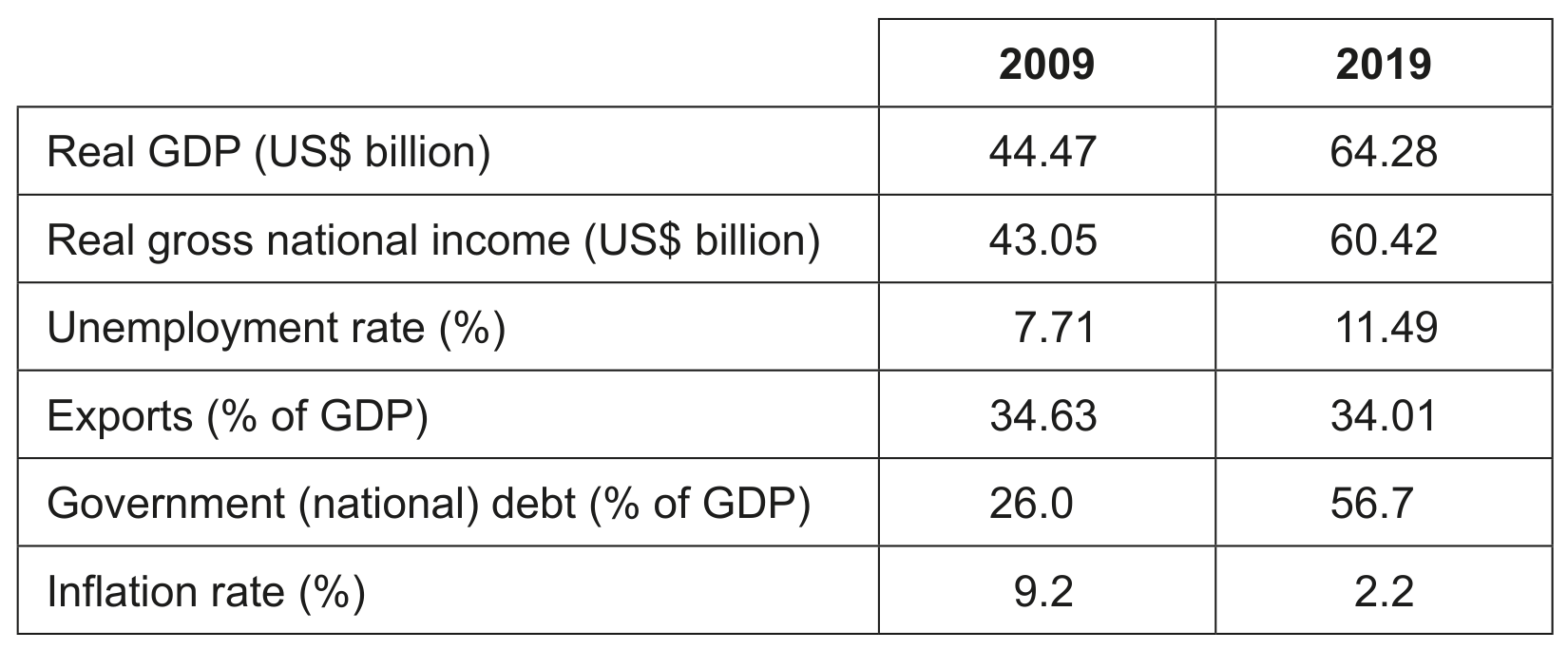
Table 1: Economic data for Costa Rica
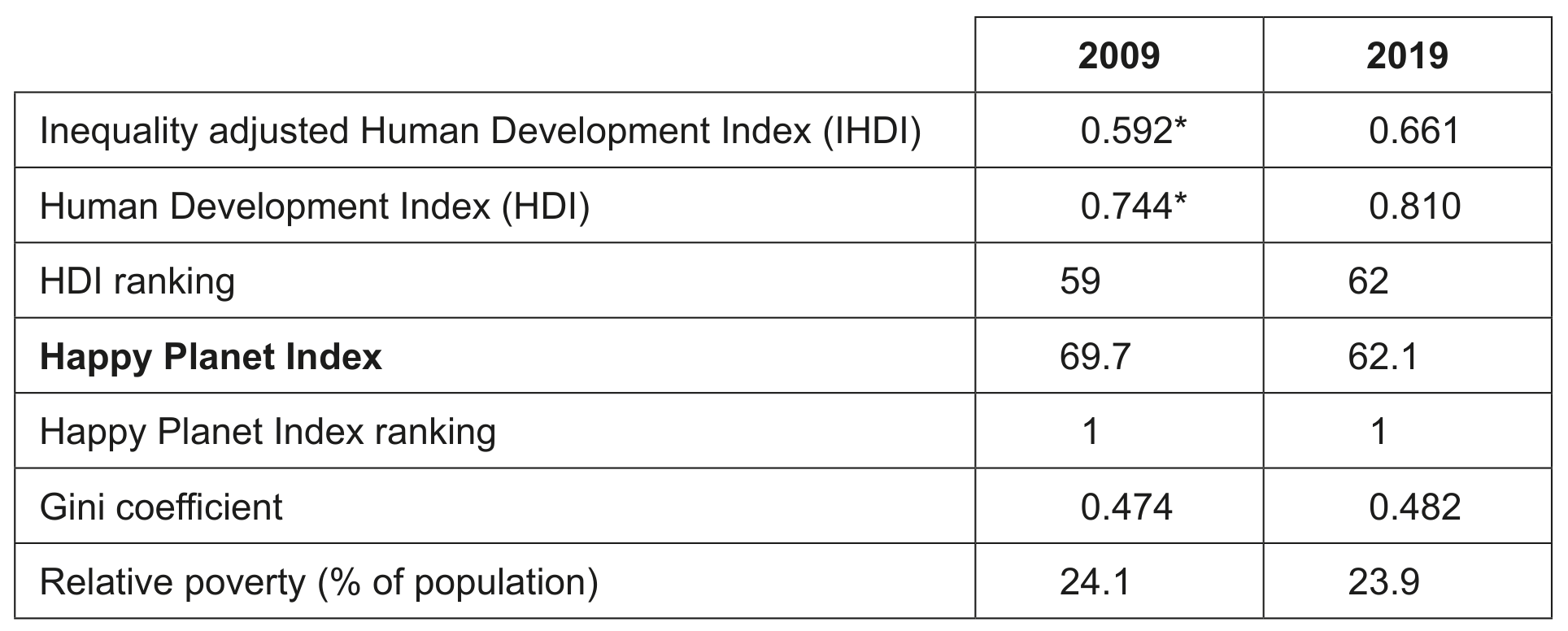
Table 1: Economic data for Costa Rica

Table 2: Development data for Costa Rica

Table 2: Development data for Costa Rica

\footnotetext{
*2011 figure
}

Question 1(a)

Question 1(a)(ii)

(a)
(i)

List two components of the Happy Planet Index indicated in bold (Table 2).
[ 2 ]

Question 2

[Maximum number: 1]

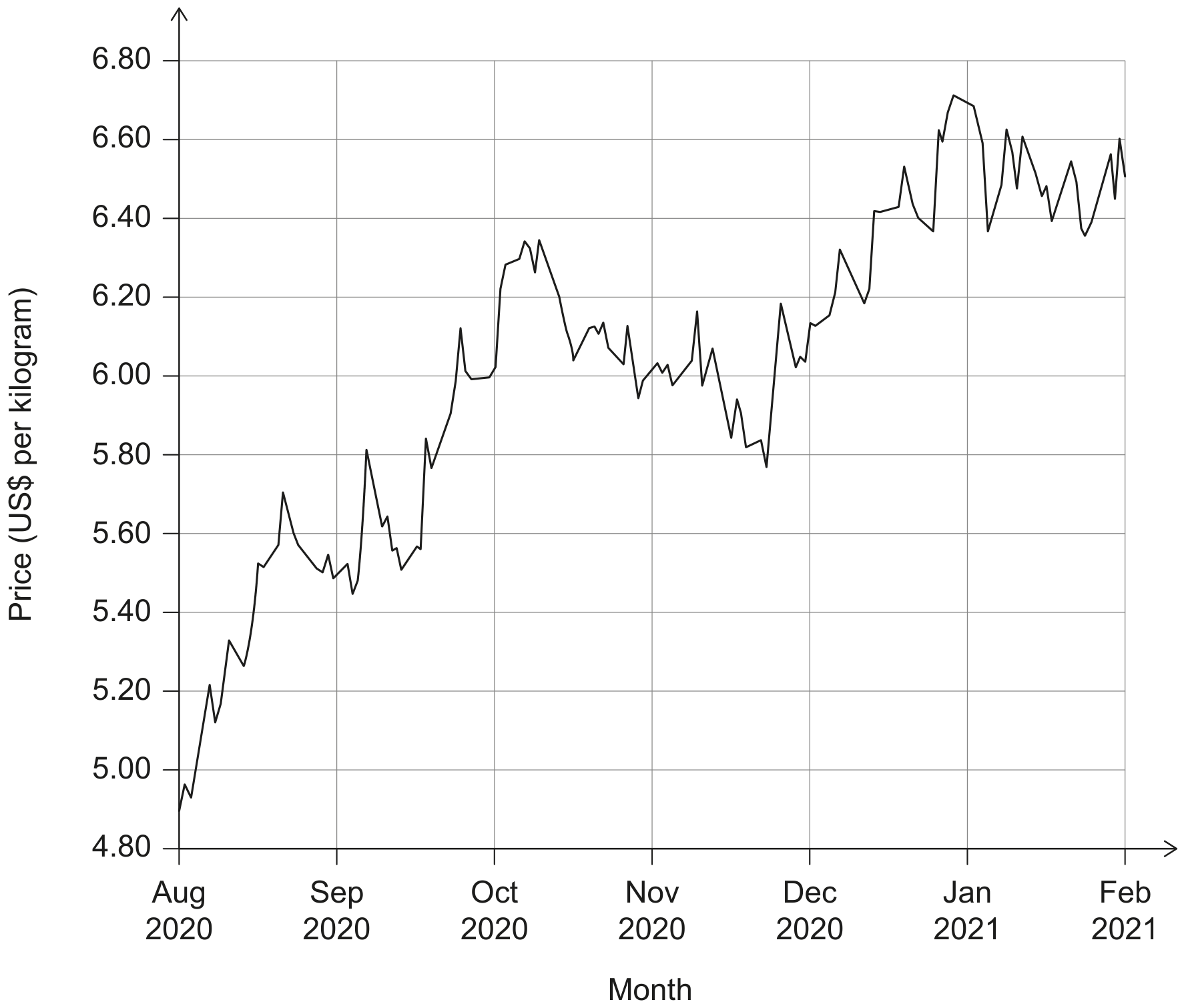
Figure 2 illustrates the daily world price of wheat in US dollars (US$) per kilogram from August 2020 to February 2021.

Figure 2

Figure 2

Question 2(a)

Question 2(a)(viii)

(a)
(i)

Identify one reason for the difference between Turkey's GNI per capita ranking and its HDI ranking.

[ 1 ]

Question 3

[Maximum number: 8]

Study the following extract and data and answer the questions that follow.
Economic development in two West African countries
Ghana

(1) Ghana is the world's second largest cocoa producer and Africa's second largest gold producer. It is one of Africa's fastest growing economies and has made major progress in achieving persistent economic growth.

(2) Over the last decade, Ghana has enjoyed increasingly stable and improving democratic governance. Four successful elections during the decade have strengthened the effectiveness of key national institutions, improved investor confidence and created an environment that promotes investment and growth.

(3) Ghana enjoys a high degree of media freedom; the private press and broadcasters operate without significant restrictions. The media are free to criticize the authorities without fear of punishment, says the non-governmental organization (NGO) Reporters Without Borders. The private press is allowed to express criticism of government policy, which increases the accountability and transparency of the government.

(4) Although Ghana's growth has been fairly strong, the source of growth has always been dominated by commodities and the capital-intensive services sector. Neither of these has a direct effect on poverty reduction. Growth in rural areas is often limited by basic infrastructure, such as roads. This limits the ability of people in rural areas to access markets in urban areas.
Nigeria
5 Nigeria is Africa's leading oil producer. In 2016, it experienced its first full year of recession in 25 years. Global oil prices reached a 13-year low and oil production was drastically cut. Oil has continued to dominate Nigeria's growth pattern, but the volatility of oil-dependent growth prevents progress in social and economic development.

(6) On the political front, the transition from military dictatorship to democratic rule has been acclaimed as one of Nigeria's major successes in the last decade. The 2011 general election, supported by the United Nations, was widely acknowledged by international observers and domestic monitors as one of the freest and fairest elections conducted in the country in recent years.
Ghana and Nigeria

(7) Both Ghana and Nigeria have cut fuel subsidies in order to reduce their budget deficits. This has had severe consequences for low-income households.

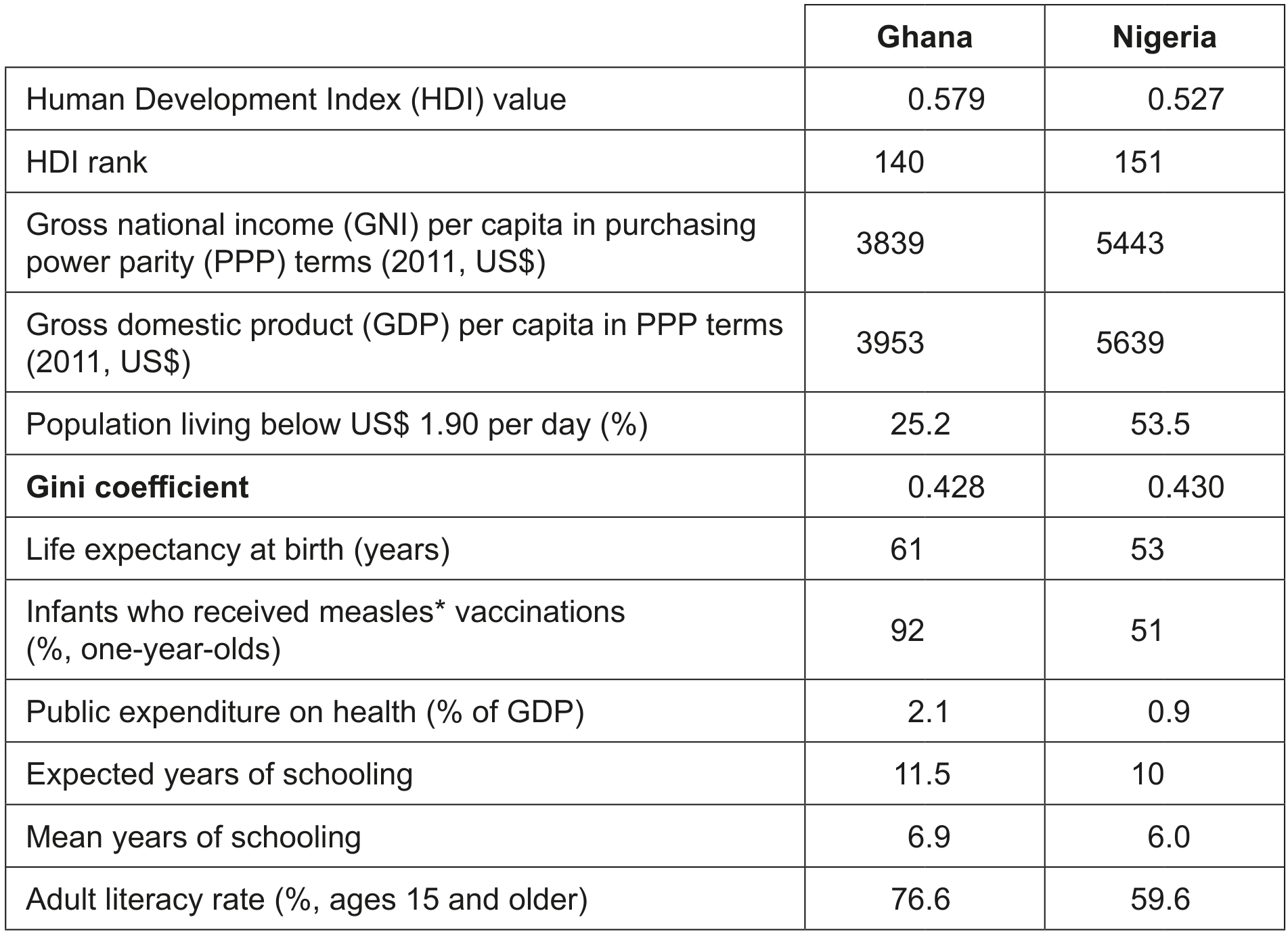
Table 1: Selected economic data for Ghana and Nigeria

Table 1: Selected economic data for Ghana and Nigeria

UNDP Nigeria country profile, http://hdr.undp.org, accessed 19 February 2019; About Ghana, http://hdr.undp.org, accessed 19 February 2019; About Nigeria, http://hdr.undp.org, accessed 19 February 2019]

\footnotetext{
* measles: a highly contagious disease that is one of the leading causes of death among young children
}

Question 3(d)

(a)

Using information from the text/data and your knowledge of economics, compare and contrast the level of economic development in Ghana and Nigeria.

[ 8 ]

Question 3

[Maximum number: 2]

Study the following extract and answer the questions that follow.
Can the Democratic Republic of the Congo achieve its economic potential?

(1) The Democratic Republic of the Congo (DRC) is a nation of great potential. It has large mineral resources and an abundance of fertile land. The mining and export of cobalt, copper and gold are the main source of government revenue. However, the abundance of natural resources causes devastating conflicts as rebel groups fight for control of the DRC's resources. With a population of 80 million and gross domestic product (GDP) per capita of only US$457, the DRC is one of the world's poorest nations. It is ranked 176 in the world in terms of the Human Development Index (HDI).

(2) The government has been accused of relying too much on tariffs, but to improve living standards, the government needs revenue to spend on agriculture, electricity and roads. Furthermore, business owners in the DRC complain of corruption and increasing "red tape" (excessive regulations).

(3) The government believes that a strong agricultural sector could boost economic growth but only 10 % of the land is used for farming. Rice, maize and other crops grow well in the tropical climate and yet the government spends US$1 billion per year importing basic foods. According to a government spokesperson, the lack of infrastructure is a major barrier to the processing and transporting of agricultural products. The DRC's road network is so bad that farmers and traders often make a two-week trip in small boats down the Congo River to sell their produce. The DRC has just 27877 kilometres ( km ) of roads. It is estimated that 90000 km of national roads and 150000 km of rural roads must be built.

(4) In addition, the World Bank reports that only 17 % of the DRC's population has access to electricity, despite the capacity of the Congo River to generate enough electricity to satisfy the needs of the region.

(5) To make matters worse, the regional conflicts have affected the availability of healthcare services. It is estimated that half of the health centres have been looted*, burnt or destroyed. Government expenditure on healthcare per capita remains one of the lowest in the world. Non-governmental organizations (NGOs) are relied on to protect the health and wellbeing of citizens. NGOs help to achieve this by distributing medicine and teaching families about hygiene and proper sanitation.
* looted: goods stolen from a place, typically during a war or riot

Question 3(a)

Question 3(a)(ii)

(a)
(i)

List two components of the Human Development Index (HDI) (paragraph (1)).

[ 2 ]

Question 3

[Maximum number: 4]

Study the extract and data below and answer the questions that follow.
Inequality in China

(1) As China's economy first began to use market-oriented policies in the 1970s, it was famously suggested that some citizens, particularly through hard work, "should be allowed to get rich before others". The government still plays a dominant role in the allocation of resources and benefits, keeping most of the gains for itself and its employees. Civil servants, who are assigned government housing, have benefited more and accumulated more wealth than the private sector employees.

(2) Income inequality is a politically sensitive issue in China and the government has not reported on it for 26 years. In 1988, the Gini coefficient was 0.38 and the next set of figures released in 2014 give a value of 0.47 .

(3) According to research by the China Reform Foundation (CRF), "hidden income" amounts to more than US$1.4 trillion, or the equivalent of Australia's annual gross domestic product (GDP). "Hidden incomes" refer to money gained from bribery or other corrupt behaviour, for example, bribes for officials or corrupt payments for doctors.

(4) Low-income households are stuck with an outdated tax system that fails to address the inequality issue. They carry the burden of tax payments while the rich and powerful operate largely outside the tax system. Low-income households also have difficulty accessing credit.

(5) Although the Chinese government expenditure is high, there tends to be inadequate spending on social protection programmes relating to health and old age. The lack of social protection has resulted in a high marginal propensity to save (MPS) amongst the low-income households as they put money away to provide for future health, education and retirement needs. The high savings result in a low marginal propensity to consume at 37 % of household income (compared to an average of more than 50 % of household income in more developed-market economies). The low marginal propensity to consume and the associated high savings rate have received significant attention in domestic and international policy circles and are viewed as a key barrier to China's continuing road to development. http://data.worldbank.org, accessed 2 August 2014; www.oecd-ilibrary.org, 17 January 2014; http://stats.oecd.org, accessed 3 August 2014, hdr.undp.org, accessed 3 August 2014 and www.imf.org, March 2010]
Figure 1: Selected economic data for China and very high human development countries
> Removed for copyright reasons

Question 3(b)

(a)

Explain why the Human Development Index (HDI) is considered to be a better indicator of economic development than GDP per capita.

[ 4 ]

Question 3

[Maximum number: 8]

Study the extract and data below and answer the questions that follow.
Singapore

(1) Singapore is a high-income economy in South-East Asia. The country provides the world's most business-friendly regulatory environment for local entrepreneurs and is ranked among the world's most competitive economies. Presently, the strong manufacturing and services sectors have become the main drivers of the Singapore economy. There is a wide range of businesses, with a particular focus on high value added goods and services.
Timor-Leste (East Timor)

(2) Timor-Leste (formerly known as East Timor) is a developing economy in South-East Asia. Timor-Leste gained independence from Indonesia in 2002. The country and families were torn apart by violence in the years before independence. Nearly 70 % of all buildings, homes and schools were destroyed. An estimated 75 % of the population were forced to move due to the violence.

(3) After serious challenges, Timor-Leste has progressed, particularly due to its endowment of natural resources, especially oil. With the petroleum revenue boom, fiscal policy has been expansionary and the economy has grown rapidly as a result of government spending, focusing on major infrastructure, development of skills, and other institutional changes. A main goal was to generate increased and sustainable private sector investment as a means to increased job opportunities and to reduce poverty. These developments are starting to contribute to poverty reduction and improved social outcomes.

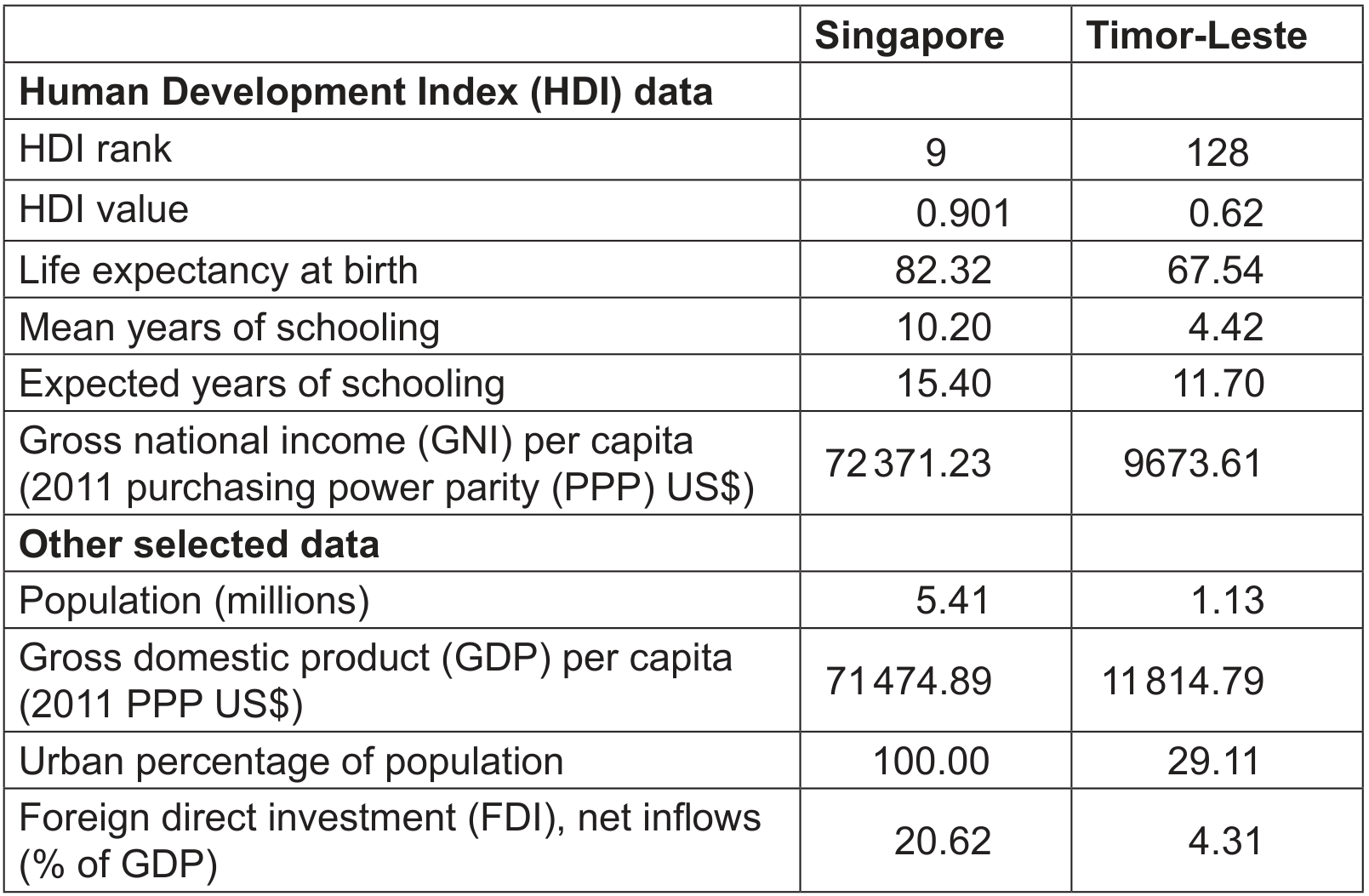
Figure 1 - Selected economic data for Singapore and Timor-Leste - 2013

Figure 1 - Selected economic data for Singapore and Timor-Leste - 2013

Question 3(d)

(a)

Using information from the text/data and your knowledge of economics, compare and contrast the Human Development Index (HDI) data for Singapore and Timor-Leste in terms of their relevance for economic development.

[ 8 ]

Question 4

[Maximum number: 8]

Study the following extract and data and answer the questions that follow.
Economic development in Honduras and Guatemala
Honduras

(1) Honduras is a developing country in Central America. While historically dependent on the export of primary products, Honduras has more recently diversified its exports to include clothing and automobile components. Honduras' economy depends heavily on exports to the United States (US) and, to a lesser extent, on remittances (money sent by a foreign worker to their home country).

(2) In rural areas, approximately one out of five Hondurans lives in absolute poverty. The country is also vulnerable to external shocks and has experienced worsening terms of trade. Revenue earned by the agricultural sector has decreased by one-third over the past two decades. This is partially due to the declining prices of the country's export crops, especially bananas and coffee beans.

(3) The Dominican Republic-Central America Free Trade Agreement (CAFTA-DR) has helped attract foreign direct investment (FDI). However, a threat to future FDI inflows is Honduras' high level of crime and violence. It has one of the highest murder rates in the world.
Guatemala

(4) Guatemala shares a border with Honduras. Guatemala has the largest population and the biggest economy in Central America. Guatemala is the top remittance recipient in Central America as a result of large numbers of Guatemalans living and working in the US. These inflows on the current account are equivalent to two-thirds of the country's export revenue and about 10 % of its gross domestic product (GDP).
5 The agricultural sector employs 31 % of Guatemala's labour force. Key agricultural exports include sugar, coffee, bananas and vegetables. The CAFTA-DR has reduced the barriers to FDI, resulting in increased investment and diversification of exports, particularly in iron, steel and non-traditional agricultural exports (such as high-priced fruits and vegetables). While the free trade agreement has improved the conditions for investment, FDI continues to be limited by concerns over security, the lack of skilled workers and poor infrastructure.

(6) With some of the worst poverty, malnutrition and infant mortality rates in the region, Guatemala's economic development is slowing. Those worst affected live in rural areas. Faster economic growth is crucial to achieving the country's medium- and long-term poverty reduction objectives.

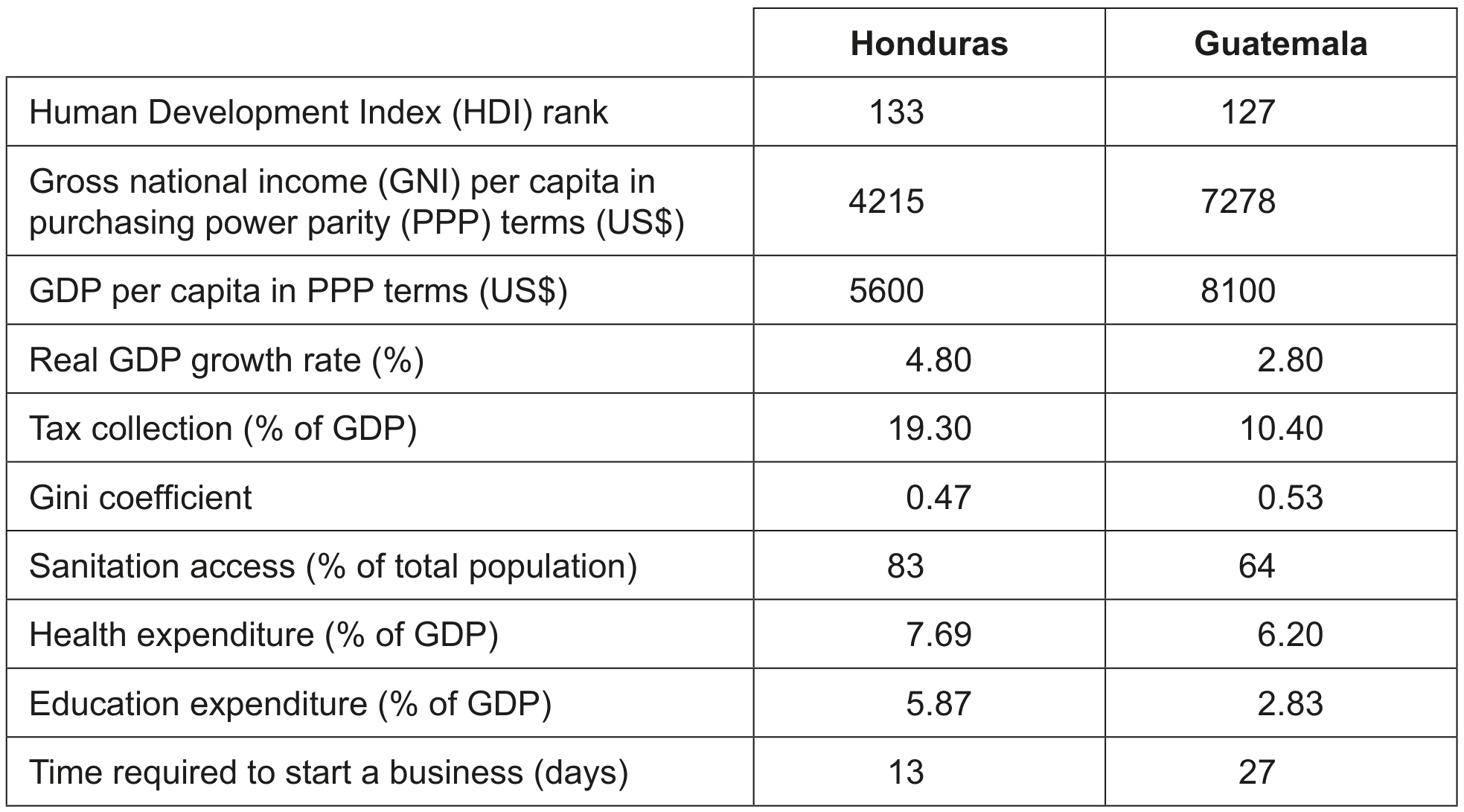
Table 2: Selected economic data for Honduras and Guatemala

Table 2: Selected economic data for Honduras and Guatemala

Question 4(d)

(a)

Using information from the text/data and your knowledge of economics, contrast the potential for economic development in Guatemala and Honduras.

[ 8 ]

Question 4

[Maximum number: 2]

Study the extract below and answer the questions that follow.
Ghana to seek help from International Monetary Fund

(1) Ghana has said it will seek financial aid in the form of a loan from the International Monetary Fund (IMF) to help stop the rapid decline in the value of the cedi, Ghana's currency, and close a large budget deficit. Ghana's transformation from one of Africa's fastest growing economies to the home of the world's worst-performing currency has become a concern. The exchange rate depreciated by 40 % against the US dollar in 2014. The fall in the currency has led to increases in the price of consumer goods such as sugar and fuel; inflation is at an unacceptable 15 %.

(2) Despite being a major exporter of gold, oil and cocoa, Ghana's current account deficit has risen sharply to 12 % of its gross domestic product (GDP). This is partly due to a rapid increase in demand for imports and falling gold prices. Additionally, oil revenues have not been as strong as expected.

(3) The government is also struggling with a wide budget deficit, which stood at 10 % of GDP last year. Ghana's good reputation for fiscal responsibility has worsened considerably as the government tripled salaries for police officers and soldiers.

(4) It is expected that the news of talks with the IMF will be positively received in international financial markets. The finance minister has said the step would help to stabilize the currency, to bring domestic prices under control, and also to restore investors' confidence in Ghana's economy.

(5) A Ghanaian spokesperson noted that the IMF would insist on the government introducing measures to tackle inflation and reduce its budget deficit. The IMF says that Ghana needs to tighten its budget immediately, by reducing public sector wages, lowering subsidies and increasing taxes. The IMF is likely to demand a limit on borrowing and perhaps some privatization of power and water companies.

(6) Earlier this year, problems in the economy had led to nationwide protests, with thousands of workers across the country protesting in the streets about the rise in the cost of living. The country's largest trade union says the government has been mismanaging the economy. In response to the protests, a government minister said that the government would work very hard to achieve economic development to make life easier for the working people of Ghana but that all Ghanaians would have to make "some sacrifices for the economy to recover". and www.bbc.com/news, 24 July 2014 and 4 August 2014]

Question 4(a)

Question 4(a)(ii)

(a)
(i)

Define the term economic development indicated in bold in the text (paragraph 6).

[ 2 ]

Question 4

[Maximum number: 2]

Study the following extract and answer the questions that follow.
New policies for Brazil

(1) From 2010 to 2014, Brazil experienced an economic boom with annual gross domestic product (GDP) growth of 8 %. During this time, the government spent heavily on social programmes (including cash transfers and pensions) that helped millions to get out of the poverty cycle. The poverty rate decreased from 22 % to 9 % and the Gini coefficient dropped from 0.581 to 0.515 . However, the spending on social programmes resulted in fiscal deficits and a large public debt, which is currently 80 % of GDP.

(2) In 2015, Brazil entered a recession that lasted until 2017. During the recession GDP declined by an average of 3 % per year. By 2017, the number of Brazilians living in absolute poverty climbed by 13 %, inequality worsened, and unemployment was 12 %. From late 2017 to 2019, Brazil struggled to recover, with only approximately 1 % annual economic growth.

(3) Some economists blamed the slow recovery on the lack of investment in education and technology during the economic boom. According to those economists, investment in human and physical capital was necessary to improve productivity and decrease the reliance on the production of primary commodities. Historically, spending on education has not been effective in reaching the very poor.

(4) In 2018, a newly elected government, aiming to stimulate economic growth, introduced market-oriented policies. Since Brazil has a large economy, the new government believed that Brazil should take advantage of world trade and foreign investment to boost economic growth and achieve economic development.

(5) The new government aimed to increase the number of multinational corporations (MNCs) investing in Brazil through deregulation and trade liberalization. Furthermore, in 2020 several state-owned enterprises were privatized.

(6) Additionally, new labour market and tax reforms were introduced to create jobs, increase labour force participation and make it easier for firms to hire and fire workers. The reforms included increasing the retirement age and reducing transfer payments. However, trade unions claim that the reforms are unfair and will lead to the exploitation of workers.

(7) There is concern that deregulation, privatization and market liberalization will put pressure on Brazil's environment, threaten sustainable development, and benefit only urban areas. In 2017, the government introduced "green GDP" as an official measure and committed to environmental protection goals. This is necessary because, for example, over 40 % of the population live in areas without access to a sewage system and manufacturing companies are dumping untreated wastewater in rivers, contributing to water pollution.

Question 4(a)

Question 4(a)(ii)

(a)
(i)

Define the term "green GDP" indicated in bold in the text (paragraph 7).

[ 2 ]

Question 4

[Maximum number: 12]

Study the extract and data below and answer the questions that follow.
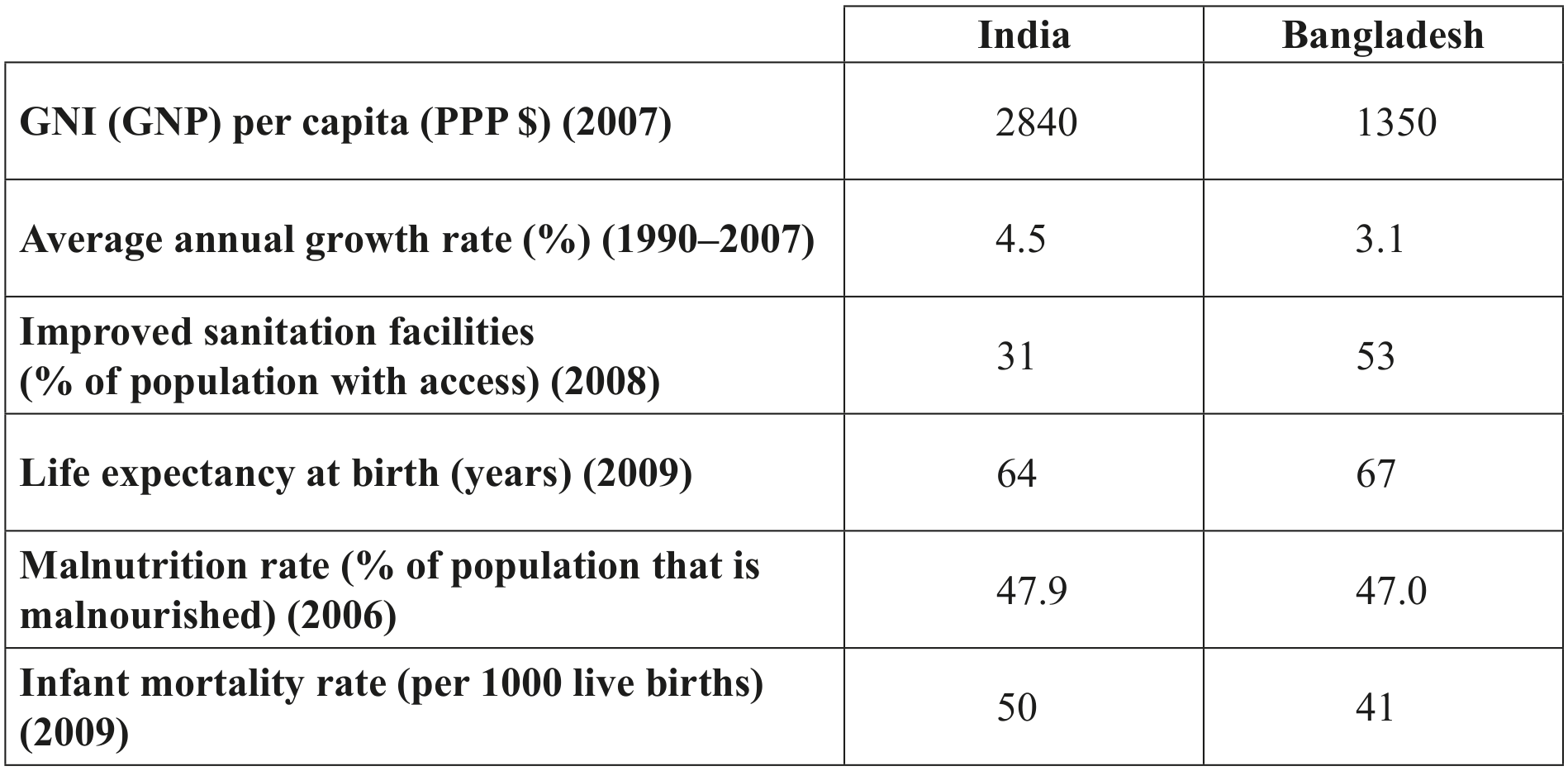
Economic growth and poverty in India

(1) Although India has one of the fastest growing economies in the world, it is unlikely that the Millennium Development Goal of halving the rate of poverty by 2015 will be achieved. An important factor is growing income inequality. Calculations of Gini coefficients show that inequality increased by about 14 % between 2001 and 2011.

(2) India has about one third of the world's population living in extreme poverty (living on less than $ 1.25 a day). Three quarters of its population live in moderate poverty (less than $ 2 a day). It is estimated that nearly half the Indian population suffers from malnutrition. Part of India's poverty problem is a result of poor governance and failure to address the underlying causes of poverty.

(3) Growth averaged 8.6 % per year in the years 2005-2011 compared with the 10 % needed over 20 years to lift the poor out of their poverty. The central bank governor says that the lack of steps to improve the supply-side of the economy will make it difficult for India to maintain its high growth rates.

(4) The Indian Nobel Prize winner Amartya Sen argues that economic growth should not be "our ultimate objective, but a very useful means to achieve … a better quality of life".
"Poverty reduction in India briefing", uk.oneworld.net, May 2011 and "Addressing income distribution", The Financial Express, 15 January 2011]

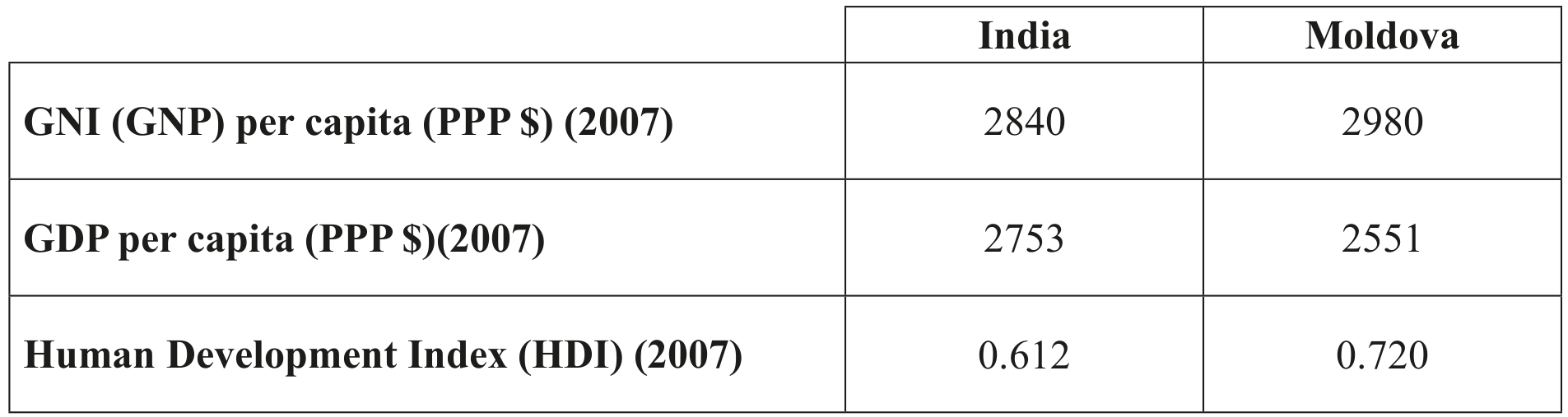
Table 1

Table 1

"Human Development Reports", United Nations Development Programme, accessed 2011]

Table 2

Table 2

Question 4(b)

(a)

Referring to Table 1, explain two possible reasons why India and Moldova have different Human Development Index (HDI) values from each other.

[ 4 ]

Question 4(d)

(b)

Using information from the text/data in Table 2 and your knowledge of economics, examine Amartya Sen's argument that economic growth should not be "our ultimate objective, but a very useful means to achieve ... a better quality of life" (paragraph (4).

[ 8 ]
0 selected