EduNinja

IB Economics HL4.6 Balance of paymentsQuestion Bank

Question 1

[Maximum number: 4]

Table 1 shows information from the balance of payments for Chile for each quarter (3-month period) of 2021.

Table 1: Balance of payments for Chile in millions of US dollars (US\$) in 2021

Table 1: Balance of payments for Chile in millions of US dollars (US\$) in 2021

Question 1(a)

Question 1(a)(i)

(a)
(i)

Using the information provided in Table 1, calculate Chile's current account balance for the second quarter (Q2) of 2021.

[ 2 ]

Question 1(a)(ii)

(ii)

The financial account balance for the fourth quarter (Q4) of 2021 was US $ 7552 million. Using the information provided in Table 1, calculate the change in reserve assets for the fourth quarter (Q4) of 2021. You must state whether reserve assets have increased or decreased.
Salmon farming in Chile
Salmon is Chile's most important food export. The value of salmon exports increased sharply in 2021, largely due to a recovery in the world price of salmon. This boosted economic activity and employment, creating opportunities for entrepreneurship and regional development.
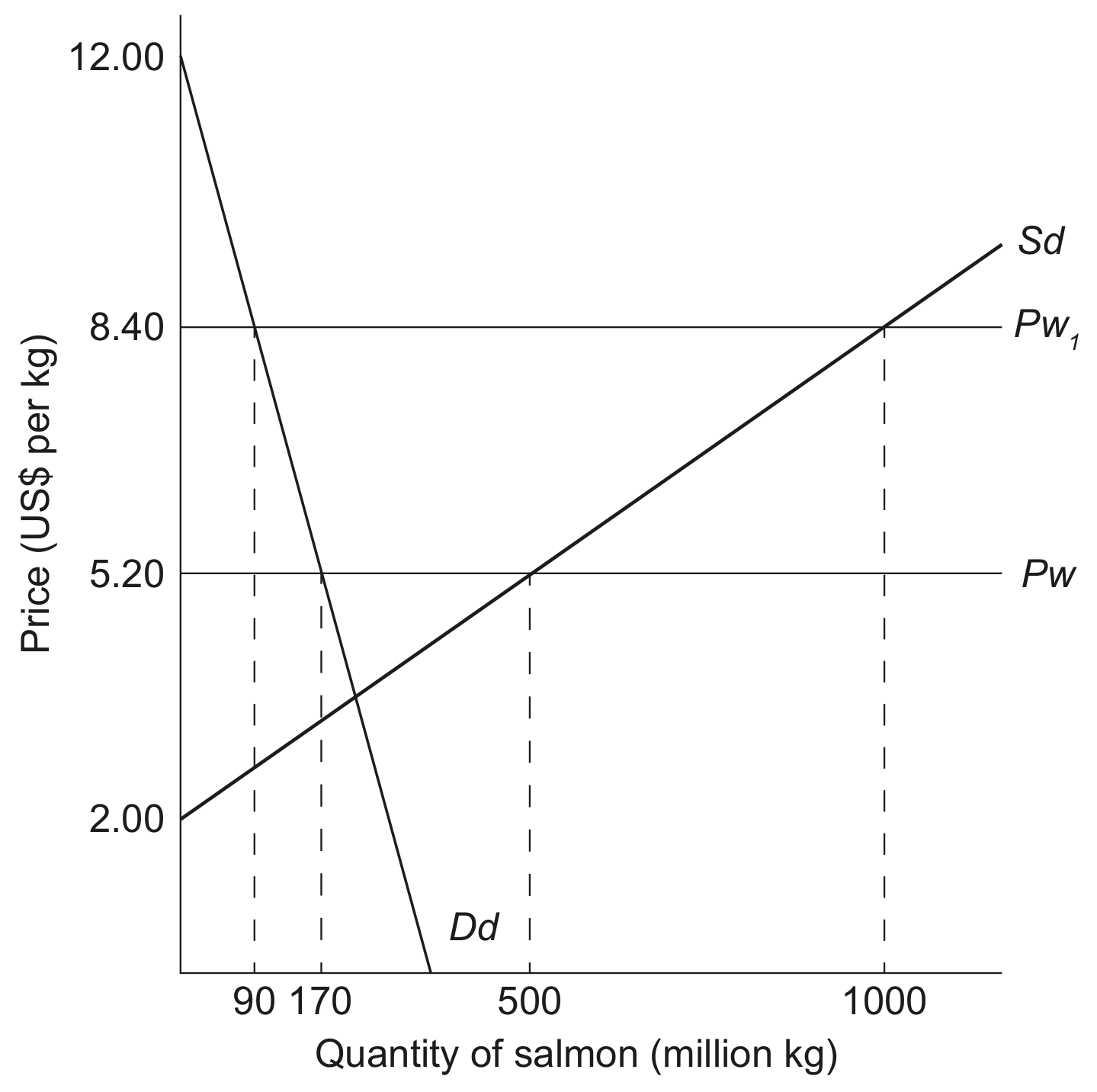
Figure 1 illustrates the market for salmon in Chile. Dd is the domestic demand for, and Sd is the domestic supply of, salmon in US$ per kg . P w is the world price and Pw1P w_{1} is the world price after an increase from US $ 5.20 to US $ 8.40 per kg.

Figure 1: The market for salmon in Chile

Figure 1: The market for salmon in Chile

[ 2 ]

Question 1

[Maximum number: 4]

Study the following extract and data and answer the questions that follow.
South Sudan joins the East African Community

(1) The East African Community (EAC) is the most integrated trading bloc in Africa. In 2005, the members established a customs union, and then in 2010 it became a common market. There are ambitious plans to establish a monetary union by 2024.

(2) According to a recent report, the region is wealthier and more peaceful as a result of the increased integration. Economic models suggest that bilateral trade between member countries was 213 % higher in 2011 than it would have been without the integration. This is despite the fact that progress on fully eliminating trade barriers has been rather slow and there are still a large number of non-tariff barriers.

(3) Until recently the customs union was made up of Burundi, Kenya, Rwanda, Tanzania and Uganda. Very recently, South Sudan joined the bloc. This presents a tremendous opportunity for South Sudan, which was recently recognized as an independent country.

(4) South Sudan is one of many developing countries that are dependent on oil exports for the majority of its export revenues and oil prices have been falling due to increased supply of oil in the market. The deteriorating terms of trade have resulted in a worsening of the current account and lower government revenues. Regional economic integration might help South Sudan to diversify its economy.

(5) Agriculture is one potential area that South Sudan could focus on to diversify its economy. According to some estimates, 70 % of land is suitable for agriculture, but less than 4 % is currently being cultivated. The large flood plains in the country are suitable for rice production and the hope is that South Sudan can develop a comparative advantage in this essential food.

(6) South Sudan is landlocked and most of its road network is unpaved. This is just one example of its poor infrastructure. Since infrastructure is an expensive investment, regional cooperation will be vital for improving its road systems. Furthermore, effective transport links to sea ports in Kenya and Tanzania will allow for greater trade and therefore economies of scale.

(7) In the short term, there will be challenges for South Sudan associated with joining the common market. For example, before Rwanda joined the EAC in 2007, there were lower tariffs on many imported inputs. However, the cost of living for the poor population rose because of trade diversion that occurred after joining the EAC. South Sudan is likely to face the same problem.

(8) Labour costs in South Sudan are higher than those of other member countries and years of conflict have left the population with low levels of education and skills. This may present a barrier for South Sudan in attracting foreign direct investment, despite being part of the common market.

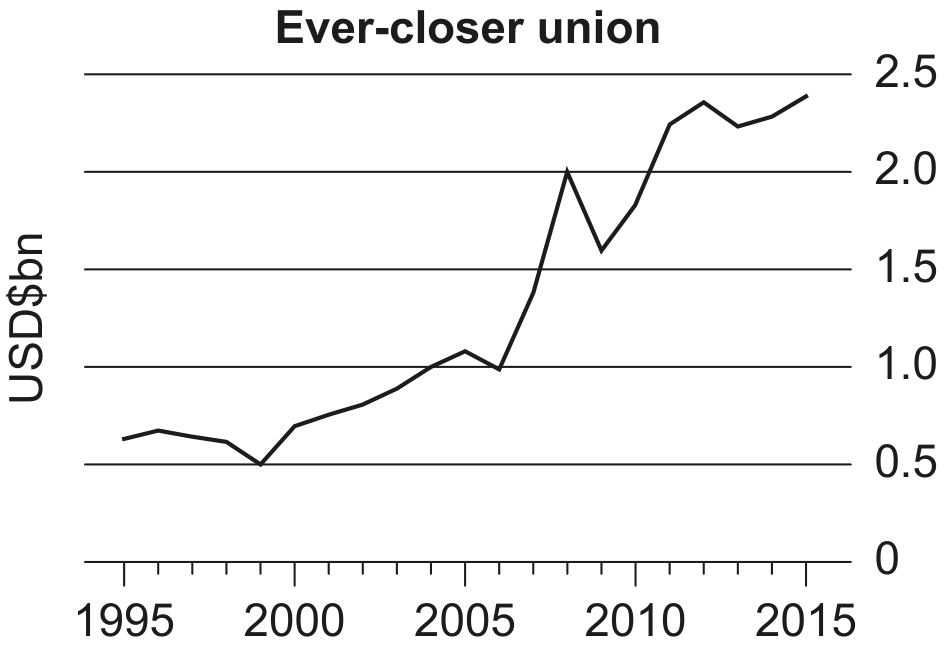
Figure 1: Intra-East African Community* trade in goods (USD\$bn)

Figure 1: Intra-East African Community* trade in goods (USD\$bn)

*Burundi, Kenya, Rwanda, Tanzania and Uganda.
Not including South Sudan, which acceded to the treaty in 2016. London (June 9, 2016); paragraphs 4-8 adapted from a paper/article written by Astrid R.N. Haas (and co-authors) with funding from the International Growth Centre.
Graph: IMF, www.eacgermany.org, accessed 3 May 2018]

Question 1(b)

(a)

Explain why "deteriorating terms of trade have resulted in a worsening of the current account" in South Sudan (paragraph 4).

[ 4 ]

Question 1

[Maximum number: 14]

Study the extract below and answer the questions that follow.
Swiss current account surplus grows

(1) Switzerland recorded a current account surplus of 11 % of gross domestic product (GDP) in 2012. This was an increase from 9 % of GDP the year before.

(2) According to Switzerland's central bank, the Swiss National Bank (SNB), which released its balance of payments figures recently, this increase in the current account surplus was caused mainly by an increase in investment income, which nearly doubled to CHF40 billion.

(3) In terms of trade in goods and services, a surplus of CHF57 billion was recorded, compared with CHF59 billion in 2011. The decline was due to the fact that there was a 3 % increase in expenditure on imports of goods and services, but only a 2 % increase in the revenues from exports of goods and services.

(4) The Swiss financial account saw a net capital outflow of CHF97 billion - nearly three times the 2011 figure. This occurred after the SNB purchased large amounts of foreign exchange in an attempt to keep the Swiss franc from appreciating to damaging levels. The high level of the Swiss franc was a result of financial investors seeking safety in the Swiss franc, when severe problems in the eurozone created fears about the value and safety of the euro.

(5) The Swiss economy outperformed the eurozone in early 2013 as GDP in the eurozone shrank for a sixth straight quarter. This was largely caused by contracting economies in France, Italy, the Netherlands and Spain. The eurozone is now stuck in its longest recession on record.

(6) The Swiss economy performed better than expected in the first quarter of 2013, with GDP growth rising to 0.6 % as a result of strong levels of consumption, particularly in health and housing. and http://futurecurrencyforecast.com, 31 July 2013]

Question 1(a)

Question 1(a)(i)

(a)
(i)

List two components of the financial account (paragraph (4).

[ 2 ]

Question 1(b)

(b)

Explain the difference between direct/portfolio investment and income from investment in the balance of payments.

[ 4 ]

Question 1(d)

(c)

Using information from the text/data and your knowledge of economics, discuss the consequences of a rising current account surplus.

[ 8 ]

Question 1

[Maximum number: 14]

Study the extract below and answer the questions that follow.
Fast-growing Turkish economy showing signs of overheating

(1) The impressive economic growth that Turkey has enjoyed from 2010-2012 may soon come to an end, as the country's economy shows signs of overheating. Although officials are still optimistic, economists are concerned about the inflationary gap, and note that the growing current account deficit makes Turkey vulnerable.

(2) At the crossroads of Europe and the Middle East, Turkey has benefitted from a boom in foreign investment and trade, and has been one of the engines of global growth from 2010-2012. The economy grew by 8.9 % in 2010 - one of the highest in the world - and the Organisation for Economic Co-operation and Development (OECD) expects it to have grown by a further 7.4 \% in 2011.

(3) However, analysts warn that the current growth rate is unlikely to last. "What GDP growth rates don't reveal is that the Turkish economy is now showing signs of overheating," said an economist at Capital Economics. The fast economic growth of 2010-2012 "was accompanied by a rapid widening of the current account deficit," which has jumped to 10 % of its GDP.

(4) "What is more, from 2010-2012, the current account deficit has mostly been financed with short-term borrowing, which means Turkey is facing a heavy external debt service burden of $ 135 billion (101 billion euros) in the period 2012-2013," warned the chief economist at Finansbank.

(5) Turkey's current account deficit, which surged from just over 2 % of GDP in 2009, is partially due to the rise in oil prices. Since Turkey is a large net oil importer, it is clearly worse off from higher oil prices. Turkey's net energy imports were equivalent to around 6 % of GDP in 2011 - accounting for over half of the total current account deficit of 10 % of GDP.

(6) There is more to Turkey's current account shortfall than simply the high cost of energy imports. The deficit has also widened due to rapidly rising domestic demand, suggesting that a period of weaker domestic demand is needed to put the current account on a sustainable footing.

(7) A financial services ratings agency warned recently that the high current account deficit makes Turkey vulnerable to sudden financial account outflows. There are concerns about the difficulty of attracting capital inflows to fund the current account deficit.
signs-of-overheating.ashx\#axzz31EjcEmch;
'Fast-growing Turkish economy showing signs of overheating'; April 02, 2012; By Fulya Ozerkan]

Question 1(a)

Question 1(a)(ii)

(a)
(i)

Define the term financial account indicated in bold in the text (paragraph 7).

[ 2 ]

Question 1(c)

(b)

Explain two reasons why "rapidly rising domestic demand" may have contributed to Turkey's current account deficit (paragraph (6).

[ 4 ]

Question 1(d)

(c)

Using information from the text/data and your knowledge of economics, evaluate the possible policies that the Turkish authorities might use to reduce the current account deficit.

[ 8 ]

Question 1

[Maximum number: 14]

Study the following extract and answer the questions that follow.
South Korea's current account surplus

(1) South Korea, Asia's fourth-largest economy, has experienced a current account surplus since 2012. South Korea's large working-age population, which tends to save a large portion of its income for retirement, contributes to the surplus. The South Korean government has expressed concerns about the impact of the high savings on domestic demand and the level of imports. However, it has been predicted that as the population ages the surplus will gradually disappear by 2042 .

(2) The South Korean won (South Korea's currency) recorded the second highest appreciation against the United States dollar (US$) in 2017 among currencies of the G20* nations. The current account surplus, the improved economic conditions and the expectations of an interest rate rise have all helped increase the South Korean won's value.

(3) The South Korean won officially operates under a floating exchange rate system, but the central bank would intervene if there were major fluctuations in the market that needed to be managed. The US is monitoring the exchange rate policy of South Korea due to the significant trade imbalance between the two countries. If the US identifies that a major trading partner like South Korea tries to limit an appreciation of its currency, then the US may consider tariffs to reduce the imbalance.

(4) South Korea's financial account in the balance of payments recorded a deficit of US$13 billion in 2018, as Koreans have invested extensively in other countries. Furthermore, foreigners have been reluctant to invest in South Korea due to the trade disputes and the potential of a trade war erupting between the US and China. The US and China are South Korea's largest trading partners, and South Korea, with its export-oriented economy (exports amount to 43 % of gross domestic product [GDP]), is sensitive to external demand shocks.

(5) South Korea's domestic investment in key areas (such as manufacturing, construction and machinery) fell during 2018, and GDP grew by less than expected. Additionally, private consumption increased only by 0.3 % in 2018 , the slowest growth for 4 years. There is also concern about the level of unemployment, especially the high rates of youth unemployment.

(6) Normally, in a situation of low growth, the central bank would implement expansionary monetary policy. However, the US Federal Reserve (the central bank of the US) and the European central bank are considering monetary tightening. If the South Korean central bank does not raise interest rates in line with the US and the European Union it runs the risk that the South Korean won may depreciate. Therefore, the South Korean government has begun discussions on using fiscal policy to help revive the job market and support domestic demand.
* G20 members include: Argentina, Australia, Brazil, Canada, China, France, Germany, India, Indonesia, Italy, Japan, Republic of Korea (South Korea), Mexico, Russia, Saudi Arabia, South Africa, Turkey, the United Kingdom, the US and the EU

Question 1(a)

Question 1(a)(ii)

(a)
(i)

List two components of the financial account (paragraph 4).

[ 2 ]

Question 1(b)

(b)

Using an exchange rate diagram, explain how South Korea's current account surplus could have "helped increase the South Korean won's value" (paragraph 2).

[ 4 ]

Question 1(d)

(c)

Using information from the text/data and your knowledge of economics, discuss the possible implications on South Korea's economy of a current account surplus.

[ 8 ]

Question 1

[Maximum number: 2]

Study the following extract and data and answer the questions that follow.
The strong Thai baht

(1) Thailand's currency, the Thai baht, ended 2019 at its highest value in more than six years. With a 7.8 % gain against the United States dollar (US$), it was the currency that appreciated the most among major Asian currencies.

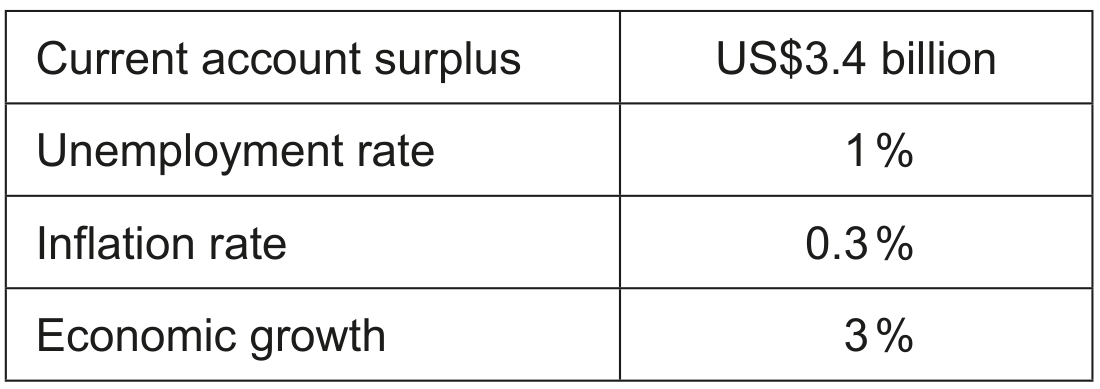
(2) The Thai baht's appreciation was caused by several factors. Many foreign investors are attracted by Thailand's economic stability, high levels of foreign reserves, low inflation rate and low unemployment (Table 1). However, the inflation rate is below the central bank's target.

(3) Initially, the central bank of Thailand (BoT) was not too concerned, as the strong Thai baht was helping Thai importers and those who had foreign debts. Additionally, Thai producers could afford to import new technology and capital equipment. An appreciating currency could also help improve the country's terms of trade.

(4) However, a strong currency can have severe consequences on an export-oriented country like Thailand. Exports account for 65 % of gross domestic product (GDP), and in 2019 exports declined by 7 %. Additionally, the tourism industry, which makes up approximately 20 % of GDP and accounts for 16 % of employment, started to express concern. Economic growth in 2019 was 3 %, down from 4.1 % in 2018.

(5) Therefore, towards the end of 2019, the BoT implemented measures to prevent further appreciation of the Thai baht. The BoT reduced controls on capital outflows to make it easier for Thai citizens to move money abroad. Additionally, restrictions were placed on the amount of money foreigners could hold in Thai bank accounts.

(6) The BoT is considering further measures including the use of foreign reserves, a decrease in the interest rate, and imposing controls on capital inflows, to prevent speculative inflows. However, these controls may impact the country's credibility and financial markets. Expansionary monetary policy may also increase household debt which, at 78.6 % of GDP, is among the highest in Asia.

(7) The BoT is concerned about using foreign reserves, as this may result in Thailand being labelled a currency manipulator* by the US. Currently, Thailand's overall large current account surplus is the only requirement it meets to be labelled a currency manipulator. However, Thailand's bilateral trade surplus with the US is currently US$19 billion, which means it is close to meeting a second requirement. Thailand wants to avoid being labelled a currency manipulator as the US may use trade protection in retaliation.
* currency manipulator: the US will label a country as a currency manipulator if the following three requirements are met (a country will be placed on a watchlist if they meet two of the requirements):
1. The country is using its foreign reserves to change the value of its currency to gain an advantage
2. The country has a bilateral trade surplus with the US of over US $ 20 billion
3. The country has a current account surplus of more than 2 % of its GDP.

Table 1: Thailand macroeconomic indicators 2019

Table 1: Thailand macroeconomic indicators 2019

Question 1(a)

Question 1(a)(ii)

(a)
(i)

Define the term current account surplus indicated in bold in the text (paragraph 7).

[ 2 ]

Question 1

[Maximum number: 6]

Read the extracts and answer the questions that follow.
Text A - Overview of Mexico

(1) Mexico, with its abundant natural resources, is the second largest economy in Latin America. However, compared to other Latin American countries, Mexico has underperformed. Its annual economic growth rate averaged 2.5 % between 1994 and 2019. Per capita income rose more slowly, at an average rate of less than 1 % annually.

(2) Government expenditure has been rising, while taxation revenue has been stable or falling. Therefore, there is concern about the increasing government debt. If there is a recession, automatic stabilizers will increase the budget deficit, further raising the level of government debt. However, the International Monetary Fund (IMF) forecasts that government debt will stabilize in the mid-2020s, at around 65 % of gross domestic product (GDP).

(3) The oil sector makes an important contribution to Mexico's economy. Earnings from this sector were about 30 % of total government revenue in 2019. However, as countries increase their use of alternative energy sources, the long-term trend of falling oil prices will probably continue.
4

Paragraph removed for copyright reasons


(5) Since 1994, the exchange rate for the peso (Mexico's currency) has been floating. In March 2020, the rate changed from 18 pesos per United States (US) dollar to 25 pesos per US dollar. During 2020, the deficit on the balance of trade in goods continued to widen. However, by April 2021 the trade balance had changed to a surplus as exports of manufactured goods rose strongly. The deficit on the current account has also been narrowed by rising net remittances.
Text B - Free trade agreements

(1) The North American Free Trade Agreement (NAFTA) was a three-country accord negotiated by the governments of Canada, Mexico, and the United States that entered into force in January 1994. NAFTA eliminated most tariffs on products traded between the three countries, with a major focus on liberalizing trade in agriculture, textiles, and automobile manufacturing. The deal also sought to protect intellectual property, establish dispute resolution mechanisms, and through side agreements, implement labor and environmental safeguards. Trade among the NAFTA members tripled over the following 25 years, partly due to trade disputes between the US and China.

(2) Following the establishment of NAFTA, productivity increased in Mexico. US and Canadian firms viewed Mexico as a low-cost location for factories, which could improve their competitiveness. Therefore, foreign direct investment (FDI) into Mexico grew significantly throughout the 1990s and early 2000s. In the industrial north of Mexico, high-tech manufacturing factories were established and wages increased. However, the agricultural south did not benefit from the FDI. Agricultural exports from Mexico did increase, but Mexican farmers, especially corn producers, faced competition from subsidized US agriculture.

(3) The wage differential between the US and Mexico was predicted to decrease significantly, but a large wage gap remains. NAFTA's effect on employment has been mixed. Some workers became unemployed when their firms lost market share due to increased competition, while others gained from the creation of new market opportunities.

(4) In 2020, NAFTA was renegotiated as the US-Mexico-Canada Agreement, which kept elements of NAFTA, while adding provisions regarding digital trade and financial services. The requirement that a high proportion of the inputs used in exported goods must come from member countries may mean that the cheapest inputs cannot be used. There are also additional rules to protect the environment and support labour rights. For example, 40 % of the value of the components in each vehicle exported from Mexico must come from factories paying a wage of at least US$16 per hour. As a result, the incomes of Mexicans who find industrial employment are raised.
Text C - Access to banking and finance in rural areas

(1) The persistence of income inequality in Mexico is partly due to domestic factors, such as underdeveloped financial institutions and low productivity in the large informal sector. Improving access to banking and finance could significantly benefit low-income households and small firms.

(2) The Expanding Rural Finance Project aims to provide finance for women, young people, and small firms in rural areas where there are no commercial banks. Over 170000 loans (averaging US$1850 per loan) were provided from 2016 to 2020. Among the recipients, 76 % lived in rural areas and 81 % were women.

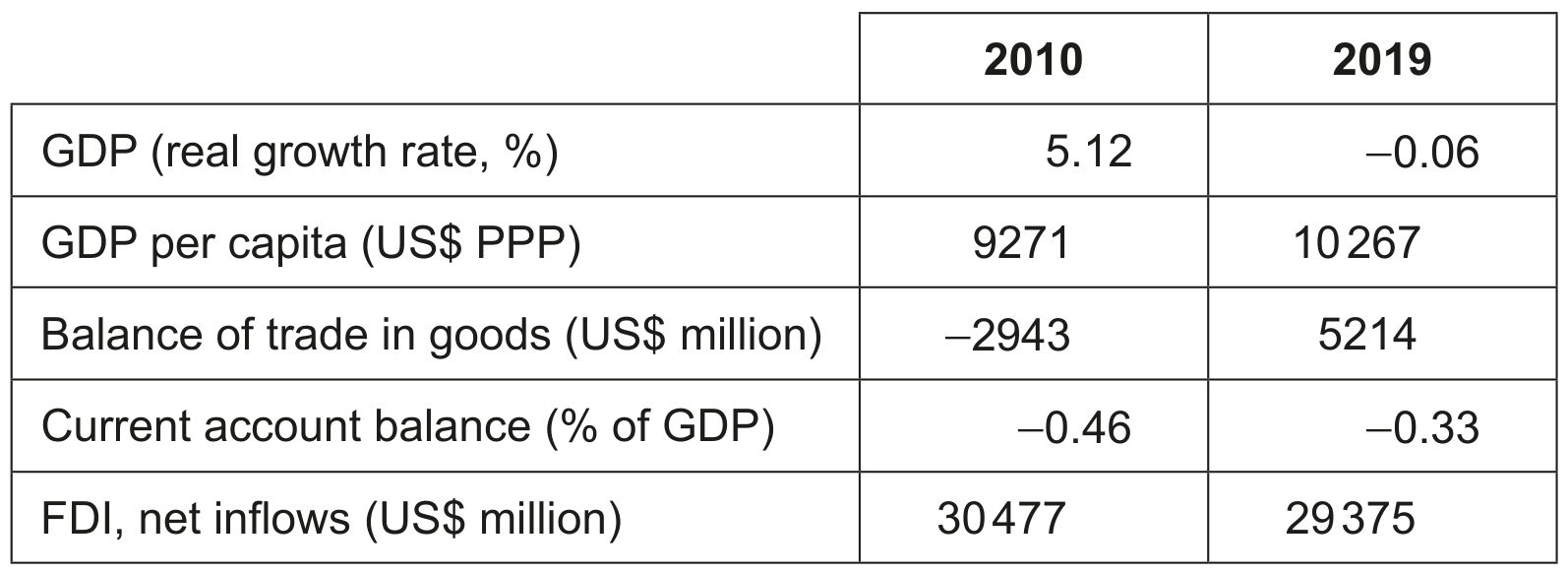
Table 1: Economic data for Mexico

Table 1: Economic data for Mexico

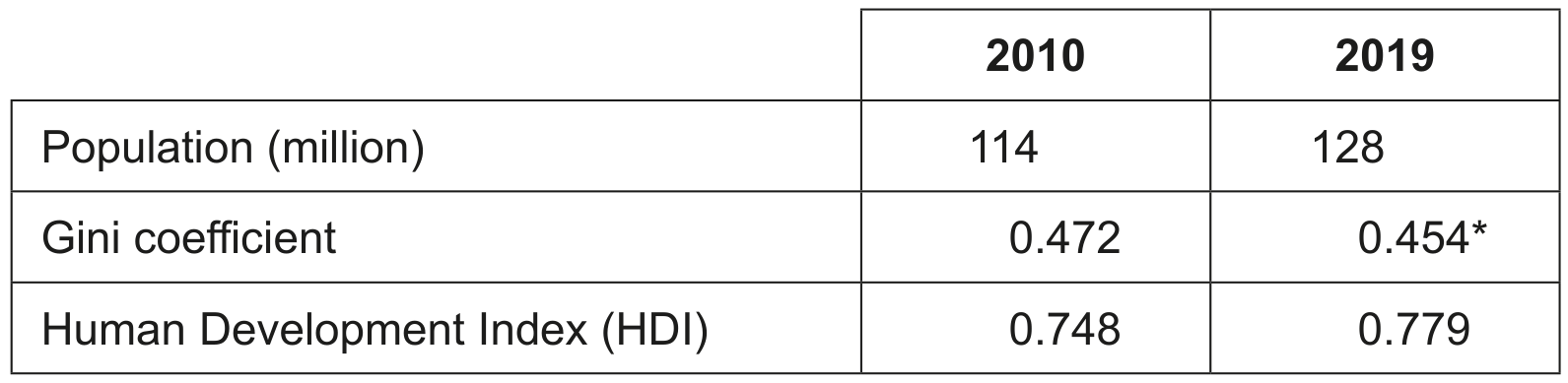
Table 2: Development data for Mexico

Table 2: Development data for Mexico

*estimate

Question 1(a)

Question 1(a)(ii)

(a)
(i)

Define the term remittances indicated in bold in the text (Text A, paragraph 5).

[ 2 ]

Question 1(e)

(b)

Using a J-curve diagram, explain the likely reason why the change in the exchange rate for the peso initially caused the deficit on the balance of trade to widen and then eventually led to a surplus (Text A, paragraph 5).

[ 4 ]

Question 1

[Maximum number: 14]

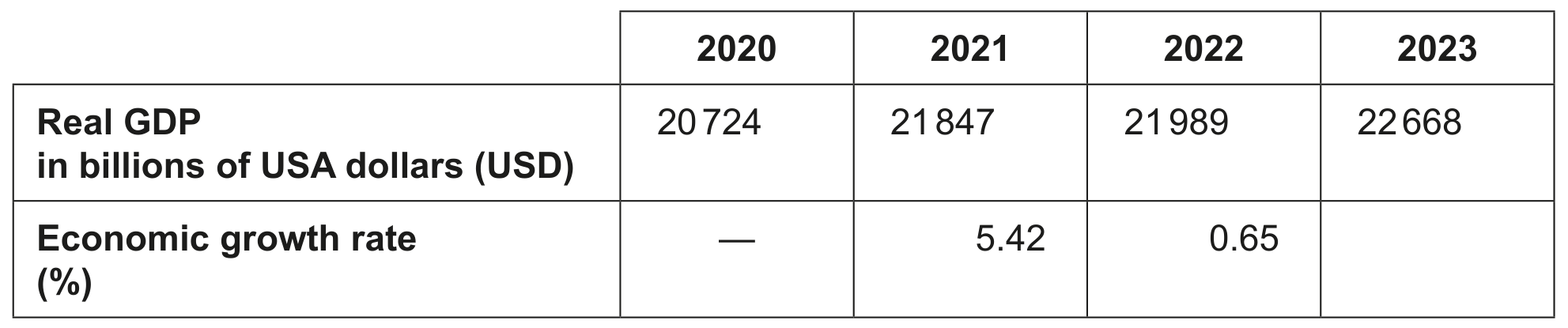
Table 1 shows the gross domestic product (GDP) of the United States of America (USA) economy from 2020 to 2023. The USA is not the fastest growing economy in the world, but it is the largest. It also has the largest budget deficit and the largest current account deficit in the world. As a result, the actions of its central bank, the Federal Reserve, always make news.

Table 1

Table 1

Question 1(a)

Question 1(a)(vi)

(a)
(i)

Using Table 2, calculate the deficit or surplus in the balance of trade in goods and services for Quarter 3 (Q3) only.

[ 1 ]

Question 1(a)(vii)

(ii)

Using Table 2, calculate the size of the financial account for Quarter 4 (Q4) only.

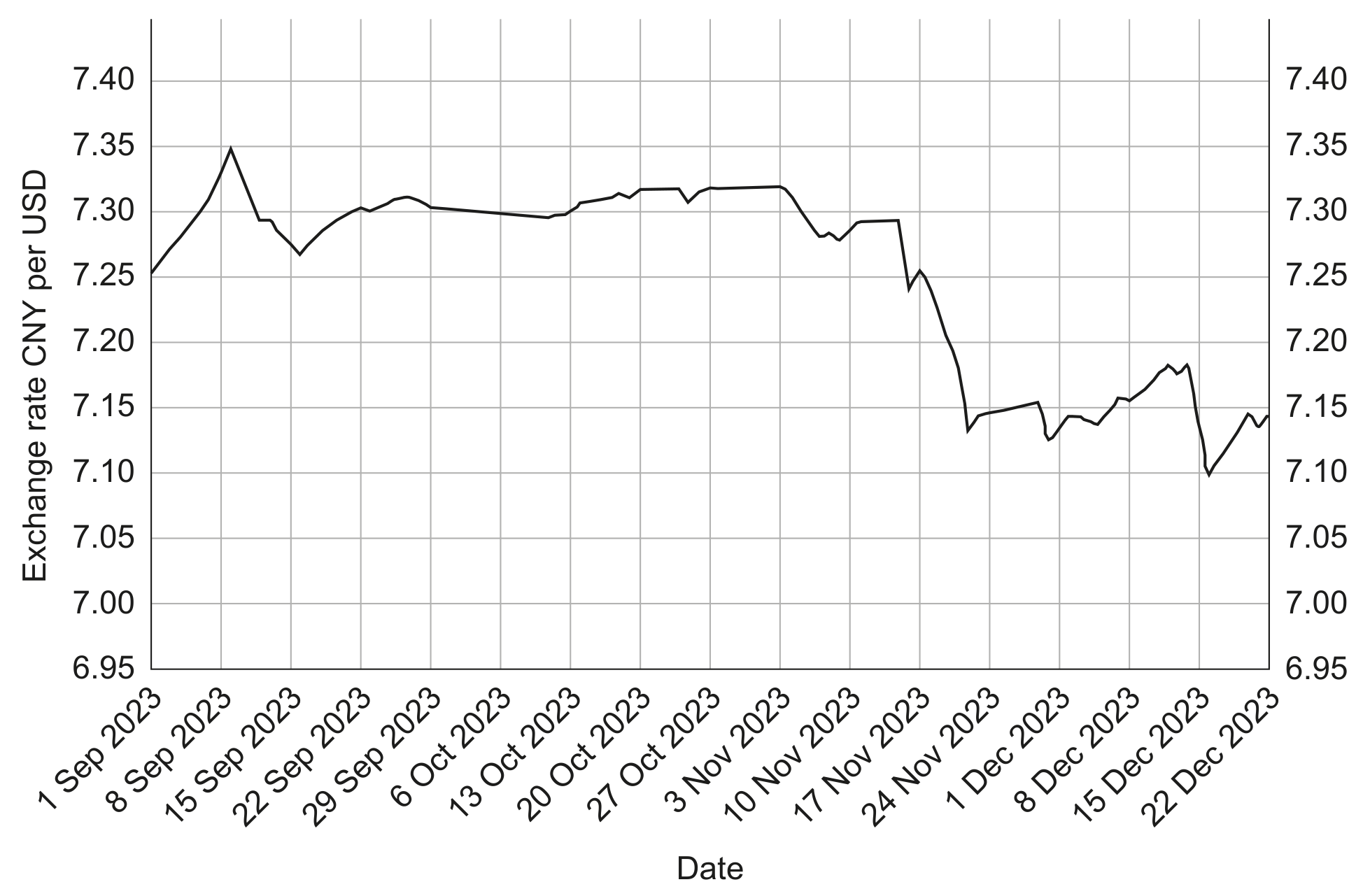
The USA recorded a trade deficit of USD 819 billion in 2023. This was a slight reduction from 2022, when it was USD 951 billion. One of the reasons for the fall in the trade deficit could be the exchange rate. In the final four months of the year, the USD depreciated against the Chinese Yuan (CNY). China is the USA's largest trading partner, even though recent trade relations between the two countries have been characterized by tariffs and retaliatory measures. Figure 1 shows the price of the USD in terms of the CNY from September to December 2023.

Figure 1

Figure 1

[ 3 ]

Question 1(b)

(b)

Using the text/data provided and your knowledge of economics, recommend a policy that the government of the USA could introduce to correct its persistent current account deficit, without intervention in foreign exchange markets.

[ 10 ]

Question 1

[Maximum number: 2]

Text A - Overview of Vietnam

(1) Economic reforms in Vietnam during the past 30 years have led to rapid economic growth, which has transformed a poor nation into a lower middle-income economy. The percentage of the population with an income of less than US$1.90 a day declined from 38\% in 2002 to below 2 % in 2018.

(2) Vietnam used to be a food-insecure nation, in which many people sometimes lacked access to affordable food, but it is now a leading exporter of basic food commodities. It also aims to become an exporter of high quality and processed food products. However, agricultural production only accounts for 18 % of gross domestic product (GDP), although it uses 40 % of the land and employs 43 % of the labour force. Due to the growing rural population, land is often divided up between a greater number of farmers, causing some farms to become smaller. These farms have fewer opportunities to benefit from economies of scale and lower average costs of production.

(3) Vietnam's rapid growth and industrialization, focused on export-oriented manufacturing, have had a harmful impact on the environment. Electricity consumption has tripled since 2010, growing faster than GDP. Electricity generation, which mainly uses fossil fuels, accounts for approximately 60 % of Vietnam's carbon emissions. Demand for water continues to increase. Unsustainable exploitation of natural resources, such as land, fisheries, and timber, could negatively affect prospects for long-term growth. In addition, Vietnam's primary sector is highly vulnerable to the climate and is therefore subject to supply shocks.

(4) Vietnam has signed several free trade agreements (FTAs). Its first FTA was a partnership with Japan in 2008. Both Vietnam and Japan are members of the Comprehensive and Progressive Agreement for Trans-Pacific Partnership (CPTPP), which took effect at the beginning of 2019. These FTAs also promote inward foreign direct investment (FDI). In addition, Vietnam has introduced policies to attract foreign investment, such as tax incentives and spending on infrastructure.

(5) Japan is the biggest provider of foreign aid to Vietnam and the largest source of FDI. Japanese firms and aid agencies are jointly financing large-scale projects, including port infrastructure and a high-speed railway, which will reduce the Hanoi to Ho Chi Minh journey time from about 35 hours to under six hours. Other Japanese-funded aid projects are in the areas of health care, education, and the environment.
Text B - Trade and investment flows between Vietnam and Japan

(1) Japan imports seafood and consumer products such as textiles, leather shoes and processed foods from Vietnam, because Vietnam has a comparative advantage in such items. Conversely, Vietnam imports machinery, technology, and raw materials for production from Japan. Gradually barriers to trade are being removed. In 2020, Vietnam began exporting lychees (a luxury fruit) to Japan after five years of negotiations on quality standards. The improved access to the Japanese market has increased the number of consumers and the revenue earned by Vietnamese lychee farmers.

(2) Japanese firms invest in Vietnam, particularly in urban areas, because wages are low and they can export from Vietnam to other CPTPP members and to China and Indonesia. Panasonic, a Japanese multinational company (MNC), relocated a major factory, which manufactures refrigerators and washing machines, from Thailand to Vietnam in 2020. The construction of a coal-fired power plant is mainly funded by Japanese firms. The Japanese government is promoting further investment by subsidizing over 30 firms that are relocating from China to Vietnam. Most of these firms are food processors or producers of manufactured goods (for example, medical equipment).
Text C - Roles of the central bank in Vietnam

(1) The central bank in Vietnam has been lowering interest rates since mid-2019. However, it has kept the minimum reserve requirement at 3 % of commercial bank deposits, despite suggestions that this requirement could be lowered.

(2) The central bank also regulates the exchange rate of the dong (Vietnam's currency). It actively intervenes in the foreign exchange market to stabilize the rate when necessary. In April 2020, there was downward pressure on the dong due to the lower interest rates and fewer foreign tourists. However, the central bank has a large amount of reserve assets, which were used to prevent the dong from depreciating.

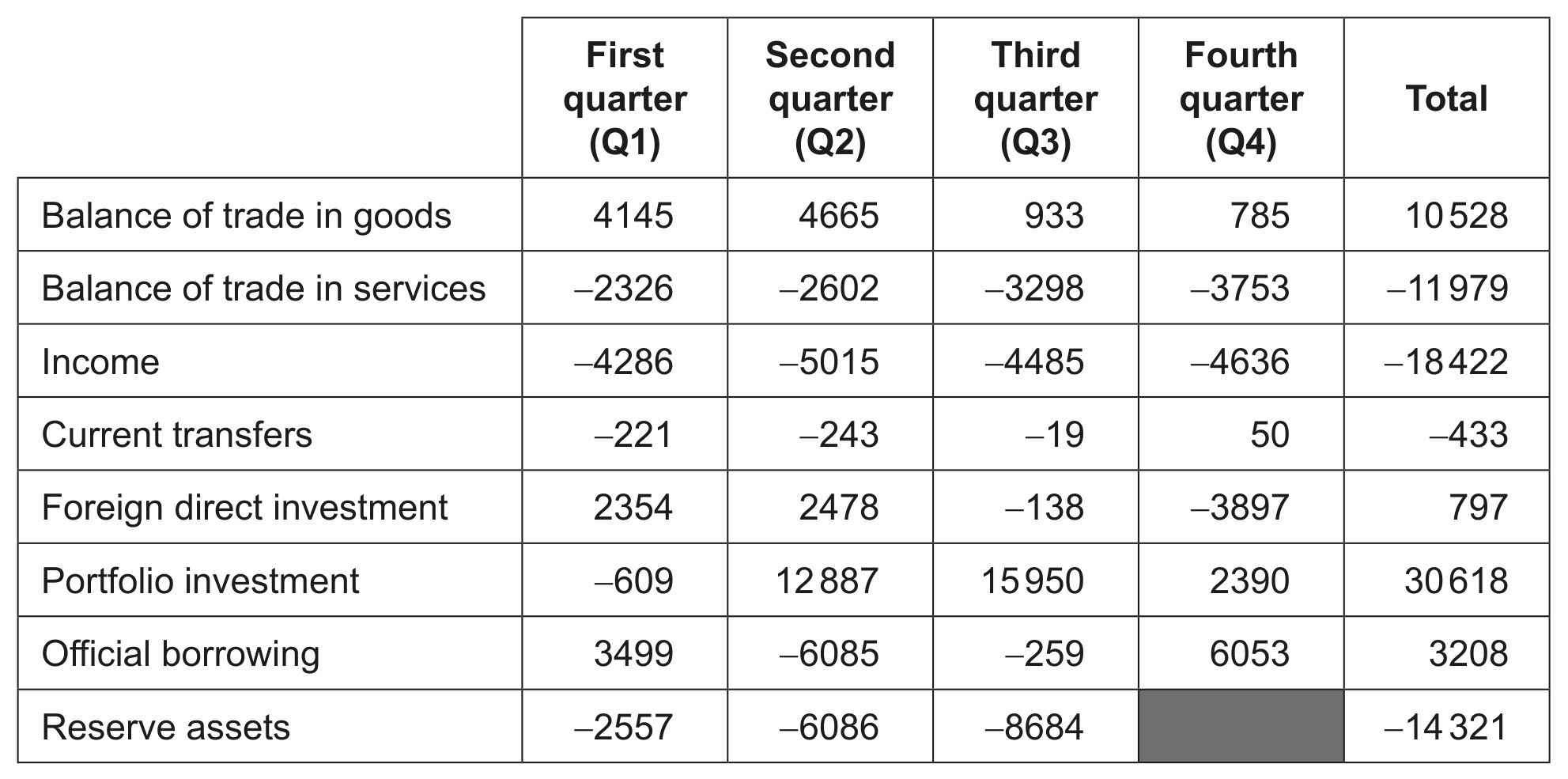
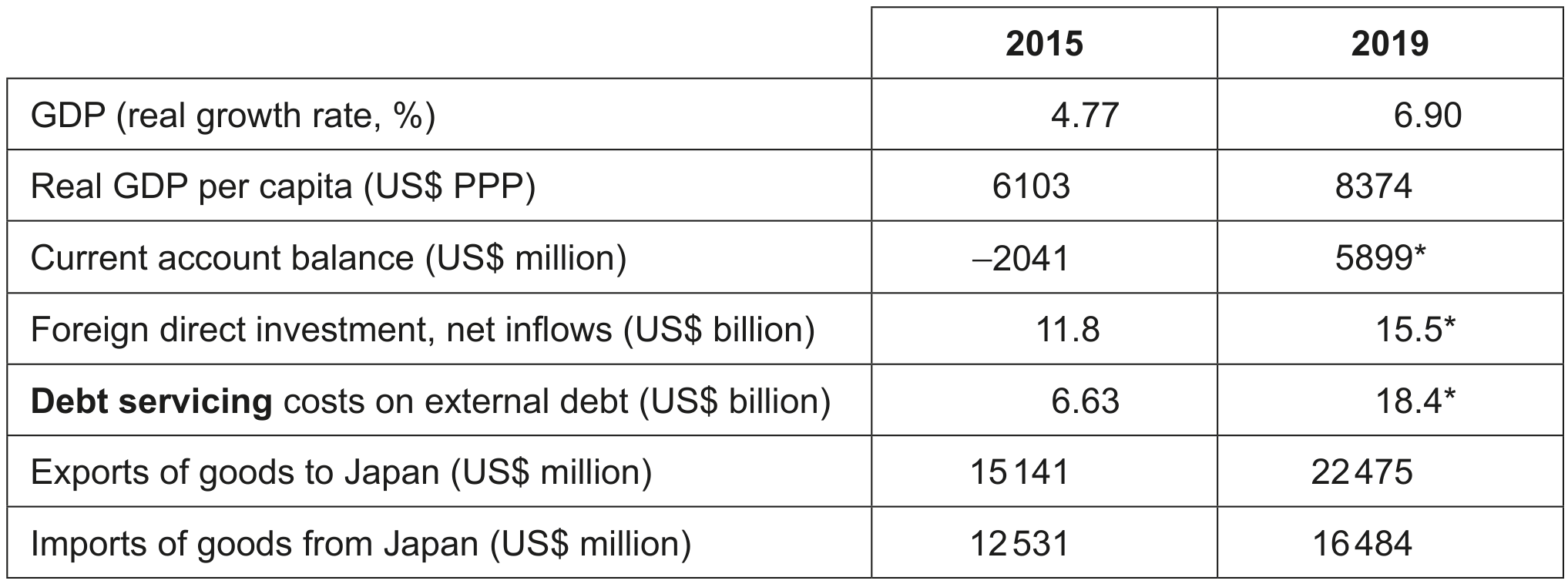
Table 1: Economic data for Vietnam

Table 1: Economic data for Vietnam

* 2018 figure

Table 2: Development data for Vietnam

Table 2: Development data for Vietnam

* 2018 figure

Question 1(b)

Question 1(b)(ii)

(a)
(i)

Using information from Table 1, calculate the change in the surplus on Vietnam's balance of trade in goods with Japan between 2015 and 2019.

[ 2 ]

Question 1

[Maximum number: 4]

Study the following extract and data and answer the questions that follow.

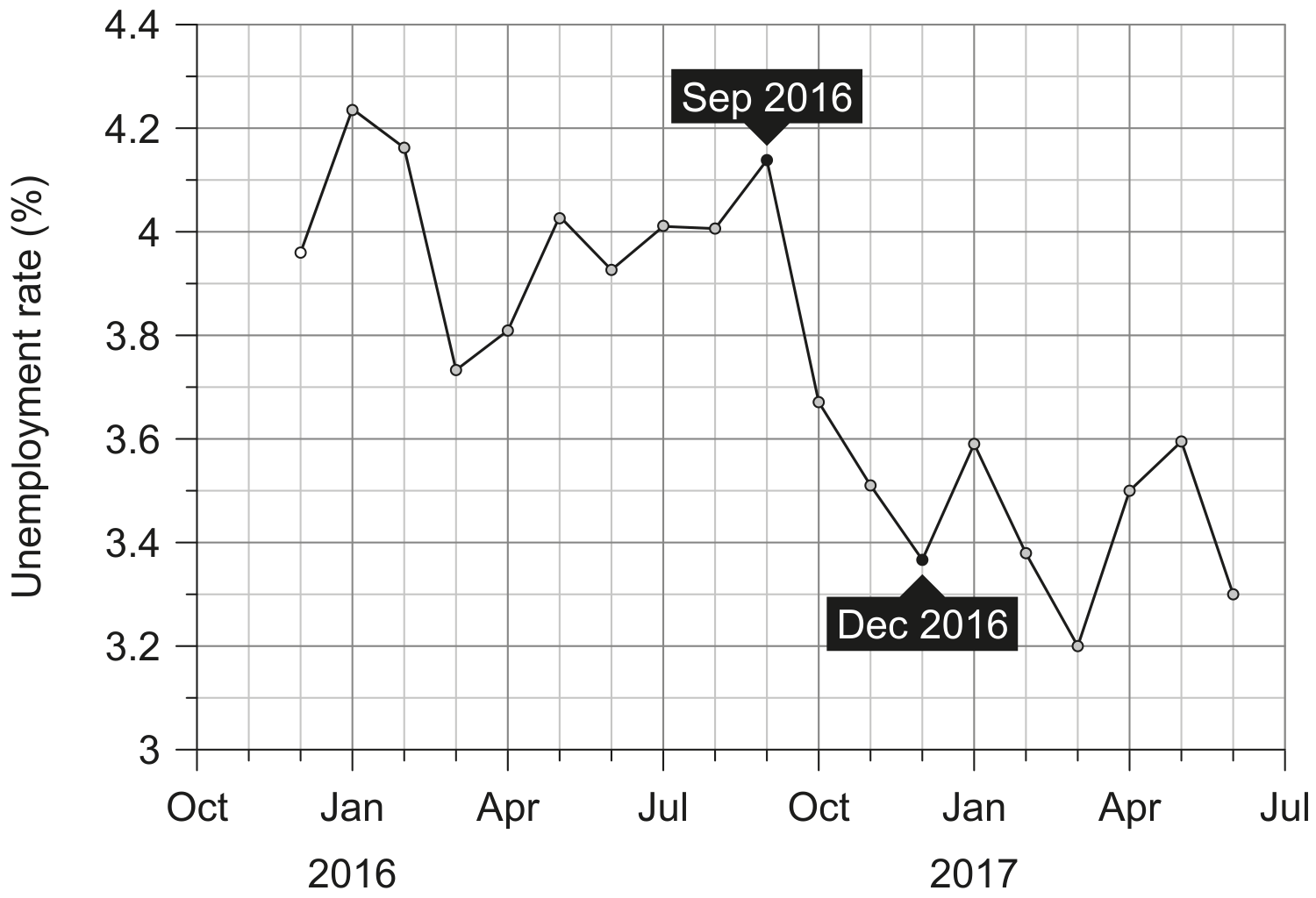
Figure 1: Mexico unemployment rate

Figure 1: Mexico unemployment rate

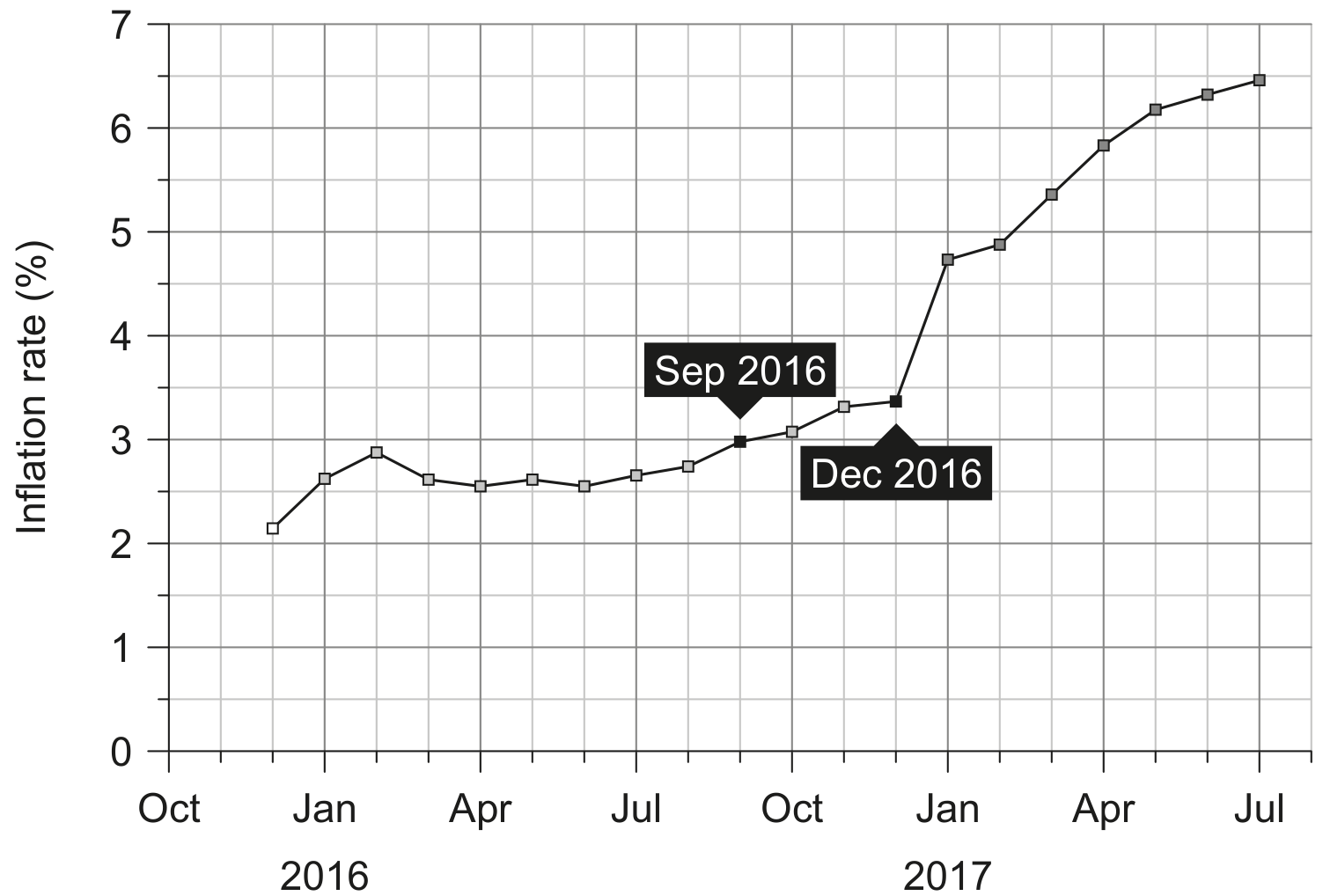
Figure 2: Mexico inflation rate

Figure 2: Mexico inflation rate

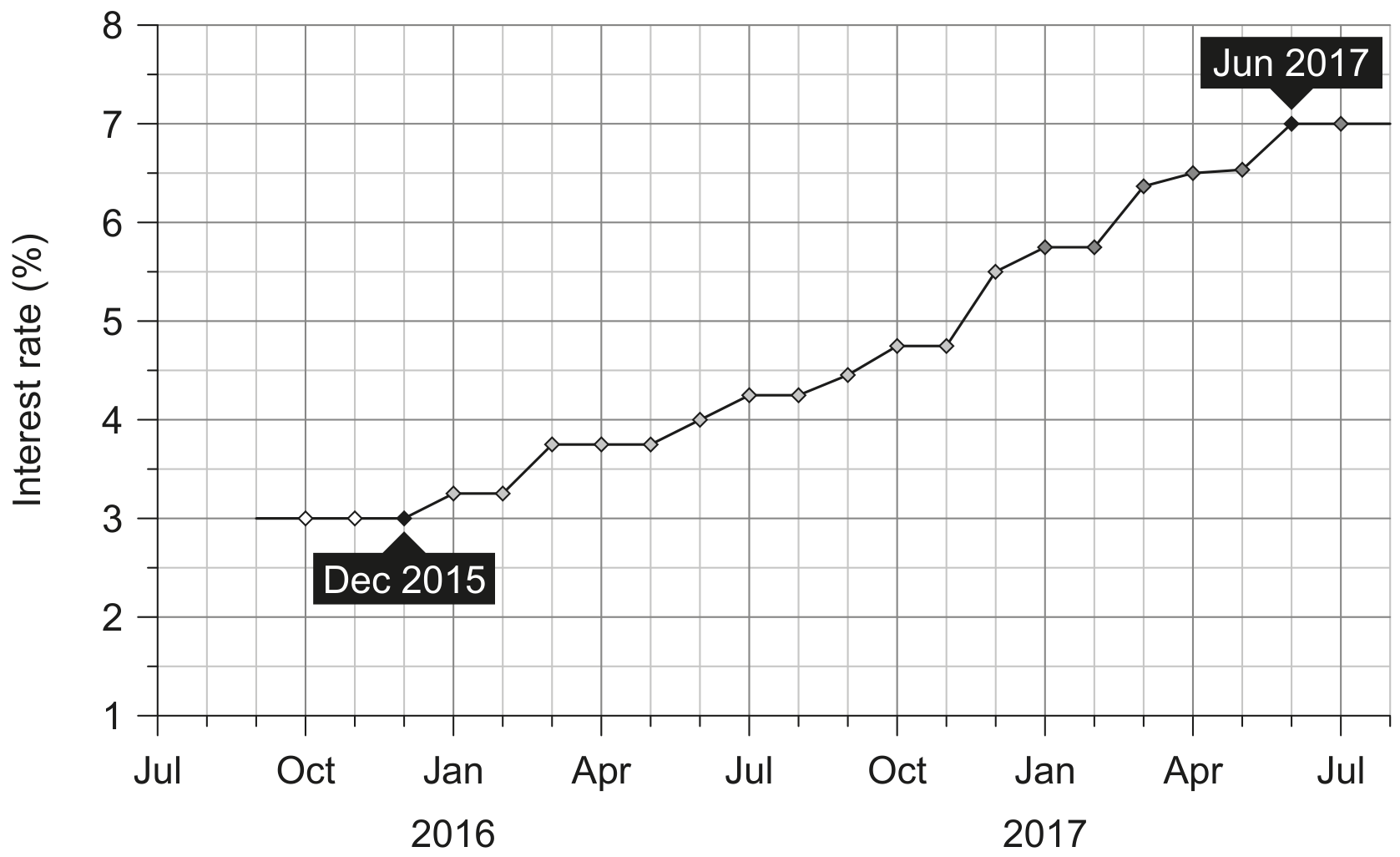
Figure 3: Mexico interest rate

Figure 3: Mexico interest rate

Question 1(c)

(a)

Given that Mexico has a current account deficit, explain why "a rapid rise in foreign direct investment (FDI) reduced Mexico's reliance on portfolio investment, which has been diminishing" (paragraph (3).

[ 4 ]
0 selected