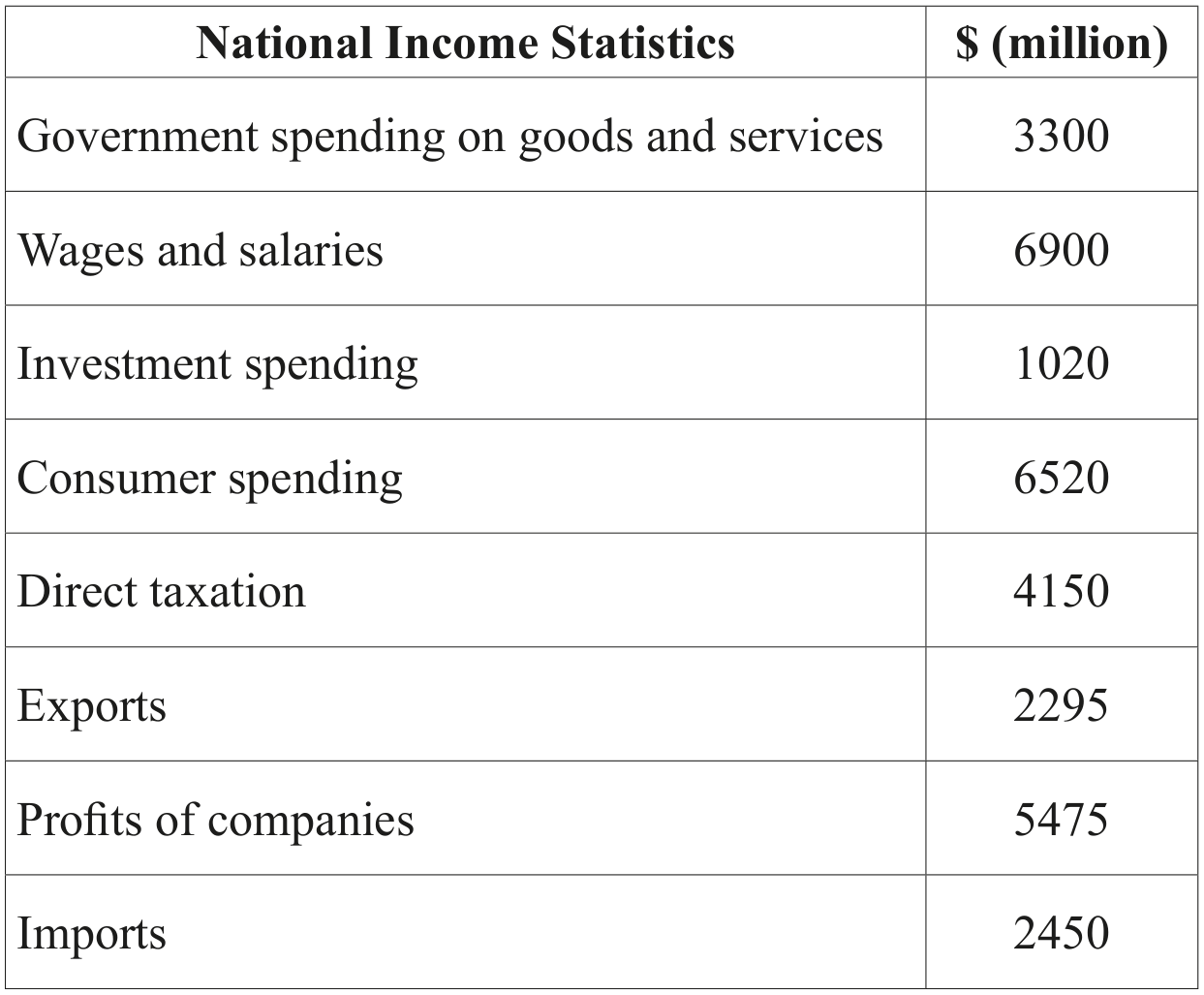
Question 1
Read the extracts and answer the questions that follow.
Text A - Overview of Mexico
(1) Mexico, with its abundant natural resources, is the second largest economy in Latin America. However, compared to other Latin American countries, Mexico has underperformed. Its annual economic growth rate averaged 2.5 % between 1994 and 2019. Per capita income rose more slowly, at an average rate of less than 1 % annually.
(2) Government expenditure has been rising, while taxation revenue has been stable or falling. Therefore, there is concern about the increasing government debt. If there is a recession, automatic stabilizers will increase the budget deficit, further raising the level of government debt. However, the International Monetary Fund (IMF) forecasts that government debt will stabilize in the mid-2020s, at around 65 % of gross domestic product (GDP).
(3) The oil sector makes an important contribution to Mexico's economy. Earnings from this sector were about 30 % of total government revenue in 2019. However, as countries increase their use of alternative energy sources, the long-term trend of falling oil prices will probably continue.
4
(5) Since 1994, the exchange rate for the peso (Mexico's currency) has been floating. In March 2020, the rate changed from 18 pesos per United States (US) dollar to 25 pesos per US dollar. During 2020, the deficit on the balance of trade in goods continued to widen. However, by April 2021 the trade balance had changed to a surplus as exports of manufactured goods rose strongly. The deficit on the current account has also been narrowed by rising net remittances.
Text B - Free trade agreements
(1) The North American Free Trade Agreement (NAFTA) was a three-country accord negotiated by the governments of Canada, Mexico, and the United States that entered into force in January 1994. NAFTA eliminated most tariffs on products traded between the three countries, with a major focus on liberalizing trade in agriculture, textiles, and automobile manufacturing. The deal also sought to protect intellectual property, establish dispute resolution mechanisms, and through side agreements, implement labor and environmental safeguards. Trade among the NAFTA members tripled over the following 25 years, partly due to trade disputes between the US and China.
(2) Following the establishment of NAFTA, productivity increased in Mexico. US and Canadian firms viewed Mexico as a low-cost location for factories, which could improve their competitiveness. Therefore, foreign direct investment (FDI) into Mexico grew significantly throughout the 1990s and early 2000s. In the industrial north of Mexico, high-tech manufacturing factories were established and wages increased. However, the agricultural south did not benefit from the FDI. Agricultural exports from Mexico did increase, but Mexican farmers, especially corn producers, faced competition from subsidized US agriculture.
(3) The wage differential between the US and Mexico was predicted to decrease significantly, but a large wage gap remains. NAFTA's effect on employment has been mixed. Some workers became unemployed when their firms lost market share due to increased competition, while others gained from the creation of new market opportunities.
(4) In 2020, NAFTA was renegotiated as the US-Mexico-Canada Agreement, which kept elements of NAFTA, while adding provisions regarding digital trade and financial services. The requirement that a high proportion of the inputs used in exported goods must come from member countries may mean that the cheapest inputs cannot be used. There are also additional rules to protect the environment and support labour rights. For example, 40 % of the value of the components in each vehicle exported from Mexico must come from factories paying a wage of at least US$16 per hour. As a result, the incomes of Mexicans who find industrial employment are raised.
Text C - Access to banking and finance in rural areas
(1) The persistence of income inequality in Mexico is partly due to domestic factors, such as underdeveloped financial institutions and low productivity in the large informal sector. Improving access to banking and finance could significantly benefit low-income households and small firms.
(2) The Expanding Rural Finance Project aims to provide finance for women, young people, and small firms in rural areas where there are no commercial banks. Over 170000 loans (averaging US$1850 per loan) were provided from 2016 to 2020. Among the recipients, 76 % lived in rural areas and 81 % were women.
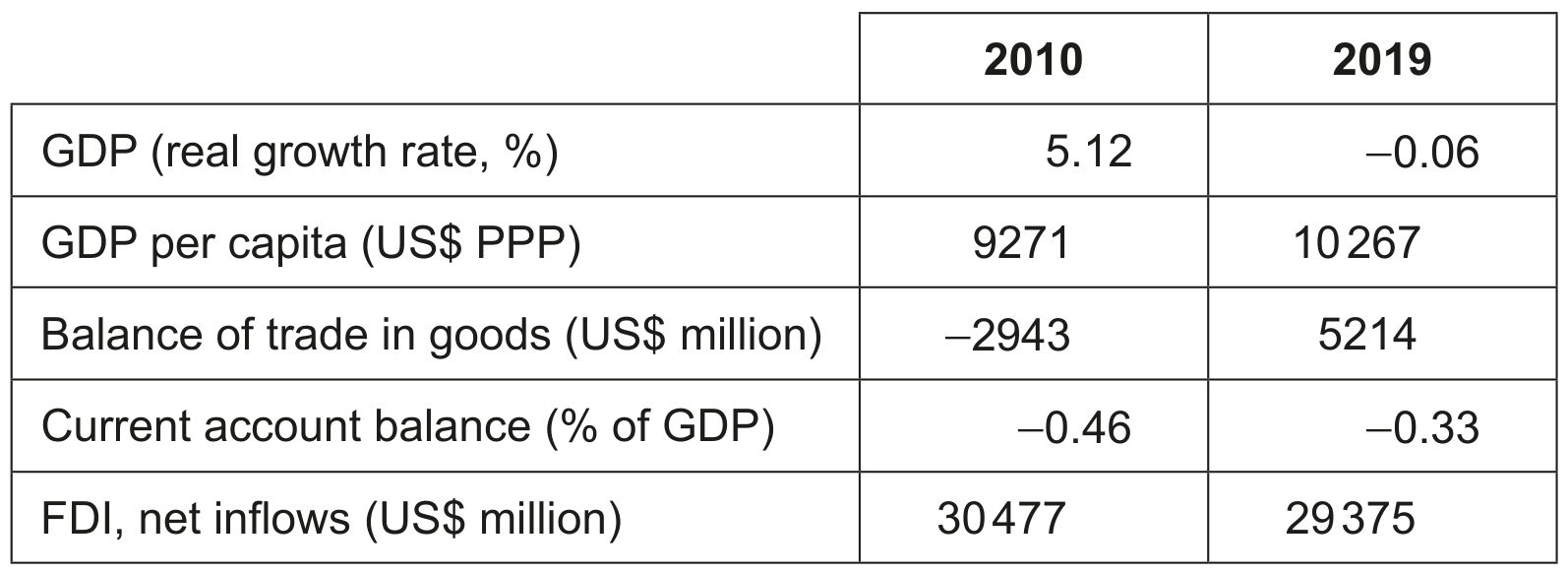
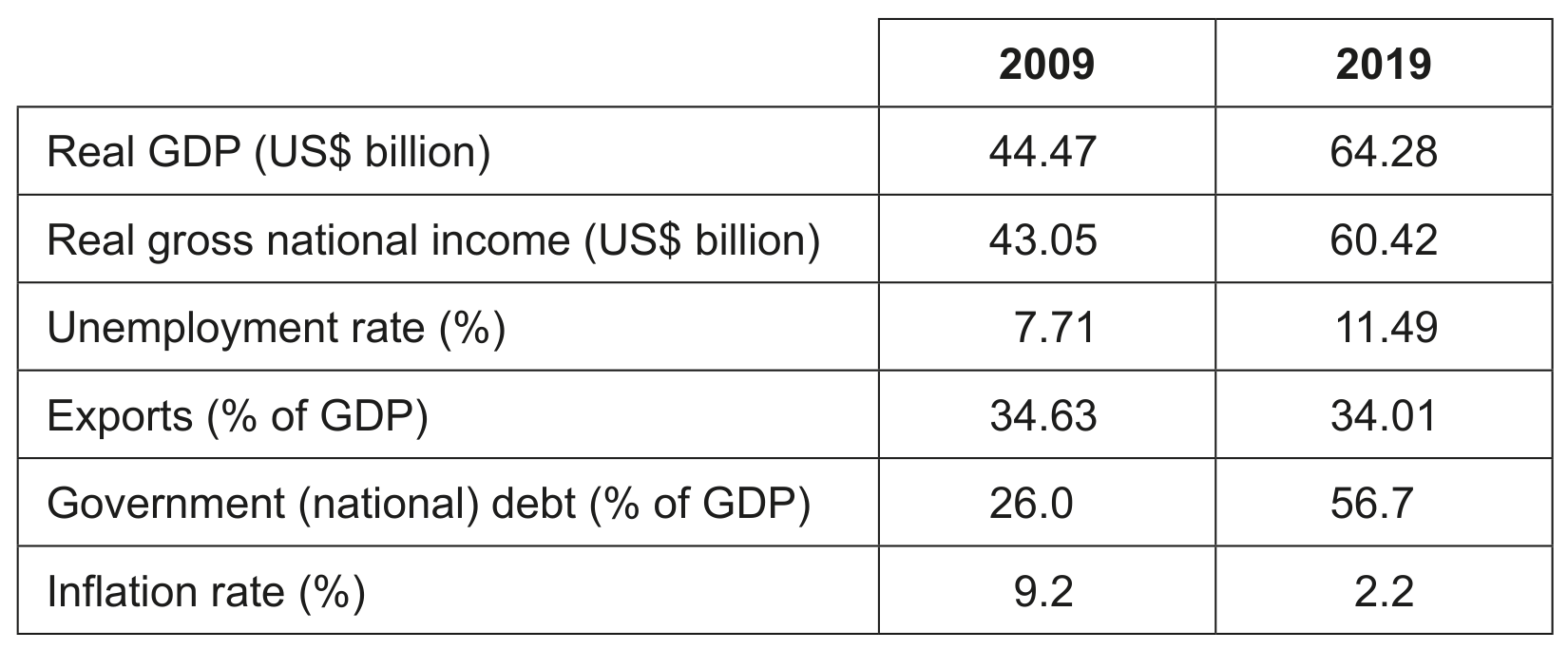
Table 1: Economic data for Mexico
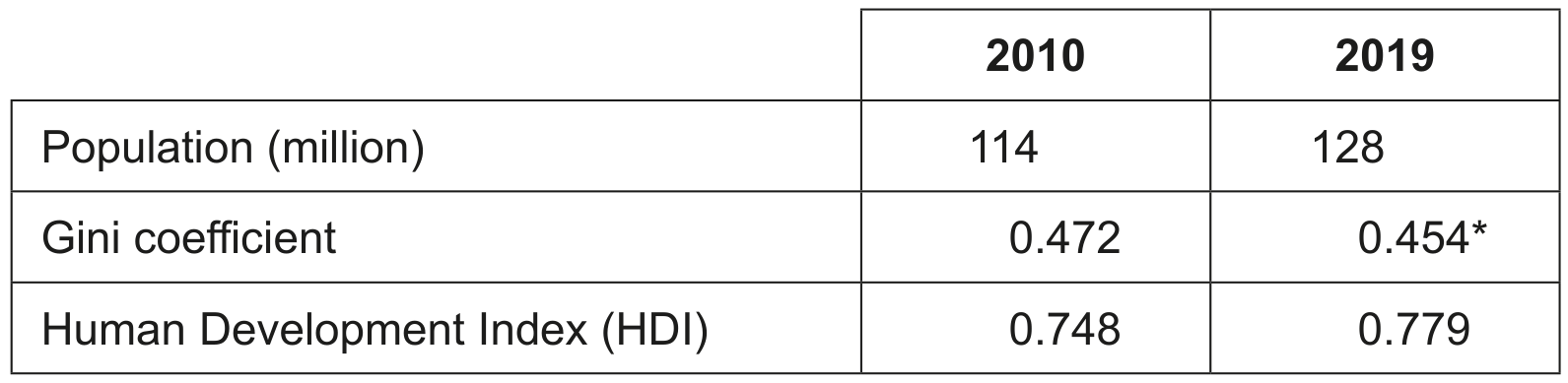
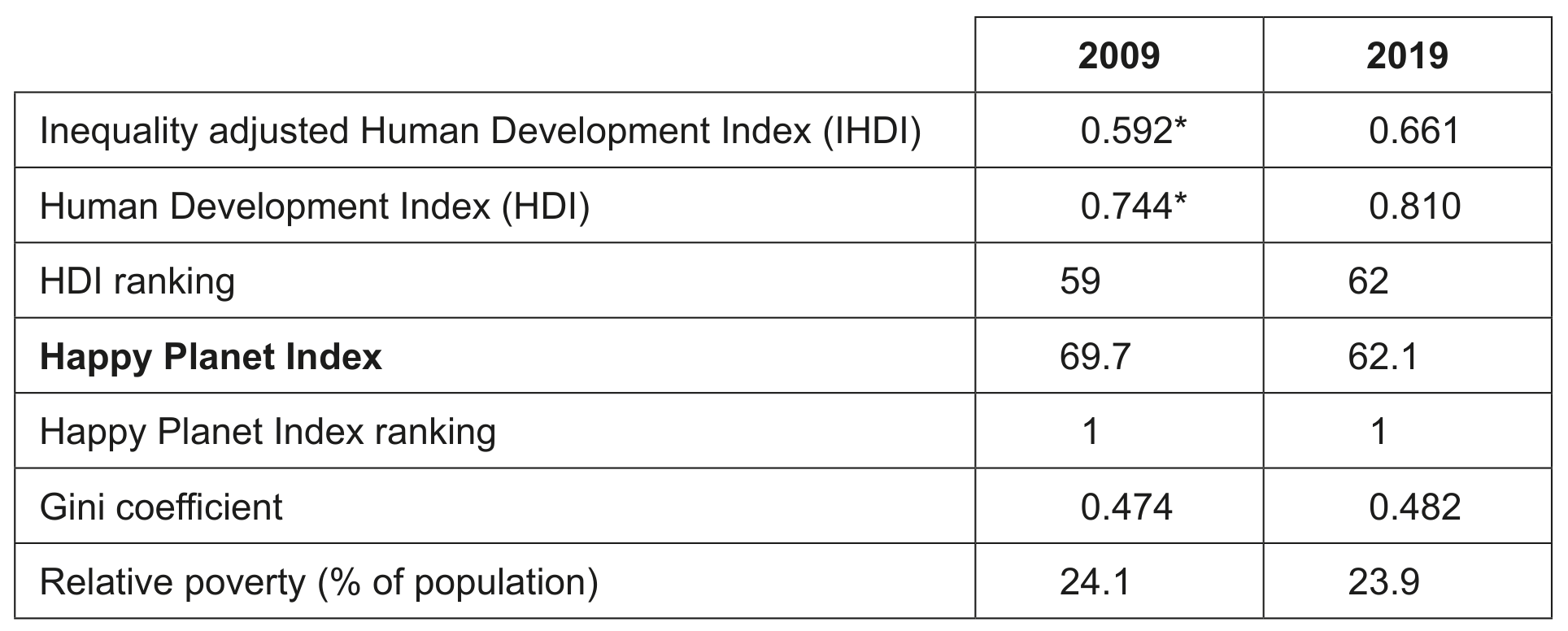
Table 2: Development data for Mexico
*estimate
Question 1(c)
Using a business cycle diagram, explain how automatic stabilizers will affect the decrease in real GDP that occurs during a recession (Text A, paragraph 2).