EduNinja

IB Economics HL4.3 Arguments for and against trade control/protectionQuestion Bank

Question 1

[Maximum number: 2]

Study the following extract and answer the questions that follow.
Canadian drywall tariffs will continue

(1) Recently imposed Canadian tariffs on drywall imports have pushed up the cost of building a new home by thousands of Canadian dollars (CA$) in the last four months. Drywall is a pre-made wall section that is used in the construction industry for building houses. Doubt as to whether the tariffs will remain is causing uncertainty for building firms, drywall manufacturers and homeowners.

(2) For now, higher prices will continue following a ruling by the Canadian International Trade Tribunal (CITT) this week. The tribunal found that United States (US) firms had been dumping drywall products into Western Canada over the past few years, harming the Canadian drywall industry.

(3) The ruling will end preliminary tariffs of up to 276 % imposed by Canada on imports of drywall from the US. However, they will be replaced by permanent, variable tariffs that would be imposed on imported drywall products whose prices fall below the minimum prices determined by the CITT.

(4) "The preliminary tariff was very damaging to homebuilding," said a building industry spokesperson. "Not just homebuilding, but hospitals, commercial buildings, indeed any new construction," he said. "It's a cost that someone had to pay for. It lowered the profits of house builders." It has been estimated that the immediate sharp increase in variable costs, following the imposition of the preliminary tariff, resulted in an extra CA$3000 to CA$5000 on the cost of building some homes.

(5) The preliminary tariffs were imposed after a dumping complaint by CertainTeed Gypsum Canada (CTGC), the last drywall manufacturer in Western Canada. CTGC has three major production sites and two gypsum quarries. Gypsum is a main component of drywall.

(6) A CTGC spokesperson had said previously that its plants and quarries could be closed, at the cost of 200 jobs, if the dumping of US drywall products continued. However, since the preliminary tariffs were imposed, the firm has announced that it has hired 30 new employees.

(7) In a separate report, the CITT found that the preliminary tariffs had been "substantially reducing competition" in Western Canada, to the detriment of Canada's homebuilders. In response, supporters of the tariff have suggested that revenue from the tariffs may be used to help areas that lost large numbers of homes and other structures in devastating forest fires.

Question 1(a)

Question 1(a)(i)

(a)
(i)

Define the term dumping indicated in bold in the text (paragraph (2)).
[ 2 ]

Question 1

[Maximum number: 2]

Study the following extract and data and answer the questions that follow.

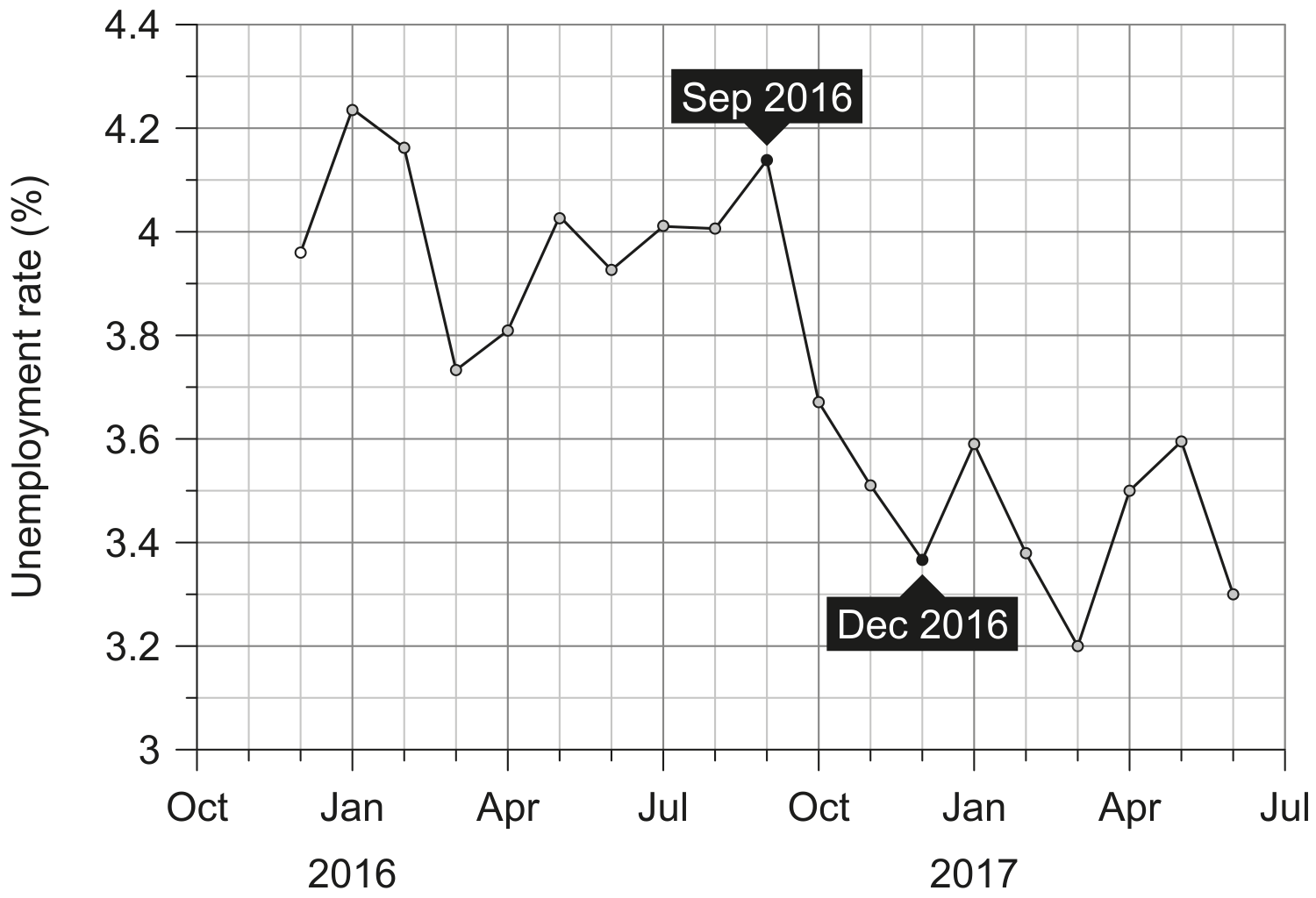
Figure 1: Mexico unemployment rate

Figure 1: Mexico unemployment rate

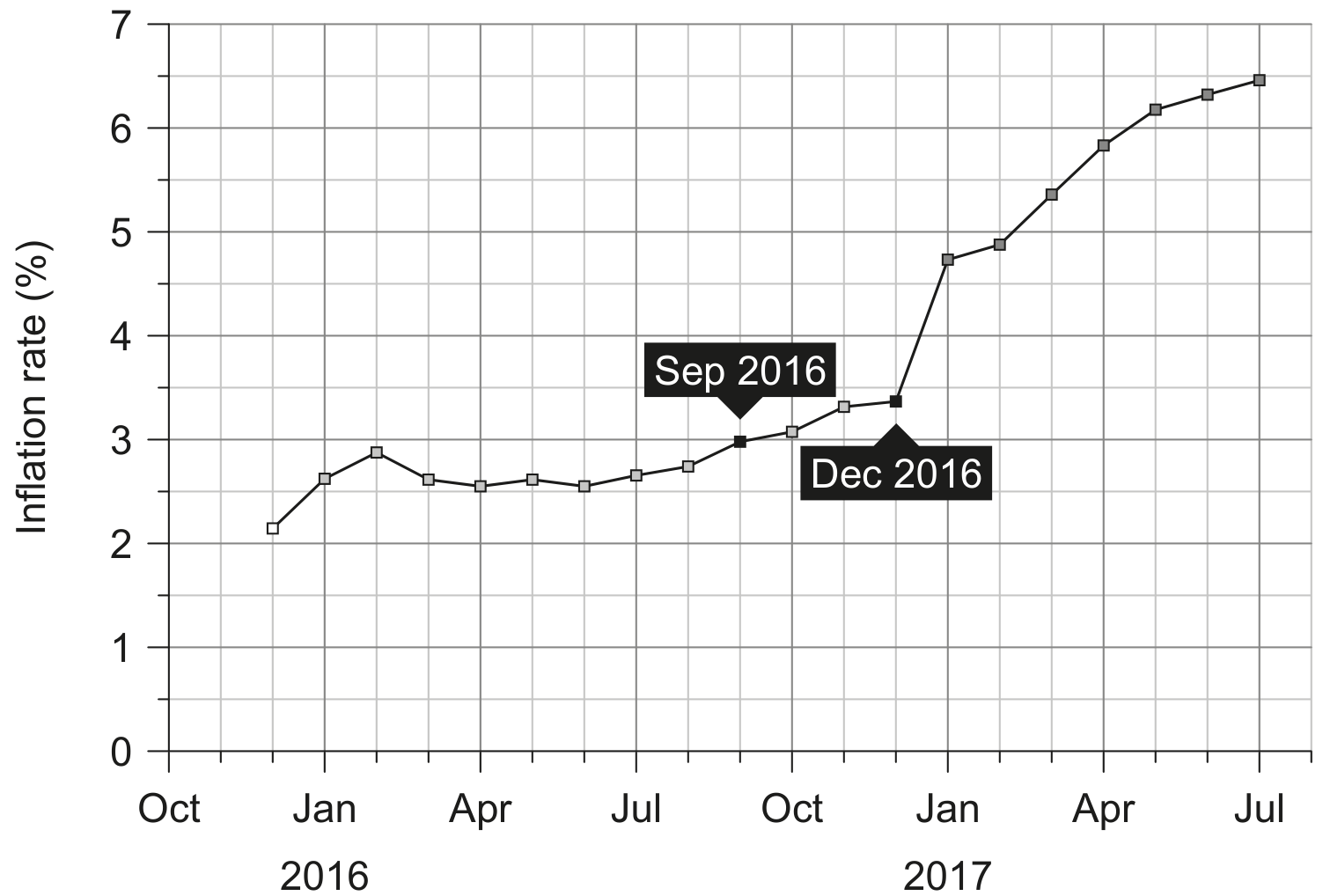
Figure 2: Mexico inflation rate

Figure 2: Mexico inflation rate

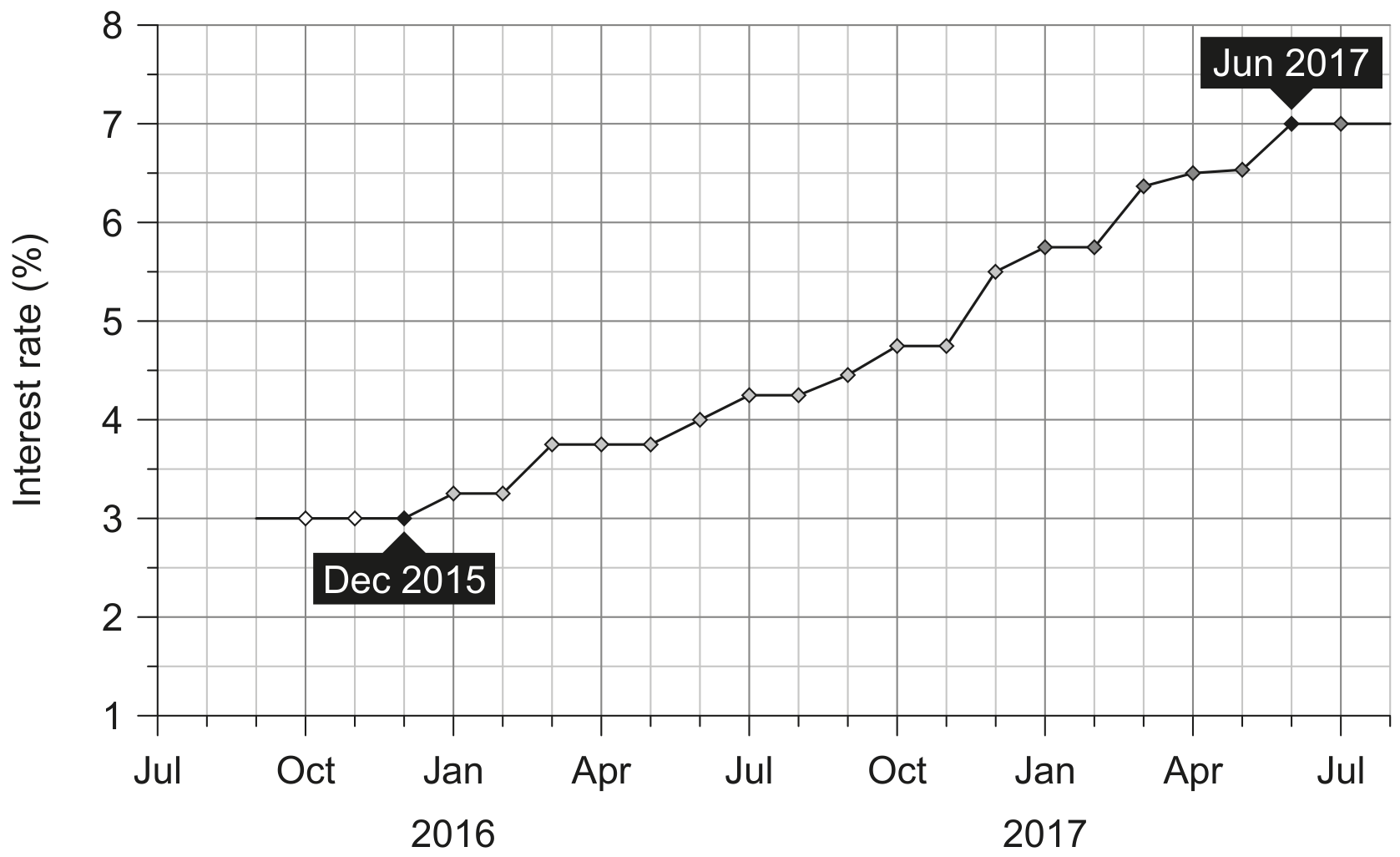
Figure 3: Mexico interest rate

Figure 3: Mexico interest rate

Question 1(a)

Question 1(a)(ii)

(a)
(i)

Define the term trade war indicated in bold in the text (paragraph (1)).

[ 2 ]

Question 1

[Maximum number: 8]

Study the extract below and answer the questions that follow.
Relief as Kenya raises tariff for steel and iron imports

(1) Steel manufacturers in Kenya are set to benefit as the government moves to protect the local manufacturing industry from cheap steel and iron imports.

(2) In 2014 a government official announced an increased tariff on steel and iron imports. "Our steel mills are closing down due to unfair competition from cheaper imported iron and steel products," he explained. "To protect and create more jobs in the iron and steel industries, tariffs on a wide range of imported iron and steel products will be increased from 0 % and 10 % to 25 %," he said. The government official further stated that as well as protecting the local industries from cheaper imports, the protectionist measures would raise an additional 2.6 billion Kenyan shillings (Kenya's currency) annually in government revenue and support economic growth.

(3) The potential of local industries to expand and create jobs through trade has been held back by a number of administrative barriers. The government remains focused on improving the business environment. Over the past six months, the government has made it easier to register a company and trade across borders. The time taken to move goods out of the main harbour has fallen sharply; non-tariff barriers such as roadblocks have also been reduced. Importers of refined industrial sugar and wheat are also pleased after the government scrapped requirements to pay unnecessary administrative charges.

(4) However, there is a belief among manufacturers that there is a need for more deregulation to lower their costs of production and in effect reduce the cost of doing business.
Kenya sees gross domestic product (GDP) growth picking up but current account a concern

(5) Good economic growth rates in neighbouring countries like Uganda help to boost Kenyan exports, particularly for agriculture that makes up nearly a quarter of the Kenyan economy. The government suggests that the main risks to growth are the slow performance of developed economies that are key export markets for Kenyan goods and services, and Kenya's large and persistent current account deficit of over 10 % of gross domestic product (GDP) in the last three years. This is a major concern for sustained economic growth and the value of the Kenyan shilling.
[Sources: adapted from www.standardmedia.co.ke, 13 June 2014; www.af.reuters.com, 25 July 2014 and www.cnbcafrica.com, 25 November 2013]

Question 1(d)

(a)

Using information from the text/data and your knowledge of economics, evaluate the claim that trade protection measures will support economic growth in Kenya.

[ 8 ]

Question 1

[Maximum number: 8]

Study the extract below and answer the questions that follow.
Relief as Kenya raises tariff for steel and iron imports

(1) Steel manufacturers in Kenya are set to benefit as the government moves to protect the local manufacturing industry from cheap steel and iron imports.

(2) In 2014 a government official announced an increased tariff on steel and iron imports. "Our steel mills are closing down due to unfair competition from cheaper imported iron and steel products," he explained. "To protect and create more jobs in the iron and steel industries, tariffs on a wide range of imported iron and steel products will be increased from 0 % and 10 % to 25 %," he said. The government official further stated that as well as protecting the local industries from cheaper imports, the protectionist measures would raise an additional 2.6 billion Kenyan shillings (Kenya's currency) annually in government revenue and support economic growth.

(3) The potential of local industries to expand and create jobs through trade has been held back by a number of administrative barriers. The government remains focused on improving the business environment. Over the past six months, the government has made it easier to register a company and trade across borders. The time taken to move goods out of the main harbour has fallen sharply; non-tariff barriers such as roadblocks have also been reduced. Importers of refined industrial sugar and wheat are also pleased after the government scrapped requirements to pay unnecessary administrative charges.

(4) However, there is a belief among manufacturers that there is a need for more deregulation to lower their costs of production and in effect reduce the cost of doing business.
Kenya sees gross domestic product (GDP) growth picking up but current account a concern

(5) Good economic growth rates in neighbouring countries like Uganda help to boost Kenyan exports, particularly for agriculture that makes up nearly a quarter of the Kenyan economy. The government suggests that the main risks to growth are the slow performance of developed economies that are key export markets for Kenyan goods and services, and Kenya's large and persistent current account deficit of over 10 % of gross domestic product (GDP) in the last three years. This is a major concern for sustained economic growth and the value of the Kenyan shilling.
[Sources: adapted from www.standardmedia.co.ke, 13 June 2014; www.af.reuters.com, 25 July 2014 and www.cnbcafrica.com, 25 November 2013]

Question 1(d)

(a)

Using information from the text/data and your knowledge of economics, evaluate the claim that trade protection measures will support economic growth in Kenya.

[ 8 ]

Question 1

[Maximum number: 8]

Study the extract and data below and answer the questions that follow.
American shrimp farmers taste victory

(1) American shrimp farmers have received good news from a United States (US) ruling that could lead to tariffs being imposed on imports from competing countries.

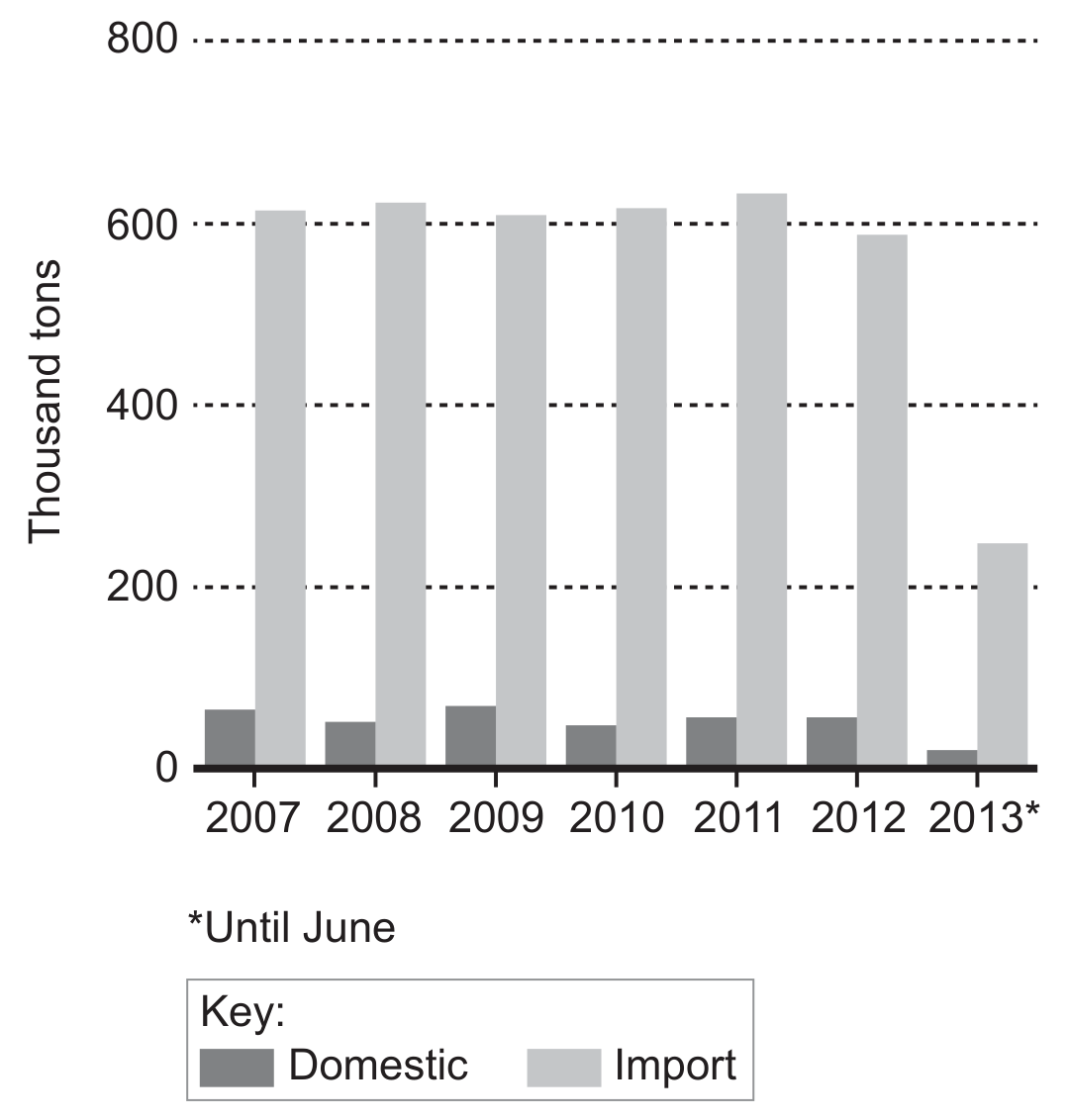
(2) US producers in the Gulf Coast were suffering from a significant oil spill in 2010. The higher fuel costs as a result of the spill have made it hard to compete with foreign shrimp farms, which they say receive government subsidies. The US producers claim such subsidies threaten to destroy the domestic shrimp business. The US imported 1200 million pounds (lb) of shrimp last year and produced 100 million pounds (lb) of shrimp domestically.

(3) The US Department of Commerce ruled that five countries - China, Ecuador, India, Malaysia and Vietnam - improperly subsidized shrimp that were exported to the American market. The department rejected accusations of improper subsidies by Thailand and Indonesia, two of the biggest US shrimp suppliers.

(4) The US International Trade Commission will now have to decide whether the subsidies harmed the American industry. If so, the US would impose tariffs on shrimp imports from the five countries. The proposed US tariffs could be as much as 54.5 %.

(5) The US shrimp farmers claim that the Indian government pays extra to cover shipping costs on shrimp going to the US and that China provides subsidized loans to its shrimp farmers. They argue that these violate World Trade Organization (WTO) rules.

(6) The five countries disputed the US Department of Commerce's decision. The Vietnamese producers state that, "This is an unfair decision affecting the lives of more than 600000 shrimp farmers and processors in Vietnam". Chinese officials have said that there was no evidence of improper Chinese subsidies and that US tariffs on Chinese shrimp would violate WTO rules.

(7) The US shrimp farmers say they need tariffs to allow them to compete fairly with Asian farmers, noting that high fuel prices are keeping some shrimp boats at the dock. "The price received by our farmers is not enough to cover their variable costs," said a lawyer, who represents the US shrimp farmers.

(8) Large US retailers and food distributors oppose the tariffs saying that the US shrimp industry had support from the oil company, BP, which has paid billions of US dollars to those affected by its 2010 oil spill.

(9) US politicians and shrimp farmers commented on problems they are facing, saying that, "not only is shrimping an industry, but it is a way of life".

Figure 1: Amount of shrimp imported to the US compared with domestic catch (thousands of tons)

Figure 1: Amount of shrimp imported to the US compared with domestic catch (thousands of tons)

Question 1(d)

(a)

Using information from the text/data and your knowledge of economics, discuss the view that the US should impose tariffs on the imported shrimp.

[ 8 ]

Question 3

Question 3(b)

(a)

Using real-world examples, discuss the view that trade protection is a more effective policy than free trade to promote employment and economic growth.

[ 15 ]

Question 2

[Maximum number: 10]

Study the extract below and answer the questions that follow.
Increase tariff on foreign chicken

(1) In the country of Trinidad and Tobago, it has been reported that the price of domestic chicken (poultry) will not increase in the near future, even if the government introduces a higher tariff on imported whole chicken from the United States.

(2) The Poultry Association of Trinidad and Tobago (PATT) hosted a news conference to reduce public concerns about reports of an increase in poultry prices. The association says that there will be an increase in prices, but this will only be on imported chicken. However, economists know that this will not be the case.

(3) The association is insisting that the current 40 % tariff on imported chicken be increased to 80 % to make things fairer between domestic and imported chicken. They argue that Trinidad and Tobago's poultry industry has been operating at a major disadvantage in comparison with other Caribbean nations. For instance, Barbados has a 180 % tariff on imported chicken, Jamaica 280 % and Guatemala 257 %.

(4) The President of PATT said imported chicken was hurting the local industry, with some firms in danger of shutting down. "Chickens are remaining longer on farms, and it's not because we want to keep them as pets, it's because they are not selling," he said.

(5) A domestic poultry producer said the local industry had to compete with goods that came from the United States, the European Union and Brazil, which were heavily subsidized by their governments. "We don't need subsidies and the government cannot afford to pay us any. We want the tariff. We don't want to ban imported chicken; once the tariff is on, everything will be fine."

(6) Trinidad and Tobago imports two types of chicken. The first type, "mechanically deboned meat (MDM)", is used to make processed meat products, such as chicken sausages and chicken burgers. The second type is whole chickens. There is a quota on MDM chickens at 0 % tariff because domestic producers have accepted that they cannot meet the local demand by firms.

(7) However, there is a concern that the importers are abusing this tariff-free access to bring whole chicken into the domestic market. Data from customs show that 3.29 million kilograms of chicken was imported in August, but almost 75 % was brought in duty-free.

(8) Local chicken sells for approximately $ 4.50 per kilogram while imported chicken, according to PATT's information from Customs, is about $ 1 to $ 2 per kilogram. "That just covers the cost of shipping the chicken. If these figures are correct, there is something very wrong," said the domestic producer.

(9) The poultry industry makes up 60\% of the agriculture sector in Trinidad and Tobago and generates over 10000 jobs and $ 1 billion in revenue.

Question 2(a)

Question 2(a)(ii)

(a)
(i)

List two reasons why the government might wish to protect the domestic poultry industry.

[ 2 ]

Question 2(d)

(b)

Using information from the text/data and your knowledge of economics, discuss the arguments for and against the protection of the domestic poultry market.

Answer one question from this section.

[ 8 ]

Question 2

[Maximum number: 8]

Study the following extract and answer the questions that follow.
The Comprehensive and Progressive Agreement for Trans-Pacific Partnership (CPTPP), Australia and Japan

(1) In 2018, Australia signed the Comprehensive and Progressive Agreement for Trans-Pacific Partnership (CPTPP)*. The agreement creates the third largest free trade area in the world, covers nearly 500 million people and is worth more than US $ 12 trillion. The members of the agreement have stated that economic integration and free trade is important to help foster good political relations and inclusive growth for all nations.

(2) The trade agreement will aim to gradually eliminate most trade protection within the member countries. The agreement will see tariffs eliminated for Australian cheese and beef exports to Japan, and increased quotas for the export of rice to Japan from 4400 to 8400 tonnes. Nikkei Asian Review reported that "Fast-food restaurants in particular are embracing the import as a way to cut costs to cope with rising wages." Additionally, Japanese food manufacturers will be able to lower production costs for rice-based meals and benefit from increased stability of input prices. The benefits from the agreement for Japan's economy are projected to exceed US$70 billion, but some industries would be negatively affected.

(3) Japanese farmers are worried about the increase in imported food from Australia. Furthermore, the Japanese government is concerned about the effects of the CPTPP on Japan's food self-sufficiency-Japan relies on other countries for over 60 % of its food. In response to these concerns the Japanese government has offered support for domestic farmers to diversify production into other crops. The government also plans to subsidize the rice farmers through the initial phase of lowering trade barriers.

(4) The agreement is said to be worth more than US $ 37 billion to Australian agricultural exports. It is hoped that CPTPP and the falling value of the Australian dollar will help Australia to reduce its current account deficit, but some economists have argued that this can take a long time. According to some estimations, the short-run price elasticity of demand (PED) for Australian exports is 0.2 and the short-run PED for imports in Australia is 0.4 . However, the long-run PED for Australian exports is 1.1 and the long-run PED for imports in Australia is 1.3.

(5) There have also been concerns about the CPTPP from trade unions in Australia. They argue that it deregulates the labour markets and gives corporations from other countries an ability to take legal action against governments for implementing laws that raise wages or protect the environment, if the foreign corporation can prove that the law hurt their commercial interests. One university lecturer said that the future costs to the taxpayer could be significant if foreign companies take the Australian government to court.

(6) The trade agreement would allow workers from other countries to work in Australia without employers being required to check if Australian citizens are available to fill the jobs before the migrant workers are employed. It is estimated this may risk 39000 jobs in Australia. Furthermore, environmental activists have expressed concerns that the negative environmental and social effects of the agreement have not been well considered. This may lead to conflicts with Australia's commitment to the United Nations' Sustainable Development Goals.
* The CPTPP includes eleven member countries: Australia, Brunei, Canada, Chile, Japan, Malaysia, Mexico, New Zealand, Peru, Singapore and Vietnam.

Question 2(d)

(a)

Using information from the text/data and your knowledge of economics, evaluate the view that free trade is beneficial to Japan's economy.

Answer one question from this section.

[ 8 ]

Question 2

[Maximum number: 8]

Study the extracts below and answer the questions that follow.
Freer trade in the Pacific Region?
Text A
In November 2011, leaders of the nine Trans-Pacific Partnership (TPP) countries - Australia, Brunei Darussalam, Chile, Malaysia, New Zealand, Peru, Singapore, United States, and Vietnam announced the outlines of an agreement that is expected to increase trade and investment among the countries, promote innovation, economic growth and development, and support job creation.
Text B

(1) Japan's Prime Minister said Japan would "start talks with other countries toward participating in TPP", indicating Japan's interest. The Prime Minister's remark has caused more debate in Japan.

(2) Japanese exporters of industrial products - cars, electric appliances and high-tech machinery - are very keen to join. The strong appreciation of the Japanese yen (Japan's currency) dramatically reduced the price competitiveness of their products last year.

(3) The toughest opposition to the TPP comes from farmers, most of them with small farms, protected for many years by government subsidies and high tariffs on imports. Japan imposes a tariff of 252 % on imported wheat and 325 % on imported sugar.
Text C

(1) Australian farmers are thrilled with the news that the Australian Prime Minister was pushing for the TPP. With a comparative advantage in many agricultural products, Australia has much to gain from a free trade agreement.

(2) Tariffs and other trade barriers in other countries are often disguised as farm subsidies, quotas and product standards to protect local producers. This restricts Australia's ability to sell many foods freely into global markets. Beef, rice, wine, lamb and sugar exports are among those most affected.

(3) Only 40 % of primary products grown in Australia are consumed domestically. Therefore, Australian producers need access to as many export markets as possible so that producers can gain from the potential economies of scale.

(4) Australia has relaxed most of its tariffs on imported food in recent years, and yet tariffs on Australian beef entering Japan, for example, remain as high as 38 %. Many nations restrict the entry of Australian beef to protect their own cattle farmers. While Japan has officially opened its doors to Australian rice, Japanese producers remain heavily subsidized by its government, therefore limiting Australia's access to the Japanese rice market.

Question 2(d)

(a)

Using information from the text/data and your knowledge of economics, discuss the possible consequences for Australian and Japanese producers of moving towards freer trade.

Answer one question from this section.

[ 8 ]

Question 2

[Maximum number: 4]

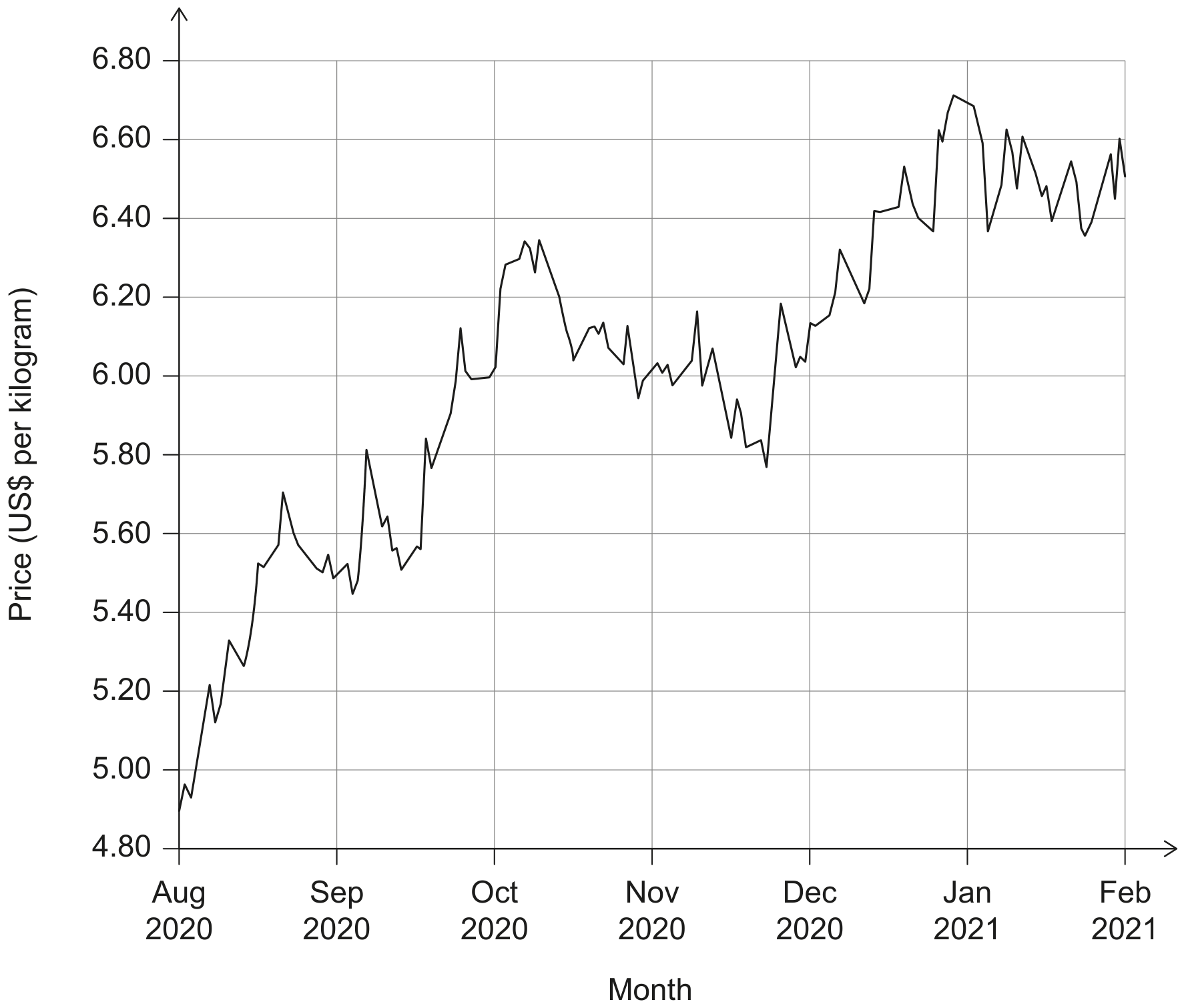
Figure 2 illustrates the daily world price of wheat in US dollars (US$) per kilogram from August 2020 to February 2021.

Figure 2

Figure 2

Question 2(a)

Question 2(a)(ii)

(a)
(i)

Using Figure 2 and the information above, explain two reasons that may account for Turkey's decision to eliminate the 20 % tariff on wheat imports from Russia.

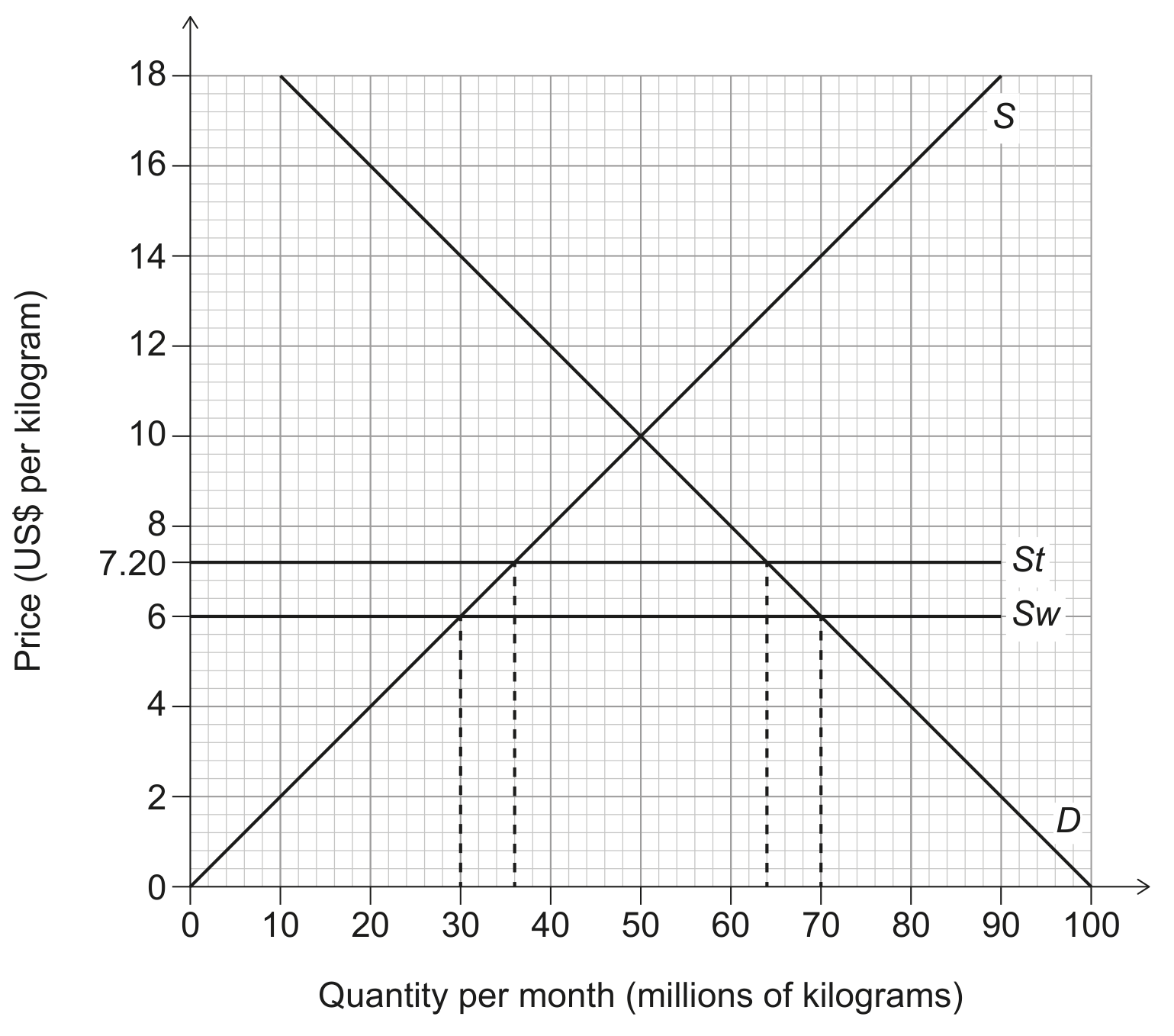
Figure 3 illustrates the Turkish wheat market. Before the 20 % tariff was eliminated, the price for wheat in Turkey was US $ 7.20 per kilogram. S is domestic supply, D is domestic demand, S w is world supply and S t is world supply with the tariff.

Figure 3

Figure 3

[ 4 ]
0 selected