EduNinja

IB Economics HL2.2 SupplyQuestion Bank

Question 1

[Maximum number: 6]

Note that widgets are an imaginary product.

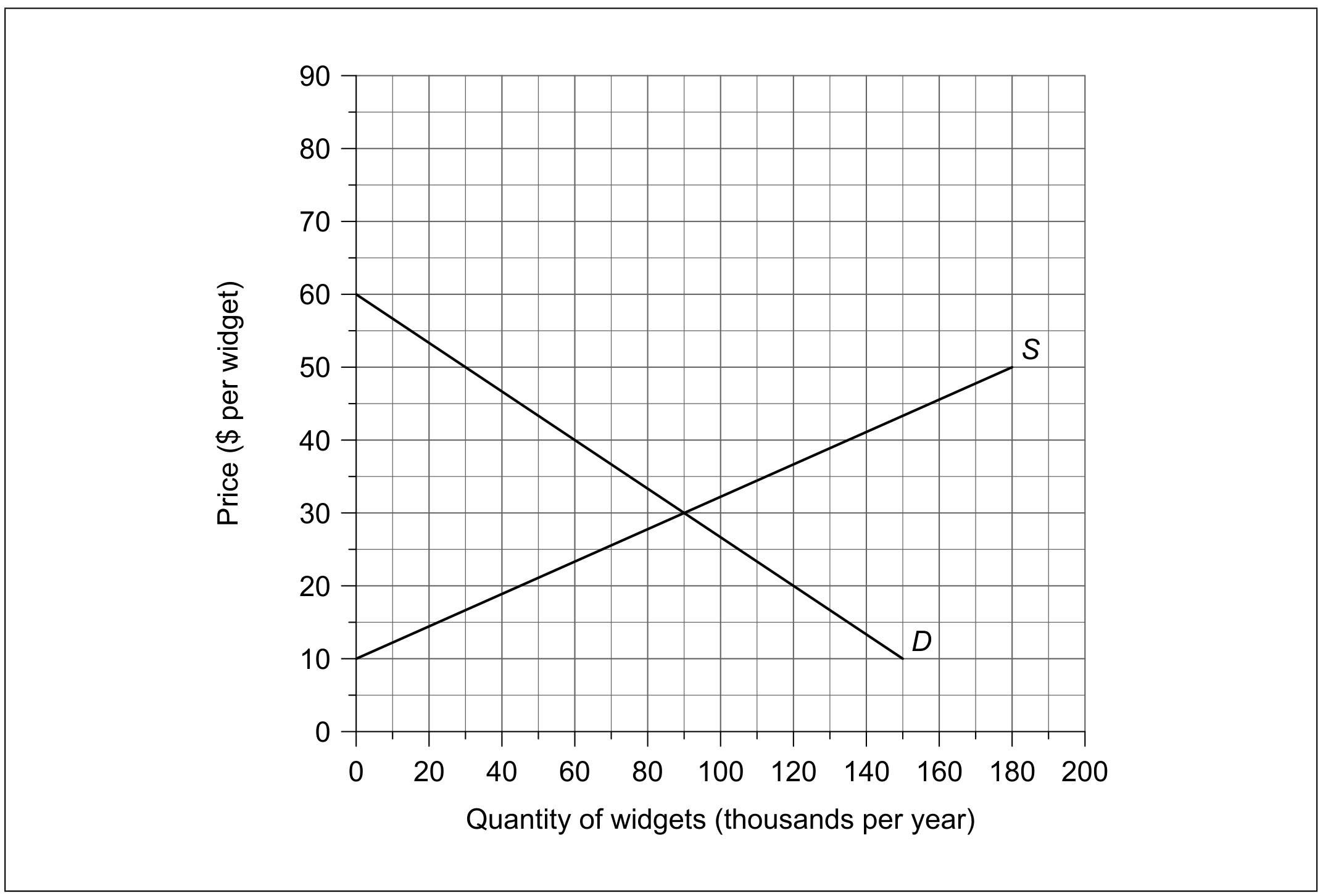
In Country X, the supply and demand for widgets are given by the functions

Qs=45+4.5PQd=1803P\begin{aligned} & Q s=-45+4.5 P \\ & Q d=180-3 P \end{aligned}

where P is the price per widget in dollars ($), Qs is the quantity of widgets supplied (thousands per year) and Q d is the quantity of widgets demanded (thousands per year).

The supply ( S ) and demand ( D ) functions are represented in Figure 1.

Figure 1

Figure 1

Question 1(a)

(a)

Identify the slope of the supply curve.

[ 1 ]

Question 1(b)

(b)

Outline the reason why the quantity supplied increases as the price rises.

An increase in costs of production has resulted in a new supply function:

Qs1=60+3PQ s_{1}=-60+3 P
[ 2 ]

Question 1(c)

(c)

Draw and label the new supply curve on Figure 1.

[ 1 ]

Question 1(d)

(d)

Using your answer to part (c), outline the reason why an increase in costs of production has resulted in a new supply function.

[ 2 ]

Question 1

[Maximum number: 3]

The demand for a product in a perfectly competitive market is given by the function

Q d=64-2 P

while market supply is given by the function

Q s=4 P-8

where P is the price per unit in dollars ($), Qd is the monthly quantity demanded and Qs is the monthly quantity supplied in thousands of units.

Question 1(a)

Question 1(a)(ii)

(a)
(i)

Outline the reason why the coefficient of price in the supply function above is positive.

[ 2 ]

Question 1(c)

(b)

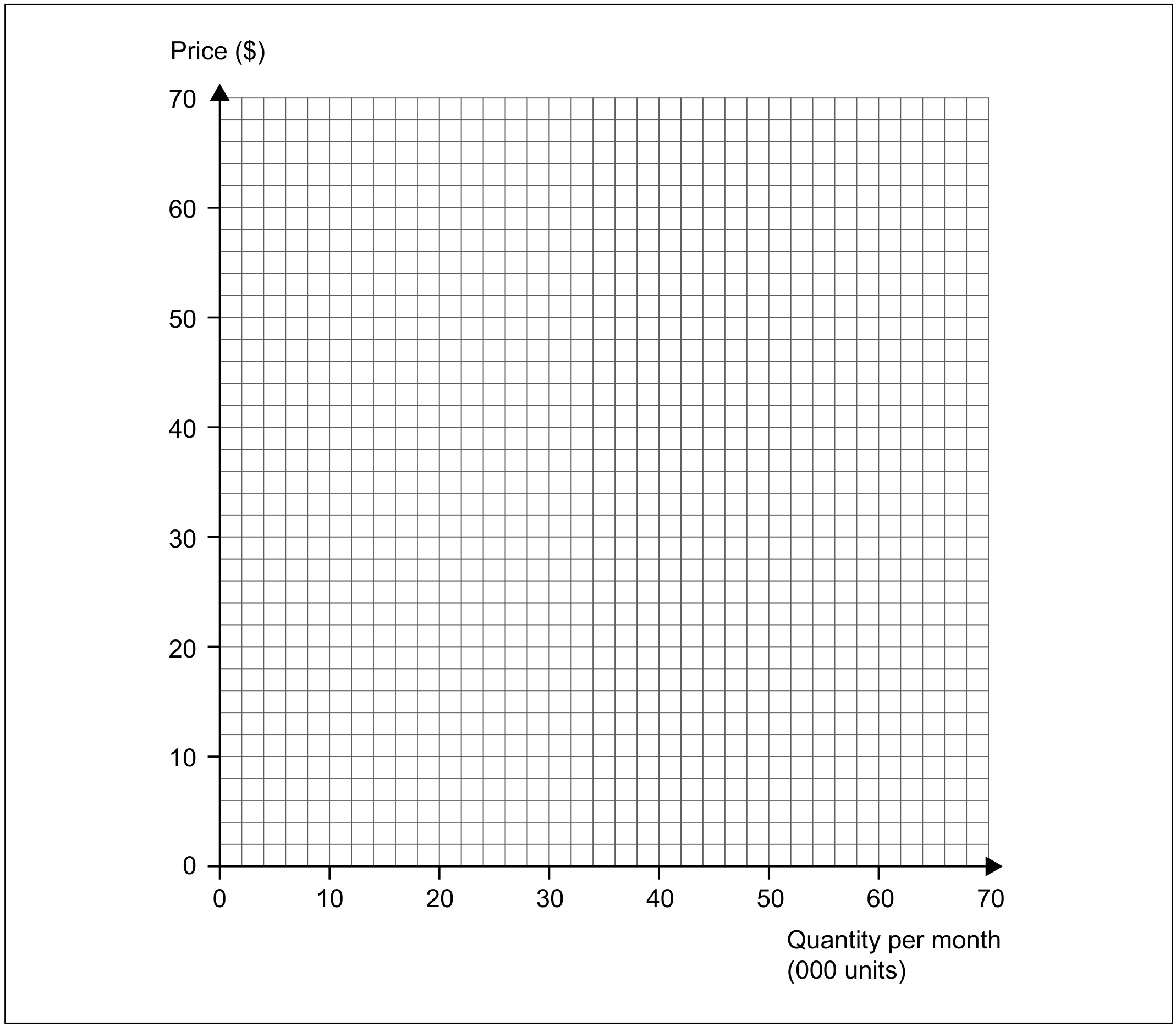
Using the functions, plot the following in the grid below:

[ 1 ]

Question 1(c)(ii)

(i)

a fully labelled market supply curve.

Question image
[ 1 ]

Question 1

Question 1(b)

(a)

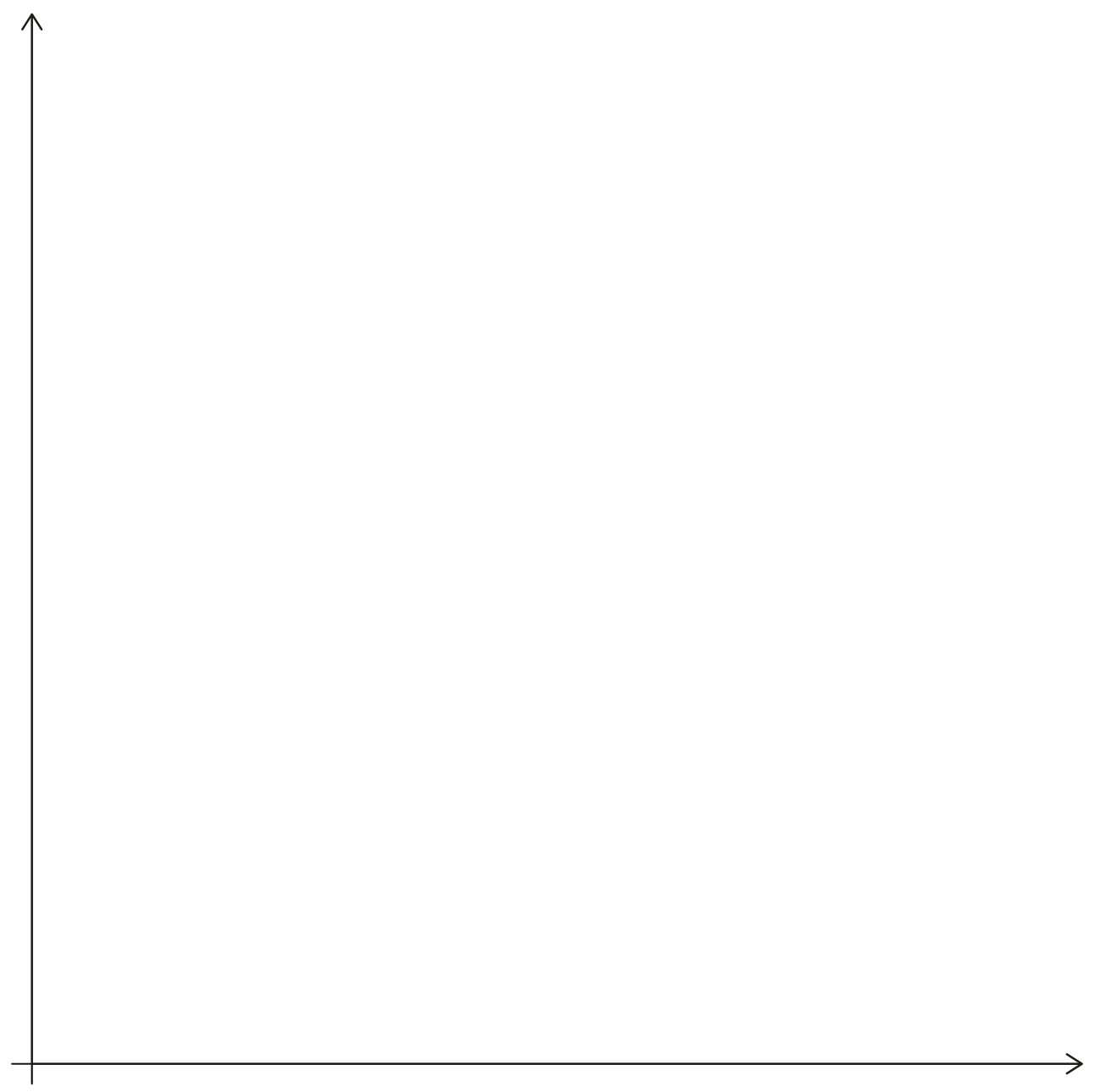
Using a fully labelled diagram, outline the relationship between marginal product (MP) and average product (AP) of labour.

Question image

The market for corn on the island of Nissos is perfectly competitive. The demand and supply for corn in Nissos are given by the functions

Qd=100.5PQs=2+P\begin{aligned} & Q d=10-0.5 P \\ & Q s=-2+P \end{aligned}

where Q d is the quantity of corn demanded per month in millions of kilograms ( kg ), Q s is the quantity of corn supplied per month in millions of kg and P is the price per kg of corn in dollars ($).

[ 4 ]

Question 1(c)

Question 1(c)(i)

(b)
(i)

Determine the slope of the market supply function for the corn farmers in Nissos.

[ 1 ]

Question 1

Question 1(a)

(a)

Explain the relationship between the law of diminishing returns and a firm's short-run cost curves.

[ 10 ]

Question 1

[Maximum number: 4]

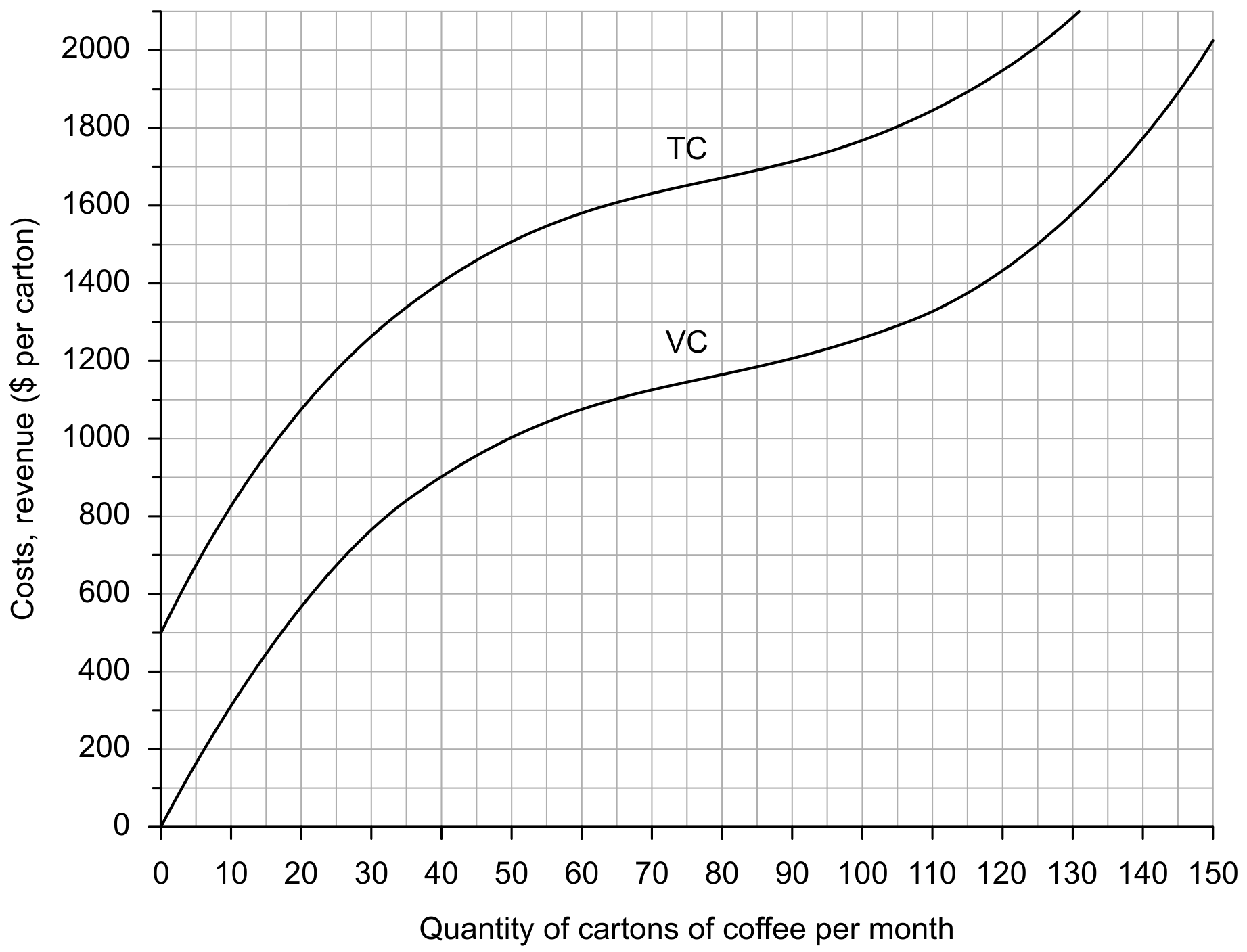
Firm A produces cartons of coffee. Figure 1 illustrates the firm's total cost (TC) and variable cost (VC) at different output levels per month.

Figure 1

Figure 1

Question 1(b)

Question 1(b)(iii)

(a)
(i)

Explain why in the short run, as output increases, marginal costs typically decrease and then increase.

The price of tea in the perfectly competitive tea market is presently $ 21 per can.

[ 4 ]

Question 1

Question 1(a)

(a)

Distinguish between decreasing returns to scale and the law of diminishing returns.

[ 10 ]

Question 1

[Maximum number: 10]

Explain the differences between economies of scale and the law of diminishing returns.

Question 1

[Maximum number: 3]

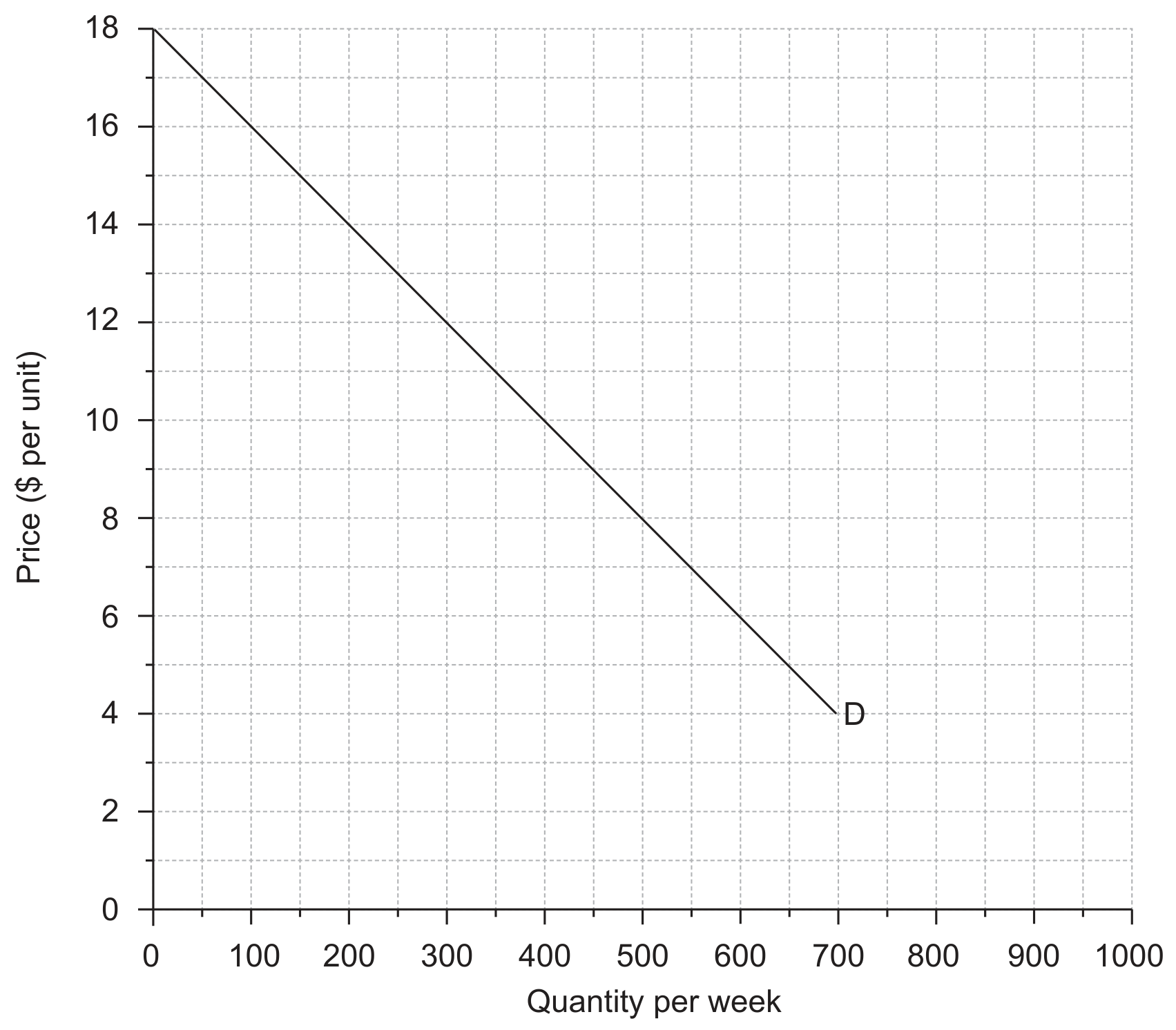
The following diagram illustrates the weekly demand for sunglasses in the town of Picton.

Question image

The market supply for sunglasses in Picton is given by the equation

Q s=-450+100 P

where Qs is the quantity supplied per week and P is the price per pair of sunglasses in dollars ($).

Question 1(a)

Question 1(a)(i)

(a)
(i)

On the diagram, plot and label the supply curve for sunglasses in Picton.

[ 2 ]

Question 1(a)(iii)

(ii)

State the price at which 50 pairs of sunglasses will be supplied.

[ 1 ]

Question 1

[Maximum number: 4]

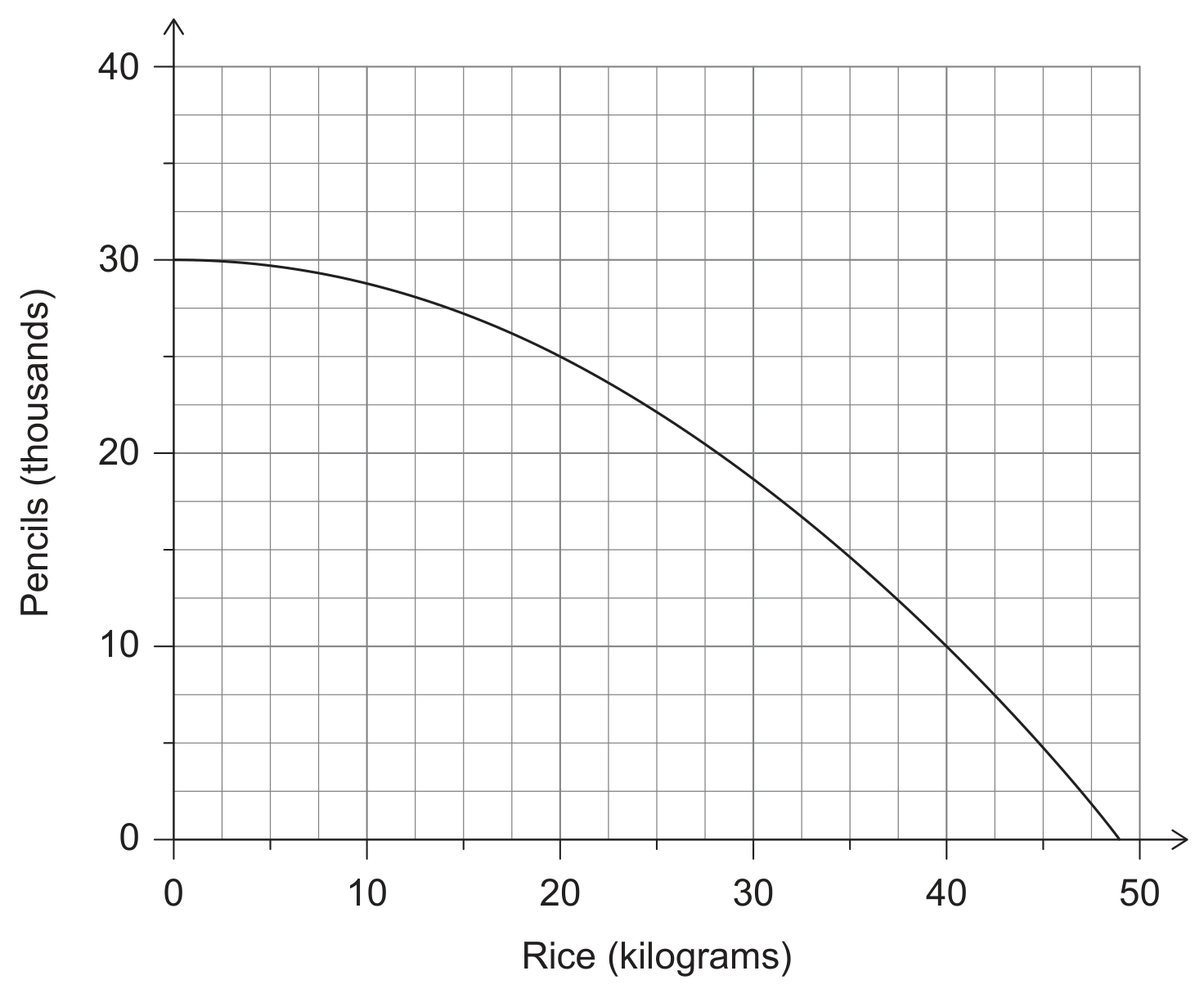
Figure 1 illustrates the production possibilities for rice and pencils in Country H. Resources in Country H are fully employed.

Figure 1

Figure 1

Question 1(f)

(a)

Using a diagram to support your answer, explain the impact on the market for Good B of an increase in the price of Good A.

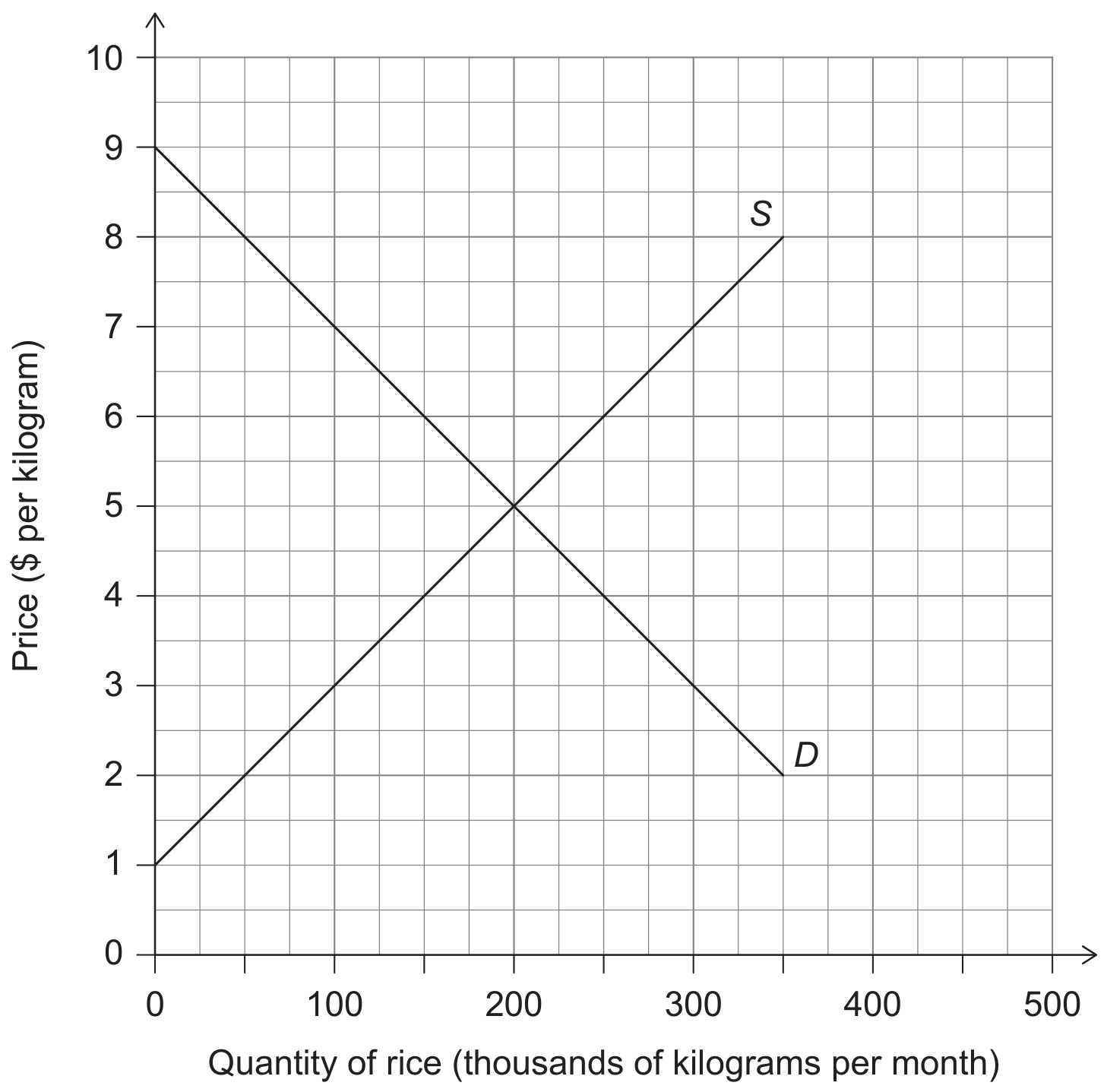
Figure 2 illustrates Islandia's demand ( D ) for and supply ( S ) of rice.

Figure 2

Figure 2

The government of Islandia wants to reduce the price of rice by 40 % in order to enable low-income households to buy enough rice to meet their needs. The government decides to achieve this by imposing a maximum price.

[ 4 ]

Question 1

[Maximum number: 4]

Study the following extract and answer the questions that follow.
Canadian drywall tariffs will continue

(1) Recently imposed Canadian tariffs on drywall imports have pushed up the cost of building a new home by thousands of Canadian dollars (CA$) in the last four months. Drywall is a pre-made wall section that is used in the construction industry for building houses. Doubt as to whether the tariffs will remain is causing uncertainty for building firms, drywall manufacturers and homeowners.

(2) For now, higher prices will continue following a ruling by the Canadian International Trade Tribunal (CITT) this week. The tribunal found that United States (US) firms had been dumping drywall products into Western Canada over the past few years, harming the Canadian drywall industry.

(3) The ruling will end preliminary tariffs of up to 276 % imposed by Canada on imports of drywall from the US. However, they will be replaced by permanent, variable tariffs that would be imposed on imported drywall products whose prices fall below the minimum prices determined by the CITT.

(4) "The preliminary tariff was very damaging to homebuilding," said a building industry spokesperson. "Not just homebuilding, but hospitals, commercial buildings, indeed any new construction," he said. "It's a cost that someone had to pay for. It lowered the profits of house builders." It has been estimated that the immediate sharp increase in variable costs, following the imposition of the preliminary tariff, resulted in an extra CA$3000 to CA$5000 on the cost of building some homes.

(5) The preliminary tariffs were imposed after a dumping complaint by CertainTeed Gypsum Canada (CTGC), the last drywall manufacturer in Western Canada. CTGC has three major production sites and two gypsum quarries. Gypsum is a main component of drywall.

(6) A CTGC spokesperson had said previously that its plants and quarries could be closed, at the cost of 200 jobs, if the dumping of US drywall products continued. However, since the preliminary tariffs were imposed, the firm has announced that it has hired 30 new employees.

(7) In a separate report, the CITT found that the preliminary tariffs had been "substantially reducing competition" in Western Canada, to the detriment of Canada's homebuilders. In response, supporters of the tariff have suggested that revenue from the tariffs may be used to help areas that lost large numbers of homes and other structures in devastating forest fires.

Question 1(c)

(a)

Using a demand and supply diagram, explain how the "imposition of the preliminary tariff" may have affected the market for new homes built in Canada (paragraph (4).

[ 4 ]
0 selected