EduNinja

IB Economics HL4.5 Exchange ratesQuestion Bank

Question 1

[Maximum number: 4]

Read the extracts and answer the questions that follow.
Text A — Costa Rica: Economic growth and development strategies

(1) In the early 1990s, Costa Rica, a Central American country with a population of approximately 5 million people, was considered an economic development success story. This stable democracy has experienced consistent economic growth (approximately 4 % annually) for the last 20 years. Some experts say this has been due to moving from a failed import substitution policy to outward-oriented economic policies. The outward-oriented policies included export promotion, diversification, trade liberalization and inward foreign direct investment (FDI). During the same period, social and environmental policies were implemented. Public education and healthcare were guaranteed for all citizens, social programmes were improved to include extensive transfer payments and minimum wages were increased. This helped the reduction in absolute poverty rates and Costa Rica became known as a global leader in environmental conservation efforts.

(2) The Dominican Republic-Central America-United States Free Trade Agreement (CAFTA-DR), was a significant move towards trade liberalization. In addition to reducing trade barriers, it established a secure and predictable environment for foreign investors. This agreement also led to the breakup of the state-owned monopolies in the telecommunication and insurance industries in Costa Rica. Additionally, trade agreements with Canada, China, the European Union (EU), Mexico, Peru and Singapore were established.

(3) Costa Rica encouraged inward FDI by lowering regulations and providing tax incentives in manufacturing industries. In 1997, Intel, a large multinational tech company from the United States (US) invested US$300 million in building a computer parts factory. Intel's investment helped diversify Costa Rica's main exports away from coffee and bananas to electronics. Moreover, the FDI allowed Costa Rica to benefit from production externalities, as multinational companies provided training to local employees. Manufacturing and services overtook agriculture in terms of contribution to gross domestic product (GDP), and Costa Rica experienced its first trade surplus in 50 years. The increase in real GDP from the FDI was significant, as the marginal propensity to consume (MPC) was 0.8 at the time.

(4) To promote diversification, export subsidies for companies in the manufacturing sector were granted. Agricultural diversification was also encouraged through subsidising farmers who were adopting new technology to produce higher value-added products, such as roasted coffee beans.
Text B - Current concerns

(1) Despite earlier successes, income inequality in Costa Rica has remained high and poverty levels have remained unchanged for several years. This has been blamed on insufficient transfer payments due to a tax system that is not progressive enough and tax exemptions offered to foreign firms. Unemployment has consistently risen, and despite high levels of spending in education, a significant number of young people have not completed secondary or higher education. The focus on higher value-added sectors did not create jobs for low skilled workers, which had a disproportionate impact on women and youth. Additionally, the social programmes have often failed, and still fail, to reach the very poor.

(2) High social and environmental spending, large increases in public sector wages, and insufficient revenue have resulted in very large government (national) debt. Most of the debt is domestic, which is raising concerns about possible crowding out.

(3) FDI has historically supported economic growth, however, domestic investment and further FDI have slowed down due to rising costs and outdated infrastructure. Additionally, the appreciating colón (Costa Rica's currency) has lowered export competitiveness, and Costa Rica remains heavily dependent on one major trading partner, the US.
Text C - "Green Trademark" environmental policy
The "Green Trademark" policy has reversed deforestation and has resulted in Costa Rica becoming one of the countries with the greatest level of biodiversity in the world. However, it is difficult to maintain the environmental focus due to pressure on government resources and the high opportunity costs associated with land use. The consistent economic growth has made it difficult for Costa Rica to reduce carbon emissions from fossil fuels. Increasing urbanization and the growth in the manufacturing sector have increased air and water pollution. Moreover, the overuse of chemicals in farming has caused river pollution, and the intensive use of land for agriculture has generated concern for environmental conservation.
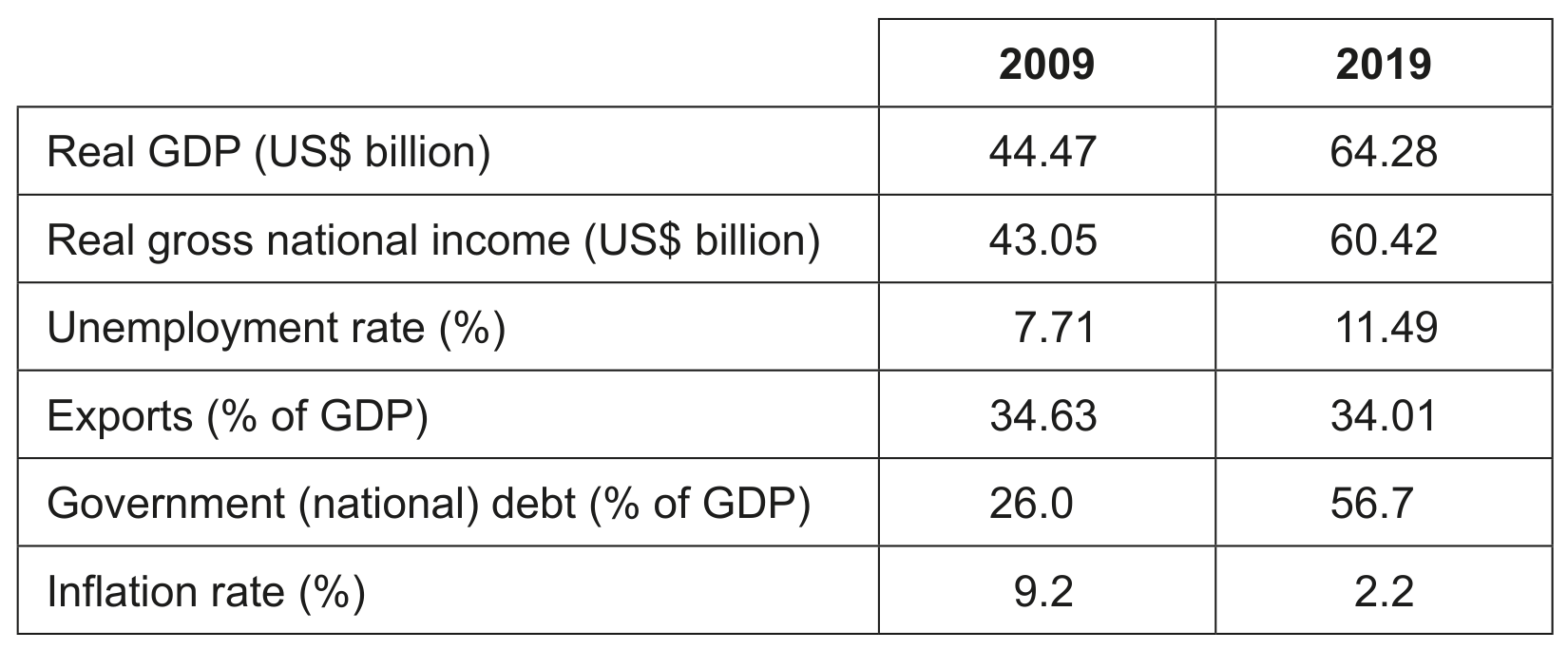
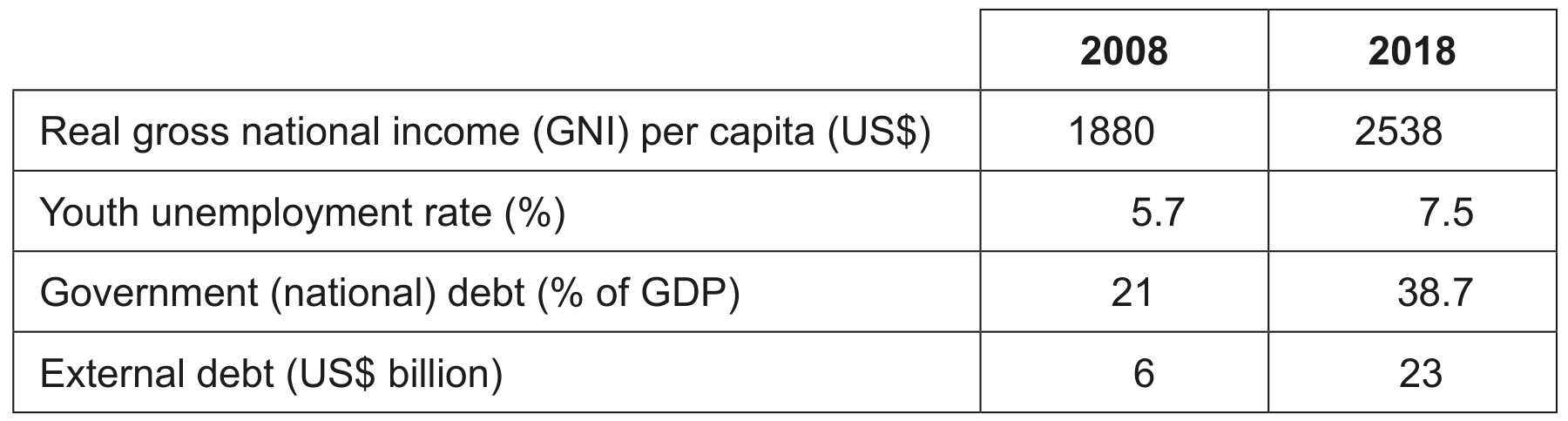
Table 1: Economic data for Costa Rica
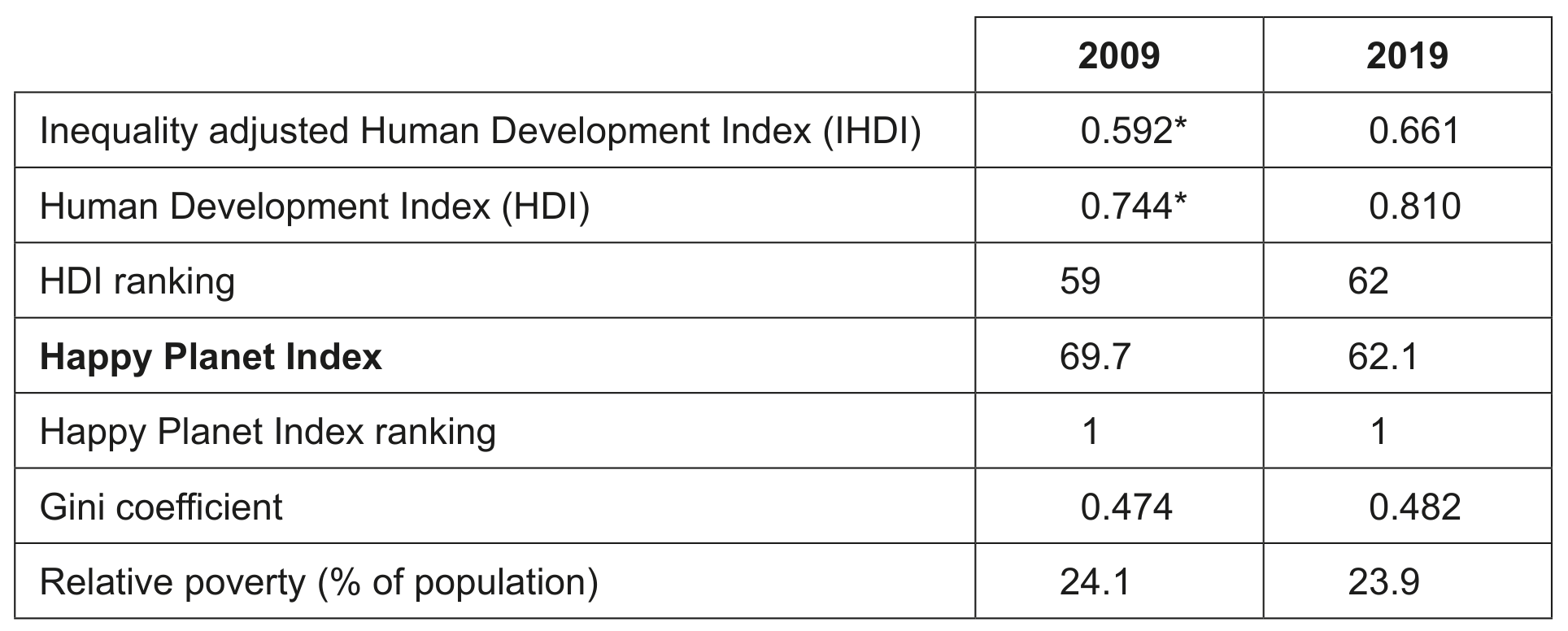
Table 1: Economic data for Costa Rica

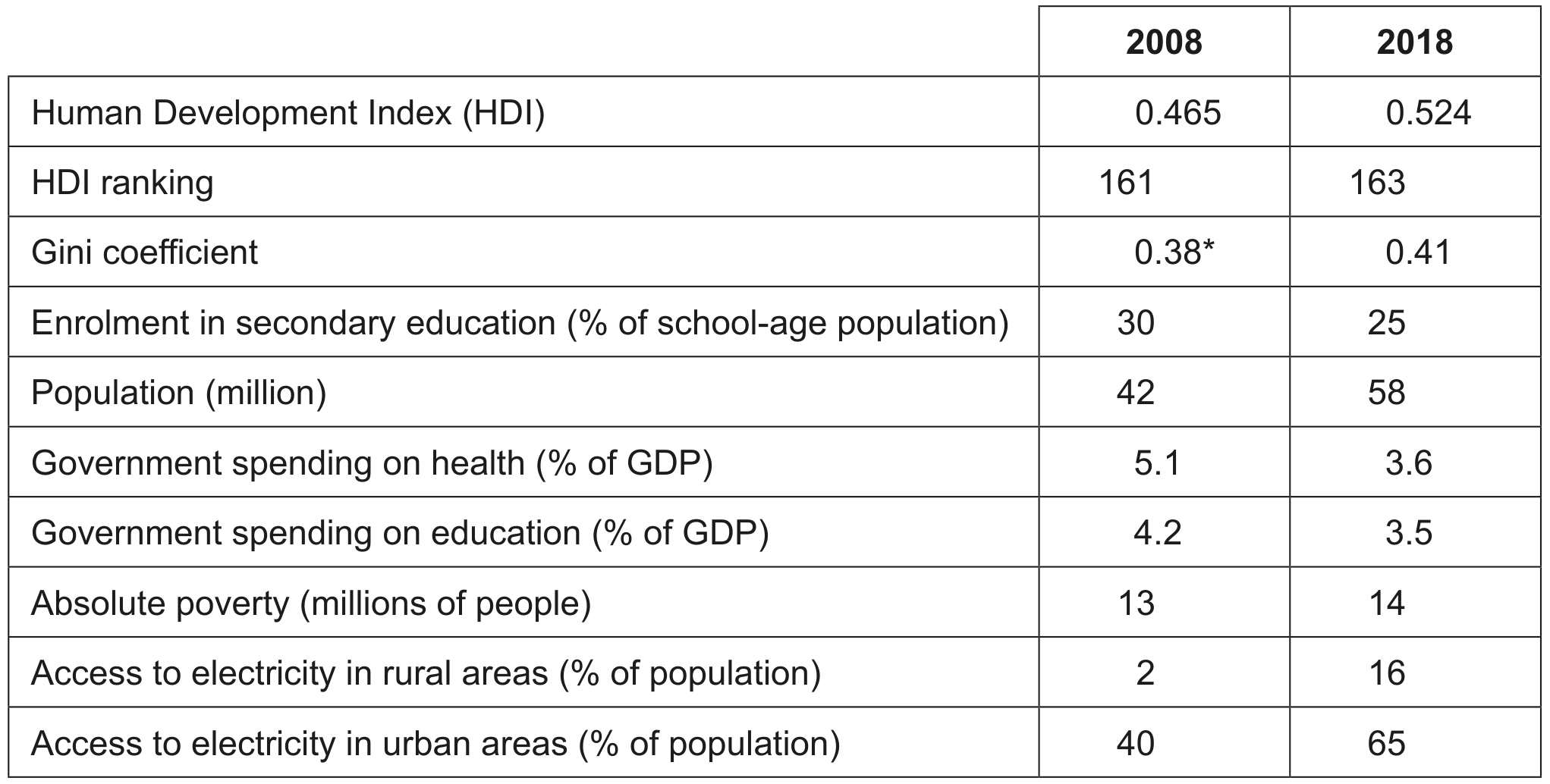
Table 2: Development data for Costa Rica

Table 2: Development data for Costa Rica

\footnotetext{
*2011 figure
}

Question 1(e)

(a)

Using an exchange rate diagram, explain how the change in the trade balance after 1997 may have changed the value of the colón (Costa Rica's currency) (Text A, paragraph 3 ).
[ 4 ]

Question 1

Question 1(a)

Question 1(a)(iv)

(a)
(i)

Describe the information regarding the Egyptian pound shown in Figure 2.

On 26 October 2022, the Egyptian pound was trading at EGP19.308 to US$1. On 10 March 2023, the Egyptian pound was trading at EGP30.850 to US$1. The nightly rate for a double room at Cairo's* Hilton Heliopolis hotel is 5965.00 Egyptian pounds.
* Cairo: the capital of Egypt

[ 1 ]

Question 1(a)(v)

(ii)

Calculate the change in the US dollar price paid between 26 October 2022 and 10 March 2023 by an American businessperson who regularly stays in this hotel when visiting Cairo for business.

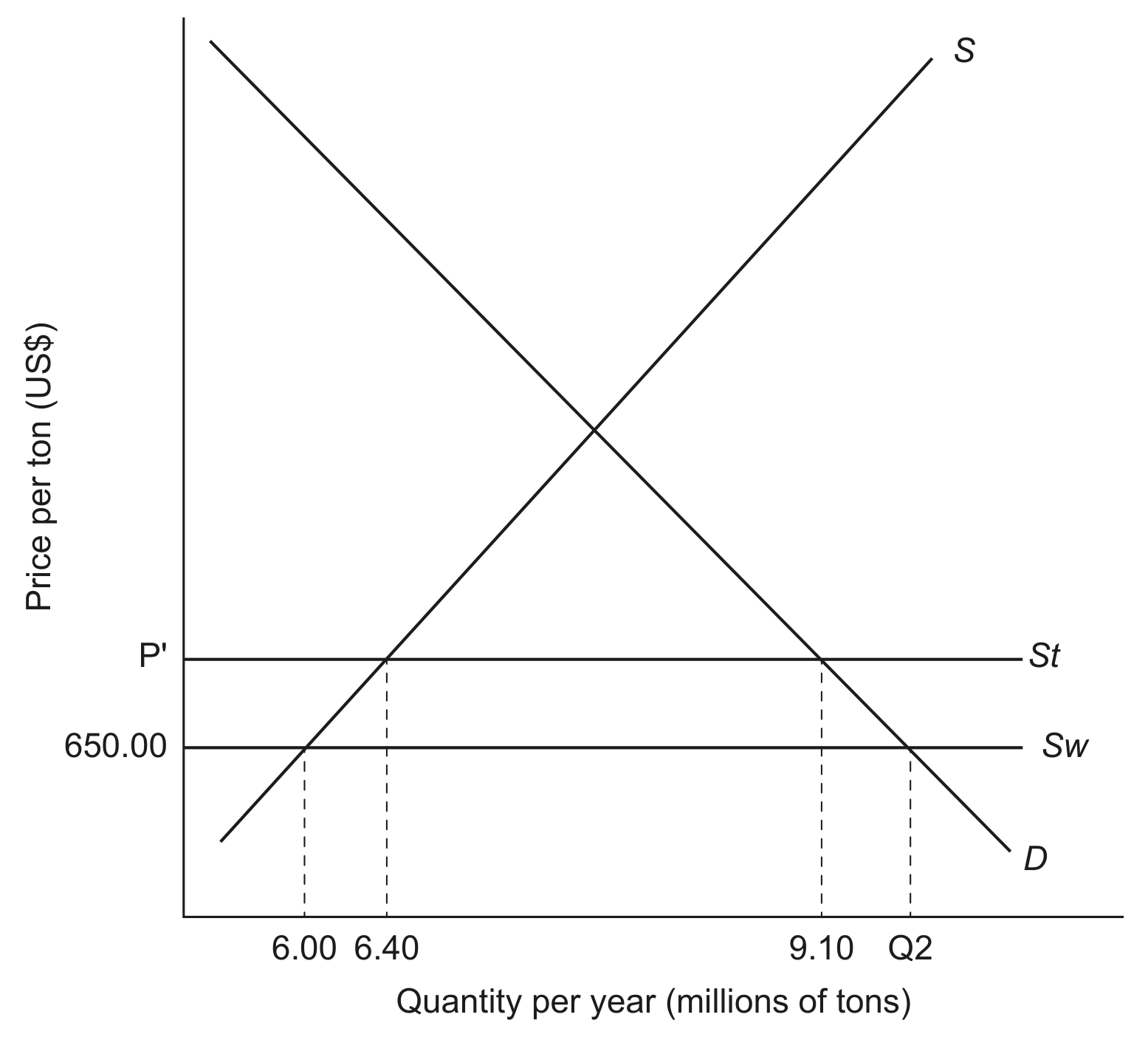
Figure 3 illustrates the market for soybeans in Egypt where D is demand, S is supply, S w is world supply and S t is supply after a tariff has been applied. In Egypt, soybeans are one of the main products used in animal feed.

Figure 3: The market for soybeans in Egypt

Figure 3: The market for soybeans in Egypt

In Egypt, the price per ton of soybeans in 2022 was US$650 and soybean imports were 4.75 million tons. In March 2023, a 4 % tariff per ton was imposed by the Egyptian government on soybeans.

[ 3 ]

Question 1(b)

(b)

Using the text/data provided and your knowledge of economics, recommend a policy that could be introduced by the government of Egypt to stabilize the value of the Egyptian pound (EGP), which has been depreciating since 2022.

[ 10 ]

Question 1

[Maximum number: 4]

Read the extracts and answer the questions that follow.
Text A - Overview of Tanzania

(1) Tanzania is one of Africa's fastest growing economies with an average of 7 % annual economic growth since 2000. It is a politically stable country, rich in wildlife and natural resources. However, the growth has been concentrated in urban manufacturing, using capital intensive production. The benefits from this growth have not reached all people and significant inequalities exist between urban and rural areas. Although the relative poverty rate has fallen over the last 15 years, the number of people living in absolute poverty has increased.

(2) Most people are employed in the slow-growing agricultural sector that relies on unskilled labour. Although incomes increased from 2008 to 2018, the demand for agricultural goods only increased by 21 % during this time period. Over 70 % of Tanzania's population lives in rural areas, relying on subsistence farming with limited tradable crops. Only 30 % of land is being used for agricultural production. With investment, the remaining unused land could be developed and generate income for farmers.

(3) The rural sector struggles to meet Tanzania's food requirements due to low levels of skilled labour and productivity. Additionally, high youth unemployment leads to large numbers of unskilled rural youth migrating to the cities, often finding employment in the informal sector where wages and working conditions are poor. Insufficient investment and lack of government support for diversifying the agriculture sector have been blamed for the persistent inequalities and poverty.

(4) Tanzania's cities have experienced a growing middle class with strong purchasing power and political influence who have placed demands on the government for cheaper electricity, better infrastructure, and more imported goods. In response, the government provided subsidies for electricity in city centres and tax benefits to foreign companies operating in Tanzania. There is concern that these measures may worsen inequality and lead to social unrest.

(5) The growth of Tanzania's manufacturing and service sector was funded through aid and large government borrowing, resulting in high national debt. Most of the government borrowing was from foreign sources and in US dollars (US$), which is a concern due to a recent depreciation of the Tanzanian shilling (Tanzania's currency) against the US$. Some of the debt was borrowed domestically and placed upward pressure on interest rates. Higher interest rates have resulted in crowding out but helped keep inflation under control.
Text B - Strategies and opportunities for Tanzania

(1) Previous governments have used interventionist supply-side policies to improve access to water, education, and health services. However, the health service improvements are not keeping up with population growth and many young people are still not completing secondary school. Infrastructure has improved, but it is still insufficient as producers in the rural sector find it difficult to reach markets and access supplies.

(2) Aid organizations are currently supporting new sustainable businesses in rural areas through training programmes, especially for women and young people, who make up most of the unemployed in rural areas. Economists have advised the government to improve access to credit through microfinance organizations and to simplify regulations to make it easier to start new businesses.

(3) The government is establishing property rights in rural areas to provide security for farmers. Historically, farmers could easily lose their land, which reduced their incentive to invest in productive farming methods. The government wants to develop Tanzania's land resources and lower its reliance on imported food. To reduce food imports, a subsidy will be granted to dairy farmers to allow them to compete against imported dairy products.

(4) Tanzania is a member of the East African Community (EAC) customs union and common market. However, Tanzania needs to improve human capital and encourage diversification so that the benefits of regional integration can reach the poor. These policies can also help attract foreign direct investment (FDI). Opportunities for growth through trade will expand as the EAC works towards becoming a monetary union in 2024.
Text C - Oil pipeline to be constructed
Tanzania and Uganda plan to construct a major oil pipeline from Uganda through Tanzania, ending at a port in Tanzania. This will attract FDI which could help fund infrastructure and generate jobs. However, environmentalists are concerned about potential ecological damage due to the waste created during the construction of the pipeline. Economists have suggested the waste could be avoided through a circular economy approach in the planning and construction stage.

Table 1: Economic data for Tanzania

Table 1: Economic data for Tanzania

Table 2: Development data for Tanzania

Table 2: Development data for Tanzania

* Estimate

Question 1(e)

(a)

Using an exchange rate diagram, explain what could happen to the value of the Tanzanian shilling if there is increased inward foreign direct investment (FDI) in Tanzania (Text B, paragraph 4 ).

[ 4 ]

Question 1

[Maximum number: 16]

Study the extract below and answer the questions that follow.
Rising peso hits Filipinos abroad

(1) The Philippine peso has risen sharply against the United States (US) dollar recently, which is bad news for Filipinos working overseas who regularly send home a portion of their earnings (known as remittances) to support their families. For those working in the US and in countries which peg their currencies to the US dollar, the effect on their remittances is becoming more severe. One example is Hong Kong, where around 140000 Filipinos work.

(2) Apart from a weaker US dollar, the Philippine peso has also been boosted by increased remittances - which hit a record US$17 billion last year - and an increase in foreign investment in the Philippine stock market. Its main index has risen 40 % this year, supported by global capital flows into Asia's emerging markets and optimism over the new government in the country. The Philippine president has voiced concern over the impact of the Philippine peso's sharp appreciation on overseas workers and the country's export sector.

(3) Recently, the US dollar fell below 43 Philippine pesos, while 41 Philippine pesos is predicted by the end of 2010. A business leader said: "There is now a lot of worry over the rising peso among overseas Filipino workers. The Philippine peso may soon rise to a point at which it is no longer worthwhile for Filipinos in low-wage jobs to continue working abroad".

(4) In previous times of currency instability, Filipinos tended not to reduce their remittances to their families, who depend on them, but absorbed the losses themselves. For that reason, the strong exchange rate is not expected to cause a fall in remittances, which are vital for the Philippine economy as they finance, among other things, spending on consumer goods and construction. In all, remittances account for over a tenth of the country's gross national income. Officials expect remittance growth of 8 % this year, a reflection partly of more Filipinos working in higher-paid skilled and professional jobs abroad.

(5) The Philippine central bank, meanwhile, is trying to slow the currency's advance by purchasing US dollars on the currency market, but this is a costly exercise for a less-developed country. Despite this, the Philippine peso is set to rise further.

Question 1(a)

Question 1(a)(i)

(a)
(i)

Define the term appreciation indicated in bold in the text (paragraph (2).

[ 2 ]

Question 1(a)(ii)

(ii)

Define the term exchange rate indicated in bold in the text (paragraph (4).

[ 2 ]

Question 1(b)

(b)

Using a diagram, explain how the "increase in foreign investment in the Philippine stock market" has affected the value of the Philippine peso (paragraph (2)).

[ 4 ]

Question 1(d)

(c)

Using information from the text/data and your knowledge of economics, discuss the likely impact of an appreciating currency on the performance of the Philippine economy.

[ 8 ]

Question 1

[Maximum number: 18]

Study the extract below and answer the questions that follow.
Indian exchange rates

(1) In 1991, India moved from following an import substitution policy to one of export promotion. There was a significant current account deficit and there were not even enough reserve assets to buy three weeks' worth of required imported goods and services. Emergency measures were needed along with a strategy to ensure it did not happen again. The strategy was trade liberalization and the economy was to be opened up to increase domestic competition.

(2) This would be achieved through both foreign direct investment (FDI) as well as greater imports of goods and services. It was hoped that these measures would ultimately increase exports so easing the pressure on the balance of payments. The new companies that emerged would attract portfolio investment, further easing the pressures on the balance of payments.

(3) Twenty-one years later, in 2012, it is clear that elements of this strategy have done well. The lowering of tariff and other barriers did increase the availability of imported products and contributed to the growth of the export sector. Trade now accounts for a major share of gross domestic product (GDP). Growth in trade and other services has been self-sustaining and contributed to the high growth rates that Indian officials are proud of.

(4) However, the present crisis in Europe is hurting stock markets across the world and raises the possibility of an outflow of portfolio investment from the Indian stock markets. At the same time, recessions in Europe and the United States will have an impact on Indian exports. This pressure on the balance of payments is already being felt on the exchange rate of the Indian rupee (India's currency), which is weakening and has fallen by about 20 % in the period January 2011 to January 2012. The falling rupee has also created inflationary pressures, which has led the government to keep interest rates high.

(5) Currently, India has a large current account deficit which the depreciation of the rupee would be expected to correct. However, recent trade data suggest that this has not happened. Exports have been falling on a month-on-month basis from July 2011, with the slowing demand for Indian goods in Europe and the United States. Some economists say that many exporters rely heavily on imported inputs, so depreciation may increase the cost of inputs more than it lowers the price of the exports.

(6) Exchange rate policy should not aim at export promotion alone, but should balance both export and import growth.
[Sources: adapted from "Europe crisis can unravel the growth strategy of the Indian economy", Mail Online India, 24 January 2012 and "Trade data defies traditional view", Business Standard India, 23 January 2012]

Question 1(a)

Question 1(a)(ii)

(a)
(i)

Define the term exchange rate, indicated in bold in the text (paragraph (4).

[ 2 ]

Question 1(b)

(b)

Using an appropriate diagram, explain one reason why the rupee may have fallen in value "by about 20 % in the period January 2011 to January 2012" (paragraph (4).

[ 4 ]

Question 1(c)

(c)

Using an AD/AS diagram, explain why "the falling rupee has also created inflationary pressures" (paragraph (4).

[ 4 ]

Question 1(d)

(d)

Using information from the text/data and your knowledge of economics, evaluate the possible economic consequences of the fall in the value of the rupee on the Indian economy.

[ 8 ]

Question 1

[Maximum number: 12]

Study the following extract and data and answer the questions that follow.
The strong Thai baht

(1) Thailand's currency, the Thai baht, ended 2019 at its highest value in more than six years. With a 7.8 % gain against the United States dollar (US$), it was the currency that appreciated the most among major Asian currencies.

(2) The Thai baht's appreciation was caused by several factors. Many foreign investors are attracted by Thailand's economic stability, high levels of foreign reserves, low inflation rate and low unemployment (Table 1). However, the inflation rate is below the central bank's target.

(3) Initially, the central bank of Thailand (BoT) was not too concerned, as the strong Thai baht was helping Thai importers and those who had foreign debts. Additionally, Thai producers could afford to import new technology and capital equipment. An appreciating currency could also help improve the country's terms of trade.

(4) However, a strong currency can have severe consequences on an export-oriented country like Thailand. Exports account for 65 % of gross domestic product (GDP), and in 2019 exports declined by 7 %. Additionally, the tourism industry, which makes up approximately 20 % of GDP and accounts for 16 % of employment, started to express concern. Economic growth in 2019 was 3 %, down from 4.1 % in 2018.

(5) Therefore, towards the end of 2019, the BoT implemented measures to prevent further appreciation of the Thai baht. The BoT reduced controls on capital outflows to make it easier for Thai citizens to move money abroad. Additionally, restrictions were placed on the amount of money foreigners could hold in Thai bank accounts.

(6) The BoT is considering further measures including the use of foreign reserves, a decrease in the interest rate, and imposing controls on capital inflows, to prevent speculative inflows. However, these controls may impact the country's credibility and financial markets. Expansionary monetary policy may also increase household debt which, at 78.6 % of GDP, is among the highest in Asia.

(7) The BoT is concerned about using foreign reserves, as this may result in Thailand being labelled a currency manipulator* by the US. Currently, Thailand's overall large current account surplus is the only requirement it meets to be labelled a currency manipulator. However, Thailand's bilateral trade surplus with the US is currently US$19 billion, which means it is close to meeting a second requirement. Thailand wants to avoid being labelled a currency manipulator as the US may use trade protection in retaliation.
* currency manipulator: the US will label a country as a currency manipulator if the following three requirements are met (a country will be placed on a watchlist if they meet two of the requirements):
1. The country is using its foreign reserves to change the value of its currency to gain an advantage
2. The country has a bilateral trade surplus with the US of over US $ 20 billion
3. The country has a current account surplus of more than 2 % of its GDP.

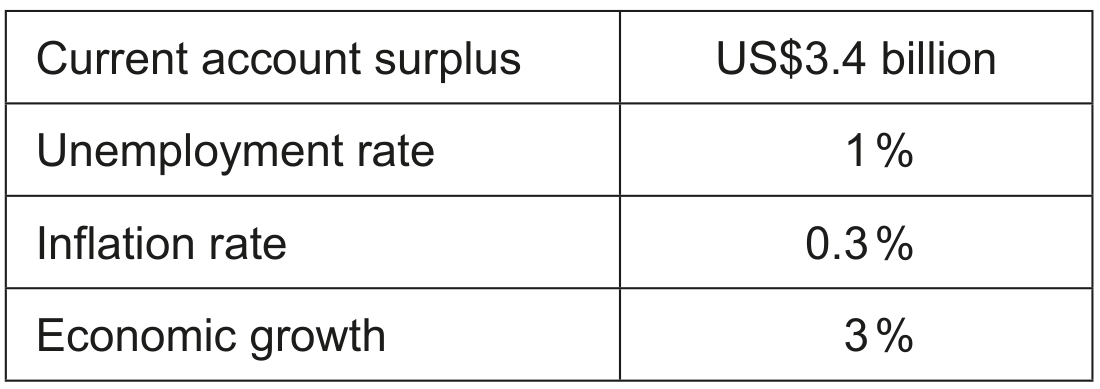
Table 1: Thailand macroeconomic indicators 2019

Table 1: Thailand macroeconomic indicators 2019

Question 1(b)

(a)

Using an exchange rate diagram, explain how a decrease in the interest rate might influence the value of the Thai baht (paragraph 6).

[ 4 ]

Question 1(d)

(b)

Using information from the text/data and your knowledge of economics, evaluate the implications of the strong Thai baht on Thailand's economy.

[ 8 ]

Question 1

[Maximum number: 4]

Study the extract below and answer the questions that follow.
Swiss current account surplus grows

(1) Switzerland recorded a current account surplus of 11 % of gross domestic product (GDP) in 2012. This was an increase from 9 % of GDP the year before.

(2) According to Switzerland's central bank, the Swiss National Bank (SNB), which released its balance of payments figures recently, this increase in the current account surplus was caused mainly by an increase in investment income, which nearly doubled to CHF40 billion.

(3) In terms of trade in goods and services, a surplus of CHF57 billion was recorded, compared with CHF59 billion in 2011. The decline was due to the fact that there was a 3 % increase in expenditure on imports of goods and services, but only a 2 % increase in the revenues from exports of goods and services.

(4) The Swiss financial account saw a net capital outflow of CHF97 billion - nearly three times the 2011 figure. This occurred after the SNB purchased large amounts of foreign exchange in an attempt to keep the Swiss franc from appreciating to damaging levels. The high level of the Swiss franc was a result of financial investors seeking safety in the Swiss franc, when severe problems in the eurozone created fears about the value and safety of the euro.

(5) The Swiss economy outperformed the eurozone in early 2013 as GDP in the eurozone shrank for a sixth straight quarter. This was largely caused by contracting economies in France, Italy, the Netherlands and Spain. The eurozone is now stuck in its longest recession on record.

(6) The Swiss economy performed better than expected in the first quarter of 2013, with GDP growth rising to 0.6 % as a result of strong levels of consumption, particularly in health and housing. and http://futurecurrencyforecast.com, 31 July 2013]

Question 1(c)

(a)

Using an exchange rate diagram, explain how the problems in the eurozone impacted the Swiss franc (paragraph (4).

[ 4 ]

Question 1

[Maximum number: 6]

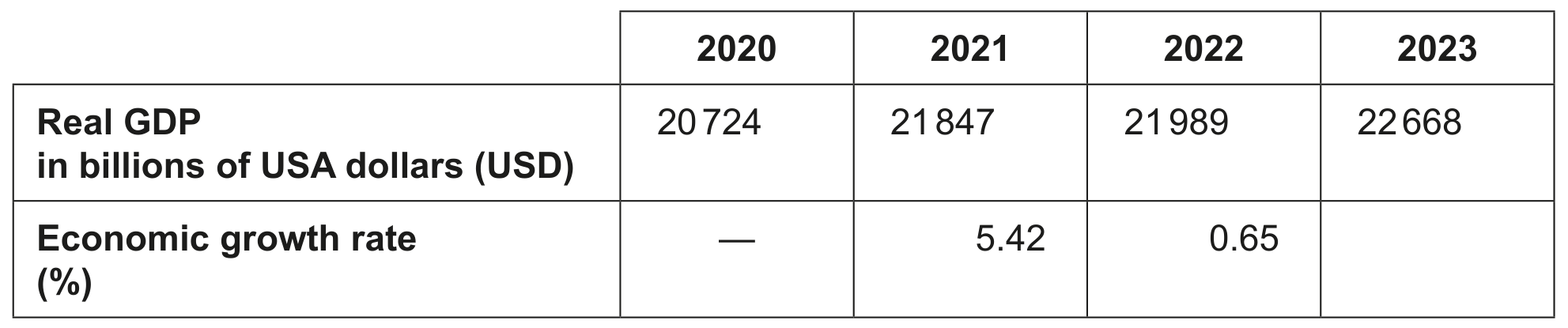
Table 1 shows the gross domestic product (GDP) of the United States of America (USA) economy from 2020 to 2023. The USA is not the fastest growing economy in the world, but it is the largest. It also has the largest budget deficit and the largest current account deficit in the world. As a result, the actions of its central bank, the Federal Reserve, always make news.

Table 1

Table 1

Question 1(a)

Question 1(a)(ix)

(a)
(i)

Using an AD/AS diagram, explain why a depreciating dollar may lead to demand-pull inflation in the USA.

Economists and policymakers hold different views on how the current account deficit affects the USA's economy. Some highlight positive outcomes, suggesting that, as the economy grows, citizens can enjoy increased access to goods and services from abroad. Others express concerns about potential negative consequences, including fewer job opportunities and slower economic growth.

[ 4 ]

Question 1(a)(viii)

(ii)

Using Figure 1, calculate the percentage change in the value of the USD in terms of the CNY from its highest point in September 2023 to its lowest in December 2023.

[ 2 ]

Question 1

[Maximum number: 4]

Text A - Overview of Vietnam

(1) Economic reforms in Vietnam during the past 30 years have led to rapid economic growth, which has transformed a poor nation into a lower middle-income economy. The percentage of the population with an income of less than US$1.90 a day declined from 38\% in 2002 to below 2 % in 2018.

(2) Vietnam used to be a food-insecure nation, in which many people sometimes lacked access to affordable food, but it is now a leading exporter of basic food commodities. It also aims to become an exporter of high quality and processed food products. However, agricultural production only accounts for 18 % of gross domestic product (GDP), although it uses 40 % of the land and employs 43 % of the labour force. Due to the growing rural population, land is often divided up between a greater number of farmers, causing some farms to become smaller. These farms have fewer opportunities to benefit from economies of scale and lower average costs of production.

(3) Vietnam's rapid growth and industrialization, focused on export-oriented manufacturing, have had a harmful impact on the environment. Electricity consumption has tripled since 2010, growing faster than GDP. Electricity generation, which mainly uses fossil fuels, accounts for approximately 60 % of Vietnam's carbon emissions. Demand for water continues to increase. Unsustainable exploitation of natural resources, such as land, fisheries, and timber, could negatively affect prospects for long-term growth. In addition, Vietnam's primary sector is highly vulnerable to the climate and is therefore subject to supply shocks.

(4) Vietnam has signed several free trade agreements (FTAs). Its first FTA was a partnership with Japan in 2008. Both Vietnam and Japan are members of the Comprehensive and Progressive Agreement for Trans-Pacific Partnership (CPTPP), which took effect at the beginning of 2019. These FTAs also promote inward foreign direct investment (FDI). In addition, Vietnam has introduced policies to attract foreign investment, such as tax incentives and spending on infrastructure.

(5) Japan is the biggest provider of foreign aid to Vietnam and the largest source of FDI. Japanese firms and aid agencies are jointly financing large-scale projects, including port infrastructure and a high-speed railway, which will reduce the Hanoi to Ho Chi Minh journey time from about 35 hours to under six hours. Other Japanese-funded aid projects are in the areas of health care, education, and the environment.
Text B - Trade and investment flows between Vietnam and Japan

(1) Japan imports seafood and consumer products such as textiles, leather shoes and processed foods from Vietnam, because Vietnam has a comparative advantage in such items. Conversely, Vietnam imports machinery, technology, and raw materials for production from Japan. Gradually barriers to trade are being removed. In 2020, Vietnam began exporting lychees (a luxury fruit) to Japan after five years of negotiations on quality standards. The improved access to the Japanese market has increased the number of consumers and the revenue earned by Vietnamese lychee farmers.

(2) Japanese firms invest in Vietnam, particularly in urban areas, because wages are low and they can export from Vietnam to other CPTPP members and to China and Indonesia. Panasonic, a Japanese multinational company (MNC), relocated a major factory, which manufactures refrigerators and washing machines, from Thailand to Vietnam in 2020. The construction of a coal-fired power plant is mainly funded by Japanese firms. The Japanese government is promoting further investment by subsidizing over 30 firms that are relocating from China to Vietnam. Most of these firms are food processors or producers of manufactured goods (for example, medical equipment).
Text C - Roles of the central bank in Vietnam

(1) The central bank in Vietnam has been lowering interest rates since mid-2019. However, it has kept the minimum reserve requirement at 3 % of commercial bank deposits, despite suggestions that this requirement could be lowered.

(2) The central bank also regulates the exchange rate of the dong (Vietnam's currency). It actively intervenes in the foreign exchange market to stabilize the rate when necessary. In April 2020, there was downward pressure on the dong due to the lower interest rates and fewer foreign tourists. However, the central bank has a large amount of reserve assets, which were used to prevent the dong from depreciating.

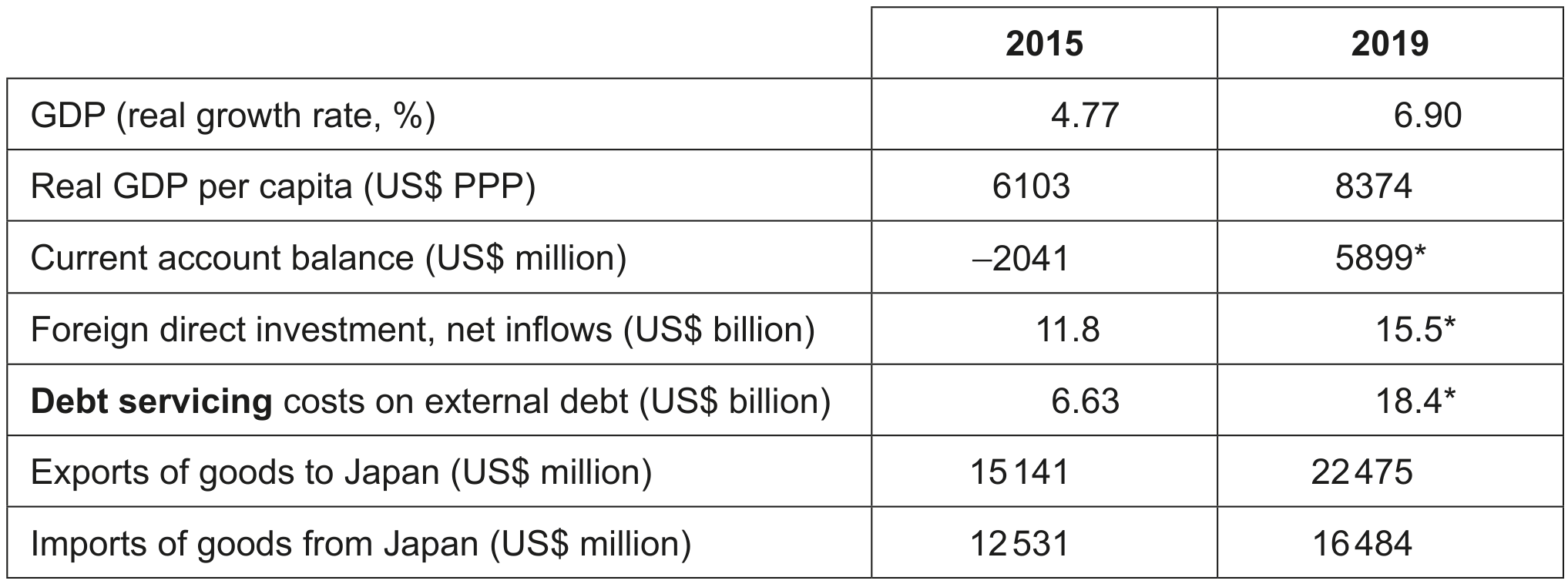
Table 1: Economic data for Vietnam

Table 1: Economic data for Vietnam

* 2018 figure

Table 2: Development data for Vietnam

Table 2: Development data for Vietnam

* 2018 figure

Question 1(f)

(a)

Using an exchange rate diagram, explain how the central bank in Vietnam could prevent the dong from depreciating by using its reserve assets (Text C, paragraph 2).

[ 4 ]

Question 1

[Maximum number: 10]

Study the following extract and data and answer the questions that follow.

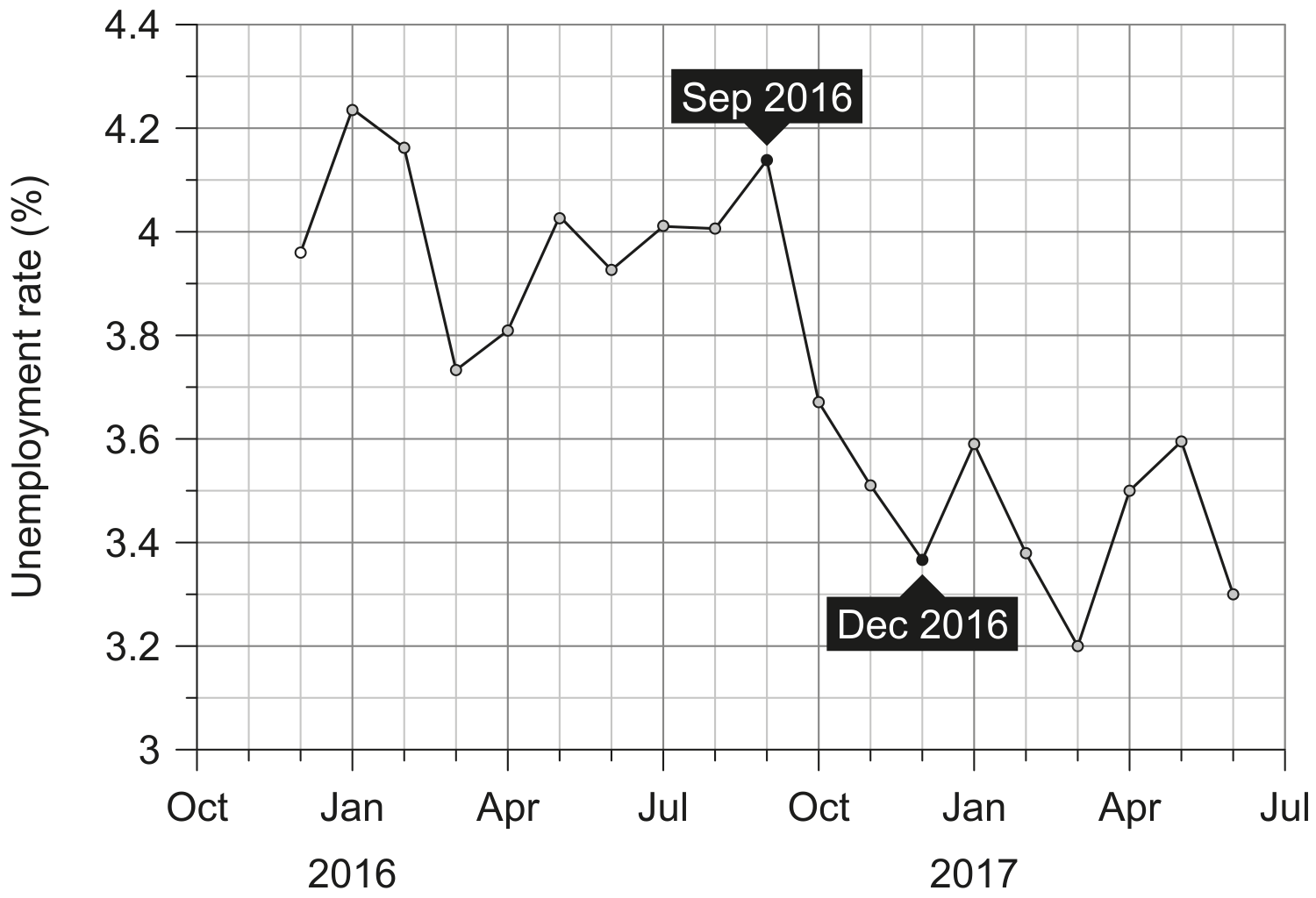
Figure 1: Mexico unemployment rate

Figure 1: Mexico unemployment rate

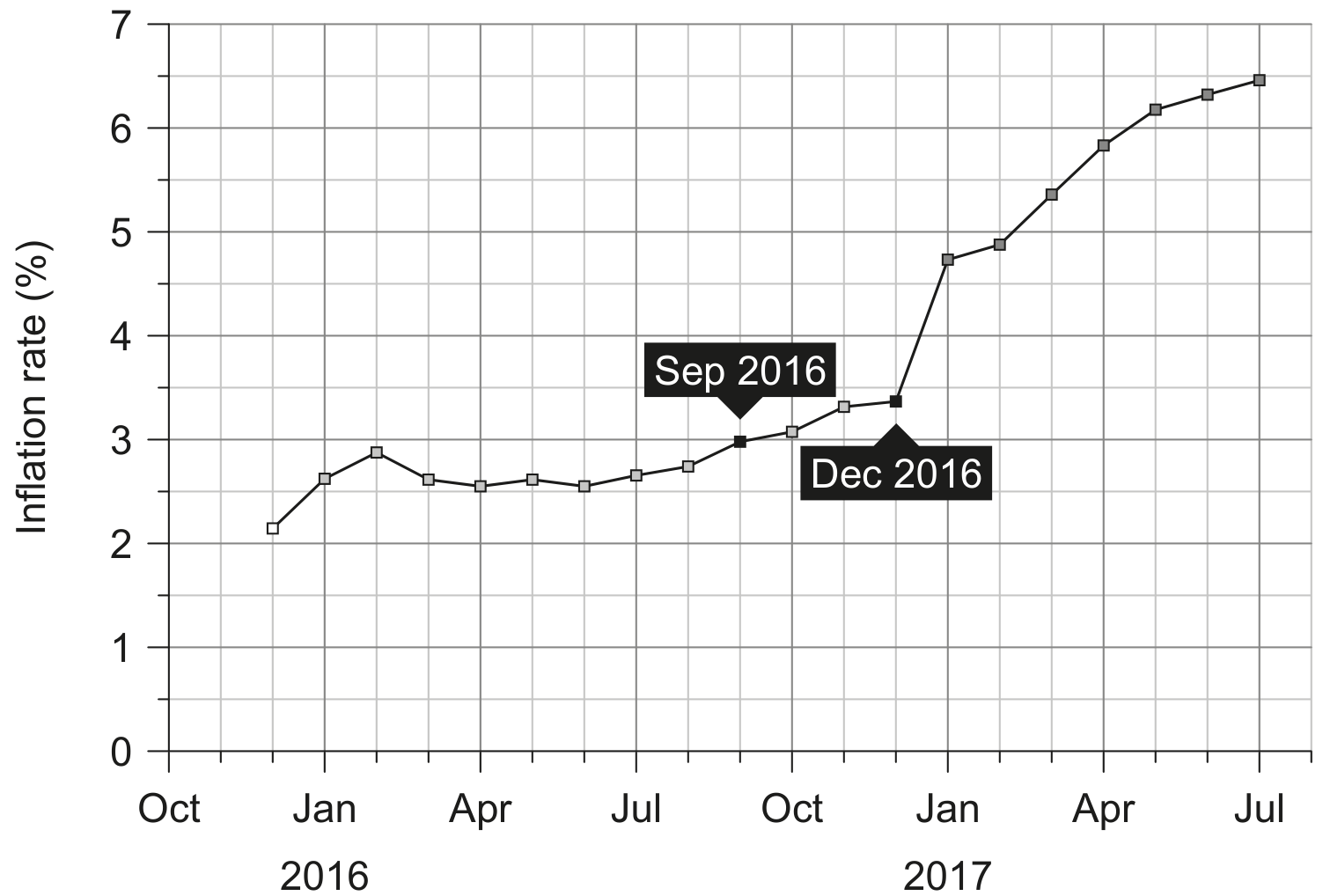
Figure 2: Mexico inflation rate

Figure 2: Mexico inflation rate

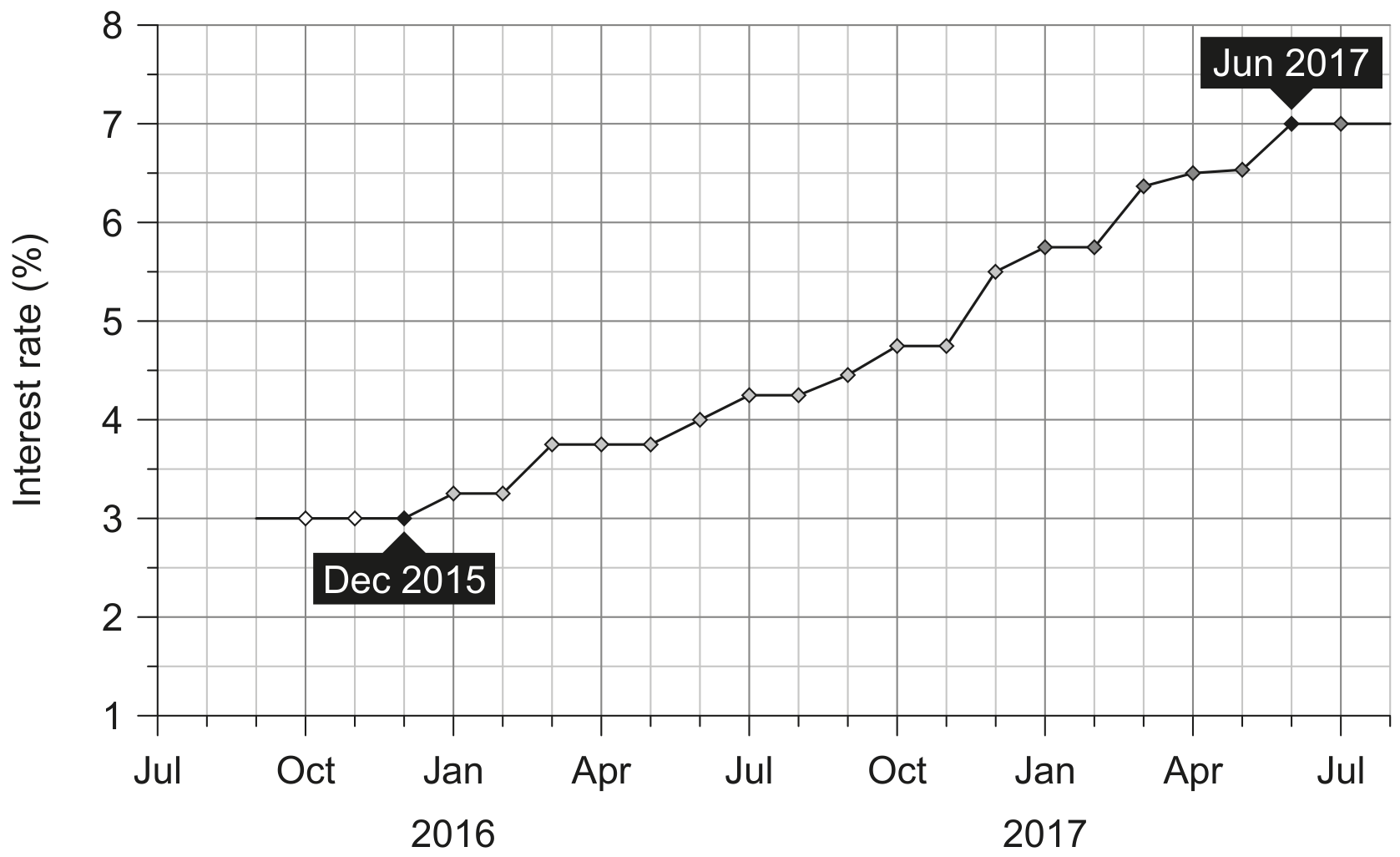
Figure 3: Mexico interest rate

Figure 3: Mexico interest rate

Question 1(a)

Question 1(a)(i)

(a)
(i)

Define the term exchange rate indicated in bold in the text (paragraph (1).

[ 2 ]

Question 1(d)

(b)

Using information from the text/data and your knowledge of economics, discuss the possible consequences on the Mexican economy of an undervalued Mexican peso.

[ 8 ]
0 selected