Question 1
Read the extracts and answer the questions that follow.
Text A — Costa Rica: Economic growth and development strategies
(1) In the early 1990s, Costa Rica, a Central American country with a population of approximately 5 million people, was considered an economic development success story. This stable democracy has experienced consistent economic growth (approximately 4 % annually) for the last 20 years. Some experts say this has been due to moving from a failed import substitution policy to outward-oriented economic policies. The outward-oriented policies included export promotion, diversification, trade liberalization and inward foreign direct investment (FDI). During the same period, social and environmental policies were implemented. Public education and healthcare were guaranteed for all citizens, social programmes were improved to include extensive transfer payments and minimum wages were increased. This helped the reduction in absolute poverty rates and Costa Rica became known as a global leader in environmental conservation efforts.
(2) The Dominican Republic-Central America-United States Free Trade Agreement (CAFTA-DR), was a significant move towards trade liberalization. In addition to reducing trade barriers, it established a secure and predictable environment for foreign investors. This agreement also led to the breakup of the state-owned monopolies in the telecommunication and insurance industries in Costa Rica. Additionally, trade agreements with Canada, China, the European Union (EU), Mexico, Peru and Singapore were established.
(3) Costa Rica encouraged inward FDI by lowering regulations and providing tax incentives in manufacturing industries. In 1997, Intel, a large multinational tech company from the United States (US) invested US$300 million in building a computer parts factory. Intel's investment helped diversify Costa Rica's main exports away from coffee and bananas to electronics. Moreover, the FDI allowed Costa Rica to benefit from production externalities, as multinational companies provided training to local employees. Manufacturing and services overtook agriculture in terms of contribution to gross domestic product (GDP), and Costa Rica experienced its first trade surplus in 50 years. The increase in real GDP from the FDI was significant, as the marginal propensity to consume (MPC) was 0.8 at the time.
(4) To promote diversification, export subsidies for companies in the manufacturing sector were granted. Agricultural diversification was also encouraged through subsidising farmers who were adopting new technology to produce higher value-added products, such as roasted coffee beans.
Text B - Current concerns
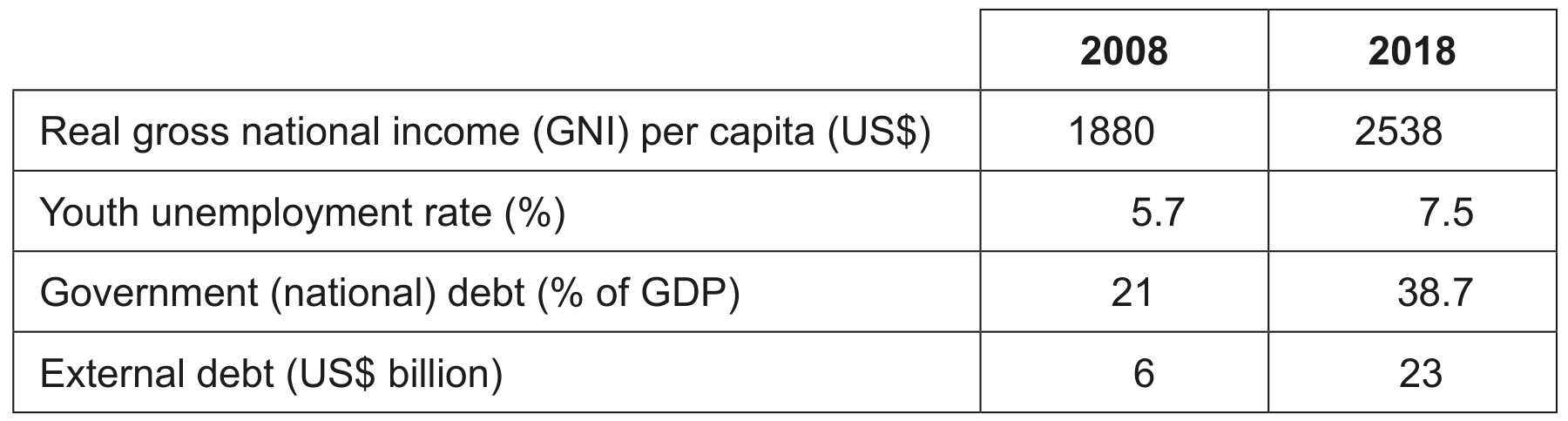
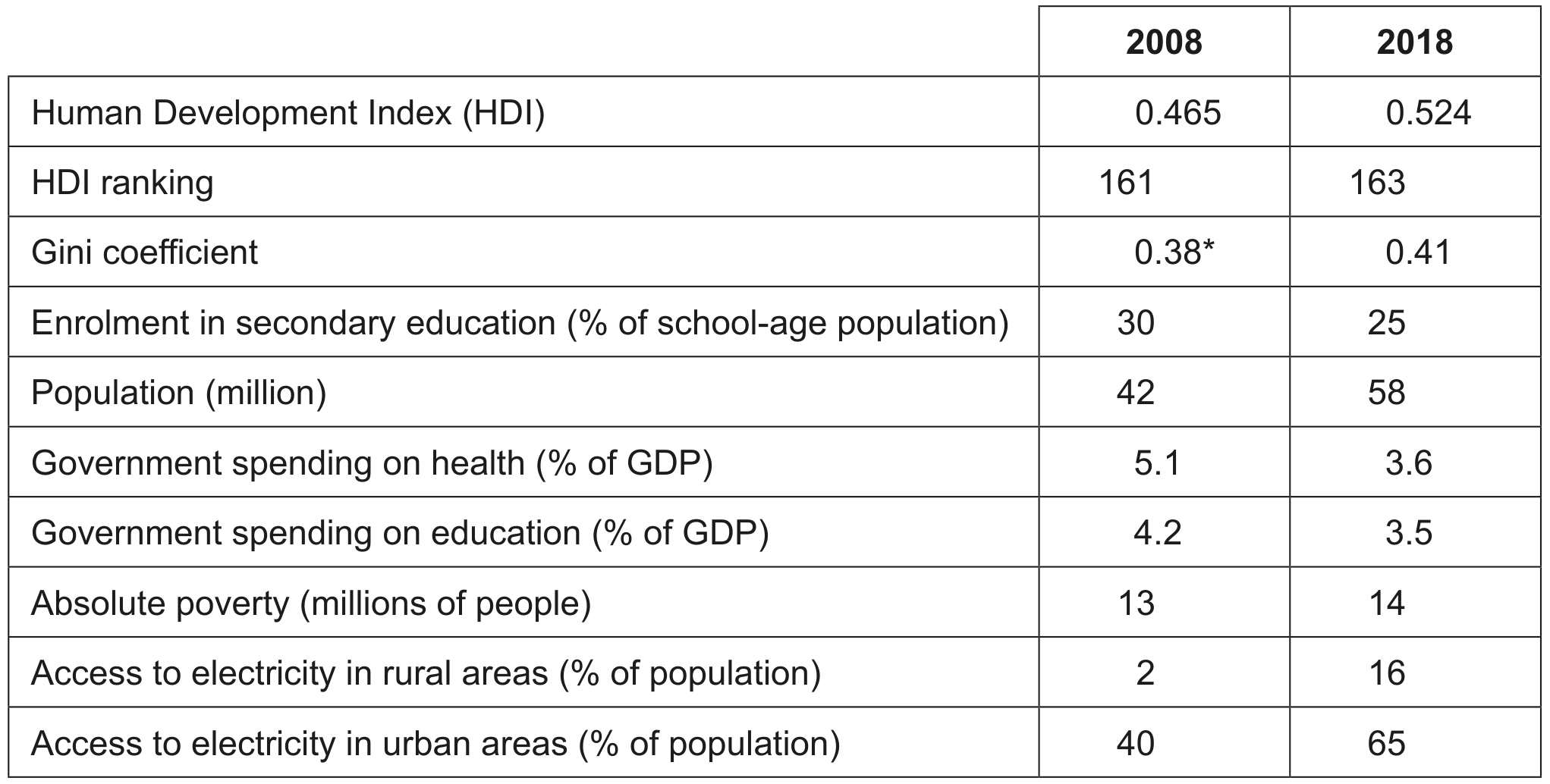
(1) Despite earlier successes, income inequality in Costa Rica has remained high and poverty levels have remained unchanged for several years. This has been blamed on insufficient transfer payments due to a tax system that is not progressive enough and tax exemptions offered to foreign firms. Unemployment has consistently risen, and despite high levels of spending in education, a significant number of young people have not completed secondary or higher education. The focus on higher value-added sectors did not create jobs for low skilled workers, which had a disproportionate impact on women and youth. Additionally, the social programmes have often failed, and still fail, to reach the very poor.
(2) High social and environmental spending, large increases in public sector wages, and insufficient revenue have resulted in very large government (national) debt. Most of the debt is domestic, which is raising concerns about possible crowding out.
(3) FDI has historically supported economic growth, however, domestic investment and further FDI have slowed down due to rising costs and outdated infrastructure. Additionally, the appreciating colón (Costa Rica's currency) has lowered export competitiveness, and Costa Rica remains heavily dependent on one major trading partner, the US.
Text C - "Green Trademark" environmental policy
The "Green Trademark" policy has reversed deforestation and has resulted in Costa Rica becoming one of the countries with the greatest level of biodiversity in the world. However, it is difficult to maintain the environmental focus due to pressure on government resources and the high opportunity costs associated with land use. The consistent economic growth has made it difficult for Costa Rica to reduce carbon emissions from fossil fuels. Increasing urbanization and the growth in the manufacturing sector have increased air and water pollution. Moreover, the overuse of chemicals in farming has caused river pollution, and the intensive use of land for agriculture has generated concern for environmental conservation.
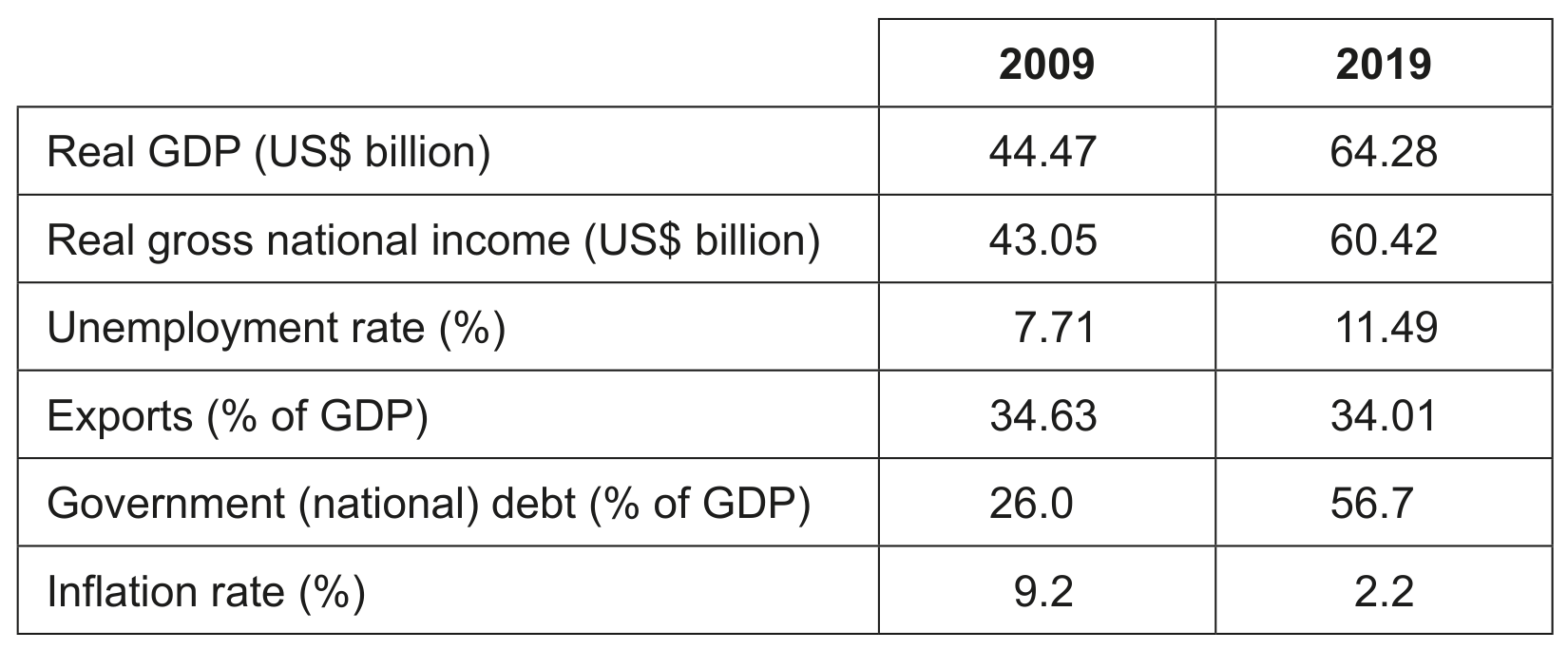
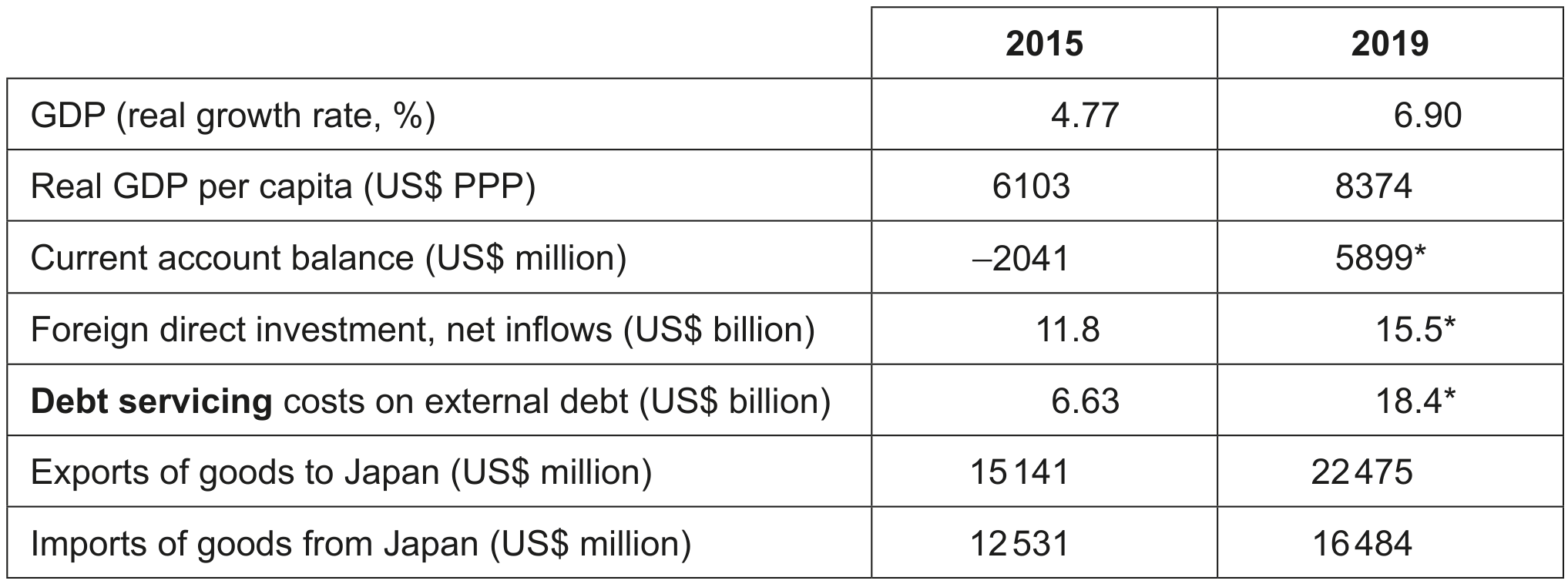
Table 1: Economic data for Costa Rica
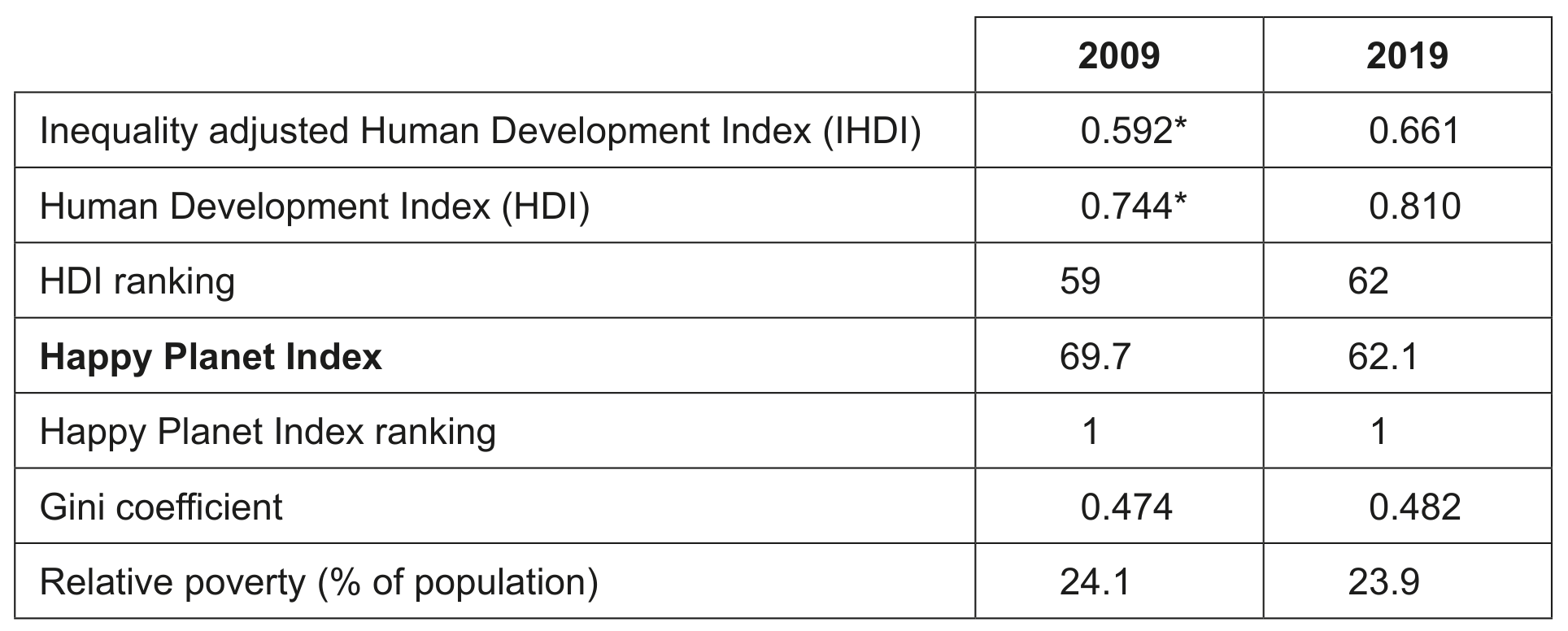
Table 2: Development data for Costa Rica
\footnotetext{
*2011 figure
}
Question 1(c)
Using a Lorenz curve diagram, explain how introducing extensive transfer payments may have changed the income distribution in Costa Rica (Text A, paragraph 1).