
Question 1(a)(i)
A report into fitness levels in the United States of America (USA) says that only about 23 % of all USA adults get the recommended amount of exercise. Walking, cycling, swimming, playing sports or doing domestic jobs such as gardening can all contribute to personal fitness. The following information is a cause for concern:
- Only one in three children are physically active every day.
- Less than 5 % of adults participate in 30 minutes of physical activity each day.
- Children now spend more than seven hours per day in front of a screen (for example, televisions, video game devices, computers).
At the same time, there has been a significant increase in demand for memberships at gyms (fitness centres), causing the fitness industry to grow by 8.7 % in the past few years.
Despite the increase in gym memberships, there is still concern about the lack of exercise in the USA. This is particularly important, as physical inactivity is estimated to result in USD 130 billion in annual healthcare spending and causes a significant reduction in the productivity of labour.
Figure 1 illustrates the market for gym memberships in the USA. D represents the demand for and S represents the supply of gym memberships. represents the increased demand for gym memberships in recent years.
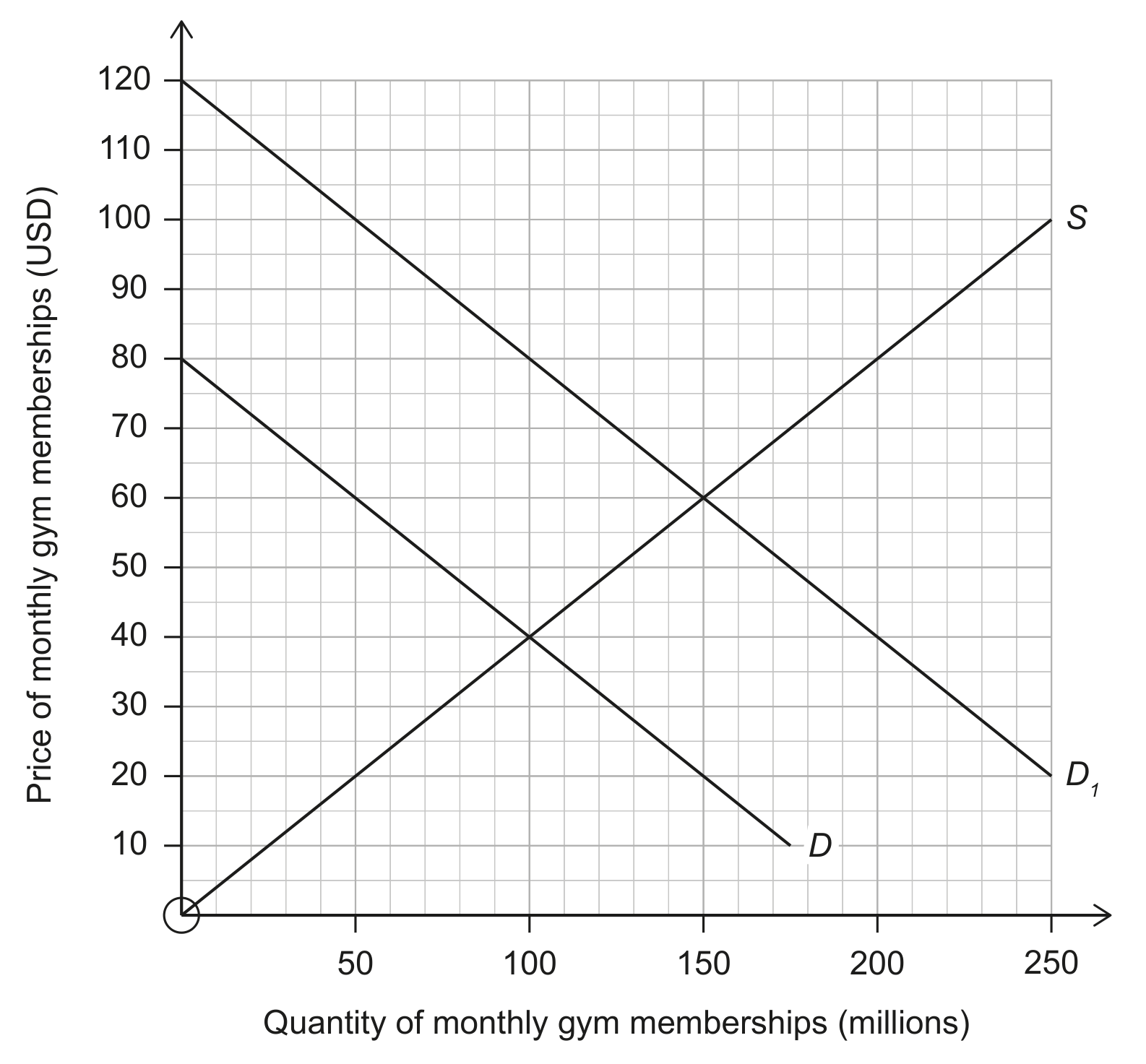
Figure 1
Using Figure 1, calculate the change in consumer surplus resulting from the increased demand for gym memberships.