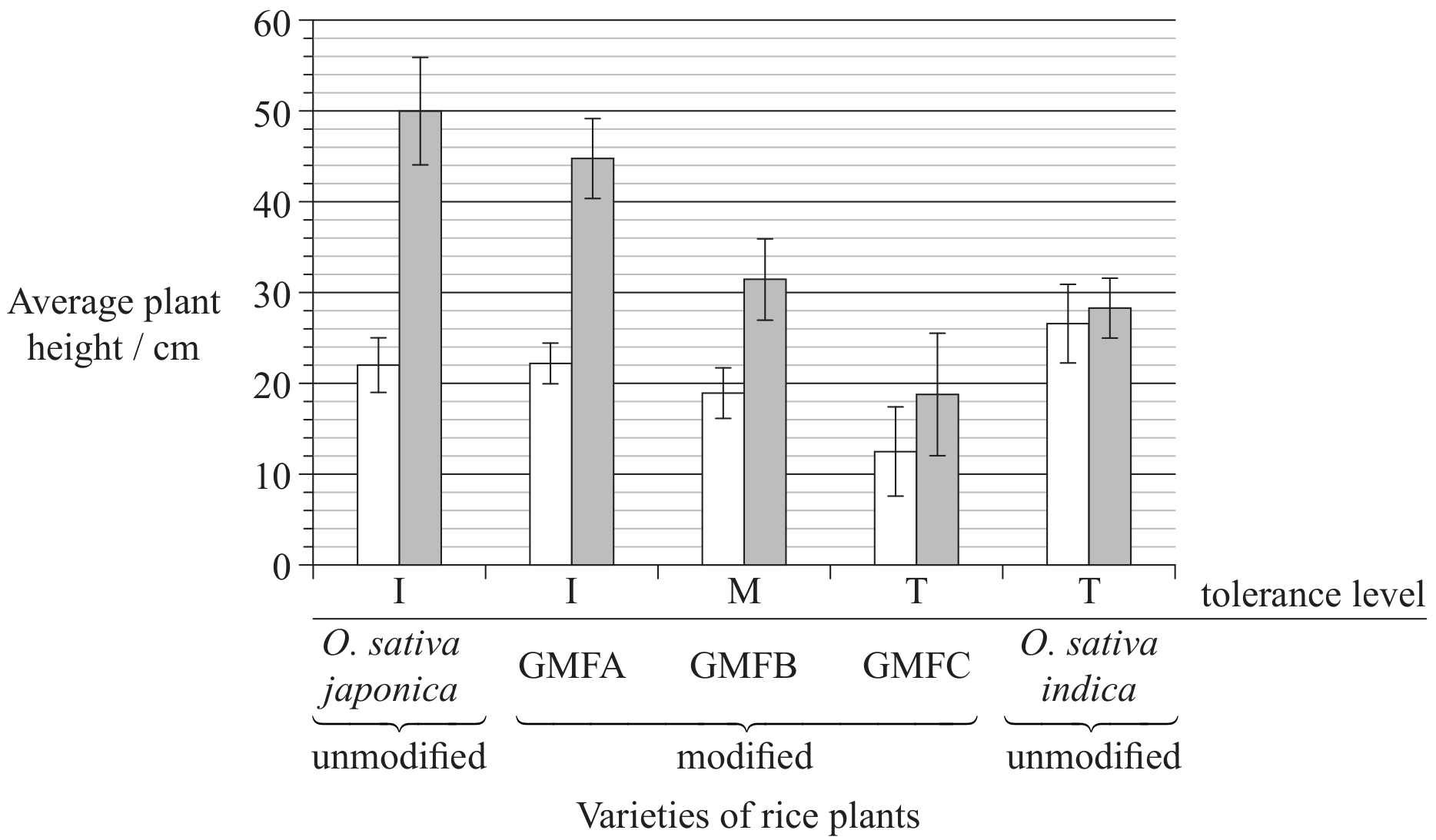
Rice (Oryza sativa) is usually intolerant to sustained submergence under water, although it grows rapidly in height for a few days before dying. This is true for one variety, Oryza sativa japonica. The variety Oryza sativa indica is much more tolerant to submergence.
Three genetically modified forms of O. sativa japonica, GMFA, GMFB and GMFC, were made using different fragments of DNA taken from O. sativa indica.
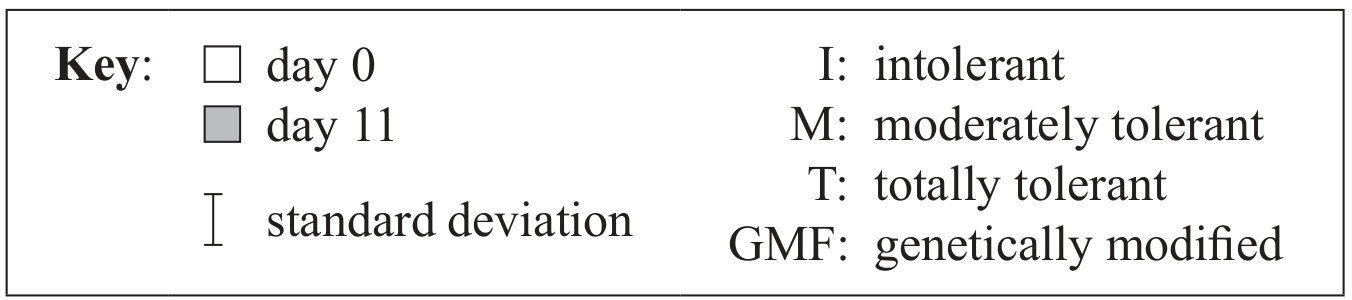
The plants were then submerged for a period of 11 days. The heights of all the plants were measured at the beginning and at the end of the submergence period.
In the same experiment, the researchers hypothesized that the capacity to survive when submerged is related to the presence of three genes very close to each other on rice chromosome number 9; these genes were named Sub1A, Sub1B and Sub1C. The photograph below of part of a gel shows relative amounts of messenger RNA produced from these three genes by the submergence-intolerant variety, O. sativa japonica, and by the submergence-tolerant variety, O. sativa indica, at different times of a submergence period, followed by a recovery period out of water.
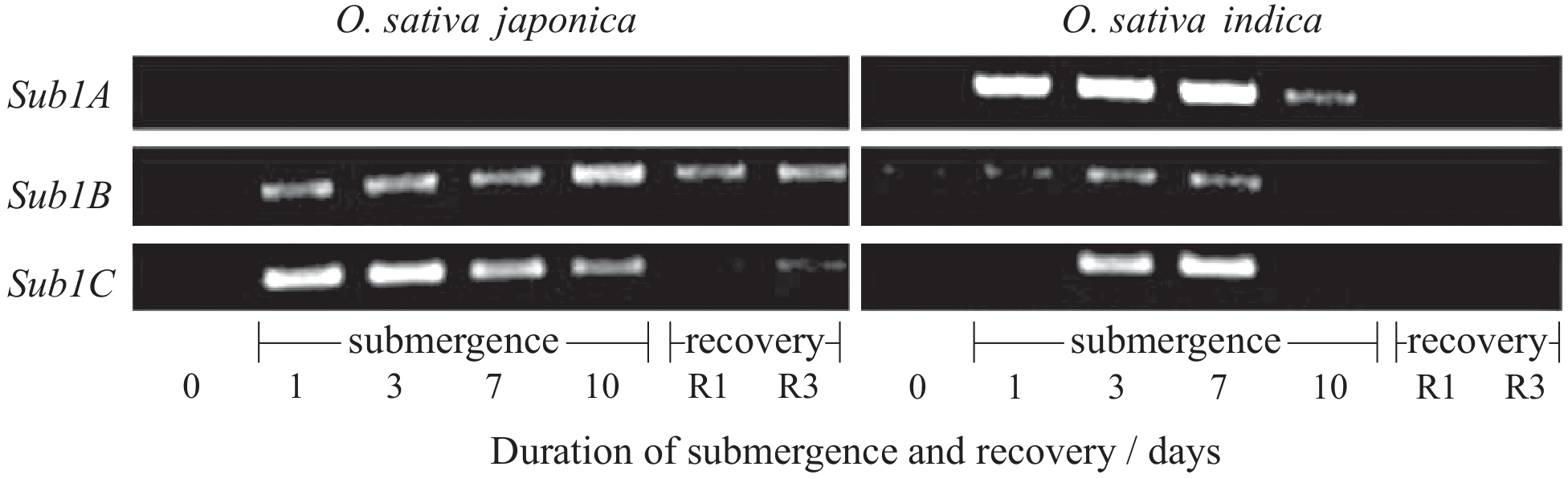
Determine which gene produced the most mRNA on the first day of the submergence period for variety O. sativa japonica.
Outline the difference in mRNA production for the three genes during the submergence period for variety O. sativa indica.
Compare the mRNA production for the three genes during the submergence period between the two varieties.
Deduce, using all the data, which gene was used to modify GMFC.