EduNinja
[Maximum number: 1]

Sockeye salmon (Oncorhynchus nerka) spend the first years of their lives in the freshwater lakes of Alaska before migrating to marine waters. Their first months in marine waters are spent foraging and growing near the shore line. They then move to offshore regions of the North Pacific Ocean for 2 to 3 years.
Question image

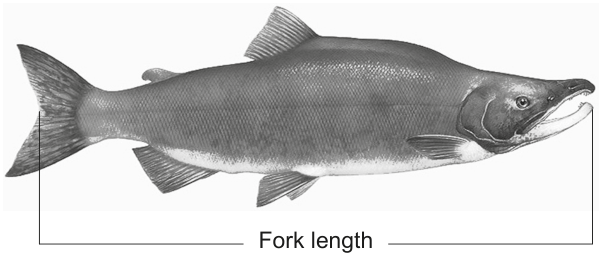
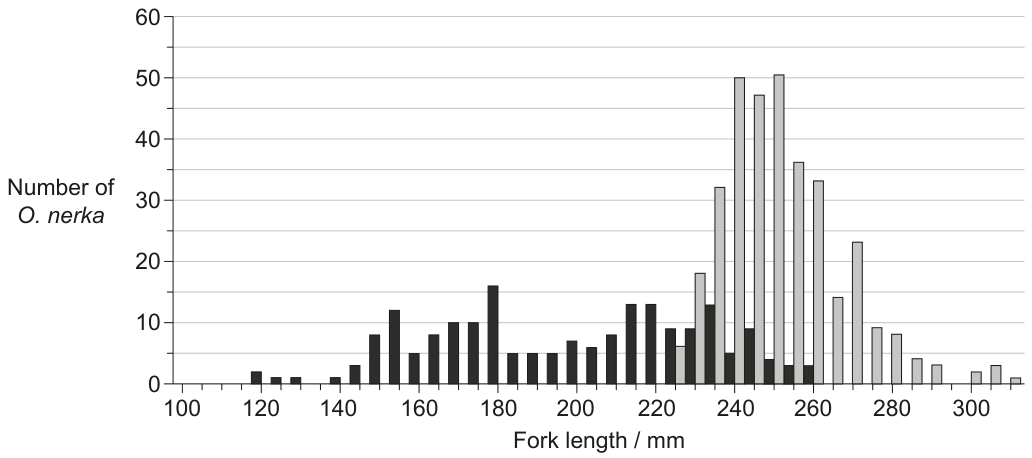
The graph shows fork length frequency of juvenile O. nerka caught during their first months in marine waters in autumn 2008 and ocean age one O. nerka caught 15 months later during winter 2009 in the North Pacific Ocean.

Question image
Table
(a)

Using the data, suggest one reason for the relationship between protein content and fork length.

[ 1 ]
[Maximum number: 5]

Low protein diets are a widespread problem in the developing world. A low protein diet in a pregnant mother could affect a developing fetus. Other mammals are used as a biomedical model for energy metabolism and malnutrition in humans.

In an experiment to study the effect of protein levels in the diet, pregnant mammals were fed diets with different ratios of protein to carbohydrate:
- low protein : high carbohydrate (LP),
- adequate protein: adequate carbohydrate (AP),
- high protein : low carbohydrate (HP).

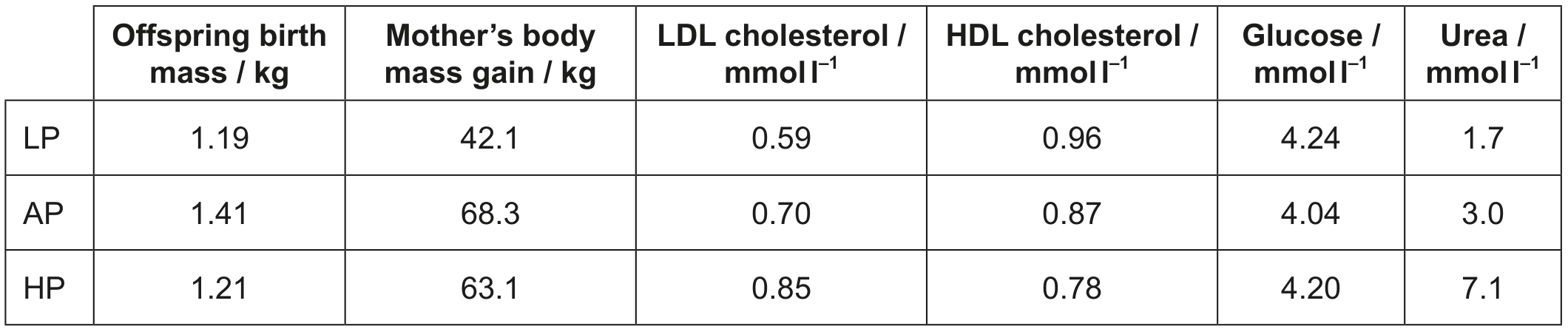
The table shows the average birth mass of the offspring and the body mass gain of the mother during the pregnancy. The concentration of several substances in the plasma of the mothers was also recorded. LDL (low density lipoprotein) is considered "bad cholesterol" and HDL (high density lipoprotein) is considered "good cholesterol".

Table
(a)

Explain the low birth mass of offspring born to mothers who were fed the LP diet.

[ 2 ]
(b)

In many societies doctors may recommend an HP diet for pregnant humans. Using the data, evaluate this recommendation.

[ 3 ]
[Maximum number: 2]

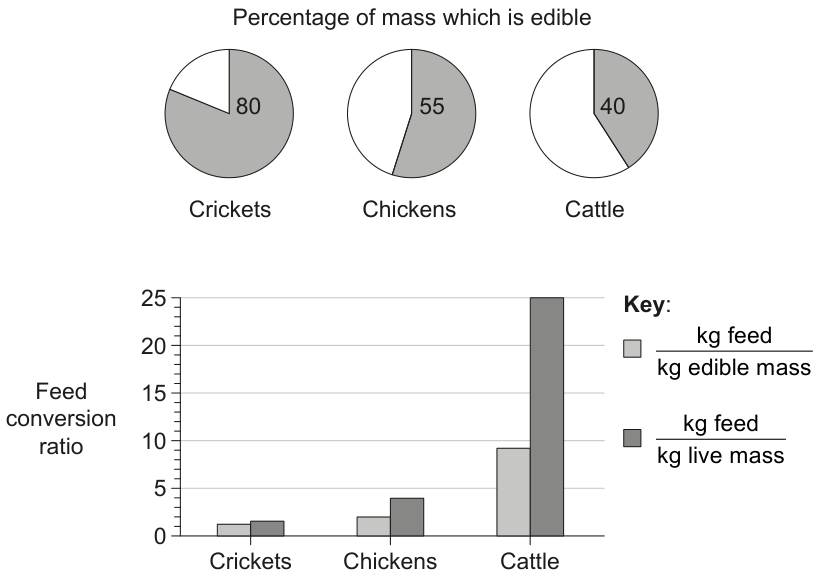
Edible insects have been a part of traditional human diets in many countries. For example, crickets are insects commonly eaten in Asia and Africa. Many studies have looked at the prospects of raising insects on a commercial scale for direct human consumption as food or indirectly by feeding insects to farm animals.

One factor to consider is which organisms are most efficient at converting the feed they eat into animal protein that can be consumed. A study compared the percentage of mass that was edible in two common farm animals and in crickets.

Question image
(a)

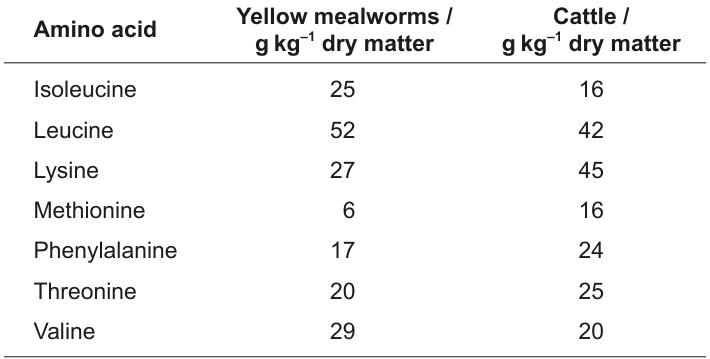
The yellow mealworm (Tenebrio molitor) is native to temperate regions of the world and has been studied as a possible means of producing food in countries with that type of climate. The amino acid content of yellow mealworms and cattle was analysed. The table shows the results for seven amino acids that are required in the human diet.

Question image
[ 2 ]
(i)

Distinguish between the amino acid contents of yellow mealworms and cattle.

[ 1 ]
(ii)

Predict, with a reason, whether the amino acid composition of yellow mealworms or cattle is more suitable for a human diet.

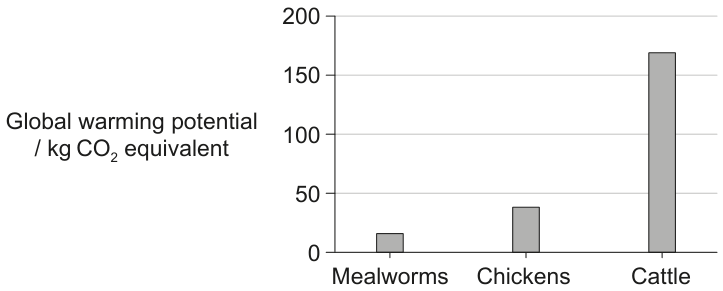
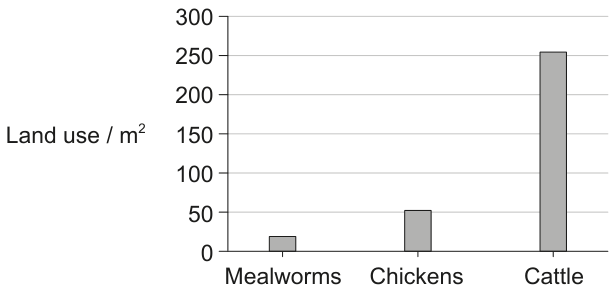
The environmental impact of producing protein from mealworms was compared with the impact of producing traditional protein sources. The graphs show the greenhouse gas production (global warming potential) and land use due to the production of 1 kg of protein from mealworms, chickens and cattle.

Question image
Question image
[ 1 ]
[Maximum number: 4]

A1. Iron, folic acid and vitamin B12 (cyanocobalamin) are important components of a healthy diet. These nutrients are necessary for the production of the red blood cells in the body that transport oxygen to the tissues. Deficiency of any of these nutrients can lead to anemia, a condition that causes weakness, tiredness and shortness of breath.

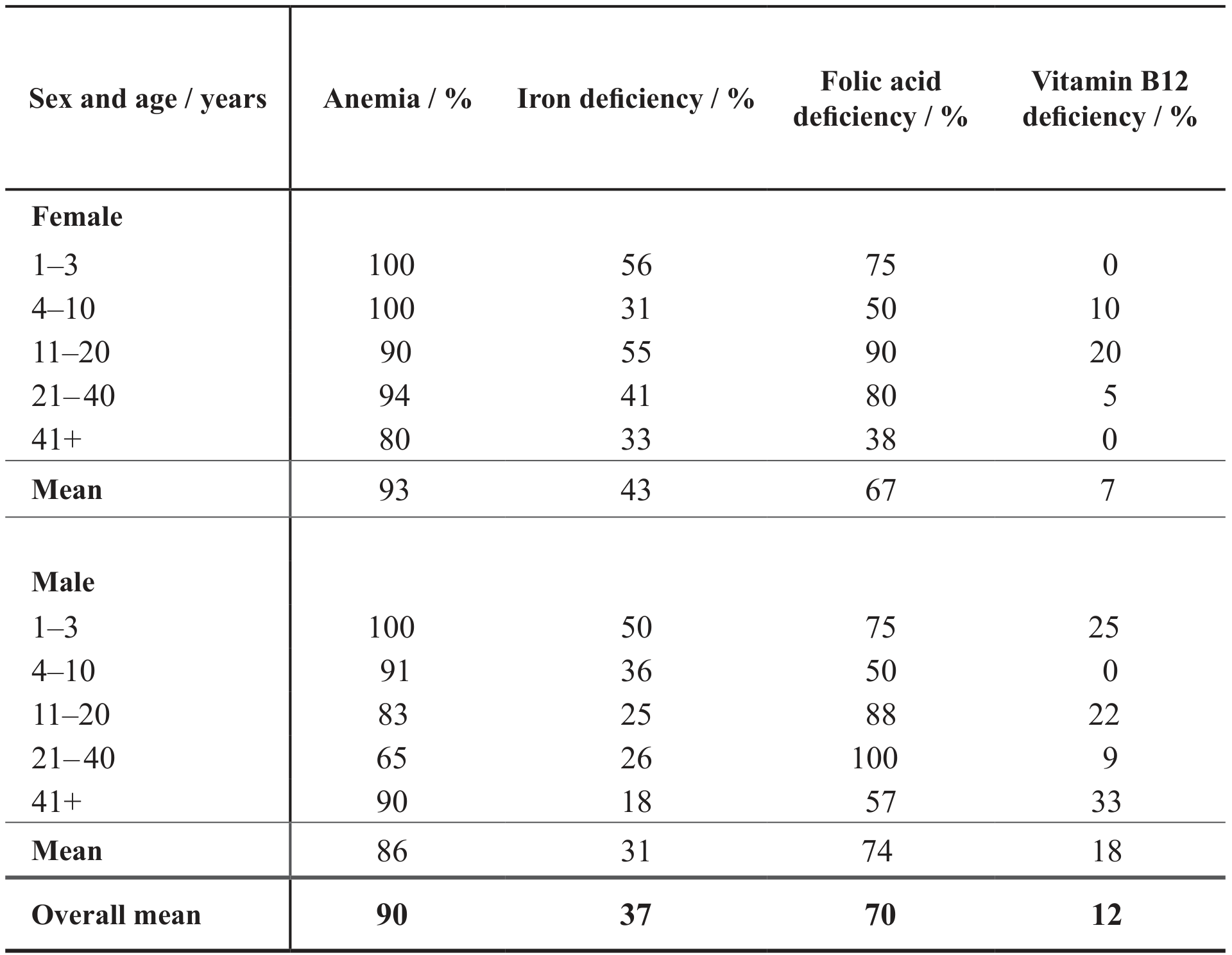
In a study of the Piaroa, a population living in a remote area of Venezuela, investigators discovered very high levels of anemia, especially amongst young children and females of childbearing age. The table below shows the incidence of anemia and deficiencies of iron, folic acid and vitamin B12 in this population, as a percentage.

Table
(a)

Compare the data for the three nutrients in 11-20-year-old females with the data for 11-20-year-old males.

[ 2 ]
(b)

The data in the table indicates differences in the incidence of anemia between males and females. Suggest possible causes of these differences.

[ 2 ]
[Maximum number: 1]

Which is an effect of protein denaturation?

A

The order of amino acids is changed when the protein overheats.

B

The bonds between amino acids are broken by condensation.

C

Parts of the protein become linked together by hydrolysis.

D

The three-dimensional structure of the protein is altered.

[Maximum number: 1]

How are amino acids joined together to form a dipeptide?

A

Single bond between a carbon and a hydrogen

B

Hydrolysis reaction forming a hydrogen bond

C

Anabolism forming a double bond

D

Condensation reaction forming a peptide bond

[Maximum number: 1]

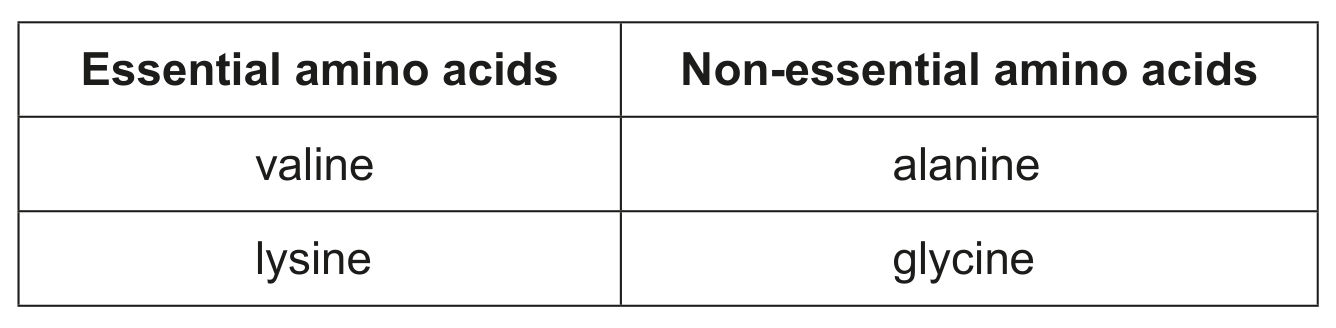
The table shows some essential and non-essential amino acids.

Table

What is a valid conclusion for an amino acid in the table?

A

Lysine is synthesized by the human body.

B

Alanine can only be obtained from food.

C

Glycine is not used in the human body.

D

Valine must be supplied in the diet.

[Maximum number: 1]

What must vegans ensure when they plan their diet?

A

Higher protein consumption than meat-eaters

B

Sufficient quantities of all essential amino acids are consumed

C

Only proteins with all 20 amino acids are consumed

D

Higher fat consumption than meat-eaters

[Maximum number: 1]

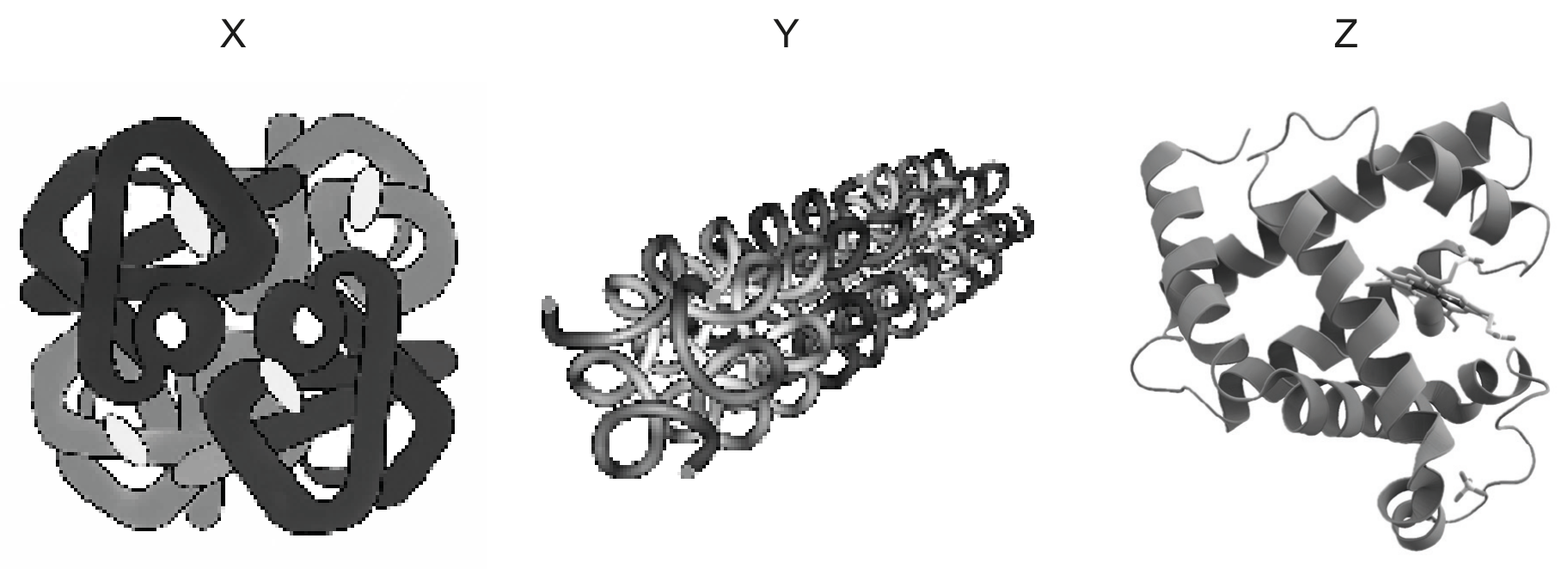
Diagrams of three different proteins, X, Y and Z , are shown.

Question image

Which row describes the structure of each protein shown?

X

Y

z

quaternary

globular

secondary

conjugated

fibrous

globular

tertiary

quaternary

primary

globular

secondary

fibrous

[Maximum number: 1]

Myoglobin is a globular protein in which nearly all the non-polar R-groups point towards the inside of the molecule. The outside surface contains all the polar R-groups. What can be deduced from this?

A

Disulfide bonds occur on the inside.

B

Hydrogen bonds form with water on the outside.

C

Ionic bonds form with water on the outside.

D

Covalent bonds occur on the inside.

0