
The synthesis of complex organic molecules in sea water is believed to be an important step in the evolution of life on Earth. Researchers investigated whether the evaporation of sea water containing amino acids could catalyse the formation of dipeptides such as divaline (valine-valine) under prebiotic Earth conditions. They placed different amino acid combinations in a chamber to simulate the evaporation cycles between high tides in shallow seas. In one investigation the amino acid valine was used as the substrate and the percentage yield of divaline was measured after different numbers of evaporation cycles. The experiment was repeated without a catalyst and with either glycine or histidine as catalysts.
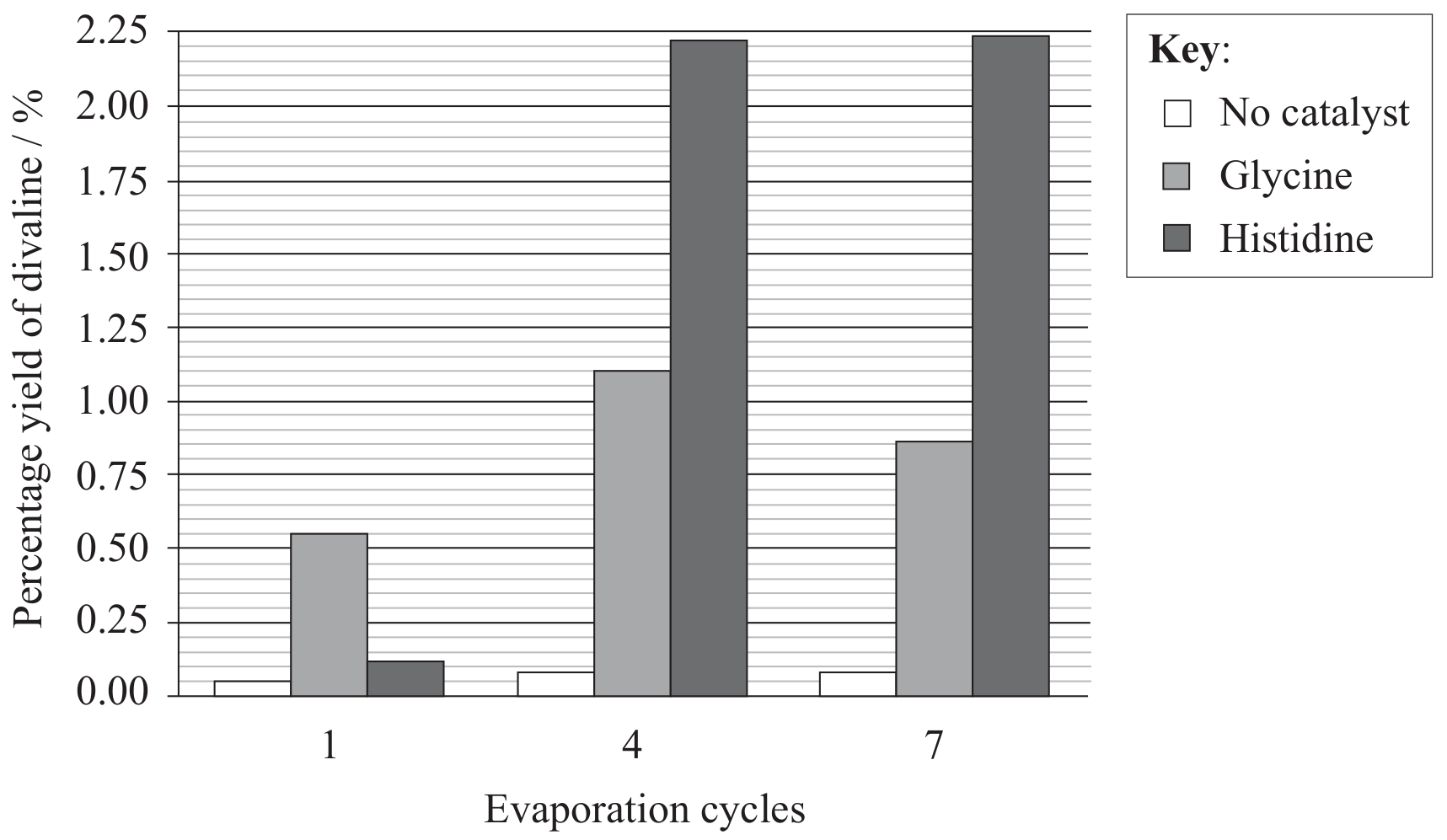
Compare the effectiveness of the two amino acid catalysts used in this experiment.
This investigation was performed in a chamber at leading to total evaporation of the salt water within one day. The atmosphere inside the chamber consisted of nitrogen, carbon dioxide and water vapour. Evaluate the experiment on the basis of similarity with conditions that existed on the prebiotic Earth.
Outline other possible locations where conditions could have allowed the synthesis of organic molecules under prebiotic conditions.