EduNinja
[Maximum number: 1]

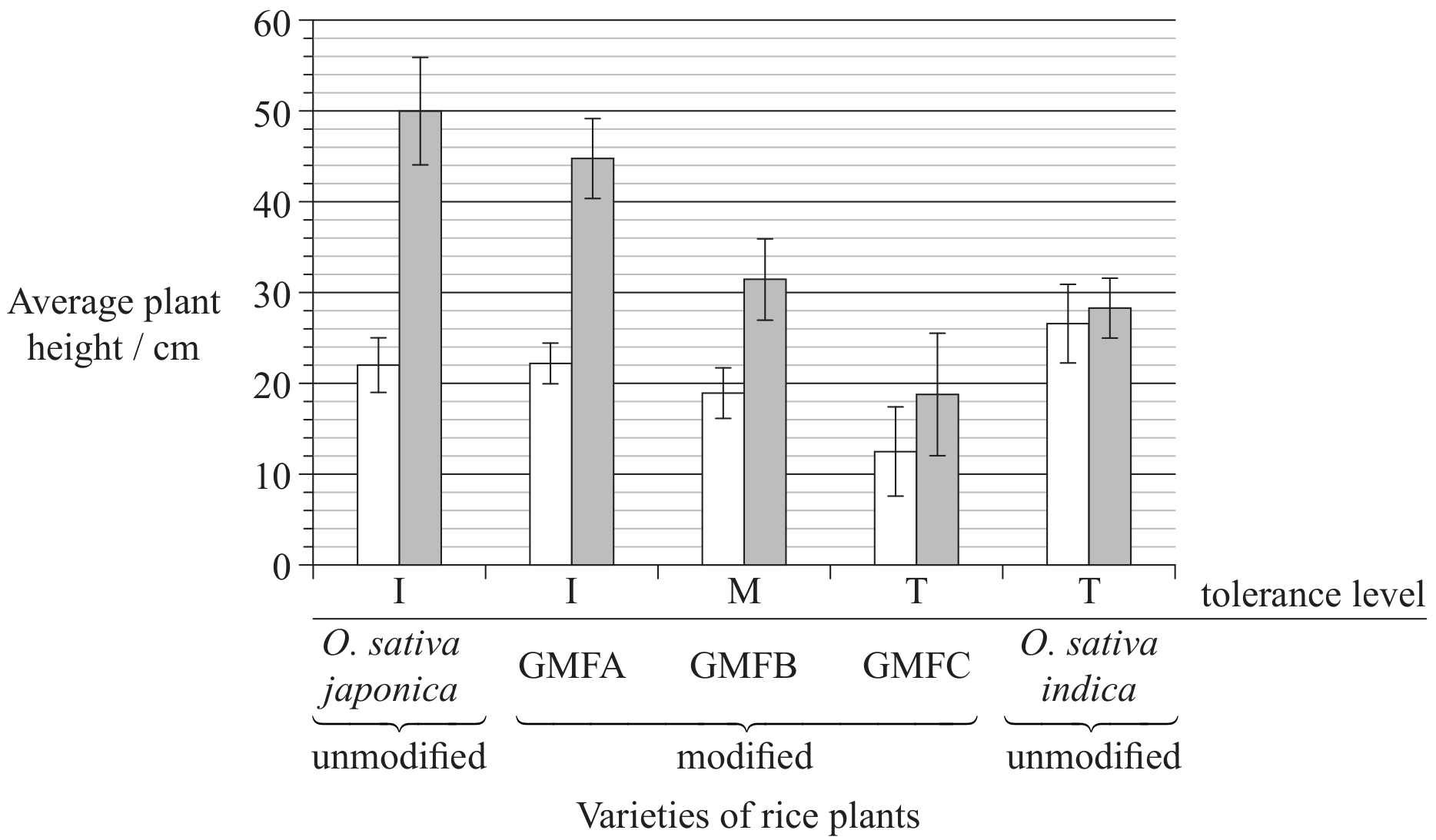
Rice (Oryza sativa) is usually intolerant to sustained submergence under water, although it grows rapidly in height for a few days before dying. This is true for one variety, Oryza sativa japonica. The variety Oryza sativa indica is much more tolerant to submergence.

Three genetically modified forms of O. sativa japonica, GMFA, GMFB and GMFC, were made using different fragments of DNA taken from O. sativa indica.

The plants were then submerged for a period of 11 days. The heights of all the plants were measured at the beginning and at the end of the submergence period.
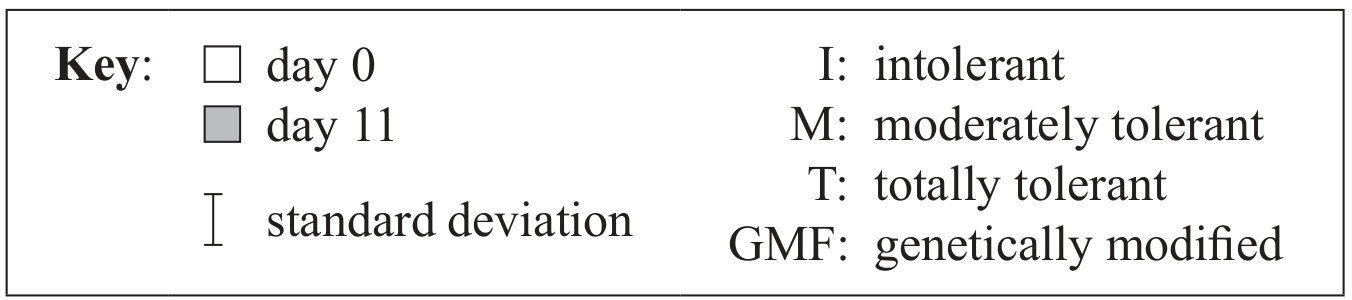
Question image
Question image
(a)

Deduce the general relationship between the growth of all the japonica varieties and their stated tolerance level.

[ 1 ]
[Maximum number: 5]

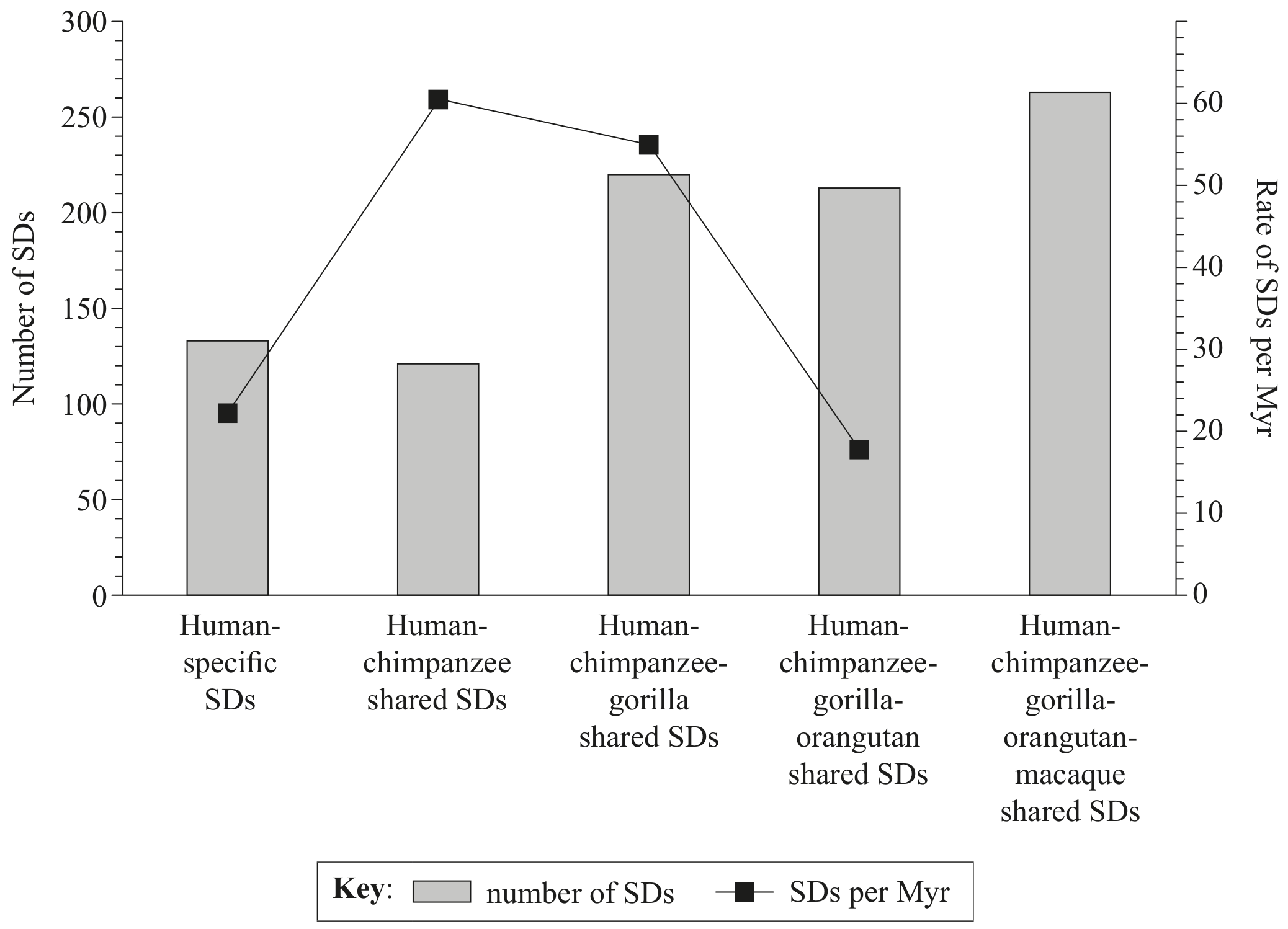
Analysis of the genome of primates reveals many DNA segments that have been duplicated. It is possible to deduce the stage in evolution at which segmental duplications (SDs) occurred by comparing human and other primate genomes. Human-specific SDs occurred after humans and chimpanzees diverged. Human-chimpanzee shared SDs occurred after the common human-chimpanzee ancestor diverged from gorillas and so on. It is possible to estimate the rates at which SDs occurred during evolution using knowledge of when the primates changed. In the chart the bars indicate numbers of shared SDs and the line shows estimates of the rate of SDs per millions of years (Myr).

Question image
(a)

Outline the trends in the rate of SDs occurring since the separation of orangutans from other primates.

[ 2 ]
(b)

Explain how the number of human-chimpanzee shared SDs can be the lowest despite the rate of SDs per millions of years being the highest.

[ 2 ]
(c)

A few SDs were found in humans and gorillas but not chimpanzees. Suggest how this might have occurred.

[ 1 ]
[Maximum number: 1]

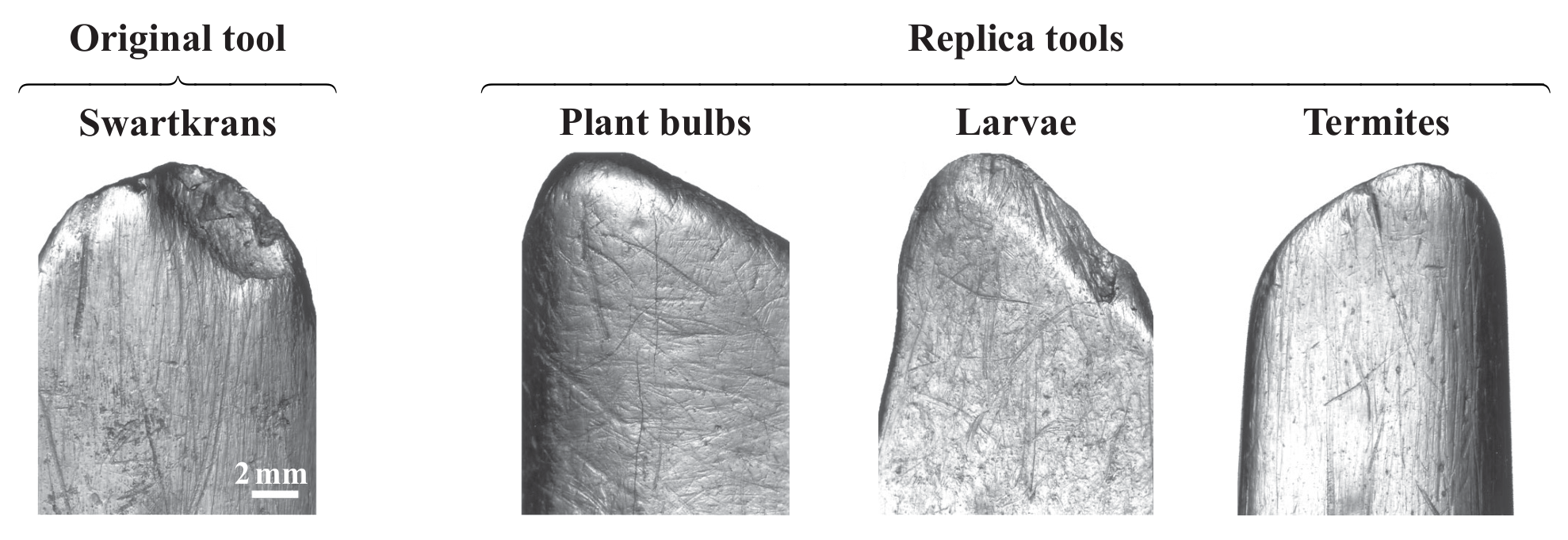
Bone tools found in the Swartkrans site in South Africa were thought to be used by Australopithecus robustus when digging for food. Using replica tools, researchers dug around plants for bulbs, dug in soil for larvae and dug in termite mounds for termites. They compared the scratch marks found on the replica tools with those on the original Swartkrans tool to predict the food eaten by A. robustus.

Question image

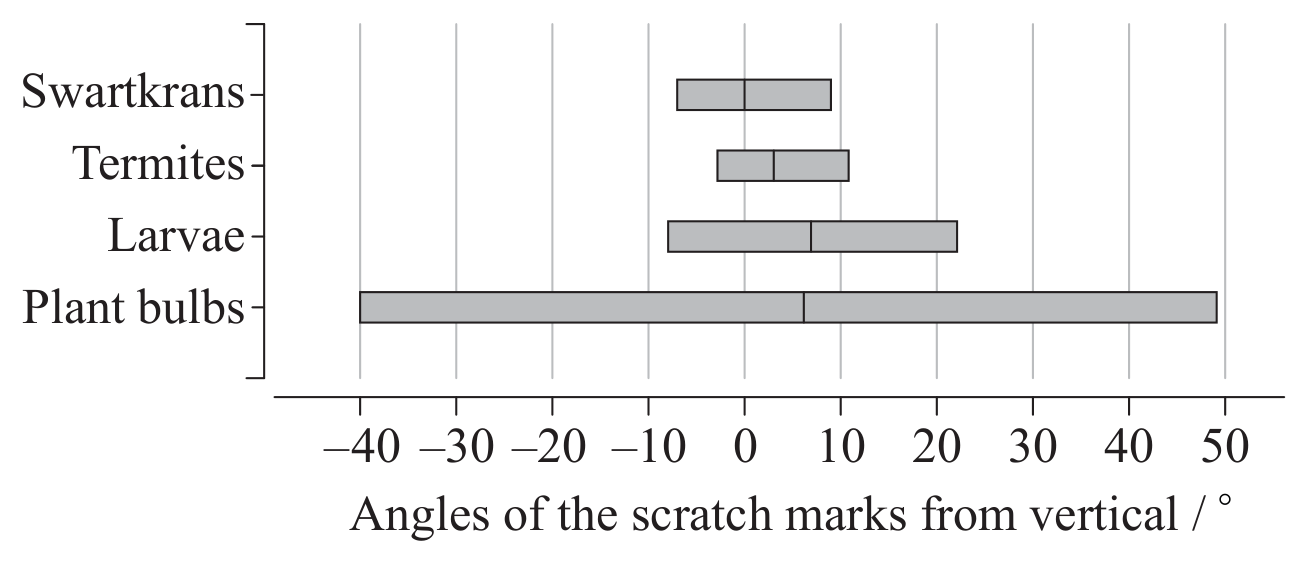
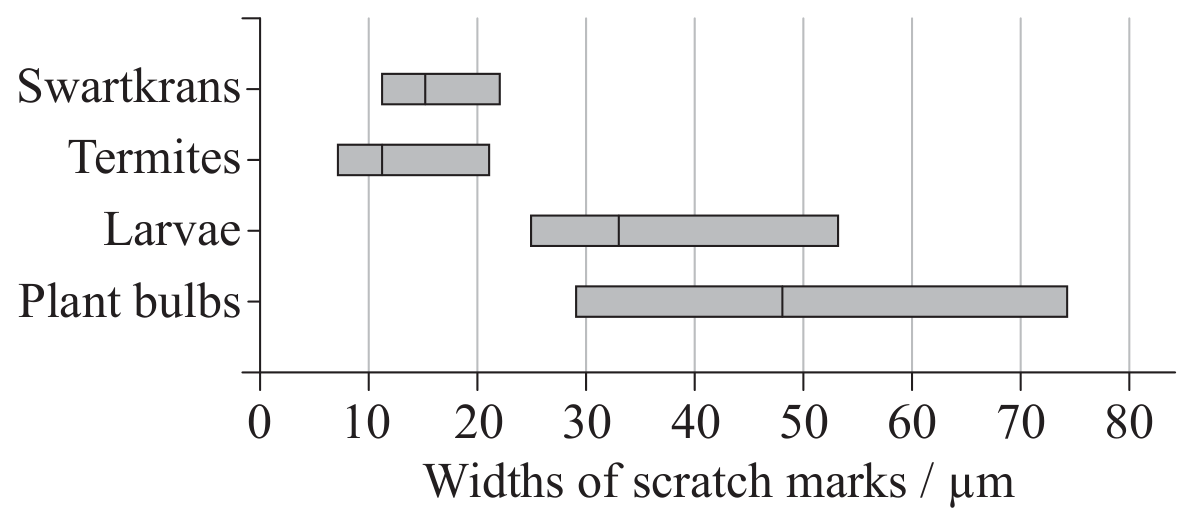
The graphs below show the ranges of angles from the vertical position of the scratch marks and the ranges of widths of the scratch marks on each tool. The solid line on each bar represents the mean value for the range.

Question image
Question image
(a)

A. robustus was thought to have coexisted with Homo habilis, both becoming extinct at the same time. State approximately how many years ago A. robustus became extinct.

[ 1 ]
[Maximum number: 5]

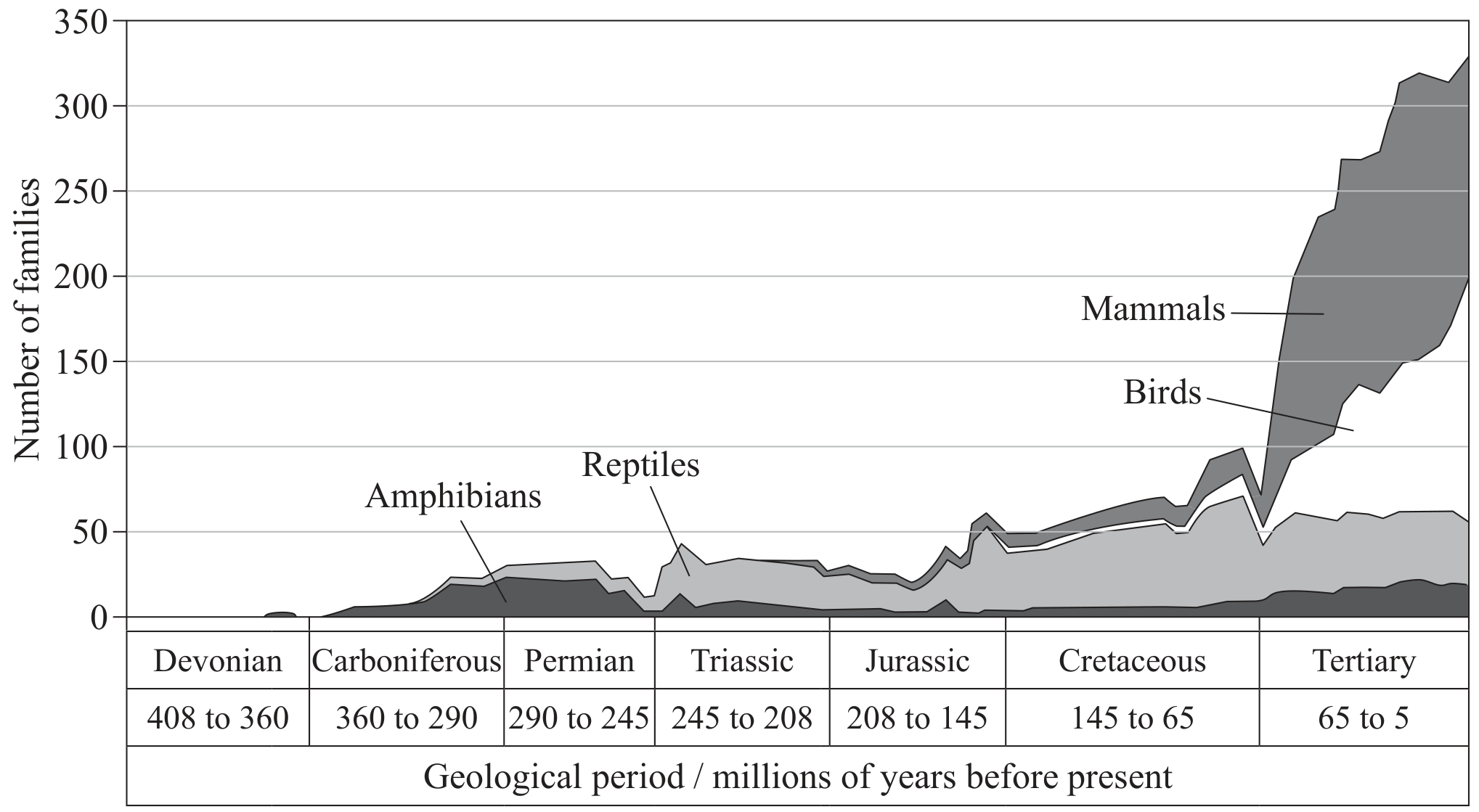
Around 30000 species of vertebrate animals with four limbs (tetrapods) are found today. They are thought to have evolved from a single amphibian species that crawled on to land around 400 million years ago during the Devonian geological period. The graph shows how the number of families of tetrapod species varied in each geological period since their first appearance.

Question image
(a)

State in which geological period reptiles first appeared.

[ 1 ]
(b)

Analyse the data in the graph to conclude whether mammals are more likely to have evolved from birds or from reptiles.

[ 1 ]
(c)

The junction between the Cretaceous and Tertiary periods is called the K-T boundary. Using the data in the graph, discuss whether evolution at the K-T boundary fits the hypothesis of punctuated equilibrium or gradualism more closely.

[ 3 ]
[Maximum number: 7]

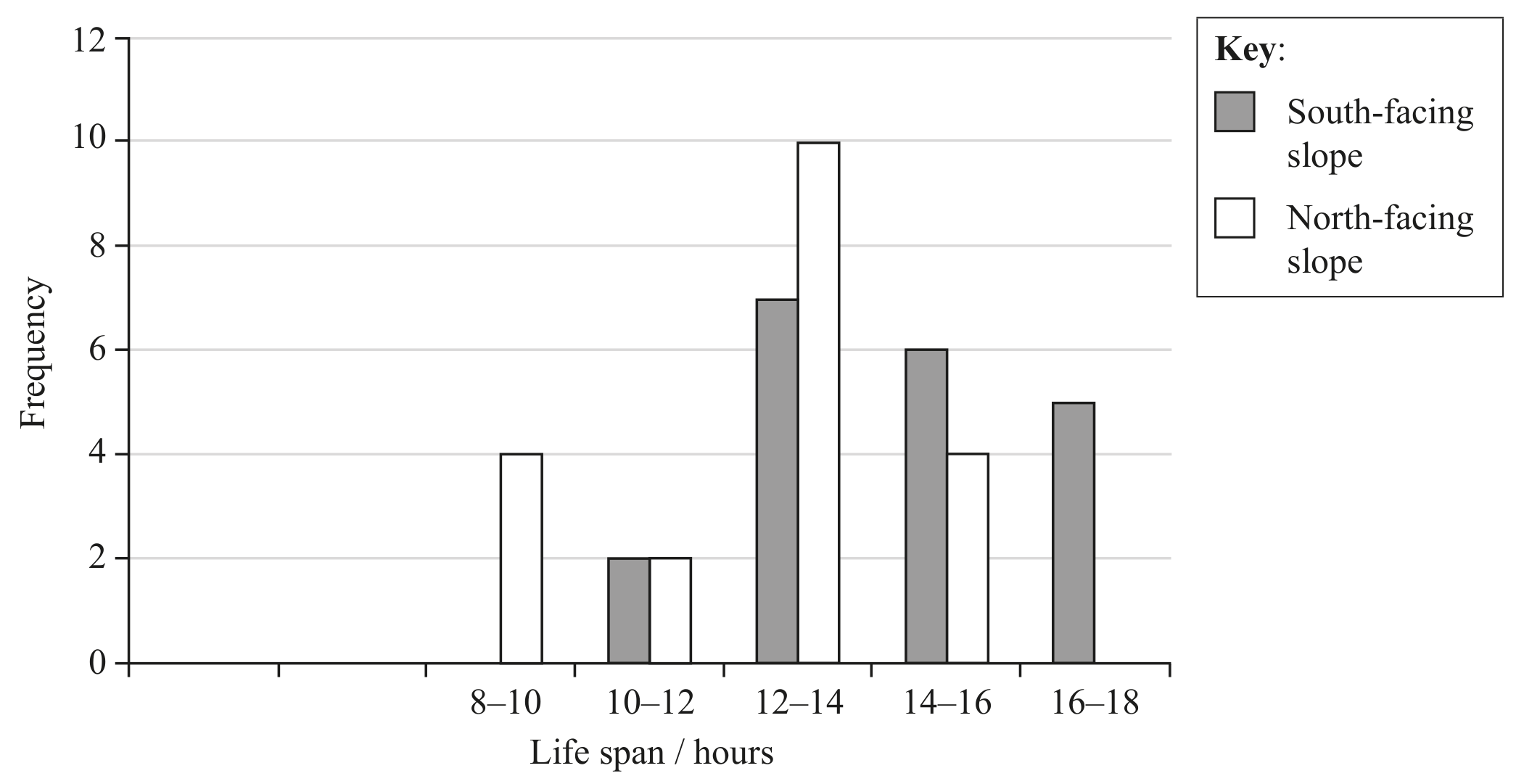
Evolution Canyon is a steep sided rocky valley near Mount Carmel in Israel. There are populations of fruit flies (Drosophila melanogaster) living on the north facing and south facing slopes of the canyon. Fruit flies are sensitive to drought conditions and die if they become desiccated.

Twenty samples of fruit flies were collected from both sides of the canyon. They were subjected to the same conditions of drought stress and the life span (in hours) of the adult flies was measured.

Question image
(a)

Compare the data for the North and South-facing slopes.

[ 3 ]
(b)

Genetic factors affect drought tolerance in Drosophila melanogaster. Deduce, with a reason, which of the slopes of the canyon has the drier climate.

[ 1 ]
(c)

Discuss whether the populations on the two slopes could evolve into two species.

[ 3 ]
[Maximum number: 6]

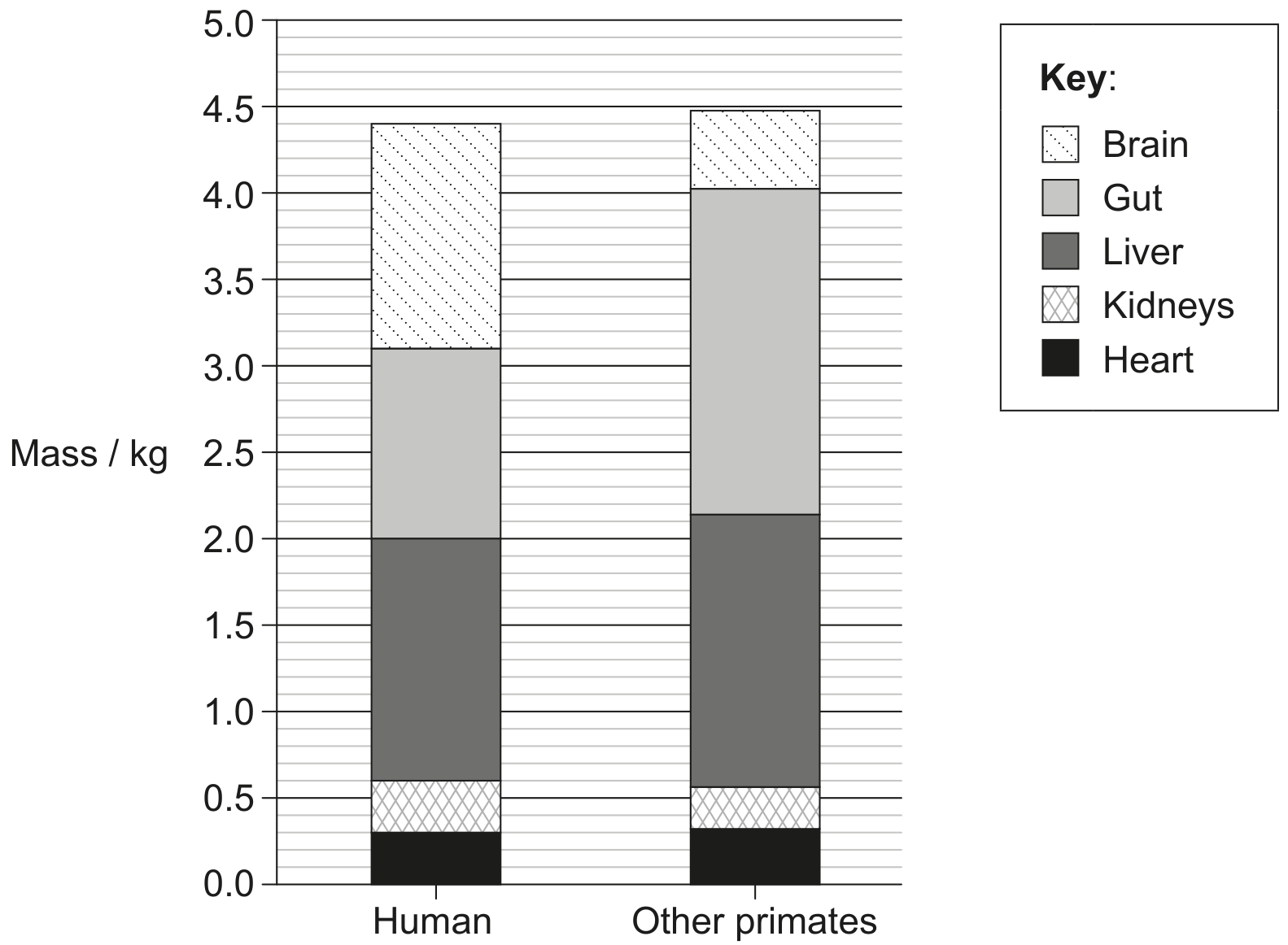
Researchers investigating human evolution recorded energy use for the brain, gastrointestinal tract (gut), liver, kidneys and heart as a percentage of total energy used in the human body. They found that these organs use around 70 % of the body's energy although they account for only about 7 % of body mass. They also compared the mass of each of these organs in humans with other modern primates, each with a body mass of 65 kg as shown in the bar chart.

Table
Question image
(a)

Compare the mass of human organs with the mass of other primate organs.

[ 2 ]
(b)

Explain the differences between the organ size of humans and other primates in terms of trends in human evolution and their causes.

[ 4 ]
[Maximum number: 3]

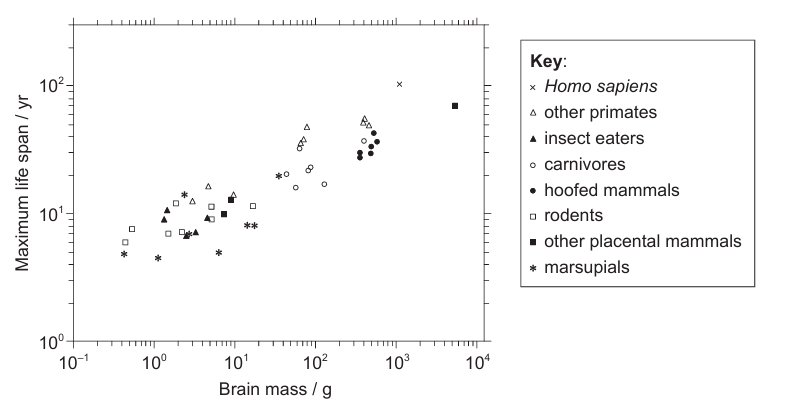
The evolution of increased body size in mammals has been accompanied by an increase in life span. Another variable that could affect life span is brain size. Data was analysed from 47 mammalian species.

Question image
(a)

State the relationship between brain mass and maximum life span.

[ 1 ]
(b)

Discuss how a larger brain size and longer life span might have contributed to the evolution of these species.

[ 2 ]
[Maximum number: 1]

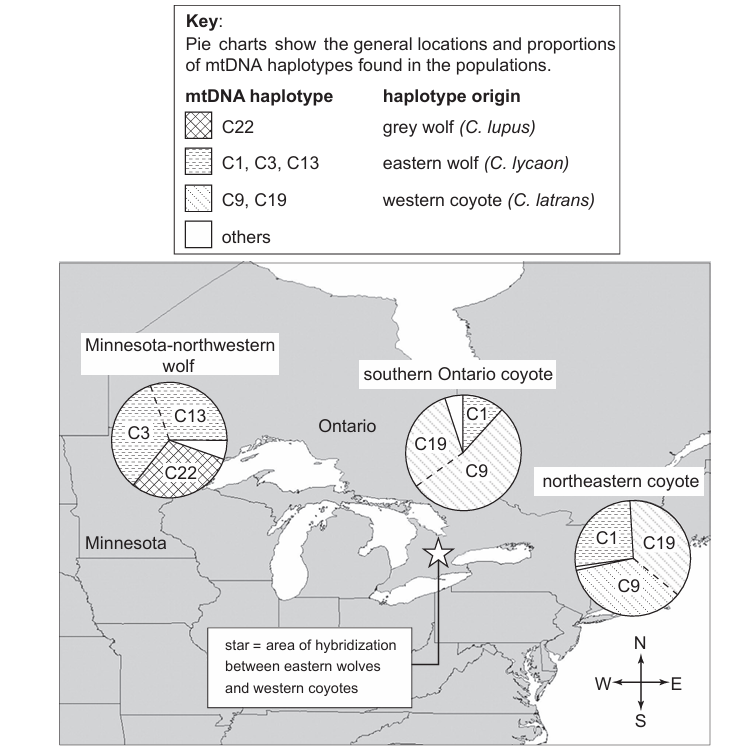
There are many closely related Canis species in North America including the grey wolf (C. lupus), eastern wolf (C. lycaon) and western coyote (C. latrans). Hybridization can occur between members of these species.
For example, during the last 100 years, hybridization has occurred between western coyotes (C. latrans) and eastern wolves (C. lycaon) in the area of Ontario shown by a star in the map shown below.
Genetic evidence for hybridization is based on identification of haplotypes (combinations of linked alleles in clusters of similar genes) that exist in mitochondrial DNA (mtDNA) of Canis populations. The populations in this study were the Minnesota-northwestern wolf, southern Ontario coyote and northeastern coyote. Assume that all animals in each Canis population have the same mtDNA haplotypes.
Key:
Pie charts show the general locations and proportions of mtDNA haplotypes found in the populations.

Question image
(a)

The northeastern coyote has more wolf-like skull features than the southern Ontario coyote. Suggest a reason for this difference.

[ 1 ]
[Maximum number: 12]

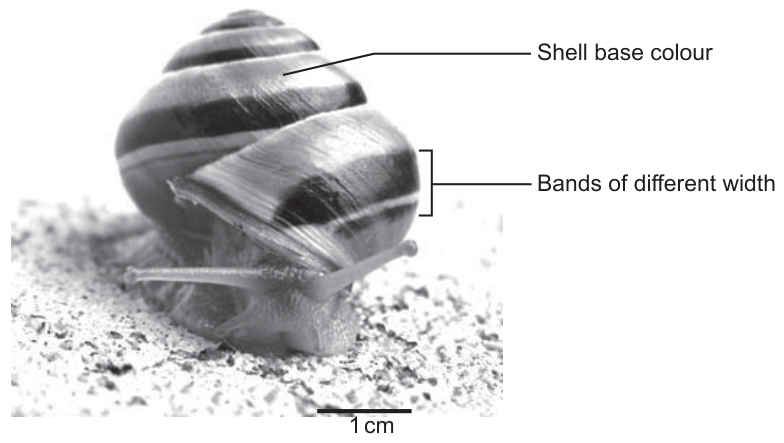
The land snail Cepaea nemoralis is very common in North America and in Europe.

The base colour of its shell varies between brown, pink and yellow, and also in its intensity. Some shells are unbanded, but most show one to five bands of different width on top of the shell base colour.

Question image

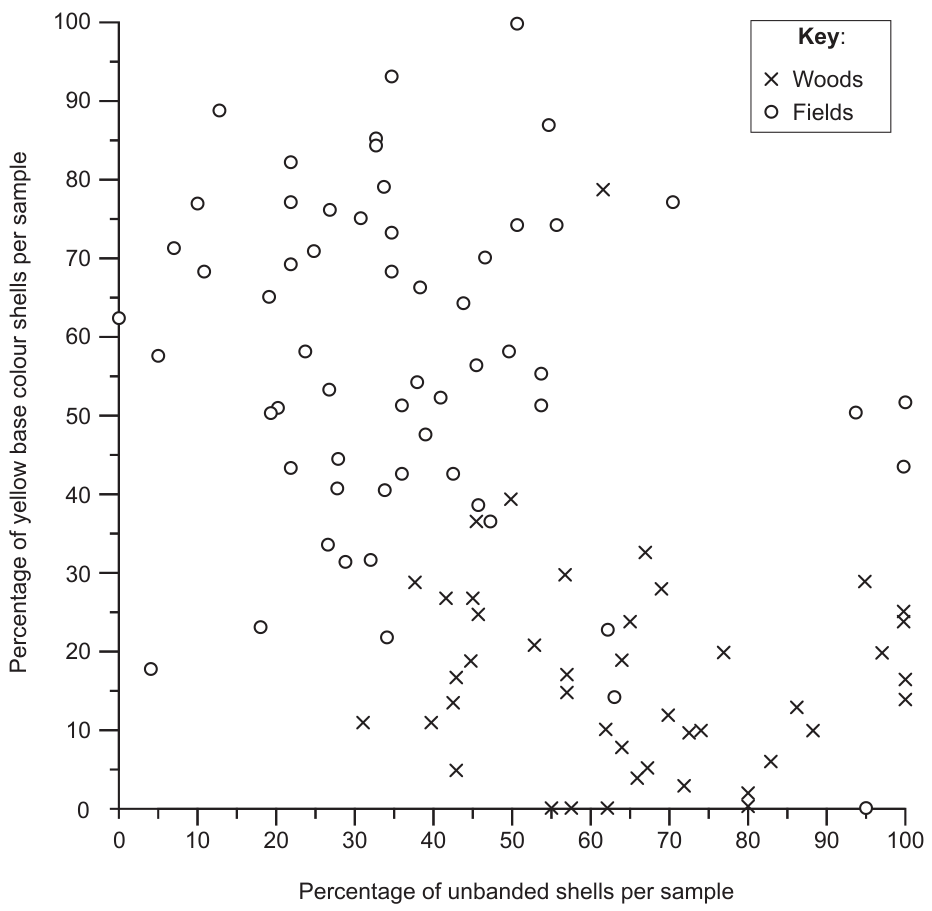
In the early 1950s, scientists studied the proportion of colours and banding of C. nemoralis in woods and fields near Oxford, UK, which differed in the type of plants and background colour. Each data point on the graph represents the percentage of yellow base colour shells and unbanded shells in a sample from either one type of wood or field, although other snail colours were present.

Question image
(a)

Determine the maximum percentage of yellow base colour shells found in woods.

[ 1 ]
(b)

Suggest either one possible advantage or one disadvantage of having a banded shell, stating whether it is an advantage or disadvantage.

[ 1 ]
(c)

Using the data in the graph, distinguish between the distribution of C. nemoralis shells in woods and fields.

[ 2 ]
(d)

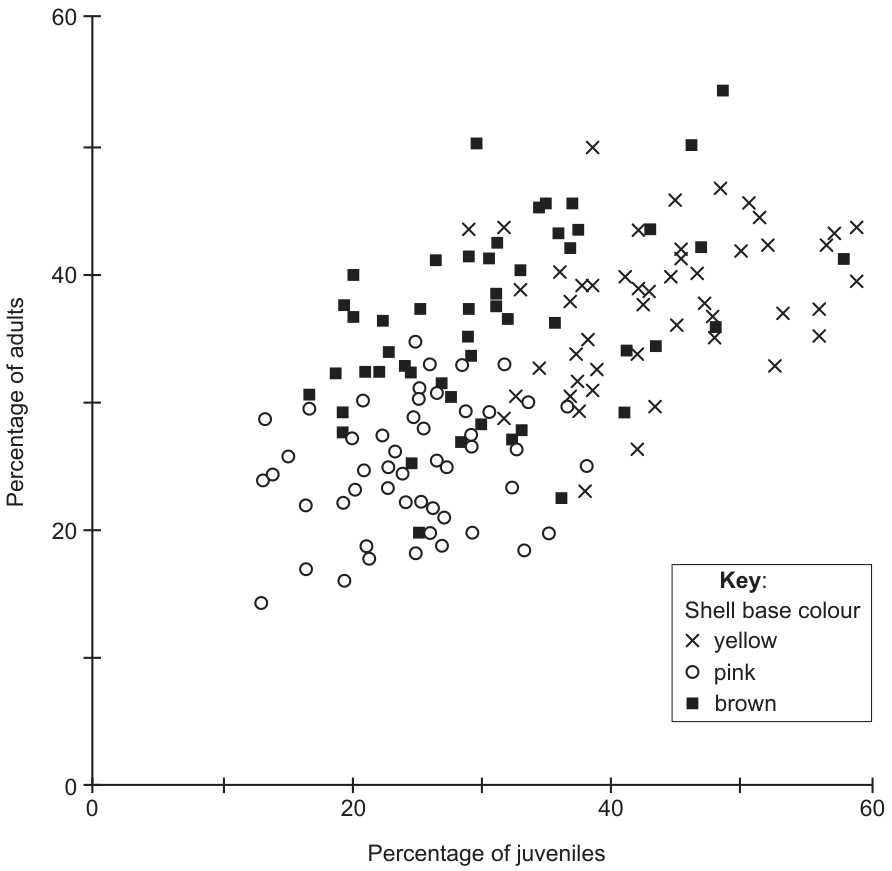
The population of C. nemoralis has been studied for many years in open fields in a similar area. In the graph, each data point represents the percentage of adults of a given base colour plotted against the percentage of juveniles of the same base colour collected each year.

Question image

Deduce from the data in the graph which shell base colours are on average most and least frequent among adult snails.

Most frequent:
Least frequent:

[ 2 ]
(e)

Discuss whether there is evidence in the data that colour plays a role in the survival of the snails.

[ 3 ]
(f)

Using the theory of natural selection, explain the differences shown in the graph between the three colours of snail.

[ 3 ]
[Maximum number: 3]

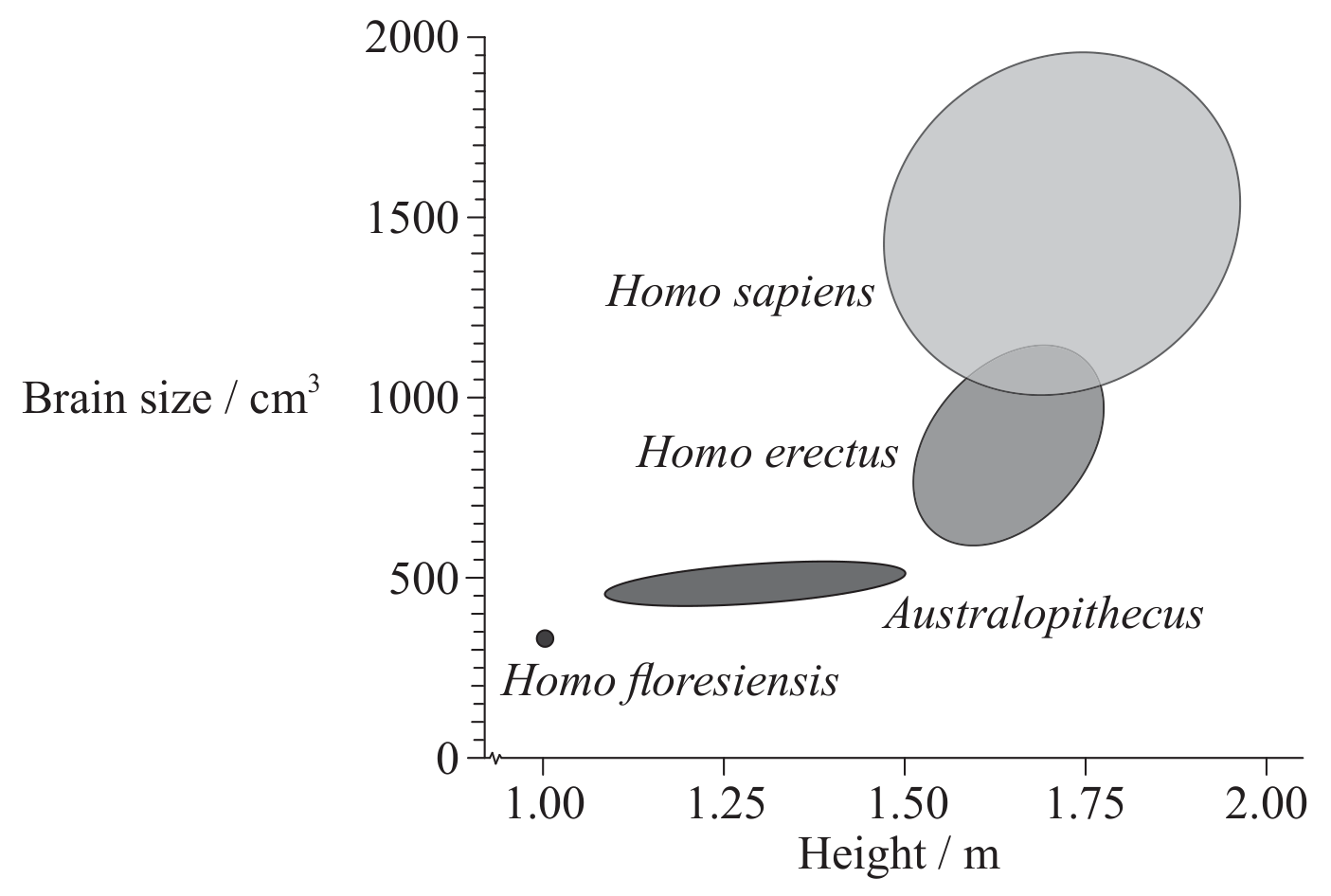
The diagram shows the range of heights and brain sizes found in four groups of hominids.

Question image
(a)

Evaluate the hypothesis that an increase in hominid height makes an increase in brain size necessary.

[ 3 ]
0