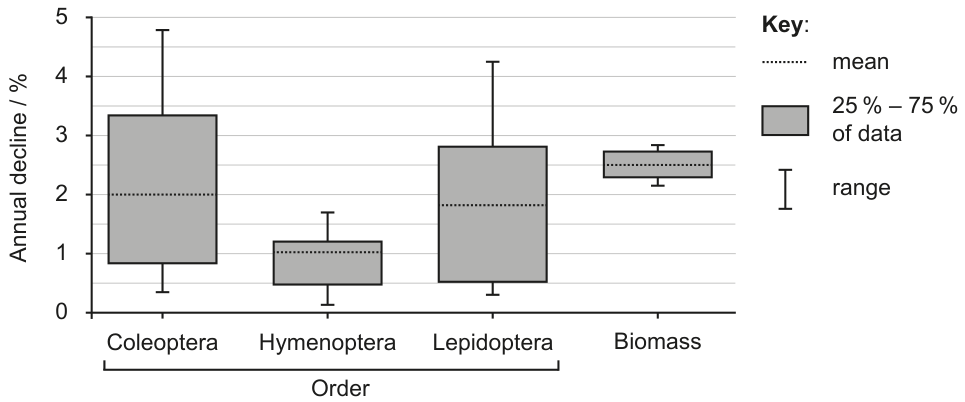
The biodiversity of insects worldwide is in decline. Destruction of habitats, pollution and climate change have contributed to the decline in global insect populations and to the extinction of insect species. A comprehensive literature review was carried out to determine the annual global rate of decline in insect species. The graph shows the results for three major orders of terrestrial insects and the total decline in insect biomass worldwide.
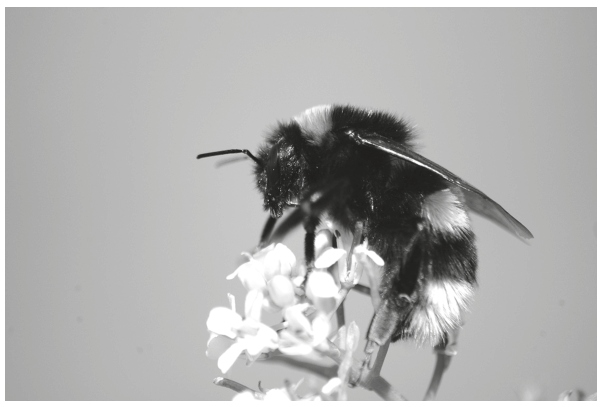
One species of the order Hymenoptera is the buff-tailed bumblebee (Bombus terrestris), which feeds on pollen and nectar obtained from specific plants.
Destruction of preferred habitats has affected the size of bumblebee populations and for survival, bumblebees have to feed on pollen from other available plant habitats. To simulate different pollens, researchers fed bumblebees on eight diets consisting of a mixture of proteins and lipids in different ratios (P:L). The bumblebees also had access to sucrose. There was no restriction on the amount of each food the bumblebees could consume. The chart shows the mean daily mass of food eaten for eight diets with different P:L ratios.
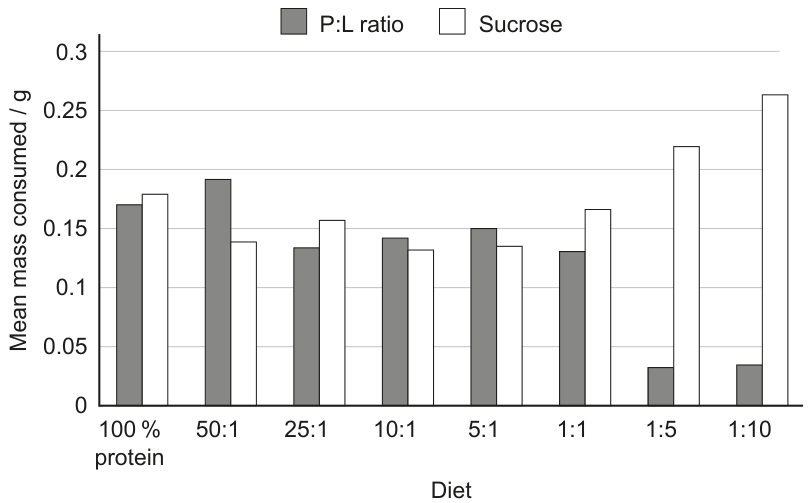
Identify in how many of the diets sucrose was the greatest mass of food consumed.
Compare and contrast the results for the 1:1 and the 1:10 P:L diets.
Suggest with a reason which P: L diet is closest to the normal diet of these bumblebees.
Discuss whether these studies show that habitat destruction can affect global bumblebee numbers.