EduNinja
[Maximum number: 4]

Fig. 1.1 is a diagram of an antibody molecule.

Fig. 1.1

Fig. 1.1

(a)

When a pathogen enters the body, a primary immune response occurs. This response includes the production of antibodies.

Describe the stages in the immune response that lead to antibody being produced against a specific antigen.

[ 4 ]
[Maximum number: 4]

Some of the steps in the production of monoclonal antibodies are shown in Fig. 2.1.
step 1
A mouse is injected with an antigen, A.
step 2
The mouse is left for a few weeks to allow an immune response to occur.
step 3
Plasma cells (effector B lymphocytes) are extracted from the mouse's spleen.
step 4
Hybridoma cells are formed.
step 5
Each hybridoma cell is isolated and allowed to grow and divide.
step 6
The hybridoma cells producing anti-A antibodies are identified and cultured on a large scale.
Fig. 2.1

(a)

With reference to Fig. 2.1, explain:

[ 4 ]
(i)

what happens during an immune response (step 2)

[ 4 ]
[Maximum number: 5]

The infectious disease cholera is caused by a bacterium.

(a)

Using genetic engineering, it is possible to produce a form of choleragen consisting of only subunit B . This can be combined with inactivated bacterial cells to produce a vaccine against cholera.

[ 5 ]
(i)

Outline how this vaccine can give protection against cholera.

[ 5 ]
[Maximum number: 2]

In 2016, the highest number of cases of malaria and deaths caused by the disease were in sub-Saharan Africa. In many areas of sub-Saharan Africa, malaria is endemic (continually present) and people are at high risk of becoming infected with the Plasmodium pathogen.

In high risk areas it is recommended that:
- homes are provided with insecticide-treated nets (ITN)
- the surfaces inside homes where Anopheles mosquitoes may rest are sprayed with insecticide. This is known as indoor residual spraying (IRS).

(a)

In malaria, the production of antibodies is beneficial to recovery, whereas in the disease myasthenia gravis the production of antibodies is harmful.

Explain why the production of antibodies in a person with myasthenia gravis is harmful.

[ 2 ]
[Maximum number: 1]


Chronic bronchitis is one of the conditions that contributes to chronic obstructive pulmonary disease (COPD).

(a)

White blood cells play an important role in defence.
State precisely the type of white blood cell that fits each of the descriptions given in (i) to (iv).

[ 1 ]
(i)

When activated, it differentiates into a cell that secretes a chemical, which causes other cells to lyse (burst). It contains a large, spherical nucleus.

[ 1 ]
[Maximum number: 2]

Vaccination can protect against the infectious disease tuberculosis (TB).

(a)

Suggest why TB is more likely to be fatal in people who have HIV/AIDS than in those who do not have HIV/AIDS.

[ 2 ]
[Maximum number: 5]

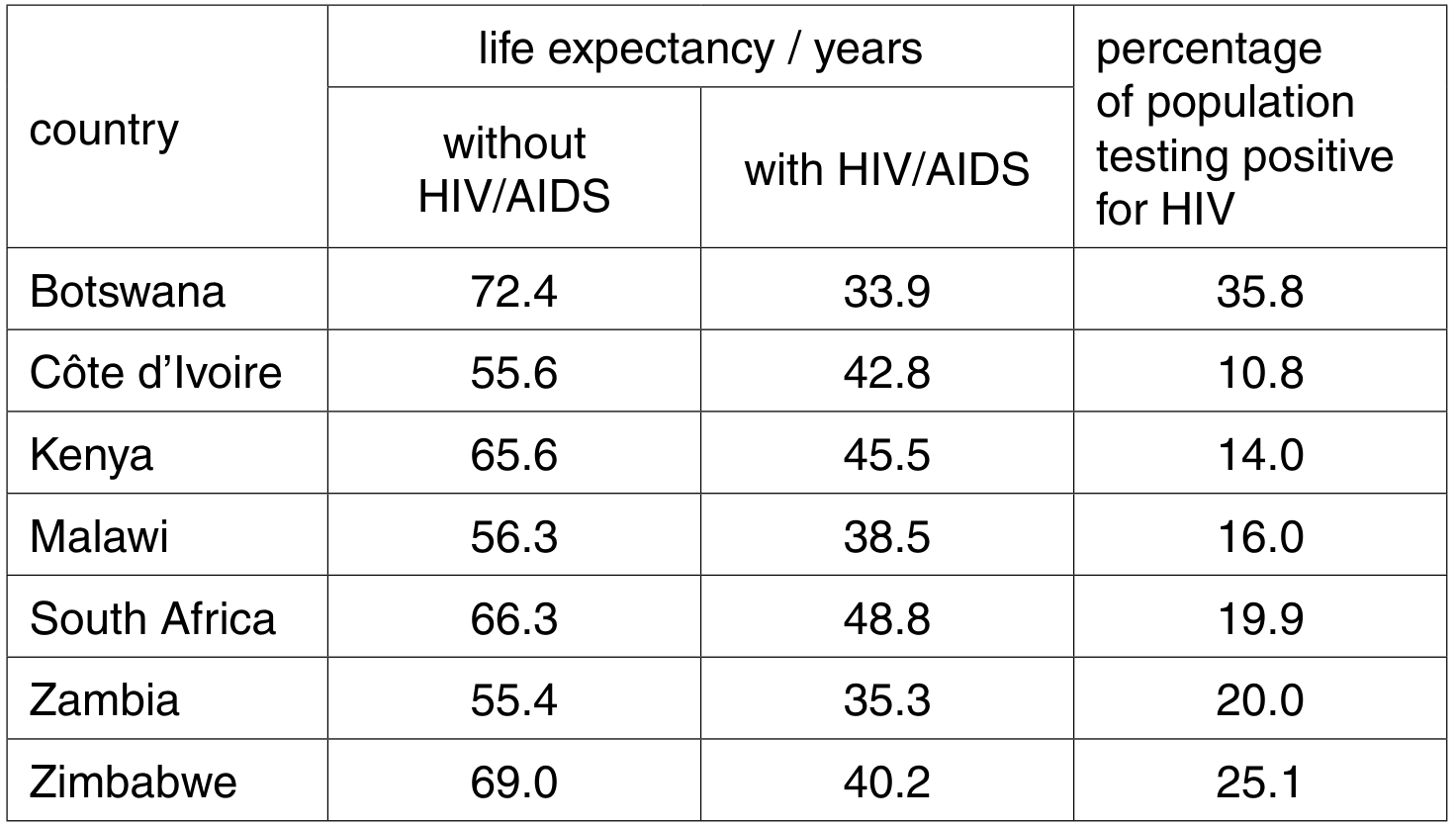
The HIV/AIDS pandemic has had a very large impact on life expectancy in many African countries.

Table 3.1 shows estimated data for seven African countries for
- the average life expectancy of an individual born in 2002
- the percentage of the population testing positive for HIV in 2002
- the average life expectancy of an individual born in 2002 if there was no HIV/AIDS pandemic.

Table 3.1

Table 3.1

(a)

A person who is confirmed as HIV-positive has tested positive for the presence of antibodies to HIV.

Outline the events that occur in a newly-infected person, which lead to the production of antibodies to HIV.

[ 5 ]
[Maximum number: 4]

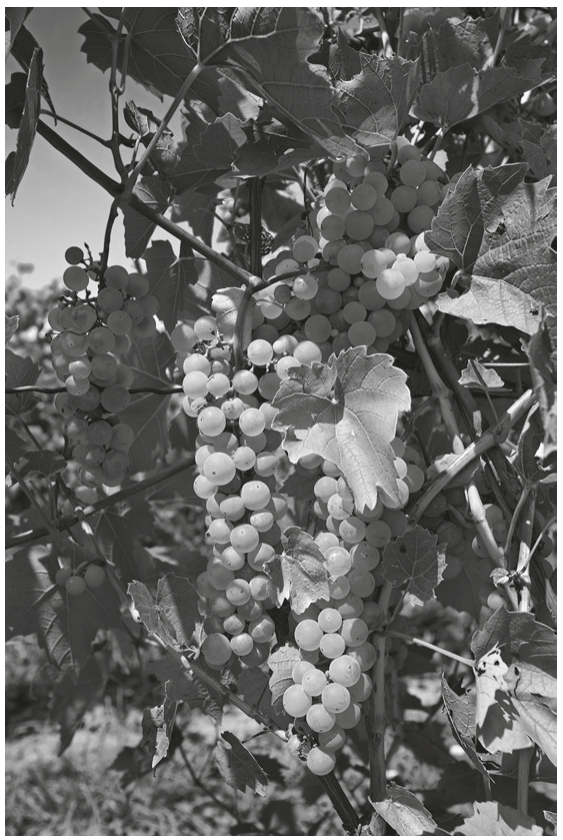
Fig. 3.1 shows some fruits (grapes) of the grapevine, Vitis vinifera.

Fig. 3.1

Fig. 3.1

Sucrose is transported in the phloem of the grapevine to the fruits. In the fruits, sucrose is hydrolysed by the enzyme sucrase, which is found in cell walls. The glucose and fructose produced by the hydrolysis of sucrose pass through membrane proteins, known as hexose transporters, into the cytoplasm of the fruit cells.

(a)

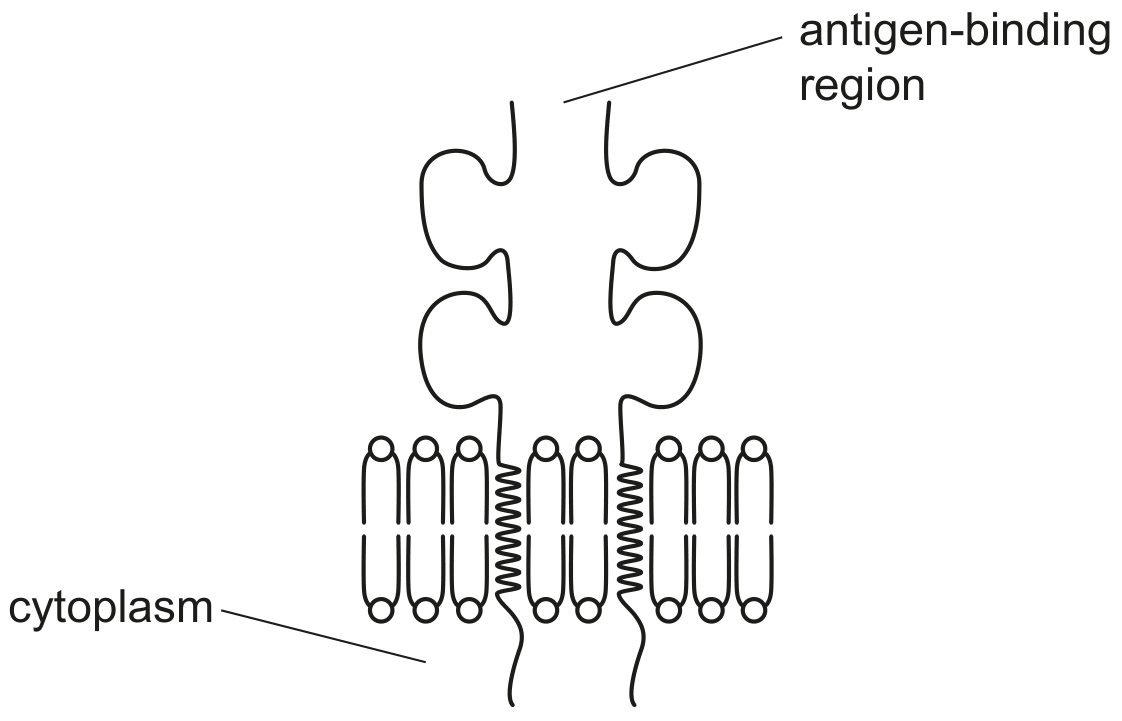
Fig. 3.3 is a diagram of a protein in the cell surface membrane of a macrophage from a mouse.

Macrophages use these proteins in antigen presentation. Non-self antigens bind to the proteins and are involved in the activation of specific T-lymphocytes during the immune response.

Fig. 3.3

Fig. 3.3

[ 4 ]
(i)

Some pathogens enter human cells. Macrophages partially digest these pathogens and present antigens to T-lymphocytes during immune responses.

With reference to Fig. 3.3, explain how T-lymphocytes respond to infection by a specific type of pathogen.

[ 4 ]
[Maximum number: 4]

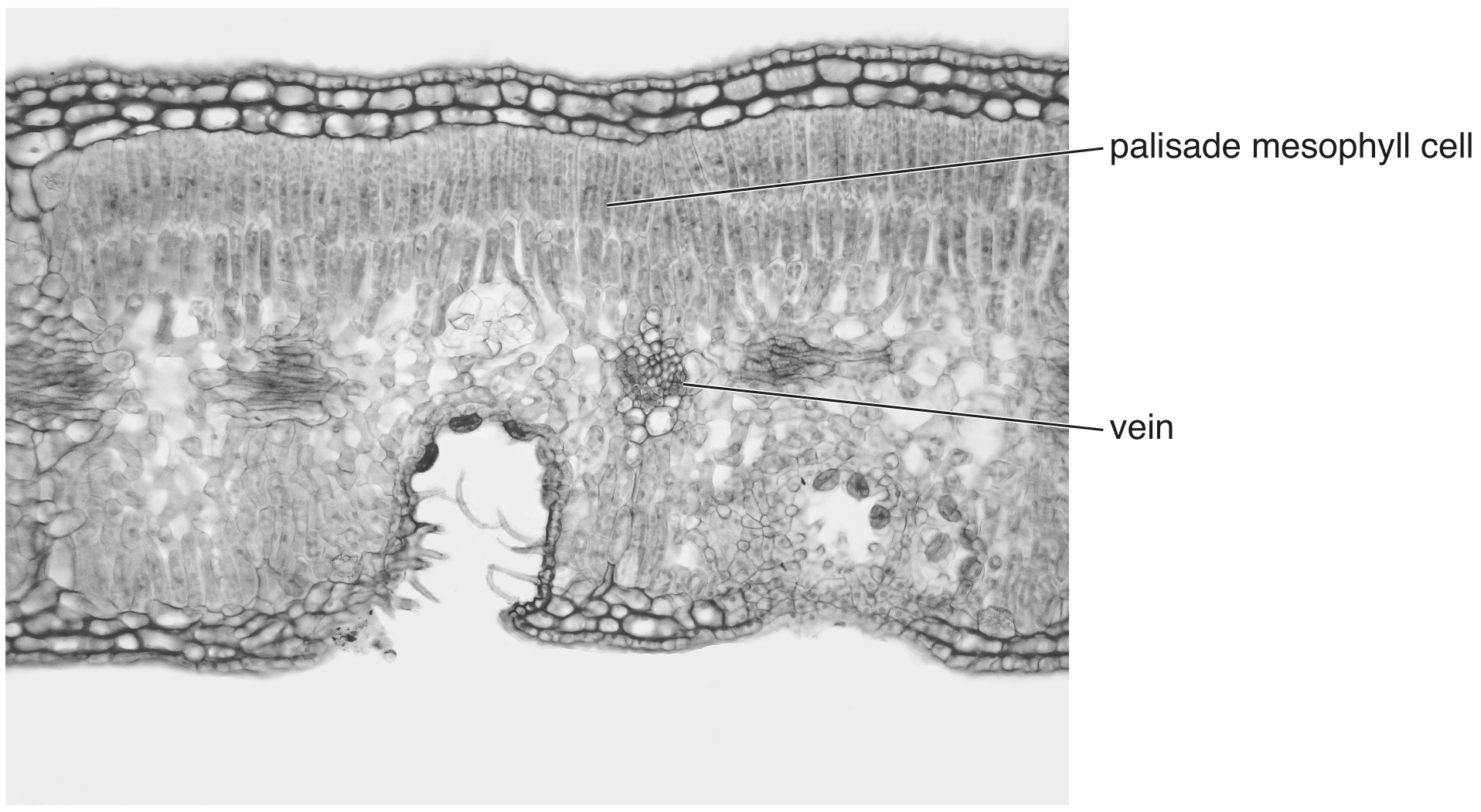
Nerium oleander is a xerophytic plant. A photomicrograph of a section through the leaf of N. oleander is shown in Fig. 3.1.

Fig. 3.1

Fig. 3.1

(a)

Monoclonal antibody can be produced that is specific to cyFBPase. This antibody is used by investigators to check that the plants with the c y F B P mutation do not synthesise this enzyme.

[ 4 ]
(i)

In monoclonal antibody production, a small mammal is inoculated with cyFBPase and several weeks later cells are removed from the spleen. Some of these cells are required for the production process.

Describe the events occurring within the body of the small mammal that lead to the formation of the cells needed for monoclonal antibody production.

[ 4 ]
[Maximum number: 3]

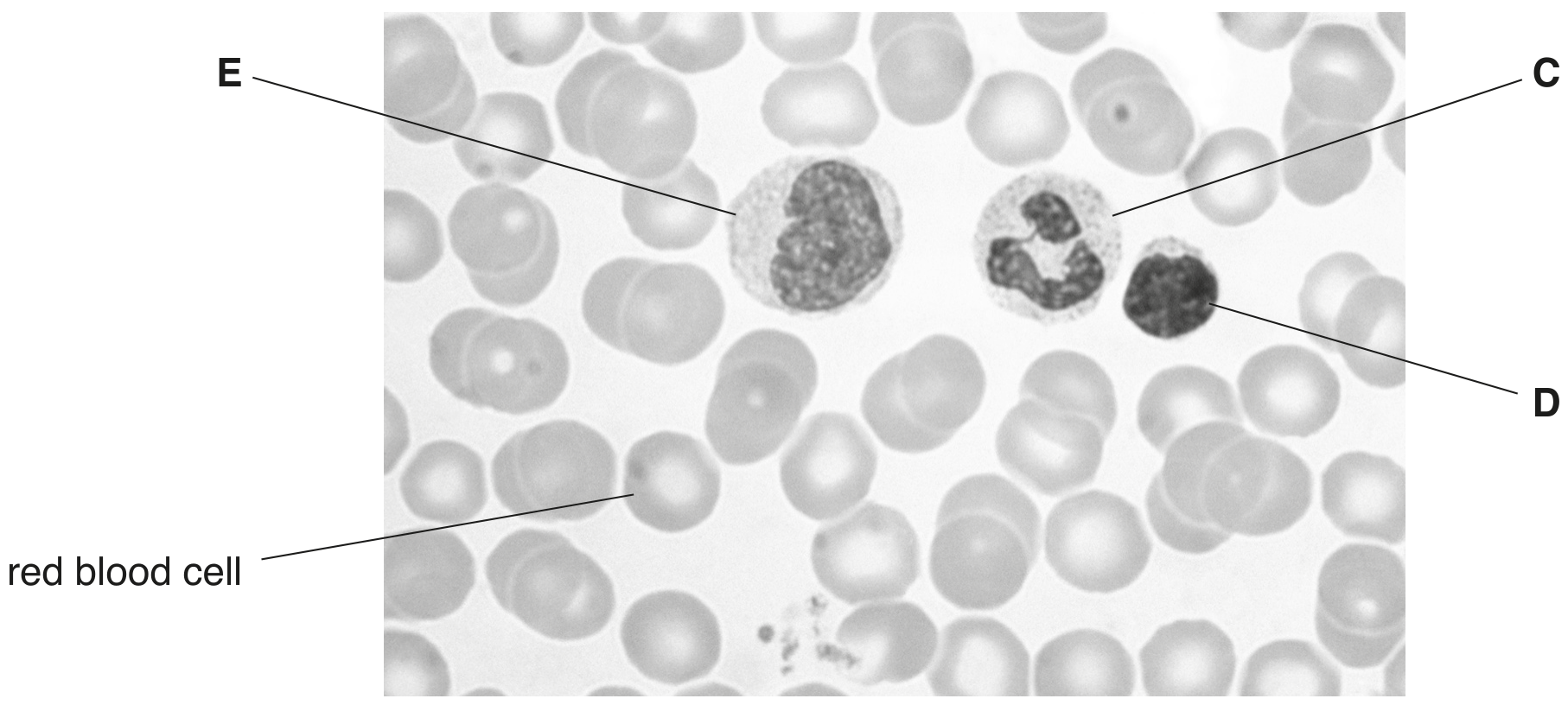
Fig. 3.1 is a photomicrograph of human blood cells from a healthy individual who lives at sea level. The cells labelled C, D and E are white blood cells.

Fig. 3.1

Fig. 3.1

(a)

In humans, an increase in the white blood cell count can be associated with leukaemias and with infectious diseases, such as measles.

Chronic lymphocytic leukaemia (CLL) is a type of cancer that starts in the bone marrow. In the early stages, many people with CLL feel well. The disease is sometimes diagnosed by chance during a routine blood analysis, when a high white blood cell count is noticed. Many of these white blood cells are only partially mature.

[ 3 ]
(i)

Explain why a high white blood cell count is a feature of measles and of CLL. measles

CLL

[ 3 ]
0